
The Preservation Task for National Parks-
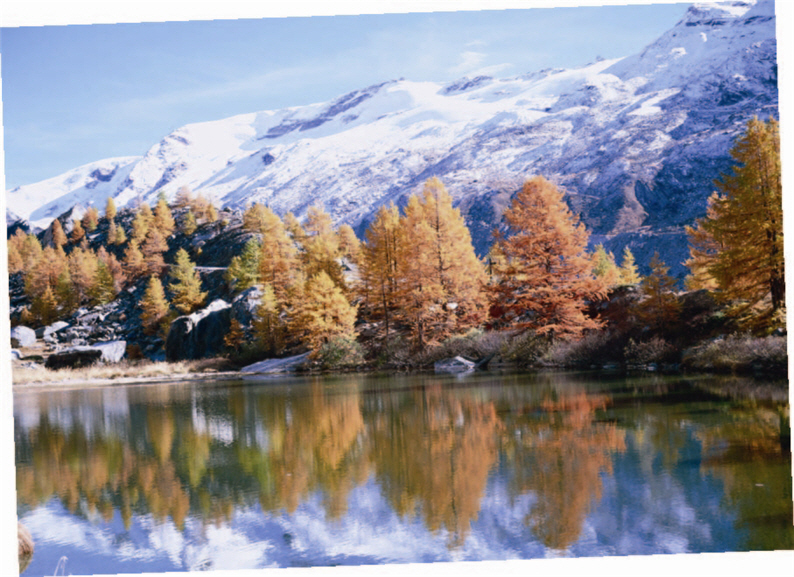
I n my last column on 「The Four Challenges to National Park Management,」 I mentioned that conservation is the primary challenge. Or, to put this in the simplest way, it is the conservation of the landscape. The landscape is a life taxon comprising many mutually related ecosystems, a spatial physical environment and biodiversity that stretches over a larger scale than the park itself. However, the operation of national park faces a variety of difficulties while trying to strike a balance among the need of human's demand, conservation, and sustainable uses of natural resources.
Controversies also arise regarding whether to protect landscapes from a 「total preservation」 or 「conservation and utilization」 perspective. In fact, since most national parks are established in areas with the 「least disturbance from mankind,」 their primary operational goal is to preserve the natural landscapes. As mankind are prone to have the desire to get near to places of natural beauty (through camping, mountain-climbing, hiking, etc.), as well as the need to sustainably utilize natural resources (e.g., soil and water resources, mines, genes, living species, and ecosystems), the realization of the concept of total preservation is not an easy goal.
It is an extremely difficult work to attain a balance among preservation, conservation, and even utilization, for it not only involves interdisciplinary cooperation (ecology, sociology, economics etc.), but also has to be built on philosophy (especially on ecological ethics). Generally speaking, the management of all landscapes is closely related to their temporal and spatial scales. While a landscape is a system of long-term variation, the strategy of management may change according to its spatial size. National parks may have different characteristics and unique natural systems, landscapes, or historic sites, therefore great differences are found in various preservation strategies.
The proper scales of national park conservation should be natural landscapes, and the task should take into consideration the intactness of natural environments.
This calls for coordination among administrative authorities, and the national park has to establish a consensus and cooperative management mechanism with its neighboring administrative units.
Strategies for preservation and conservation require specific knowledge that is often quite regional. That is to say, in managing a certain national park it is impossible to copy entirely the operational methods of a national park of another country or even another national park of the same country. As stated above, park operation should be anchored to local ecology, socio-economic conditions, and ethics, but it may takes lessons from the practice of other parks as well. For instance, the concept of adaptive management may be adopted in designing a park operational method suitable to our own. Adaptive management means management by learning, the learning here means the constant monitoring, collection, analysis, and interpretation of data required in order to set up standards for improving and evaluating the management.
The scale of national park conservation should be based on natural landscapes. It depends on coordination among administrative authorities when the spatial scale crosses the boundaries set according to the administrative jurisdiction. Consensus and cooperative management mechanisms should be established between a national park and its neighboring administrative jurisdictions.


Hen-biau King
Ph.D. Earth Science of Carleton University, Canada
Director-General of Taiwan Forestry Research Institute, and the Chair of International Long Term Ecological Research Network
- Image: The Preservation Task for National Parks


