
Leave No Trace in National Park across All Continents-
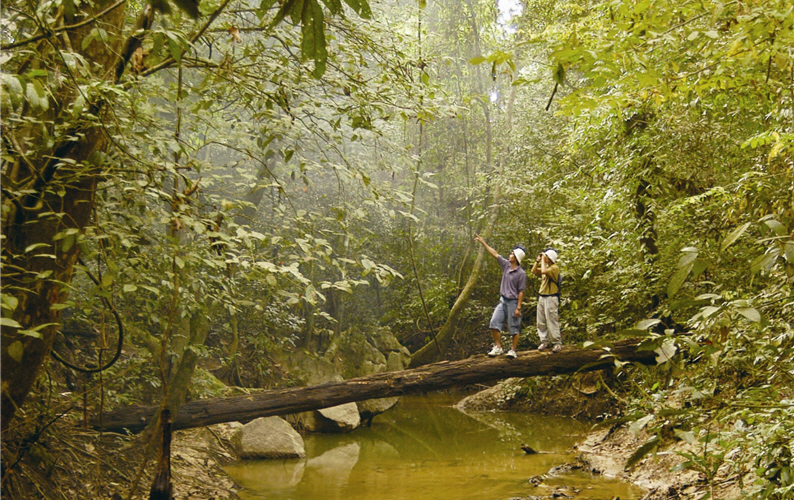
Taman Negara National Park
T he Taman Negara National Park is situated across the states of Kelantan, Terengganu and Pahang in Malaya Peninsula of Malaysia, covering 4,343 km2, i.e. one eighth the size of Taiwan. It is the largest natural park in Malaysia and has never suffered any massive man-made damage in the history.
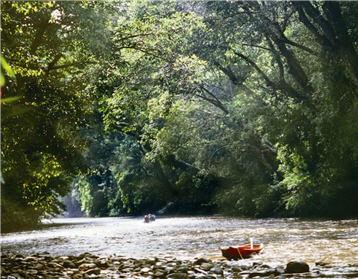
To protect this virgin tropical rainforest, the government relies on the control of visitors to the park. All visitors must first purchase permissions and boat tickets (as boat is the only means of transportation to Taman) at the office of the National Park at an adjacent village Kuala Tembeling, and then enter Taman by boat from Kuala Tembeling. Because the rainforest is covered with dense growth of trees and swamps, it is dangerous for tourists to travel alone. The park authority provides a package tour that includes ecological a guided ecotour, lodging, food, permissions and other necessary fees. Small groups of visitors are led by the interpreters so that no improper damages might be caused to the environment of the park.
Yosemite National Park
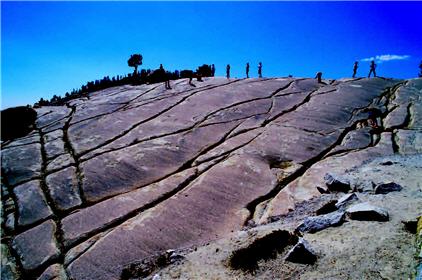
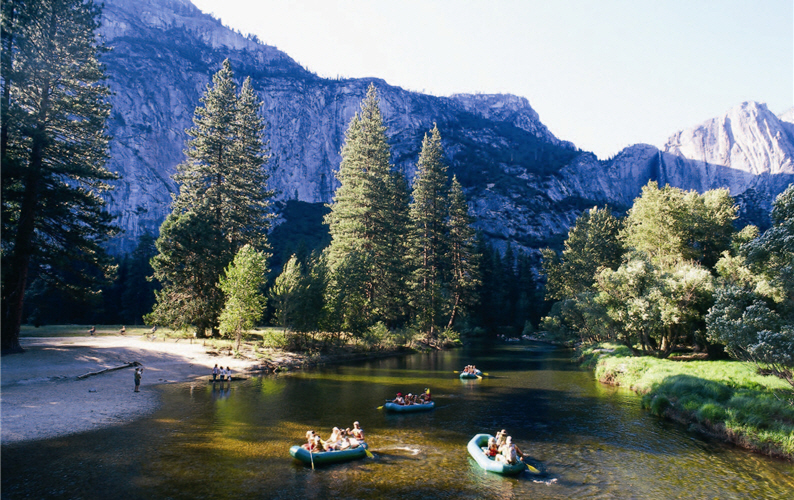
Privileged with the precious growth of giant sequoia, the Yosemite National Park in California, USA, was designated by President Lincoln the first state park of the States in 1864 and later became a national park in 1890. In addition to the giant sequoia trees, the most popular attractions in the park are the glaciation landforms, the massive individual granite rocks and great waterfalls.
The Yosemite National Park was once buffeted by floods, and some parts of its campsites and hotels were destroyed. The authority chooses to make the park recover naturally without any artificial reconstruction. Signs with the design of a cartoon bear are established by the trails to alert the visitors to stay on the trails instead of taking shortcuts and damaging the vulnerable ground. At the concourse of the visitor center, extemporaneous interpretations are offered by the park volunteers to advocate the Leave Not Trace movement and the significance of environmental education to the visitors.
- upper : The rainforest trails of the Tarman National Park are built with little artificial materials but fallen trees instead and constructed according to the natural terrain. / by Tourism Malaysia
- lower left : Waterway is the only access to the Tarman National Park and convenient for the park authority to control the number of visitors. / by Tourism Malaysia
- lower right : A spectacular view of granite topography can be enjoyed from the Olmsted Point of the Yosemite National Park. / by Ching-yao Chiu
Text—Ann-hua Chuang
Photographer—David Chang.Wen-sung Wang.Ching-yao Chiu
Photo provider—Tourism Malaysia.Tourism Australia
Visitors must take particular care with the food they bring with them into the park, for the bears tend to search for food in the tents, backpacks and clothing. The park authority cautions the visitors to carefully dispose of their food and garbage. One must never leave any food in the tent, and take the food or garbage out of the backpacks and pockets lest the smell of the food should attract the bears.
Tickets are required for visitors and vehicles to enter the park so that the numbers of tourists may be in control. To reduce the environmental pollution by the exhausts from the cars, visitors must park their cars outside, and take the connecting buses with an intensive schedule provided by the authority to enter the park area. It might be a little inconvenient for the tourists, but will help greatly to rebuild the natural resources of the park.
Etosha National Park
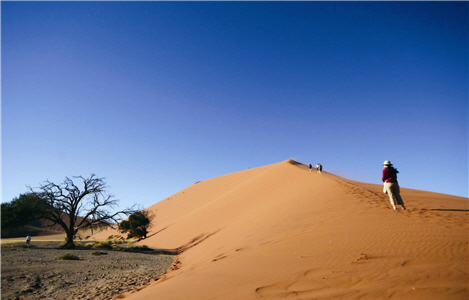
E stablished in 1907, the Etosha National Park in Namibia was once 100,000 km2 in size and the largest wildlife reserve in the world, but later reduced to 22,270 km2 due to the unstable political status. It is noted for its spectacular landscapes of Etosha Pan, rusty dunes, bushy grassland and prairie animals.
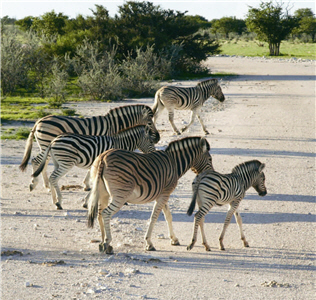
Similar to the other African national parks, the standard way to visit Etosha is taking a ride on a jeep. For the sake of tourists’ safety as well as preventing them from scaring the animals, the tourists must absolutely stay in the jeep, never walk around, and answer to the call of nature only on specific spots. The vegetation and soil in the park are very vulnerable to any impact. To avoid the lifted dust scaring the animals, all vehicles must not exceed the speed limit of 60 km per hour on the well paved gravel driveway and taking a shortcut is strictly forbidden.
- upper : John Muir, Father of the USA national parks, gave high praise of the ecological beauty of the Yosemite National Park. / by Ching-yao Chiu
- lower left : Zebras and other wild animals can be seen roaming around the Etosha National Park. / by David Chang
- lower right : Rusty dunes are notable features of the Etosha National Park. Shown in this picture is Dune 45 at Namib Desert. / by David Chang
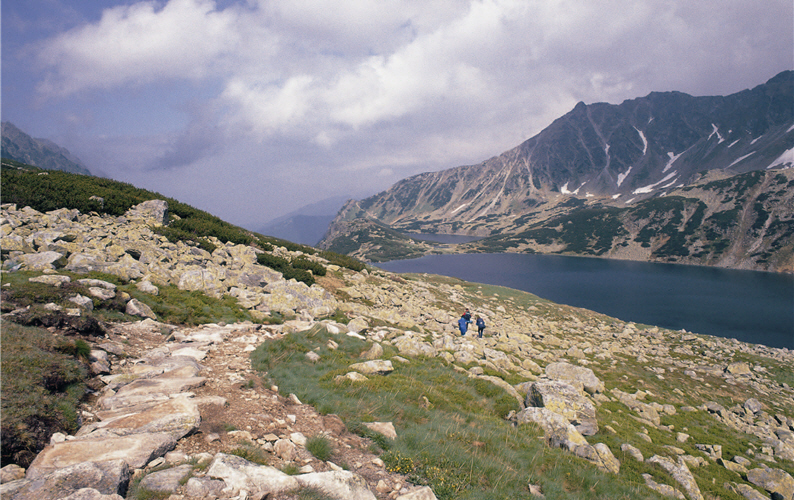
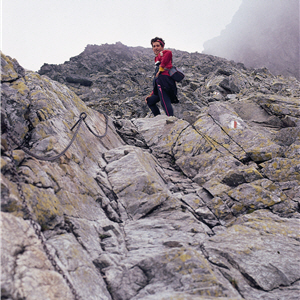
Numerous interwoven mountain-hiking paths crisscross with the routes from Poland and Slovakia to the Tatra National Park. To help tourists avoid losing their directions, the park authority establishes many short indicating posts with different colors for different paths. Hikers can plan their own direction of move and identify it with the representing color. Once into the mountain area of the Tatra National Park, they can follow the colored posts at the intersections en route to their destination. In addition to preventing the tourists from getting lost, this design can also protect them from entering undeveloped areas by guiding them to walk on solid paths.
Great Barrier Reef Marine Park
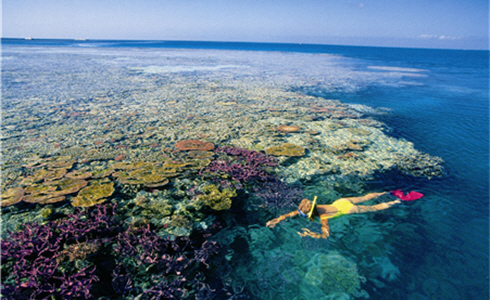
The Great Barrier Reef Marine Park off the coast of Queensland in east Australia is the world’s largest expanse of living coral reef system. As one of the selected World Heritage Sites by UNESCO, its reefs stretch for 2,300 km from offshore Queensland northward to the south of Papua New Guinea, covering a total area of 350,000 km2, i.e. approximately 10 times of the size of Taiwan. It is composed of roughly 2,900 individual coral reefs, among which are some most precious ones as thick as 500 m and originated over 2 to 18 million years ago.
- upper : Though not particular great in size, the Tatra National Park is privileged with high mountains, glacier cirques, lakes and a variety of landforms. / by Wen-sung Wang
- lower left : Red-and-black indicating posts on the rocks will guide the mountaineers in the Tatra National Park. / by Wen-sung Wang
- lower right : Touching the coral by hand in snorkeling or scuba diving is strictly forbidden by the Great Barrier Reef Marine Park authority. / by Tourism Australia


