Derict to middle content area:::

:::
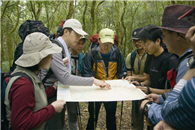
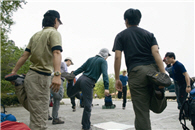


The Proper Way to Use a Hiking Pole
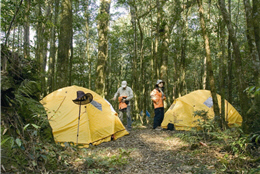
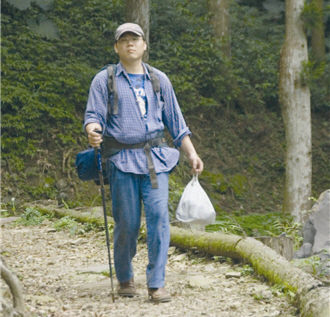
Slip your wrist into the strap and proceed to swing the pole with the same side leg to save yourself some effort. When going uphill, the pole should be planted behind the heel. When going downhill, the pole should be planted before the falling foot.
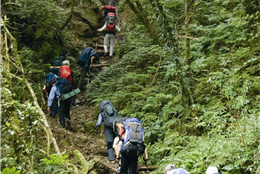
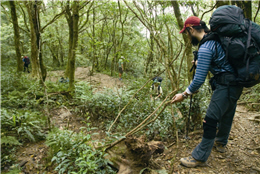
 Making a Cat Hole
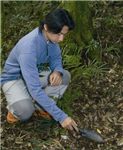
A cat hole is used to dispose of solid human waste. Unless you plan to pack out your waste, a cat hole is the least harmful way of disposing waste in nature. Cat holes should be dugged 70 meters (about 80 adult steps) away from water sources. If your party is large or if you plan to spend more than one night at the same campsite, try to disperse your cat holes and do not dig in the same location. Choose dark soil as the waste will decompose faster. Avoid urinating on leaves or grass to prevent unnecessary contamination.
Leave No Trace Master Course Seeking Harmony with Nature-
Human beings are intricably bound with Nature, and our actions have a profound effect on the workings of Nature. Through Leave No Trace techniques, we learn to enjoy oudiv>
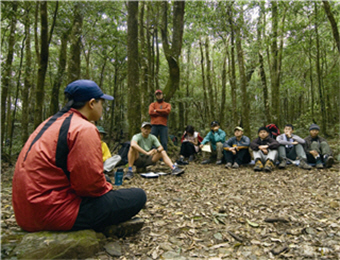
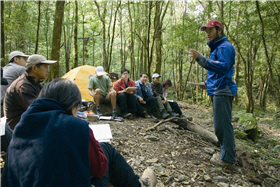
The Leave No Trace Master Course held at Dongyanshan National Forest Recreation Area is an in-depth training program aimed at training Leave No Trace educators who will be able to train others in LNT skills and facilitate workshops.
Under the guidance of two Leave No Trace Master Educators, participants started from Dongyanshan Forest Recreation Area in Taoyuan County, and travelled along the trails of Manyueyuan Forest Recreation Area, Beichatienshan, Lakashan, Heweishan, and Siaowulai. The seven principles of LNT include issues of planning, waste disposal, and camping methods etc. By adopting the concepts and ethics of Leave No Trace, we will be able to enjoy Nature with the least negative impact. Let's follow the course and learn more about Leave No Trace.
1 Plan Ahead and Prepare
a. Appropriate Gear
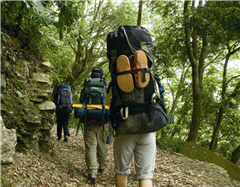
Consider the geological features of your goal and its management regulations. Choose appropriate gear for your trip, and remove excessive items. Dongyanshan is situated at mid to low altitudes, where the weather is unpredictable and the mountain areas are usually wet and foggy.
The Leave No Trace Master Course held at Dongyanshan National Forest Recreation Area is an in-depth training program aimed at training Leave No Trace educators who will be able to train others in LNT skills and facilitate workshops.
Under the guidance of two Leave No Trace Master Educators, participants started from Dongyanshan Forest Recreation Area in Taoyuan County, and travelled along the trails of Manyueyuan Forest Recreation Area, Beichatienshan, Lakashan, Heweishan, and Siaowulai. The seven principles of LNT include issues of planning, waste disposal, and camping methods etc. By adopting the concepts and ethics of Leave No Trace, we will be able to enjoy Nature with the least negative impact. Let's follow the course and learn more about Leave No Trace.
1 Plan Ahead and Prepare
a. Appropriate Gear
Consider the geological features of your goal and its management regulations. Choose appropriate gear for your trip, and remove excessive items. Dongyanshan is situated at mid to low altitudes, where the weather is unpredictable and the mountain areas are usually wet and foggy.
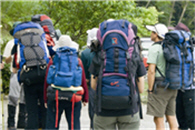
Participants should wear waterproof and slip-resistant hiking boots. During spring when temperatures tend to vary greatly from night to day, suitable hiking clothes, windbreakers and raincoats to keep yourself dry and warm are essential. An alpine sleeping bag and mattress are also important items.
b. Groups
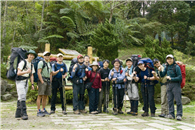
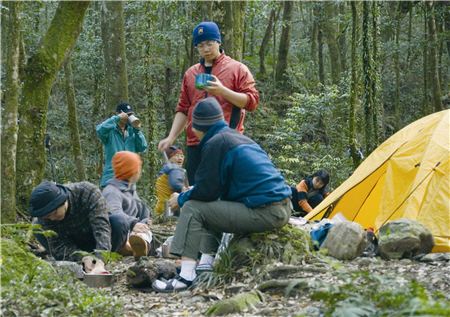
The 12 participants in the course are divided into 5 groups. This not only makes camping and food preparation easier, it also helps to plan adequate meals adequately to prevent leftovers. Package food in reusable containers to reduce trash.
c. Prior Discussions
Take a look at your maps and discuss route options. Participants are informed about their locality. During the hike, camping plans are made taking into consideration the weather, the number of visitors present, and the physical conditions of the participants.
d. Warming up
Take a few minutes to warm up with stretching exercises before you start your hike to better prevent injuries or muscle cramps.
b. Groups
The 12 participants in the course are divided into 5 groups. This not only makes camping and food preparation easier, it also helps to plan adequate meals adequately to prevent leftovers. Package food in reusable containers to reduce trash.
c. Prior Discussions
Take a look at your maps and discuss route options. Participants are informed about their locality. During the hike, camping plans are made taking into consideration the weather, the number of visitors present, and the physical conditions of the participants.
d. Warming up
Take a few minutes to warm up with stretching exercises before you start your hike to better prevent injuries or muscle cramps.
Hint
Internal framed hiking backpacks are recommended.
Internal framed hiking backpacks are recommended.
The Proper Way to Use a Hiking Pole
Slip your wrist into the strap and proceed to swing the pole with the same side leg to save yourself some effort. When going uphill, the pole should be planted behind the heel. When going downhill, the pole should be planted before the falling foot.
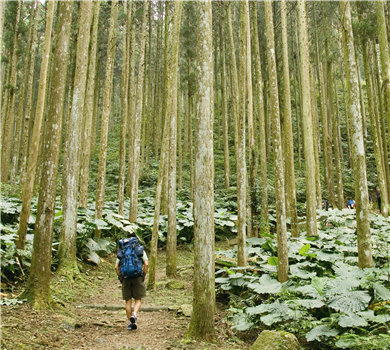
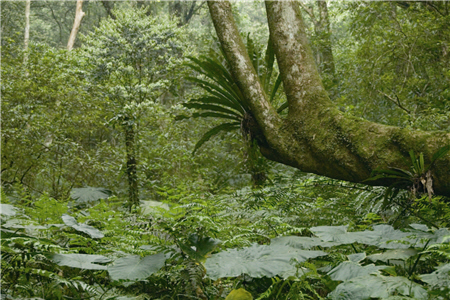
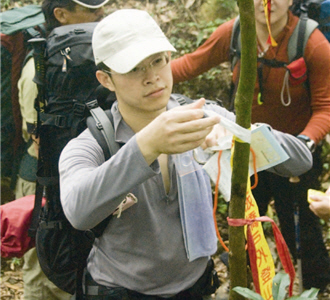
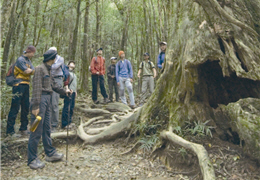
- upper left: Dongyanshan National Forest Recreation Area
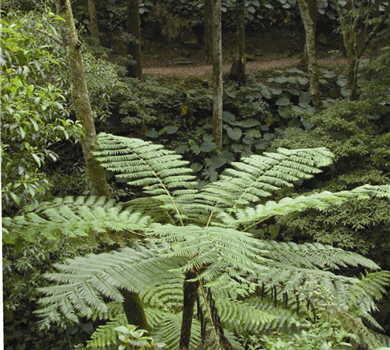
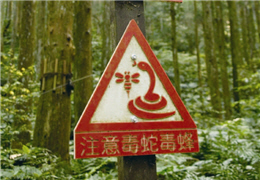
- upper right: Cyathea lepifera
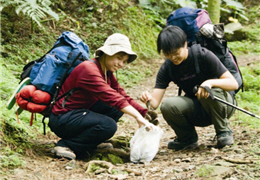
- Left to right(lower): Appropriate Gear.Groups.Prior Discussions.Warming up
Text / Michelle Wei
Photographer / Peter Wang
Resource / Yen-hui Shiu, Program Manager of Outward Bound Taiwan
Resource / Benjamin Rush, Department of Sport and Leisure Studies, National Dong Hwa University
Photographer / Peter Wang
Resource / Yen-hui Shiu, Program Manager of Outward Bound Taiwan
Resource / Benjamin Rush, Department of Sport and Leisure Studies, National Dong Hwa University
Travel and Camp on Durable Surfaces
a. Walk on the Trail
The footsteps of visitors impact the trails over the long term. Please stay on existing trails during your trip, and avoid short-cuts or creating new trails. Always choose the trail that has the least impact on Nature. Place rocks or gravel on the trail if it is muddy. Stay on the deignated trail and avoid walking on trail margins that result in parallel trails.
a. Walk on the Trail
The footsteps of visitors impact the trails over the long term. Please stay on existing trails during your trip, and avoid short-cuts or creating new trails. Always choose the trail that has the least impact on Nature. Place rocks or gravel on the trail if it is muddy. Stay on the deignated trail and avoid walking on trail margins that result in parallel trails.
b. Camp at Least 60 Meters away from Water Sources
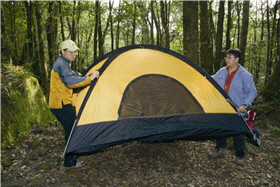
Areas around water sources tend to be fragile and take a long time to recover. Avoid grasslands when setting up camp; your campsite should be flat, reasonably cool, and a distance away from other visitors. To protect water resources and avoid keeping animals from their drinking sources, camp away from lakes or streams.
Areas around water sources tend to be fragile and take a long time to recover. Avoid grasslands when setting up camp; your campsite should be flat, reasonably cool, and a distance away from other visitors. To protect water resources and avoid keeping animals from their drinking sources, camp away from lakes or streams.
Hint
In face of 2 parallel trails, avoid the trail that is muddier and closer to the grass margin. Such a trail is more likely to suffer from impacts of footsteps. Block the trail with twigs and branches to direct other visitors to the other trail.
In face of 2 parallel trails, avoid the trail that is muddier and closer to the grass margin. Such a trail is more likely to suffer from impacts of footsteps. Block the trail with twigs and branches to direct other visitors to the other trail.
A cat hole is used to dispose of solid human waste. Unless you plan to pack out your waste, a cat hole is the least harmful way of disposing waste in nature. Cat holes should be dugged 70 meters (about 80 adult steps) away from water sources. If your party is large or if you plan to spend more than one night at the same campsite, try to disperse your cat holes and do not dig in the same location. Choose dark soil as the waste will decompose faster. Avoid urinating on leaves or grass to prevent unnecessary contamination.
- Select a few round pebbles.
- Use a trowel and dig a hole about 15 to 20 centimeters deep and 10 to 15 centimeters wide.
- After use, toss the pebbles into the hole and mix with the soil. Cover the cat hole with the dug-out soil.
- left & center: Walk on the Trail
- right: Camp at Least 60 Meters away from Water Sources
3 Minimize Campfire Impacts
a. Use Canned Fuels to Cook
However much we like real campfires, campfires do make lasting negative impacts on Nature. Try as much as possible to cook with stoves and canned fuels.
b. Select Firewood and Start a Campfire
If you must start a campfire the traditional way, dig a shallow pit first. Then use a pot lid as a base, or built a mound on a piece of cloth, and pick dead twigs as firewood. Beware not to pick large piece of downed wood. If the wood is not burned to ash and becomes carbonized, it will take 200 years to decompose.
c. Handle Campfire Ash
Put out the fire with water. Scatter the ash around the shallow pit, and cover with the dug-out soil to restore the appearance of the site.
a. Use Canned Fuels to Cook
However much we like real campfires, campfires do make lasting negative impacts on Nature. Try as much as possible to cook with stoves and canned fuels.
b. Select Firewood and Start a Campfire
If you must start a campfire the traditional way, dig a shallow pit first. Then use a pot lid as a base, or built a mound on a piece of cloth, and pick dead twigs as firewood. Beware not to pick large piece of downed wood. If the wood is not burned to ash and becomes carbonized, it will take 200 years to decompose.
c. Handle Campfire Ash
Put out the fire with water. Scatter the ash around the shallow pit, and cover with the dug-out soil to restore the appearance of the site.
4 Proper Waste Disposal
a. Minimize Leftovers and Dishwashing Occasions
Taking into consideration your appetite, decide on the amount to cook before you prepare your meal. Plan your cooking accordingly. For example, boil water for your tea first, and then cook your noodles using the same pot to minimize washing. Or you can stir-fry first, then use the same pan to make soup.
Wash your dishes 70 meters away from water sources. Strain your dishwater before scattering on sunlit paths to avoid contaminating the same area. Leftovers should be packed out in plastic bags. Avoid cooking greasy food as it will cause more contamination.
b. Pack out Your Garbage
Pack out all garbage, including paper napkins, food wrappers, fruit peel, cans etc.
a. Minimize Leftovers and Dishwashing Occasions
Taking into consideration your appetite, decide on the amount to cook before you prepare your meal. Plan your cooking accordingly. For example, boil water for your tea first, and then cook your noodles using the same pot to minimize washing. Or you can stir-fry first, then use the same pan to make soup.
Wash your dishes 70 meters away from water sources. Strain your dishwater before scattering on sunlit paths to avoid contaminating the same area. Leftovers should be packed out in plastic bags. Avoid cooking greasy food as it will cause more contamination.
b. Pack out Your Garbage
Pack out all garbage, including paper napkins, food wrappers, fruit peel, cans etc.
Hint
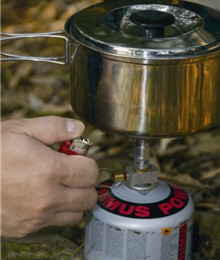
The safest way to cook is to set your pot or pan on a portable stove, and then light it with a lighter, holding it upside down to avoid burning your fingers. Adjust the flame to suit your purpose.
The safest way to cook is to set your pot or pan on a portable stove, and then light it with a lighter, holding it upside down to avoid burning your fingers. Adjust the flame to suit your purpose.
Hint
If the twigs do not catch fire easily, strip off the bark with a Swiss army knife. Remember to let the twigs burn into ashes completely.
If the twigs do not catch fire easily, strip off the bark with a Swiss army knife. Remember to let the twigs burn into ashes completely.
- upper left: Use Canned Fuels to Cook
- upper center: Handle Campfire Ash
- upper right: Select Firewood and Start a Campfire
- lower left: Minimize Leftovers and Dishwashing Occasions
- lower right: Pack out Your Garbage
5 Leave what You Find
a. Do not Touch Cultural or Historical Artifacts
Observe but do not touch cultural or historical artifacts. Touching these artifacts will alter them eventually.
b. Leave Natural Features Undisturbed
Respect the natural world and do not remove natural objects from their surroundings or collect them as souvenirs.
c. Avoid Spreading Non-Native Plants and Animals
Avoid disrupting the ecological balance of the natural world through the introduction of non-native species.
d. Do not Construct, Build or Burrow
Use maps or compasses at all times, and avoid using tags, stone markings, or tree-bark carvings as indicators. If you need to move a rock, always return it to its place to restore the surroundings.
a. Do not Touch Cultural or Historical Artifacts
Observe but do not touch cultural or historical artifacts. Touching these artifacts will alter them eventually.
b. Leave Natural Features Undisturbed
Respect the natural world and do not remove natural objects from their surroundings or collect them as souvenirs.
c. Avoid Spreading Non-Native Plants and Animals
Avoid disrupting the ecological balance of the natural world through the introduction of non-native species.
d. Do not Construct, Build or Burrow
Use maps or compasses at all times, and avoid using tags, stone markings, or tree-bark carvings as indicators. If you need to move a rock, always return it to its place to restore the surroundings.
6 Respect Wildlife
a. Observe Wildlife from a Distance
Keep in mind that we are visitors in the wild animals』 domains. Respect wildlife. During encounters keep your distance and do not follow or get close as animals may be affected.
b. Never Feed Animals
Feeding animals damages their health. Sometimes animals who are fed will associate humans with food and visit campsites to pilfer food. Never feed wildlife, and avoid compromising the welfare of both animals and humans.
c. Store Food and Trash Securely
The smell of food and trash will easily attract wildlife. Please store your food and trash securely to avoid animals from getting to them.
d. Control Your Pet
The best option is to leave your pet at home. If you have to bring your pet, make sure to control it at all times. Ensure your pet does not affect the other visitors or wildlife. To prevent the spreading of diseases, keep pets away from water sources, and clean up their feces.
e. Avoid Sensitive Times and Habitats
Before you strike out, consider the seasonal stresses that wildlife face. Avoid mating, nesting, and breeding seasons.
a. Observe Wildlife from a Distance
Keep in mind that we are visitors in the wild animals』 domains. Respect wildlife. During encounters keep your distance and do not follow or get close as animals may be affected.
b. Never Feed Animals
Feeding animals damages their health. Sometimes animals who are fed will associate humans with food and visit campsites to pilfer food. Never feed wildlife, and avoid compromising the welfare of both animals and humans.
c. Store Food and Trash Securely
The smell of food and trash will easily attract wildlife. Please store your food and trash securely to avoid animals from getting to them.
d. Control Your Pet
The best option is to leave your pet at home. If you have to bring your pet, make sure to control it at all times. Ensure your pet does not affect the other visitors or wildlife. To prevent the spreading of diseases, keep pets away from water sources, and clean up their feces.
e. Avoid Sensitive Times and Habitats
Before you strike out, consider the seasonal stresses that wildlife face. Avoid mating, nesting, and breeding seasons.
Hint
The right way to hike is to place the first step firmly on the ground before taking the next step. When hiking on steps, take care to place your whole foot on the steps to ensure your balance.
The right way to hike is to place the first step firmly on the ground before taking the next step. When hiking on steps, take care to place your whole foot on the steps to ensure your balance.
- upper left: Leave Natural Features Undisturbed
- upper right: Do not Construct, Build or Burrow
- lower left & lower center: Observe Wildlife from a Distance
- lower right: Store Food and Trash Securely
7 Be Considerate of Other Visitors
a. Respect Other Visitors
Everyone is entitled to high quality oudiv>
a. Respect Other Visitors
Everyone is entitled to high quality oudiv>
b. Yield to Others
It is common to meet someone from the other direction on a narrow trail. The hiker going uphill has the right of way.
c. Camp away from Trails
Select a campsite away from the main trail and keep an appropriate distance away from other campers. Consider your visual impact on other visitors.
It is common to meet someone from the other direction on a narrow trail. The hiker going uphill has the right of way.
c. Camp away from Trails
Select a campsite away from the main trail and keep an appropriate distance away from other campers. Consider your visual impact on other visitors.
Hint
Disposing of human waste at both low and high altitude areas are basically the same. The only thing to note is that cat holes in snow-covered areas should be dug into the soil. Safety and temperature conditions should be considered when selecting campsites. Always 「Camp Low, Climb High.」
Disposing of human waste at both low and high altitude areas are basically the same. The only thing to note is that cat holes in snow-covered areas should be dug into the soil. Safety and temperature conditions should be considered when selecting campsites. Always 「Camp Low, Climb High.」
Educator Introduction
- Educator Introduction
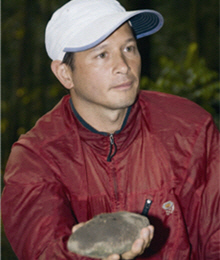
- Under the acknowledgement of Leave No Trace Organization, NOLS has authorized Outward Bound Taiwan in conducting the Leave No Trace Master Course. The instructors are experienced oudiv>
- Benjamin Rush
- Yen-hui Shiu
- Department of Sport and Leisure Studies, National Dong Hwa University
- NOLS instructor
- Program Manager of Outward Bound Taiwan
- NOLS instructor
- left: Respect Other Visitors
- center: Yield to Others
- right: Camp away from Trails


