
National Parks Embrace Leave No Trace Program-
At the end of 2006, dozens of mountain climbing clubs and organizations in Taiwan signed an agreement to uphold the principles of Leave No Trace. As a matter of fact, Leave No Trace is not new to the national parks, which have long since incorporated the concepts into their conservation policies. The parks are putting words into action, and delivering their conservation mission by a more systematic approach.
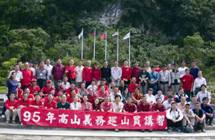
Earlier this year, a 5-day Leave No Trace Master Course was held in the mountain trails of Dasyuei Mountain. Hosted by the Forestry Bureau and Outward Bound Taiwan, the course was taken by mountain climbers and national parks staff.
One of the participants, Yi-hui Wu, who is from the tourism section of Shei-pa National Park, explained that the course was conducted to train LNT educators. During the course, participants were required to prepare a set of curriculum based on the seven principles of LNT. She believed that national parks would be better prepared to promote LNT concepts after the training.
Once back to her post, Yi-hui Wu began to plan for a workshop aimed at educating conservation and interpretation volunteers about LNT. The workshop was held this May. “Leave No Trace, a program from USA, states in seven implicit principles the issues that people who enjoy oudiv>
Shih-shao Nie from the Tourism Section of Taroko National Park is another participant of the course. He stated that the course gave very detailed and practical instructions about the proper ways of minimizing impacts on the wild. However, these principles are only effective when people are willing to heed them. He believed that his task at hand is to help visitors internalize the concepts of LNT.
Shih-shao Nie feels that visitors to the park will not be able to understand the full implication of LNT simply by learning about the seven principles. Organized events that help visitors to visualize the effects of LNT will reinforce the importance of its practice. Taroko National Park Headquarters will educate its 100 high mountain conservation volunteers and 400 interpretation volunteers about LNT during its annual volunteer training sessions held in May and July. The program will also be incorporated into annual events such as the Taroko Gorge Musical Festival and the International Marathon.
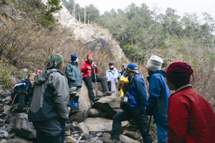
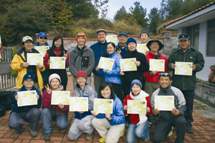
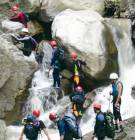
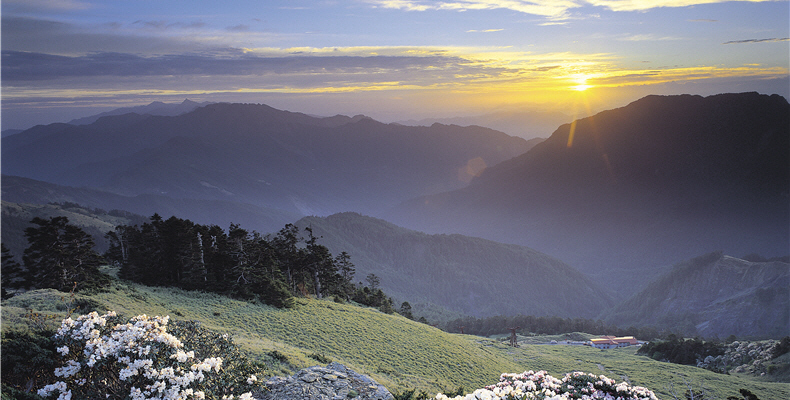
- upper: The sunrise of M. Hehuan East Peak in spring. / by Chin-yuen Tai, provided by TNP
- Left to right(lower):
- The process of Leave No Trace Master Course in Dasyue Mountain. / by Shih-shau Nie
- Participant finished the Leave No Trace Master Course in Dasyue Mountain, has authorized a license of NOLS. / by Yen-hui Shiu
- River hiking workshops conducted by SPNP show participants ways to enjoy river hiking with the least impact on the environment. / by Yi-hui Wu
- High mountain volunteers trained by TNP assist in high mountain facilities maintanence and trash removal. / by Shih-shau Nie
Text / Ann-hua Chuang
Photographer / Chin-yuen Tai.Mike Yang.Cheng-hao Yu.Dong-kun Liao.Amy Deng
Resource / Shih-shao Nie, Tourism Section of TNP.Wen-de Jhang, Park Ranger of TNP.He-rong Wu, Director of Tourism Section of YSNP.Hong-de Cyuan, Director of Tatajia Visitor Center of YSNP.Yi-hui Wu, Tourism Section of SPNP.Jian-siang Gao, Park Ranger of SPNP
Photo provider / Yen-hui Shiu, Program manager of Outward Bound Taiwan.Yi-hui Wu.He-rong Wu.Hong-de Cyuan.Shih-shao Nie.Pao-kuang Chen.Mao-yao Lin
When LNT was introduced to Taiwan last year, many thought it was a brand new concept. “Leave No Trace is not a new concept. What it did was taking the whole environmental education concepts into account, and designed a step-by-step maunal by which oudiv>
Although Yushan National Park Headquarters did not take part in the Master Course this time, it is fully aware of its concepts and applications. In recent years, Yushan National Park has been a leader in providing environmental education for high mountain hikers.
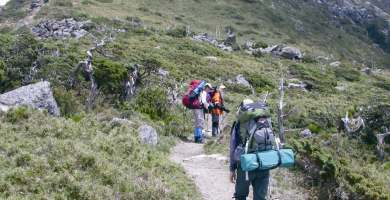
“Last year, together with Outward Bound Taiwan, we conducted the 2006 Yushan National Park High Mountain Ecology Workshop in which the ideas of Leave No Trace were introduced. Participants learned about similar techniques during their hike to Siangyang Mountain and Lake Jiaming.” Wu explained. Most of the participants were from non-profit mountaineering clubs in schools or school teachers. These are the people most concerned with protecting the environment and will help to spread the message.
He points out that commercial mountaineering guides are less motivated to promote LNT concepts and skills. Some of the guides have to carry heavy loads and therefore are simply too exhausted to impart proper LNT techniques. Some guides lead groups that are too large for sufficient supervision, resulting in improper behavior, like littering, amongst the visitors.
Yushan Natiomal Park is home to the most hiking trails in Taiwan. Mountain trails like the Mt. Jade Hiking Route, Mt. Jade Main Peak, Southern Cross-island Highway 3 Mountains, Guan Mountain Hiking Route, South Section 2 of Central Mountains Hiking Route, Batongguan, Walami etc. are trails not to be missed by mountain climbers. In the past, mountain climbers were ignorant of their impact and did not even handle trash properly. Many of them would dump unwanted stuff along the trails and leave redundant food supply in cabins.
The climbers used to joke that to reach the summit, all you had to do was follow the trash. “The joke was absolutely true. In the past, the Mt. Jade Main Peak Trail was littered with rubbish, bottles, tissue papers, peel etc. all the way up to the summit.” Wu explains that after the establishment of Yushan National Park in 1985, the littering problem has been reduced as the park sent rangers and volunteers to clear the trash on a permanent basis. Mountain climbers these days are also more aware of environmental protection issues. If you visit the trail now, the improvement is quite visible.
But the littering problem caused by the mountain climbers has not completely been eliminated. Shei-pa and Taroko, the other two high mountain national parks, face the same challenge. Places like the Cuei Pond in Syue Mountain, Taoshan Shelter, Nanhu Cirque, Yuleng Cabin, Heishuitang and Chenggong Cabin etc. have had their share of trash. “During the holidays the littering along Cilai and Nanhu trails is appalling. The park has to send rangers and volunteers to haul the trash down the mountains.” Nie says that most mountain climbers in Taiwan have yet to commit to the “Dispose of Waster Properly” principle of LNT.
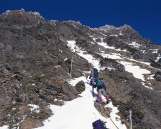
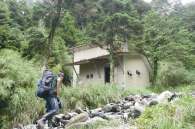
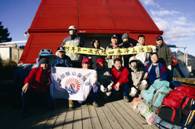
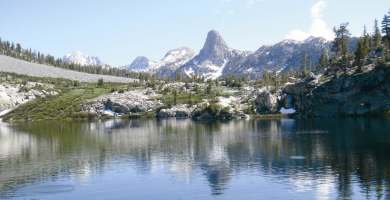
- upper left: Areas around lakes in USA tend to be broader, hence compliance with LNT camping requirements is easier. However, this requirement needs to take Taiwan’s topography into consideration to be feasible here. / by He-rong Wu
- upper right: YSNP conducted high mountain ecology workshops to encourage hikers to be more environmental and ecological conscious during their hiking activities. / by He-rong Wu
- Left to right(lower):
- National parks have limited park rangers and volunteers; hikers are encouraged to pack out their own trash. / by He-rong Wu
- The gravel trail that leads up to Mt. Jade Main Peak is crumbly; mountain climbers are advised to hike alongside the railings. / by Mike Yang
- The Chenggong Cabin in TNP Cilai Mountain provides shelter, a kitchen and washing facilities for mountain climbers. Hikers are advised to use the cabin with care. / by Shih-shau Nie
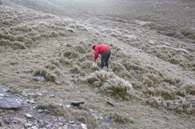
- Many conservation-conscious mountain climbers initiated campaigns to clean the mountains. / by Yi-hui Wu
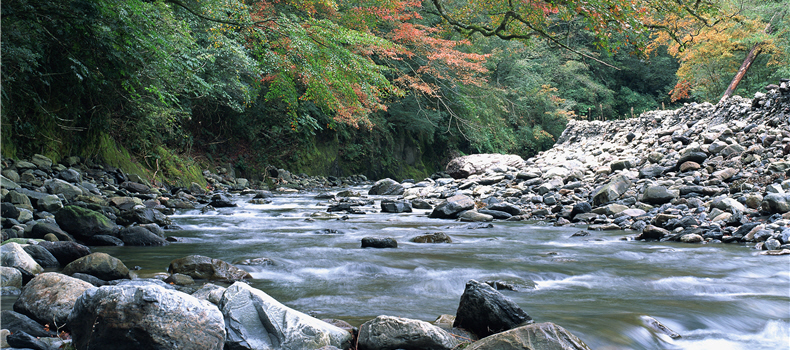
Improper Disposal of Fruit Peel and Leftover Food
Nature appreciates regard, but cannot abide ignorance.
“As a matter of fact, some mountain climbers do want to do protect the land they visit, they are just misinformed about the proper ways of handling trash and garbage.” Yi-hui Wu explains. Many people misunderstand that fruit peel, leftover food and tissue papers will naturally decompose in the moist forest grounds. But the fact is that the low temperatures in high mountain areas do not facilitate decomposition at all. The ground is paved with a thick layer of fallen leaves waiting their turns. These trash that climbers leave will still be there for a long time.
Wu points out that slow decomposition is not the only problem. Seeds from tossed away apple cores and oranges might sprout and grow into saplings in the wild, causing ecological impact. Leftover food usually contains salt, and leaving leftover food in one place over a long period of time will easily affect vegetation growth in that area.
Many mountain climbers plan their trip without proper measurement of food to bring, often resulting in excess food. They are tempted to leave the extra food behind on their return to lighten their loads. The food is usually left at cabins or beside the trails. Birds, rodents, and monkeys are attracted by the food. They start to hang around the cabins to steal food. Weasels have become so adept at stealing that they would even open backpacks to look for food.
Hong-de Cyuan, director of Tatajia Visitor Center in Yushan National Park remarks, “The worst thing that could happen is when monkeys and weasels die from indigestion of the plastic wrappings they has consumed.”
It seems that trash is not the only problem causing headaches in national parks. Some climbers like to start campfires at campsites and burn their trash with the fires. The national park law stipulates that the burning of wood or clearing areas by burning is strictly prohibited. Yi-hui Wu says that visitors are not allowed to start campfires with wood and dried grass. Cooking should be done with gas stoves.
The climbers who sidestep the regulation are unaware of the possible disasters. In 2001, a mountain climber started a fire to dispose of his lunch pack and unwittingly ingited a calamitous forest fire at East Peak of Syue Mountain.
“Besides promoting the proper way of handling fires along the trails, we have also eliminated traces of campfires, including ashes and burnt rocks, so that subsequent climbers will not be tempted to start their own.” Yi-hui Wu adds. Some climbers will think that campfires are allowed when they see traces of fires.
Wu mentions the example of Wuling Quadruple Mountains and Shenling Trail. The climbers there have formed a habit of burning their trash in front of the Taoshan Shelter. This situation was greatly improved when park rangers cleared away all signs of fires. Once visitors understand that they are not suppose to burn their trash, they will learn to pack out it.
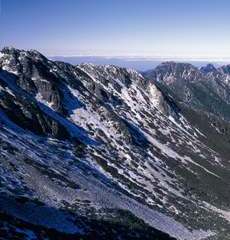
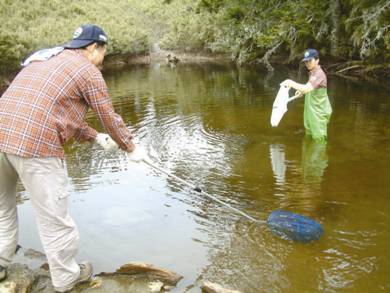
- upper: Cijiawan River, only home to the Formosan landlocked salmon, now is a plan of wildlife habitat. / by Cheng-hao Yu, provided by SPNP
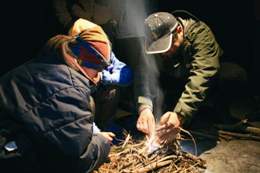
- lower left: In USA, campsites in national parks are allowed to use dry twigs to start campfires. However, in Taiwan’s national parks suggests stoves only in campsites. / by Yen-hui Shiu
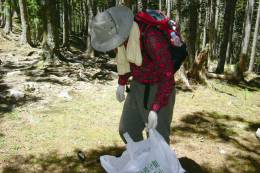
- lower center: Shei-pa volunteers pack out trash in trash bags with conservation slogans printed on them. / by Yi-hui Wu
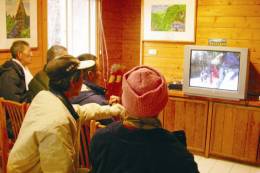
- lower right: Hikers attempting to climb Syue Mountain must watch a video on safety regulations before they start their endeavor. / by Yi-hui Wu
Giving out Trash Bags to Encourage Packing out
The “Pack it in, pack it out” maxim is an essential LNT principle. The national park laws prohibit the disposing of fruit peel, trash and garbage in national parks. Hong-de Cyua remembers that national park authorities used to line the trails with trash bins for hikers to dispose their trash, and then sent park rangers to carry the trash down the mountains. But due to the inaccessibility of trails and limited manpower, the national parks now encourage mountain climbers to pack out their own trash.
Hong-de Cyuan says that in the earlier times, Yushan National Parks Headquarters place trash bins along the trails. But the bears learned to tip the bins over to scavenge for food. The bins were removed in 1995. Now the park gives out trash bags to remind hikers to pack out their trash.
Shei-pa National Park provides trash bags in the cabins for park rangers and volunteers to use when they are tidying up the cabins. The trash bags has slogans printed on them, and so mountain climbers are reminded of their responsibility when they spot a park ranger carrying trash on the way down.
The Trailhead Service station of Syue Mountain is the starting point of the Syue Mountain trail. All visitors have to apply for hiking permits at the station before they strike out on the trail. Shei-pa National Park Headquarters shows a 10-minute video to applying visitors, relating proper hiking techniques and conservation information. Yi-hui Wu says, “The video is compulsory for all mountain climbers. The staff at the station will remind them to pack out their trash, and recycling bins are available here at the station.”
Besides trash question, mountain climbers to pack out human waste is a big challenge to national parks. In recent years, the national parks in order to solve the question, also concentrate many mental efforts and the equipment.
In recent years, some national parks around the world have begun to encourage mountain climbers to pack out human waste. He-rong Wu says that such an extreme measure would not be feasible with Taiwanese. In view of this, the national parks have embarked on a series of eco-latrine constructions.
According to LNT practices, human waste should be buried in cat holes dug 70 meters away from water sources. “Not all practices of LNT are directly applicable to Taiwan.” He-rong Wu points out. “Cat holes are impractical up in Taiwan’s mountains.” The water sources in high mountain areas tend to be lakes formed by rainwater, and creeks deep down in valleys. The rugged terrain could mean that no suitable place for a cat hole can be found even after trekking around the mountain ridge for a whole day. You would probably run into a cliff wall every 20 or 30 meters away from your campsite. It would be impossible to find a suitable place to dispose of your human waste.
Moreover, Taiwan’s mountain terrains are often covered in gravel or bamboo bushes. It would be difficult digging cat holes on these surfaces. The trails are all above treeline and features low temperatures, which would present difficulties in decomposing the waste. The varying topography in high mountains would also mean that campsites are too rare to provide opportunities for campers to spread out with their cat holes. The national parks have therefore constructed eco-latrines to counteract the problem.
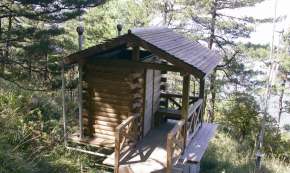
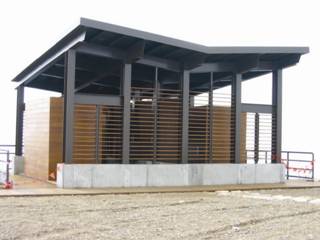
- upper left: Syueshan Glacial Cirques is mostly covered in gravel with very little soil, and human waste are unlikely to decompose if they are disposed of there. / by Dong-kun Liao
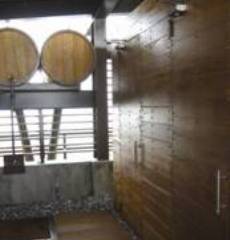
- upper center: The eco-latrine on Mt. Hehuan sports a clean look, and helps to minimize impacts and conserve energy. / by Pao-kuang Chen
- upper right: The inside of eco-latrine on Mt. Hehuan. / by Pao-kuang Chen
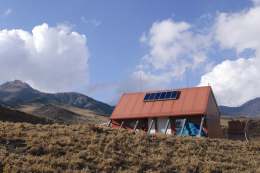
- lower left: National parks will usually select safe and low environmentally-impacted areas to built cabins for hikers. The picture shows the cabin in DashueiKu of YSNP. / by Amy Deng
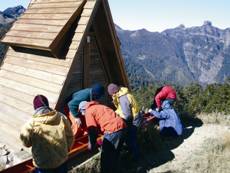
- lower center: Building materials for eco-latrines in national parks have to be tranpsorted manually or by helicopters to the sites. The picture shows the eco-latrine of Taoshan Cabin built by SPNP. / by Yi-hui Wu
- lower right: The picture shows an eco-latrine along the trail of Mt. Jade Main Peak. Disposing of leftovers in eco-latrines will shorten the lifespan of the latrines. / by He-rong Wu
Eco-Latrines Minimize Impact on Environment
In the past, when national park authorities took over the management of some cabins previously run by the Forestry Bureau, the cabins were equiped with simple toilets. The crude toilets were filthy during holidays or when there were water shortages. Many mountain climbers would rather pick a place outside the cabins, causing degradation of the cabins’ surroundings.
Due to the low temperatures in the high mountains, the waste collected in the toilets took a very long time to decompose. Even when buried, feces would still remain feces. The national parks decide to upgrade the toilets in the parks.
The first eco-latrines were built with much difficulty. All construction material had to be hauled up the mountains manually. Before the latrines were built, park rangers and volunteers regularly added bacteria and wood chips to the waste tanks to speed up the decomposition process.
“Decomposing is hard at low temperatures. Some climbers make it worse by pouring leftover food into the toilet. If you have several hundred visitors in a day, the toilets would not be able to handle that kind of stress.” Yi-hui Wu says.
To effectively solve the problem, Shei-pa National Park Headquarters replaced the toilets in 369 cabin with a dry ecological latrine where urine and fecal matter are separated. The fecal matter is mixed with wood chips to faciliate composting. The compost is dry. With proper maintenance the latrines can greatly minimize impacts on the high mountain areas.
Taroko National Park Headquarters built its dry eco-latrine in Mt. Hehuan last year and effectively solved the problem of human waste disposal. As the area often encounters water shortages, the eco-latrine is built with a V-shaped roof to collect rainwater to use for cleaning the toilet.
The temperature at the main peak of Mt. Hehuan is lower than 15 Celsius degrees. The bacteria have to be in warmer conditions to facilitate composting. The latrine utilizes solar energy and micro-chip management to keep the bacteria at a suitable temperature. The fecal matter is also regularly stirred to help decomposition. The humus in the chamber can be removed after 4 or 6 months and used as fertilizers.
Yushan National Park Headquarters established two dry eco-latrines in 2003 at the Menglu Pavilion and the White Wood Forest, and successfully eliminated the problems of smell and tissue papers. The two latrines were designed by Ming-siou Wu, an architect well-known for his prososal of latrine revolution in Taiwan. Supported by solar and wind energy, the latrines also collect rainwater and use bacteria to decompose the fecal matter, reducing human efforts.
Wu fully capitalizes on the DIY aspect when designing the latrines. He places the decomposing chamber underneath the toilet, mixing the fecal matter with bacteria and wood chips. To speed up the process, he adds a fan outside the latrine, which also eliminates odor and speeds up the blender in the chamber. The user has to turn the wheel to mix fecal matter with the wood chips after using the toilet. The stainless steel toilet can be removed and washed to maintain a clean environment. A small plaza complete with a pavilion is situated outside the latrine for the convenience of users.

Dry Eco-Latrine
A dry eco-latrine separates urine from fecal matter and does not require water to function. Urine is first separated from fecal matter, and the matter is mixed with wood chips. The wood chips contain bacteria that start the decomposing process. The result is a less smelly and effective way of waste disposal.
Resource: The project of 2004 Eco-dry Toilet Application and Environmental Monitoring in Yushan Mountain Peak Trail
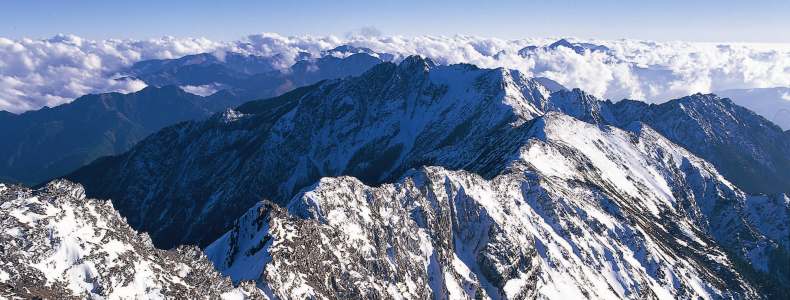
- image: Mt. Jade Main Peak is an international hiking attraction. Under the long-term maintanence of YSNP Headquarters, the trail has managed to retain its original beauty. / by Mike Yang
Leave No Trace Adapts to Taiwan
Taiwan has long incorporated Leave No Trace principles “Leave what you find” and “Respect wildlife” in the national park laws.
To Shih-shao Nie’s understanding, LNT principles cover not only the mountain areas, but any area that supports oudiv>
The principle “Travel and camp on durable surfaces” is applicable to all wilderness. The national parks have established a comprehensive set of trails and spots to offer recreation opportunities to visitors. The high mountain parks Yushan, Shei-pa and Taroko, the ocean park Kenting, the cityscape of Yangmingshan, the historical park Kinmen, are striving to strike a balance between eco-tourism and conservation.
Hui-yi Wu brings up the fact that some climbers feel that zig-zagging up the trails are a waste of time and energy, and choose instead to create new trails. This is dangerous to the climbers. The trails set by the park authorities have taken safety into consideration. The regions by the trails are usually sloped, and will result in landslides if too much pressure were applied. Moreover, the vegetation by the side of the trails will suffer from the needless trampling.
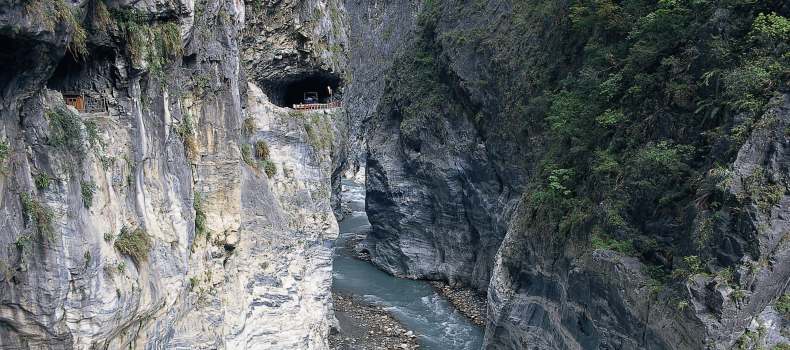
- image: The picture shows the Taroko Gorge. A magnificent view of nature can be captured with a simple click of a camera, leaving no trace at all. / by Mike Yang
Treat Nature Right
If a sustainable environment is a top priority, then Taiwan should understand that humans are the subjects that need to be properly regulated.
The introduction to LNT is as follows: “Before someone decides to practice LNT in the wild, he should first experience the personal bond with nature, in order to discover his reason for caring for nature. Enjoying nature can take many forms; you may like to enjoy beautiful natural scenery, or to observe flora and fauna, or to learn facts about the natural world, or to feel that you are part of nature, or to participate in oudiv>
Hong-de Cyuan, who has assisted in many rescue missions, states, “We hope all mountain climbers will come well prepared for unexpected bad weather, and be properly equiped, so as to enjoy nature fully.”
“Some people simply do not understand the forces of nature, ” Hong-de Cyuan laments. The forests and mountains may seem gentle and quiet, yet they harbor great forces that humans cannot contend against.
How does one enjoy nature without inflicting impacts? According to Yi-hui Wu, “When a mountain generously shares its beauty with us, we should receive the gift humbly. Every mountain climber should attempt a mountain with care, and this will ensure better climbing experience and environment.” LNT certainly provides practical skills that we can follow. The national parks will be providing more detailed regulations in the future. Mountain climbers who abide by these principles will enjoy safety and minimize impact at the same time.
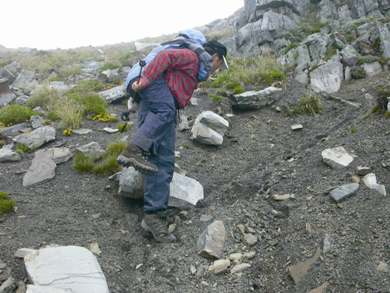
- left: Conditions in the high mountains can be very unpredictable. A mountain climber must first understand the surroundings and be fully prepared, and must not conduct reckless attempts. The picture shows an emergency rescue operation in SPNP Headquarters. / by Yi-hui Wu
- right: The volunteers of Shei-pa National Park Headquarters clear the Sinda Pond and research the water quality. / by Yi-hui Wu


