
Leave No Trace A Global Trend in Outdoor Ethics-
Formosa, the land of spectacular beauty. Yet it should do more than admire her many charms; resources must be protected, and the environment conserved, to ensure a sustainable future. Lately Taiwan has begun to promote the concepts of oudiv>
The Executive Yuan started establishing the National Trail System to subsume “National Development Plan” in 2002, laying down groundwork for regulations, management systems, promoting awareness, and conducting forest inventory etc. One of the major objectives of the system was to develop minimizing the degrading impacts of ecotourism. After reviewing the Nature protection policies of various countries, the authority decided to adopt the Leave No Trace program advocated by the United States of America.
Leave No Trace (LNT) is aimed at educating those who enjoy oudiv>
The Origin of Leave No Trace
LNT is not a brand new concept. Originating from USA, it was initiated in the 1980s. Oudiv>
Land managers faced with the dual challenge of providing high quality oudiv>
The Development of Leave No Trace
During the mid-1970s, the U.S. Forest Service developed an educational program aimed at major wilderness accesses. Visitors were advised of low impact concepts and techniques by individual counselors. In the early 1980s, the oudiv>
In 1990, the U.S. Forest Service partnered with the non-profit National Oudiv>
The successful collaboration between U.S. Forest Service and NOLS set the foundation for further partnerships with the Oudiv>
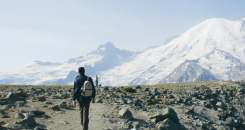
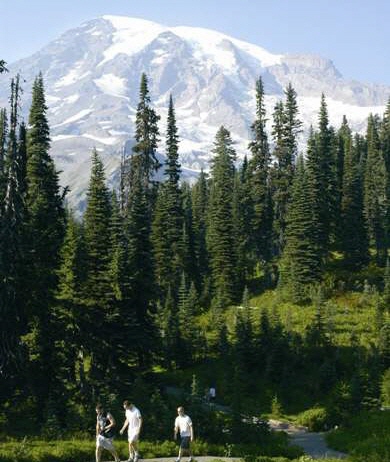
- upper left: Establishing visitor trails in national parks ensure a balance between recreation and conservation. / by Yu-ren Guo
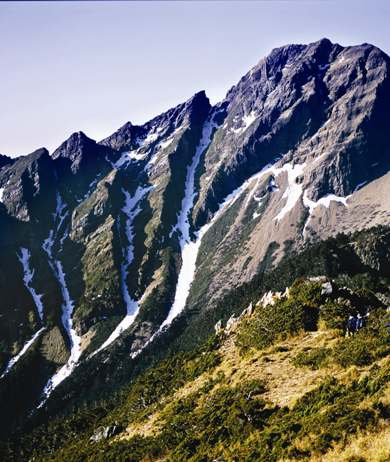
- upper right: The trail from Mt. Jade North Peak to Mt. Jade Main Peak. / by Yu-lin Wu, provided by YSNP
- Left to right(lower):
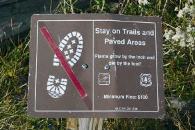
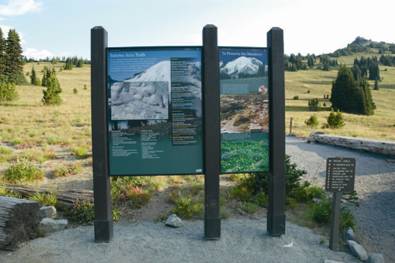
- Mount Rainier National Park put up signs to advise visitors not to trample on grass. / by Yu-ren Guo
- The rock climbing facility in NOLS provides training in oudiv>
- NOLS provides training in mountain climbing and camping techniques. / by Yu-ren Guo
- Before you step foot into Mount Rainier National Park, the guide will remind you of conservation principles, including advice to travel light and pack simple food. / by Yu-ren Guo
Text / Wan-ju Chiang
Photographer / Peter Wang · Yu-lin Wu · Mike Yang · Dong-kun Liao
Resource & Photo provider / Yu-ren Guo, Lecturer of Department of Landscape Architecture, Chinese Culture University
The Principles of Leave No Trace
LNT provides basic training courses that emphasize on oudiv>
LNT aims to promote and inspire responsible oudiv>
The Success Model
To strike a balance between providing recreation opportunities and protecting the natural lands, the national management agency should establish relevant support in specific regions after developing the concepts, principles and training programs. Yu-ren Guo, a lecturer at the Department of Landscape Architecture of Chinese Culture University, heads the Taiwan National Trail Enhancement Program which also promotes LNT in the island. He notices that LNT programs are usually supplemented by relevant regulations in many countries. Managing agencies establish public facilities to provide information to visitors before they enter the area.
The public establishments must be in line with the principles they promote. Car park grounds and washroom locations etc should be put into consideration. Interpretation signs are also important portals of LNT promotion through which visitors learn about appropriate behavior and relevant regulations. Interpretation sign contents should focus on the geographical, flora and fauna, and cultural heritage features of the place. The presentations of the information should be interesting enough to capture visitor attention so as to successfully relate the value of ecological resources and influence visitors' attitude.
Other than governmental management agencies, other organizations strive to advance the concepts and practice of Leave No Trace as well. Car manufacturer Subaru, concerned with the impact that four-wheel drives are causing the environment, prints Leave No Trace Principles stickers (both adults and children versions) to remind drivers of responsible oudiv>
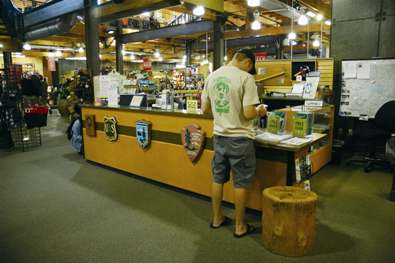
REI, the largest oudiv>
Recently, Leave No Trace has become a global trend. Land management agencies in countries like England and Canada are adopting LNT programs. If you visit the Great Barrier Reef in Australia, you will be advised about LNT techniques while you are on the cruise boat enroute to the reef. You will be reminded not to touch the coral reefs while you dive, not to feed the fish, not to use shampoo and bath products etc. At your destination, ubiquitous signs in different languages serve as constant reminders of appropriate behavior. Local interpreters do their part in transmitting concepts of conservation as well.
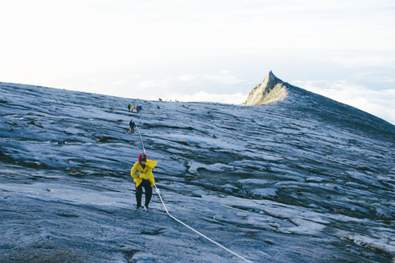
Mountain climbing activities in European countries, India, Nepal and Pakistan etc. are also strictly regulated to minimize impacts. Yu-ren Guo cites Mount Kinabalu, the highest peak in Southeast Asia, as in example. To climb the 4,095 meters mountain, mountain climbers must acquire a permit prior to their attempts. A local guide is allocated to every 8 persons, and every single climber has to wear a tag that lists the name and register number. The tag helps the guide to identify his wards, and also keeps a tab on the number of visitors going through to ensure maximum capacity levels are observed.
- upper left: Interpretation signs are placed around the park, introducing visitors to the local natural environment. / by Yu-ren Guo
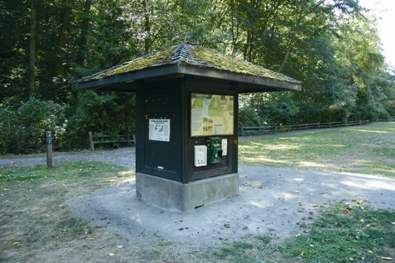
- upper right: Carkeek Park in Seattle, provide “degradable pick-up mitt” for people deal with pet waste. / by Yu-ren Guo
- lower left: REI has an LNT information counter in its store. / by Yu-ren Guo
- lower right: Mount Kinabalu is the highest peak in Southeast Asia, one has to abide by the strict regulations of the management. / by Yu-ren Guo
Leave No Trace in Taiwan
Yu-ren Guo emphasizes that fact that developing countries are not far behind in their pursuit for natural resource conservation. Stringent regulations are applied to ensure a win-win situation in the struggle between tourism growth and environment protection. A mountain lover, Guo thinks that Taiwan is an invaluable oudiv>
Leave No Trace program matches in principle and practice the ecotourism program that the National Parks of Taiwan has been advocating for years. The ecotourism program covers five areas: environmental education, interpretation, sustainable development, environmental awareness, and responsible operation. The objectives of the program are in line with that of LNT, differing only on the details of practices.
Taiwan’s LNT program can start with the issuance of a mountain climbing passport to elementary and junior high school students. This will mean that every young person in the country will have firsthand experience of climbing a local mountain and learning the skills of LNT. They will be trained to pack out their trash, bring properly packaged food, select appropriate campsites away from water sources, and proper campfire usage. Hopefully this basic training will educate our younger generation on the principles of low impact recreation.
The National Trail Enhancement Program in Taiwan strives to “Create Positive Oudiv>
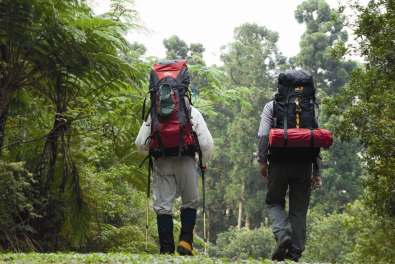
“Travel light with simple food, proceed slowly and quietly,” advocates Yu-ren Guo. A responsible visitor should understand that bringing loads of food to have a feast up on the mountains is not an appropriate enjoyment. Sustaining on simple foods and feasting your eyes on the natural beauty is what that counts.
It is also advisable to travel with minimum gear to minimize impact on the land. Avoid competing with fellow visitors to reach your destination. Focusing on getting ahead and taking shortcuts will only bring adverse effects to your health and cause damage to the trails. Enjoy your travel in quiet and solitude, and be refreshed by nature.


Yu-ren Guo
M.S., Ohio State University, currently teaching at the Department of Landscape Design of Chinese Culture University. He is also the executive director of the activity division of National Park Association in Taiwan, and a board member of Sustainability Development Association.
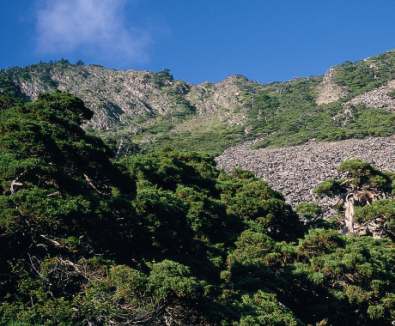
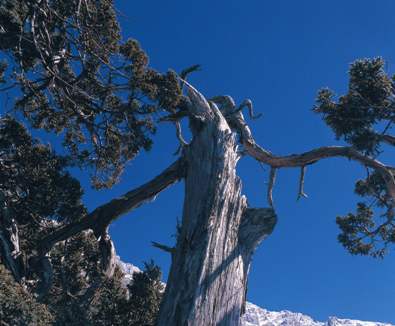
- upper left: kawakamii are coniferous trees distributed at the highest elevation in Taiwan. They upward growth is replaced by communities of Juniperus squamata and Yushan rhododendrens. These evergreen tree are known as krummholz. / by Dong-kun Liao
- upper right: Yushan stands at 3,952 meters. Its main peak drops off 300 meters to the Lakulaku River, and harbors a myriad of life forms. This photo is Juniperus squamata. / by Mike Yang
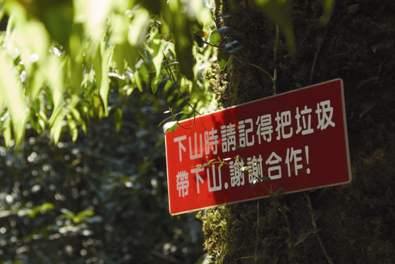
- lower left: The hikers are encouraged to pack out their own trash to observe the principle of conservation. / by Peter Wang
- lower right: To ensure sustainability for nature, please adopt low impact practices during camping and recreation activities. / by Peter Wang


