Derict to middle content area:::

:::
Aborigines Wisdom in Harmony with Nature-
The aborigines peoples live by the forests, mountains and seas.
They live in harmony with Nature, accompanied by the seas, the rivers, the heaven and earth, and each other.
“In the olden times, aborigines tribes depended on natural resources to subsist,” Shei-pa park ranger Jian-siang Gao explains. Over a long period of time, the aborigines peoples developed a philosophy that ensured harmony with Nature, and sustainability in the long run. It would not be far-fetched to say that the aborigines are the pioneers in Leave No Trace principles.
They live in harmony with Nature, accompanied by the seas, the rivers, the heaven and earth, and each other.
“In the olden times, aborigines tribes depended on natural resources to subsist,” Shei-pa park ranger Jian-siang Gao explains. Over a long period of time, the aborigines peoples developed a philosophy that ensured harmony with Nature, and sustainability in the long run. It would not be far-fetched to say that the aborigines are the pioneers in Leave No Trace principles.
Hunting in the deep forests is an essential part of aborigines culture. In Taiwan, every single tribe has its own hunting grounds which is off-limit to other tribes. Trespassing into other tribal territories to hunt, steal or set traps often result in wars.
The resources of a hunting ground are protected by the tribe. Sustainability is ensured as hunting is regulated. In order to protect the basic number of wild animals in the hunting grounds to sustain the tribe, every tribe strictly forbids hunting during breeding season.
The resources of a hunting ground are protected by the tribe. Sustainability is ensured as hunting is regulated. In order to protect the basic number of wild animals in the hunting grounds to sustain the tribe, every tribe strictly forbids hunting during breeding season.
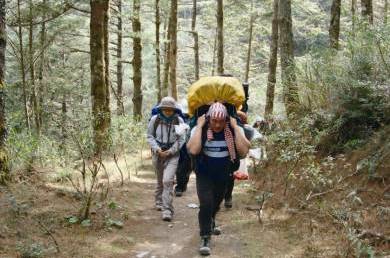
- left: The Aborigines occupies mountain guide to relay the importance message of conservation to fellow hikers. / by Sabrina Huang
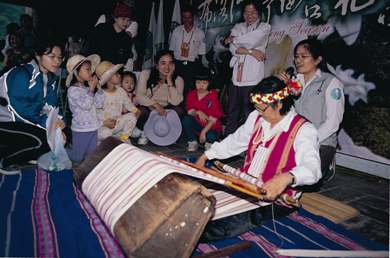
- right: Taroko tribe makes use of traditional life wisdom, take to use Boehmeria nivea fiber to regard as the line of weaving, emerge an aborigine to rely on a natural resource, but also cherish a resource in the meantime. / by Mao-yao Lin
Be Sensitive to Breeding Season
Jian-siang Gao, an Atayal tribe from the Lishan , further explains, “In traditional Atayal hunting culture, tribesmen are prohibited to hunt during the breeding season in spring and summer. During this time, tribesmen are expected to concentrate on farming. The chief and elders of the tribe will conduct a ceremony to announce the commencement of the hunting season after harvest to hunt for meat for winter.”
Taroko park ranger Wen-de Jhang is a Taroko tribe from Hualien’s Tongli Village. He remembers the respectful manners that the elders in his tribe treats the mountains and forests. “According to them, the Taroko people only hunt the males of the pheasant, sambar deer, serow, and wild boar. Females, entrusted with the responsibility of producing progeny, were not to be hunted.” Killing more than you need was also taboo. Food should just be enough to feed all, any excessive hunting was condemned by the chief and elders.
Jian-siang Gao, an Atayal tribe from the Lishan , further explains, “In traditional Atayal hunting culture, tribesmen are prohibited to hunt during the breeding season in spring and summer. During this time, tribesmen are expected to concentrate on farming. The chief and elders of the tribe will conduct a ceremony to announce the commencement of the hunting season after harvest to hunt for meat for winter.”
Taroko park ranger Wen-de Jhang is a Taroko tribe from Hualien’s Tongli Village. He remembers the respectful manners that the elders in his tribe treats the mountains and forests. “According to them, the Taroko people only hunt the males of the pheasant, sambar deer, serow, and wild boar. Females, entrusted with the responsibility of producing progeny, were not to be hunted.” Killing more than you need was also taboo. Food should just be enough to feed all, any excessive hunting was condemned by the chief and elders.
The aborigines peoples’ greatest fear is that animals will flee when they see, smell or hear a human being. “Which is why we leave no trace!” says Jian-siang Gao. Hunters avoid travelling on animal paths, lighting fires or talkings when hunting.
The aborigines hunter’s camping methods conform with Leave No Trace philosophy as well. Tatajia visitor center director Hong-de Cyuan, a Bunun himself, explains that the Bununs are exceptional at utilizing the natural environment. A hunter would spend the night in a natural cave instead of setting up camp.
The aborigines hunter’s camping methods conform with Leave No Trace philosophy as well. Tatajia visitor center director Hong-de Cyuan, a Bunun himself, explains that the Bununs are exceptional at utilizing the natural environment. A hunter would spend the night in a natural cave instead of setting up camp.
Pack Simply and Leave No Trace
Jian-siang Gao mentioned that the experienced aborigines traveller can spend many days in the wild with just some cooked sweet potatoes, rice grains, salt and a hunting knife. Aborigines people are also very cautious about the use of fire. During the day, the aborigines hunter subsists on the cooked sweet potatoes and does not light any fire to cook. At night when the temperature dips, a fire is started using dead wood. The hunter removes grass from the surroundings of the fire to avoid forest fires.
“Wary about polluting the water sources, the elders would always remind tribe members to defecate far away from the water sources.” Jian-siang Gao says laughingly. They use twigs to clean up themselves. Tissue papers contain phosphorus which is harmful to the land. Gao uses twigs himself when he is in the mountains.
Jian-siang Gao mentioned that the experienced aborigines traveller can spend many days in the wild with just some cooked sweet potatoes, rice grains, salt and a hunting knife. Aborigines people are also very cautious about the use of fire. During the day, the aborigines hunter subsists on the cooked sweet potatoes and does not light any fire to cook. At night when the temperature dips, a fire is started using dead wood. The hunter removes grass from the surroundings of the fire to avoid forest fires.
“Wary about polluting the water sources, the elders would always remind tribe members to defecate far away from the water sources.” Jian-siang Gao says laughingly. They use twigs to clean up themselves. Tissue papers contain phosphorus which is harmful to the land. Gao uses twigs himself when he is in the mountains.
Wen-de Jhang offers his view on waste disposal, “There are dung beetles in the mid to low altitude forests that will seek out animal droppings. Aborigines hunters in the past knew exactly where to defecate.” In the past when there were few visitors venturing into the wild, nature could easily decompose human waste like animal waste. But now, the multitude of visitors flocking to the wilderness have brought upon unprecedented pressure on the land.
Enter the forest, and the breathings of ancient beings surround you, providing reliable comfort. Treat Nature with respect, and learn to live in harmony with nature – this is what we have to learn from the philosophy of the aborigines peoples.
Enter the forest, and the breathings of ancient beings surround you, providing reliable comfort. Treat Nature with respect, and learn to live in harmony with nature – this is what we have to learn from the philosophy of the aborigines peoples.
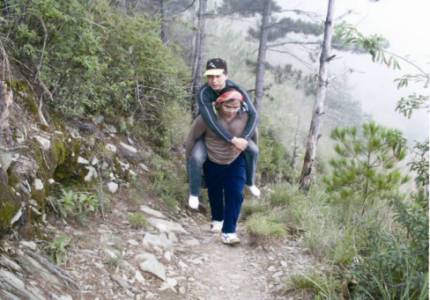
- left: The indigenous people are very familiar with the natural surroundings. The national parks rely on their knowledge to assist in park ranging and rescue efforts. / by Hong-de Cyuan
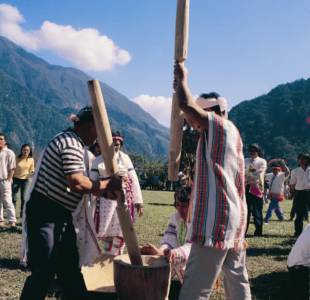
- right: Taroko tribe makes millet with pounder which obtain materials from Nature. The way match the concept of environmental protection. / by Mao-yao Lin


