
Mountains as Curtains Sky as Tent-Sibao Elementary School--the school closest to nature
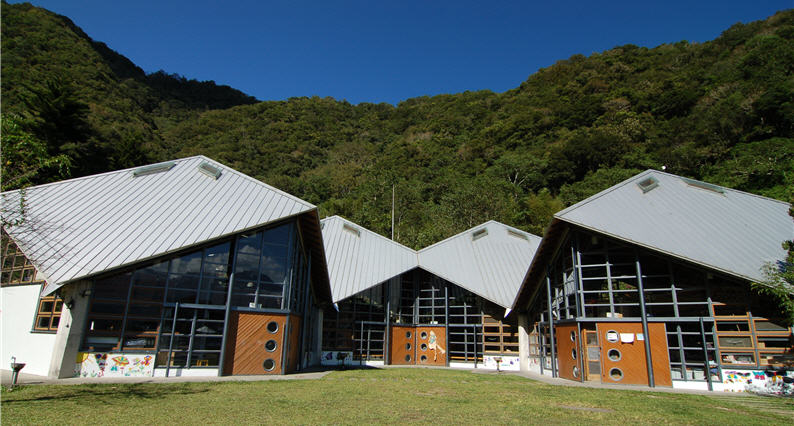
Half way up the hill near Tiansiang of the Central Cross-Island Highway, a group of pupils live their lives care-free as if they were integrated with nature. They all go to Sibao Elementary School, which is situated inside Taroko National Park (TNP).
The School Closest to Nature
Once a branch of Fushih Elementary School, Sibao is the only school sitting in a national park. It was once attended by children of local farmers, yet the gradual decrease in the farming population and the decline in community activities led the school to the crisis of closing down or transformation. Thanks to the school’s unique location and pluralistic culture, the Hualien County Government repositioned it as a “forest elementary school,” which evolved to the current Sibao.
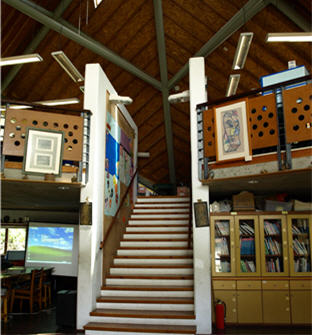
Courtyards, craftsmanship of masters of sculptures, pottery and architecture, and the imposing scenery are all integrated into the campus. The roof of the classroom is parallel to the mountain range in the back, making it pleasant to the eye; the appeal of ecological conservation is clearly seen from the construction materials used; special plants in the park are also grown on campus in multiple layers so that every corner of the school offers something for the students to appreciate and learn, making it a school truly close to nature.
The principal of the school, Mr. Shih-syuan Jhang, noted that in addition to the architecture blended with nature, the paper butterflies on the wall and other decorations all enriched the students’ lives.
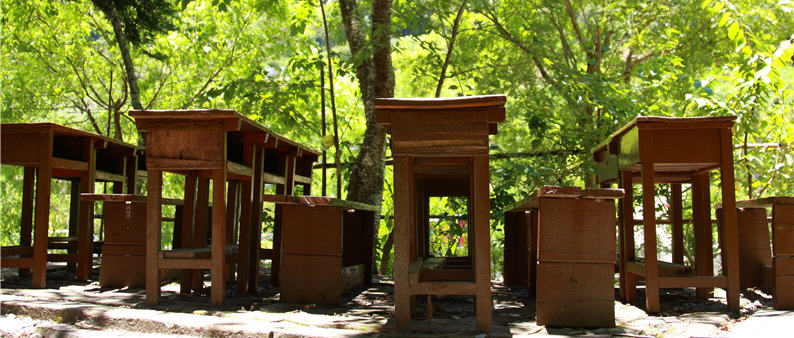
- upper: It makes one envious of the students of Sibao Primary School, for they can learn in such a picturesque environment of Taroko National Park./ by blogger salu099
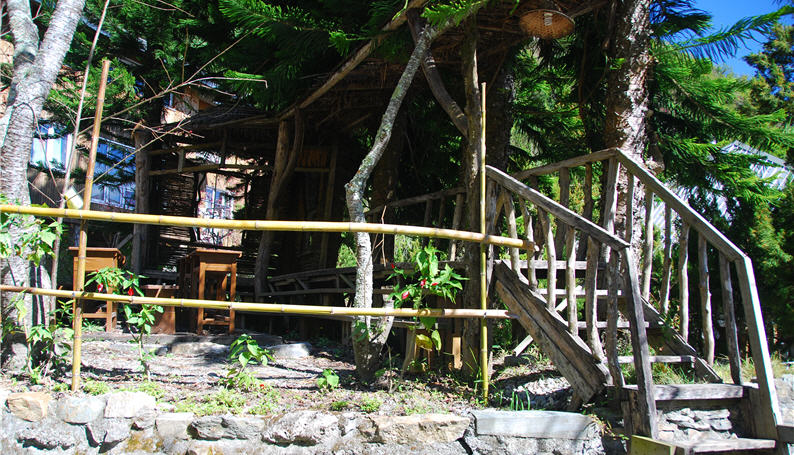
- lower: Desks and chairs under a leafy shade, gentle wind breezes from time to time, making one keen to go to school./ by blogger Rui-cheng Bao
Interview & text: Ying-fang Shih
Special thanks to: Mr. Shih-syuan Jhang, Principal of Sibao Elementary School, and Mr. Mao-yao Lin of Taroko National Park Headquarters
Translator/ Teresa Huang
Photo provider/ Shih-syuan Jhang & Mao-yao Lin
Claiming to learn from nature, the school adopts an incremental course that centers on national parks to teach the students meanings of nature. The course proceeds from disciplines of daily life, to history and ecology of the nature, to hands-on exercise and community visits, so as to build rapport with the neighborhood. The unique scenery of the TNP and its abundant resources are also teaching materials based on the concept of the “mobile classroom”. Students can directly explore the trails and from various trainings, appreciate the beauty of nature that is part of their life.
In August 2005, TNP set up an environmental education center in Sibao, extending the fenceless teaching so that children elsewhere can experience TNP and the school’s unique curriculum. Taroko National Park Headquarters (TNPH) considers promoting environmental education a priority and achieving that goal through a school is a foundation-laying task.
TNPH has been holding environmental education camps in Sibao over the years, combining resources from the school and Dong Hwa University to devise courses that bring kids closer to nature and promote their care for it. Besides learning about national parks, there are oudiv>
To children of different backgrounds, this is no doubt a special experience, in that they have to do everything themselves and put “care for nature” into action. In their favorite Nature Observation course, kids walk through forest trails, observe the forests and trees of varying kinds and watch mountain birds through binoculars. One kid once found a larva of Allomyrina dichotoma, he held it up lovingly yet carefully, put it back and covered it with a piece of wood so that it could transform into a pupa. Another once marveled in his diary, “Never knew that so many animals live under the trees!” The kids learn from and get inspired by nature. TNPH tries to help children acquire knowledge and ideas and experience the beauty of nature, and ultimately turn care for nature into action and part of their life.
“Environmental education should be lifelong and for all, and also a major goal of national parks. The targets of it should include people of all ages and groups,” noted Mr. Mao-yao Lin of TNPH. He said that TNPH has been adjusting its environmental education campaigns and gradually mapped out curriculum that meets its goals. Future revision is still possible, but its core value and goal will remain unchanged. Kids that have received environmental education are like growing seeds that will sprout and become guardians of the environment.

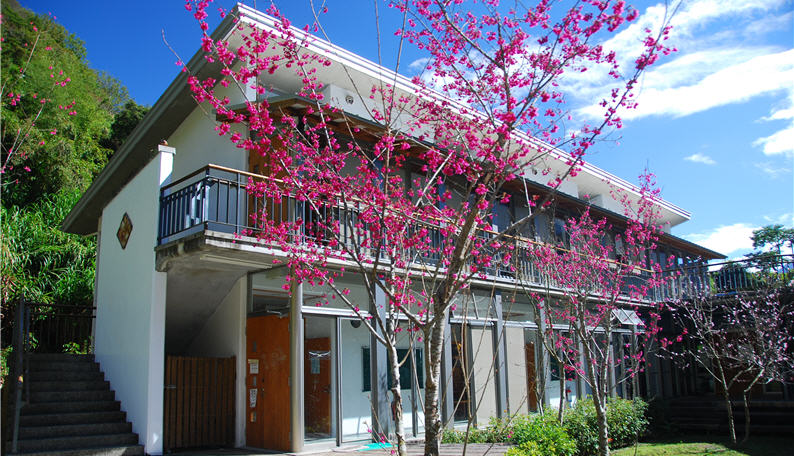
- upper: The mountain cherry blossoms make the students' dormitory even more beautiful./ by blogger sya./ by Guang-jhih Hong
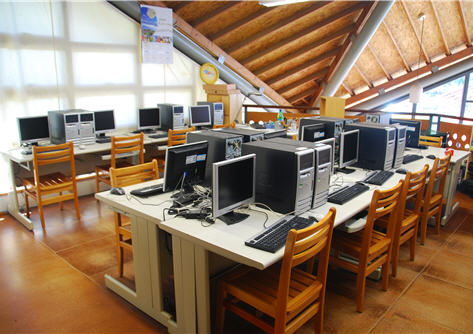
- lower left: The computer room of Sibao Primary School, demonstrating a perfect combination of technology and nature./ by blogger sya
- lower right: The interior of a classroom of Sibao Primary School. Learning has to be relaxing and stress-free. The elevated classroom and gentle lighting constitute the best learning atmosphere./ by blogger Mei-yu Syu
 Learning by Having Fun in Nature
“We can learn from just about everything in nature” best summarizes how Sibao educates kids. Through the help of TNPH and others, Sibao went through the difficulty of setting up a school, survived many other hardships, and has now become stronger for all its students.
Living in deep mountains 900 meters in altitude, Principal Jhang, who spares no effort promoting environmental education, said “No one can enjoy the spectacular scenery of Taroko and promote environmental education like I do.
With their chanting of books passing through the trees, and innocent smiles reflecting on the lake, students in Sibao embrace nature not bothered at all by the mud all over them, for it is the imprint of their precious learning.
- upper: The idea of am oudiv>
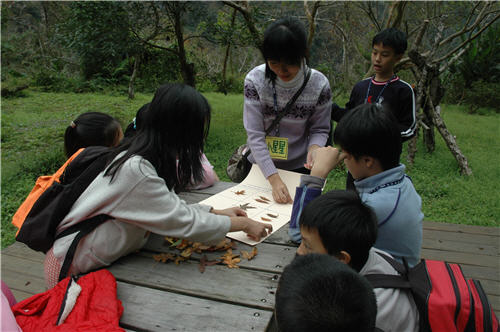
- lower left: Group members picked up fallen leaves of different shapes from the hiking trail and completed the leaf bingo.
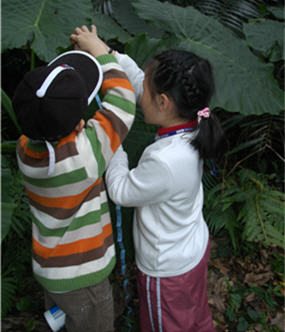
In the process, the children understood the various and diversified trees in the forest / Photo provided by TNP, taken by Mao-yao Lin. - lower right: During environmental education, children were asked to find out the largest alocasia macrorrhiza , the plant with
the largest leaf, on the hiking trail and measure the size of the leaf./ Photo provided by TNP, taken by Mao-yao Lin.


