
Sailing to the Icy South End of Earth -
Few people in Taiwan are so obsessed with the icy polar region like Lung-sheng Chang. From North Pole to South Pole, the areas between latitude 66.3 and 90 are his favorite destinations. He observes glaciers, icebergs, penguins and seals with his camera and introduces the fun of polar trips to people in Taiwan.
The polar region above latitude 66.3 is the travel destination Lung-sheng Chang most obsessed with.
“Because of global warming, the glaciers in both Arctic and Antarctica are receding, which will greatly affect the ecology of the Earth and even the regional resources distribution and economy in the future,” says Chang who always concerns about the issue of global environmental change. Taiwan’s research on glaciers and polar regions has been scant, and the government does not pay much attention to related international issues. Chang says worriedly that it will be too late unless we do it now.
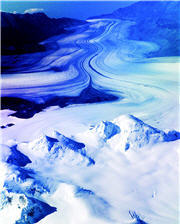
To study polar regions, one must start with understanding glaciers. Besides the Antarctica attracting international attention in recent years, the glacier landform that Chang wishes to visit most is the Patagonia Ice Field, located at the south end of South America where Charles Darwin visited during his 5 years’ scientist exploration on H. MS Beagle. “At the border between Chile and Argentina, there are the largest glaciers group. You can see the steep peaks, canyons and lakes cut out by hundreds of glaciers on the plateau,” Chang says with his eyes glow with admiration.
The mountains on Patagonia Ice Field are formed by the cutting of glaciers and weathering of strong west wind from outer Antarctic. They look like having been cut through by a sharp knife, leaving spires, bladed ridges and precipices over 1,000 m high. When Darwin saw such amazing landscape but was stopped by ripping waters, he wrote about his life-long regret in “A Naturalist’s Voyage Round the World in
H.M.s Beagle”.
“From some high land we hailed with joy the white summits of the Cordillera, as they were seen occasionally peeping through their dusky envelope of clouds. But we viewed these grand mountains with regret, for we were obliged to imagine their nature and productions, instead of standing, as we had hoped, on their summits.”
Excerpt from “A Naturalist’s Voyage Round the World in H.M.s Beagle”
Chang cannot stop imagining how Darwin felt then. For years, he wants to visit Patagonia and the Antarctica because he does not wish to end up like Darwin regretting for the rest of his life. When he finally retired and had a chance to realize his dream, he attended a photographing tour there in 2005. He visited Los Glaciares National Park, Nahuel Huapi National Park, Tierra del Fuego National Park and Valdes Peninsula Preservation Area in Argentina, and Vincente Rosales National Park and Paine National Park in Chile.
- left: Patagonia is one of the few primitive landforms in the world. Its average height is 2000 to 3000m, covered with mountains, valleys, glaciers and waterfalls. / by Lung-sheng Chang
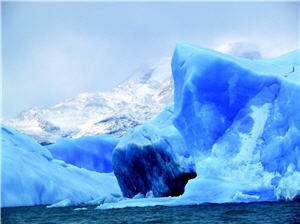
- center: The ice crystal of the glacier has the color of sapphire. / by Lung-sheng Chang
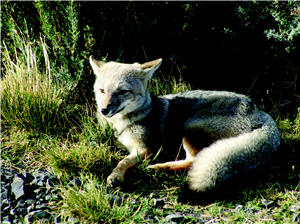
- right: Grey foxes can be seen on the grassland of Paine National Park. / by Lung-sheng Chang
Text / Ann-hua Chuang
Photographer / Lung-sheng Chang, President of Urban Regeneration R&D Foundation.Pei-chi Chen
Impressed by the Nature’s Masterpieces
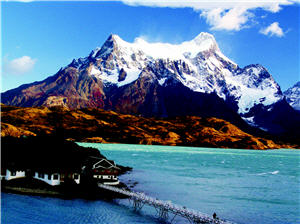
The Patagonia Ice Field is located on the Andes Mountains with an area of 14,020 km2 (roughly 1/3 the size of Taiwan). Hundreds of glaciers run into Argentina in the east and Chile in the west from here. As the Andes in Argentina is less steep, and glaciers scour through and leave glacier lakes of different sizes. As the Andes in Chile is steep and descends directly into the ocean, the strong cutting effect of glaciers creates fiords in the coast area. The uncanny workmanship of the Nature leaves impressive glacier landscapes everywhere in Patagonia.
Chang says that of the 34 national parks in Argentina 12 are in Patagonia. When visiting the glacier landform, one must go to Los Glaciares National Park, founded in 1945 and registered a world heritage by UNESCO. In the park, there are 12 large glaciers, and Glacier Upsala is the largest with a length of 60 km, a size 595 km2 (twice the size of Taipei City), a width around 5-7 km, and the ice cliff around 60-80 m in height. It is one of the few grand glaciers easily accessible for visitors in the world.
The elongated Chile has the driest Atacama Desert in the world, the second highest mountain Acongcaqua, Longitudinal Valley, Patagonia Ice Field and many other special natural environment. Its government started to plan the establishment of national parks and reservations for conservation long ago. Now there are in total 31 national parks, 15 natural reservations, and 48 natural monuments, covering 140,000 km2 or 18% of the area of Chile.
There are 9 national parks in Chilean Patagonia. Some of them are continuous with Argentina national parks but there are not connecting roads and no joint management between parks of these two countries. Visitors cannot cross the border to the other adjacent park. They have to go out of the park and then take a long way to cross the national border with extra time and cost for transportation.
When Chang came to Chile, he visited Paine National Park in Patagonia, which was founded in 1959 and is noted for diverse animals and birds including Guanaco, Condor, Darwin’s Rhea, Terrent duck and Black Necked Swan. It is one of the few primary habitats in the world and is selected by UNESCO a biosphere reserve. Below the tongues of Grey and Geikie glaciers are two large glacier lakes with large blue ice floating in the grayish green water. Visitors can reach the edge of glacier tongue by boat and appreciate the changing blue light and huge ice wall 6 to 7-fl oors high.
Qualified Guides Required for Visitors to Hire
The national parks on Patagonia Ice Field have international fame. Due to the long and chill winter, visitors come in summer and the number exceeds 100 thousands annually. According to Chang’s observation, these national parks charge visitors with admission of US$10 per person. There are simple establishments of docks and explanation boards. The trail systems are well-maintained stone and soil roads with complete visitor monitor function.
Each national park shares some management measures in common but all lack sufficient human resources. For example, Los Glaciares National Park only has around 20 employees. Therefore visitors are required to hire qualified tour guides according to the size of the group. The tour guides will explain about related regulations and local ecology. Some parks prohibit visitors from smoking or leaving the group, and require them to wear crampons and water-proof/wind-proof clothing. Some parks provide simple lodges or campsites while some don’t have.
Adventuring into Kingdom of Penguins
After visiting Patagonia glaciers, the unique and exciting Antarctic trip began. Chang took a boat from Peurto Madryn of Valdes Peninsula, Argentina to Antarctica. Being the country most close to Antarctica, Ushuaia of Tierra del Fuego at the southmost end the country is only 950 km away, and so most tourist boats choose to depart from Argentina.
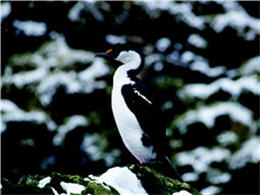
- upper left: The magnicent mountains in Paine National Park provide a beautiful landscape. / by Lungsheng Chang
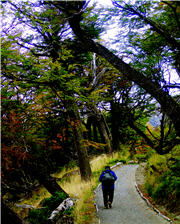
- upper center: The trail system of Paine National Park is well designed. / by Lung-sheng Chang
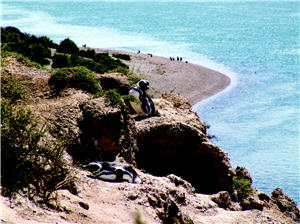
- upper right: Magellanic Penguins mainly stay on the seashore of Patagonia. Valdes Peninsula only has 200,000 penguins. / by Lungsheng Chang
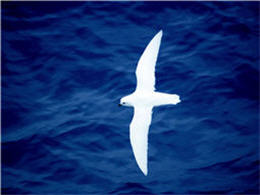
- lower left: Snow Petrel in Antarctic Convergence island oceans is called the Fairy of the South. / by Lung-sheng Chang
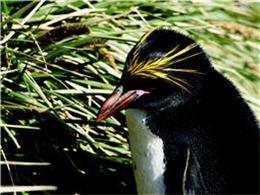
- lower center: Macaroni Penguins with long yellow feathers on the head can be seen around Antarcti islands. / by Lung-sheng Chang
- lower right: Imperial shag living among rocks with blue circle around eyes is one of the rarest species of shags. / by Lung-sheng Chang
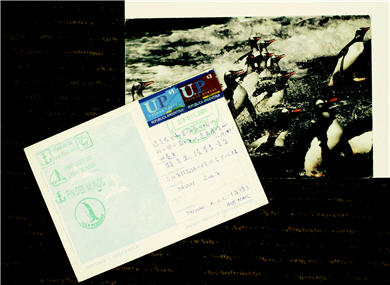
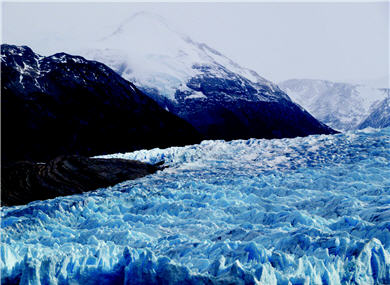
Chang says that Peurto Madryn is a major fishing town of southern Argentina, and Valdes Peninsula is the most important habitat for southern right whale. The boat Andrea he took for Antarctica was moored there. Punta Norte of Valdes Peninsula is the world’s only place where killer whales would pray on seals on beach. Punta Tombo is the largest habitat for Magellanic Penguin in the world. These two places are the most important wildlife habitats in Argentina and thus promote the tourism in Peurto Madryn. Departing from Peurto Madryn to Antarctica is a little farther than from Ushuaia, but the tourists can have a visit to the famous wildlife habitat nearby.
This Antarctica Tour consisted mainly of sailing around Scotia Island Arcs. It started from Peurto Madryn to Falkland Island first, then went eastward to cross Antarctic Convergence and reached South Georgia Islands. Then the boat crossed Scotia Ocean to South Shetand Islands, and then anchored in Neko Harbor for landing Antarctica. On the returning trip it passed South Shetland Islands and crossed Drake Passage to disembark in Ushuaia. The total trip covered 9, 260 km with 19 days on the sea.
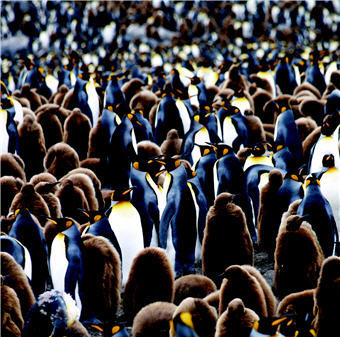
On the way, Chang visited each island and saw countless penguins, seals, sea lions, sea elephants and birds. He also visited a long-abandoned whale station to trace the heroic adventures of early 20th century. He even bathed in the seashore hot spring in Antarctica to experience the unique contrast feelings of fire and ice “The purpose of my Antarctic trip is to see penguins. There are 17 species of penguins on the world and in this trip I already saw 7 of them.” Of the photos of his Antarctic trip, there is one showing tens of thousands of penguins standing behind him as if taken in the kingdom of penguins.
Strict Management to Protect Ecology
The boat companies who operate Antarctic trips provide professional English-speaking tour guides. The passengers eat and sleep on the ice-strengthened vessel. There are classes on boat providing information about the ecology, history and researches of Antarctica. “Sailing on the ice ocean of Antarctica is nothing like taking the Love Boat cruise on Caribbean Sea that you can stay on deck all the time!” Chang says that the summer temperature of Antarctica is still below zero and the entire boat is frozen. Passengers can only rush out for a short stay on deck to take pictures of the icebergs in ocean, and then are scared back in the cabin by the chilly wind.
The International Polar Year
Since his Antarctica trip, Chang pays more attention to international issues on the polar areas. Over one hundred years, people have been very curious about there and many countries have tried to claim sovereignty over Antarctica, which is the last land discovered by human beings. It is a pity that Taiwan has been absent from this field.
2007 is the International Polar Year (IPY), which is a large-scale polar research activity scholar event co-hosted by global scientists. 3 IPYs have been celebrated in the past every 50 years. The first was in 1882, and it set a precedent for collaboration of international scientists. The second IPY was held in 1932 and the participating countries agreed to set up long term stations research at either Pole. In 1957 the third IPY was held and the Antarctic Treaty was signed to limit the use of Antarctica to peaceful and scientific research purpose only while any military activities would be prohibited. The Madrid Environmental Protocol in 1992 further defined Antarctica as special preservation area, positioning it as a “world park” free from any mining activity.
Chang says, “IPY is promoted by International Council for Science and World Meteorological Organization and not by UN. The absence of Taiwan from this field means giving up another opportunity to voice in international organizations.” For him, one trip is not enough. He already signed up for a second South Pole trip to visit there in next January, which will be summer in Antarctica. He wishes to bring back more records and information to share with those who are interested in Antarctic study.
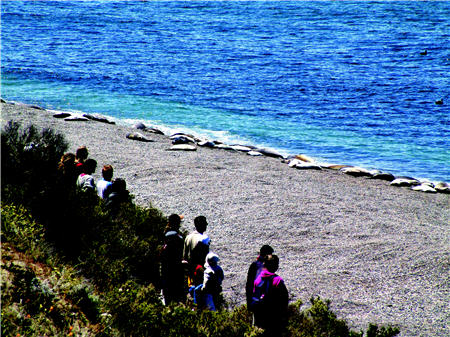


President of Urban Regeneration R&D Foundation; former President of National Park Society in Taiwan, Administrator of National Environmental Protection Administration, Director General of Planning and Construction Administration, Vice Chairman of Council for Economic Planning and Development.
- upper left: The postcard sent by Chang to his friends in Taiwan from Antarctica. / by Pei-chi Chen
- upper right: The heavy layers of Grey Glacier in Paine National Park generate huge cutting pressure on both sides. / by Lung-sheng Chang
- lower left: Visitors wait for watching the killer whales ashore to hunt seals on the north cape of Valdes Peninsula. / by Lung-sheng Chang
- lower right: Over 100,000 King Penguins live in St. Andres Bay of South George Islands, the larges habitat of them. / by Lung-sheng Chang


