Derict to middle content area:::

:::



《The Village》Tong-Li Villages of Taroko-
With the awakening of environmental conservation, the concept of ecotourism starts to grow. The paradisal Tong-Li Villages at the foot of the mountain in Taroko National Park is one of the few tourism sites providing in-depth aboriginal lifestyle.
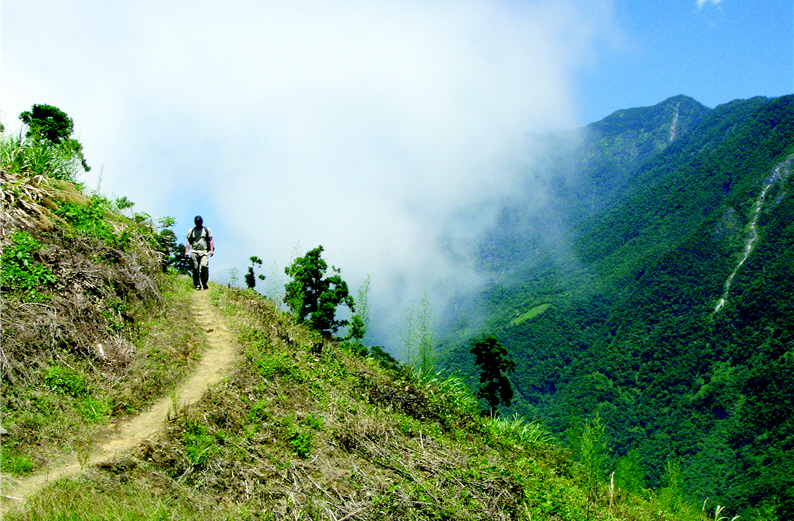
Located over Taroko Gorge at an elevation of 915 mand 1,128 m, both the Villages of Dali and Datong are home to the 12th aborigine tribe--Taroko tribe. Before theyare officially recognized, Taroko tribe had been mistakenas part of Atayal tribe. A branch of Taroko tribe originally living in Jingguan Village of Renai Township, Nantou County moved over the Central Mountains to northern Hualien County in 17th Century. During the Japanese Occupation, the Japanese anthropologists labeled them as a subdivision of Atayal tribe. In January 14, 2004, they finally had a name of their own--Taroko.
In 1979, the government moved Tong-Li villagers to Minglo Community near Taroko Terrace. Then some of them who could not leave their farms behind returned to the village for the love of living in the mountains. Now there are 2 families living in Dali Village and more than 10 families in Datong Village. In recent years as Taroko National Park Headquarters starts to promote eco-tourism in the park, Tong-Li Villages join the program, hoping to connect local ecological, natural and humanity attractions with their tribal life and achieve the goal of conservation and environment education. However, the promotion of ecotourism relies on the joint effort of the government, villagers and visitors
Located over Taroko Gorge at an elevation of 915 mand 1,128 m, both the Villages of Dali and Datong are home to the 12th aborigine tribe--Taroko tribe. Before theyare officially recognized, Taroko tribe had been mistakenas part of Atayal tribe. A branch of Taroko tribe originally living in Jingguan Village of Renai Township, Nantou County moved over the Central Mountains to northern Hualien County in 17th Century. During the Japanese Occupation, the Japanese anthropologists labeled them as a subdivision of Atayal tribe. In January 14, 2004, they finally had a name of their own--Taroko.
In 1979, the government moved Tong-Li villagers to Minglo Community near Taroko Terrace. Then some of them who could not leave their farms behind returned to the village for the love of living in the mountains. Now there are 2 families living in Dali Village and more than 10 families in Datong Village. In recent years as Taroko National Park Headquarters starts to promote eco-tourism in the park, Tong-Li Villages join the program, hoping to connect local ecological, natural and humanity attractions with their tribal life and achieve the goal of conservation and environment education. However, the promotion of ecotourism relies on the joint effort of the government, villagers and visitors
The Rough Path with Amazing Landscapes
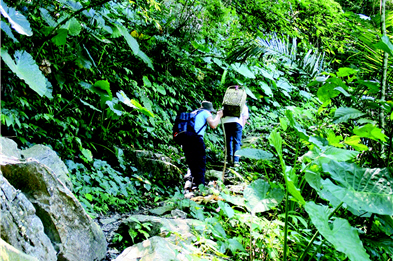
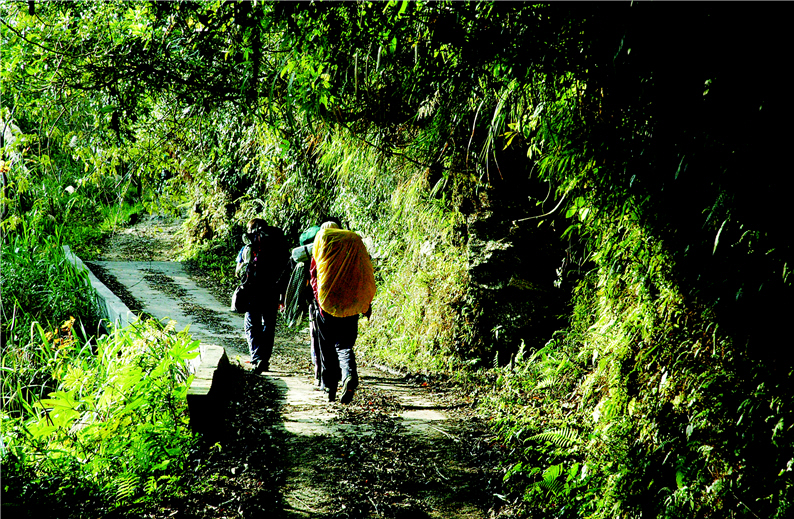
There only way to reach Tong-Li Villages is to go on foot along the trails inside Taroko National Park. One can choose the 7.4 km-long route from Shakadang trail via Sanjianwu to Dali-Datong Trail. The part of Shakadang trail smooth and visitors can enjoy the clear Shakadang Creek and beautiful layered marble stones on the way, with Rhyacornis fuliginosus, Myiophoneus insularis flying over the creek, Cinnamum camphora and Machilus kusanoi Hayata trees by the sides, butterflies of Papilioninae family and Parantica sita niphonica dancing around. After passing Sanchienwu, the landform becomes steep and wet with weeds and bushes in the way that challenge visitors’ strength. But still visitors are lucky enough to hear the singing of running water and birds from the valley, and occasionally to spot some frogs resting on the leaves of Alocasia macrorrhiza, squirrels and Macaca cyclopis.
Or one can choose to take Dekalun Trail to Dali Village and connect with Shakadang Forest Trail or Dali-Datong Trail. Dekulun Trail is well-designed and consists of a zigzag ladder part and a second part of natural stone surface. It also provides resting platforms and lookout spots. Visitors can enjoy the diverse landforms, the Visitor Center, Chinwen Bridge, the estuary of Liwu Stream and vegetations of the Dekulun Trail. In forest, visitors can see the footsteps of Sus scrofa taivanus, and Kallima inachus formosana, cicadas, Stag beetles through the seasonal changes.
There only way to reach Tong-Li Villages is to go on foot along the trails inside Taroko National Park. One can choose the 7.4 km-long route from Shakadang trail via Sanjianwu to Dali-Datong Trail. The part of Shakadang trail smooth and visitors can enjoy the clear Shakadang Creek and beautiful layered marble stones on the way, with Rhyacornis fuliginosus, Myiophoneus insularis flying over the creek, Cinnamum camphora and Machilus kusanoi Hayata trees by the sides, butterflies of Papilioninae family and Parantica sita niphonica dancing around. After passing Sanchienwu, the landform becomes steep and wet with weeds and bushes in the way that challenge visitors’ strength. But still visitors are lucky enough to hear the singing of running water and birds from the valley, and occasionally to spot some frogs resting on the leaves of Alocasia macrorrhiza, squirrels and Macaca cyclopis.
Or one can choose to take Dekalun Trail to Dali Village and connect with Shakadang Forest Trail or Dali-Datong Trail. Dekulun Trail is well-designed and consists of a zigzag ladder part and a second part of natural stone surface. It also provides resting platforms and lookout spots. Visitors can enjoy the diverse landforms, the Visitor Center, Chinwen Bridge, the estuary of Liwu Stream and vegetations of the Dekulun Trail. In forest, visitors can see the footsteps of Sus scrofa taivanus, and Kallima inachus formosana, cicadas, Stag beetles through the seasonal changes.
- upper: Tong-Li Villages siton the hill top by upstream of Shadadang Creek. (by Shu-hao Hsu, provided by TNP)
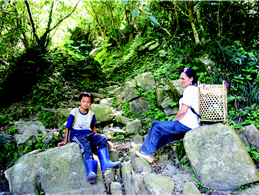
- lower left: The second half part of Dekalun Trail is rocky and haunted by snakes. (by Yung Hsueh)
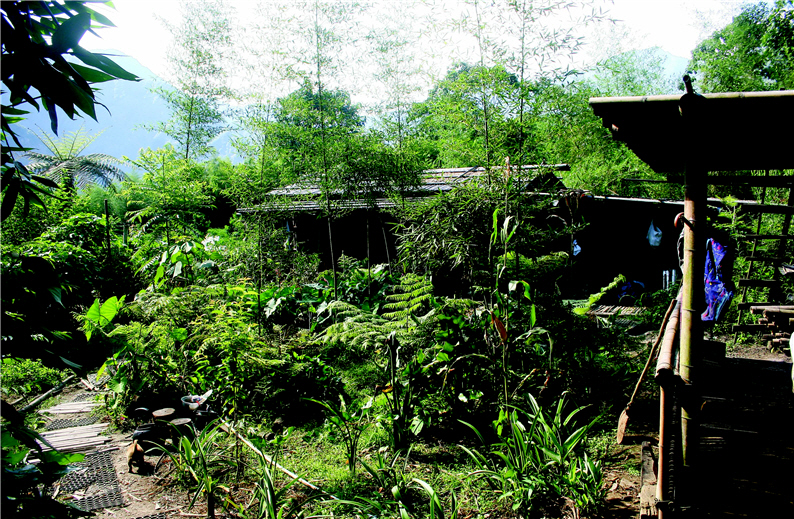
- lower right: Dali was once moved to the plain but now some villagers return to it again. (by Cora Hsu)
Text/ Cora Hsu
Photographer/ Ling Lin‧Mao-yao Lin‧Cora Hsu‧Shu-hao Hsu‧Wen-hui Chan‧Yung Hsueh‧Ming-chung Chen
The Village Without Electricity and Highway
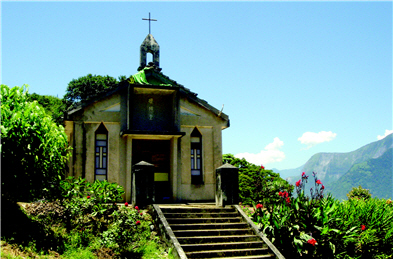
The original name of Dali is “Hohos”, meaning the hiss of snakes or a place with many snakes. At first there was elementary school in Dali but was later wasted after the village removal in 1979. Now the site becomes a henhouse. Visitors can also find some other early buildings such as a church and police substation. Nowadays the fade of the old church remained well while the police substation is surrounded by corn fields. Datong Village is located on a platform on the left of Shakadang Creek. Its old name was “Shakadang” , meaning “a molar tooth”. During the Japanese Occupation there was an administrative
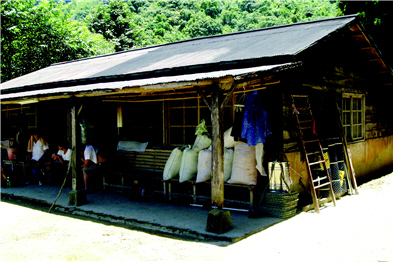
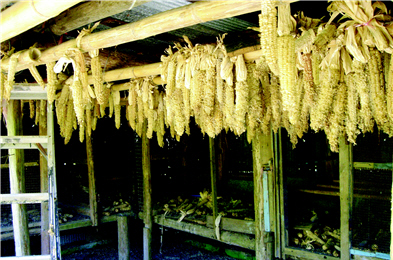
Nowadays Tong-Li Villages still keep some simple but strong ancient houses built with bamboo wood and Sphaeropteris lepifera. Corn, cabbage and millets are their main staples, but they also feed the chickens with corns and millets. It is one of the few villages that have neither electricity nor highway, and one of the last places for people to experience the traditional aboriginal way of living.
In 2005, CPAMI chose national parks as demonstration areas by assisting villages in the parks to develop ecotourism. Through the joint effort of the government, academics and the few villagers from Tong-Li who supported ecotourism, the Tong-Li Ecotourism Autonomic Association (TLEAA) is founded. With the purpose to keep harmony with the Nature and befriend with the environment, it promotes the ideal of ecotourism to villagers and visitors, and establishes a “Villagers’ Living Code” and an “Ecotourism Visitors’ Code”.
The original name of Dali is “Hohos”, meaning the hiss of snakes or a place with many snakes. At first there was elementary school in Dali but was later wasted after the village removal in 1979. Now the site becomes a henhouse. Visitors can also find some other early buildings such as a church and police substation. Nowadays the fade of the old church remained well while the police substation is surrounded by corn fields. Datong Village is located on a platform on the left of Shakadang Creek. Its old name was “Shakadang” , meaning “a molar tooth”. During the Japanese Occupation there was an administrative
Nowadays Tong-Li Villages still keep some simple but strong ancient houses built with bamboo wood and Sphaeropteris lepifera. Corn, cabbage and millets are their main staples, but they also feed the chickens with corns and millets. It is one of the few villages that have neither electricity nor highway, and one of the last places for people to experience the traditional aboriginal way of living.
In 2005, CPAMI chose national parks as demonstration areas by assisting villages in the parks to develop ecotourism. Through the joint effort of the government, academics and the few villagers from Tong-Li who supported ecotourism, the Tong-Li Ecotourism Autonomic Association (TLEAA) is founded. With the purpose to keep harmony with the Nature and befriend with the environment, it promotes the ideal of ecotourism to villagers and visitors, and establishes a “Villagers’ Living Code” and an “Ecotourism Visitors’ Code”.
The Code for Ecology Conservation
The “Villagers’ Living Code” consists of an overall environment plan such as using natural materials for new or renewed construction, and rules against using chemical fertilizers and herbicide and no deforestation is allowed. It also dictates that no broadcasting or karaoke is allowed, the generators are shut off after 7:30 pm to ensure a quiet community. The meals are mainly prepared with local products, and the carrying capacity of visitors will be monitored.
Visitors also need to follow the code to achieve successful interaction with villagers. In the “Ecotourism Visitors’ Code,” visitors are required to be fully prepared. Once in the village, visitors should be ready to give up certain luxury and convenience to enjoy local natural and cultural environment. They must restrain themselves from making noise and picking farm products, and they should bring their own dining utensils as well as do the garbage classification.
The Tong-Li Villages Ecotourism Plan by Taroko National Park Headquarters contains co-building house projects and seasonal farm experience tour. From late March to late April, it is the season for planting corn, millet, bean and Allium bakeri. From late April to late May it is harvest season for Usawa Cane (Arundinaria Usawai Hayata) and Minglo Community will host the Usawa Cane Festival. From late May to early June, it is time for Dali Village to harvest Litsea cubeba. July and August are the harvest seasons for corn, millets and Allium bakeri. Visitors during the off farming season can experience the aborigines traditional life style.
The “Villagers’ Living Code” consists of an overall environment plan such as using natural materials for new or renewed construction, and rules against using chemical fertilizers and herbicide and no deforestation is allowed. It also dictates that no broadcasting or karaoke is allowed, the generators are shut off after 7:30 pm to ensure a quiet community. The meals are mainly prepared with local products, and the carrying capacity of visitors will be monitored.
Visitors also need to follow the code to achieve successful interaction with villagers. In the “Ecotourism Visitors’ Code,” visitors are required to be fully prepared. Once in the village, visitors should be ready to give up certain luxury and convenience to enjoy local natural and cultural environment. They must restrain themselves from making noise and picking farm products, and they should bring their own dining utensils as well as do the garbage classification.
The Tong-Li Villages Ecotourism Plan by Taroko National Park Headquarters contains co-building house projects and seasonal farm experience tour. From late March to late April, it is the season for planting corn, millet, bean and Allium bakeri. From late April to late May it is harvest season for Usawa Cane (Arundinaria Usawai Hayata) and Minglo Community will host the Usawa Cane Festival. From late May to early June, it is time for Dali Village to harvest Litsea cubeba. July and August are the harvest seasons for corn, millets and Allium bakeri. Visitors during the off farming season can experience the aborigines traditional life style.
- upper: Dali Village locates at the Taroko Gorge of 915m high and is surrounding by fog. (by Cora Hsu)
- lower left: Before the old church was a belief center at Dali Village, and now is remained well.(by Cora Hsu)
- lower right: The discarded school of Dali Village. (by Cora Hsu)
The goal of the experience tour is to have visitors involved with their host families as a member of the village. Through working with the host families, visitors can learn about the wildlife and participate in farming, planting, harvesting, even wood chopping and tree planting.
In the conservation plan to fulfill the goal of encouraging villlagers’ involvement in natural resources management and lessen their hunting endangered animals like Muntiacus reevesii micrurus, Sus scrofa taivanus, Paguma larvata taivana, etc., the Wildlife Conservation Reward Act encourages visitors accompanied by tour guides to report on encountering wildlife or finding their trace, and a reward of 200 to 3000 NT dollars will be given to each family accordingly.
Bonding the Village to Develop Ecotourism
YaYa (Ai-yu Chen) is one of the villagers who have joined in the host families plan proposed by TLEAA. Born in Datong Village in 1951, YaYa is grandmother to 13 grandchildren. She was forced to leave the mountain and move to Minglo Community at the age of 29, but YaYa says that it is not easy to make a living there and she does not like the hot weather in the plain. She always regards the village on the range as her real home. She enjoys commuting to the village for farming regardless to the inconvenient transportation.
In the conservation plan to fulfill the goal of encouraging villlagers’ involvement in natural resources management and lessen their hunting endangered animals like Muntiacus reevesii micrurus, Sus scrofa taivanus, Paguma larvata taivana, etc., the Wildlife Conservation Reward Act encourages visitors accompanied by tour guides to report on encountering wildlife or finding their trace, and a reward of 200 to 3000 NT dollars will be given to each family accordingly.
Bonding the Village to Develop Ecotourism
YaYa (Ai-yu Chen) is one of the villagers who have joined in the host families plan proposed by TLEAA. Born in Datong Village in 1951, YaYa is grandmother to 13 grandchildren. She was forced to leave the mountain and move to Minglo Community at the age of 29, but YaYa says that it is not easy to make a living there and she does not like the hot weather in the plain. She always regards the village on the range as her real home. She enjoys commuting to the village for farming regardless to the inconvenient transportation.
YaYa has a dream, which is to unite Datong and Dali for joint operation of ecotourism. It is not only a great way to make a living, but also good for promoting people to understand the village life through the sustainable eco conservation. However, many villagers have no intention to return to the mountains and even think of selling their land, which makes YaYa very upset.
When the association was founded, YaYa and some other villagers joined in the ecotour guide training program offered by Taroko National Park Headquarters, including the humanity history of the villages, ecotour guide and rescue skill. Now guiding visitors to Tong-Li has become the major income for YaYa.
Co-building House Plan
This sustainable ecotour first started in late January 2006 under the call from Pao-lien Li, the author of “A Woman Farmer’ s Journal”. 10 visitors participated in the activities of “Calling to the Ancestors’ Souls” tour, building a house and making millet cakes together with the villagers. In the 10-day experience tour, visitors helped YaYa build a bamboo house on her own land.
When the association was founded, YaYa and some other villagers joined in the ecotour guide training program offered by Taroko National Park Headquarters, including the humanity history of the villages, ecotour guide and rescue skill. Now guiding visitors to Tong-Li has become the major income for YaYa.
Co-building House Plan
This sustainable ecotour first started in late January 2006 under the call from Pao-lien Li, the author of “A Woman Farmer’ s Journal”. 10 visitors participated in the activities of “Calling to the Ancestors’ Souls” tour, building a house and making millet cakes together with the villagers. In the 10-day experience tour, visitors helped YaYa build a bamboo house on her own land.
- upper: Shakadang Trail through Dali to Datong Village. (by Mao-yao Lin, provided by TNP)
- lower left: For encouraging conservation, rewards will be provided upon visitors finding wildlife trace under tour guide’s guiding. Here is Paguma larvata taivana. (by Ming-chung Chen, provided by TNP)
- lower center: Traditional argyle weve of Dong-Li villages. (by Ling Lin)
- lower right: YaYa (right) and her grandson YaFer run a host family in Datong village. (by Yung Hsueh)
It has been one and half year since their help with house building, and YaYa is still very grateful to those visitors. She said those days were very wet and cold, but everyone still worked very hard and occasionally would follow YaYa to harvest veggies and cooking. They worked at day and listened to YaYa singing and telling stories at night. Though the bamboo house is only half completed, YaYa and her son moved in and made home like a Shangri la away from the secular world. Since YaYa’s house is built on her own land far away from the forest trail, it is the only house in the Tong-Li Villages that has a doorplate.
A Healthy Life in the Natural Environment
YaYa’s simple house is surrouned by crops planted by herself, including corn, garlic, sweet potato and Aralia decaisneana Hance. YaYa said that by the definition of ecotourism, products cannot use chemical fertilizer or herbicide and have to be cultivated in the traditional way. When visitors come, the host families will treat them with delicacies of seasonal crops and wild vegetables in addition to steamed rice or rice in bamboo cane cooked with fi rewood.
A Healthy Life in the Natural Environment
YaYa’s simple house is surrouned by crops planted by herself, including corn, garlic, sweet potato and Aralia decaisneana Hance. YaYa said that by the definition of ecotourism, products cannot use chemical fertilizer or herbicide and have to be cultivated in the traditional way. When visitors come, the host families will treat them with delicacies of seasonal crops and wild vegetables in addition to steamed rice or rice in bamboo cane cooked with fi rewood.
YaYa told us, on her own land in the woods, there is a precious limestone cave by the creek. Many visitors would come specifically for the beautiful stalactite formation in that cave.
The inconvenient access and lack of electricity provide Tong-Li with a privilege for ecotourism. Air conditioners are replaced by the cooling breeze, and televisions by the pleasant sounds of the Nature. Without a fl ushing toilet, one covers the site with soil after using the bathroom, which is very natural and environment-friendly. The spring water tastes better than pipe water, and stars are brighter without the city light polution.What visitors in a Tong-Li ecotour are not general tourists but people with understanding about “green life”, who can truly appreciate the simple life away from urban civilization.
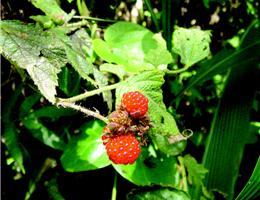
When traveling to Tong-Li Villages, in addition to experiencing the aboriginal life style in the mountains, tasting local vegetables is a great blessing. Delicious fresh wild vegetables can be found along the trail. Led by their host YaYa, visitors can collect the bamboo shoots and mushrooms for dinner, wild Aralia decaisneana Hance for a cup of refreshing tea, and sweet Rubus formosensis Ktze for fruit.
The inconvenient access and lack of electricity provide Tong-Li with a privilege for ecotourism. Air conditioners are replaced by the cooling breeze, and televisions by the pleasant sounds of the Nature. Without a fl ushing toilet, one covers the site with soil after using the bathroom, which is very natural and environment-friendly. The spring water tastes better than pipe water, and stars are brighter without the city light polution.What visitors in a Tong-Li ecotour are not general tourists but people with understanding about “green life”, who can truly appreciate the simple life away from urban civilization.
When traveling to Tong-Li Villages, in addition to experiencing the aboriginal life style in the mountains, tasting local vegetables is a great blessing. Delicious fresh wild vegetables can be found along the trail. Led by their host YaYa, visitors can collect the bamboo shoots and mushrooms for dinner, wild Aralia decaisneana Hance for a cup of refreshing tea, and sweet Rubus formosensis Ktze for fruit.
- upper: Ya Ya's house was achievement of Co-building House Plan and consisted of bamboo. It is the only house with doorplate in Tong-Li Villages. (by Yung Hsueh)
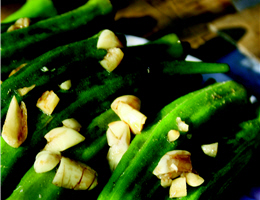
- lower left: Allium bakeri (by Yung Hsueh)
- lower center: Okra (by Yung Hsueh)
- lower right: Rubus formose ns is Ktze (by Cora Hsu)


