Derict to middle content area:::

:::
《The Villages》Tapangu Village of Alishan-
The sun rises over the top of Mt. Ta with light penetrating through trees to the headstream of Tzengwen River. The Tapangu Village of Tsou people, with beautiful landscape and abundant natural resources, has been actively promoting ecotourism to survive cultural conflicts and economical crisis of recent years. Their achievement shines like the rising sun that brings prosperity and vitality, and makes the village a model for aboriginal villages to promote ecotourism.
The Tapangu Village located at an elevation of 800 to 1,500 m in the corner of Mt. Alishan is traditionally a major settlement of Tsou people, including the communities of Tapangu, Taptuana, and Iskiana. The major crops of Tapangu village used to be Wasabia japonica, bamboo and Ficus pumila, but recently also include some addition of economic products like tea, alpine coffee and persimmon. Nevertheless, the diverse natural ecology is the key resource for the transformation of Tapangu.
Since 5 years ago, Tapangu established a river patrol posse in Taptuana and Iskiana to protect the river and fish. The fish protection movement inspired villagers and set the foundation for Taptuana village to spontaneously devote themselves to community infrastructure and natural ecology protection.
The Tapangu Village located at an elevation of 800 to 1,500 m in the corner of Mt. Alishan is traditionally a major settlement of Tsou people, including the communities of Tapangu, Taptuana, and Iskiana. The major crops of Tapangu village used to be Wasabia japonica, bamboo and Ficus pumila, but recently also include some addition of economic products like tea, alpine coffee and persimmon. Nevertheless, the diverse natural ecology is the key resource for the transformation of Tapangu.
Since 5 years ago, Tapangu established a river patrol posse in Taptuana and Iskiana to protect the river and fish. The fish protection movement inspired villagers and set the foundation for Taptuana village to spontaneously devote themselves to community infrastructure and natural ecology protection.
“In the beginning, the purpose of fish guard is to protect our hometown. We didn’t think of tourism development. The main inspiration for the Tapangu Village ecotourism is from Taomi Eco-Village, ” said Tsang-ching Chuang, Chairman of Tapangu Ecotourism Development Association. The trip to Taomi Eco-Village in early 2003 deeply impressed them and they believed that, with so great humanity and natural resources, Tapangu could certainly find its own way. Since then the promotion of Tapangu Village Ecotourism began to sprout.
Sustainability of the Forest
Since 4 years ago, Tapangu residents have been self-motivated to perform the tasks without any external grants, including maintaining forest trails, 24-hour fish guard partrol, garbage collection, setting up warning signs to protect wildlife, and constructing trails along the river with eco-engineering skills. Later the village received around NT$800,000 from CIE Grant for 921 Earthquake, and started a series of ecotourism guide training courses.
Sustainability of the Forest
Since 4 years ago, Tapangu residents have been self-motivated to perform the tasks without any external grants, including maintaining forest trails, 24-hour fish guard partrol, garbage collection, setting up warning signs to protect wildlife, and constructing trails along the river with eco-engineering skills. Later the village received around NT$800,000 from CIE Grant for 921 Earthquake, and started a series of ecotourism guide training courses.
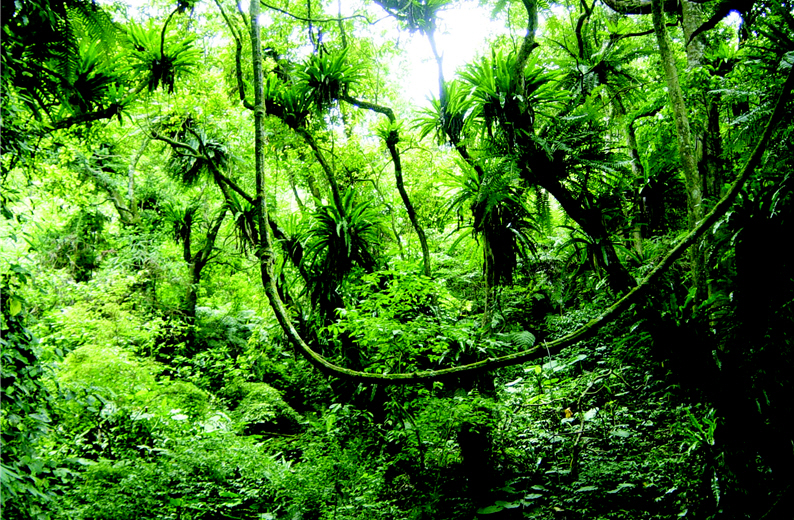
- upper: The primitive rainforest in the Iskiana Ecotourism Site.(by Jin-ying Liao)
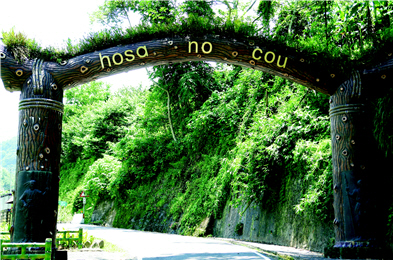
- lower left: The Entrance Landmark of Tapangu Village.(by Ching-lian Pang)
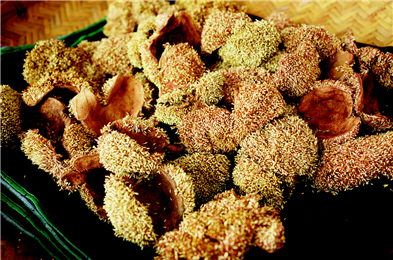
- lower right: Ficus pumila is one of the major economic agricultural products of Tapangu.(by Ching-lian Pang)
Text/ Ching-lian Pang
Photographer/ Jin-ying Liao‧Su-yun Dai‧Ching-lian Pang
“Though not much, this grant is the beginning of our community’s adopting governmental resources for home improvement. We believe that both promoting ecotourism and natural conservation will lead us to a sustainable tourism industry.” Jin-ying Liao, a Tapangu Elementary School teacher dedicated to conservation says that Tapangu residents don’t want their beautiful landscape to be deformed by economic development as often seen in the tourism industry. Tapangu villagers choose ecotourism to honor the tradition of Tsou people that respects the forest and the Nature.
Well-recognized Village Ecotourism
After 4 years of effort, Tapangu has laid a foundation for ecotourism and the villagers’ hardworkship has been paid off. Their signature character is “Single contact window” and “feedback funds system.” Through the single contact window visitors can get all they need for lodging, meals, tour guides, transportation and DIY activities, Those who benefit from referral will donate 5% of their income as the feedback funds to CIE for improving environmental conservation and community welfare.
Being a model for village ecotourism and exhibiting great potential for the transformation of traditional agriculture, Tapangu was chosen as the priority ecotourism site for CPA consultation in 2005. The authority of Alishan National Scenic Area also assigns the Graduate School of Tourism, Recreation and Hospitality of National Chiayi University to assist Tapangu Tribe for ecotourism promotion with a 3-year project.
Well-recognized Village Ecotourism
After 4 years of effort, Tapangu has laid a foundation for ecotourism and the villagers’ hardworkship has been paid off. Their signature character is “Single contact window” and “feedback funds system.” Through the single contact window visitors can get all they need for lodging, meals, tour guides, transportation and DIY activities, Those who benefit from referral will donate 5% of their income as the feedback funds to CIE for improving environmental conservation and community welfare.
Being a model for village ecotourism and exhibiting great potential for the transformation of traditional agriculture, Tapangu was chosen as the priority ecotourism site for CPA consultation in 2005. The authority of Alishan National Scenic Area also assigns the Graduate School of Tourism, Recreation and Hospitality of National Chiayi University to assist Tapangu Tribe for ecotourism promotion with a 3-year project.
Last March, Chiayi County Tapangu Village Ecotourism Association was officially founded with a total of 80 members. It proves that the concept of ecotourism is rooted inside the village and is supported by the villagers. This year TVEA is included in the Sustainable Action Plan by NCSD, Executive Yuan, and the recognition brings residents more faith.
A Primary Forest Full of Tsou Culture
The forest around Tapangu Village is very large and almost untouched. The landscape is pure and clean with abundant species of animals and plants. Hunting and fi shing used to be the Tsou people’s major ways of living. Suyun Dai, who once was the single contact window receptionist, is married to the last Tsou hunter Daming An. Dai says that the hunting spirit of Tsou people is respect to the Nature and sustainability. While the environment is damaged by massive agriculture and tourists, the into-depth ecotourism will enable visitors to directly understand the preciousness of Tsou culture as well as the beauty of virgin forest.
Taptuana River runs through the Taptuana Ecotourism Site. Whose major attraction is the gigantic Bisxhofia javanica Blume woods. While walking along the trail, one can enjoy the cool air and observe fish in the clear river. Other attractions in the site like the maple woods trail, the camphor woods trail and the ancient mountain pass are ideal for bird watching.
A Primary Forest Full of Tsou Culture
The forest around Tapangu Village is very large and almost untouched. The landscape is pure and clean with abundant species of animals and plants. Hunting and fi shing used to be the Tsou people’s major ways of living. Suyun Dai, who once was the single contact window receptionist, is married to the last Tsou hunter Daming An. Dai says that the hunting spirit of Tsou people is respect to the Nature and sustainability. While the environment is damaged by massive agriculture and tourists, the into-depth ecotourism will enable visitors to directly understand the preciousness of Tsou culture as well as the beauty of virgin forest.
Taptuana River runs through the Taptuana Ecotourism Site. Whose major attraction is the gigantic Bisxhofia javanica Blume woods. While walking along the trail, one can enjoy the cool air and observe fish in the clear river. Other attractions in the site like the maple woods trail, the camphor woods trail and the ancient mountain pass are ideal for bird watching.
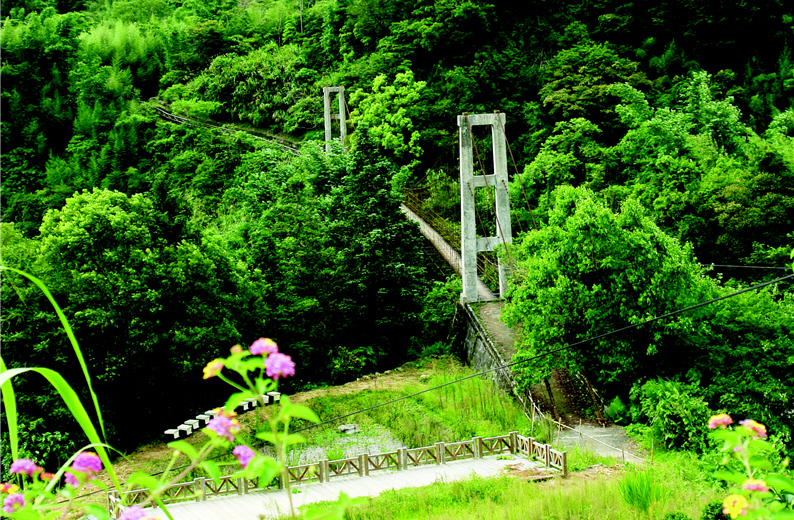
- upper: The Tapangu Drawbridge is the beginning of Trefuya old trail.(by Chinglian Pang)
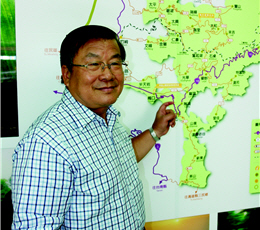
- lower left: Fu-sung Jhung is former Director of Alishan National Scenic Area and the impor tant promoter for Tapangu Village Ecotourism.(by Ching-lian Pang)
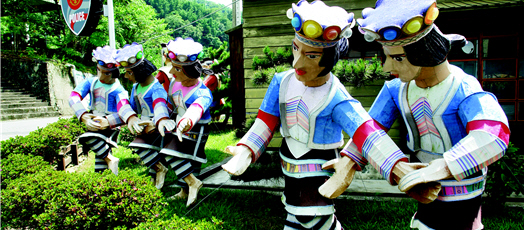
- lower right: The aborigine icons can be see everywhere around Tapangu.(by Ching-lian Pang)
“Valley of Spizaetus nipalensis fokiensis” in Tsou’s language, Iskiana ecotourism site is the place of ancient Tapangu Tribe and a place full of legends and amazing landscape. If visitors could climb up to the hilltop, they will see the wonderful rainbow waterfall and splendor landscape. By the river side there is a trail reconstructed from the hunting path and one can enjoy the rainforest view there. Once the Tsou ancient hunting field, Iskiana is now a showcase of Tsou’s hunting and fi shing culture. In an ecotour Tsou warriors will lead visitors for a first-hand experience to understand Tsou’s life and wisdom.
Bountiful Biodiversity
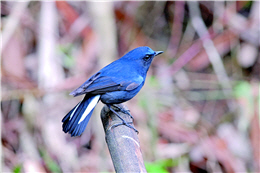
The landscapes of Tapangu Village are diverse. From waterfalls at low altitude to valleys at high altitude, the forest provides great habitat for all kinds of animals. The virgin forest at medium altitude has remained untouched and there are over 73 birds being recorded, including Lophura swinhoii, Cinclidium leucurum montium, Aegithalos concinnus and Accipiter virgatus, etc.. Tapangu Village deserves to be called the paradise of bird watching.
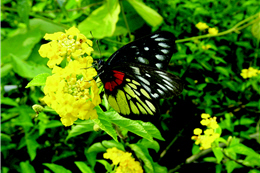
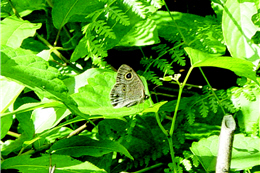
Tapangu is also harbors many Taiwan’s endemic species of butterflies: Papilio twaiwanus Rothschild, Ypthima formosana Fruhstorfer and Leucantigius atayalicus. The headstream of Zengwen River, Taptuana River, Iskiana Valley and the bottom forest are the major butterfly habitats. In addition todiverse fauna, the flora of Tapangu Tribe contains the tropics, the temperate zone and the frigid zone. The newly imported economic agricultural products also create a new landscape.
Bountiful Biodiversity
The landscapes of Tapangu Village are diverse. From waterfalls at low altitude to valleys at high altitude, the forest provides great habitat for all kinds of animals. The virgin forest at medium altitude has remained untouched and there are over 73 birds being recorded, including Lophura swinhoii, Cinclidium leucurum montium, Aegithalos concinnus and Accipiter virgatus, etc.. Tapangu Village deserves to be called the paradise of bird watching.
Tapangu is also harbors many Taiwan’s endemic species of butterflies: Papilio twaiwanus Rothschild, Ypthima formosana Fruhstorfer and Leucantigius atayalicus. The headstream of Zengwen River, Taptuana River, Iskiana Valley and the bottom forest are the major butterfly habitats. In addition todiverse fauna, the flora of Tapangu Tribe contains the tropics, the temperate zone and the frigid zone. The newly imported economic agricultural products also create a new landscape.
Tapangu Village Ecotourism Code
In order for the future visitors to enjoy the natural resources, this code is made on the belief that human and the Nature will co-exist.
1.When entering the tribe and the Nature, don’t do anything that might make the God angry.
2.Be well-prepared and planned before entering the Nature. Don’t take anything that the wildlife feed on.
3.Be a responsible visitor and don’t leave your garbage in the Nature.
4.Proper consumer activity is an investment for the tribe to be capable of protecting the Nature.
5.Feel with your heart and experience the achievement and joy of conservation.
Tsou’s Culture and Art
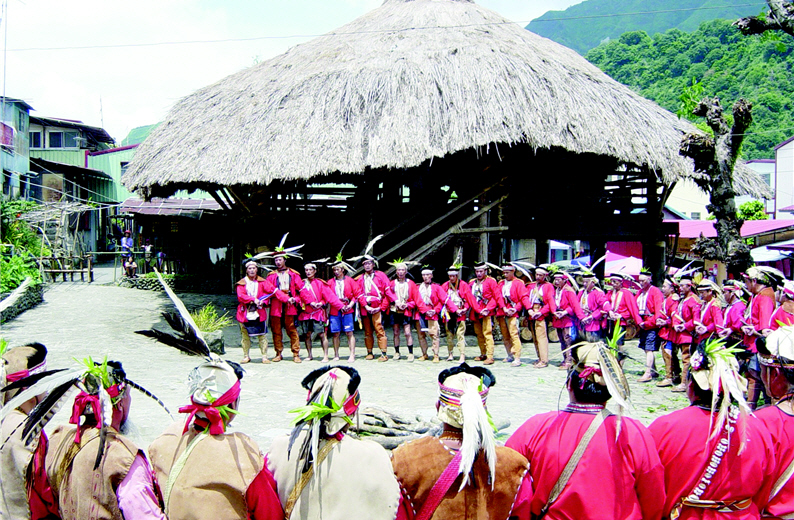
Tapangu is one of the two major Hosa (tribes) for Tsou and its satellite tribes include Shanmei, Sinmei, Chashan and Lijia. Tapangu hosts traditional war sacrifice (Mayasvi) and millet harvest sacrifice (Homeyaya) every year. During the rituals, villagers of satellite tribes will return to Hosa to participate in the celebration. Homeyaya is the Tsou New Year when Tsou families return to the large family worship houses to offer sacrifices to the millet god. It is also the time for family reunion and the hilarious moment for the Tapangu Tribe.
In order for the future visitors to enjoy the natural resources, this code is made on the belief that human and the Nature will co-exist.
1.When entering the tribe and the Nature, don’t do anything that might make the God angry.
2.Be well-prepared and planned before entering the Nature. Don’t take anything that the wildlife feed on.
3.Be a responsible visitor and don’t leave your garbage in the Nature.
4.Proper consumer activity is an investment for the tribe to be capable of protecting the Nature.
5.Feel with your heart and experience the achievement and joy of conservation.
Tsou’s Culture and Art
Tapangu is one of the two major Hosa (tribes) for Tsou and its satellite tribes include Shanmei, Sinmei, Chashan and Lijia. Tapangu hosts traditional war sacrifice (Mayasvi) and millet harvest sacrifice (Homeyaya) every year. During the rituals, villagers of satellite tribes will return to Hosa to participate in the celebration. Homeyaya is the Tsou New Year when Tsou families return to the large family worship houses to offer sacrifices to the millet god. It is also the time for family reunion and the hilarious moment for the Tapangu Tribe.
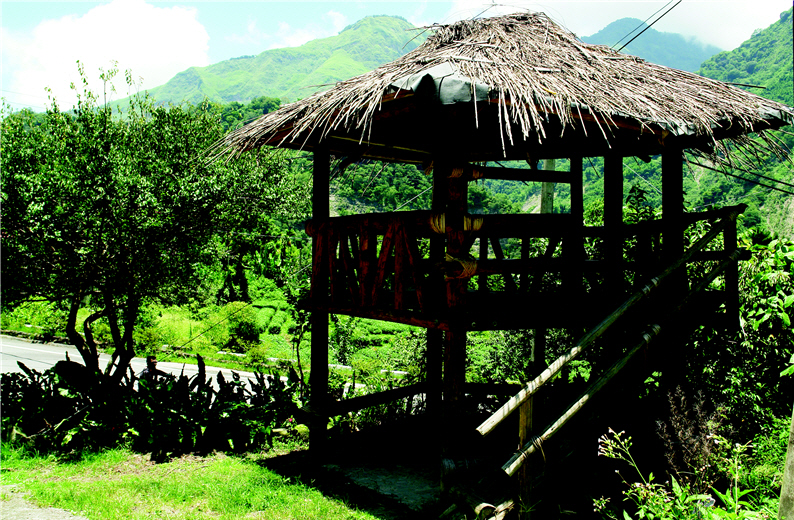
- upper: Kuba is the important meeting place for Tsou people.(by Ching-lian Pang)
- lower left: Cinclidium leucurum(by Jin-ying Liao)
- lower center: Delias hyparete(by Jin-ying Liao)
- lower right: Ypthima angustipennis(by Jin-ying Liao)
Tsou people believe that they are the War God’s descendants and they worship the Heaven. Kuba is the most dominant building and gathering place in the village. Traditionally, women are forbidden to touch or enter Kuba. Tsou people believe the Heaven God and War God will enter Kuba via the holy tree (Ficus Superba Japonica) nearby to bless the tribe. Although the time of war was gone long ago, the tight family relationship and tradition worships are still observed solemnly every year.
Tsou people are the mountain tribes and are good at applying materials from their environment for creation. There are many self-taught artists specializing in different craftsmanship, with artistic buildings and artworks seen all around. An in-depth ecotour contains DIY craftsmanship program and visitors could learn the Tsou people’s aesthetic view and taste.
Tsou people are the mountain tribes and are good at applying materials from their environment for creation. There are many self-taught artists specializing in different craftsmanship, with artistic buildings and artworks seen all around. An in-depth ecotour contains DIY craftsmanship program and visitors could learn the Tsou people’s aesthetic view and taste.
The Vision of Co-existence with the Nature
In the past 4 years, Tapangu has been very progressive in conservation and improving the quality of lodging, tour guide service, handicrafts and agricultural products marketing. It indeed generates income for villagers and the in-depth ecotourism connecting with traditional Tsou culture will be core development in the future. Now the authorities of Alishan National Scenic Area and Chiayi County are working on the improvement of the village infrastructure, including building a Tsou Natural and Cultural Center for keeping their heritage and conservation.
“The beauty of Tapangu is expressed from the tour guides’ words and stays in the visitors’ eyes and hearts!” Association Cangjing Jhuang says from his heart. Tsou people are trying to trace the root of their traditional culture and find their ancient ethic out of respect to the mountains and the the Nature. The experience in the past 4 years is still new and there is plenty of space for improvement. Each village member understands that it is a long way to go!
In the past 4 years, Tapangu has been very progressive in conservation and improving the quality of lodging, tour guide service, handicrafts and agricultural products marketing. It indeed generates income for villagers and the in-depth ecotourism connecting with traditional Tsou culture will be core development in the future. Now the authorities of Alishan National Scenic Area and Chiayi County are working on the improvement of the village infrastructure, including building a Tsou Natural and Cultural Center for keeping their heritage and conservation.
“The beauty of Tapangu is expressed from the tour guides’ words and stays in the visitors’ eyes and hearts!” Association Cangjing Jhuang says from his heart. Tsou people are trying to trace the root of their traditional culture and find their ancient ethic out of respect to the mountains and the the Nature. The experience in the past 4 years is still new and there is plenty of space for improvement. Each village member understands that it is a long way to go!
- upper: War sacrifice (Mayasvi) is an annual traditional ritual of Tapangu Village.(by Jin-ying Liao)
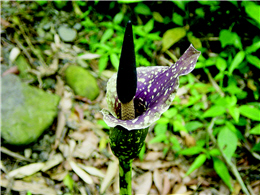
- lower left: Amorphophallus henryi N.E. Br(by Jin-ying Liao)
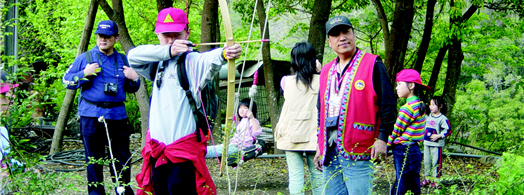
- lower right: In the Ecotourism to Tapangu Village, one can try the traditional Tsou archery.(by Su-yun Dai)


