
Ecotourism : Explore the Beauty of Taiwan -
Ecotourism has become popular in recent years. As the economic and the concern about environment conservation grow, the old demotic style of tourism can no longer meet the demand of modern people. Ecotourism of high quality emphasizing the depth and responsibility becomes the mainstream. To support the sustainability of ecotourism, the government establishes a Promotion Team of scholars and experts to conduct phased on-site survey, hold research result presentations and function as the professional advisory platform.
The Ecotourism Promotion Team Provides a Professional Advisory Platform
With the purpose to effectively revive domestic tourism, the Executive Yuan announced in May 2001 the “Domestic Tourism Development Project,” including a strategy to promote ecotourism through joint tourism resources. In the following year, in responding to the International Ecotourism Year advocated by UN, the government announced the year 2002 as Taiwan Ecotourism Year. In 2004, NCSD of Executive Yuan proposed the Ecotourism White Paper to promote ecotourism and make it a mainstream industry.
Through collaborations between the gov-ernment and ptivate institutions, many eco-tourism sites have been established. “Water &Land Resources Working Group (WLRWG)”,NCSD, Executive Yuan initiated the selection and consultation on domestic ecotourism sites in 2004.
Denition of Emerging Ecotourism
“Benefit Feedback is the true essence of ecotourism,” says Yann-jou Lin, leader of the Promotion Team and professor of Department of Horticulture, NTU. He points out the blind spot of contemporary understanding about ecotourism, and stresses that it is necessary to clarify the definition of ecotourism before promoting this emerging tourism model.
According to WLRWG in the Ecotourism White Paper, ecotourism is a kind of tour conducted in natural environment with the focus on ecological conservation and sustainability as the ultimate goal. An ecotour of this mode must lead visitors to understand and appreciate with local natural and humanity environments through guided services, provide environment education to enhance visitors’ knowledge and inspire them to be responsible for environmental conservation. Eventually, all economic feedback will be given to the site for promoting conservation and improving the residents’ life.
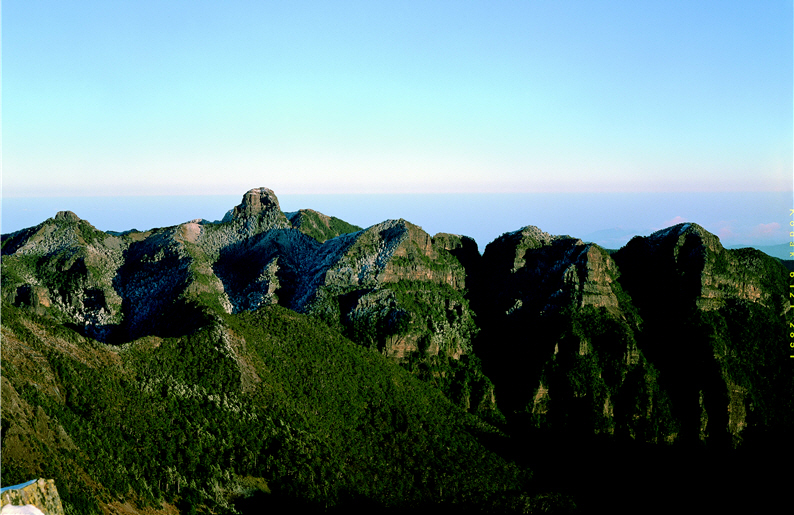
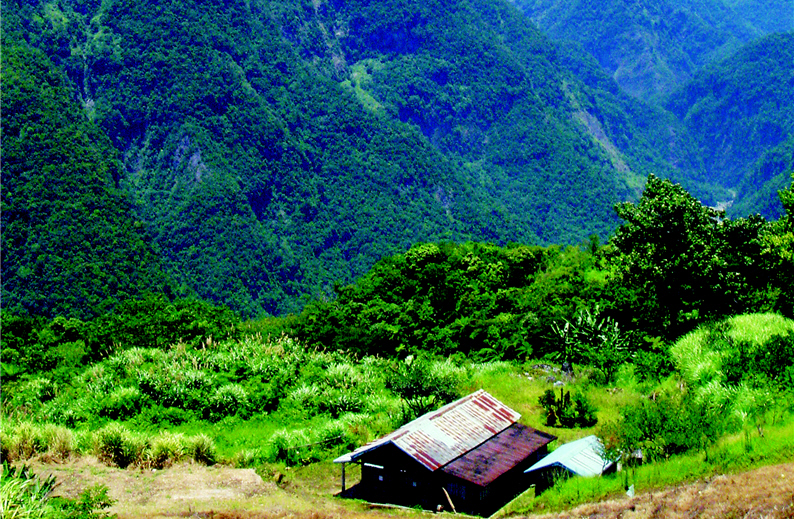
- upper: Daba Peaks.(by Shih-jhong An, provided by SPNP)
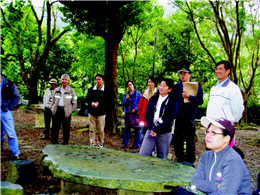
- lower left: The Promotion Team went to Ecotourism Site for on-sit esurvey. (provided by Ling Lin)
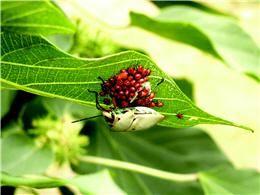
- lower center: The Cantao ocellatus protects its nits. (provided by Albe Farm)
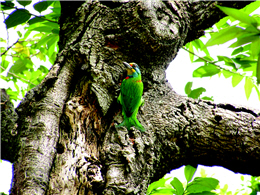
- lower right: Megalaima oorti (provided by Albe Farm)
Text/ Wan-Ju Chiang
Photographer/ Shih-jhong An
Lin regards the definition of ecotourism as a chain relationship among visitors, the tourism industry, local residents, operators and the environment. First, the site must have characteristic natural landscape or cultural significance. In the tour process the carrying capacity of visitors should be monitored on the basis of a responsible attitude and behavior so that no damage will be inflicted on resources conservation and sustainability.
In addition to helping visitors to actively learn and acquire conservation concepts, Lin said that the participation of local community and the benefit feedback are actually the most important part of ecotourism. Decades ago, some scenic spots tried to attract tourists in the name of ecotourism. However, according to their standard at that time, an activity can be called an ecotour as long as the object of observation belonged to a primitive and undisturbed natural resource.
Lin sneers at the misconception of some people who overly emphasize ecotourism and believe that the government will subsidize any activity carrying the name of ecotourism. Different from the traditional mode, the modern ecotourism is interpreted as an ethical relationship between man and the environment on the premises of conservation and sustainable management of the environment where a low-impact small tour is allowed, coupled with local participation so that the residents may be benefited and motivated to preserve their cultural and industrial resources.
The Mission of the Promotion Team
When the concept of new ecotourism was established, the Promotion Team began the on-site survey of ecotourism sites proposed by the selecting and monitoring groups of CPA according to their development potential.
In the following year the focus program of the Promotion Team expanded to 11 ecotourism sites, including Albe Farm, Lunpi Village Ecotourism Area, Wuling Farm, Fushaoshan Farm, Shanli Culture & Ecotourism Demonstration Village, Nan-an Walami Ecotourism Site, Caoling Recreation Area, Taijiang Ecological & Cultural Zone, Cigu Lagoon and Black-Faced Spoonbill Conservation Area, Wutai Township, and In the following year the focus program of the Promotion Team expanded to 11 ecotourism sites, including Albe Farm, Lunpi Village Ecotourism Area, Wuling Farm, Fushaoshan Farm, Shanli Culture & Ecotourism Demonstration Village, Nan-an Walami Ecotourism Site, Caoling Recreation Area, Taijiang Ecological & Cultural Zone, Cigu Lagoon and Black-Faced Spoonbill Conservation Area, Wutai Township, and Fongguei Peninsula.
The mission of the Promotion Team is to invite scholars and experts in eco resources, history, conversation, environment protection, land development, community infrastructure establishment, recreation management and national parks, etc. to conduct on-site surveys. After communicated with local residents, the Team is able to proposed multi-aspect advices. Last year, the Team expands its consultation to ecotour agencies and site managers by holding training seminars and research result presentations to establish an communication platform.
- upper: Dali Village of Taroko.(by Cora Hsu)
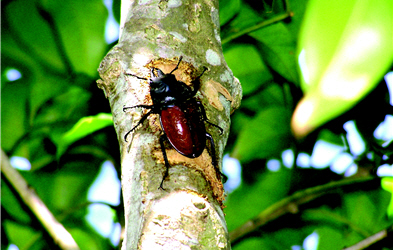
- lower left: Neolucanus swinhoei (provided by Albe Farm)
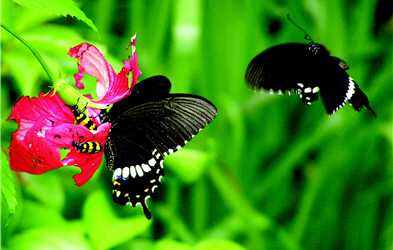
- lower right: Papilio polytes pa sikrates (provided by Albe Farm)
Establishing the Supervising Authority and System
“It is most important to have a correct concept of ecotourism.” After 2 years’ consultation trips, Lin regards the Tapangu Village of Alishan National Scenic Area as the best ecotourism site in Taiwan. The major problem with the other sites is the impeded development resulted from misconception.
More problems come from the deformed operation due to the site managers’ greed. Lin said that in most cases the managers try to operate in multidirectional purposes, inviting joint venture to expand the establishment out of excessive ambition, or become too careless about the carrying capacity on the false belief in that crowds brings money without realizing that it is the beginning of deterioration of an ecotour that leads to elimination.
Lin suggests that the government should produce a common consensus on ecotourism, establish a standard for the carrying capacity. Different sites needs to be evaluated and rated as low, medium and high according to their responsibility and impact on the environment, and then separated into different levels according to the “purity” of their operation. A supervising governmental authority will issue certificates and offer professional advice and strict censorship in addition to establishing an “alert mechanism” and “exit mechanism” that gives a warning against deterioration. Lin believes that this is the best policy for sustainable ecotourism.
“Ecotourism can only be a side job rather than a major work,” Lin points out the true meaning of ecotourism. He emphasizes that accurate ecotourism concepts can only be based on the condition that the community could benefit from such tourism mode to invite active conservation in return. However, the site managers and local residents must never have such an illusion that ecotourism can bring instant wealth. The long-term policy is the key to sustainable operation. “Rather do it slowly and properly than consume all the resources from our future generations,” Lin said.

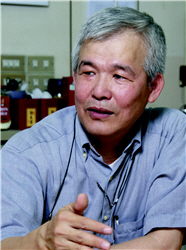
Yann-jou Lin
Ph.D.,Graduate School of Civil Engineering, Nor thwest University, USA
Professor, Landscape Horticultural Group, Department of Horticulture, NTU
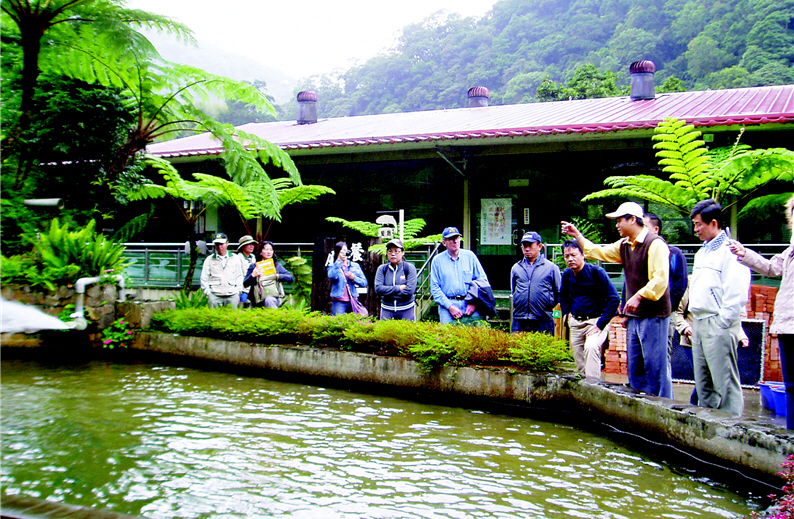
- upper: The Promotion Team went to ecotourism site for on-site survey.(by Ling Lin)


