
Sustainable Ecotourism Generates New a Conservation Vision-
Does an ecotour simply mean touring into the Nature?
It is wrong to think so. True ecotourism should involve ecological conservation as well as caring the benefits to local community. It starts with respecting the Nature through an experience filled with both sense and sensibility. Make it a rule that visitors stay in harmony with the Nature.
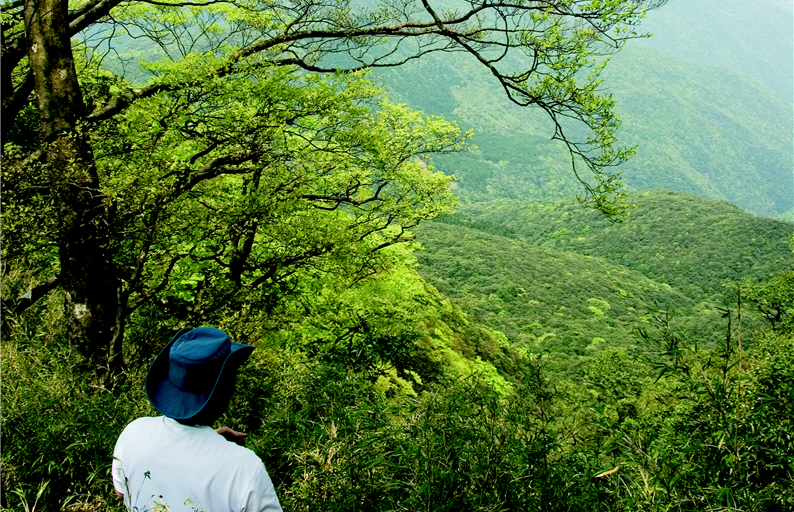
A group of visitors get off the tour bus and follow the tour guide into the forest at medium elevation, ready to experience a so-called “ecotour”. Rushed by the tour guide along the trail, the visitors never have a chance to see the coal tits that come by the wind and perch on the cherry trees. They don’t stop to observe the beautiful leaves and the blue mountains afar, or try to feel the cozy temperature and hear bird singing. They miss the best enjoyment that the Nature can offer.
Not until they reach the end of trail where a stream flows beneath the waterfall the tour guide begins to introduce the environment very briefly. The garbage left by other visitors can be seen all over. The rocks by the stream are blacken with smoke from previous BBQs. A visitor finds a wild orchid accidentally and wants to dig it out for planting at home while other visitors come for his help and the tour guide don’t even try to stop them. Several visitors complain that the trail is not smooth enough, the view is not good, the stream is filthy and it is not fun just walking all the way... People must be very confused that how an ecotour can be so boring.
Start from Conservation and Local Welfare
Ecotourism has become very popular in Taiwan. However, according to Liu’s observation, many people still don’t have a clear understanding about ecotourism, and some even regard ecotourism merely as a trip into the Nature. As a matter of fact, the content of ecotourism refers to serious and significant meaning of sustainability and conservation.
Ecotourism might originate from the combination of two causes. Firstly, some protected wilderness areas that did not allow tourism for the protection of precious resources from damage in the past but later are open to public appreciation and experience in response to the appeal from enthusiasts on condition that no damage may be inflicted on the environment. Secondly, the rapid economic growth from 1960s to 1970s in Western countries enabled the public to seek for recreation, and the development of transportation makes tourism a major activity at leisure. When massive tourists rushed into the reservations of aborigine tribes, the indigenous animals and plants were disturbed by the traffi c, the expansion of commercial areas near the sites as well as the invasion of foreign species.


Lucia Liu
Ph. D., Cornell University, USA
Researcher of Biodiversity Research Center , Academia Sinica.
Research specialty: bird conservation, biodiversity, and integrated resources conservation.
- upper: Ecotourism is a travel environmental responsibility.(by Peter Wang)
Text/ Ann-hua Chuang
Photographer/ Peter Wang‧Pi-yi Lin‧Yu-li Lin‧Jeng-hao Yu‧Cheng-hsiung Chang‧Yan-li Jhang‧Chao Huang‧Wen-yu Huang‧Jhih-ming Chen‧Pei-chi Chen‧Huei-ting Chen
In 1965, Hetzer brought out the concept of Ecological Tourism with a hope that through a joint reflection by the culture, education and tourism industry to develop a least-impact tourism mode based on local cultural and environmental characteristics yet most satisfactory to local economy and visitors. The path of economic development never stops and the Nature is constantly suffered. As a result, many primary spices and natural environments are forced by man to face the fate of extinction in a very short period. Many conservation activists and organizations are eager to find new strategies for sustainable conservation and delaying the loss of the Nature.
In 1983, Mexican conservationist Ceballos Lascurain proposed “Ecotourism” to convince the public to preserve the Phoenicopterus chilensis habitat at northern Yucatan wetland in Mexico. His idea of ecotourism is to vitalize local economic activities through bird-watch tours, and the people and government will take care of the ecological environment of Phoenicopterus chilensis habitat to preserve this species.
The initiation of ecotourism is like a solution to rescue the ecology and has been introduced into operative and management strategies of national parks by many countries. For example, the American national parks, national reserves, national monuments, national recreation areas, etc. try to fuse ecological education systematically with ecotourism, so that through a trip both instructive and entertaining every visitor may realize the significance of coexistence in an ecological system. Moreover, through ecotourism people will learn the operation and management of environment, transforming the pressure human being brings to environment into a conservation force.
Ecotourism became a trend in the Western countries during 1980s. At about the same time in Taiwan, several academic reports introduced the concept of ecotourism. In 1990s, certain national parks and related ecology research institutions such as museums, conservation associations like bird-watching association, and magazines on Taiwan ecology began to conduct small-scale ecotours with the advantage of the information and human resources they possessed. In the meanwhile, some foreign tourism authorities also started to promote their ecotour programs and. ecotourism becomes a new travel trend in Taiwan.
During the early stage of the development of ecotourism in Taiwan, due to limited information, human resources and content of package tours, ecotourism remained as small target group trips. In 2002, the government brought up the “Tourists Doubling Project” , expecting to increase the annual visitors to Taiwan from 2.6 million to 5 million revive domestic economy. The Tourism Policy Promotion Commission of Executive Yuan and Tourism Bureau of MOTC started to make plans and white Papers on promoting ecotourism strategies based on domestic ecotourism resources.
The government’s involvement in Taiwan ecotourism is accelerated by noticing the active ecotourism development in other countries. The ecotourism grows rapidly by 10-15% per year. Well-planned ecotours not only can ensure ecological environment not to be damaged from public tourism, but also bring great economic benefits to local community as well as the entire country. Ecotour packages such as watching gorilla in Congo or observing Hippocampus bargibanti on Batanes Islands, Indonesia, are very popular among international tourists and increase foreign currency exchange revenue.
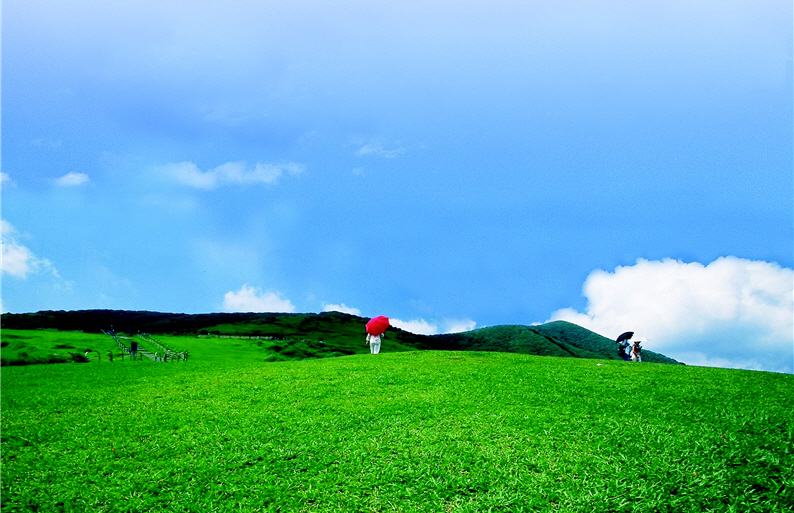
- upper: Avisits to YMSNP in Taipei brings you closer to Mother Nature. (by Piyi Lin, provided by YMSNP)
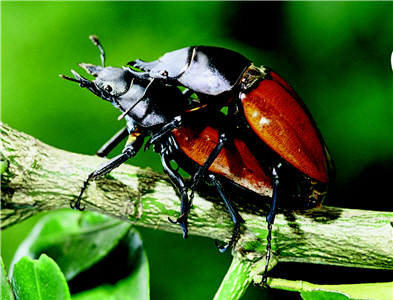
- lower left: Neolucanus swinhoei in copulation. (by Chao Huang, provided by YMSNP)
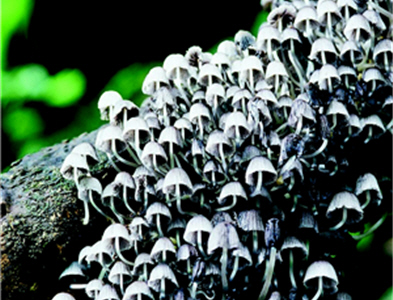
- lower right: Different scenes are in display by turns on the stage of the Nature with every season unfolded. (by Huei-ting Chen, provided by YMSNP)
Provide Sustainable Operation
With the ecotourism policy promoted by “Tourists Doubling Plan” introduced, domestic ecotourism flourished and became a national exercise with governmental support within 2 years. Nevertheless, “some activities were executed in a wrong way and the tourism sites were damaged,” Liu said. For example, during the whale-watching tour emphasizing ecological experience, some boat drivers come too close to the whales in order to please their customers without respecting the habit of whales. The frightened whales and dolphins often dive deep into the water at the risk of suffocation, sterility or even death.
Maybe the travel industry never fully understands the true meaning of ecotourism, but remedy should be conduct accordingly once the damage is made,. The Water & Land Resources Working Group of NCSD, Executive Yuan thinks it is necessary to revise Ecotourism White Paper from the viewpoint of land conservation.
Experts and scholars are invited to redefine ecotourism and clarify the spirit and goal of ecotourism. Concrete ecotourism-related policies are expected to be made from sustainable approaches beyond the vision and duties of the tourism authority.
Delegated by NCSD of Executive Yuan to revise Ecotourism White Paper, Liu finished the revised version by 2004. As stated in the Ecotourism White Paper, ecotourism “is a model tour conducted in the Nature.
It emphasizes the concept of ecological conservation and the sustainable development is the ultimate goal.” Ecotours qualified such definition must lead visitors to understand and appreciate local natural and humanity environment through guiding service. It must also provide environmental education to enhance visitors’ awareness and thus inspire their responsible actions. The economic feedback should be given to local community to help local conservation in addition to advancing the community welfare.
Liu pointed out that the revised Ecotourism White Paper provided clear definition of ecotourism, its spirit and goals, ecotourism sites, visitors and transportation carrying capacity as well as local tour guide training.
Upon the publishing of revised Ecotourism White Paper, Executive Yuan assigns National Park Department, CPAMI to conduct ecotourism consulting by welcoming recommendation for ecotourism sites, inviting experts to review and establishing an ecotourism promoting team.
8 Principles to Differentiate Ecotourism
Years ago, U.S. National Park Service Center proposed a popular slogan: “Leave nothing but footprints; take nothing but photographs.” However the Service Center also realized that even footprints may hurt the ecology if visitors cannot become listeners and dialogists to the ecology of National Park.
The way for visitors to become ecological listeners and dialogists is to participate in ecotourism and experience sustainable operation and the wonders of nature. In Ecotourism White Paper, 8 principles are suggested for differentiating true ecotourism. Any negation of the following would disqualify the tour as an ecotour:
- Only low-impact environmental recreational activity and accommodations should be employed.
- Regardless of group size or number of visiting groups, number of tourists to the area has to be limited.
- Provide full support to the employment of local natural
resources and humanistic conservation work - Employ local residents and vehicles as much as possible
- Provide tours that help tourists appreciate experiences with nature.
- Hire guides who know well the local natural environment and culture.
- Make sure that local wildlife and plants won’t be disturbed and the environment not spoiled.
- Respect the traditional culture and privacy of life of local residents.
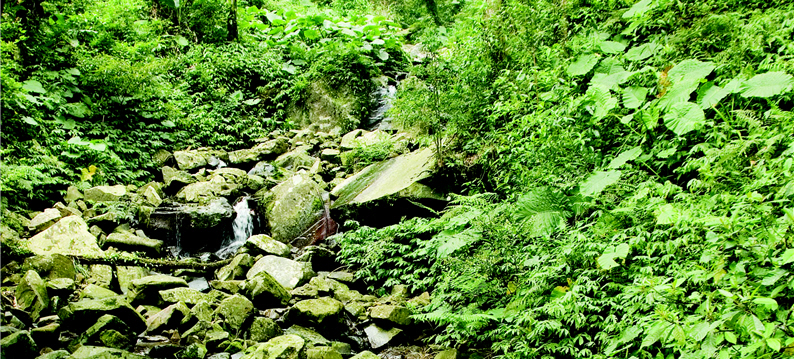
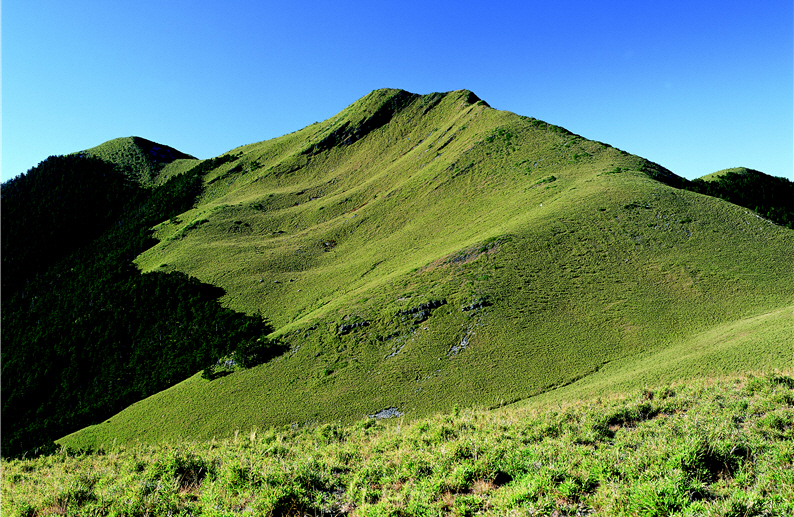
- upper: Dasyue Mountain. (by Jenghao Yu, provided by SPNP)
- lower: Don't over look the creeks in the valley below when you look up to admire the stretching mountains.(by Peter Wang)
Improper development of ecotourism might bring economic profits for few people in a short time, but it is only short-sighted operative method that harms the sustainability of local community, the society, and the nation. Liu points out the visitors and tour operators more or less will cause damage and pollution to the environment. They should be liable to t make the best effort to contribute human resource, money and other resources to reduce the damage to the environment.
Fascinating Target Tours
Learning and experiencing are one fast way to help visitors understand the purpose of ecotourism. Liu said that. Instead of a superficial casual observation, foreign tour industry usually conduct a tour through monitoring visitor and activity capacity on site, and providing in-depth guiding service on ecological characteristics and the ecological influence over human beings.
In addition, a good tour guide will inspire visitors to treasure the natural ecology in Taiwan. The site for an ecotour is not necessarily be a remote wilderness, and a, community park or small hills may also provide ecological attraction. Some tour guides are too serious and too focused on academic knowledge rather than easily understandable approach to explain the relation between spices and environment. Such guiding service will be too boring for visitors to enjoy. Thus the tourists will inevitably lack interest in the beauty of the Nature.
Sometimes all visitors need is a little guidance to be able to notice the relations among different life forms, to hear the birds singing, to smell scent of flowers, and will realize the interaction and diversity of natural resources. Liu suggests those tour guides to design an interesting story about the environment as main frame that leads the tourists to discover the wonder of individual species by touching their heart. When people fall in love with ecotourism, they will learn to care about the land they live in.
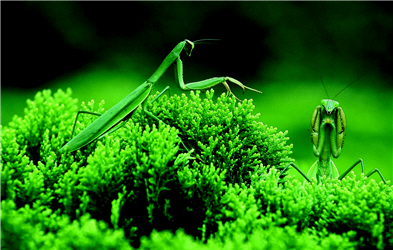
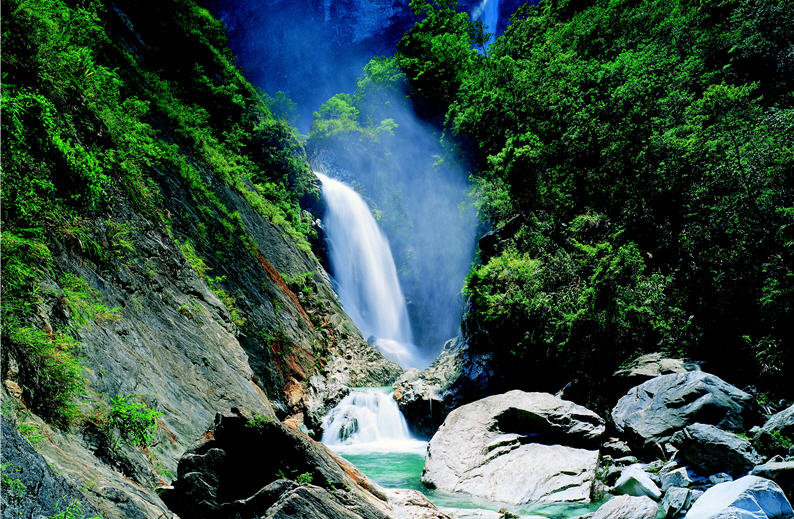
- upper: Baiyang Water fall of Taroko. (by Wen-yu Huang, provided by TNP)
- lower left: The insect world of Taiwan provides infinite fun in ecology experience. (by Yu-li Lin, provided by YMSNP)
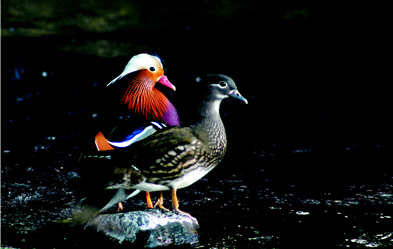
- lower right: Aix galericulata (by Yanli Jhang, provided by SPNP)


