
Concepts above Techniques-An Interview with Nature Photographer Jen-hsiu Hsu
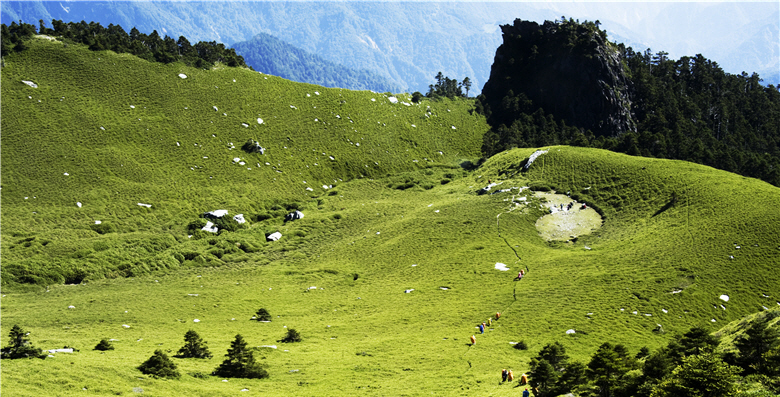
The fast rule of the Royal Society for the Protection of Birds (RSPB): “The welfare of the subject is more important than the photograph.” Such spirit should be borne in every nature photographer's mind......
A celebrated nature writer, Jen-hsiu Hsu has traveled around the globe conducting ecological investigations as he photos and writes about Nature. He is confident and articulate with wrinkles of experience and perseverance on his face.
Coming through a long way from Wu-lai to the Society of Wilderness (SOW) with a busy schedule, he was somewhat in haste through this interview.
A Born Nature Observer
But when speaking of nature photography, Hsu was still in high spirits describing all the impressive and unforgettable moments. “Snakes are a difficult subject to shoot because they appear irregularly and mostly at night. Poisonous snakes are easier since they do not fear humans, but the point is don't get bitten by them,” Hsu talked with a brief, firm and non-hesitant tone.
During the daytime in the SOW, classrooms were unlit and empty, with some staff and volunteers quietly at work. On the walls were exhibited dozens of photos taken by Hsu, recording his traces, while the thank-you certificates granted by various groups served as a proof of his contributions to Taiwan's ecological education.
Non-aggressive Nature Photography
Manipulative methods have often been used by many photographers, which would disturb the animals' life, Hsu said regrettably. “In shooting a documentary of wild animals, one must work with zoologists to plan the routes, locations and details such as where to hide to get some good shots. When filming larger animals, one must avoid disturbing them. ”
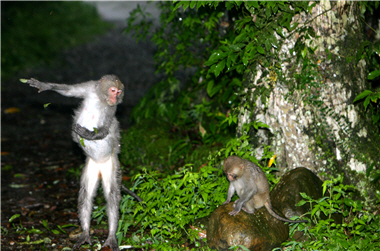
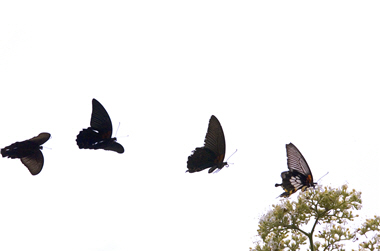
- upper: Nature photography shows and cares about Nature, not ravage it.
- lower left: Such an interesting moment could only be caught under the situation of mutual respect between humans and animals.
- lower right: Without being tampered by any special effects, this is an authentic picture of many male butterflies going after a female in front.
Interview & Text/ Ding-guo Dai
Photographer/ Ching-hua Wang
Translator/ Kuan-yu Ou
“In photographing birds, Some people would use dazzlingly bright flashlights or even cut off twigs and branches near the birds' nests. This kind of manipulation totally ignore the risk of ruining birds' breeding, and is simply a destructive act to ecology,” said Hsu somewhat indignantly.
He prefers non-aggressive methods whenever possible. He never photographs birds in the nest because it often leads to tragedies such as a mother bird abandoning the nest, or eggs being kicked off the nest by frightened birds. When being a judge for nature photography contests, Hsu would deny these kinds of ecologically unethical works any nominations.
“There was once a contestant trying to catch the moment a mother bird fed her young. But the bird sort of hesitated to get into the nest because she saw the photographer was nearby, which turned out an aggressive intervention.”
Legislation for Bird Photography in Britain
The negligence in photographing bird nests has long been criticized by naturalists. In Britain, ethics of bird photography has been regulated by law – the Protection of Bird Acts 1954-67 – which prohibits any up-close photography of rare birds near their nests without the license granted by Nature Conservancy. In other countries such as Iceland, shooting the nests of rare birds without a license is also illegal.
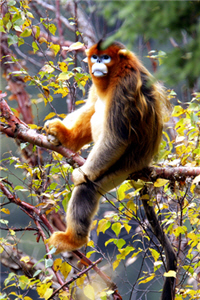
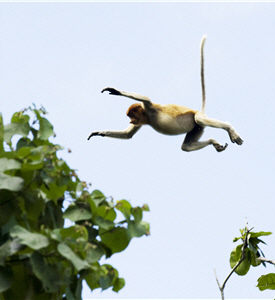
- upper left & upper center: In photographing wild animals, one must be familiarized with their habitual ehaviors before planning the routes and locations for shooting. On the left is Snub-nosed Monkey (Rhinopithecus roxellanae), On the right is Nasalis larvatus.
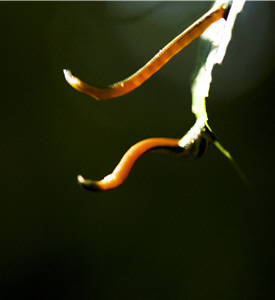
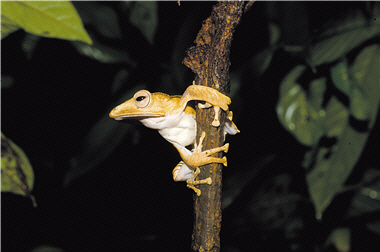
- upper right: Snakes are a difficult subject to shoot because they appear irregularly and mostly at night.
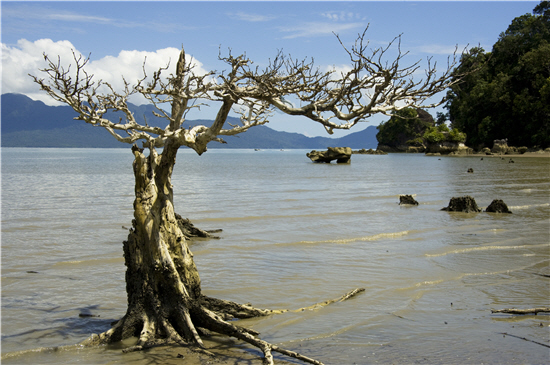
- lower left: The dead tree shows strong vitality under the lens of Jen-hsiu Hsu. The picture was taken in Sarawak.
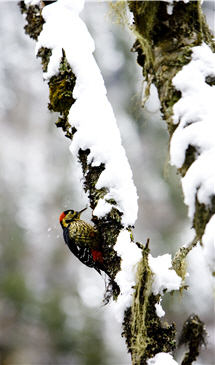
- lower right: Photographing birds in or near their nests should be avoided because it may lead the mother birds to abandon the nests. The picture shows a Darjeeling Woodpecker (Dendrocopos darjellensis ).
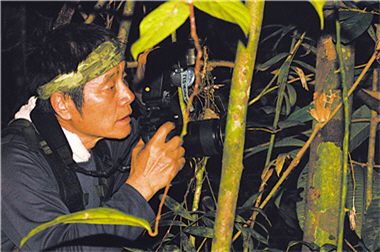
As for whether Taiwan would follow suit, Hsu felt pessimistic. “Even issues as important as national land planning would be tabled for years in the legislature, not to mention minor acts such as ethics of nature photography.”
“It should be proposed and promoted by civil groups including birding associations, nature photography societies, and animal welfare institutes. But there's still a long way to go,” said Hsu.
More Care, No Ravage.
Britain's Association of Natural History Photography Societies, in order to supplement related laws, once proposed the Nature Photographer's Code of Practice, which was also adopted by the Royal Society for the Protection of Birds (RSPB). In the Code is one hard and fast rule: “The welfare of the subject is more important than the photograph.” Such spirit should be borne in every nature photographer's mind.
With experience of a judge in photo contests, Hsu advised that one should notice questionable points in a photo and whether there is any devastation on the ecology. He once found someone glued a fledgling on the red fruit of a Giant Elephant Ear ( Alocasia macrorrhiza) and used heavy lighting. “It looked impressive but was truly despicable violence. Nature photography shows and cares about Nature, not ravage it.”
Hsu always reminds nature photographers to keep in mind:“ The welfare of the subject is more important than the photograph.”

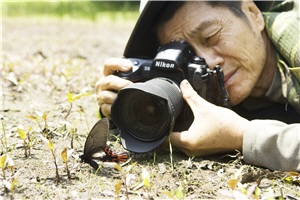
Profile of Mr. Jen-hsiu Hsu
A known writer and nature photographer, Hsu was once accredited to Nicaragua as an agricultural consultant, and has started traveling and photographing around the world since 1974. He had won Wu San Lien Journalistic Literature Award, Lucian Wu Prose Award, etc. In 1995, he founded the Society of Wilderness, fundraising to purchase wild-land to preserve the ecology and species.
- upper left: Hsu was all focused taking picture of Nature photography.
- upper right: A Giant Tree Frog (Litoria infrafrenata ) was spawning on a tree.


