
Balance Between Nature and Technology-Canaveral National Seashore and Merritt Island National Wildlife Refuge, Florida, U.S.A.
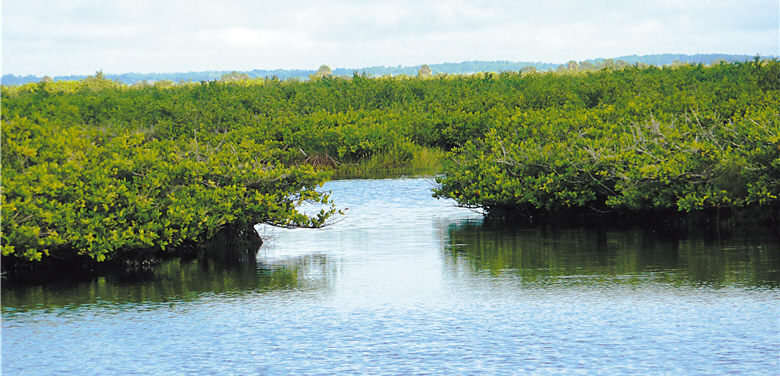
In comparison with the picturesque scenery and spectacular terrain of Yosemite National Park and Yellowstone National Park, Canaveral National Seashore (CNS) and Merritt Island National Wildlife Refuge (MINWR) of Florida, U.S.A., exhibit extensive bodies of waters from swamps to seashores. The area mainly consists of a wetland ecosystem and plays a significant role during a time of extreme global weather conditions.
MINWR was previously known as a World Heritage Site, an International Biosphere Reserve, a Wetland of International Importance and a renowned paradise for birds with a unique shallow-water swamp ecosystem. CNS is a coastal national seashore whose sandy shore is the longest and the most primitive-looking in the Atlantic coast of U.S.
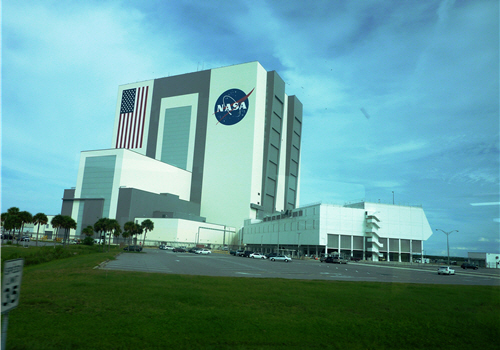
In 1960, National Aeronautics and Space Administration (NASA) acquired a substantial land portion of the north of Merritt Island, adjacent to US Air Force's Cape Canaveral Air Force Station as a space shuttle launching site. This area was later named “John F. Kennedy Space Center” (KSC) in remembrance of President J.F. Kennedy.
What is the connection between a protected area and space shuttle launch? KSC, MINWR and CNS are located in the wetlands of Indian River. This massive mangrove swamp is separated by Merritt Island and bordered by Mosquito Lagoon on the north. Indian River flows across the meeting point of Banana River and Cape Canaveral before entering the Atlantic Ocean. Both MINWR and CNS are located in the north of KSC and serve to protect the mangrove swamps of Mosquito Lagoon and the Indian River north. Each area zone serves its own purpose, but all 3 area zones are bound by technological development. This area resembles Taiwan's Taijiang National Park, with the same focus on wetland wildlife conservation.
After the establishment of Taijiang National Park, Ling Lin, Section Chief of National Parks Division, on behalf of National Parks of Taiwan, was invited by the U.S. Department of State for an in-depth visit and research to obtain a complete picture of the entire development. The development and background of MINWR and CNS are similar to those of Taijiang National Park in many aspects: a multi-purpose wetland features technological, agricultural, commercial and industrial usages; local groups take the initiative to build the region.
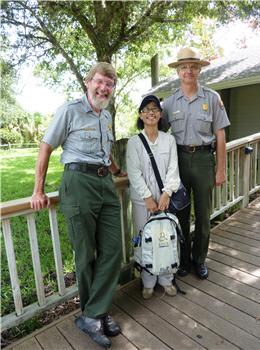
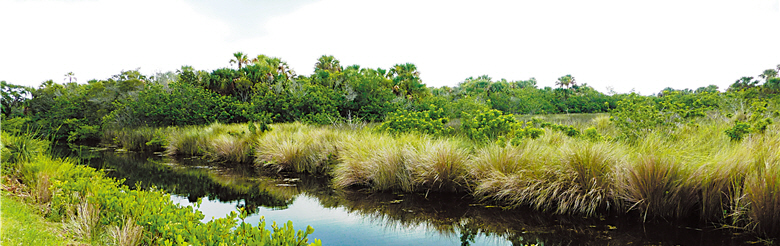
- upper: The landscape and the periphery of Canaveral National Seashore are highly similar to those of Taijiang Natinal Park. / by Ling Lin.
- lower left: At the invitation of the U.S. State Department, the management of Taiwan's national parks gets to make more exchanges with their U.S. counterparts. The guide by Sam (left) and John (right) makes the visit more fruitful. /Photo provided by Ling Lin.
- lower right: Kennedy Space Center that adjoins the park owns the land and donates it to ensure environmental sustainability. It sets a good example of pursuing technological developemnt while looking after ecological conservation. / by Ling Lin.
Text/ Yu-min Lai
Amendment/ Ling Lin, Section Chief of National Parks Division, Ministry of
Interior’s Construction and Planning Agency.
Photo provided/ Ling Lin
Translator/ Ingrid Cheng
Human Activities Prior to the Start of Land Conservation
In fact, the lands of MINWR and CNS were not under the management of the U.S. National Park Service or National Marine Fisheries Service, but KSC.
NASA acquired a greater part of northern Merritt Island in 1960 as a space shuttle testing and launching complex. The lack of extensive land development in the region has inspired Allan D. Cruickshank, an ornithologist, naturalist, environmental protection teacher and photographer, to become actively involved in convincing National Marine Fisheries Service to enter an agreement with NASA. By 1963, NASA has converted the unused northern section into a wildlife protected area. Canaveral National Seashore was created in 1975 by an act of U.S. Congress to conserve the primitive barrier beach in the Atlantic coastal area. The established link between a national park and refuge leads to a huge step toward ecosystem conservation and environmental protection.
The Ramsar Convention regards “wise use” as the highest principle for utilizing wetlands. In other words, sustainable utilization can be achieved through the use of the ecosystem. The human activities on the Indian River wetlands are best to explain the importance of wetland conservation and the balance between human and nature.
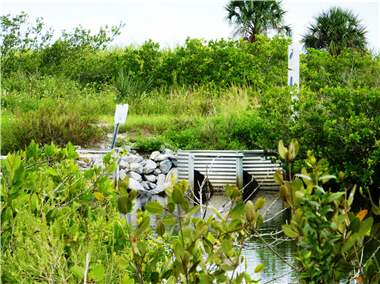
Mosquitoes were a huge nuisance to NASA employees. To solve such problem, biologists were hired to conduct mosquito control of the swamp region. Retaining running water in the wetlands helps reduce the likelihood of mosquitoes laying eggs. To ensure running water on the wetland, swamps with a larger land portion were divided into smaller areas to create tributaries and further separated by 3-m-wide soil levees. Culvert pipes were buried underneath the soil levees to control running water during mosquito breeding season. Once the breeding season ends, the levees would be closed to maintain the original look of the swamp.
This particular design certainly puts human life and the natural ecosystem into consideration, effectively minimizing the mass breeding of mosquitoes. Afterwards, human development started to emerge, and the area soon turned into a popular holiday resort and retirement destination.
Solution Required for a Problem
With the increase of human activities comes the ecosystem destruction and environmental pollution.
The fish stock of the protected area was decreased by approximately 50% compared to the 1950s due to the following reasons: First, the increase in human food consumption has led to overfishing and a significant depletion in fish stock. Second, water pollution is so serious that local residents refuse to buy locally caught fish, but prefer fish varieties from abroad. Third, the destruction of the natural habitat. Massive harbor and sea levee constructions, along with the disintegration of the natural habitat result in the reduction and extinction of species. The destruction of the natural habitat already caused the disappearance of rocky-algal reef, which grows best at 6 ft. under the sea surface. However, more than 170,000 ares of lake regions are below the depth of 6 ft., or even below 3fts. According to the statistics, the total area size of rockyalgal reef was 84,000 ares in 1986, whereas the current land size is 20% less than 20 years ago. Thanks to the works of IRLNEP, SWIM and the local governments helping to purify the water, a certain number of rocky-algae reefs of the region have gradually been restored.
Between the periods of 1950 to 1970, about 75% of wetlands and mangrove forests were destroyed and changed. The launching of habitat disintegration has effectively reduced the mosquito pollution during the breeding season but turned some 40,000 ares of wetlands into a mosquito control reservoir. This marked the extinction of indigenous wetland plants. 70% of the reservoir is now connected to the swamps to revive the wetland plants.
- upper left: Biologists use dikes and culverts to control the flow of water so as to deter mosquitoes from laying eggs. During the breeding seasons they open the culverts for a smooth flow of water and close them during non-breeding seasons. The picture shows the gate that controls the water flow./ by Ling Lin.
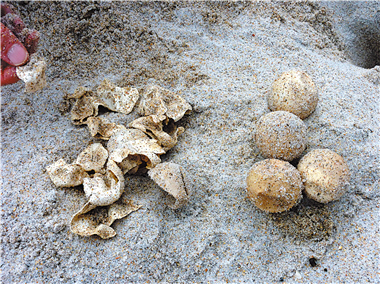
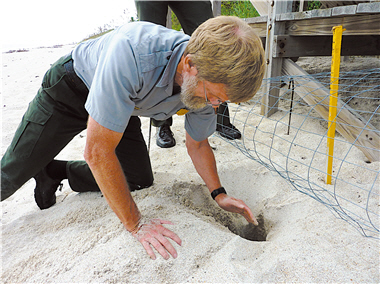
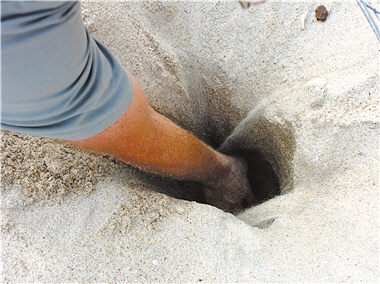
- upper right, lower left & lower right: The seacoast is an important place for Loggerhead Turtles and Green Turtles to lay eggs. Sand screens are placed at the mouth of a cave to prevent the racoons from stealing the eggs. The pictures show the process of species counting research./ by Ling Lin.
The migration of alien species, particularly the wild boars, is another trouble in the area, in which the Administration could only hunt down or remove the alien fauna and flora species to avoid harming the native species in the area.
Man-made Nature
After the visit, along with complete escorted tour and information provided by U.S. government and the local NGOs, Lin realized that water levels and tides of CNS swamps and MINWR are the works of man-made mechanical manipulation. Hence, the Seashore and the Refuge cannot be categorized as a natural site.
People would wonder: Can the man-made mechanical manipulation be considered part of nature? Is it the only way to protect the indigenous fauna and flora? Nevertheless, as humans are determined to coexist with nature, the man-made operation is the only suitable solution that was researched and established by U.S. National Park Service, Marine Fisheries Service and U.S. Environmental Protection Agency based upon the current situation.
Southern Florida would not be able to enjoy a perfect shallow-water swamp ecosystem without complete authorization of KSC, the help of National Park Service working on the coastal terrain protection, Environmental Protection Agency on monitoring water quality, as well as Marine Fisheries Service on protecting natural resources and setting limits on fish stock.
Sam, Acting Chief of CNS Administration and John, Chief Researcher of Conservation, have informed Lin that, in order to maintain the terrain of the area, CNS is committed to minimizing the impact of human activities on natural environment, and natural methods are currently implemented to restore the indigenous plants of the coastal sand dunes that were previously flooded and destroyed by the tsunami. There is a 25-km road without electricity and water supply. And the only buildings along the road are green toilets that only rely on natural light.
A Reference Source and Example
The greatest challenge for CNS and MINWR is to effectively control the water resource to ensure the water quality and water levels resemble those of the natural water cycle.
This also reminds us of the similar low-lying areas like Hekou, Siping, etc. We believe Taijiang National Park will also encounter the same important issues of monitoring and controlling water quality in the near future. It would be best to start water planning as early as possible.
Taijiang National Park of Taiwan and Wildlife Refuge of Indian River swamps are both located at the suburbs. Either tourism and recreational development, or urban and rural development will cause an impact on the ecosystem and environment. Taiwan should learn from the U.S.'s experience and avoid excessive man-made disturbances. It is important to promote collaboration between related government agencies and private organizations to launch research, inspections, monitoring and conservation so that the peaceful coexistence of man and Nature will certainly come to reality in the future of Taijiang National Park.


Profile of Ling Lin, Ph. D
Ph.D. in Geography at National Taiwan University. She had served at the Taroko National Park Headquarters and is currently Section Chief of the National Parks Division of CPAMI. She was invited by the U.S. State Department and the American Institute in Taiwan to pay visits to national parks in the U.S. and make in-depth exchanges.
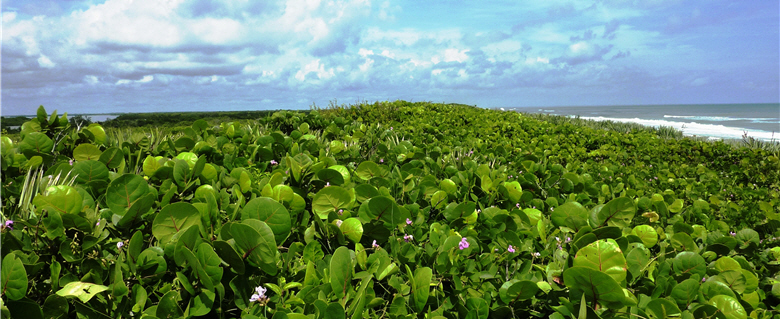
- Canaveral National Seashore at the south of Florida has unique shallow-water swamps and retains the most prestine look of the coastline./ by Ling Lin.


