
A Flip in Thoughts: Know about Nature and Conform to It-EProfessor Heng-biao King on Environmental Ethics

In 2005, Hurricane Katrina devastated the Gulf Coast overnight, forcing the New Orleanians to be evacuated from the Jazz City, and the U.S hasn't fully recovered from the devastation yet. In 2009, Typhoon Morakot brought Taiwan heavy rainfall equivalent to the island's annual precipitation within three days. The long road to reconstruction poses a daunting challenge to Taiwan.
When facing the enormous force of Nature, no countries can be called “great power.”
As people scurried to clear up the mess, they had to take the common karma seriously: global warming is getting out of hand and natural disasters have become the norm. How should we redefine the human-Nature relationship, and how do we coexist peacefully with Mother Nature?
How do we bow to Mother Nature?
Do Humans Know the Way of Nature?
“The Earth is alive,” Professor King got right to the point. The generation of all life forms and the existence and evolution of such diversity are inseparable with the Nature's force –unless the Earth becomes a dead planet just like the moon.
During this ever-evolving process, life learns to adapt and multiply and Nature shows greater power in regeneration than in destruction. Take typhoons for instance. They are considered disasters by many people, but this may not be the case from an ecological perspective.”
King cited the example of ecological observations on forests and said that after each typhoon, the torrential rain and the gale knock down great amount of leaves and trees, which happen to offer scavengers and soil microbes plenty of nutrients. To them, typhoon seasons are time for harvests. Moreover, after large numbers of organisms are decomposed, the speed of the nutrient cycle is enhanced, leading to denser forests and richer biodiversity. In the long run, therefore, typhoons result in regeneration over and over again.
The same holds true for earthquakes, mudslides and other “natural disasters” common in Taiwan. Many species also learn to adapt themselves to the repeated natural disturbance, thus forming an ecosystem specific to Taiwan. But what about humans?
Take Time to Learn from Mother Nature
“How do humans conform to Nature's way? And how do you know if you do it right? Perhaps humans would misunderstand the message sent by Mother Nature.”
King, who has long been on the Committee of the International Long-Term Ecological Research (ILTER) and an ardent promoter of long-term ecological research in Taiwan, reiterated that people should rethink the idea of“ we” in a broader sense to incorporate not just humans but all species of life.
Why do floods occur and what impact do they have on wild animals? How do wild animals influence the future of mankind? How do we cope with the changing Nature? Without a longterm dynamic scientific data as the basis to understand natural phenomena, all the flood prevention projects and reconstruction subsidies would fail to address the root cause of the problems, but allow disasters to repeat one after another.
Staying persistent is the crucial mindset in learning from Nature.
Such a huge learning task requires a group of knowledgeable people that employ advanced technology to conduct longterm observation, recording, data analysis, exchanges and comparisons to transform data into knowledge as the scientific basis for the execution of decisions.
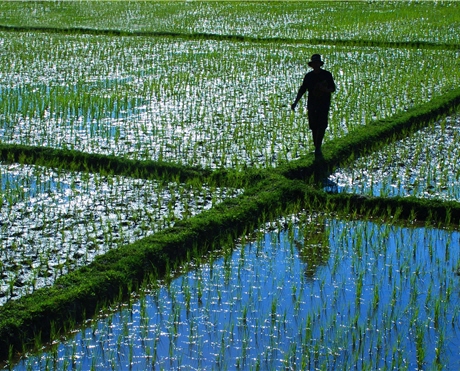
- upper: The earth is alive. The formation of air current, the flow of the oceans, the typhoons, hurricanes, tsunamis, tornados, earthquakes and floods are all natural occurrences./ by Leonid Nyshko
Interview & Text/ Mingzhen Jiang
Translator/ Teresa Huang
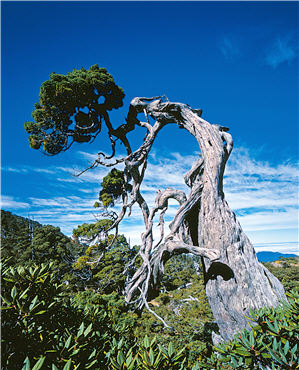
Another example concerns the long-term ecological observation program of Fu-Shan Botanical Garden, where frequent typhoons cause many fallen leaves every year but new leaves to sprout in the following year. In 1994, the observation team started to record the amount of twigs and leaves blown off by the 6 typhoons that struck Taiwan that year. The recording, which has been done every two weeks and still ongoing as of today, shows that in spite of the leaves blown off by typhoons each year, there is still a steady annual growth in the number of leaves, “with the total number back to its original scale after 11 years.” And the macaques, which migrate according to the variation in the number of leaves, eventually returned to their habitat. Fallen twigs and leaves are just, among many others, one effect that typhoon poses to the forests.
The 15-year-long observation has provided a curve for reference in the management and planning of forests.
Cross-disciplinary and Borderless Ecological Research
In view of the significance of long-term ecological research and information sharing, King established the “Ecological Information Research Team,” which is headed by Dr. Chau-chin Lin, and has developed Taiwan's “ecological information management system.” Currently Taiwan is playing a leadership role across Asia in this technology, and has successfully helped the establishment of long-term ecological information system in 10 countries.
“Ecological research, particularly the long-term one, is multifaceted, comprehensive and borderless.” Taiwan's ecological information management system has laid a solid foundation for such prospect. Nonetheless, R&D is just a process, while application is the ultimate goal. So the problem goes down to the transformation of the knowledge derived from the ecological research into ecological data that can be passed on to generations and serve as the scientific reference for policymaking, so as to maximize the use of such valuable data. All this requires high-quality human resource and funding, complemented by support from the government.
Humans Cannot Sit Out of This Ecosystem
Speaking of environmental ethics, Taiwan focuses on the sustainable management in acquiring natural resources. This has put Nature after humans, who then become the owner and manipulator of environmental rights, rather than respecting all species' rights to live. Within this context, it may appear unrealistic to talk about environmental ethics.
Instead of laterally criticizing on the aforementioned values, King offered a broader thinking: “This is because the gap between natural science and social science has widened apart after their separate developments.”
Ecologists seclude themselves from the crowd to conduct research on meteorology, species, and changes in landscape and so on. They've, however, failed to factor in the parameter of “humans”-- human nature, human thinking, and even the consequences caused by the political and legal systems. Social scientists are no better, as they never want to tap into the other end of ecological studies.
The consequences of human behaviors will bring varying and complex impact on the environment, and the impacted environment will in turn exert its influence on humans. As simple as this idea may be, it has complex implications.
In addition to observing and understanding the law of Nature, it is also necessary to monitor over an extended period of time the consequences brought about by human behaviors. The juxtaposition and explanation thereafter constitute important reference materials to shed light on the importance of“ conforming to Nature,” and leaves repetitive flood controls, containment and costly flood prevention projects obsolete. Lasting stability requires long-term dedication to the understanding of Nature.
Taiwan has abundant human and financial resources, but it needs a selfless leader with great vision to integrate everything and provide a consistent driving force for the long-term ecological research in Taiwan. This will allow the public to know about Nature, conform to it and know how to lessen the damage after each typhoon, or even better, to use typhoon to aid Taiwan's sustainable development, and offer a better environment for future generations.
Let humans be the trigger for change.

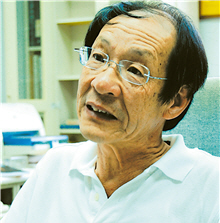
Profile of Professor Heng-biao King
PhD in Geosciences from Carleton University, Canada. Professor King has been promoting Taiwan's long-term ecological research and participating in international events to make exchanges with researchers from around the world. He was the chair of the Committee of the International Long-Term Ecological Research(ILTER) and is currently the director-general of the Society of Subtropical Ecology.
- upper left: People should attach greater importance to environmental ethics and reasonably use the resources provided by Nature so as to live a sustainable life./ by Stephane
- upper right: Wes hould respect the perseverance demonstrated by all the living beings when face the challenges posed by severe weather patterns./ by Rongchin Yu


