
An Awakening of the Children of the Sea-A Look Back on the Development of Marine Conservation in Taiwan
Dongsha Atoll National Park, the first marine national park in Taiwan, was founded on January 17, 2007. For Taiwan, this represents a major step toward the conservation of marine resources. The people of Taiwan have lived amongst the sea for four hundred years, but have perhaps never done enough for it. Even so, a group of people has worked so genuinely to protect the sea since many years ago before 2007…
A Pioneer in Marine Resource Conservation
Before Taiwan’s economic take-off in the 1970s, environmental protection, let alone marine conservation, was a concept that few people in Taiwan knew about. Since then, economic development became the one goal pursued by the public and private sectors alike, and environmental issues were often seen as an obstruction to prosperity. It was in such an atmosphere that Professor Kun-hsiung Chang, now president of the Society of Streams, became a pioneer in the conservation of marine resources. “Social responsibility is the duty of an academic,” says Chang.
“Marine conservation has become fashionable in recent years, but it wasn’t like that in the early days. Back then, there were no government subsidies for research projects. All that scholars hoped for was that the government would take our advice and make some policy concessions,” laments Chang as he looks back on the early days when he worked for the conservation of the sea. Even the promotion of the most basic concept of resource management, i.e., avoid overcatching to preserve the regeneration ability of biological resources, was met with countless setbacks. Such difficulties, however, did not discourage but impelled him to find more clever ways to campaign for his ideas.
A Monumental Achievement in Conservation and Restoration
As inshore fishing resources collapsed due to long years of overfishing, the government of Taiwan decided to set up artificial reefs in 1972-73. A year after the funds have been allocated, however, there was no report of any substantial results. Chang was then appointed to investigate the implementation of the project. “It was a demanding task,” he recalls.
Chang’s investigation was met with hindrance from local officials, so he decided to dive underwater and see with his own eyes whether artificial reefs were set up as ordered. “I suppose they had never seen a scholar who would do such a thing,” a look of pride flickers across Chang’s face as he recounts his past deeds.
Chang found that many of the reefs were not properly set up, which was why the results were inconsequential. But he did not report his findings. Instead, he chose to work with the frontline implementers, helping them see the importance of carrying out the project thoroughly. Looking back, artificial reefs have obstructed trawling practices and served as habitats for sea life. They have now proven to be a monumental achievement in the history of conservation and restoration.
Like Teacher, Like Student
Not only is Chang a pioneer, but he passes on the torch as well. Many marine resource conservation experts have studied under him. Professor Kwang-tsao Shao, currently chief executive officer of the Biodiversity Information Center, has studied fish for more than 30 years. Back when he was a student, he used to accompany Chang on his forays into seas around the island, and has since entered the field of ecological research.
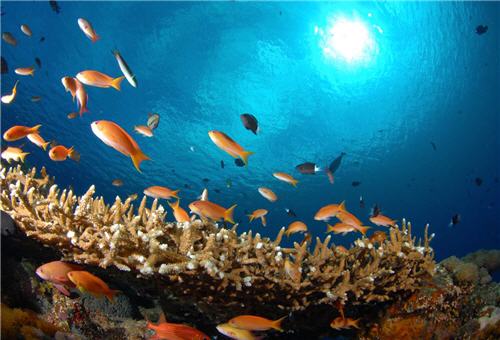
- upper:On the road of Taiwan's marine conservation, the scholars have painstakingly braved many difficulties. / by Peter
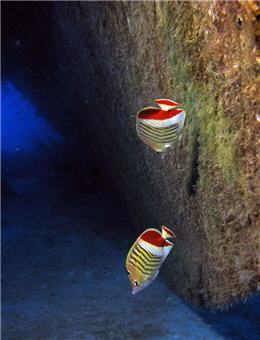
- lower left:Artificial reefs have obstructed trawling practices and served as habitats for sea life, so the beautiful scenes that schools of fish swim under the sea can be seen. Artificial reefs have now proven to be a monumental achievement in the history of conservation and restoration. / by Yung-chun Tsay
- lower right:One can observe rich marine ecology around artificial reefs, which seem to be stable houses for marine creatures. /by blogger A-Zhu
Interview & Text/ Yong-hui Shen
Special Thanks to/ Prof. Kun-hsiung Chang, President of the Society of Streams
Prof. Kwang-tsao Shao, Chief Executive Officer of the Thematic Center of Biodiversity Informatics
Researcher Rong-quen Jan of Biodiversity Research Center, Academia Sinica
Translator/ Shinhong Chen
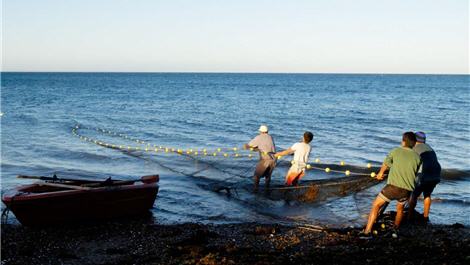
An Island Rich in Natural Resources
Taiwan has a land area that accounts for only 0.025% of the world’s total, but possesses a tenth of the entire marine life species around the globe, showing the bountifulness of this island.
A high biodiversity is Nature’s precious gift to Taiwan. All kinds of habitats and ecological systems can be found here, ranging from coral reefs to lagoons, creating a tiny ecological museum out of this small island. Diverse ecological systems and the difference in such conditions as ocean currents, water temperature, and geography, are the reasons why Taiwan enjoys such abundant marine resources.
But being rich in resources does not mean that they are inexhaustible. The bounty of the sea has always fooled mankind into believing that they cannot possibly ruin the oceans. Every year, we haul tens of millions of tons of resources from the sea, and dump millions of tons of garbage into it. Only now do we realize that we have severely damaged the sea by depleting its resources and polluting its water.
More Conservation-Minded
Taiwan has become more conservation-minded in recent years than in the 70s. Even so, it still lags far behind western countries, and the conservation of the sea has not received adequate attention as yet.
It is a problem seen across the world. People’s understanding of the sea has generally lagged 20 to 40 years behind that of the land. Mankind has begun to know more about the sea after the required surveying equipment and research vessels were developed, and that was only five or six decades ago.
Ideas can be instilled in the public consciousness. In early Taiwan, wine made with tiger bones used to be a common commodity in markets. Now, however, most people would not even dream of eating tigers or rhinoceroses. This is one of the achievements in conservation.
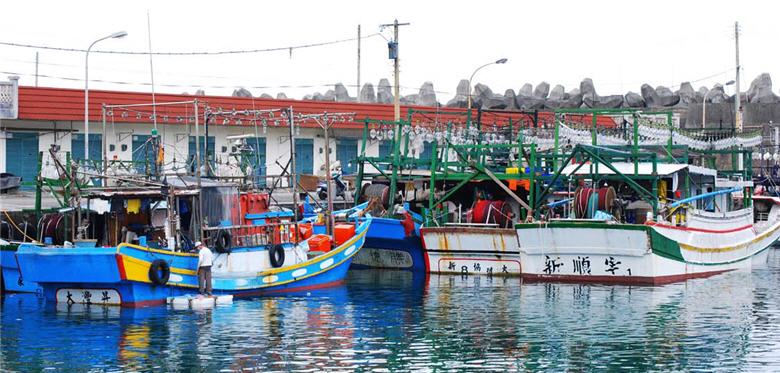
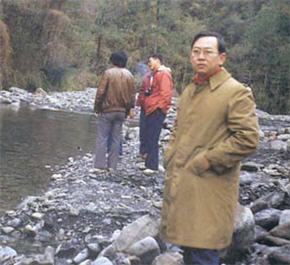
- upper left: Prof. Kun-hsiung Chang became a pioneer in the conservation of marine resources when no one paid attention to it, as well as a teacher who has led many great students and passed on his aspiration. / from The History of Taiwan's National Park
- upper right: People often overuse fishnet and catch a fish no matter how small the fish is. Under this circumstance, the marine ecology imbalances could be worse. /by blogger A-Zhu
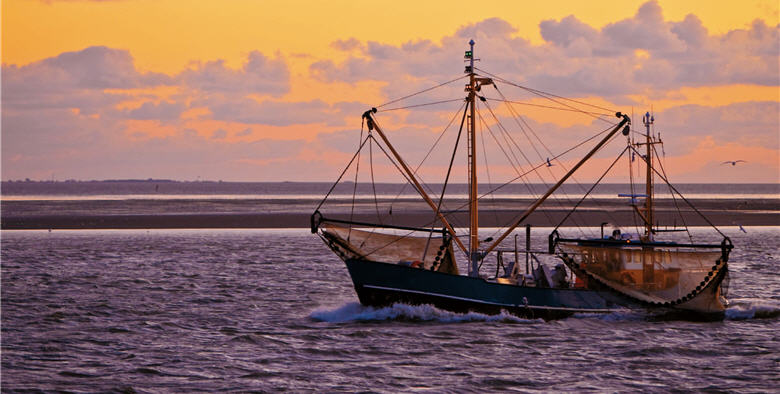
- lower: There are warnings to inshore fishing in Taiwan: the fish is gone and catch has greatly plunged. It is common nowadays that the fishing boats don't go to the sea. / by Wan-ching Lai
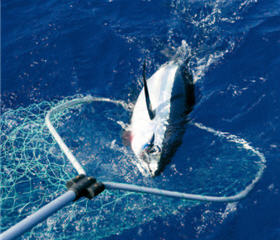
Still, most people would not feel any guilt for eating sharks or tuna. This is an irony that needs to be addressed. Sharks and tuna are to the sea what tigers and rhinos are to the land. The only difference is that no one has ever thought of fish as wild animals that need to be protected. We are so accustomed to thinking of them merely as food.
Marine Culture Equals Seafood Culture?
Marine culture has become a recent trend in Taiwan. Many events, such as the Flying Fish Festival and the Bluefin Tuna Festival, are held in Lanyu, Pingtung, and other places. Equating the sea with seafood, these events are more sacrifices than festivals. There is nothing wrong in consuming the biological resources of the sea, but as we catch and eat them, we should also learn to conserve the marine environment. A marine culture that utilizes marine resources in a proper extent is a sustainable one that is worth promoting.
Knowledge is Power, and Faith Brings Hope
Because of excessive development, the coastal area in Taiwan has suffered the worst degree of cementization and probably the largest quantity of underwater garbage in the world. But there is still hope as long as we are willing to change. Knowledge is power. People will do more as they gain more understanding. Until that happens, “slowing down” is something that we can put into practice right away. If we slow the rate of fishing and fish consumption, we might just be able to keep the sea alive.


Kun-hsiung Chang
Currently the president of the Society of Streams, Kun-hsiung Chang had studied in Japan and came back to work as an academic and a conservationist. He founded the Organization for the Study and Protection of the Formosan Landlocked Salmon in 1984, which is the first organization in Taiwan devoted to the protection of an endangered species. He holds a prestigious academic status both at home and abroad.
Kwang-tsao Shao
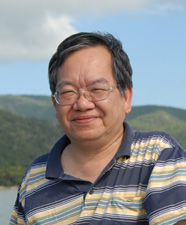
Kwang-tsao Shao is the chief executive officer of the Thematic Center of Systematics and Biodiversity Informatics. He has studied fish for more than thirty years, specializing in a variety of fields, such as fish taxonomy, marine life, biological statistics, numerical taxonomy, and ecology and evolution. He recently introduced the documentary The End of the Line into Taiwan, hoping to raise the awareness on the conservation of marine resources.
- upper left: While we relish the seafood, we should also learn how to utilize the marine resources in a proper extent. Let's not make marine culture equal to seafood culture. / by tono
- upper center: Human selfishness has caused serious damage to the marine environment; it's really upsetting to see all those fish killed by “dynamite fishing.” / from The History of Taiwan's National Park
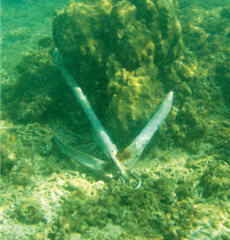
- upper right: Improper behaviors by humans often bring irreversible damage to the ocean. The picture shows how anchoring can hurt the coral reefs. / Photo provided by Zai-quan Xiao


