
The Da Vinci Code of Birds-The Analysis and Reflection of Avian Behavior
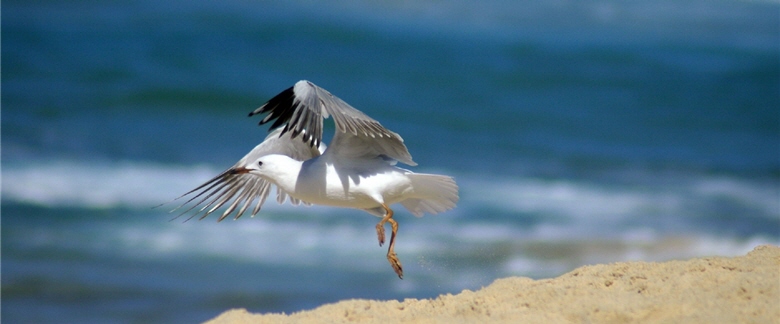
Birds have been a biological indicator of various conservation-related issues in Earth's environment. From experts of different areas to common bird watchers, people all hope to explore the secrets and patterns of birds' behavior and survival. Whatever the purpose for humans' urge to get connected to these feathered creatures, birds have always brought people countless marvels and insights.
A Perfect Indicator for Observation
“Birds are arguably one of the best bioindicators to answer numerous questions related to ecology because their taxonomy is clearer and the species identification and observation of them are easier,” explained Hau-jie Shiu, Asst. Prof. of the Dept. of Bioscience and Biotech., NUTN.
Compared to insects that require researchers' effortful classification or small mammals that necessitate capture for observation, birds are highly visible and fully classified, and thus give researchers much more mobility and ease in scientific investigations.
There are a lot to see and explore regarding birds' behavior and habits. Due to the limited pages of the Quarterly, here we use the migration of birds as an example.
As the effects of global warming on species remain a focus of concern of scientists, many have started to investigate the link between global warming and birds' migration and reproduction. It turned out that in high-latitude countries flowers blossom and insects reproduce earlier to a degree larger than migratory birds know to return to their breeding ground earlier. This threatening lack of food will put forward or change the time of birds' migration and the duration of their stay. “Cold-tolerant or migratory birds may be able to find new life patterns, but the entire ecosystem of birds has still been greatly affected in general,” said Shiu.
In addition to climatic factors, other elements also play a role in birds' migration. According to Shiu's study on the altitudinal migration of birds in Taroko National Park, the causes of birds in mid-altitude areas moving to low-altitude ones in winter are not simply a drop in temperatures as we used to believe, but also their need for food, perhaps an even more important factor in affecting bird's migration.
Differentiation and Heredity Are Affected Most by Mankind
Climatic changes may have an impact on birds' reproduction and survival, but natural selection takes a long time since all life forms are able to adjust to variation in temperature. By contrast, threats posed by humans are often more imminent, destructive and influential.
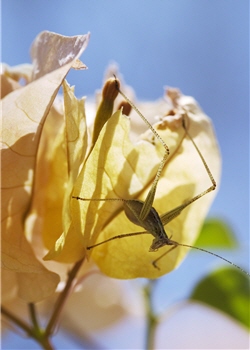
- upper left: Bird's taxonomy is clearer than other species and the species identification and observation of them are easier. /by Rorem
- lower left: Due to global warming, flowers blossom and insects reproduce earlier, and thus the time of birds' migration and the duration of their stay would be changed.
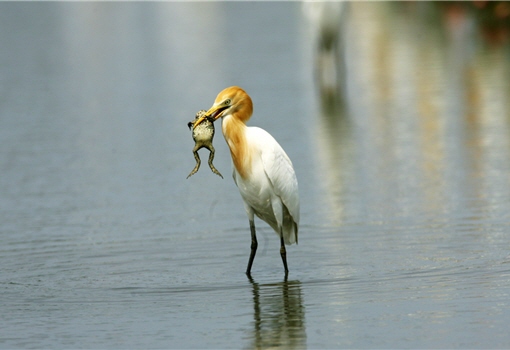
- lower right: Bird's need for food perhaps is also an important factor in affecting bird's migration. The picture shows Cattle Egret (Bubulcus ibis). /Photo provided by Ming-yuan Chiu, taken by Su-lan Chiu-Lu
Interview/ Wan-ching Lai
Yong-hui Shen
Text/ Yong-hui Shen
Special Thanks to/Hau-jie Shiu, Asst. Prof. of the Department of Ecoscience
Ecotechnology at National University of Tainan; Shou-hsien Li, Prof. of the Department of Life Science at National Taiwan Normal University
Chen-jeih Pan, Director of the Institute of Space Science at National Central University.
Translator/ Kuan-yu Ou
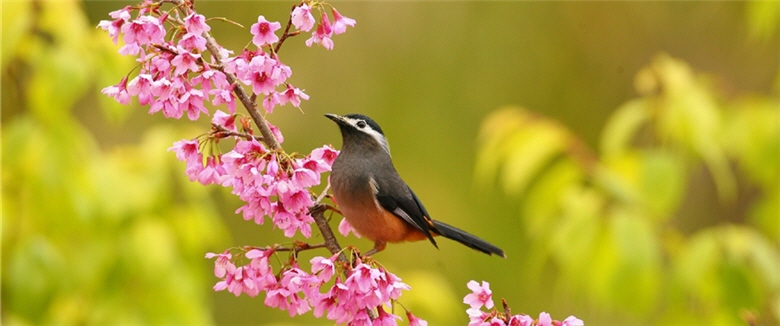
We had been told by textbooks that geographical separation is the main cause of biological differentiation. But now research has shown that a more crucial variable is the natural selection conditions a species faces in two different places. In a hostile environment where a species has no way to live and grow, its genes will not change at all. Using the thrush, or Hwamei (Leucodioptron canorum) as an example, Prof. Shou-hsien Li of the Dept. of Life Science, NTNU, explained: “Taiwan Hwamei and Chinese Hwamei were geographically separated 3.5 million years ago but had since continued their differentiation and gene exchanges until half million years ago.” Apparently, differences in natural selection forces of two places may often play a more direct and pivotal role than geographical separation.
“In the Nature, life forms come and go. The appearance and elimination of all species has just been part of Nature.” Li added, “So the most serious threat to bird conservation still comes from humans.”
Li argued that from a perspective of genes, the seriousness of invasion of alien bird species would depend on whether the alien bird crossbreeds with any of the indigenous birds in Taiwan, and whether their hybrid owns reproductive capacity. For instance, a mule, the hybrid of a horse and a donkey, is infertile, and thus doesn't have significant impact on the genetic makeup of local animals.
But if an alien species and an indigenous species crossbreed and their hybrid is fertile, it will cause certain problems to species conservation. “However, the solutions to these problems also involve how we think about our purposes of conservation,” Li added, suggesting that we ask ourselves what on earth we want to focus on and protect.
The reason why endemic species or subspecies are so precious is that each of them are formed and developed as a unique species through a long-term natural selection in some distinct environments. It's truly something special and respectable that a species could go through such a long process of evolution and become what it is now. They deserve to be protected against any changes or harm caused by humans.
Technologies Help but Conservation Needs More
Whether the impact comes from genes or environments, it must count on observation to obtain and sort out further information on it.
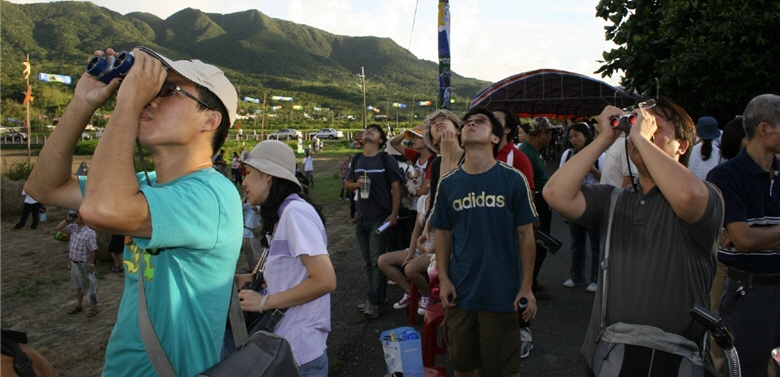
As“ waiting” is the basic requirement of all observations in research, other factors such as technological assistance will make observation much more cost-effective and efficient.
In every bird-watching site across Taiwan, such as Guandu, Cigu, Sheding, Guanshan, Eluanbi, etc., researchers and bird watchers always used to worry about their lack of luck to see the birds. Migratory birds, for example, had long been a difficult target for us to pinpoint the exact time of their arrival. But thanks to a joint project “Radar-assisted Bird Tracking” by Kenting National Park (KTNP) Headquarters and the Institute of Space Science, NCU, observations of birds is no longer a matter of luck.
- upper: Analyzing Hwamei (Leucodioptron canorum ) by heredity, the research shows that Taiwan Hwamei and Chinese Hwamei were geographically separated 3.5 million years ago but had since continued their differentiation and gene exchanges. The picture shows Taiwan Sibia (Heterophasia auricularis ) / Photo provided by Ming-yuan Chiu, taken by Su-lan Chin-Lu
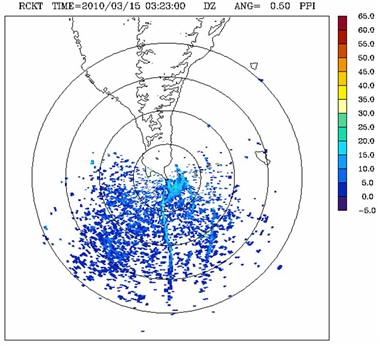
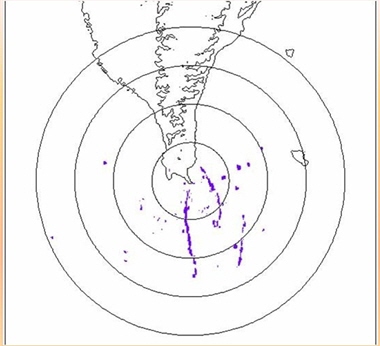
- lower left & lower right: Photo (left) shows the original echoes from meteorological radars, and photo (right) shows the echoes reflected by flocks of Eagles after eliminating the information of clouds, rains and waves. / Photo provided by Chen-jeih Pan
The project originated from the use of meteorological radars in monitoring the conditions of clouds and rains with the radars occasionally detecting the echoes reflected from flocks of migratory birds. That gave the bird-caring KTNP Headquarters the idea of tracking birds with radars. The first attempts failed as the data received was too complicated and required human interpretation, which was time-consuming and error-prone. Later, KTNP Headquarters managed to invite Prof. Chen-jeih Pan of Institute of Space Science to take charge of the project.
“The first scientist using the weather radar in Kenting to study raptors was a professor in Nat'l Pingtung Univ. of Science and Technology. I'm just a layman in bird research who can only tell apart pigeons and egrets.” The modest Pan has, in fact, been a great help in collaborating with KTNP in tracking birds by radars. Now not only can the noise on the radar be identified and eliminated, but the directions, routes, as well as the time and locations of landing, can be accurately monitored and forecast. This is an important advancement in both bird conservation and bird-watching activities.
According to analysis, we get to know that“at about 100 km away from their destination, these birds already decide where they are going to land,” Pan talked about his knowledge of birds' flight as he has been involved in the project for a long time. “We can tell from the radar the birds' migration habits, flight altitude, speed, etc. Even when there's a coup among a flock of birds, we‘ll see it.” Pan said that the forecast system will go online starting 2011, but more care must be taken in providing the information and promoting bird conservation; otherwise, the project will help not just bird watchers but also hunters, and cause irreversible harm to the ecology.
For people in Taiwan, national parks have been great places for sightseeing and hiking; for birds, these parks are where the birds pass by, rest and gather. Their importance may be mainly attributed to the distinct geographical and ecological environments they are endowed with, but also relies on human efforts. National parks are not merely parks that belong to the nation; they also bear the mission of environmental protection and conservation, offering Taiwanese people a different form of conservation education, which requires materials and scientifically proven statistics that, through interpretation, may become the best instruments to help people know about and care about the Nature.


Chen-jeih Pan
Dr. Pan is currently the Director of the Institute of Space Science at National Central University and collaborate Information of Bird Migration System Development Plan with KTNP. He had completed the posdiv>

Hau-jie Shiu
Dr. Shiu is currently Assistant Prof. of the Department of Ecoscience and Ecotechnology at National University of Tainan. His research area covers community ecology, ecological Methodology and geographic information system.

Hau-jie Shiu
Professor Li is currently Professor of the Department of Life Science at National Taiwan Normal University. He specializes in evolutionary biology, genetic evolution, behavioral ecology and ornithology.
- upper: Waiting is the basic requirement of all observations in research. And technological assistance will make observation much more cost-effective and efficient. /Photo provided by Kenting National Park


