
Something about Iris Formosana-
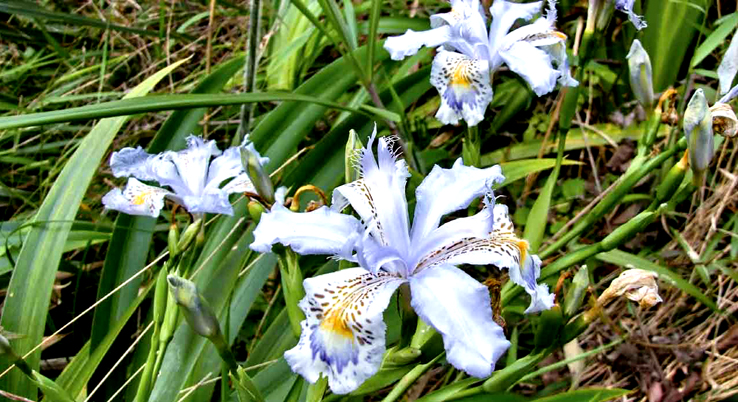
The distribution of Iris Formosana may be influenced by factors such as landforms, climates, and human intrusion and destruction. For example, along an industrial road in Ren-ai Township, Nantou County, roadside grass had been regularly mowed and sprayed with herbicide, and thus Iris Formosana was removed and dwindled in quantity. In Sinyi Township,mudslides caused by collapsed crags during torrential rains had flooded away the local Iris Formosana. Though the flower propagates well in the wild, people should mind that overexploitation to the environment would lead to a declining biodiversity, and that more has to be done to protect the habitats of plants endemic to Taiwan.


Shi-quan Huang
As a college graduate majoring in fine arts, Huang is currently an amateur aesthetic eco-photographer who
also takes delight in observation and recording. Once working in the field of industrial design, he has long
been engaged in promoting environmental protection. Huang loves to combine images and music to create
a deeper meaning from the idyllic beauty of Taiwan' natural environment, and urge the public's echoes on
protecting the Nature.
Text & Photo / Shi-quan Huang
Translator / Kuan-yu Ou


