
In Peace with the Waters-The
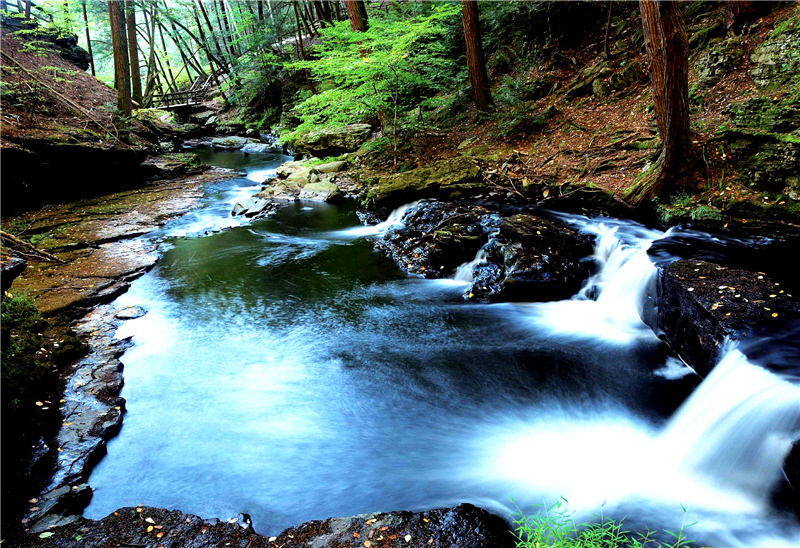
Surrounded by sea and boasting the many rivers and creeks stemming from Central Mountains, Taiwan is endowed with abundant water resources. Water nourishes life and brings joy to those who have fun with it. But still, to many people, water can be both friendly and frightening.
When the unfortunate drowning accidents occur, it is the most regrettable when the drowned were in fact skillful swimmers, and this highlights people's limited understanding towards waters. That is to say, when confronted with unknown or unfamiliar waters or marine environment, people still get caught in the fear of the unknown.
To know more about the water, we may need to put our books away and go out there to make friend with it. To that end, the National Park Mountaineering School at TNP is offering a course titled "Read the Water" in the summer of 2011. So what exactly is the course about and how do we “read” the water?
Overcome the Fear of Water by Reading It
"We'd like to enhance people's understanding of different waters, so we'll focus on interpreting hydrological characteristics and carrying out relief work in rushing waters," noted Shu-pao Chen of TNP Headquarters. "Most people can certainly swim, but not many have an adequate understanding of waters, and that is far more important than just being an excellent swimmer."
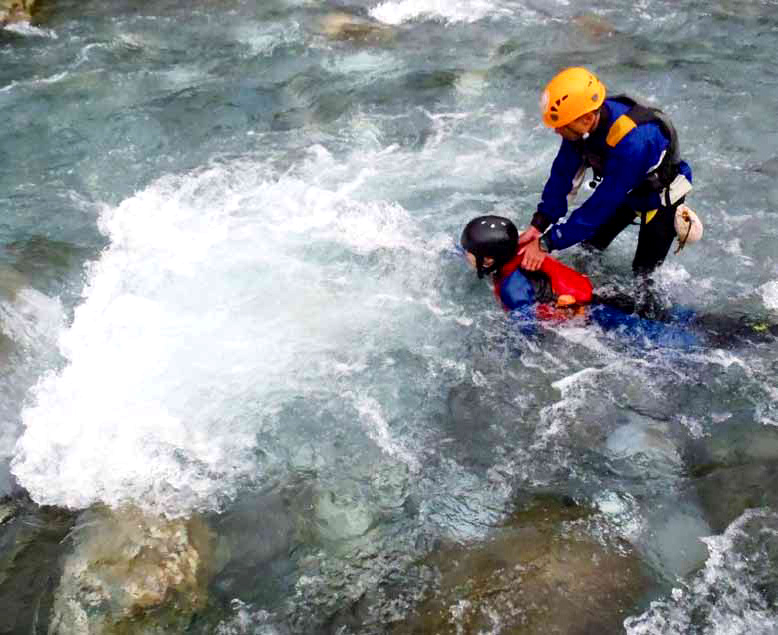
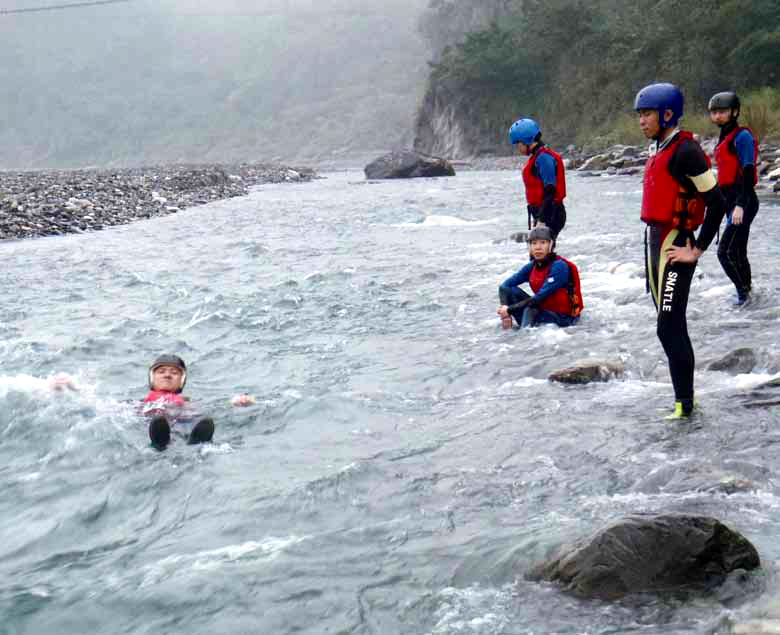
- upper:Living on an island, people in Taiwan could use more opportunities to understand the waters and more thoughts about the waters./ by Zhi-ming Zhang
- Left to right (lower):Knowledge about water obtained from books may be far from sufficient. Many people feel this obvious lack of understanding about water when they set foot in raging torrents./ Provided by TNP Headquarters
Interview & Text / Hsin-hua Lian
Special Thanks to / Shu-pao Chen of the Interpretation and Education Section at Taroko National Park Headquarters
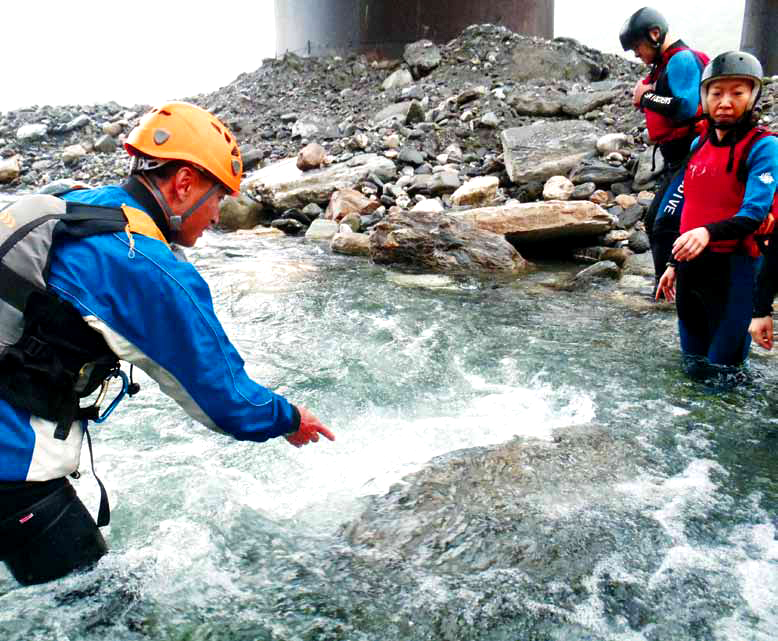
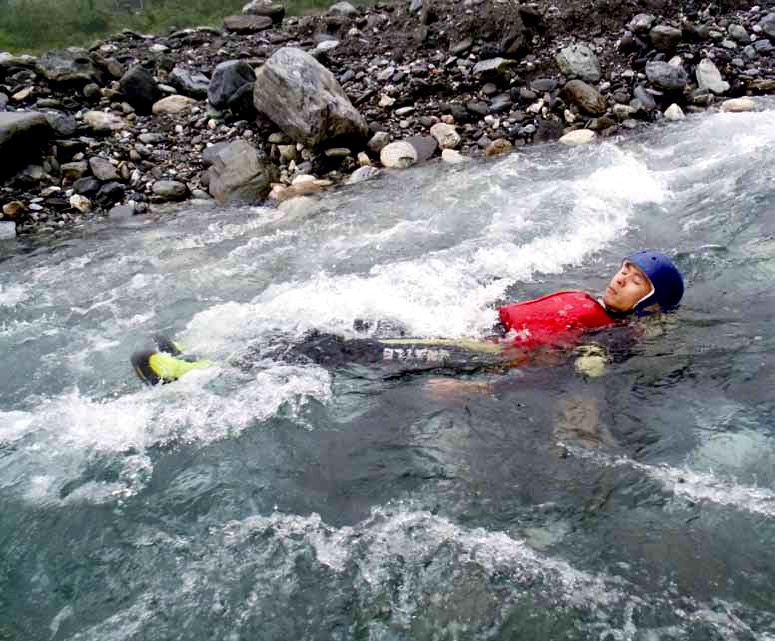
The course is aimed at building people's understanding towards rivers, and teaching them to identify various hydrological features through oudiv>
Some people may assume that they already know a lot about waters, but as soon as they set foot into raging torrents, they realize they have been wrong. "We've received many calls so far from people who want to sign up for the course but hesitate because of their fear of water. There are also those who came and saw the actual training site and got cold feet. These kinds of reactions made us more determined to organize such training sessions," said Chen.
Knowing What Lies Beneath the Water
A seemingly tranquil river is not necessarily safe. The danger that lurks underneath is sometimes even more than you'll ever imagine. But in fact, many dangers arise because people tend to be negligent.
Take river crossing for example. In summer, afternoon thunder showers or typhoons usually cause rivers to flood, making rivers particularly dangerous. Therefore, it is advisable to cross rivers where water is shallow. Also, where the river is split into two smaller flows, the water would be smaller in volume, and thus much safer. In areas where the water is deeper, one must carefully observe the vortexes and waves.When the water flows over two rocks and forms a waterfall, never cross the river over the rocks, for there might be vortexes undetectable to the human eye.
The next phase of the course pertains to practical skills. When crossing the river, one should prepare a 2-m-long wooden stick. Then he faces the upstream and thrusts the wooden stick into the water in front of him and presses the stick downwards upon his shoulder. When trying to make a move, do it along with the flow of the water rather than against it. Lever the force of the water to make only half a step at a time with the stick. And it is the right and safe way to cross the river by walking along a slash line to its lower reaches before landing on the opposite bank.
When one crosses the river, he should also untie the belt and the chest button of his backpack, so that in the unfortunate case when he trips and can't get up, he can still abandon his backpack and save his own life. When the water level reaches above one's knees (over 60 cm) or when there is gusty wind or heavy rain, it is advisable that one not take the chance, even with ropes, to cross the gushing waters, but plan for the route for safe retreat. (From: "Mountains are my grand classroom," a book authored by Tai-sheng O’Young. http://tw.myblog.yahoo.com/rescueroyoung001/arti cle?mid=537&prev=560&l=f&fid=26)
The aforementioned is just a part of the course. The water, after all, is capricious. The 2-day course only marks a beginning, from which the participants can move on and learn to think on their own feet and make informed decisions when facing different waters, and that's what’s really important.
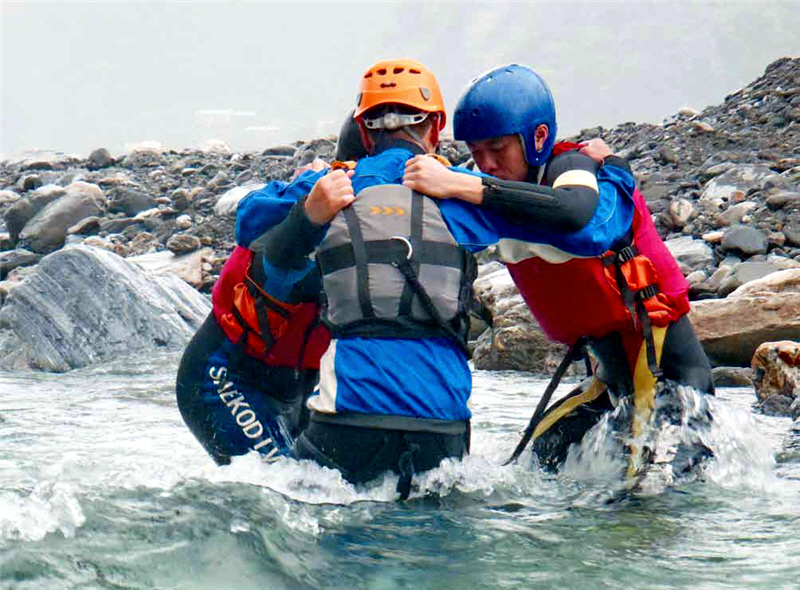
- Left to right (upper):Knowledge about water obtained from books may be far from sufficient. Many people feel this obvious lack of understanding about water when they set foot in raging torrents./ Provided by TNP Headquarters
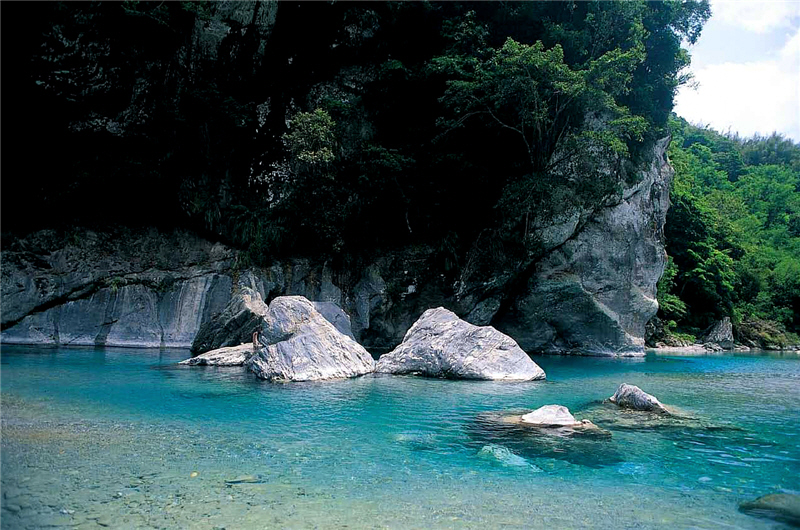
- lower right:A seemingly tranquil river is not necessarily safe. The danger that lurks underneath is sometimes even more than one could imagine.In the picture is Sanjhan River./ by Mao-yao Lin
- lower left:When crossing the river in a group of 3 or more persons, people may hold one another by the arms to form a circle and then proceed in rotation.
Cherish the Water and Leave No Waste
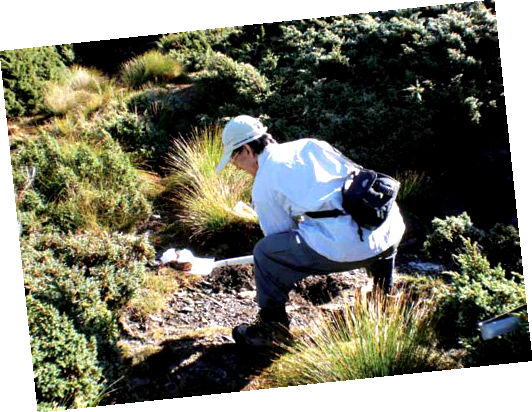
Learning to treat the waters well also constitutes an important part of the course. For example, answering “the call of nature” in the river and in the sea should be done in different ways. As for urinating, when near a river, one should do it at least 20 m away from the water; whereas in the sea, one should do it at the wave ridge for better wash-off. For the disposal of feces, one should dig a cathole 60 m away from the water. Dig at 45˚ downwards with a trowel, then round the loop at 20 cm in diameter, remove the clod and defecate into the pit, and finally, put the clod back once you're done.
At shallow waters with rocks all over, one may evacuate the bowels on a flat rock and throw the excrement into the sea. Be sure to take away the used toilet paper, since they are much less decomposable than feces, and would cause damage to the environment.
"We tend to say that trust is the best way for people to get along with one another. Similarly, understanding is the best way for people to get along with the Nature. Within these 2 short days, I could see the changing attitude and growing acceptance in our participants towards the waters, and this made me feel all the work is well worth it," said Chen.
This course is in fact just part of the environmental education Taiwan’s national parks are offering. Living on an island, people in Taiwan need to learn to live with the waters in the right way. While national parks are mainly responsible for the preservation of marine resources, it is up to the citizens to appreciate the value of such resources, through a closer and better contact with the waters.

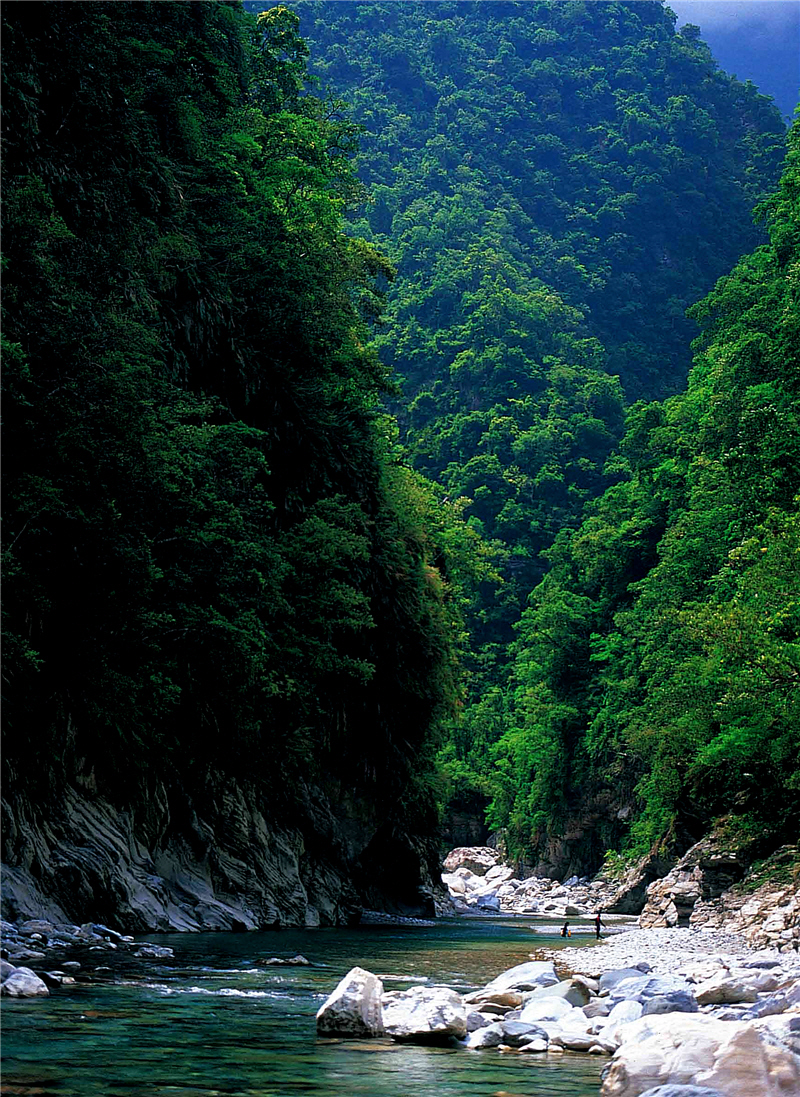
- upper left:People should learn to be in peace with the waters through a closer and better contact with them.In the picture is Sanjhan River./ by Mao-yao Lin
- upper right:For the disposal of feces, one should dig a cathole 60 m away from the water./ Provided by
YSNP Headquarters


