
Genuine Representation of the Nature-Through the Lens of Eco Photographer Dong-kun Liao
Rachel Carson wrote in her book Silent Spring : “If facts are the seeds that later produce knowledge and wisdom, then the emotions and the impressions of the senses are the fertile soil in which the seed must grow.”
For Dong-kun Liao, a versatile eco-photographer who reckons exploring the Nature as his destiny, his mastery of photo-taking is nothing but a skill; it is the exploring, learning, and sharing beyond lenses that are of true value and meaning in his life.
Growing up in the countryside and once serving in Taiwan Forestry Research Institute, Liao has profound knowledge of plant taxonomy and wildlife. Liao’s B.A. in journalism gives him a desire to go into whys and wherefores. He not only takes down with cameras the beauty of landscapes, but also grasps even the stunning glimpses of lights and shadows, and articulates the interplay between life and the environment. Touched by the richness of Taiwan’s ecological environment, Liao became an eco-photographer in 1987 after several trips to the island’s natural reserves and national parks.
Trekking around Taiwan has darkened Liao’s skin. His eyes glow when talking about environmental know-how, showing his love for the Nature. His friendly character is yet another evidence of long-time exposure to the natural world.
“I expect myself to be a naturalist and to get more chances to communicate with the land and the environment rather than just being a photographer, cameraman, and writer,” said Liao, who never shows off his achievement but keeps reflecting on himself for improvement. Liao believes that an excellent ecophotographer should deeply understand and approach the subjects, get used to waiting, and lways keep alert and calm. Surely, good works are there for those who are prepared, too—and if the weather cooperates.
“The profundity of a photo is determined by the way the lensman sees, which, in turn, is gained by learning, challenges, and experiences,” stresses Liao.
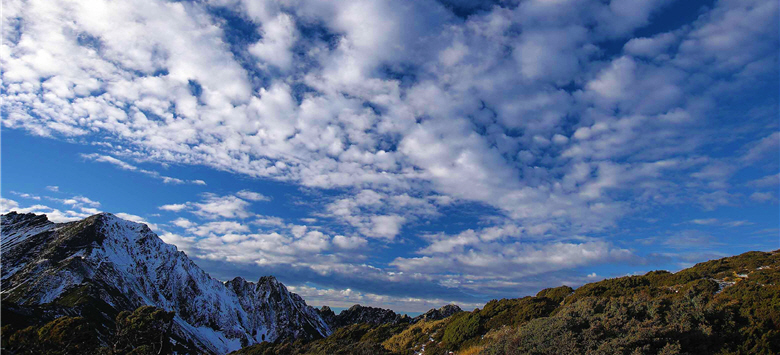
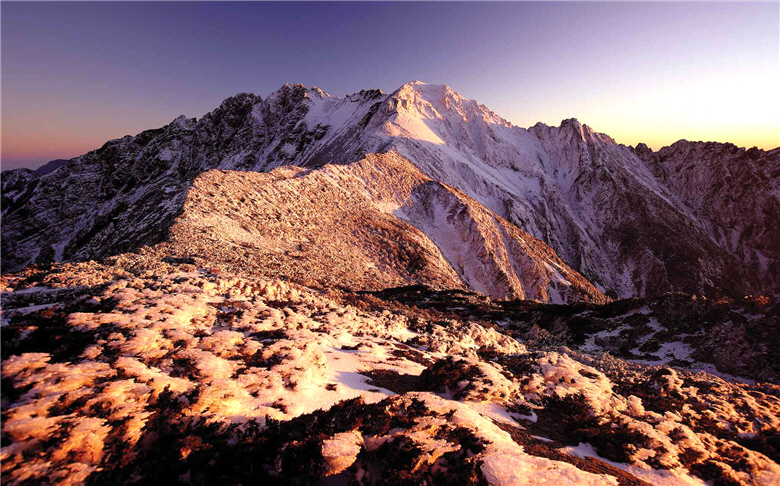
- upper:For Liao, it is the exploring, learning, and sharing beyond his lenses that are of true value and meaning in his life. In the picture is Yuanfong, Yushan.
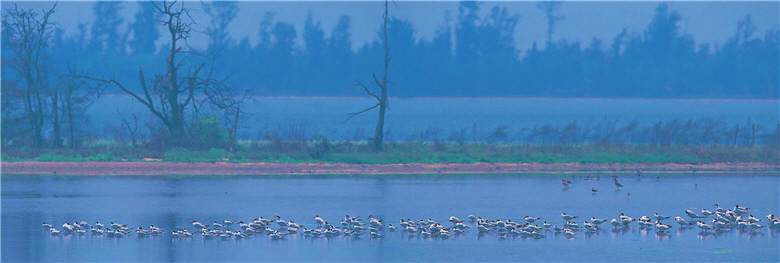
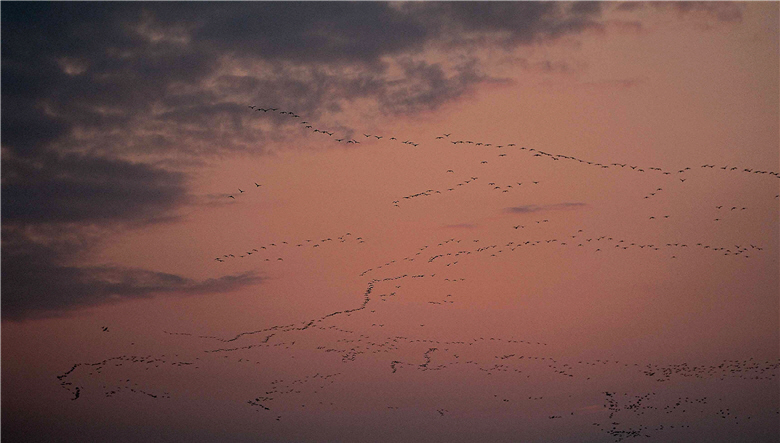
- lower:Keeping alert and calm at all times is the key to successful eco-photography.In the picture is Caspian Tern (Sterna caspia) in Kinmen.
Interview & Text / Hsin-hua Lian & Jing-yi Chen
Photo provided by / Dong-kun Liao
Great Moments Come from Respect
Filming summer birds, for example, requires the cameraman to know about the habitats as well as the behavior of the birds and to endure unfriendly environments. Liao once shot terns on an uninhabited island, where no natural shelter was found.In order to prevent the birds from feeling intruded, Liao had to hide himself in a camouflage tent under some burning 40-50˚C, in which he might have easily suffered from heatstroke if he had not taken enough water or issipated body heat. According to Liao, terns can get hot-tempered when they hatch eggs and rear baby birds. As such, photographers, upon arrival on anisland, are often greeted by flocks of angry birds unleashing nose-dive attacks. A quiet, motionless sit, then, could soon cool the birds down as they found no actual threats.“The bottom line of eco-photography is to show respect for the subjects. But it takes self-discipline to walk this fine line.”
Liao has got used to long solitude since he usually leaves home for days or weeks for filming. He often goes to the mountains alone and engages in peaceful contemplations. As a result, his affections for the Nature can easily be found in his visual and written works.
The true costs of breath-taking masterpieces often cannot be measured by monetary terms. The time, energy, patience, and risks invested in should all be accounted for. Liao’s 30-min-long documentary The Cormorants, commissioned by Kinmen National Park Headquarters, took him 3 years to finish, during which he travelled to China, the Netherlands and Hong Kong for shooting. The documentary won the Excellence Award in the 2010 National Publication Award, outstripping thousands of other competitors, thanks to its diversified materials, profound meanings, and serious production processes.
“I don’t care about the cost of time and money if my goal is worth pursuing,” says Liao, “What really matters is what you want to express and present to the audience. In fact, the answer usually looms out as you keep doing it and searching for the purpose.”
Experience and Learn from Nature
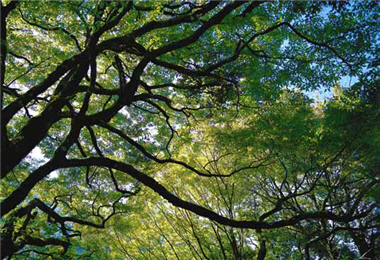
- upper left:Liao often goes to the mountains alone and engages in peaceful contemplations. As a result,his affections for the Nature can easily be found in his visual and written works.In the picture is Carpinus cordata in Alishan.
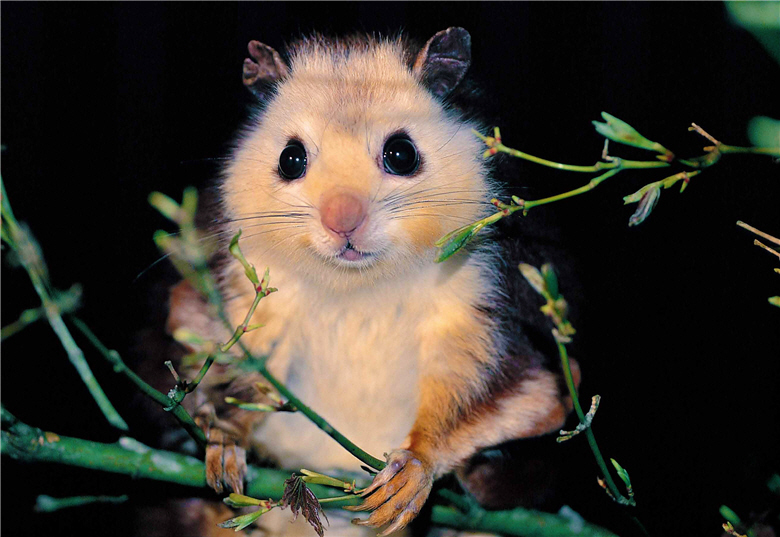
- upper right:Touched by the rich and diversified ecosystem of Taiwan, Liao has been fully devoted to recording the ecology with images and sounds.In the picture is White-faced flying squirrel (Petaurista alborufus lena)
- lower:Out of his love for the trueness and greatness of the Nature, Liao never regrets committing to eco-photography. In the picture is Common Cormorant (Phalacrocorax carbo) in Kinmen.
Liao never regrets committing to eco-photography. Facing the Nature’s trueness and greatness, Liao waits, watches, merges in, and contemplates, saying, “Only when you personally feel it can you embody the feeling and represent it in another form of expression.”
One discovers the sorrow, excitement, intrigues,
passion, romance, or eagerness of Nature in Liao’s works, be it a picture, a film, or written words. In his Island of My Dreams, Liao tells stories of capricious weathers, serene forests, and endangered Formosan Landlocked Salmon (Oncorhynchus masou) with detailed observation and vivid representation.
Liao admits that being an eco-photographer is not easy; it is both physically and mentally demanding. However, Liao does not find the daunting task painful at all. Instead, he calls himself the luckiest person “because many surprising and interesting things in the Nature await you all the time and these unexpected beauties are always the most mesmerizing part of the job. The longer I get along with the Nature, the more clearly I see myself. Nature is a treasury of beauty that keeps enriching my life. I hope to be a conduit between Nature and humans, and share my feelings and experiences with people by images and writings thereby tugging at their heartstrings.”
After giving this interview, Liao set off for Taitung and Kenting for another project. Following his steps, Liao’s strong feeling of the environment is sure to touch hearts and minds again and again.

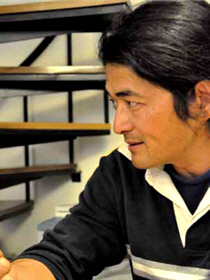
Dong-kun Liao
A native of Yunlin County, Liao has been a versatile eco-photographer known for his expertise in and devotion to recording the Nature with images and sounds. Growing up in the fields and majoring in journalism and photography in school, Liao once worked for Taiwan Forestry Research Institute for forest conservation, and later became one of the few professional eco-photographers in Taiwan.
- upper left:Liao believes that the longer a person gets along with the Nature, the more clearly he or she sees himself or herself. In the picture is the dusk of Wusong at Mt. Jade South Peak.


