
Sailing Towards Hope-Special Report on Lanyu Boat-building Cultural Exchange Project
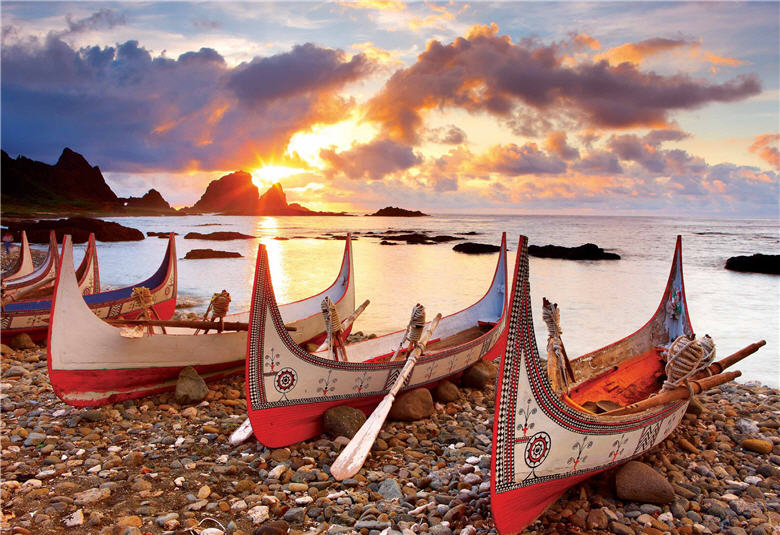
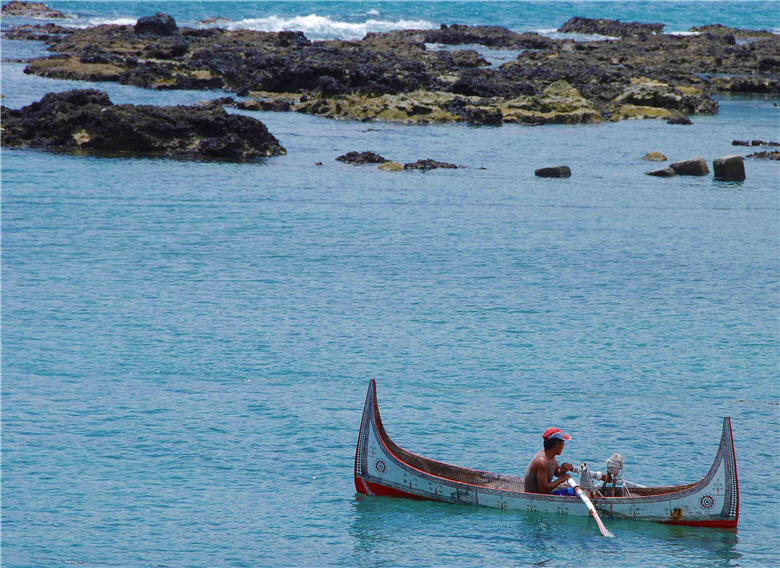
Located off the coast of Taitung County, Lanyu (OrchidIsland) has been an intriguing place known for its blue sea, colorful Yami balangays (plank boats), flying fish, sturdy tribesmen, and marvelous coastal rocks.
For the Taos, the indigenous residents on Lanyu, the ocean is where they’ve been living and developed an interdependent relationship with it. Also known as Yami, the Taos have given the ocean its meanings and cultivated from it precious marine cultures and wisdoms, including all the dos and don’ts and the discovery of fish species.
The Tao Marine Culture and Heritage
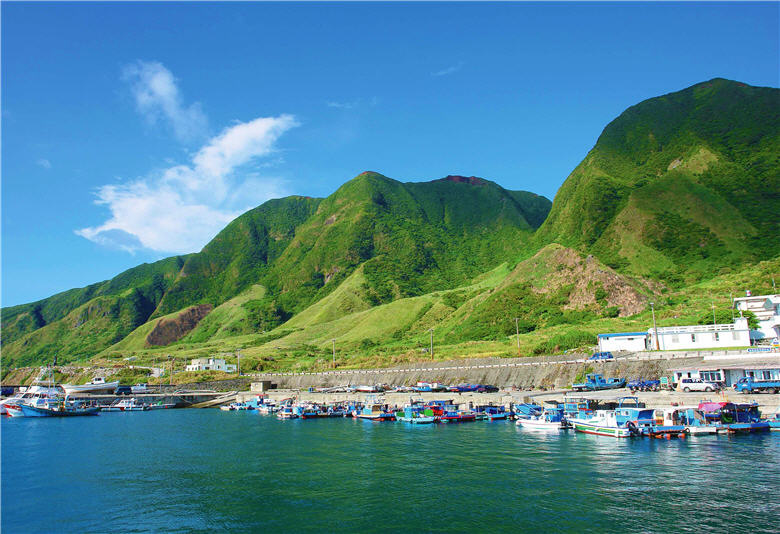
First known as the Red-headed Island (or Hongtouyu), the islet was renamed as Lanyu, meaning “Orchid Island” in Chinese, by the ROC government in 1947 because of the butterfly orchids that grew in profusion there. The 45-km² island is Taiwan's second largest and it’s also one of the hopefuls among Taiwan’s bids for the UNESCO’s World Heritage site. The isolation by the sea may have slowed the development of this island, but it has helped to retain the natural beauty as well as the distinct culture and lifestyle of the Taos.
Currently over 3,000 Taos live on Lanyu, and their culture is the best preserved among Taiwan’s aboriginal tribes. The balangay, which normally seats 1 to 2 persons and up to 10 persons for the largest, represents their unique marine culture and wisdom. Lanyu Township Chief Duo-li Jiang said that over a century ago there were even bigger ones, called cinedkeran in Yami language, for travel between Lanyu and the Batanes of the Philippines. But as the ties were severed, the Taos have stopped building bigger boats for more than 10 persons.
In the summer of 2010 under a special occasion, Minister of the Interior Yi-huah Jiang had a casual long chat with Chief Jiang, and decided to initiate a project that involves building a cinedkeran and sailing it across the Kuroshio to Taiwan to pass on the boat-building technique and share with people in Taiwan proper the Taos’ ideals of a sustainable ocean. With the efforts by Director-general of CPAMI Shih-wen Yeh in seeking interagency collaboration, the project is about to be realized in summer 2011 as the Taos will visit Taiwan on a newly built cinedkeran, bringing their unique marine culture and a new vision for sustainable marine policies for the entire Taiwan.
At last, the silent prayer by these dwellers in the blue sea has finally been answered.
Break the Taboos and Take the Challenges
The building of a balangay is an art perfected by Taos’ancestors, and is far more difficult and complicated than that of a usual canoe carved from only one piece of wood.
The balangay is pieced together by using pegs, tenons, mortises, knots and glue. Its structure normally consists of a 3-section keel (the bow, the stern, and the bottom) and the 2- to 4-layer planks at the two sides of the hull. Different types of wood are used in different parts of the boat. For example, wear-resisting wood is perfect for the keel, which always rubs against the shore bottom, while hardwood is mostly used in the bow and stern as the two parts hit the reefs quite often.
- upper:The balangay, or the plank boat, is a symbol of marine culture and at the same time a blend of wisdom in utilizing resources in the mountains and forests, aesthetics of art, and experiences accumulated in marine life. /by Jin-yuan Dai
- lower:Lanyu, with an area of 45.7 km², is Taiwan's second largest offshore island./by Zhen-yi Zheng
Compilation & Text/Hsin-hua Lian、Xiao-yu Lin
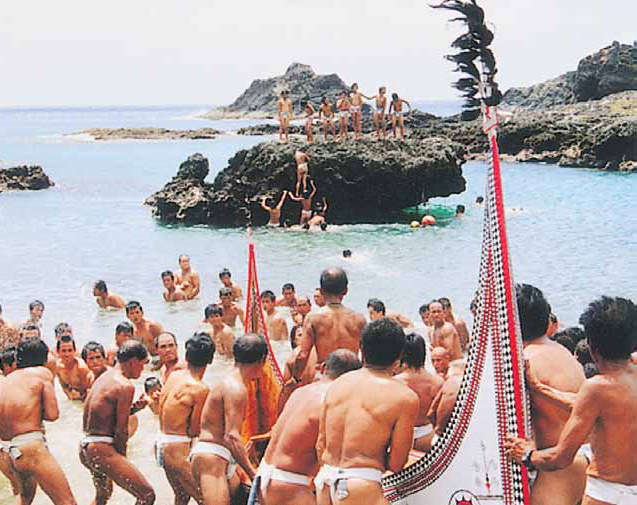
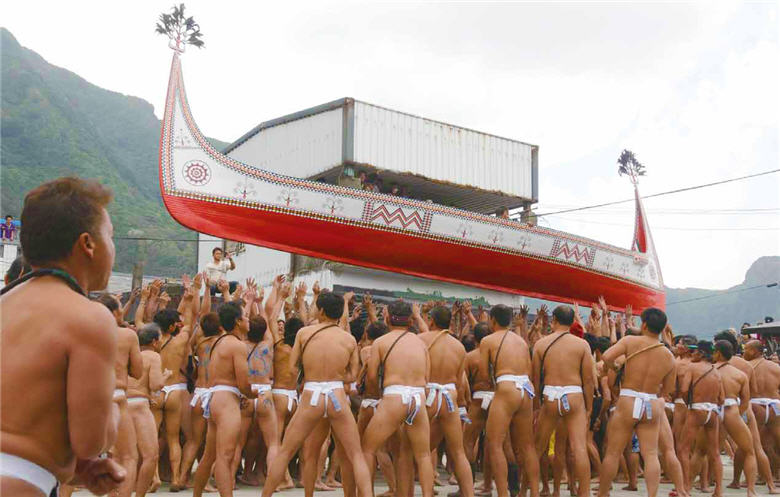
Each balangay is adjoined with 21 to 27 wood planks, and colored with red, black and white wave-like stripes, along with concentric circles (representing eyes) and human-shaped patterns (symbolizing heroes). The watercraft fully demonstrates the Taos’ exquisite skills in boat-building and coloring. The vessel featured in the upcoming project is named Si Mangavang, bearing meanings of sharing, exploring and visiting. It is built by an 18-man team of elite tribesmen of 3 different age groups to show their traditional techniques and their courage to brave the seas.
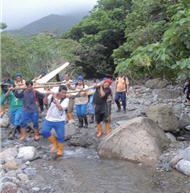
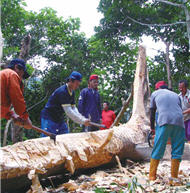
Si Mangavang is a cinedkeran for 16 persons, much larger than its normal size for 10 and a rarity even to the seniors in the tribe. But the hugeness also means a greater challenge since each of the 27 planks would have to be bigger and thus more difficult to find and carry. Under tremendous pressure, the elite team finally found the ideal wood for the bow and the stern of the keel in January, and proceeded with confidence to do their utmost to build the rest of the boat.
“For many things, you have to participate by yourself, so you’ll get closer to and have a better understanding of your own culture,” Township Secretary Zheng-de Huang said. “Many younger men in the team only heard about the boatbuildingthrough words from the elderly. Now they’re actually doing it on their own by following the seniors. They might not be articulate about how they felt in the process, but we definitely saw their growth as the boat took shape.”
The keel of Si Mangavang was pinned together by April, an important step which was celebrated with a traditional ceremony, hosted by Huang as the captain, by painting the dowels with fresh blood of a pig to pray “for the success of subsequent boat-building and for the well-being of the entiretribe.”
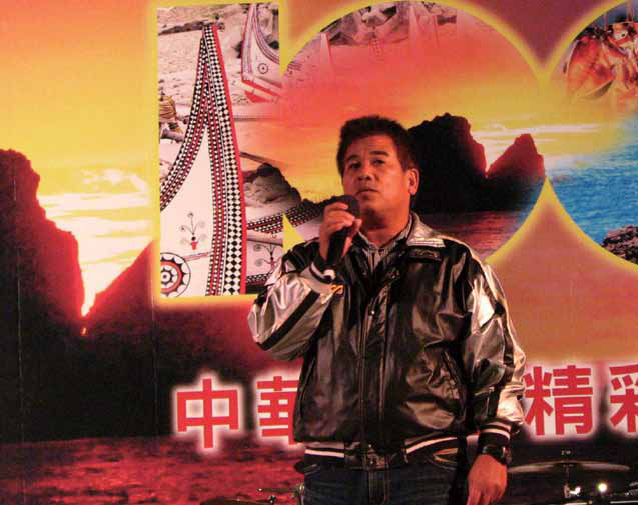
- upper left、upper right:Township Chief Jiang hopes to revive the image of a beautiful Formosa through the building and rowing of the cinedkeran ./(right) Provided by Lanyu Township Office; (left) Provided by MNP Headquarters
- lower:An opportunity for cooperation and exchange is the starting point of a sustainable marine culture./Provided by Lanyu Township Office
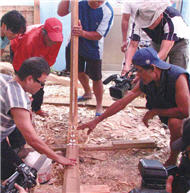
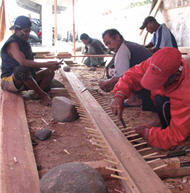
Traditional Yami customs have forbidden the announcement of any boat-building plan prior the completion of a balangay. But for a better publicity of this significant project, the Taos put the taboos aside and held a public ceremony for painting with the pig blood and adjoining the keel and the side planks. They also allowed women to touch the boat, which is normally prohibited, and to knit for it a sail dyed with colors extracted from local plants of Lanyu.
Si Mangavang means “carry a full load of blessings to visit somewhere you’ve never been to,” explained Huang. For the Taos, the significance of Si Mangavang lies in the fact that it reaches beyond the local boundaries and traditional taboos and towards the unknown realm of the sea.
Dances and Songs Dedicated to the Ocean
The cinedkeran launching ceremony is slated for late June, 2011 at the Dongqing Bay, from which the boat will sail from Lanyu to Taitung, the Bashi Channel and then northward along Taiwan’s west coast, stopping by Kenting, Kaohsiung, Tainan, Taichung, and finally into Danshui River at Taipei, the last stop of the journey.
What’s impressive about the project is that many community-based organizations, such as the Sailing Club and the Taipei Kayaker Association, are also involved in this event, and there’ll be modern sailboats and kayaks sailing along with Si Mangavang. Tainan Mayor Ching-te Lai has nodded the sailing of a ship replica of the famous ancient boat Cheng-gong (Success) in Ming Dynasty to guide the cinedkeran into Anping Harbor when it arrives at Tainan.
Lanyu Township Office will recruit some non-tribesmen as “warriors” wearing only the loincloth for manhaway, a boat-throwing ceremony, joined by Tao tribesmen. These warriors must receive 4 hours of cultural trainings to learn about the postures, facial expressions and sound-making in the process of putting the boat into the water. The Office will also invite people to participate in a “working holiday” to know more about the life of Tao tribeswomen and the Taos’agriculture. It is Chief Jiang’s hope that this cultural exchange sends the message that the Taos are striving to transcend both geological and ethnic boundaries to promote their marine culture.”
- Left to right:Huang, as the captain of the cinedkeran, painted the dowels pinned on the keel with fresh pig blood to pray for good luck and safety for the tribe.
- Uniting social groups through the establishment of fishing groups, is the core value of heritage to be passed down in this boat-building activity./Provided by MNP Headquarters
- In the process of looking for wood, the Tao villagers realized that fish in the ocean and trees in the mountains are actually closely linked./Provided by Lanyu Township Office
- Cinedkeran building is tough, as it's difficult to find trunks strong and long enough for the keel of a boat./Provided by MNP Headquarters
The eve before the cinedkeran launching ceremony will be a cheerful night of music as Tao seniors and kids will sing in chorus, followed by the performance from the singer Chien-nien Chen and the chorus of all participants, representing the enthusiastic collaboration among all parties in this event.
As this boat-building cultural exchange project is just a beginning, it is sincerely hoped that what may touch people in Taiwan is not just the marine character of Lanyu people but their genuine love for the ocean.
- upper:The rough seas pose a grave challenge to the Taos, who, nevertheless, are confident in overcoming it./by Zhen-yi Zheng


