
The sacred Gift-Tongariro National Park in New Zealand
New Zealand is situated at the remotest corner of the southern hemisphere. It's one of the last lands on Earth settled by humans, but its geological and ecological histories date back to 96 million years ago. When humans arrived, there were merely two species of bats, the only native mammals, around 200 species of land birds, and many peculiar plants. Due to a lack of natural enemies, birds evolved toward large sizes and flightlessness,making New Zealand home to the only flightless owl as well as the fattest parrots and pigeons in the world.
A Gift Given by a Wise Chief
In 1840, Europeans, mainly the British, started to immigrate into New Zealand. These settlers forcefully bought the lands, including current downtown Auckland, from local people, with just a few goods as exchange, and then sold the lands to later immigrants at high prices. Europeans’ settlement at that time led to the extinction of 7 bird species and a severe decline of the forest coverage rate to 23%.
To protect their homeland, the indigenous Maori fought back, but was defeated by the British using advanced weapons. By 1887, the settlers’power had expanded to the central North Island, where three volcanoes, including Tongariro, were located. Horonuku, the paramount chief, did not want the sacred mountains, which were full of ancestral legends and memories, to be sacrificed and cleared to make room for farming, so he made an astonishing decision, that these mountains be gifted to the British government, on the condition of remaining its natural and primitive environment. As a result, the 3 volcanic mountain:Tongariro, Ruapehu, and Ngauruhoe, were the only lands that were fortunately preserved.
After World War II, while most countries devoted their attention to massive infrastructure development, New Zealand, on the contrary, was determined to protect the nature at the national level by establishing more national parks and protected areas. Today, New Zealand has 14 national parks, 17 marine parks, 20 forest parks, and 1,200 protected areas.
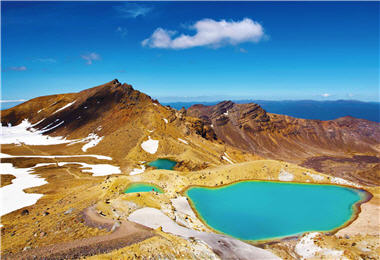
- upper left:Just like its name suggests, the green waters of Emerald Lake in Tongariro National Park is truly mesmerizing. /by Dmitry Pichugin
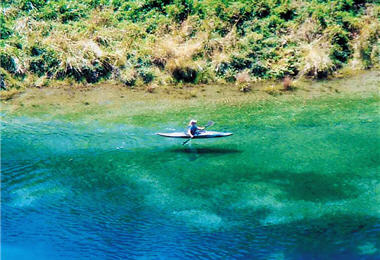
- upper right:The upstream of Waikato River.Thanks to restrictions on polluted water, canoeing in the river is like doing it in the sky.
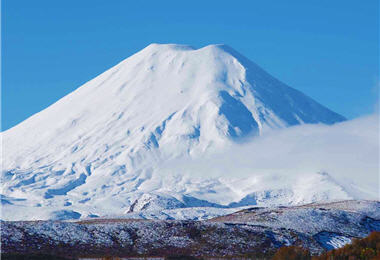
- lower left:Mount Ngauruhoe (2,287 m),named after a beautiful slave girl who was thrown into the crater as a sacrifice, is a conical volcano that best resembles Mount Fuji.
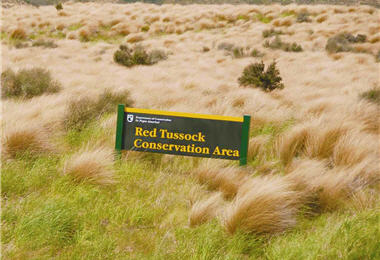
- lower right:Even native weeds are under the protection of DOC.
Text & Photo/ Richard Chen
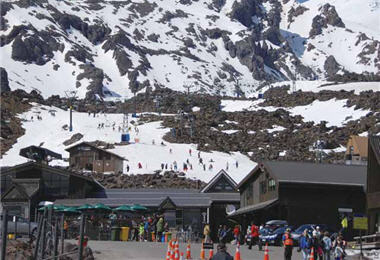
Exactly one century after the precious gift had been presented by the chief, the Department of Conservation (DOC) was founded in 1987 under the approval of New Zealand's Prime Minister David Lange. DOC's endeavor has made this gift even more valuable. Tongariro National Park covers approximately 795 km² with nearly no artificial development:only two small ski areas located about halfway up the mountains accessible by car, and very limited accommodations. Moreover, visitors can only reach the summits to appreciate the crater lakes on foot.
Preciousness with Minimal Human Presence
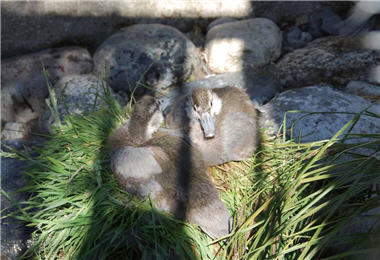
In fact, Tongariro National Park is not abundant in natural resources, with merely 550 species of mountain flora and even a smaller diversity of fauna, yet it is the habitat of the world's only four existing species of Blue Duck (Hymenolaimus malacorhynchos) living in rapids. Many native kiwi birds, however, have been relocated to protected areas where they have no predators.
The volcanoes in Tongariro National Park have always been active. In 1953, the collapse of one barrier lake caused the worst train accident in New Zealand’s history.In 1996, Ruapehu, the highest mountain on the North Island, erupted, fortunately after the ski season, thus no casualty was reported.
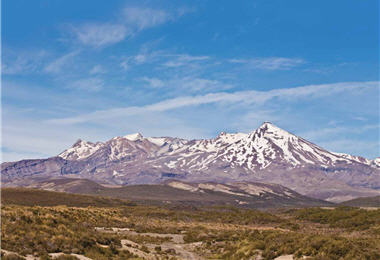
- upper left:The volcanic activities in Tongariro National Park have still been quite frequent. Mount Ruapehu (2,797 m), the highest mountain on the North Island, is also the most active volcano in New Zealand./ by Mike
- upper right:The fledgings of the rapids master : Blue Duck (Hymenolaimus malacorhynchos) .
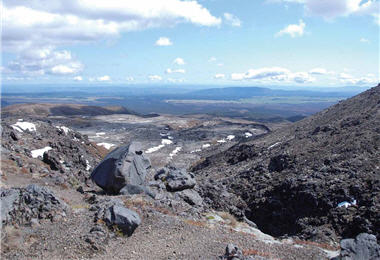
- lower left:Nearly no man-made buildings in sight on the mountains.
- lower right:The small-scaled Whakapapa ski area in the national park.
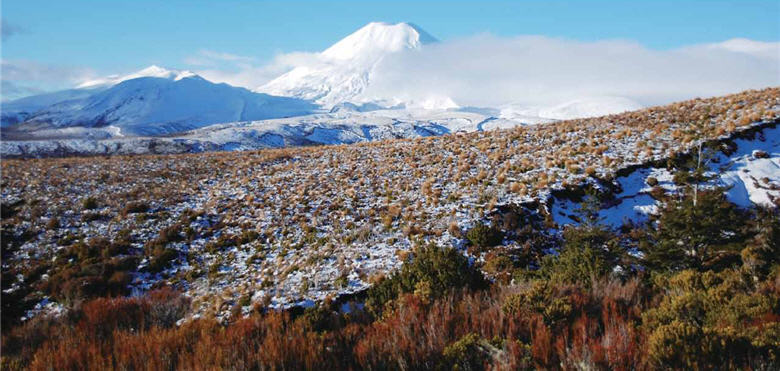
Thanks to scarce natural resources and frequent volcanic activities, Tongariro National Park has never been a popular destination for tourists; therefore, its pristine beauty has been well preserved for hundreds of years. In 1993,Tongariro National Park was nominated both natural and cultural World Heritage by United Nations Educational, Scientific and Cultural Organization (UNESCO). Horonuku's far-sighted decision had truly paid off.
Conservation Authorities Unified
Yangmingshan National Park (YMSNP) is also famous for its volcanic topography; however, the management practices of these two national parks differ. About 25% of New Zealand's lands, including all national parks, are under the jurisdiction of DOC, the single, unified conservation authority. The general public can enter national parks for free, while travel agencies and tourist coach companies are charged an annual fee for bringing in grouped visitors. Moreover, commercial vehicles must have concession permits to enter certain areas, and would otherwise be fined promptly. Despite few park staffs, regulations are strictly and swiftly enforced in the Park.
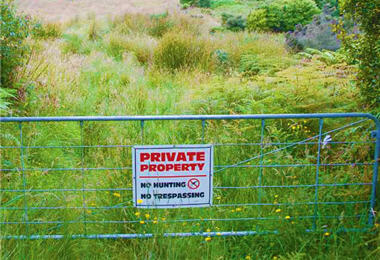
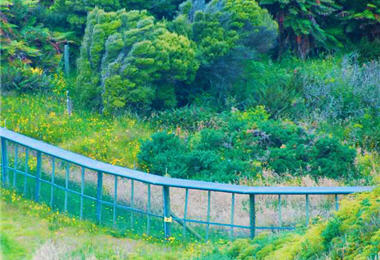
Furthermore, Tongariro National Park is rather under developed. No roads are artificially paved except that some slopes are consolidated with wooden boards. Not only are there no pavilions and restrooms along the trails, some of them are even closed in bad weather. In other words,conservation always comes first before recreation. In the past,many foreign species, such as Australian opossums,European weasels, rats, and wild cats, were once introduced into New Zealand, posing a threat to the survival of native birds. Since 1894, 400 endangered bird species have been sent away for better protection. In 2005, a donation program called“ Noah's Ark 400”was initiated to build around Manugatautari mountains a onemeter-high,50-km-long electric fence, which has successfully cleared out foreign species in that region.
While the national parks in Taiwan, by contrast, seem to focus mainly on recreation and visitor services at the expense of ecosystem protection and species restoration, Tongariro National Park may serve as a role model for their counterparts in Taiwan. As a volunteer interpreter in YMSNP for 10 years, I truly dream to see like-wise ideal conditions be realized in Yangmingshan one day.

Richard Chen
Following the National Excellent Tour Manager Award he won in 2007, Chen was granted the “Friend of Yangmingshan” Award in 2010, the highest honor that the national park recognizes its volunteers with. With professional training on ecotourism in Rocky Mountains in Canada, Chen has been a long-time interpreter at Yangmingshan National Park and an instructor at Society of Wildlife And Nature (SWAN), and been frequently invited by numerous schools and the Dept. of Environmental Protection to share his experiences of ecological conservation in Australia and New Zealand.
- Left to right (upper):Noah's Ark Program used electric fences to prevent the invasion of foreign species.
- lower:With only a small number of visitors each year, the pristine beauty of Tongariro National Park has been well preserved for hundreds of years.


