
Rebirth of Treasures-Transformation of Discontinued Mines in National Parks
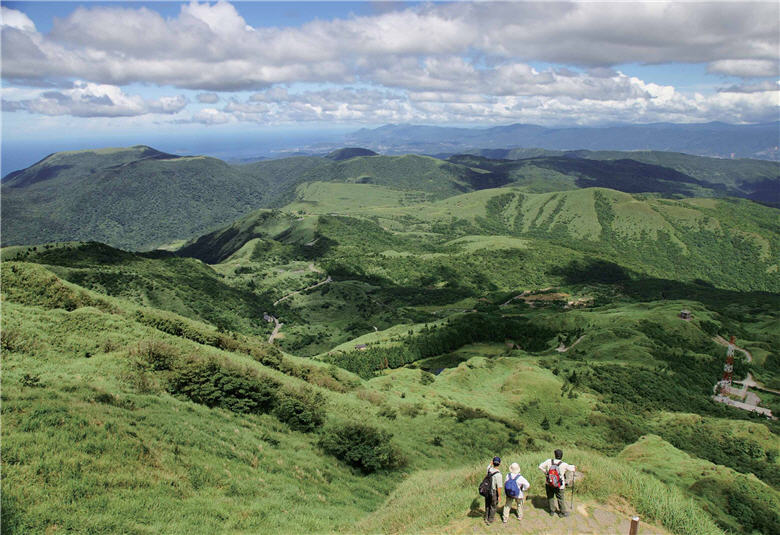
Having gone through negotiations, announced nomining areas, terminated mining, and completed compensations, Taiwan's national parks spent 25 years turning tens of thousands of hectares of mining sites into national conservation areas. The damaged was restored. The collapsed was renovated. The long-forgotten was changed into a new wonderland for wildlife.
As a result, the lands were reborn. The life quality of people was improved.
A Classroom in the Nature
Yonglai Mine, a mining site for porcelain and clay mineral extraction located beside the road from Lengshuikeng to Qingtiangang Grassland in Yangmingshan National Park (YMSNP), became abandoned since 1988. Although never being an attractive spot, there actually exists plentiful vegetation for tourists to observe and experience, such as forests, grasslands, and wetlands. Moreover, YMSNP Headquarters preserved certain mining equipment and built pavilions and wooden trails, turning Yonglai Mine into an oudiv>
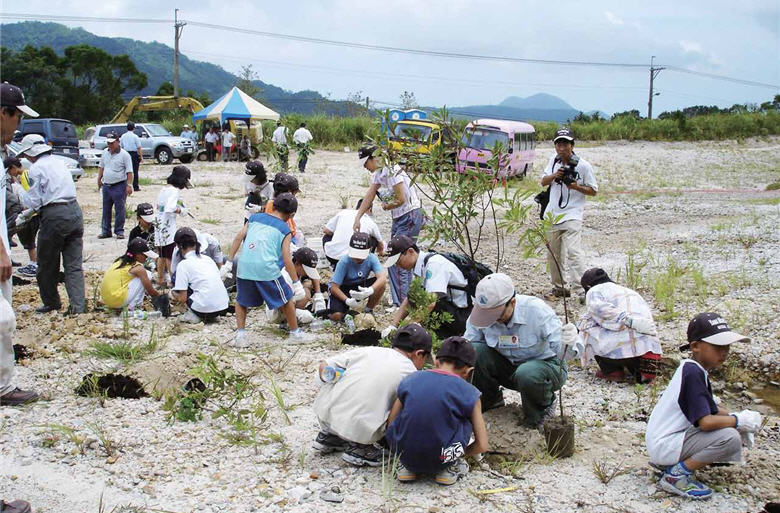
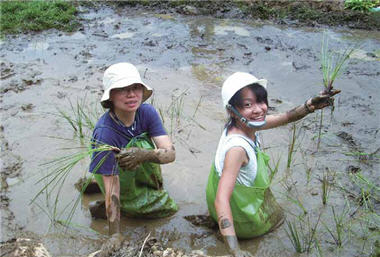
In 2005, YMSNP and Taiwan Environmental Information Association (TEIA) co-organized Eco-Working Holiday activities. By applying phytoremediation to the mine pool and conducting a Plant Genetic Resources Preservation
Project in Yangmingshan, Yonglai Mine was made into an ecological education park.
The detailed activities included revegetation, environment monitoring, habitat preservation, and eco-interpretation. Participating volunteers helped to remove invasive species and monitor water quality and vegetation every month. Through actual works in environmental restoration, public awareness of biodiversity and conservation were thus better raised.
According to Shun-fa Chang, Chief of Planning Section of YMSNP Headquarters, there are three ways to reutilize discontinued mines. Firstly, for mines in a primitive environment and not easily accessible via transportation, like Yuwen Mine, they are left as eco-protection areas and restored by natural succession. However, for those with clayey soil where vegetation is hard to grow naturally, such as Weili Mine, artificial planting is necessary.
Secondly, mines which are accessible and with a large hinterland, are transformed into recreation areas, such as the ones in Liahuanggu, Longfonggu, and Lengshuikeng. In 2001, the park reconditioned the hot spring in Lengshuikeng built by the previous owner of Yonglai Mine and opened it for free for the public till today.
Thirdly, mines with cultural and historical values are entirely preserved, for instance, the sulfur-mining equipment at Dayoukeng. However, it is only open for academic research and environmental education but not to the public due to safety concerns.
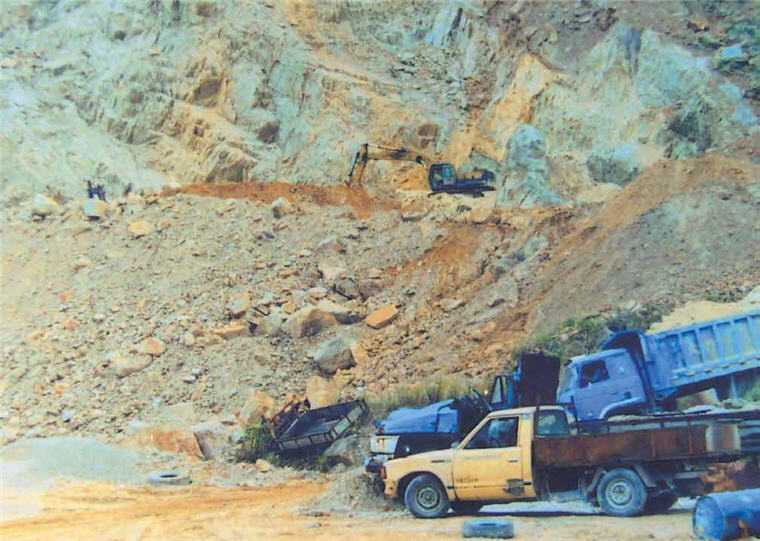
- upper:The hard work by Yangmingshan National Park Headquarters in restoring the discontinued mines in the park has filled them with verdant vitality./ by Yan-bo Chen
- lower:What Weili Mine looked like when it was still in function. /Provided by YMSNP Headquarters
Interview & Text / Hsiu-mei Li
Translator / Donna Hu
Special Thanks to / Contract Interpreter Mr. Mao-yao Lin of TNP Headquarters,
Section Chief Ms. Shun-fa Chang, Chief Mr. Li-chang Lu, Technical Specialist Ms.
Shu-chun Yu, Assistant Technical Ms. Ya-jing Fan of YMSNP Headquarters, Former
Director Mr. Lung-sheng Chen, and Technical Specialist Ms. Zhen-yu Chen of YSNP
Headquarters, Ms. Yi-hsun Tsai of Taiwan Environmental Information Association (TEIA)
“This is a way of learning. By taking into account suggestions from experts and coming up with different plans suitable for different environments with different needs, we will be able to provide the best plan for a specific land and hence give discontinued mines new lives,” said Li-chang Lu, Chief of Yangmingshuwu Service Station in YMSNP.
Lu believes that “Historic sites are the best source of environmental education.” If the project of making Dayoukeng, the sulfur guarding camp, and Fishermen’s Trail a historic attraction is approved, many sulfur-mining photos and videos collected by Lu can be displayed in the interpretation center, guiding tourists to relive the history of mining.
Specific Ecological Planning for Local Needs
Taroko Nat ional Park (TNP) Headquar ters also commissioned scholars to make natural restoration plans for the mines. They found that vegetation in untapped mines or discontinued mines has well recovered. In addition to few native plants, invasive species, such as White Popinac (Leucaena leucocephala) , Napier Grass (Pennisetum purpureum) , and Spanish Needle (Bidens pilosa) , grew in abundance.
Prof. Yi-ju Yang suggested that discontinued mines, after ecological restoration, should be used for ecotourism. This can be realized by improving trail facilities, providing interpreter-training courses for local residents and conservation volunteers, strengthening the partnerships between national parks and local communities, and encouraging people to participate in eco-tours.
According to Shi-zhao Nie, Chief of Planning Section of TNP Headquarters, the lands of discontinued mines in Taroko belong to the Forestry Bureau. The current priority is to monitor its natural succession and pay attention to water and soil conservation to prevent possible landslides. As tourists may pour in and make impact, whether to open these discontinued mines for recreational purposes is still under discussion.
Walami area in Yushan National Park (YSNP) boasts rich eco-resources, but its steep and geologically unstable slopes have allowed limited trails and facilities. Today Walami is an ecological protected area, while Japanese Occupation Era Batongguan Traversing Trail and Dafen area were first designated as scenic areas before listed as ecological protected areas in 2008.
- upper:For those mines with clayey soil where vegetation is hard to grow naturally, such as Weili Mine, artificial planting is necessary./ Provided by YMSNP Headquarters
- lower left :With an abundance of ecological resources and geological landscapes, Walami area may serve as a wonderful venue for interpretation and education. /Provided by YSNP Headquarters
- lower right:YMSNP Headquarters and Taiwan Environmental Information Association (TEIA) co-organizedEco-Working Holiday activities at the abandoned Yonglai Mine in hopes of inspiring public actions of environmental protection through the restoration efforts by the volunteers./ Provided by TEIA3.
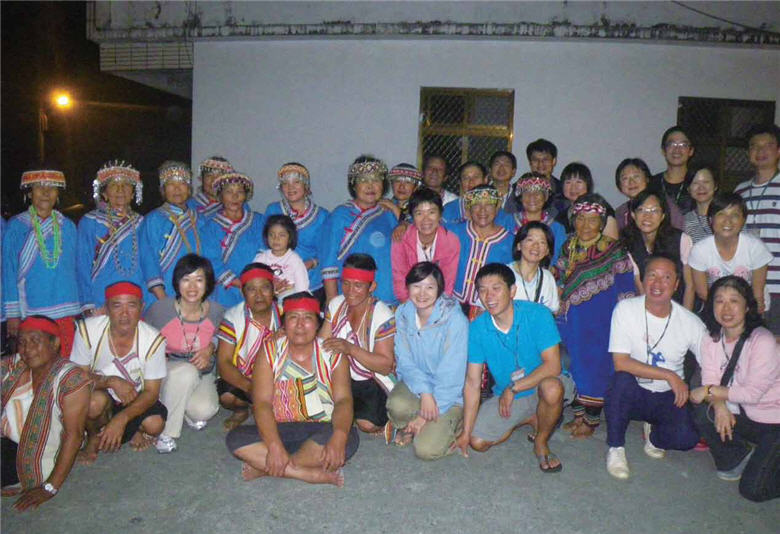
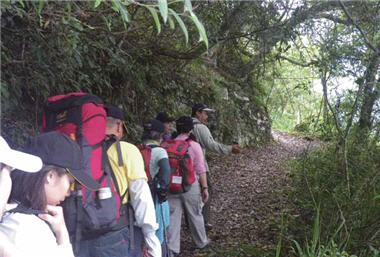
Undeniably, Walami is an excel lent venue for interpretation and education with its wide variety of natural resources, historic heritage, and geological landscape. So YSNP has been working with local aborigines in developing ecotourism, with a featured annual event “Walami-Yuxi Cultural and Ecological Tour,” which provides field trips, aboriginal dance shows, visits to the Bunun tribe and relics during Japanese Occupation, to help people better understand Walami area.
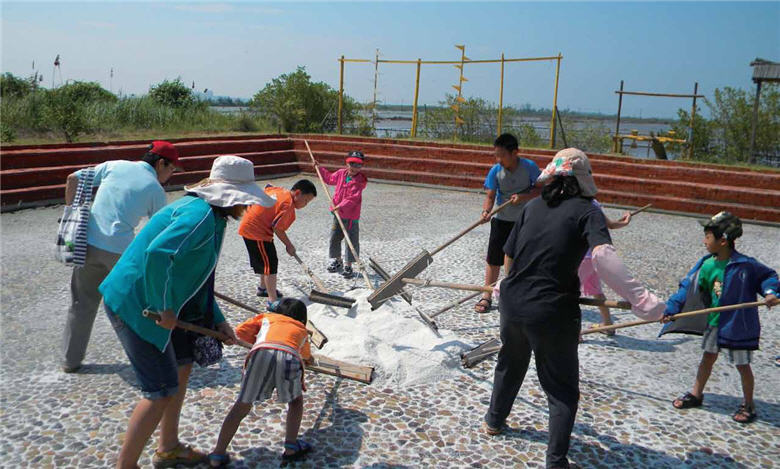
Sihcao Wildlife Refuge and the salt pans and wetlands in Cigu at Taijiang National Park (TJNP) are popular tourist destinations. The park advertises its salt-pan culture in a creative way and offers salt-making tours in summer. By listening to professional interpreters explaining the history of Anshun Salt Works while experiencing the salt-making
process, the hard works of the ancestors and the wisdom of benign extraction of mineral resources can be thoroughly appreciated by people today.
The status of mines has waxed and waned in the past few decades. After fulfilling their historical missions, discontinued mines are now transformed and reborn, and should be sustainably cherished generation after generation.
- upper:YSNP Headquarters has been working with localaborigines in developing ecotourism, offering anopportunity to experience aboriginal cultures.
- lower:TJNP Headquarters promotes the salt-pan culture in a creative way in which the wisdom of benign extraction of mineral resources can be thoroughlyappreciated by people today. /Provided by TJNP Headquarters


