
Emotional Exchanges with Mountains-An Interview with Photographer Ping-yuan Chen
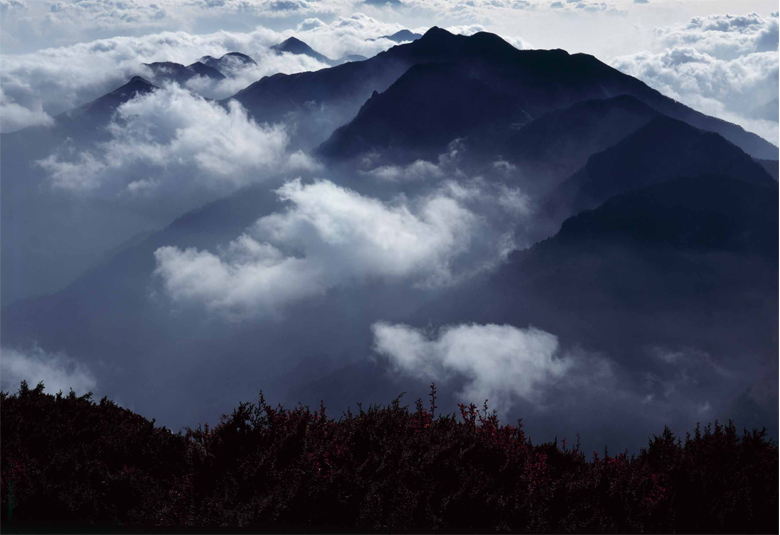
Through his lenses, sceneries in Taiwan present their magnificence with great momentum as well as gentleness with profound imagery. His photo of Mt. Nanhu was printed on the new NT2,000 dollar bill by the Central Bank. Chunghwa
Post Co., Ldiv>have been widely adopted by private banks and insurance
companies on calendars.
Ping-yuan Chen, having been immersed in photography for over 30 years, has accumulated 10 photo collections and won numerous culture and art awards. For him, photography is a way to communicate with the Nature. He savors the feeling of being exiled to the boundless wilderness and leaves imprints of his life on earth by taking photos of all living forms.
Chen photographs a wide variety of subjects. Natural
sceneries like mountains, seashores, river valleys, and badlands are commonly seen in his works. At night, he takes vivid photos of poisonous snakes, hornets, and insects. Some of his most impressive images of pandas and Snub-nosed Monkeys (Rhinopithecus roxellana) were taken in China.
Among all the subjects, Mt. Nanhu is Chen's favorite.
He wants to convey his feelings through the mountain's primitive, desolate, and extreme beauty. In order to deeply and comprehensively capture such beauty, from 1984 to 1995,
Chen climbed up Mt. Nanhu more than 30 times, staying there
for a total of 450 days. He even quit his teaching job and spent
the whole year of 1990 in the mountain, only to record every
distinctive moment of the four seasons. During that period, he
stepped all over the mountains, even to those summits and trails that few people would visit. "Insanely addicted to mountains" was how Chen jokingly described himself.
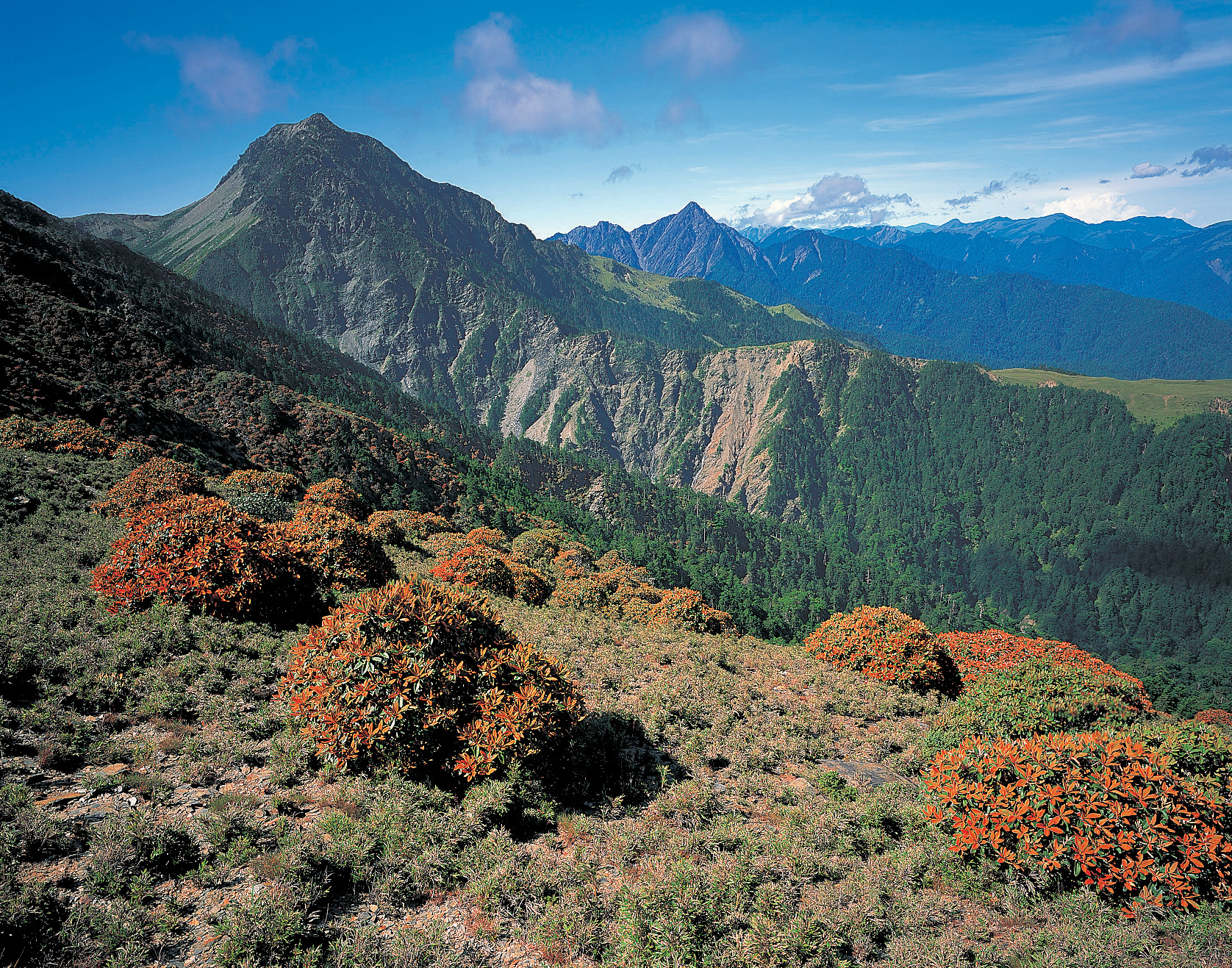
- upper:The original photo used on the NT2,000 dollar bill.
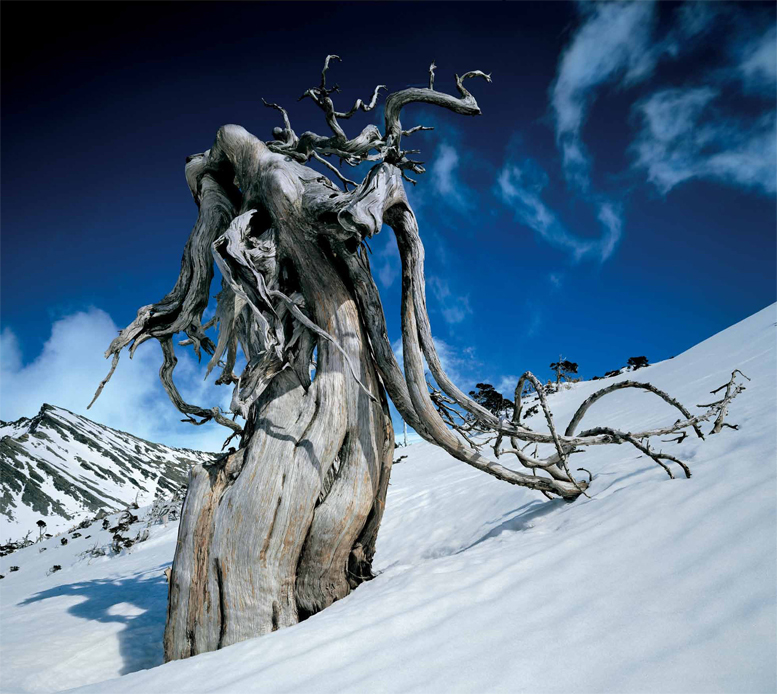
- lower left:Moved by a thousand-year-old wildwood relentlessly surviving in the snow, Chen could not help but take off his hat and salute "him."
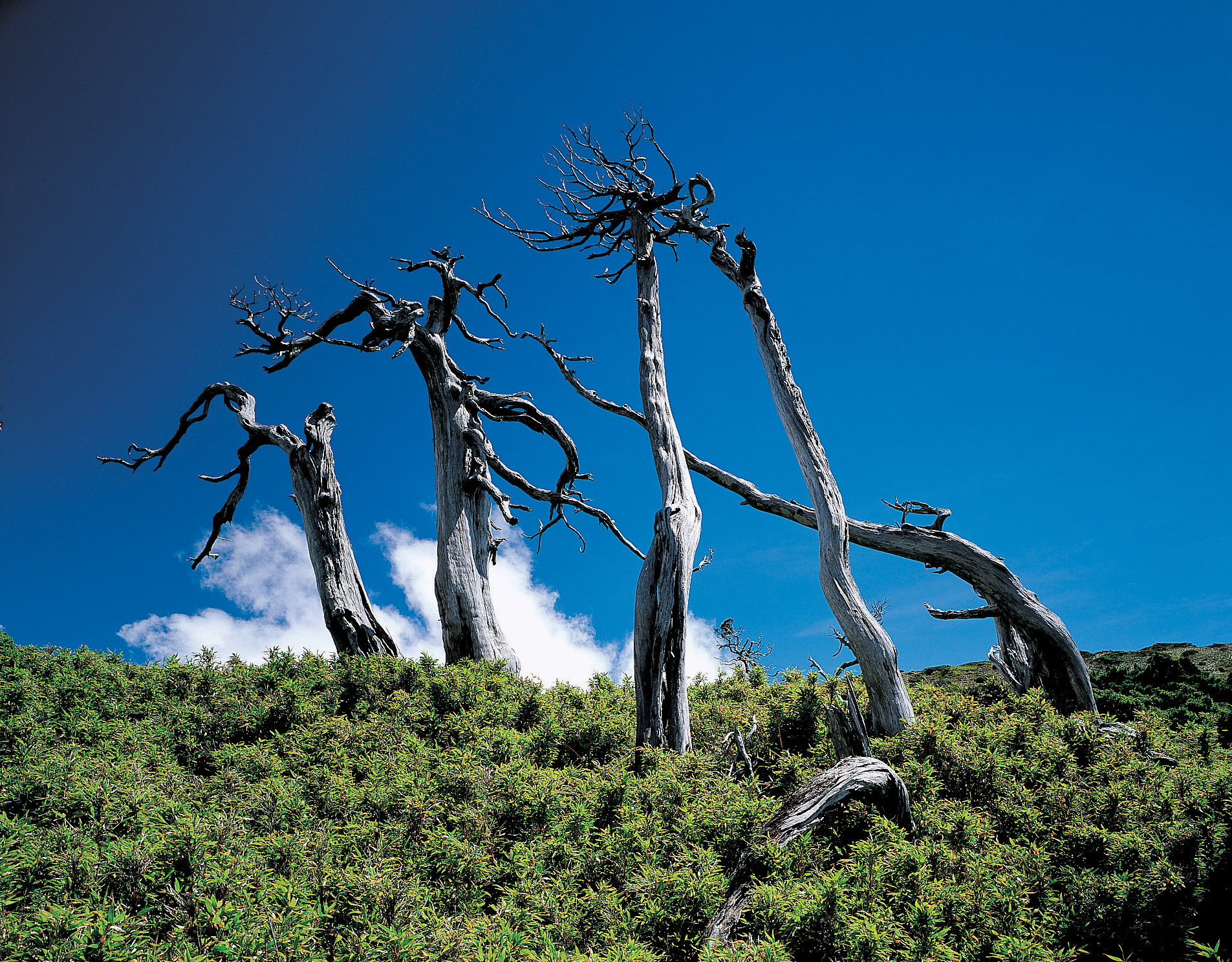
- lower right:Wildwoods
Interview & Text /Wan-ching Lai、Hsin-hua Lian
Photo Provided by/ Ping-yuan Chen
Translator/ Donna Hu
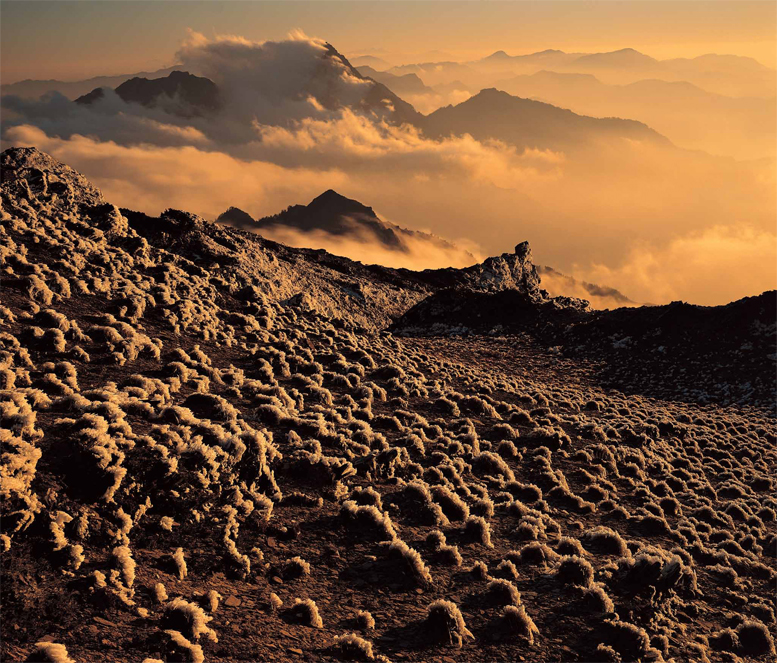
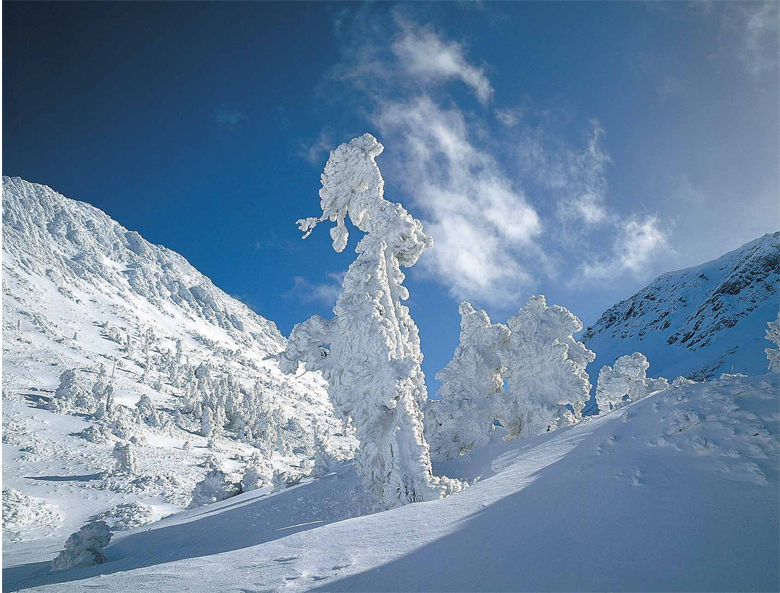
For Chen, photographing the mountains is a difficult self-growing process. He sees every mountain-photographing opportunity a new challenge, with countless endeavors being
devoted from scratch. Chen believes that mountain photographers have no rights to reject hardships. The Chinese character of mountain has only 3 strokes, but its shape alone teaches people to respect mountains in awe. It is true that majestic mountains seem to scare people away with dangerously steep slopes and seemingly unreachable peaks; yet they love to befriend people with a strong will. The tougher the mountain is, the greater the joy of climbing it. Whether climbing or photographing the mountains, they are always the best listeners for people.
Control the Camera, Not the Other Way Around
Chen's insistence on photography is clearly shown in his beliefs: "The spirit of photography dies if being treated as a hobby. The long forgotten camera tells the depravity of the
photographer."
Chen began photographing mountains in 1983 by using 135- and 120-film cameras and color positive films. After 2 years of experience with more than 60 mountains, he switched to 4x5- and 8x10- inch large-format direct viewfinder cameras so that the magnificence of the mountains could be fully expressed through his lens.
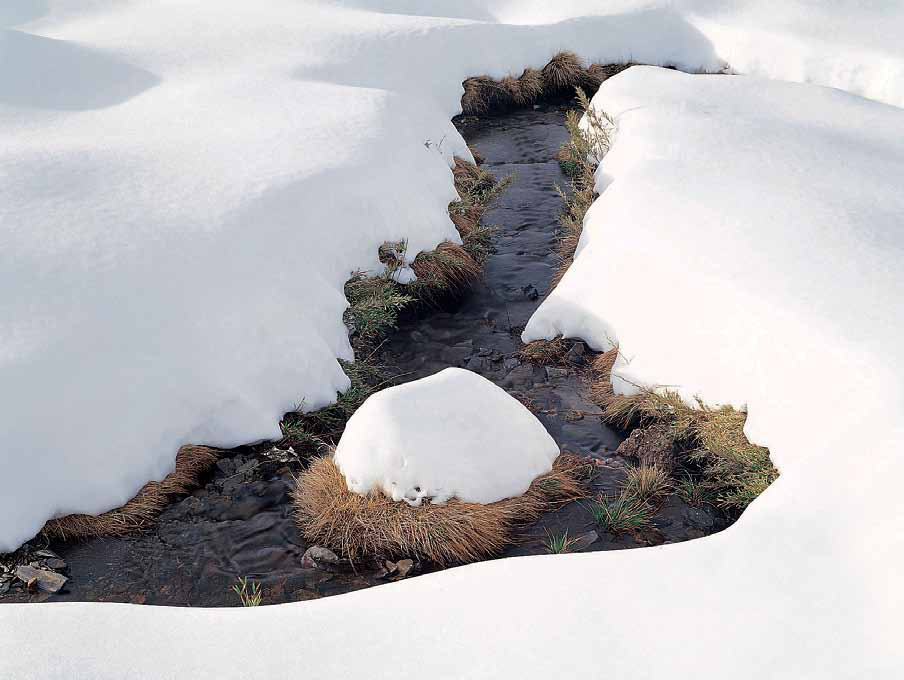
- upper left:Departing
- upper right:The rime on the ring valley of Mt. Nanhu seemed to be coagulated from heaven's tears, a truly stunning natural beauty.
- lower:At the mountain pass piled with snow, a white snowball sits like a monk in meditation, contemplating the capriciousness of life.
Chen is often asked why he insists on using the big and heavy direct viewfinder cameras instead of light and small digital cameras. In his mind, only large-format cameras meet his needs in endless pursuit of photographic arts. By adjusting the lens' optical axis, the strength of the Nature is enlivened in the
photos. Because the optical axis of smalland medium-format cameras cannot be adjusted, mountains in the photos appear to be shorter than they actually are, and their sublime majesty may be compromised. Also, 800-million-pixel images produced by large-format cameras can be enlarged to 7-meter high with perfect resolution.
Large-format cameras do not have light meters and auto-focus function, thus only one picture can be taken at one time. The user must control the camera with his or her creativity and take photos of subjects that truly touch one's heart. Otherwise the films can be easily wasted. By contrast, users would be controlled by small- and mediumformat cameras, and thus more confined in creatively expressing their ideas.
The Aesthetic Trilogy in Photography
Chen loves to photograph ugly wildwoods the most.
He believes that the extreme of ugliness is beauty. Ugly wildwoods may seem nasty from the outside, but photographers are able to turn such ugliness into beauty through the eyes of their souls. This is the essence of Chen's art works: transforming natural ugliness to aesthetic beauty.
Chen divides aesthetic photography into three stages. The first stage is to observe the subjects with naked eye. Subjects in photos appear to be exactly the same as they are in the real world whoever takes them. The second stage is to sense the subjects with the heart. Every photographer could have his or her unique interpretation toward one subject. Chen expects to create more works of this stage in the future. The third stage, the highest level of photography, is to contemplate the subjects through the soul. The photographer must be able to imagine and foresee the unrevealed scenery, and be willing to wait for that dream to be realized.
example. When Chen first saw the dying wildwood, he instantly foresaw an image with the moon residing in the hole of the wood. After 5 years of contemplation and waiting, such an aesthetic work with profound imagery was born.
The Pursuit of Spiritual Resemblance
Natural subjects that resemble a triangle, a circle, a diamond, or other irregular shapes always inspire Chen to photo them into artistic creations in no time. With a highly sensitive aesthetic intuition, Chen knows what to make out of them at the first sight. What he really pursues is to turn common subjects into unfamiliar ones, and look beyond the physical appearance to present spiritual resemblance. Chen, a photographer who has dedicated his time and talents to the Nature, manifestly reveals his passion and insistence toward the Nature in the preface of one of his photo collections. He hopes that by sharing his works, people would get acquainted with Taiwan's mountains and repeatedly savor emotional exchanges with them, and eventually feel such an inspiration that "the mountains are given lives by humans; and humans are given lives by the Nature."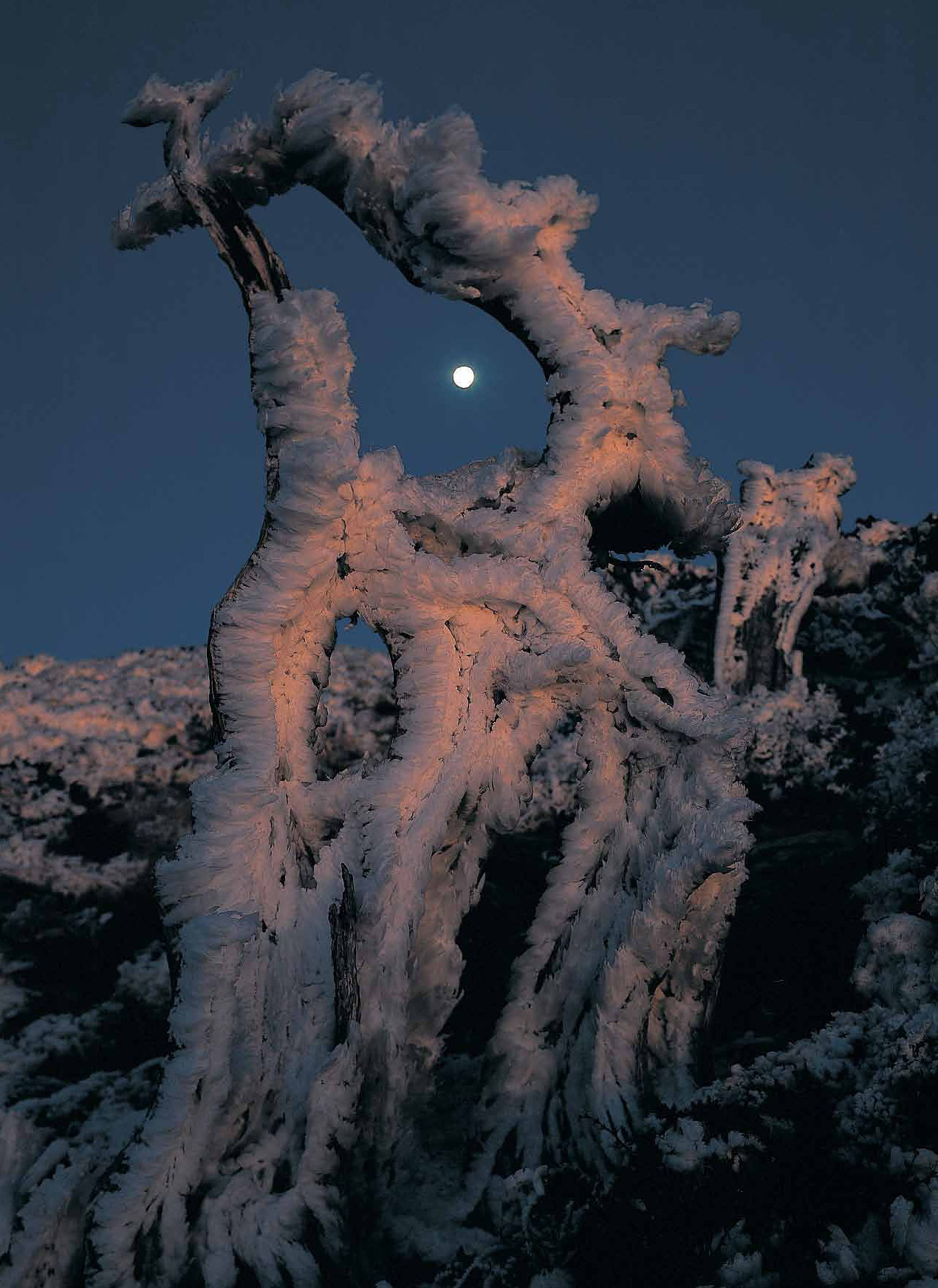

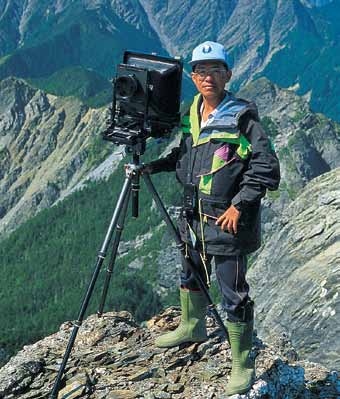
Ping-yuan Chen
Ping-yuan Chen enriches his inner self in the mountains and gives what he gains in the mountains to the society when back in the city. As a photographer who is willing to endure all hardships only to have emotional exchanges with the mountains, Chen insists on using 8x10-inch large-format direct viewfinder cameras to wholly capture the profound imagery and powerful strength of the mountains in Taiwan.
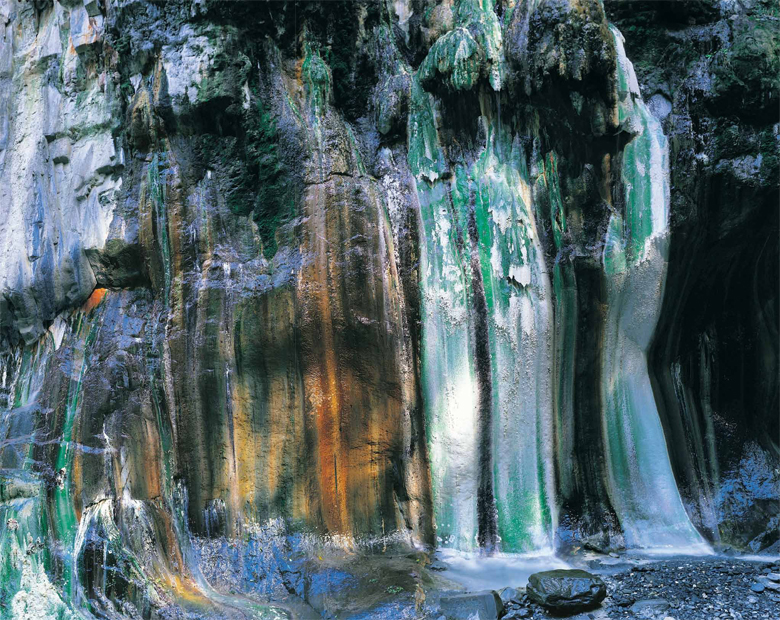
- upper left:Water flowing from the fissure of Lisong Hot Spring is like a color pen, turning the rocks into a colorful and splendid hyper-realistic oil painting.
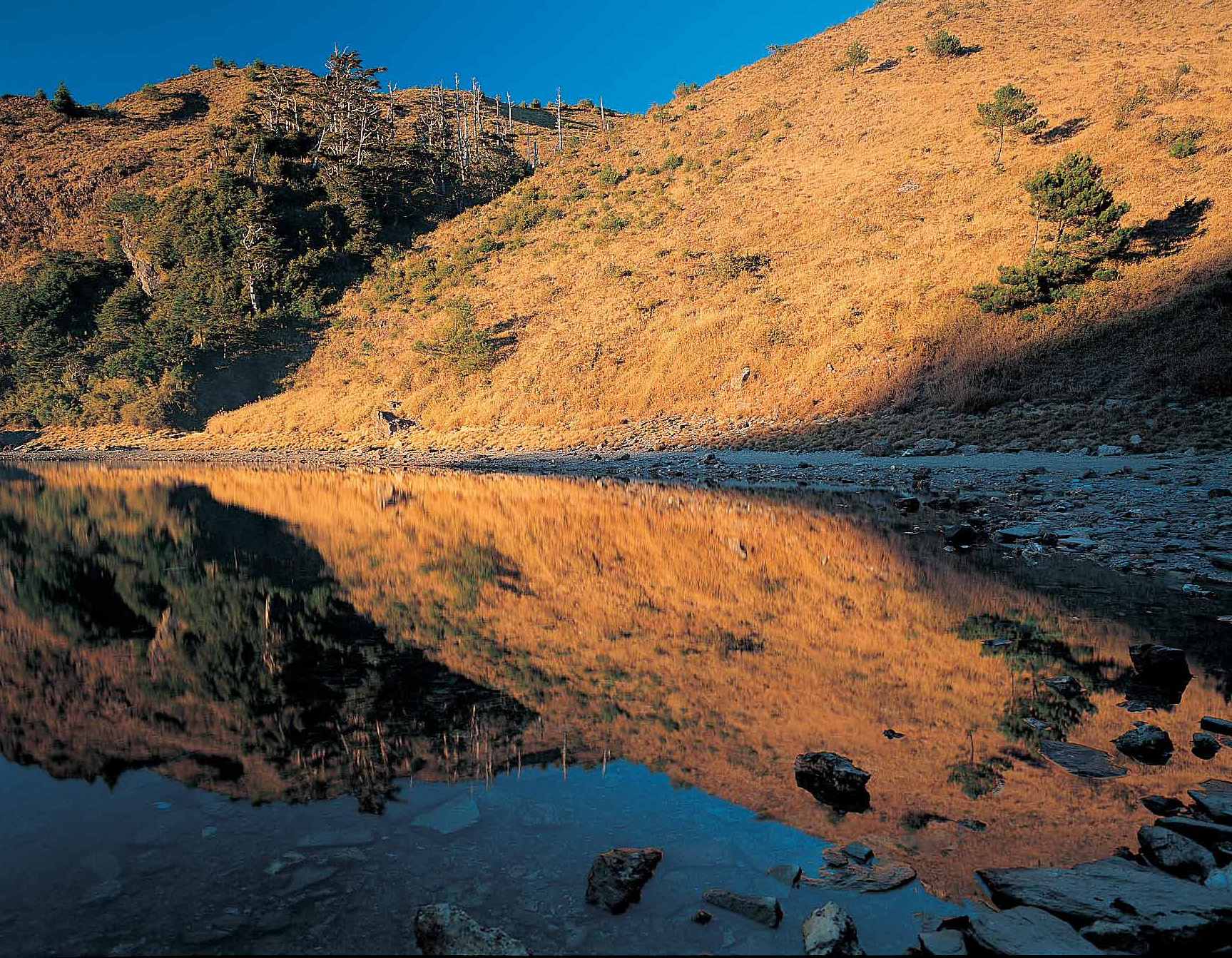
- upper right:The morning sunshine lights up the hills like a flame and creates an inverted reflection on the lake. What a dreamy image!
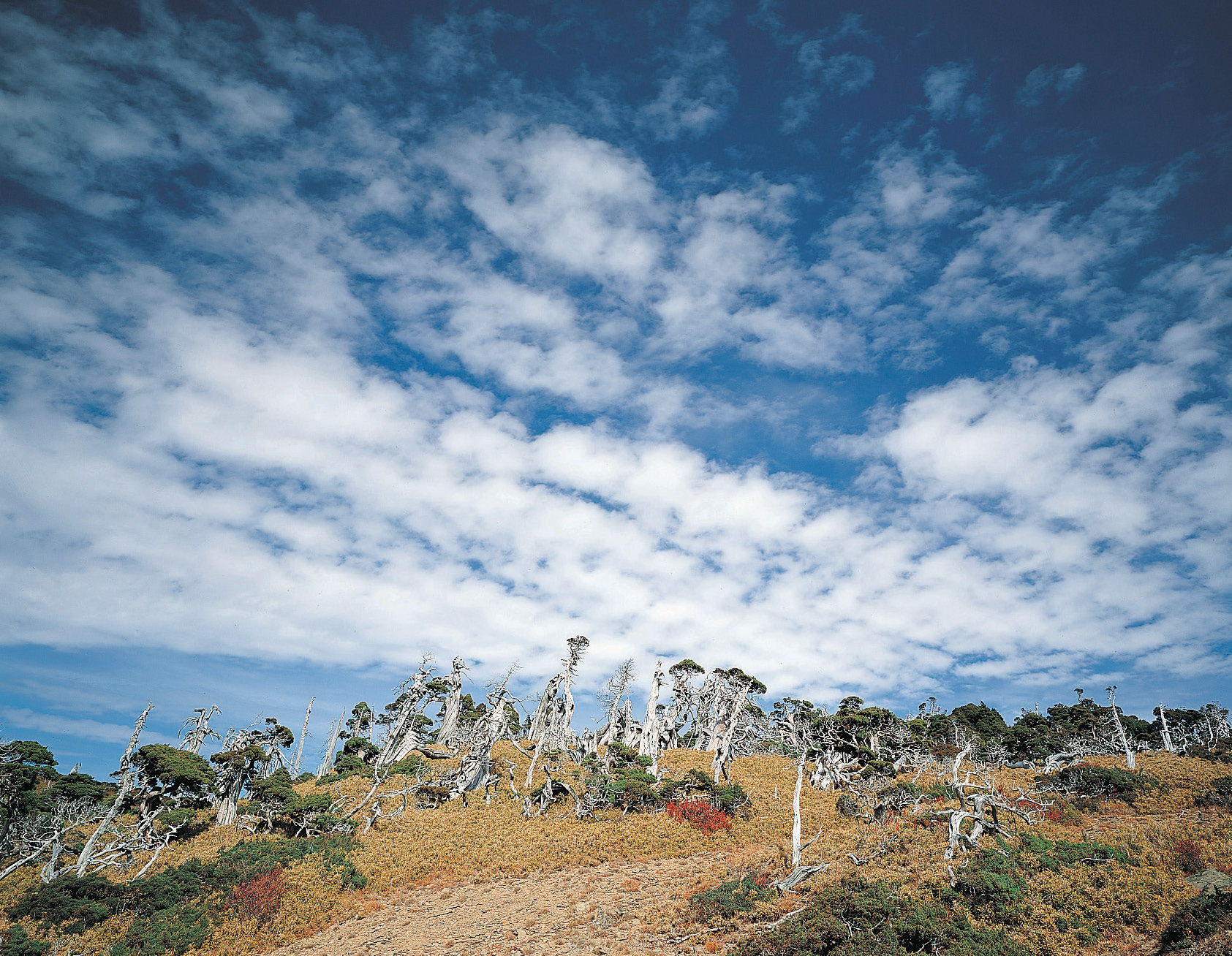
- center:In excitement, Chen chased the clouds while carrying a heavy large-format camera in front of the trees and accomplished this work titled A Crowd of Cedar Trees .
- lower right:The Moon in the Wildwood


