
Cultural Exchange across the Kuroshio-
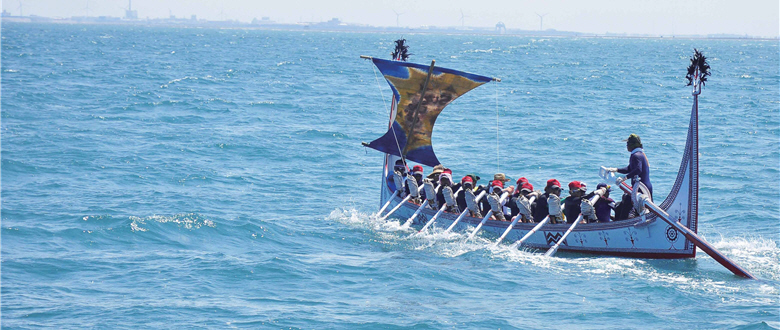
Under the scorching sun and on the raging seas, a group of sailors with an average age of 50 rowed a traditional balangay (or cinedkeran ) named Si Mangavang , the largest one ever built in the past century in an ancient style, across the Kuroshio. They braved all that heat and dangers on an 18-day journey of challenge only to write a page in history for the marine spirit belonging to Lanyu (Orchid Island) and Taiwan.
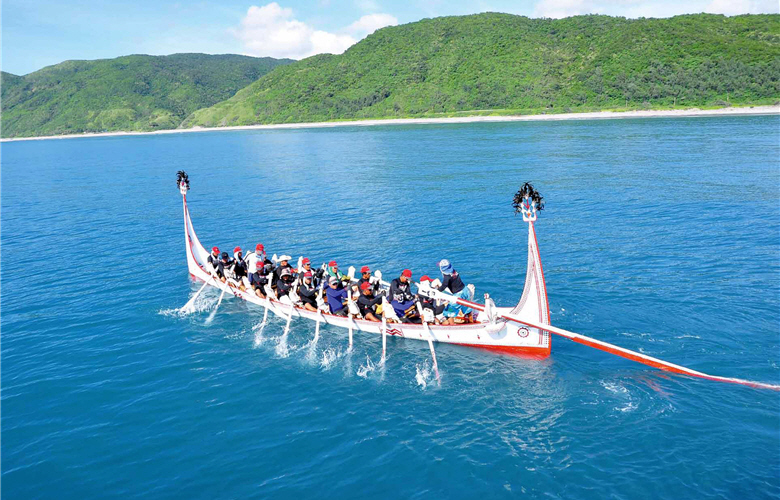
Their daunting adventure to Taiwan not only marked a significance in the country’s centennial, but demonstrated superb nautical wisdom and marine culture of the Yami.
The Warriors Set Off
In the early afternoon on June 28, 2011, Si Mangavang set off from Dongqing Bay and sailed a 15-km voyage to Kaiyuan Harbor as a warm-up. Though just sailing along the coast of Lanyu, the sailors still faced some turbulent part of the route at the northeast corner, where two ocean currents merged, before they safely arrived at Kaiyuan Harbor.
This somewhat chal lenging warm-up had foreboded an even greater difficulty ahead that’d require extraordinary skills and wisdom to overcome. But all the warriors were still poised to take on the mission.
In the wee hours at 4 a.m. on June 29, the cinedkeran was getting ready in a launching ceremony, when the tribe’s seniors sang their prayers and the sailors concluded their final preparations for the upcoming 18-day visit across the seas. Their first stop: Dawu in Taitung.
Under the escort by the Coast Guard, Si Mangavang and its logistics ship departed from Kaiyuan Harbor, heading toward the boundless glittering ocean. Ahead lies the bumpy Kuroshio hidden beneath the calm sea surface, posing a tough barrier between Lanyu and Taiwan.
First Challenge : Crossing the Black Tide
Considering the main current of the Kuroshio flows from southwest toward northeast, it’ll be a much rougher route to cut across the 100-km-wide and 300-m-deep strong current that flows at a speed of 3 nautical miles per hour if they try to take a shortcut toward the southwest to Eluanbi. So the senior sailors decided to go northwest first to pass the Kuroshio and reach Shangwu Harbor at Dawu and then sail south along the countercurrent along the coast.
The cinedkeran finished this leg of voyage at 11:30 a.m., spending less than 8 hours to cross the Kuroshio, a record much faster than that of 11 hours set by another balangay Ipanga na in 2007. Si Mangavang sailed at an average speed of 5.5 knots. (The knot is a unit of speed equal to one nautical mile, which is defined as 1,852 m, per hour, roughly 0.5144 meter per second.)
- upper:Cultural Exchange across the Kuroshio
- lower:Si Mangavang was sailing along the coast of Taitung.
Compilation & Text/Wang-ching Lai、Hsin-hua Lian
Photo Provided by/Marine National Park Headquarters
Translator/Kuan-yu Ou
The cinedkeran finished this leg of voyage at 11:30 a.m., spending less than 8 hours to cross the Kuroshio, a record much faster than that of 11 hours set by another balangay Ipanga na in 2007. Si Mangavang sailed at an average speed of 5.5 knots. (The knot is a unit of speed equal to one nautical mile, which is defined as 1,852 m, per hour, roughly 0.5144 meter per second.)
Captain Yi-zhong Zhou of the logistics ship, who also sailed along Ipanga na from the east coast to Taipei in 2007, said that Ipanga na was rowed by 14 sailors with an average speed of 3.7 knots (over 4 knots at the fastest). So the swiftness of Si Mangavang this year was way beyond everybody’s estimation. It is somewhat attributed to moderate marine facies and more rowers on board, but the key lies in the perfect symmetrical structure of the boat and its stableness in cutting through the waves.
The safe passing of the Kuroshio, however, wasfollowed by a few situations during harboring, when some paddles were damaged by hitting the coast ground, and some sailors were cut on their soles by broken glass and some sharp-pointed bits at the ramp. Chief Duo-li Jiang of Lanyu Township Office, the worst injured among all, hoped that these minor and personal misfortunes could bring a smoother subsequent journey.
Angry Seas at Eluanbi
Before they began the next leg from Dawu to Bitou Harbor at Kenting the next day, some coast guards were amazed by how fast Si Mangavang had traveled, jokingly wondering whether the cinedkeran had been installed with a motor or been towed by the logistics ship for a while.
But that’s so much for joke. One after another challenge posed by the seas awaited the sailors for real. Whether these skillful warriors could keep up the fast speed in an unhindered style was unknown to everyone.
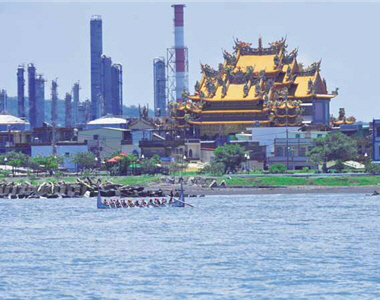
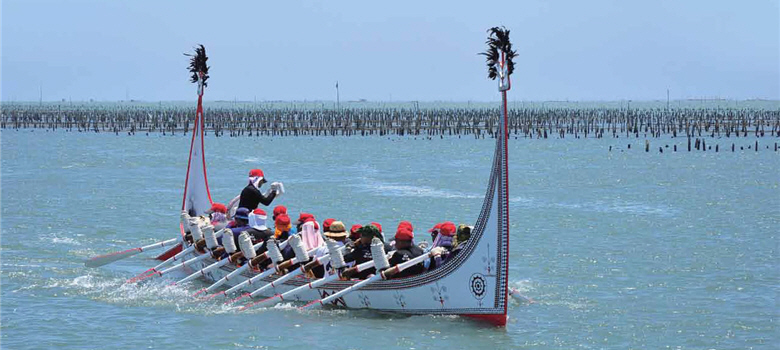
- upper:Si Mangavang was passing through the oyster farm dense with oyster-raising racks and ropes.
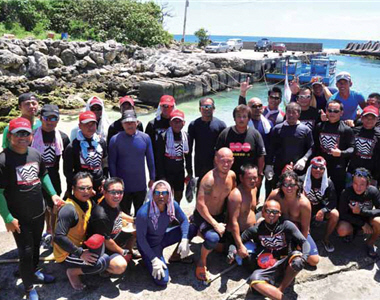
- upper left:The energetic Yami warriors arrived at Bitou Harbor in Kentin
- lower right:Si Mangavang was passing by the Linyuan Industrial Zone.
The most challenging part of the entire voyage had to be the seas at the cape of Eluanbi, where two oceans merge at this corner of Bashi Channel and some major accidents once happened. Three years ago 8 divers went missing at Qixingyan in Kenting, and were rescued 48 hours later at the coast of Taitung, somewhere over 100 km north! This showed how tough a fight it was that the sailors had to face with their balangay.
Built in an ancient style without any modern equipment or power supply, Si Mangavang relied only on human paddling and helm controlling. It was unthinkable that a boat in such a simple and traditional form could make it through the rough seas.
The original itinerary for that day ended at Xinghai Harbor, but considering the weather forecast provided by the Navy, the crew decided to go ahead of the schedule and pass the cape of Eluanbi, the most difficult part of the journey, when the sea conditions were more fitting for sailing. But the intense heat posed another threat, so the veteran rowing coach A-zhong Huang suggested that they sail across the part on two shifts of rowers.
At noon the sailors passed Xinghai Harbor, and soon met rough sea waves and countercurrents. They rowed in such synchronous manners and with such accurate angles and depths of their paddles in the water that the entire crew of 18 men and the cinedkeran became one unity at full throttle, showing the Yami’s respect and fearlessness to the ocean.
Local fishermen paid their full respect to the sailors of Si Mangavang for the fact that it could sail at a speed of 6.8 knots against the strong currents and bumpy waves that even veteran seafarers would dread.
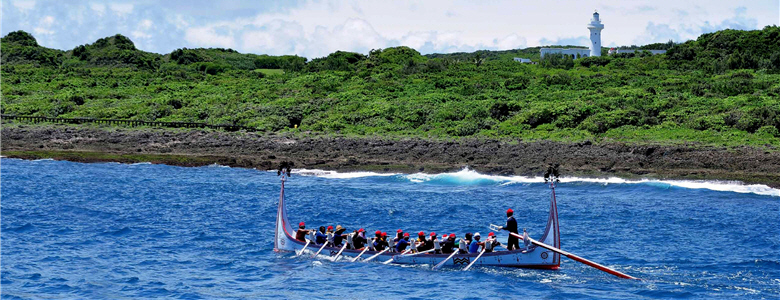
Conquering the horrifying part at the cape of Eluanbi,the sailors slowly rowed past Eluanbi Lighthouse against a backdrop of white spoondrifts and jagged coral reefs, forming a beautiful scene, a touching moment and a significant record. This marked the southern-most point that any balangay of Lanyu has ever reached in history, and well proved that the superb nautical experiences of the Yami were indeed a truly valuable legacy.
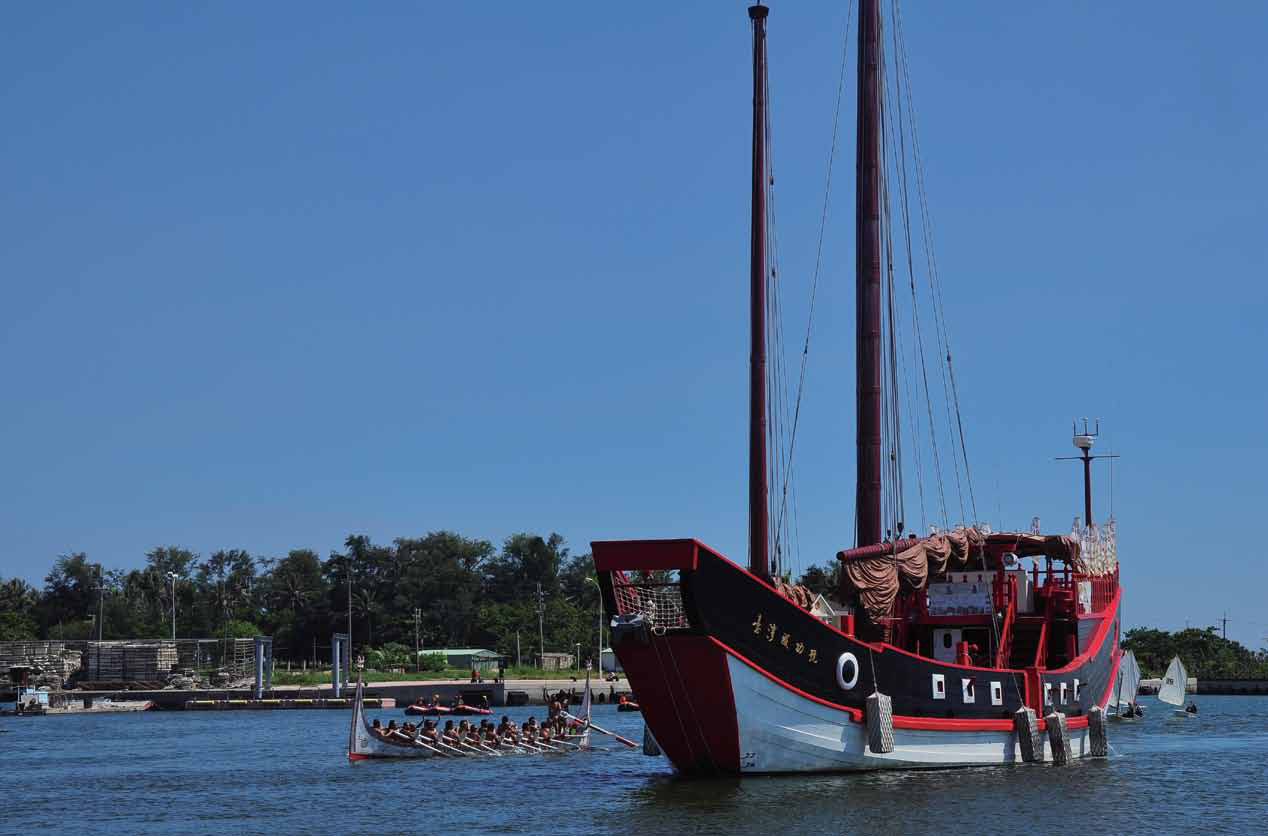
- upper:Si Mangavang sailed with the Taiwan Cheng Kung at Anping Harbor in Tainan, composing a cultural encounter between the past and the present.
Innate Optimism of the Yami
Successful passing of the Kuroshio and the cape of Eluanbi came with an embarrassing price for the 40 sailors rowing on shifts: scraped buttocks. This was caused by friction against the seats during the long rowing, and it could hurt so much when the scraped area contacted sea water or sweat. But still, these sailors just kept rowing day after day with great perseverance. The senior and experienced ones, who knew well to avoid the scraping, would poke fun at the younger ones, advising them not to wiggle their butts so much during the rowing.
These optimistic Yami warriors just rowed on and enjoyed the voyage in a naïve and joyous manner, and were never bothered by the scorching sun or the discouraging tidal waves that sometimes pushed them backwards. Even when they insisted on wearing the loincloth for later performances, they didn’t worry about showing their scraped buttocks but took time to get a nice suntan in order to show some “nice asses” to the audience, as they joked.
Viewing the Land from Aboard
The rest of the journey past Eluanbi at Pingtung was allthe way north along the Taiwan Strait. A lack of rough seas and ocean currents did not mean the sailors could take it lightly. Si Mangavang still had to sail against the southward reverse currents at the estuaries of Donggang River and Gaoping River during the ebb. The rowing coach Huang said that the reverse currents coming upfront were easier to tackle than the ones coming from the sides, which would sway the helm and thus slow the boat.
During the voyage, the Yami sailors got to see different views toward the land of Taiwan. Off the coast of Linyuan Industrial Zone, for example, the colorful cinedkeran on the sea formed a sharp contrast against the numerous Tetrapods and chimneys near the land. It is the sailors’ belief that a better preserved coast would be more appealing.
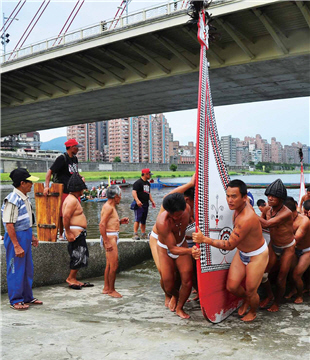
- upper left:Si Mangavang arrived at Dajia Riverside Park, marking a perfect end of this journey.
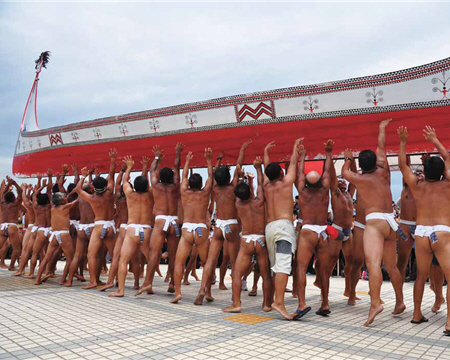
- upper right:The Yami warriors raised Si Mangavang high. Only through such energy and power will the cinedkeran , the sailors and the entire tribe be blessed and protected by the heaven, according the Yami seniors.
A Cultural Encounter of Past and Present
Heading north along the west coast of Taiwan, Si Mangavang witnessed a busy day of the important trade port of Kaohsiung Harbor before it anchored at the more culture-featured Anping Harbor at Tainan. Under the arrangement by Tainan City Government, the cinedkeran sailed shortly with the Taiwan Cheng Kung, by the Taiwanese in the 17th century, composing a cultural encounter between the past and the present.
The Taiwan Cheng Kung symbolizes the explorative spirit of Koxinga (Chenggong Zheng) in developing
Taiwan, while Si Mangavang represents the adventurous exploration of the Yami marine culture in crossing the Black Tide (the Kuroshio). Now the two met in this historic city of Tainan.
The Trial Posed by the Black Ditch
On the journey from Anping to Taichung lay the next test to Si Mangavang : the notorious Black Ditch, through which the ancestors immigrated to Taiwan. As a branch of the Kuroshio flowed into the Y-shaped sea area and turned into a faster and stronger current, accompanied by the shallow seabed and widely scattered sandbanks and tidal lands at the west coast, the logistics ship and the escort ship of the Coast Guard had to stay far away from the coast while Si Mangavang sailed alone near the land, where the sailors could enjoy the landscapes. But after several times of grounding near the estuaries of Zengwun River and Zhoushui River, the crew could not but keep a distance from the coast.
With great caution, the sailors rowed past Waisanding Sandbank, the largest one along Taiwan’s coastal area. At the southern part of the sandbank lies Taiwan’s major oyster farm, where there are racks and ropes all over the
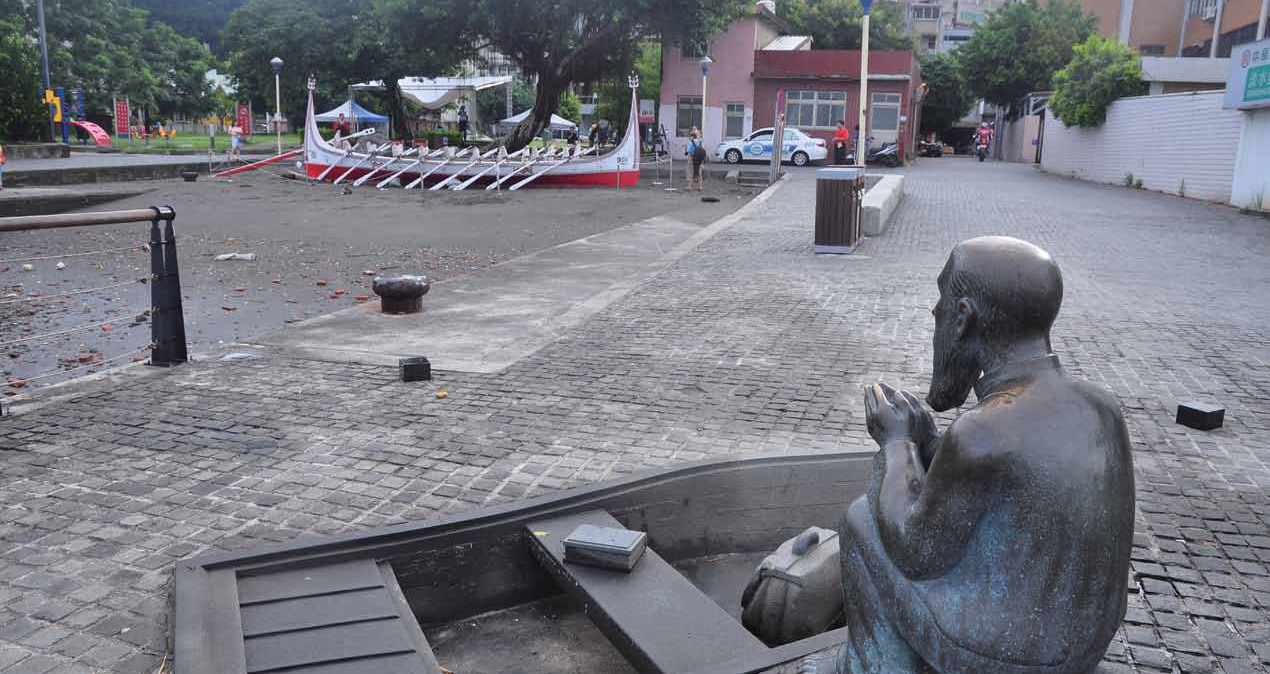
- upper:In the old main street at Danshui, the statue of George L. Mackay seemed to gaze upon Si Mangavang , representing an encounter across time and space.
area with strings of oysters on them. The moment the Lanyu cinedkeran passing through marked another significant exchange between two different forms of marine cultures.
Departing from the large seaborne oyster farm, Si Mangavang passed by the landmark of Taiwan’s costal development – the Formosa Plastics Group’s Naphtha Cracker #6 Industrial Zone. Suddenly the scene illustrated an imbalance between a tiny cinedkeran and colossal monster chimneys, highlighting the awkward tug-of-war between modern development and cultural preservation.
But the journey from Waisanding Sandbank to Mailiao Harbor turned out a much tougher one as the sailors were challenged by the gusty winds and bumpy waves of the west coast. Travelling against the wind, Si Mangavang was an hour later than scheduled. The sailors were struggling so hard against the strong reverse current of 2 knots during the ebb that they found this leg of voyage even more tiring than the one of crossing the Kuroshio.
The sea north of Wuchi, Taichung was mostly calm and peaceful with cool southwest breeze. It definitely was the most pleasant part of the voyage.
At the estuary of Dajia River, they came across two pink Chinese white dolphins (Sousa chinensis) , and off the coast of Tongxiao and Baishatun, they spotted another group of little Chinese white dolphins. Though the encounters lasted for too short to record them on tape, most sailors felt lucky enough to see this precious creature nicknamed “Matzu Fish” in Chinese. And good luck did shine upon them as the next few days it was all good weather and smooth sailing from Taichung, Miaoli to Hsinchu.Into Danshui River and the End of Voyage
Cruising past Taoyuan, Si Mangavang was set to head into Danshui River and then Keelung River, deep into the heart of Taipei City before ending the trip at Dajia Riverside Park. Without losing guard, the sailors rowed with care through the bumpy currents at the estuary of Danshui River.
At 2:30 on July 13, Si Mangavang safely arrived at Danshui and got ready to head for Shuangxi Wharf at Keelung. In Danshui, the cinedkeran anchored right beside the bronze statue of George L. Mackay. Though Dr. Mackay had never been to Lanyu, the statue seemed to gaze upon the boat, giving it his blessing. This encounter across time and space between the Yami sailors and the respectable missionary was truly remarkable.
On July 16 came the final leg and the climax of the journey as Si Mangavang , rowed by the boat’s builders in traditional Yami attire, sailed from Shuangxi Wharf to Dajia Riverside Park. There the sailors received salutes from R.O.C. President Ying-jeou Ma, Premier Den-yih Wu, Minister of the Interior Yi-huah Jiang, Minister of the Council of Indigenous Peoples Da-chuan Sun (Paelabang danapan) and Lanyu Township Office Chief Duo-li Jiang. Through the traditional Yami ceremony manhaway, President Ma gave tribute to the sailors.
Minister Jiang, who initiated the cinedkeran’s visit to Taiwan, praised the success of the trip as an outstanding achievement, which must have been blessed by Yami ancestors as Si Mangavang was able to shun several possible strikes of typhoons during the voyage.
- upper:Conquering the horrifying part at the cape of Eluanbi, the sailors slowly rowed past Eluanbi Lighthouse.
In the 18-day adventure, Si Mangavang stopped by many cities of Taiwan, making dialogues with local cultures and demonstrating the unique marine culture and wisdoms of the Yami in everything from boat-making, route-planning, crew-selecting and problem-solving on the sea.
Now the mission of Si Mangavang has come to a successful end. Whoever witnessed or heard about this special exchange between the sea and the land will well remember it. It’s Minister Jiang’s hope that people in Taiwan would get to know, with modesty and curiosity, more about each of the diverse cultures around us and pass on the essence of those precious heritages such as the Yami marine culture.
Behind the SceneSmall :Blemishes after a Long Journey
Braving the rough seas and waves, the handmade cinedkeran Si Mangavang faced another challenge: maintenance and repair.
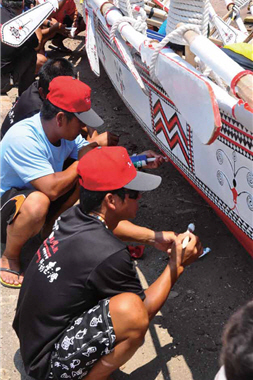
On the 6th day of the voyage, a slit was found on the upper board of the hull at the 2nd row on the left side, a likely result of long-time rowing. The crack, fortunately on the top plank, did not affect the structure safety of the boat, and required only gentler rowing at the spot. It showed that the cinedkeran was quite strong and durable. On the latter half of the journey, there were also some crevices and degummed parts at the top planks on both sides of the boat. So during the day of rest, the sailors gave the cinedkeran a repair job and polished it up a little bit.
Behind the SceneSmall :The Core of a cinedkeran : Helmsman and Oarsmen
The soul of a cinedkeran is the helmsman, whose skills and experiences are crucial in reacting to the ever-changing winds and tides. As Si Mangavang is longer than ordinary balangays, its helmsman must use more strength to hold the helm and keep the boat steady. When the southwest current coming from behind the boat and pushing the bow outward, the helmsman has to pull the boat inward to keep it heading straight. For a longer boat like Si Mangavang , some little lateral waves would shake the boat hard, and the helmsman needs to use full strength to hold the helm, a difficult task that sometimes requires a few oarsmen near the helm to offer their help. This, just like oarsmen having to scoop out the water splashed into the boat, is a situation that the crew try hard to avoid because it’d slow the boat when fewer men are rowing.
Behind the SceneSmall :Si Mangavang in Memory Forever
Travelling in three seas (the Pacific Ocean, Bashi Channel, and Taiwan Strait) and two rivers (Danshui River and Keelung River), Si Mangavang looked a bit worn but the hull still showed its beautiful designs and magnificent poise.
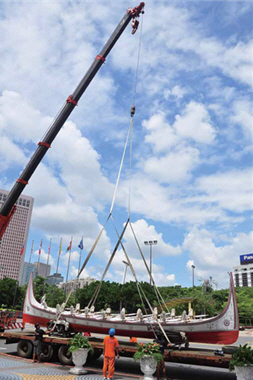
With mission accomplished, Si Mangavang now has been on display in front of the mural of Confucius’ The Commonwealth of Great Unity inside the Taipei City Government. It would continue to tell this great story of the Yami and show the boatmaking craftsmanship, while making known to the world the unique nautical skills and marine culture of the Yami.
- upper left:With mission accomplished, Si Mangavang was craned to the Taipei City Government, and now has been on display in front of the mural of Confucius' The Commonwealth of Great Unity inside the city government building.
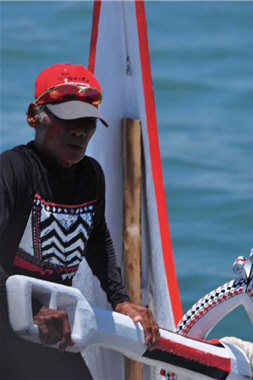
- upper center:A well-experienced senior sailor was handling the oar.
- upper right:Another challenge for Si Mangavang came from its maintenance and repair. In the picture the Yami sailors were giving the cinedkeran a repair job and polishing it up a little bit.
Extended Report:The Encounters with Si Mangavang
The 18-day voyage that demonstrated the bravery and nautical skills of the Yami was simply mind-boggling to the general public in Taiwan. But to the staff of Taiwan’s national parks, the visit is not only an exchange of marine culture but an effortful process that involves numerous details including preparations, route-planning, boat-rowing and all the coordination.
Initiated by MOI and Executed by CPAMI
Back in August 2010, the project of the Lanyu cinedkeran’s visit to Taiwan had been brewing in the minds of Minister of the Interior Yi-huah Jiang, Lanyu Township Office Chief Duoli Jiang, and Director-general of CPAMI Shih-wen Yeh. Yeh later assigned the task to Marine National Park Headquarters, which spent over 6 months in planning and started the project and the boat-building in early 2011.
The Coordination and Escort
From the selection of the task force, the arrangements on events and activities, to the naming of the cinedkeran , MNP Director Mo-lin Yang had held a dozen of meetings, and been busy coordinating with various local government agencies across Taiwan.
On June 29, 2011, when Si Mangavang set off from Kaiyuan Harbor at Lanyu, Secretary of MNP Shao-liang Hsu and Technical Specialist Jun-yao Wang boarded the logistics ship, reporting every detail of the voyage while keeping contact with the Coast Guard to ensure the safety of the crew. They also had to inform the control towers in major ports of the intended passing of Si Mangavang to avoid any risk that the cinedkeran might collide with colossal cargo vessels or be capsized by the giant waves caused by them.
Welcoming Ceremony by KTNP
In the meantime, other national parks were getting prepared for the arrival and visit of Si Mangavang . On June 30, when the cinedkeran reached Bitou Harbor in Kenting, KTNP held a series of exquisite performances, such as the welcoming rituals of Paiwan tribe and a concert of Hengchun old folk songs, hoping to wish the sailors good luck on their journey.
Water-Spraying Welcome by MNP
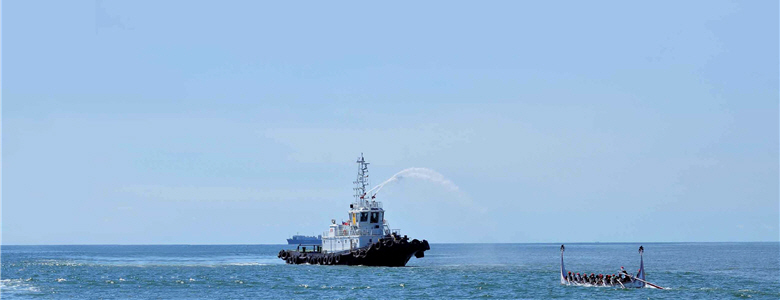
On July 3, Si Mangavang , accompanied by canoes, windsurfing boards and lateen sailboats of NSYSU Windsurfing Club and others, arrived at Sizihwan and was received with a waterspraying welcome by the two ships sent by Kaohsiung Harbor Bureau. At the evening party, MNP Director Yang gave the sailors a large photo taken by Dong-kun Liao of their rowing poise as a surprise gift.
Ancient-style Reception by TJNP
Si Mangavang arrived at Anping Harbor in Tainan on July 4, where TJNP welcomed the sailors with Lanyu cultural events and a special exhibition titled Taijiang at the Age of Discovery at Cha-Ha-Mu Aboriginal Culture Hall, a warm reception filled with cultural and historical feels.
Aboriginal Gatherings by SPNP
Upon their arrival at Wuchi Harbor in Taichung on July 8, under the arrangement by SPNP, the sailors were received with praying rituals performed by the Atayals and the Bununs. SPNP also invited some 40 Yami kids and their parents from Lanyu to stay for the night at National Museum of Natural Science with the sailors, their brave kins.
Dragon Boat Companionship by YMSNP
Si Mangavang had then started its 3-day visit in Taipei since it reached Fisherman’s Wharf at Danshui on July 13. Under the coordination by YMSNP, dragon boat teams from the city’s police and fire departments and private organizations, along with some canoes, were sailing alongside Si Mangavang into Keelung River. Later the entire journey came to a perfect end amid the powerful chanting of prayers by the Yami sailors.
A Collaborative Success
It took the efforts by and coordination among more than 50 authorities and agencies to make possible this grand mission. Each staff member from all participating national parks had spared no effort and worked extra hours to ensure the success of the project. When Si Mangavang safely and gracefully arrived in front of the President and the public, all the toil and pain during the process have become the sweetest fruits for the heroes behind the project.
Just as Director-general of CPAMI Yeh observed, these Yami warriors from Lanyu completed a grand cross-sea mission out of a simple will to visit somewhere they had never been to: Taiwan’s west coast. And People in Taiwan had witnessed the wisdom and perseverance of the Yami. This voyage had made a most splendid imprint of the exchange between Lanyu and Taiwan for the past few decades, and left a most remarkable memory of the Yami warriors and the national parks in the country’s centennial.
- upper:Si Mangavang was received with a water-spraying welcome by the two ships sent by Kaohsiung Harbor Bureau.


