Derict to middle content area:::

:::
Restoring the Clean Creek of a National Treasure Fish-Survey of Formosan Land-locked Salmon Stocking and Historical Habitat
As society gradually evolved from primitive hunting and gathering to farming and livestock-racing, vast expanses of forest, grassland, and wetlands disappeared, causing the direct or indirect extinction of countless species, and reducing the earth's biodiversity. In 1992, the famous biologist Edward O. Wilson estimated that rampant logging of tropical forests caused the extinction of roughly 27,000 species each year.
Wetlands are one of the Earth's most productive environments in terms of Biodiversity creation. Although wetlands account for less than 6% of the Earth's area, they produce 25% of its biomass, and account for a staggering 90% of fisheries' catch. As a consequence, reductions in the area of wetlands will unquestionably have a severe impact on the Earth's ecological balance. To ensure that the Formosan Land-locked Salmon, which currently inhabits the high mountain Creek around Taiwan's Wuling Farm, can thrive in its mountain habitat and be free from local environmental impacts will not be an easy task.
Wetlands are one of the Earth's most productive environments in terms of Biodiversity creation. Although wetlands account for less than 6% of the Earth's area, they produce 25% of its biomass, and account for a staggering 90% of fisheries' catch. As a consequence, reductions in the area of wetlands will unquestionably have a severe impact on the Earth's ecological balance. To ensure that the Formosan Land-locked Salmon, which currently inhabits the high mountain Creek around Taiwan's Wuling Farm, can thrive in its mountain habitat and be free from local environmental impacts will not be an easy task.
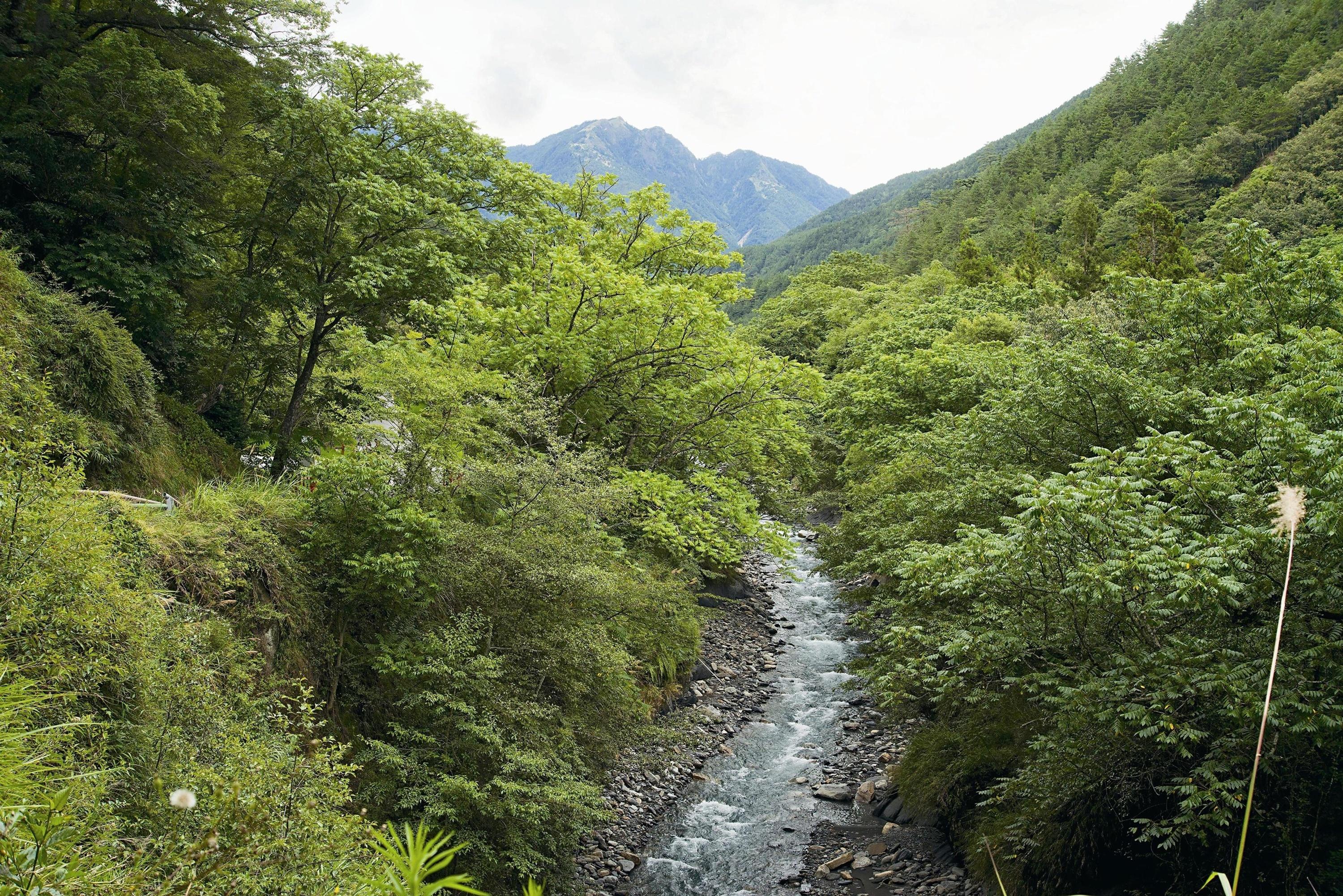
- Qijiawan Creek. Photograph by Liu Si-yi
Habitat destruction
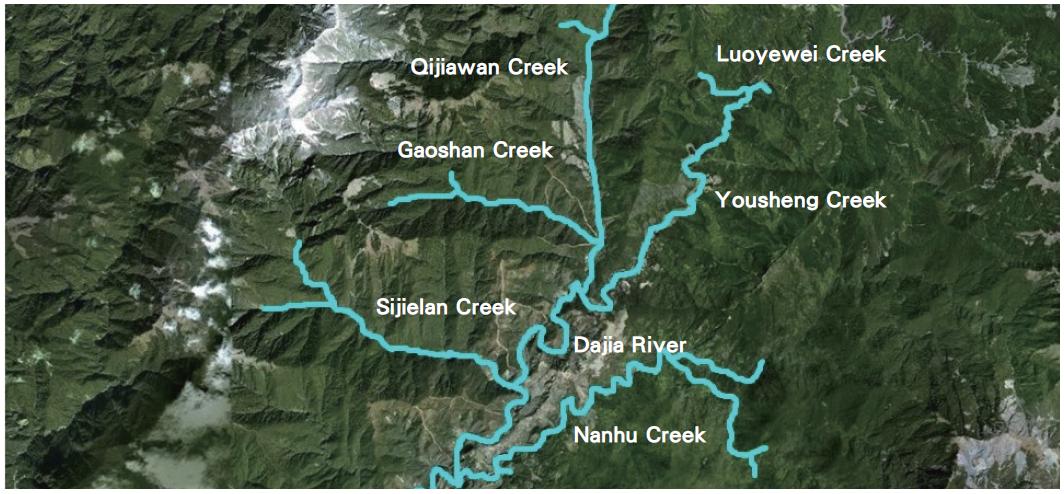
Taiwan's "National Treasure Fish"—the Formosan Land-locked Salmon—originally inhabited six upstream tributaries of the Dajia River, namely Qijiawan Creek, Gaoshan Creek, Yousheng Creek, Nanhu Creek, Sijielan Creek, and Hehuan Creek. The clear air and water of this area not only sustained the rare Formosan Land-locked Salmon, but also provided a place where people could go to view the stars and moon. But as the coastal wetlands were gradually developed as farmland, travel to the mountains increased, sediment control dams built along rivers and streams blocked the salmon's migration, erosion occurred in the wake of typhoons and torrential rains, and recent climate change increased the incidence of extreme weather, the Formosan Landlocked Salmon's once comfortable habitat suffered immense disturbances.
The results of recent surveys indicate that the salmon's range is now limited to the scope of the Qijiawan Creek wetlands, including Qijiawan Creek, Gaoshan Creek, West Fork Taoshan Creek, and North Fork Taoshan Creek, as well as populations recently established through stocking in Sijielan Creek and Luoyewei Creek. The Formosan Land-locked Salmon's living environment has become increasingly precarious, and its range has grown steadily smaller. In particular, changes in land use and habitat destruction have not only caused the number of fish to shrink, but also threatened their reproduction and survival.
In order to provide space for salmon migration and lessen habitat fragmentation, starting in 1996 the Shei-Pa National Park Administration began assessing the feasibility of removing check dams, and from 1999 to 2001 improved or removed four check dams on Gaoshan Creek, which is a tributary of Qijiawan Creek. Because of this, Gaoshan Creek became the sole natural stream in the Qijiawan Creek basin with no check dams, and the proportion of large stones in its bed rose, forming a stable bottom matrix. In addition, the number of deep pools also increased sharply, and the slope of the stream bed gradually leveled out up- and downstream of where dams had been located. Now that they can migrate to upstream of the dam locations, the salmon population has displayed growth.
Check dam No. 1 on Qijiawan Creek caused habitat destruction and blocked the mingling of different salmon populations. This resulted in the loss of genetic diversity, and left the salmon population vulnerable to extinction. The successful case of the improvement of the check dams on Gaoshan Creek has prompted Shei-Pa National Park Administration to make further efforts to improve the gradually deteriorating habitat along Qijiawan Creek.
For the sake of safety and to restore Formosan Land-locked Salmon habitat, starting in 2006, Shei-Pa National Park Administration embarked on a series of monitoring and survey projects, began drafting hydraulic modeling experiments, and established a consulting team consisting of scientists and experts in hydraulic engineering and ecological conservation, etc. affiliated with the Taichung City government; Dongshi Forest District Office, Forestry Bureau, Council of Agriculture; Water and Soil Conservation Bureau; Environmental Protection Administration; River Management Office; and Te-Ji Reservoir Administration, Ministry of Economic Affairs and Wuling Farm. After assessment of improvement projects over the course of two years, part of check dam No. 1 on Qijiawan Creek was removed in 2011 in order to increase contact between salmon populations and increase their genetic diversity.
The removal of dams to restore the salmon's ecological habitat following thorough assessment is the first measure of its kind in Taiwan, and has profound significance for conservation. Because dams have been improved in Taiwan for the sake of habitat conservation in very few cases, and the volume and height of check dam No. 1 on Qijiawan Creek, and volume of sediment behind the dam, all far exceeded those of the four check dams removed from Gaoshan Creek, the park continues to monitor the stream following improvement of check dam No. 1, and is investigating the potential impact and influence on downstream ecosystems of sediment resulting from dam improvement work. Research units are currently continuing to carefully perform this monitoring work.
Taiwan's "National Treasure Fish"—the Formosan Land-locked Salmon—originally inhabited six upstream tributaries of the Dajia River, namely Qijiawan Creek, Gaoshan Creek, Yousheng Creek, Nanhu Creek, Sijielan Creek, and Hehuan Creek. The clear air and water of this area not only sustained the rare Formosan Land-locked Salmon, but also provided a place where people could go to view the stars and moon. But as the coastal wetlands were gradually developed as farmland, travel to the mountains increased, sediment control dams built along rivers and streams blocked the salmon's migration, erosion occurred in the wake of typhoons and torrential rains, and recent climate change increased the incidence of extreme weather, the Formosan Landlocked Salmon's once comfortable habitat suffered immense disturbances.
The results of recent surveys indicate that the salmon's range is now limited to the scope of the Qijiawan Creek wetlands, including Qijiawan Creek, Gaoshan Creek, West Fork Taoshan Creek, and North Fork Taoshan Creek, as well as populations recently established through stocking in Sijielan Creek and Luoyewei Creek. The Formosan Land-locked Salmon's living environment has become increasingly precarious, and its range has grown steadily smaller. In particular, changes in land use and habitat destruction have not only caused the number of fish to shrink, but also threatened their reproduction and survival.
In order to provide space for salmon migration and lessen habitat fragmentation, starting in 1996 the Shei-Pa National Park Administration began assessing the feasibility of removing check dams, and from 1999 to 2001 improved or removed four check dams on Gaoshan Creek, which is a tributary of Qijiawan Creek. Because of this, Gaoshan Creek became the sole natural stream in the Qijiawan Creek basin with no check dams, and the proportion of large stones in its bed rose, forming a stable bottom matrix. In addition, the number of deep pools also increased sharply, and the slope of the stream bed gradually leveled out up- and downstream of where dams had been located. Now that they can migrate to upstream of the dam locations, the salmon population has displayed growth.
Check dam No. 1 on Qijiawan Creek caused habitat destruction and blocked the mingling of different salmon populations. This resulted in the loss of genetic diversity, and left the salmon population vulnerable to extinction. The successful case of the improvement of the check dams on Gaoshan Creek has prompted Shei-Pa National Park Administration to make further efforts to improve the gradually deteriorating habitat along Qijiawan Creek.
For the sake of safety and to restore Formosan Land-locked Salmon habitat, starting in 2006, Shei-Pa National Park Administration embarked on a series of monitoring and survey projects, began drafting hydraulic modeling experiments, and established a consulting team consisting of scientists and experts in hydraulic engineering and ecological conservation, etc. affiliated with the Taichung City government; Dongshi Forest District Office, Forestry Bureau, Council of Agriculture; Water and Soil Conservation Bureau; Environmental Protection Administration; River Management Office; and Te-Ji Reservoir Administration, Ministry of Economic Affairs and Wuling Farm. After assessment of improvement projects over the course of two years, part of check dam No. 1 on Qijiawan Creek was removed in 2011 in order to increase contact between salmon populations and increase their genetic diversity.
The removal of dams to restore the salmon's ecological habitat following thorough assessment is the first measure of its kind in Taiwan, and has profound significance for conservation. Because dams have been improved in Taiwan for the sake of habitat conservation in very few cases, and the volume and height of check dam No. 1 on Qijiawan Creek, and volume of sediment behind the dam, all far exceeded those of the four check dams removed from Gaoshan Creek, the park continues to monitor the stream following improvement of check dam No. 1, and is investigating the potential impact and influence on downstream ecosystems of sediment resulting from dam improvement work. Research units are currently continuing to carefully perform this monitoring work.
- upper:Locations of upper Creek of the Dajia River and their tributaries. (home of the Taiwan Formosan Land-locked Salmon) (PhotographcGoogle Map)
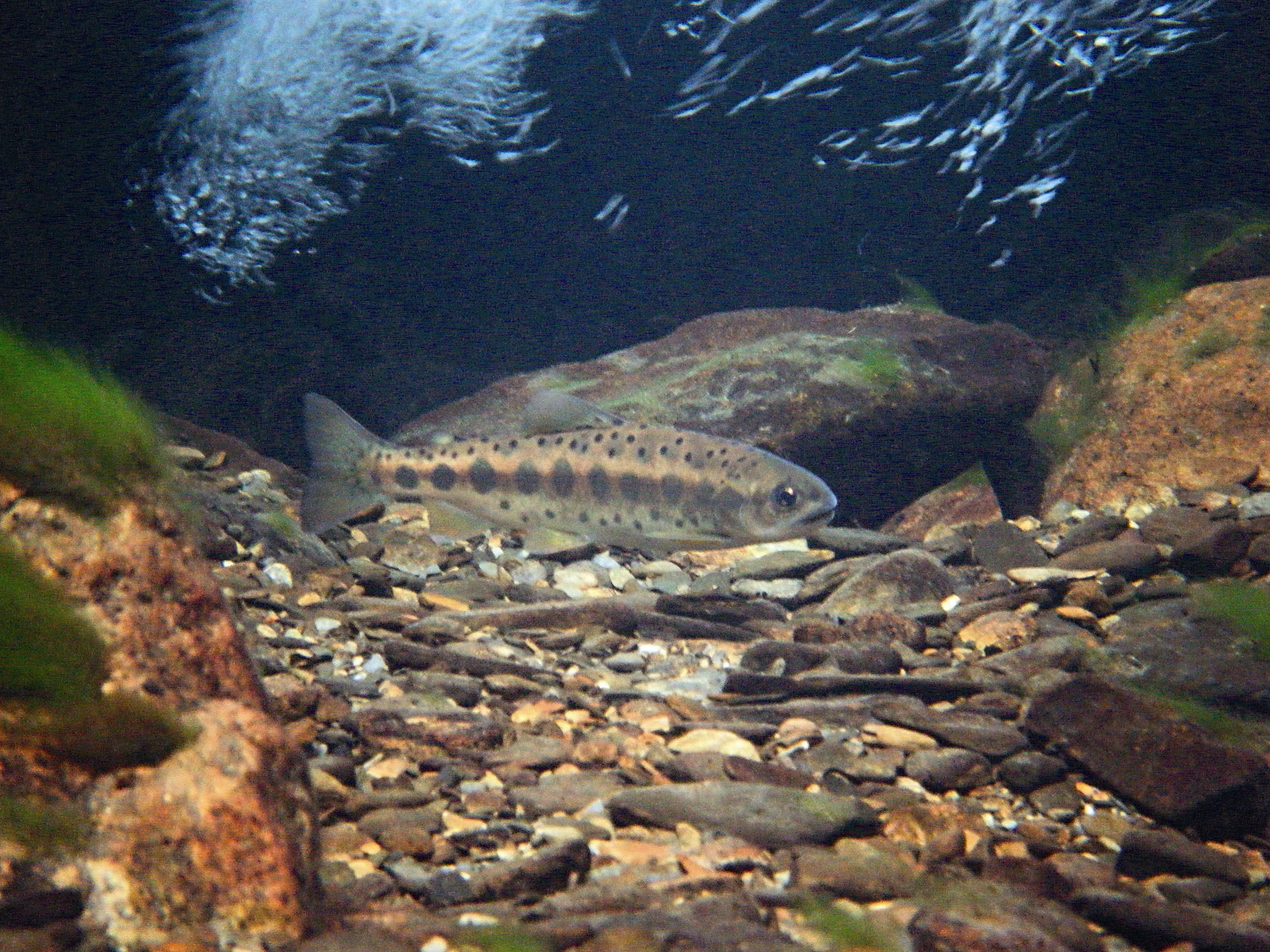
- lower left:Beautiful Taiwan Formosan Land-locked Salmon (Oncorhynchus masou formosanus ).
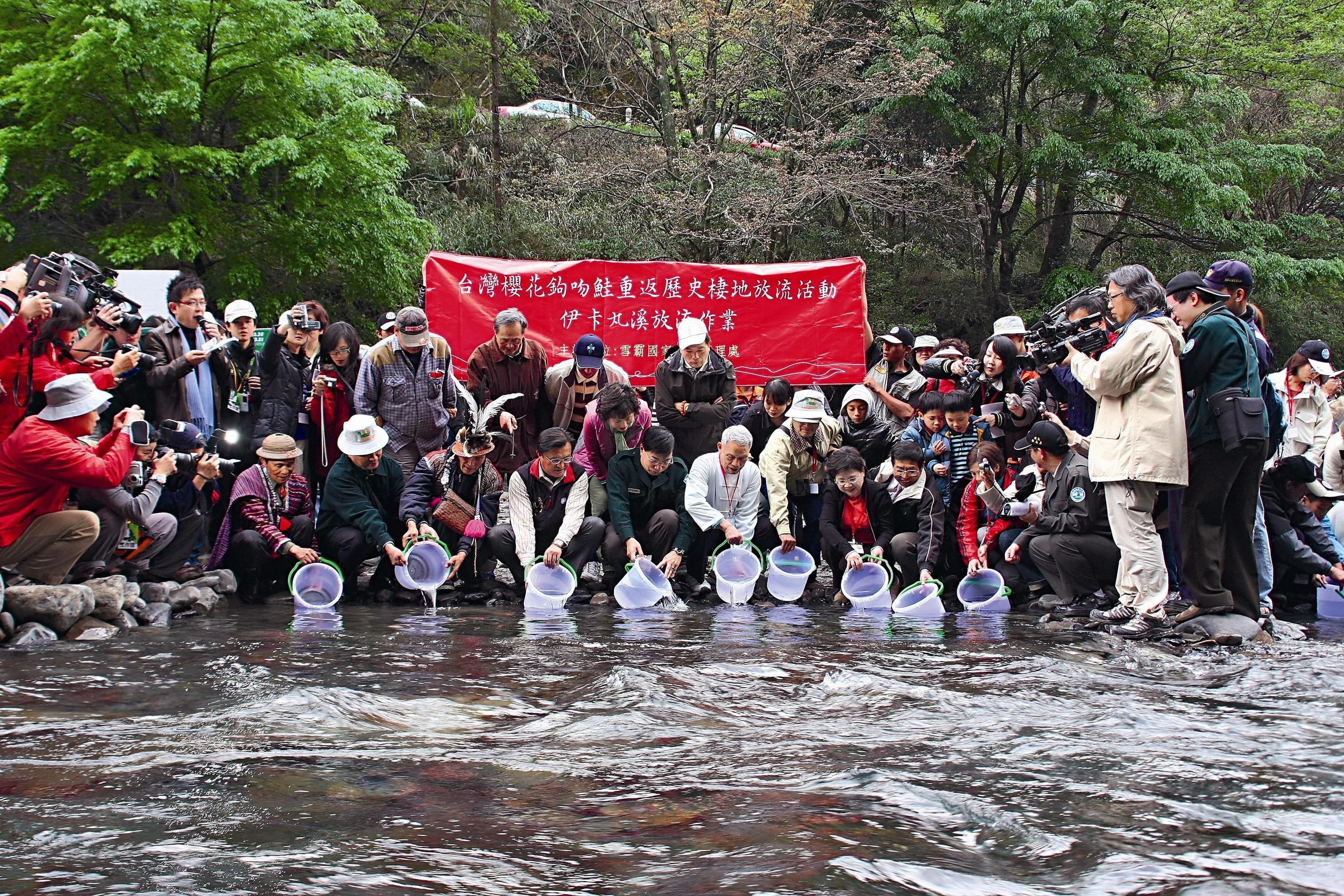
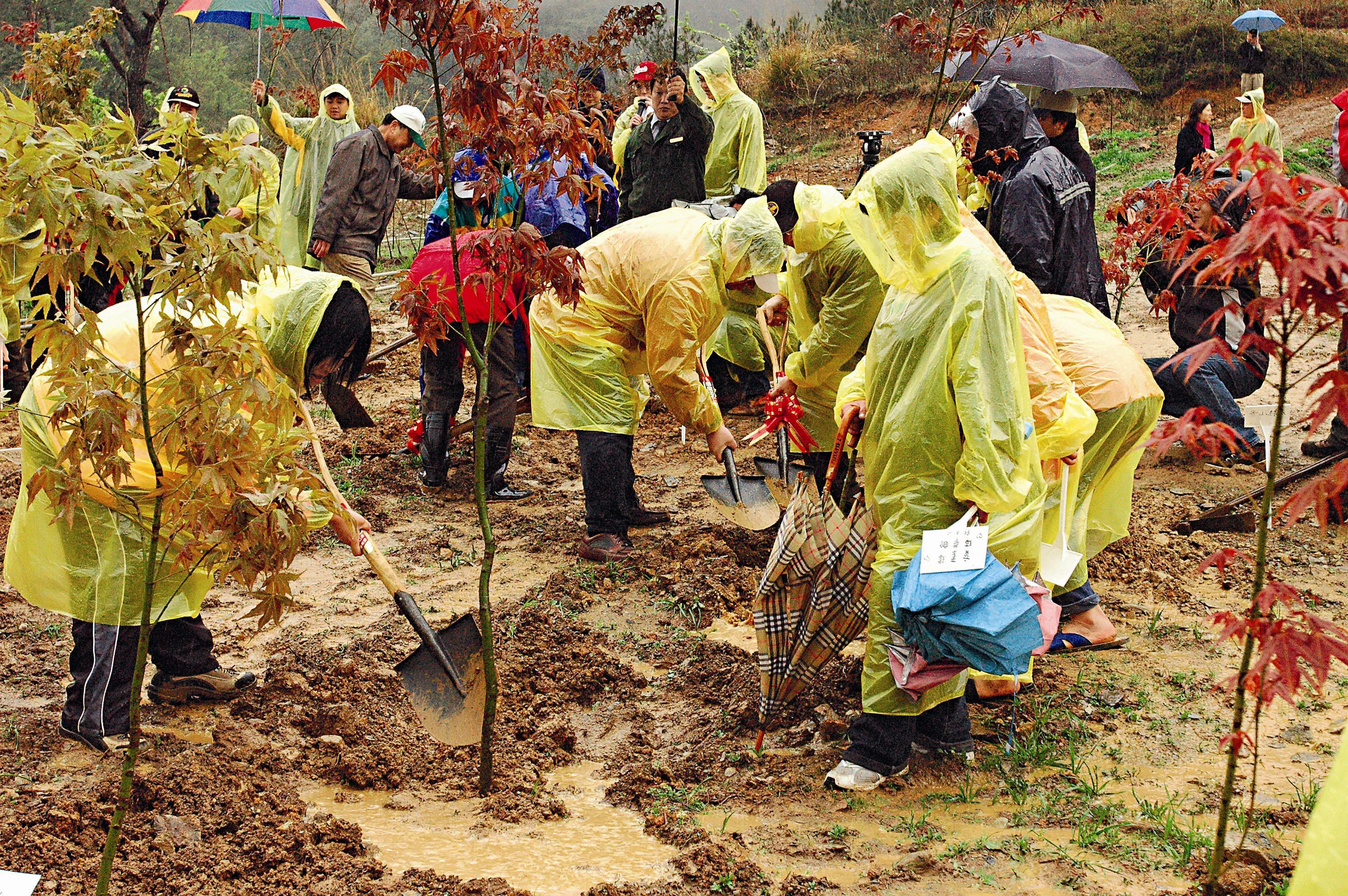
- lower right:Taiwan Formosan Land-locked Salmon are released in a stream that formed part of their historical habitat, and residents of nearby villages turn out to protect the National Treasure Fish. Photographc Shei-Pa National Park
Active habitat protection measures
In recent years, thanks to the active efforts of Shei-Pa National Park Administration, Wuling Farm, the Taiwan Forestry Bureau, and other related agencies, efforts to conserve the Formosan Landlocked Salmon have included curbing agricultural activities near the banks of Qijiawan Creek, promoting reforestation, researching habitats suitable for the salmon's survival and reproduce in conjunction with a team of experts and scientists, and monitoring and assessment of the salmon's original historical habitat to determine whether it can still support salmon populations.
At the same time, efforts are being taken to identify appropriate potential release points. The current multifaceted salmon restoration program holds out the hope that the Formosan Land-locked Salmon can be successfully restored over much of its original range, allowing Taiwan's "National Treasure Fish" to again thrive in the upstream tributaries of the Dajia River.
In order to protect Formosan Land-locked Salmon habitat, in 1978 the government decreed a gradual end to cultivation of approximately 6 hectares of orchards and vegetable patches near Qijiawan Creek. These areas were reforested, and a mature forest ecosystem has now begun to emerge. Salmon conservation work and the restoration and reforestation of land along the banks of Qijiawan Creek has become more systematic and vigorous following the establishment of the Shei-Pa National Park Administration, and the projects "Habitat Improvement, Reforestation, and Rivershore Vegetation Restoration in the Taiwan Salmon Observatory Deck" and "Restoration and Reforestation of the Bank Protection Zone in the Guoyi Area along Qijiawan Creek " got underway during the next two years.
The government also began discussing expanding the width of the core protected zone along Qijiawan Creek from 30 m to 50 m, and allowing 20 ha of agricultural land near the stream to be reforested by the Taiwan Forestry Bureau and other relevant agencies. After much hard work by many parties, the Council of Agriculture formally announced the establishment of the "Taiwan Formosan Land-locked Salmon Refuge" encompassing the area in 1997, and reforested agricultural land in order to expand the habitat protection area.
In particular, 10 hectares of orchards and vegetable patches were recovered to serve as a buffer zone, and also as a nursery for cultivating seedlings of a variety of plants.After wards, the Shei-Pa National Park Administration continued to implement a series of conservation and environmental education activities, including the "Wuling Area, Upstream Dajia River, Treeplanting Reforestation Project," "One Tree-One Salmon Treeplanting Activity," and "An Eternal National Treasure - The Formosan Land-locked Salmon" conservation activity series.
These activities caused the public to gradually understand the government's dedicated efforts and commitment to conserving the Formosan Landlocked Salmon, and attracted even more people to participate in conservation activities. Today, Shei-Pa National Park Administration is still striving to restore riverbank vegetation and conduct largescale reforestation work, and is converting agricultural land to forest, prairie, and wetlands in order to protect water sources and restore the vitality of the land.
As early as 1978, orchards and vegetable patches occupying approximately 6 ha along Qijiawan Creek were gradually shut down and reforested in order to protect Formosan Landlocked Salmon habitat. Today the forest covering these areas is approaching maturity. In the wake of the establishment of the Shei-Pa National Park Administration in 1992, reforestation and salmon conservation work along the banks of Qijiawan Creek proceeded more actively and systematically. In 1995, relevant units began discussing expanding the width of the core protected zone along Qijiawan Creek from 30 m to 50 m, and allowing 20 ha of agricultural land near the stream to be reforested by the Taiwan Forestry Bureau and other relevant agencies. The project "Habitat Improvement, Reforestation, and Rivershore Vegetation Restoration in the Guanyutai Area " was implemented in April of that year, and the project "Restoration and Reforestation of the Bank Protection Zone in the Guoyi Area along Qijiawan Creek" got underway not long afterwards in 1996.
During the following year, the Council of Agriculture announced the establishment of the "Formosan Land-locked Salmon Refuge," while calling for agricultural land to be reforested and the habitat protection expanded. In particular, plans called for 10 ha of orchards and vegetable patches along the Wuling Road to be gradually recovered and used as a buffer zone, and also as a nursery for cultivating seedlings of a variety of plants. In the wake of the 1998 "Upstream Dajia River-Wuling Area Reforestation Project," the 1999 "One Tree-One Salmon Treeplanting Activity," and the 2000 "An Eternal National Treasure-The Formosan Land-locked Salmon" conservation activity series caused the public to gradually understand the government's dedicated efforts and commitment to conserving the Formosan Land-locked Salmon, and attracted even more people to participate in conservation activities.
Today, Shei-Pa National Park Administration is still striving to restore riverbank vegetation and conduct large reforestation work, and is converting agricultural land to forest, prairie, and wetlands in order to protect water sources and restore the vitality of the land.
In recent years, thanks to the active efforts of Shei-Pa National Park Administration, Wuling Farm, the Taiwan Forestry Bureau, and other related agencies, efforts to conserve the Formosan Landlocked Salmon have included curbing agricultural activities near the banks of Qijiawan Creek, promoting reforestation, researching habitats suitable for the salmon's survival and reproduce in conjunction with a team of experts and scientists, and monitoring and assessment of the salmon's original historical habitat to determine whether it can still support salmon populations.
At the same time, efforts are being taken to identify appropriate potential release points. The current multifaceted salmon restoration program holds out the hope that the Formosan Land-locked Salmon can be successfully restored over much of its original range, allowing Taiwan's "National Treasure Fish" to again thrive in the upstream tributaries of the Dajia River.
In order to protect Formosan Land-locked Salmon habitat, in 1978 the government decreed a gradual end to cultivation of approximately 6 hectares of orchards and vegetable patches near Qijiawan Creek. These areas were reforested, and a mature forest ecosystem has now begun to emerge. Salmon conservation work and the restoration and reforestation of land along the banks of Qijiawan Creek has become more systematic and vigorous following the establishment of the Shei-Pa National Park Administration, and the projects "Habitat Improvement, Reforestation, and Rivershore Vegetation Restoration in the Taiwan Salmon Observatory Deck" and "Restoration and Reforestation of the Bank Protection Zone in the Guoyi Area along Qijiawan Creek " got underway during the next two years.
The government also began discussing expanding the width of the core protected zone along Qijiawan Creek from 30 m to 50 m, and allowing 20 ha of agricultural land near the stream to be reforested by the Taiwan Forestry Bureau and other relevant agencies. After much hard work by many parties, the Council of Agriculture formally announced the establishment of the "Taiwan Formosan Land-locked Salmon Refuge" encompassing the area in 1997, and reforested agricultural land in order to expand the habitat protection area.
In particular, 10 hectares of orchards and vegetable patches were recovered to serve as a buffer zone, and also as a nursery for cultivating seedlings of a variety of plants.After wards, the Shei-Pa National Park Administration continued to implement a series of conservation and environmental education activities, including the "Wuling Area, Upstream Dajia River, Treeplanting Reforestation Project," "One Tree-One Salmon Treeplanting Activity," and "An Eternal National Treasure - The Formosan Land-locked Salmon" conservation activity series.
These activities caused the public to gradually understand the government's dedicated efforts and commitment to conserving the Formosan Landlocked Salmon, and attracted even more people to participate in conservation activities. Today, Shei-Pa National Park Administration is still striving to restore riverbank vegetation and conduct largescale reforestation work, and is converting agricultural land to forest, prairie, and wetlands in order to protect water sources and restore the vitality of the land.
As early as 1978, orchards and vegetable patches occupying approximately 6 ha along Qijiawan Creek were gradually shut down and reforested in order to protect Formosan Landlocked Salmon habitat. Today the forest covering these areas is approaching maturity. In the wake of the establishment of the Shei-Pa National Park Administration in 1992, reforestation and salmon conservation work along the banks of Qijiawan Creek proceeded more actively and systematically. In 1995, relevant units began discussing expanding the width of the core protected zone along Qijiawan Creek from 30 m to 50 m, and allowing 20 ha of agricultural land near the stream to be reforested by the Taiwan Forestry Bureau and other relevant agencies. The project "Habitat Improvement, Reforestation, and Rivershore Vegetation Restoration in the Guanyutai Area " was implemented in April of that year, and the project "Restoration and Reforestation of the Bank Protection Zone in the Guoyi Area along Qijiawan Creek" got underway not long afterwards in 1996.
During the following year, the Council of Agriculture announced the establishment of the "Formosan Land-locked Salmon Refuge," while calling for agricultural land to be reforested and the habitat protection expanded. In particular, plans called for 10 ha of orchards and vegetable patches along the Wuling Road to be gradually recovered and used as a buffer zone, and also as a nursery for cultivating seedlings of a variety of plants. In the wake of the 1998 "Upstream Dajia River-Wuling Area Reforestation Project," the 1999 "One Tree-One Salmon Treeplanting Activity," and the 2000 "An Eternal National Treasure-The Formosan Land-locked Salmon" conservation activity series caused the public to gradually understand the government's dedicated efforts and commitment to conserving the Formosan Land-locked Salmon, and attracted even more people to participate in conservation activities.
Today, Shei-Pa National Park Administration is still striving to restore riverbank vegetation and conduct large reforestation work, and is converting agricultural land to forest, prairie, and wetlands in order to protect water sources and restore the vitality of the land.
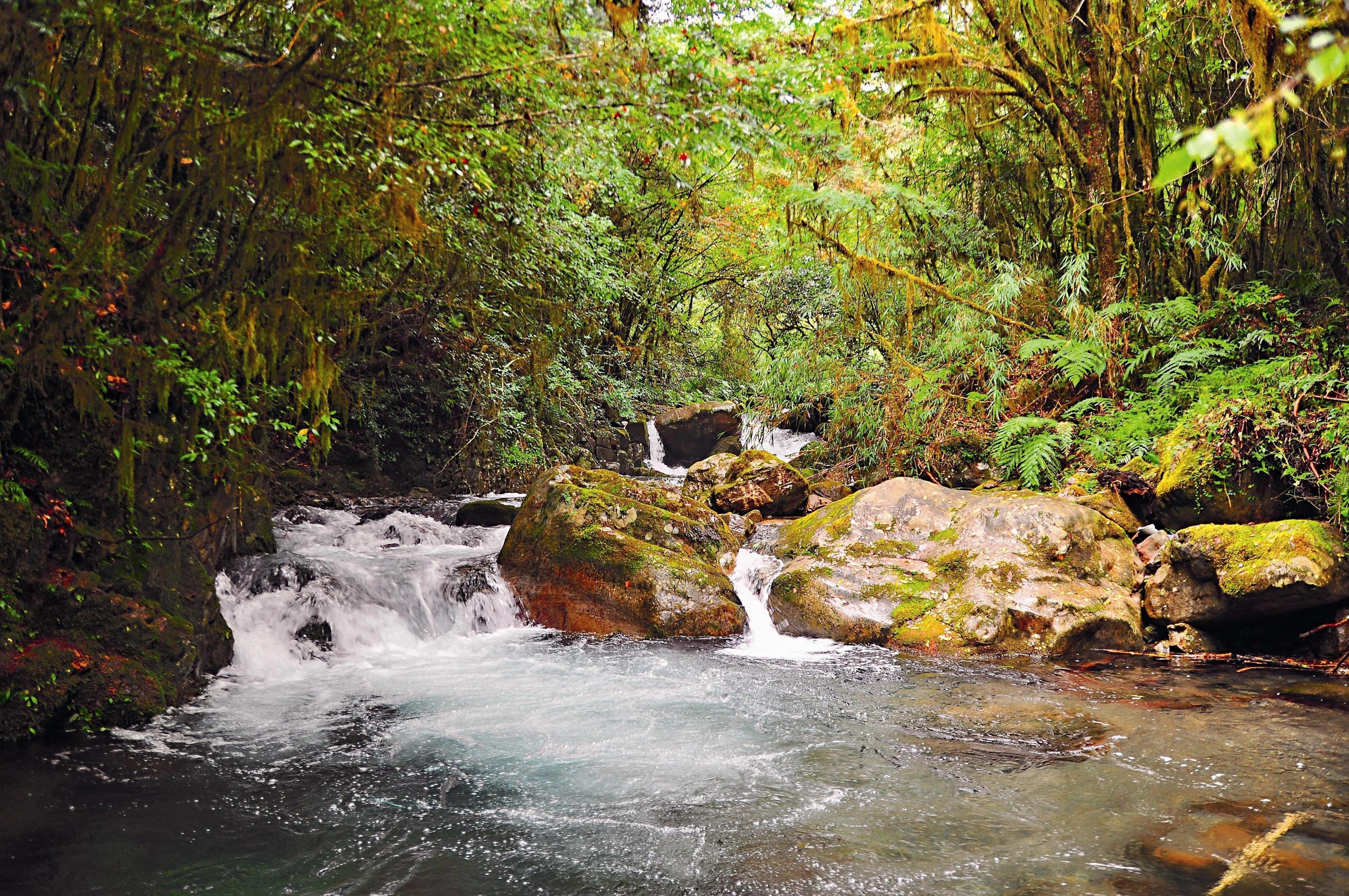
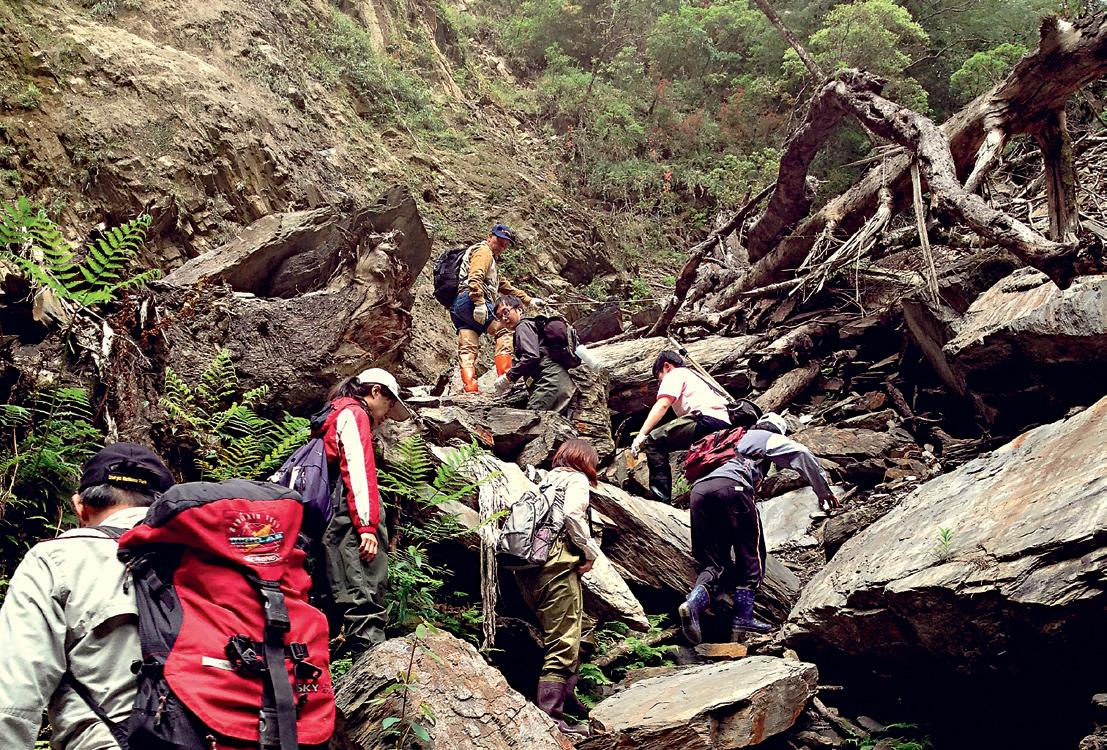
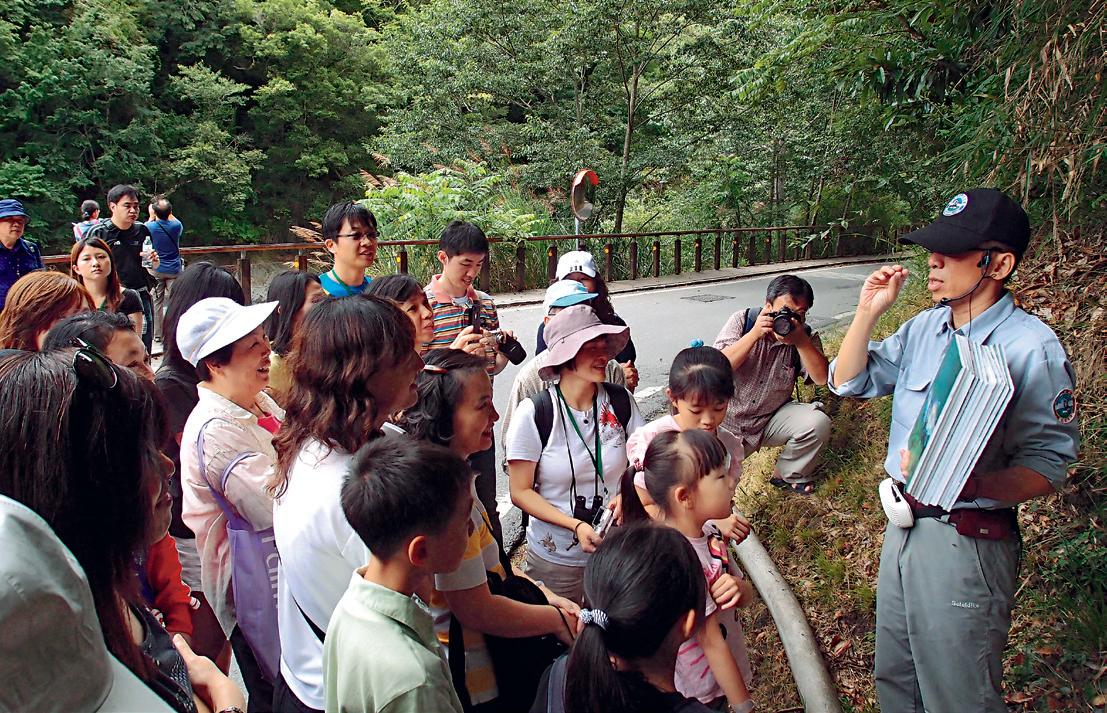
- upper left:Research personnel hiking while conducting a survey.
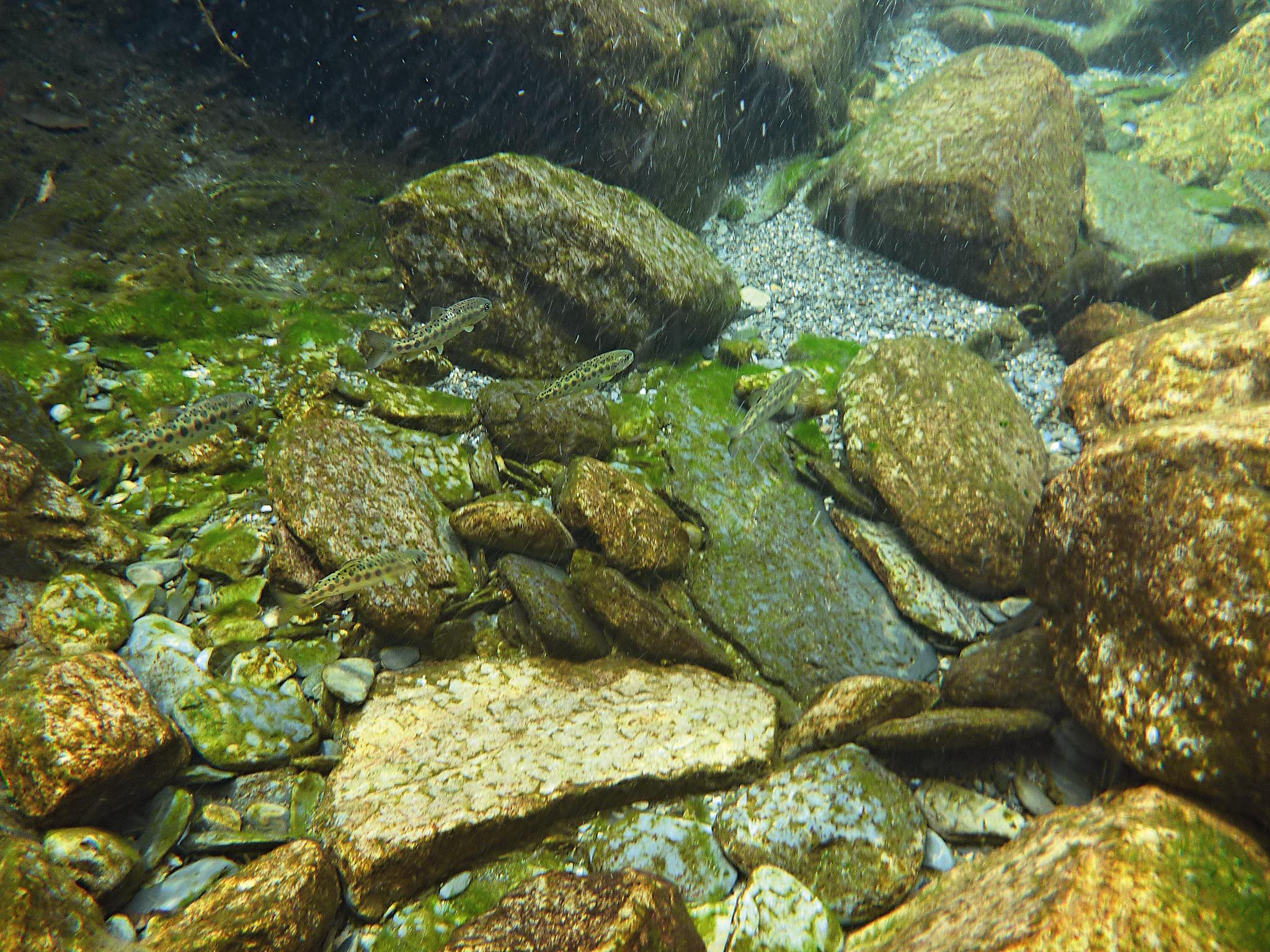
- upper right:The most suitable salmon habitats consist of deep pools and areas with gravel bottoms.
- lower:Deep pools and areas with gravel beds provide the most suitable habitat for salmon.
Long-term ecological restoration plan
Ecological restoration requires long-term monitoring by experts in order toverify effectiveness and adjust restoration methods. Shei-Pa National Park Administration currently raises salmon fry at a hatchery, and releases the approximately 1-year-old fish on an annual basis. The Shei-Pa Nationa Park Administration has established a number of sampling points along stocked Creek in order to monitor the effectiveness of stocking and assess the condition of fish habitat. Taking Luoyewei Creek, which has had the most successful restoration results, as an example, this Creek is located at an elevation of approximately 2,000 m, and has a total length of approximately 4 kilometers.
Luoyewei Creek is an upstream tributary of Yousheng Creek, has a width of approximately 6 meters, is relatively secluded, and has had little human disturbance. In addition, water quality varies during the rainy and dry seasons; the large volume of water in the stream dilutes pollutants during the rainy season, but water quality tends to deteriorate during the dry season.
The most suitable Formosan Land-locked Salmon habitat consists of deep pools and gentle flow, followed by shallows and rapids, and the fish prefer a gravel bottom. The habitat in Luoyewei Creek chiefly consists of shallows and gentle flow, with some deeper pools, and the bottom is mostly composed of gravel and larger rocks. As far as the salmon are concerned, this is an ideal environment. The carefully-selected points at which Shei-Pa National Park releases hatchery salmon, as well as the monitoring station on Gaoshan Creek—where salmon have been reproducing in the wild—have a very similar habitat.
Aquatic insects constitute the Formosan Land-locked Salmon's main food source, and the fish eat many types of insects. In fact the types and quantities of aquatic insects can be used to monitor environmental changes. In the Wuling area, the number of aquatic insects reaches a peak around the beginning of the year, and decreases progressively until reaching a minimum during the typhoon season in the middle of the year. The quantity of insects gradually increases from the start of the winter dry season until the beginning of the following year, and this cycle repeats on an annual basis.
A survey performed in October 2012 indicated that hatchery salmon released into Luoyewei Creek had successfully produced offspring, indicating that restoration was extremely successful. The total number of salmon in the stream exceeded 1,200, and some fish have even swum downstream to Yousheng Creek. However, the middle and downstream sections of Yousheng Creek are not always free-flowing, and several areas commonly dry up completely during the summertime. In addition, the many vegetable patches along thestream severely impact the aquatic ecology.
In order to provide the naturally-reproducing salmon in Luoyewei Creek with a larger habitat, and enable them to exchange their genes with the fish of Qijiawan Creek, the Park is taking increasingly active steps to restrict agricultural along Yousheng Creek, and is planting a suitable number of trees to increase vegetation coverage and reduce water temperatures. These steps will create an ecological corridor and expand salmon habitat.
Ecological restoration requires long-term monitoring by experts in order toverify effectiveness and adjust restoration methods. Shei-Pa National Park Administration currently raises salmon fry at a hatchery, and releases the approximately 1-year-old fish on an annual basis. The Shei-Pa Nationa Park Administration has established a number of sampling points along stocked Creek in order to monitor the effectiveness of stocking and assess the condition of fish habitat. Taking Luoyewei Creek, which has had the most successful restoration results, as an example, this Creek is located at an elevation of approximately 2,000 m, and has a total length of approximately 4 kilometers.
Luoyewei Creek is an upstream tributary of Yousheng Creek, has a width of approximately 6 meters, is relatively secluded, and has had little human disturbance. In addition, water quality varies during the rainy and dry seasons; the large volume of water in the stream dilutes pollutants during the rainy season, but water quality tends to deteriorate during the dry season.
The most suitable Formosan Land-locked Salmon habitat consists of deep pools and gentle flow, followed by shallows and rapids, and the fish prefer a gravel bottom. The habitat in Luoyewei Creek chiefly consists of shallows and gentle flow, with some deeper pools, and the bottom is mostly composed of gravel and larger rocks. As far as the salmon are concerned, this is an ideal environment. The carefully-selected points at which Shei-Pa National Park releases hatchery salmon, as well as the monitoring station on Gaoshan Creek—where salmon have been reproducing in the wild—have a very similar habitat.
Aquatic insects constitute the Formosan Land-locked Salmon's main food source, and the fish eat many types of insects. In fact the types and quantities of aquatic insects can be used to monitor environmental changes. In the Wuling area, the number of aquatic insects reaches a peak around the beginning of the year, and decreases progressively until reaching a minimum during the typhoon season in the middle of the year. The quantity of insects gradually increases from the start of the winter dry season until the beginning of the following year, and this cycle repeats on an annual basis.
A survey performed in October 2012 indicated that hatchery salmon released into Luoyewei Creek had successfully produced offspring, indicating that restoration was extremely successful. The total number of salmon in the stream exceeded 1,200, and some fish have even swum downstream to Yousheng Creek. However, the middle and downstream sections of Yousheng Creek are not always free-flowing, and several areas commonly dry up completely during the summertime. In addition, the many vegetable patches along thestream severely impact the aquatic ecology.
In order to provide the naturally-reproducing salmon in Luoyewei Creek with a larger habitat, and enable them to exchange their genes with the fish of Qijiawan Creek, the Park is taking increasingly active steps to restrict agricultural along Yousheng Creek, and is planting a suitable number of trees to increase vegetation coverage and reduce water temperatures. These steps will create an ecological corridor and expand salmon habitat.
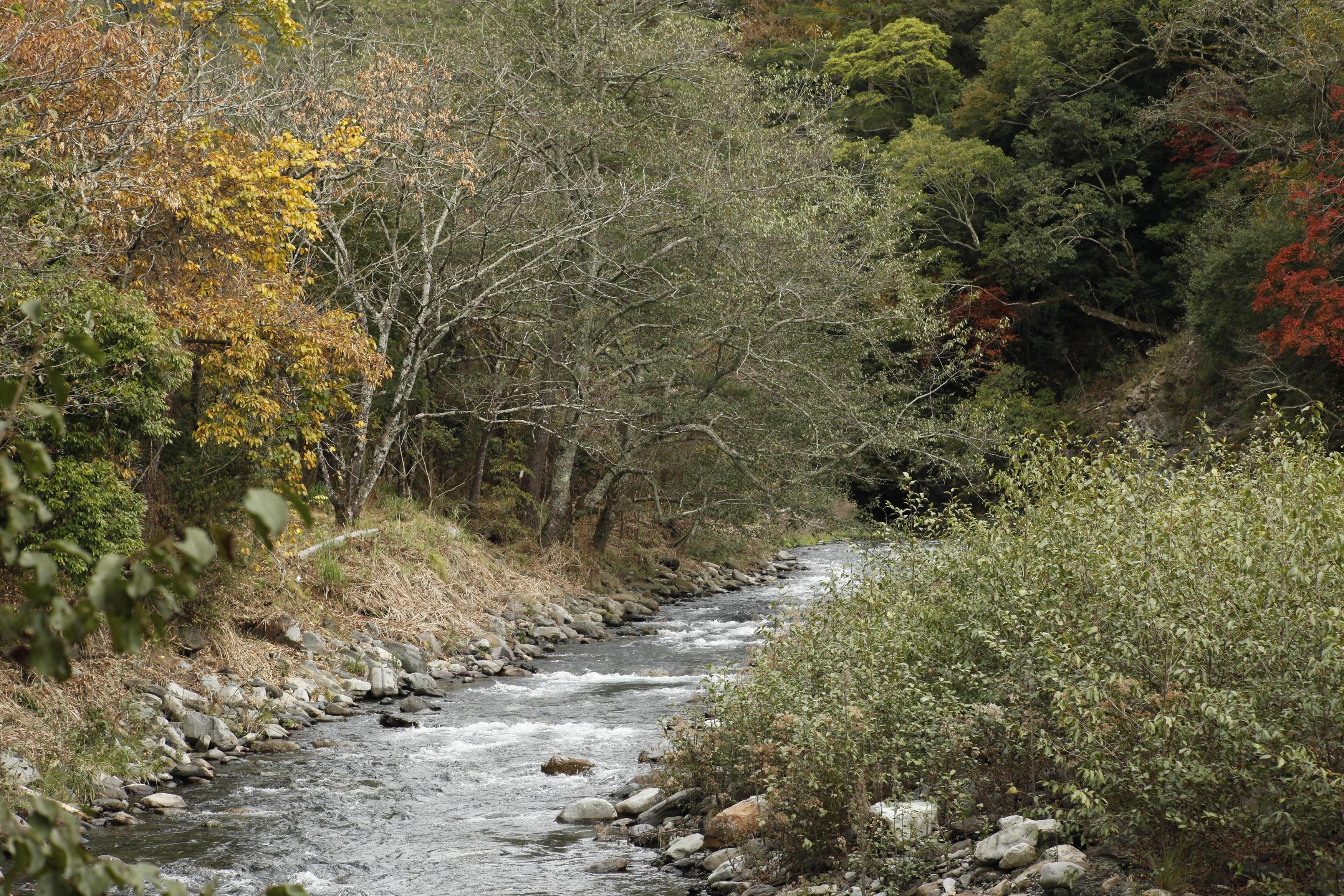
- upper left:Restorative reforestation of the bank protection zone in the Guoyi area along Qijiawan Creek. Photographc Shei-Pa National Park
- upper right:The Wuling Farm regularly holds various kinds of environmental education activities. Photographc Shei-Pa National Park
- lower:Qijiawan Creek Wetland. Photograph by Liu Si-yi
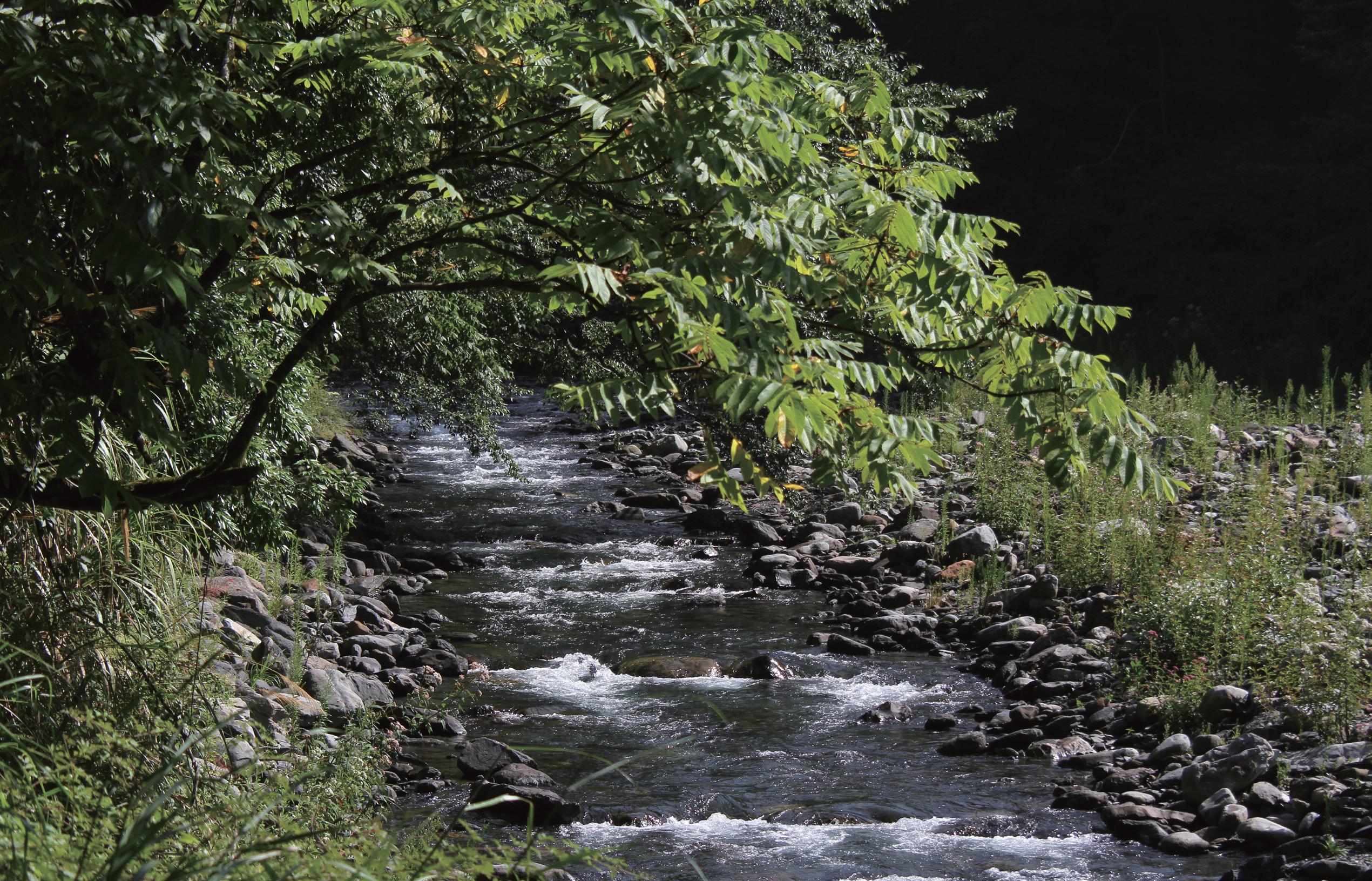
The salmon's homeland reborn
Like the butterfly effect, even small changes in land use may have large consequences. Minor changes in soil and water quality and hydrological characteristics may affect an entire ecosystem, and even contribute to long-term global climate change. The fact that Taiwan is small, densely populated, and lacking in natural resources underscores the great value of Taiwan's land and natural environment. Conservation of wildlife such as the Formosan Land-locked Salmon, management of wildlife habitat, and even policies and measures seeking to stop human destruction all require longterm monitoring and survey research conducted by professional researchers, as well as the enthusiastic participation of everyone concerned about Taiwan's "National Treasure Fish."
An understanding of the past allows us to know future cycles: Long-term ecological monitoring and conservation work shed light on the Earth's history and development, and also improve our understanding of the restoration of salmon and salmon habitat in the Wuling area. Although the task of preserving the Formosan Land-locked Salmon has been long and arduous, positive results have now been achieved. We hope that even more resources and effort can be focused on this work in the future, which will ensure that salmon continue to proudly swim in the pure water of Taiwan's high mountain Creek.
Like the butterfly effect, even small changes in land use may have large consequences. Minor changes in soil and water quality and hydrological characteristics may affect an entire ecosystem, and even contribute to long-term global climate change. The fact that Taiwan is small, densely populated, and lacking in natural resources underscores the great value of Taiwan's land and natural environment. Conservation of wildlife such as the Formosan Land-locked Salmon, management of wildlife habitat, and even policies and measures seeking to stop human destruction all require longterm monitoring and survey research conducted by professional researchers, as well as the enthusiastic participation of everyone concerned about Taiwan's "National Treasure Fish."
An understanding of the past allows us to know future cycles: Long-term ecological monitoring and conservation work shed light on the Earth's history and development, and also improve our understanding of the restoration of salmon and salmon habitat in the Wuling area. Although the task of preserving the Formosan Land-locked Salmon has been long and arduous, positive results have now been achieved. We hope that even more resources and effort can be focused on this work in the future, which will ensure that salmon continue to proudly swim in the pure water of Taiwan's high mountain Creek.
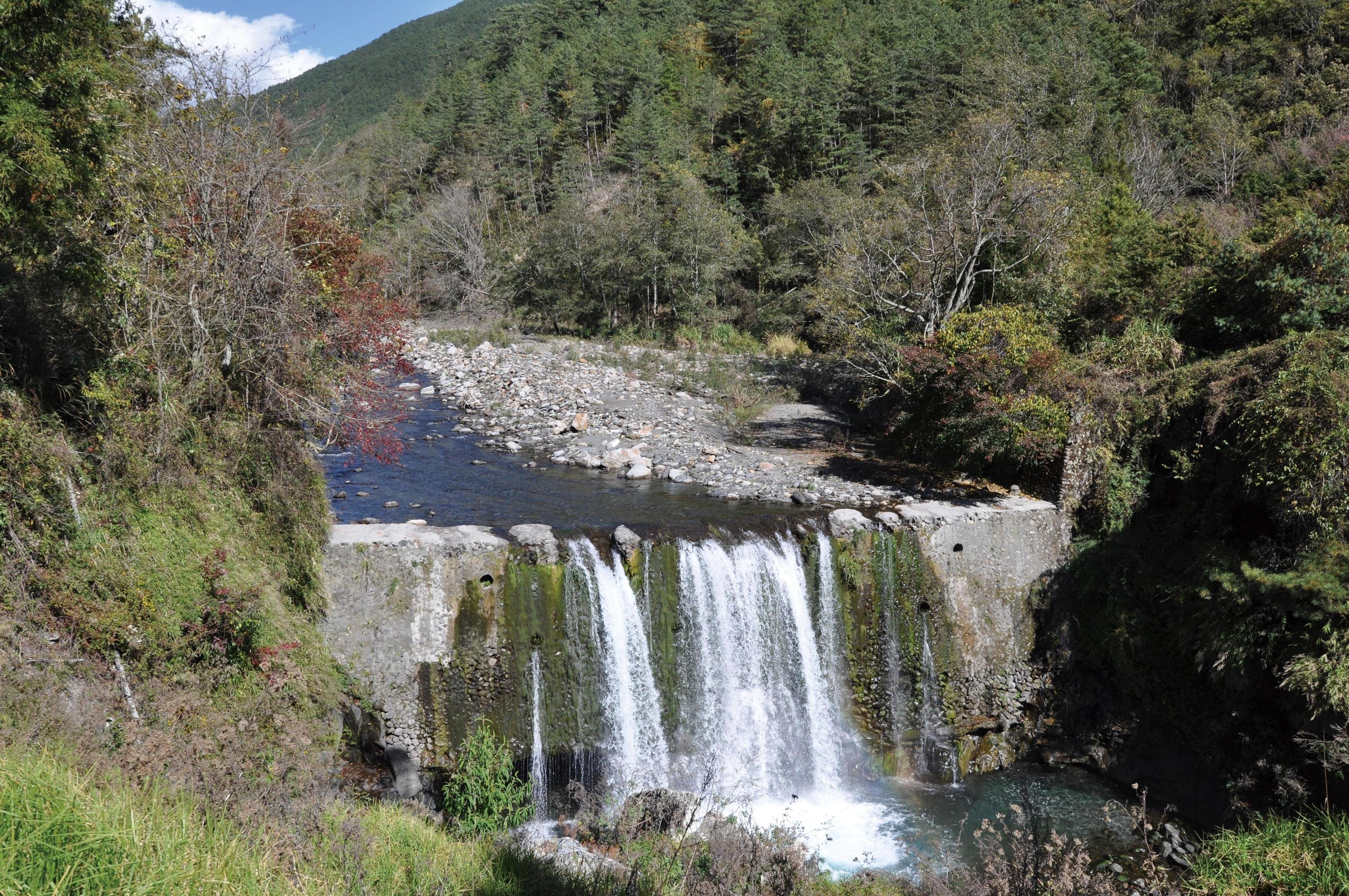
- upper:Qijiawan Creek Wetland. Photographc Shei-Pa National Park
- lower:Check dam No. 1 on Qijiawan Creek. Photographc Shei-Pa National Park
About the author - Kuan Wen-hui
Ph.D. in environmental engineering from National Taiwan University, and is an associate professor in the Department of Safety, Health and Environmental Engineering at Mingchi University of Technology. Studied changes in land use in the Wuling area over the long term, researched effects on water quality in Qijiawan Creek, and performed environmental monitoring of streams historically inhabited by the Formosan Land-locked Salmon.


