Derict to middle content area:::

:::
 Guandu's Ecological Value and Environment Functions
Apart from providing excellent bird habitat, Guandu is also home to many insects, crabs, mudskippers, frogs, and various kinds of fish, crustaceans, and mollusks. It is estimated that there are over 200 species of plants and over 830 species of animals at Guandu. The Wild Bird Society is keenly aware of the importance of maintaining biodiversity.
For instance, when a number of species native to Taiwan, including the small fish (Hemicculter leuciclus ) , Top-mouth gudgeon (Pseudorasbora parva), freshwater clams (Anodonta woodiana ) , the snail (Sinotaia quadrata ) , and the shrimp (Caridina longirostris ) , were accidentally found during silt removal at the site of the final sedimentation pond in the "Shuomokeng Creek Artificial Wetlands Project," the organisms were caught and kept in a moon pool until the hydrology and flora in the artificial wetlands had stabilized enough that they could be released there.
In addition, the Wild Bird Society has also established insect and bird survey teams to perform survey work on a regular monthly basis. The Society has also established bird and insect databases, and volunteers have been observing the nesting and breeding of the Pheasant-tailed Jacana and Black-winged Stilt, which had not occurred in the past.
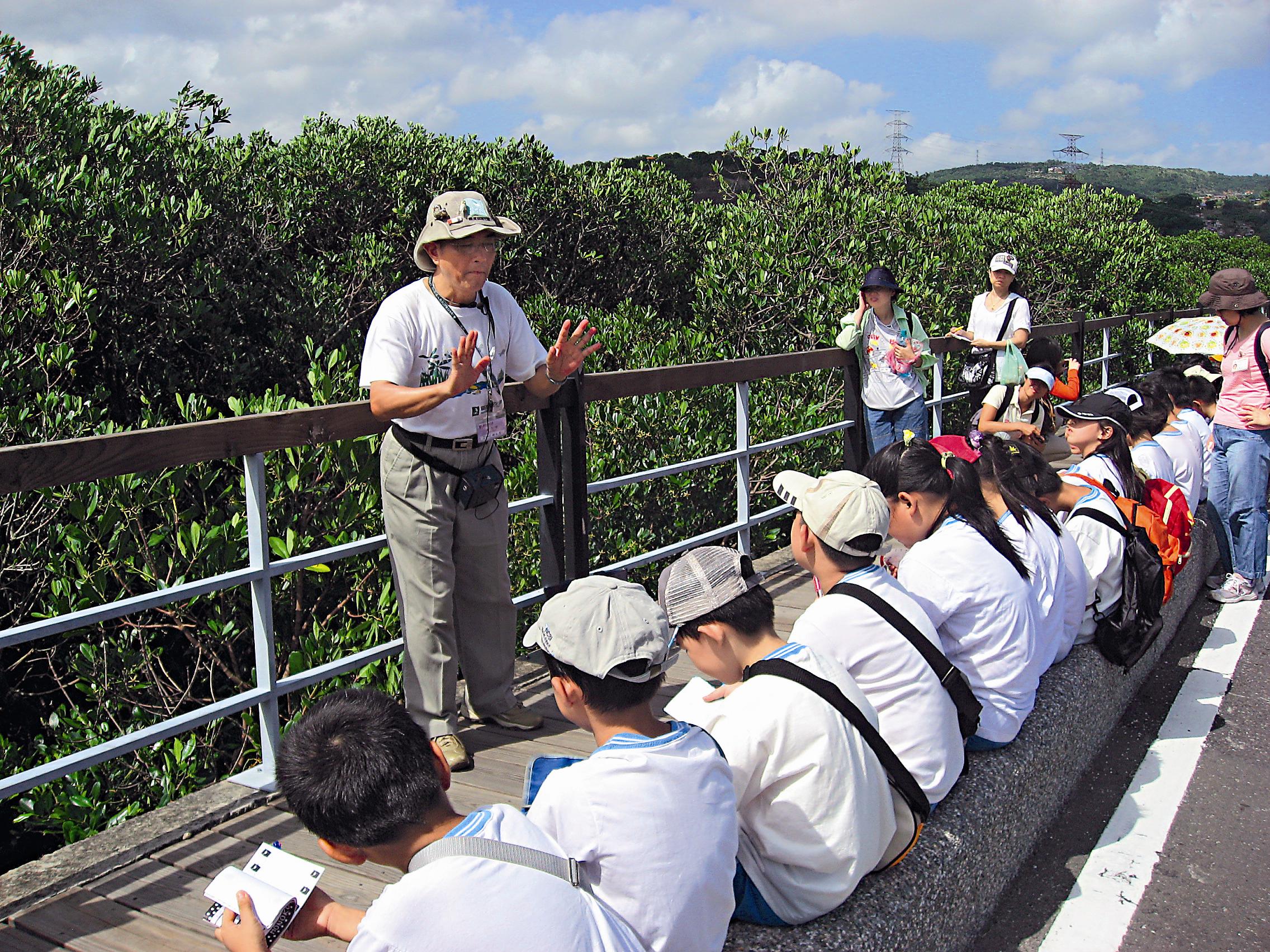
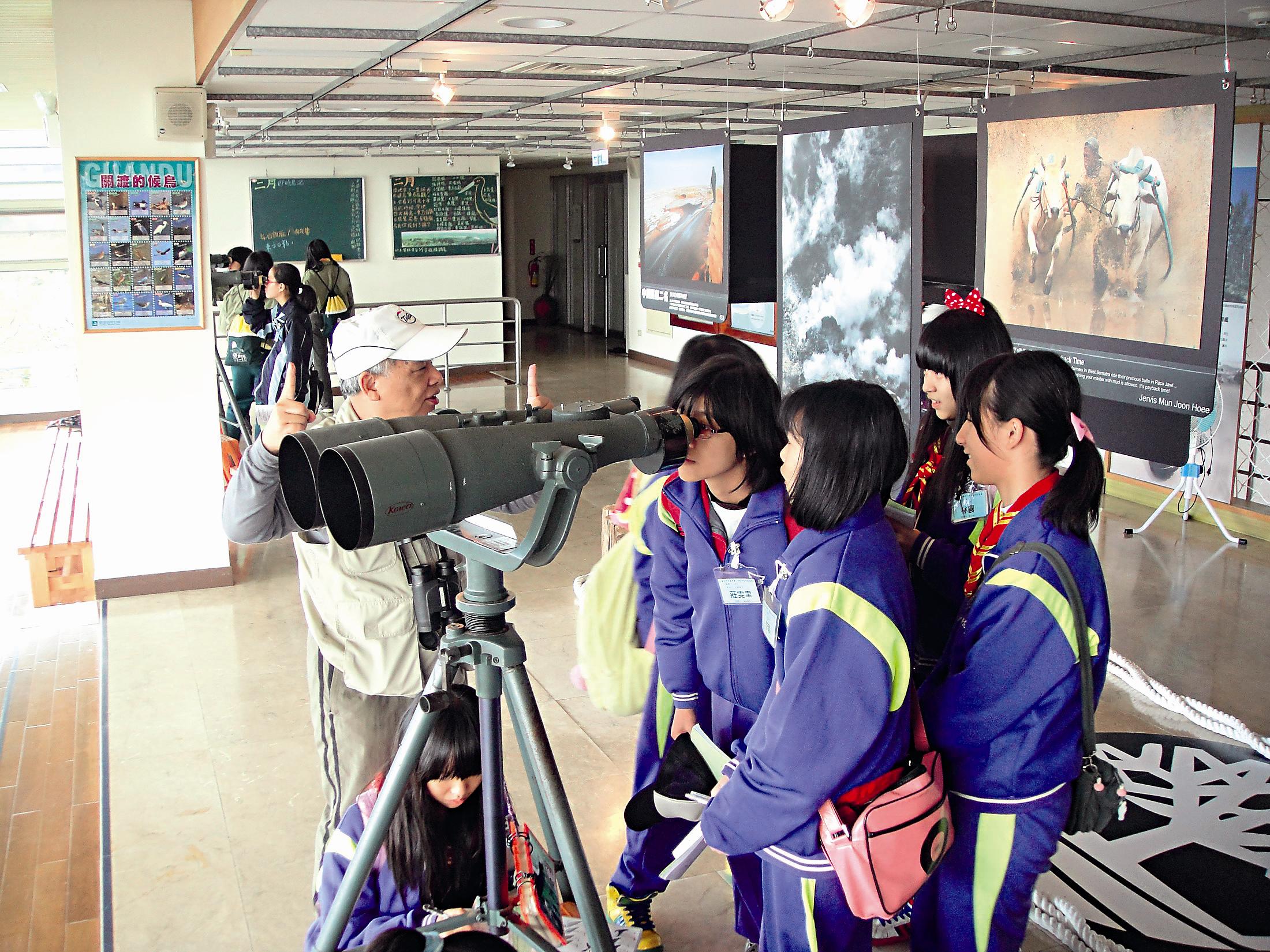
Guandu Nature Park not only possesses biological monitoring, research, conservation, and recreation functions, but also bears responsibility for environmental education. Over 10,000 large and small environmental education activities have been held over the past 10 years, and a cumulative total of more than 500,000 people have taken part in these events. In order to give the public a better understanding of wetlands and their importance, the park regularly holds various kinds of environmental education activities, including topical special exhibitions, weekend lectures, parent-child do-ityourself classrooms, various camps, and specialized lecture classes.
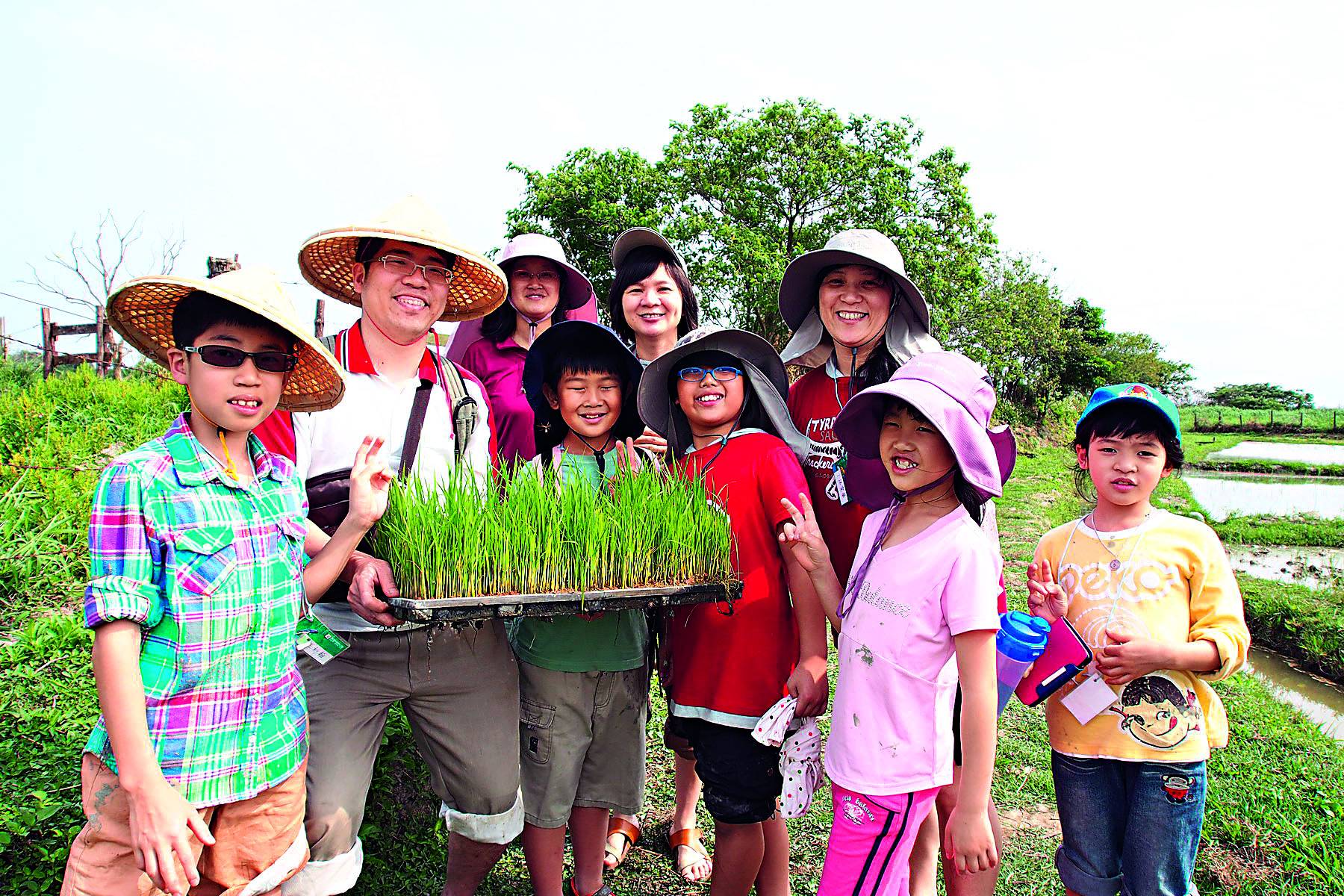
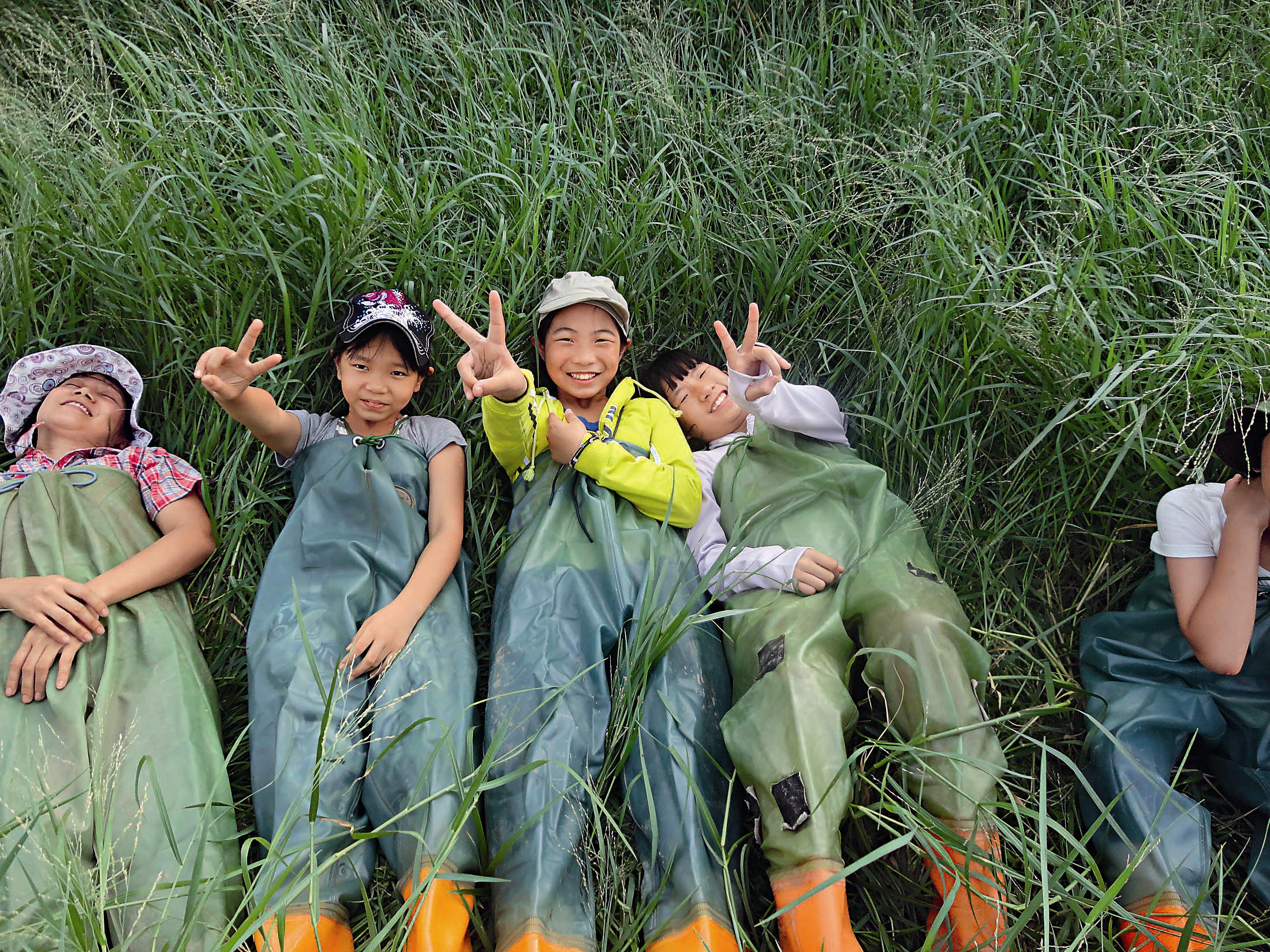
Apart from promoting interest in nature, these activities also seek to preserve and revitalize old cultural memories of the Guandu area. For instance, children have a chance to take their shoes off and personally experience the joy of transplanted rice seedlings and harvesting rice in a marshy paddy. Furthermore, the park has also held a number of "natural installation art festivals," and invited artists from various countries to use natural source materials beautify and express their concern for the environment.
Rebirth of Wetlands Guandu Nature Park-
Recalling the birds at Guandu during his youth, the bright eyes and animated voice of Juan Chin-sung, chairman of the Wild Bird Society of Taipei, "It looked as if the number of dunlin in a single flock exceeded 10,000 birds, but there were certainly at least several thousand, all moving as one, like a mass of fish in the sea. When not in the breeding season, dunlin have a white belly and a black back. So when they changed direction, the sky suddenly became white, and when they turned back, the sky became black. It was a spectacular sight!"
When Juan was still in university, he accompanied his father birding, and from that time on—around 1976—Juan has had a close connection with Guandu. He has not only borne witness to the ecological resurgence of the Guandu wetlands, but also accompanied it through calamity and rebirth. Today, Guandu Nature Park has already recovered the vital ecological functions of wetlands. This almost miraculous result is the positive result of good communication between government agencies and private conservation groups, and can serve as a model for cooperative efforts between government and private groups to promote ecological and environmental education.
When Juan was still in university, he accompanied his father birding, and from that time on—around 1976—Juan has had a close connection with Guandu. He has not only borne witness to the ecological resurgence of the Guandu wetlands, but also accompanied it through calamity and rebirth. Today, Guandu Nature Park has already recovered the vital ecological functions of wetlands. This almost miraculous result is the positive result of good communication between government agencies and private conservation groups, and can serve as a model for cooperative efforts between government and private groups to promote ecological and environmental education.
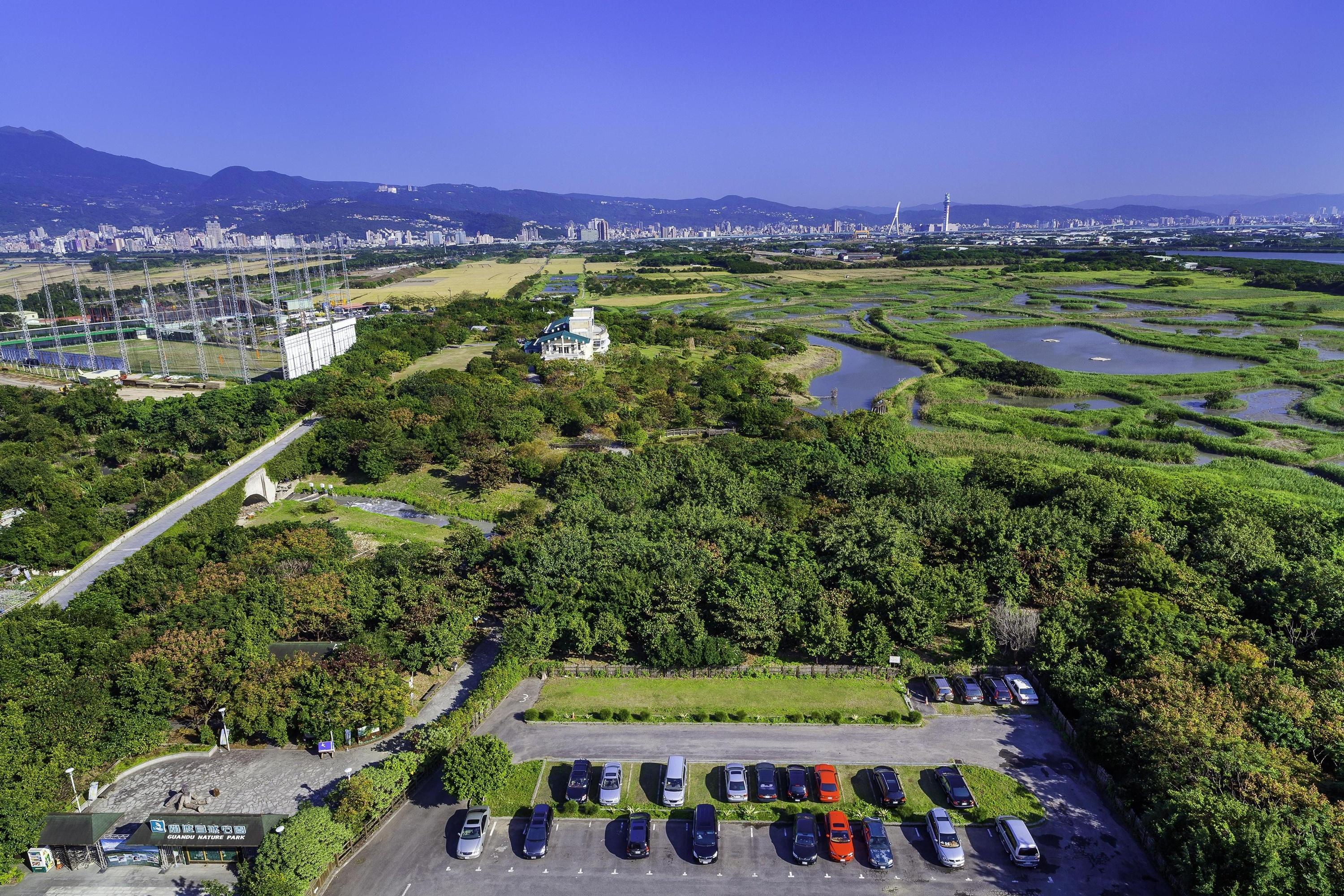
- Guandu Nature Park. Photograph by Harry Huang
Calamity and Recovery
There was once a pristine wetland located at the foot of Yangmingshan, on the edge of the metropolitan Taipei area. The environment was very favorable to life here, and aquatic plants grew luxuriantly, nurturing vast numbers of aquatic insects and countless fish, shrimp, and shellfish. This bounty attracted great numbers of birds, including rare transient birds and vagrant birds that had strayed from their normal range. The open terrain also made the area very suitable for birding, making this, in the words of Juan Chin-sung, a birding paradise—Guandu.
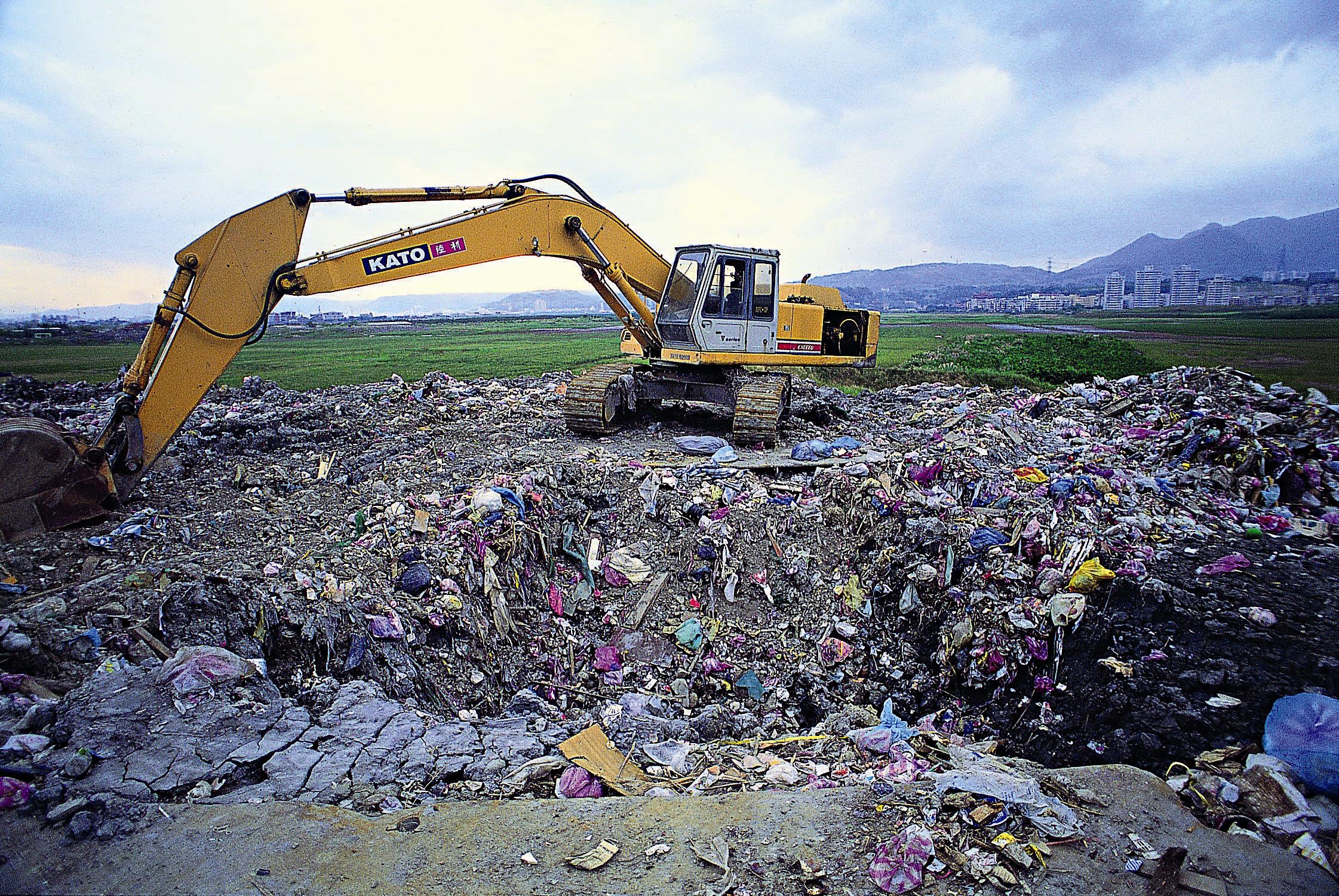
Nevertheless, good things don’t last forever, and this Eden quickly changed for the worse after 1981, and piles of waste soil began appearing on the eastern and western sides of Guandu. Taiwan was enjoying a spectacular economic surge around this time, and the building industry was flourishing, producing large amounts of waste soil. Without any appropriate place to put it, builders originally dumped waste soil furtively around the Guandu area. But because Guandu is subject to frequent flooding, has high salinity, and is poor rice-growing land, some short-sighted farmers eager to make quick money simply opened their land for the dumping of waste soil and trash, charging many thousand NT dollars for each truckload.
As a result, all of Guandu Nature Park to Dadu Road was filled in with waste soil. At that time, some piles of waste soil were even larger than nearby Zhishanyan Hill! Seeing that a rare bird habitat was gradually being annihilated, Juan realized, "If we don’t take action now, Guandu will perish!" Having taken all they could bear, birders began a campaign of outreach, complaint, lobbying, and protest. After a decade of hard work lasting from 1986 to 1996, the campaigners took advantage of the Taipei mayoral election to extract a concrete promise to protect Guandu. In January 1996, the Taipei City Council finally passed a special budget for the purchase of land in the Guandu area for future public facility use. The City Council also planned the development of the area as Guandu Nature Park, with the expectation that the restored wetlands environment would achieve the goals of public education and recreation.
However, the land purchase budget of NT$15.6 billion allowed the expropriation of only 57 ha, and many areas around Guandu were not expropriated. For instance, the land to the east of the park remained in private hands, and continuedto be used for waste soil dumping. In addition, the land along the dike road also was not expropriated. Although that land was supposed to remain undeveloped and available for flood prevention purposes, it was still ultimately private land, and the owners felt free to use it as they pleased as long as they did not build anything. Furthermore, the mangrove nature reserve outside the dike also remained private, and experienced severe silting.
The Kandelia mangrove gradually grew out toward the center of the river channel, causing the channel to get increasingly narrow. According to Juan Chinsung, "Everyone originally assumed that the mangrove was very rare, which is why the nature reserve was established, and it couldn't be thinned. Although now it can be thinned, we still hope that this land can be expropriated."
There was once a pristine wetland located at the foot of Yangmingshan, on the edge of the metropolitan Taipei area. The environment was very favorable to life here, and aquatic plants grew luxuriantly, nurturing vast numbers of aquatic insects and countless fish, shrimp, and shellfish. This bounty attracted great numbers of birds, including rare transient birds and vagrant birds that had strayed from their normal range. The open terrain also made the area very suitable for birding, making this, in the words of Juan Chin-sung, a birding paradise—Guandu.
Nevertheless, good things don’t last forever, and this Eden quickly changed for the worse after 1981, and piles of waste soil began appearing on the eastern and western sides of Guandu. Taiwan was enjoying a spectacular economic surge around this time, and the building industry was flourishing, producing large amounts of waste soil. Without any appropriate place to put it, builders originally dumped waste soil furtively around the Guandu area. But because Guandu is subject to frequent flooding, has high salinity, and is poor rice-growing land, some short-sighted farmers eager to make quick money simply opened their land for the dumping of waste soil and trash, charging many thousand NT dollars for each truckload.
As a result, all of Guandu Nature Park to Dadu Road was filled in with waste soil. At that time, some piles of waste soil were even larger than nearby Zhishanyan Hill! Seeing that a rare bird habitat was gradually being annihilated, Juan realized, "If we don’t take action now, Guandu will perish!" Having taken all they could bear, birders began a campaign of outreach, complaint, lobbying, and protest. After a decade of hard work lasting from 1986 to 1996, the campaigners took advantage of the Taipei mayoral election to extract a concrete promise to protect Guandu. In January 1996, the Taipei City Council finally passed a special budget for the purchase of land in the Guandu area for future public facility use. The City Council also planned the development of the area as Guandu Nature Park, with the expectation that the restored wetlands environment would achieve the goals of public education and recreation.
However, the land purchase budget of NT$15.6 billion allowed the expropriation of only 57 ha, and many areas around Guandu were not expropriated. For instance, the land to the east of the park remained in private hands, and continuedto be used for waste soil dumping. In addition, the land along the dike road also was not expropriated. Although that land was supposed to remain undeveloped and available for flood prevention purposes, it was still ultimately private land, and the owners felt free to use it as they pleased as long as they did not build anything. Furthermore, the mangrove nature reserve outside the dike also remained private, and experienced severe silting.
The Kandelia mangrove gradually grew out toward the center of the river channel, causing the channel to get increasingly narrow. According to Juan Chinsung, "Everyone originally assumed that the mangrove was very rare, which is why the nature reserve was established, and it couldn't be thinned. Although now it can be thinned, we still hope that this land can be expropriated."
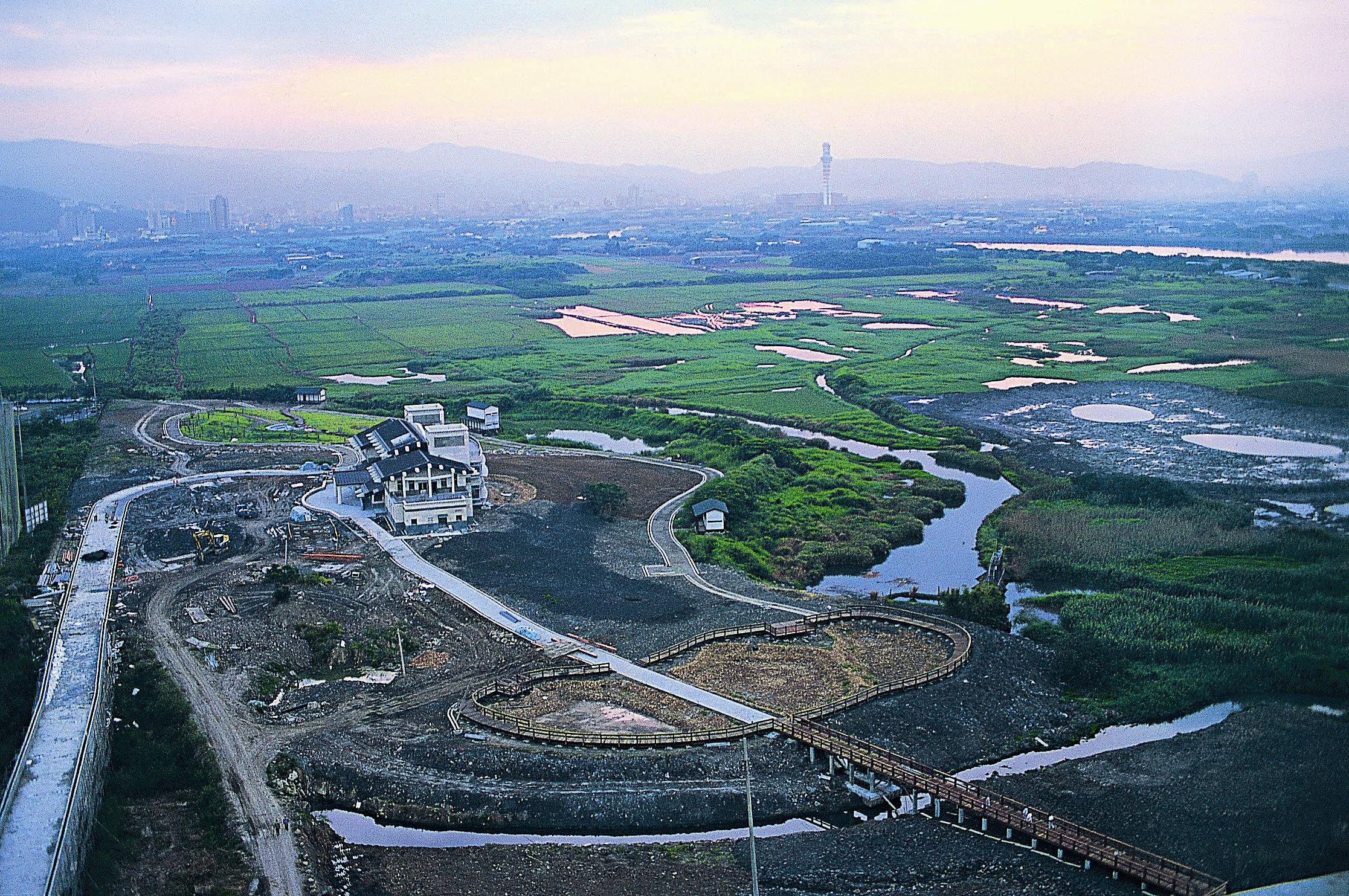
- upper left:The Guandu wetlands when the Guandu Nature Park was first established in 2001.
- upper right:The large-scale illegal dumping of trash by unscrupulous companies almost caused the complete destruction of the Guandu wetlands.
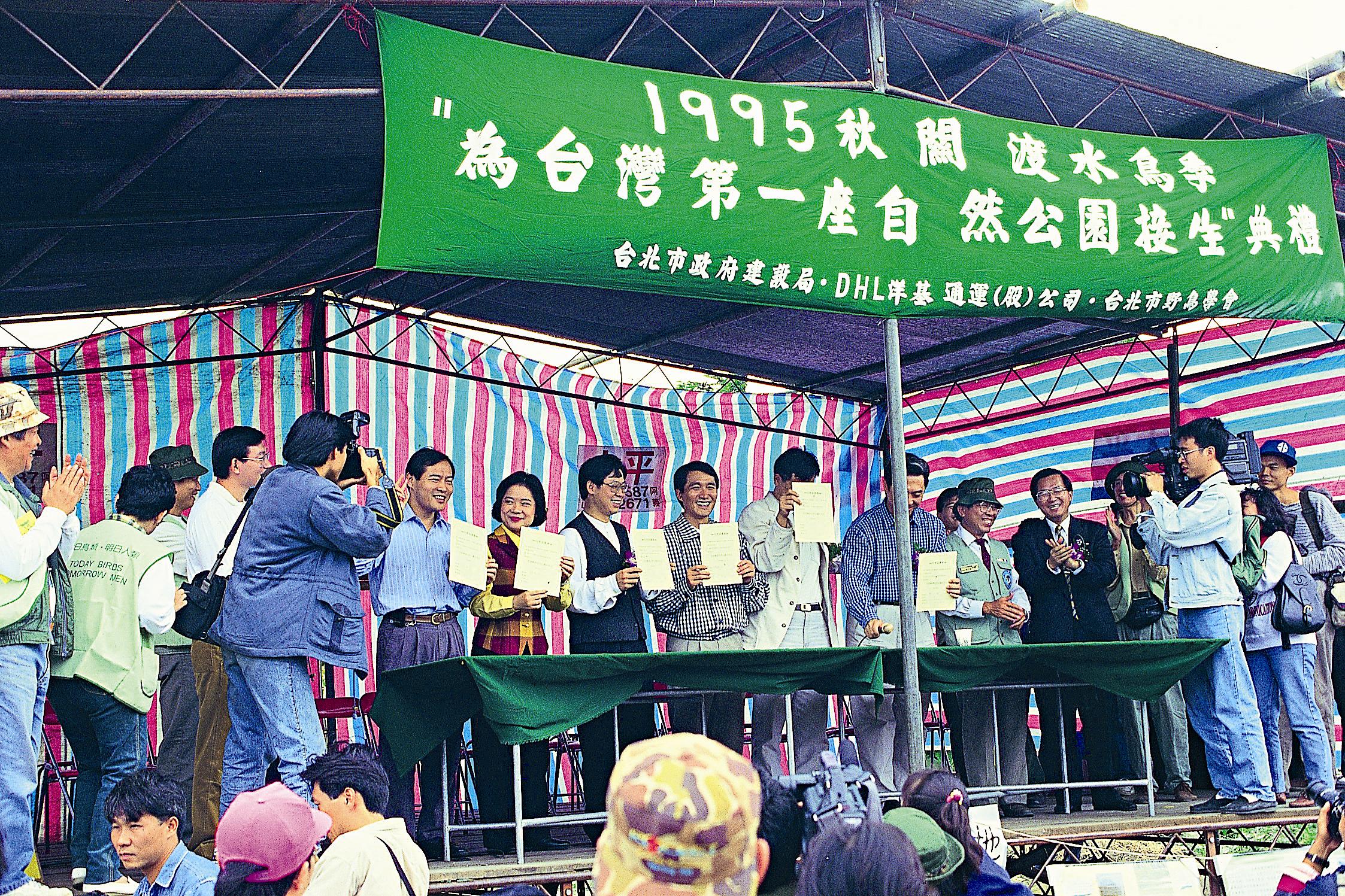
- lower left:In 1995, City councilors from all political parties invited to the Waterfowl Festival eagerly sign a letter of consent for the development of Guandu Nature Park.
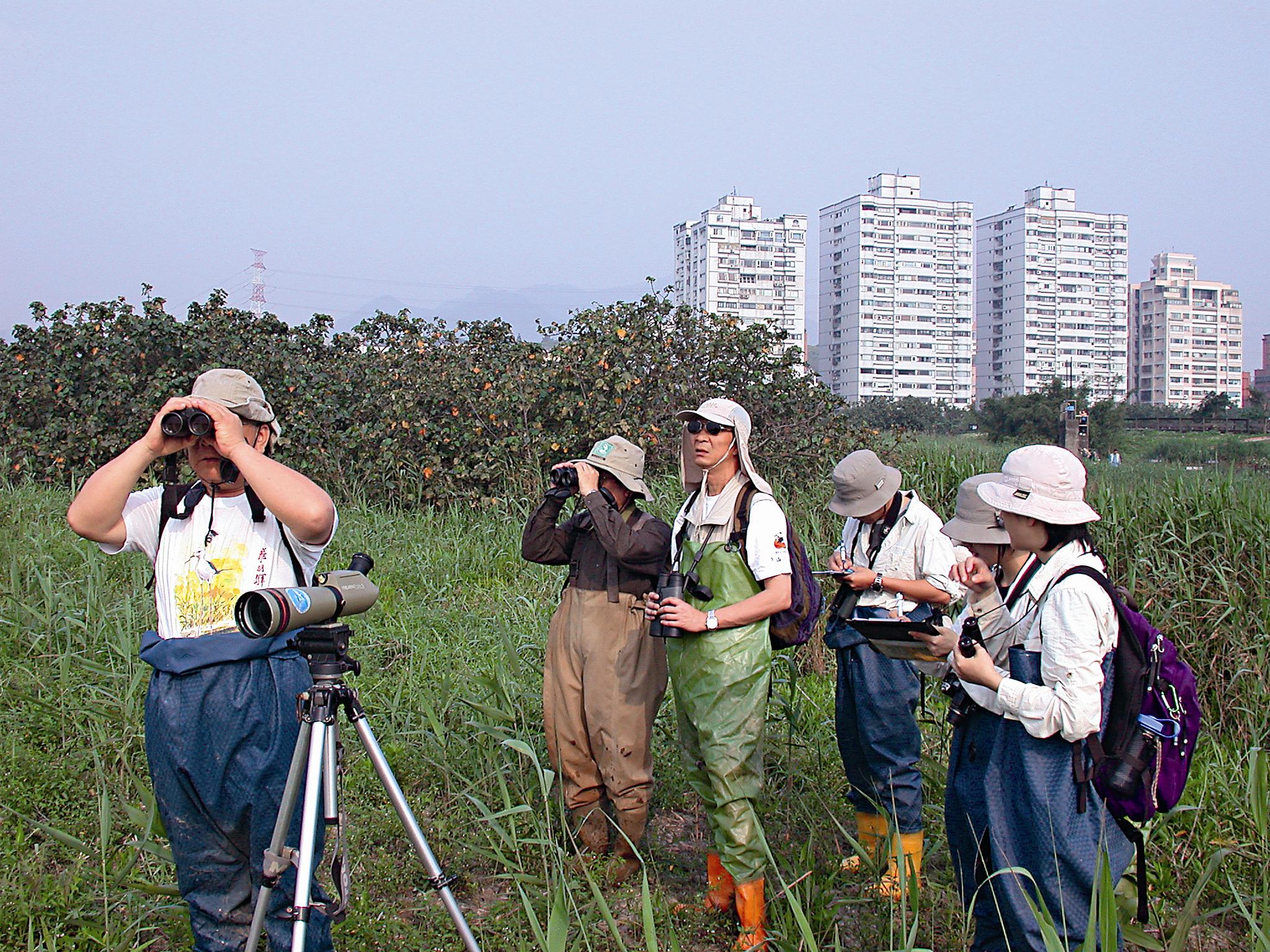
- lower right:Volunteers conduct a bird survey using the line transect.
Restoring the Eden
After completing land expropriation, the government commissioned scholars to perform a survey of local natural resources, including an investigation of vegetation, bottom-dwelling organisms, birds, fish, and reptiles. For its part, The Wild Bird Society felt duty-bound to perform a survey of bird life in the area, and Juan Chin-sung participated in these surveys from the very beginning. In those days, farmland and vegetable patches covered much of the area, and separate areas were divided by fences built from planks and piles of debris. Due to the many turns and detours, it then took an hour to travel a distance it would take only three minutes to cover today.
It was very difficult to reach the location of today's Nature Center, and this spot was in the midst of a desolate area that looked very much like a devastated war zone. Continuing into the area, one came to a vast expanse of mudflats, and everyone had to put on waders if they hoped to go any further. A full tour of the area took a full six hours. The trip was especially tough in summer, when survey crew members commonly had to dump 1-2 liters of sweat out of their waders after returning from a survey! These surveys were performed 19 times each year, and bird survey work is still being undertaken at Guandu.
After completing data collection during the first two years, work gradually got underway on park facilities and landscaping. Because the ground had almost no topsoil at that time, and plants couldnot take root, topsoil had to be transported from other locations, one truckload at a time. The main facilities had been completed by July 2001, and the next step was to decide what organization would be in charge of operation. After a public bid request process, and it was rumored that a certain major business group was trying to win the bid with a lowball offer, "We at the Wild Bird Society had exerted every bit of our strength preserve the area—How could we in good conscience let other people take over and manage area for recreation, and not ensure conservation?" explained Juan Chinsung.
At that time, Li Ping-tu, then chairman of the Wild Bird Society of Taipei, boldly proposed two conditions: The society would bear responsibility for ensuring profitability, and all profits would be given back to Guandu Nature Park, with no provision for losses to be made up with later profits. Finally, the Guandu Nature Park of Taipei received the right to operate Guandu Nature Park.
After completing land expropriation, the government commissioned scholars to perform a survey of local natural resources, including an investigation of vegetation, bottom-dwelling organisms, birds, fish, and reptiles. For its part, The Wild Bird Society felt duty-bound to perform a survey of bird life in the area, and Juan Chin-sung participated in these surveys from the very beginning. In those days, farmland and vegetable patches covered much of the area, and separate areas were divided by fences built from planks and piles of debris. Due to the many turns and detours, it then took an hour to travel a distance it would take only three minutes to cover today.
It was very difficult to reach the location of today's Nature Center, and this spot was in the midst of a desolate area that looked very much like a devastated war zone. Continuing into the area, one came to a vast expanse of mudflats, and everyone had to put on waders if they hoped to go any further. A full tour of the area took a full six hours. The trip was especially tough in summer, when survey crew members commonly had to dump 1-2 liters of sweat out of their waders after returning from a survey! These surveys were performed 19 times each year, and bird survey work is still being undertaken at Guandu.
After completing data collection during the first two years, work gradually got underway on park facilities and landscaping. Because the ground had almost no topsoil at that time, and plants couldnot take root, topsoil had to be transported from other locations, one truckload at a time. The main facilities had been completed by July 2001, and the next step was to decide what organization would be in charge of operation. After a public bid request process, and it was rumored that a certain major business group was trying to win the bid with a lowball offer, "We at the Wild Bird Society had exerted every bit of our strength preserve the area—How could we in good conscience let other people take over and manage area for recreation, and not ensure conservation?" explained Juan Chinsung.
At that time, Li Ping-tu, then chairman of the Wild Bird Society of Taipei, boldly proposed two conditions: The society would bear responsibility for ensuring profitability, and all profits would be given back to Guandu Nature Park, with no provision for losses to be made up with later profits. Finally, the Guandu Nature Park of Taipei received the right to operate Guandu Nature Park.
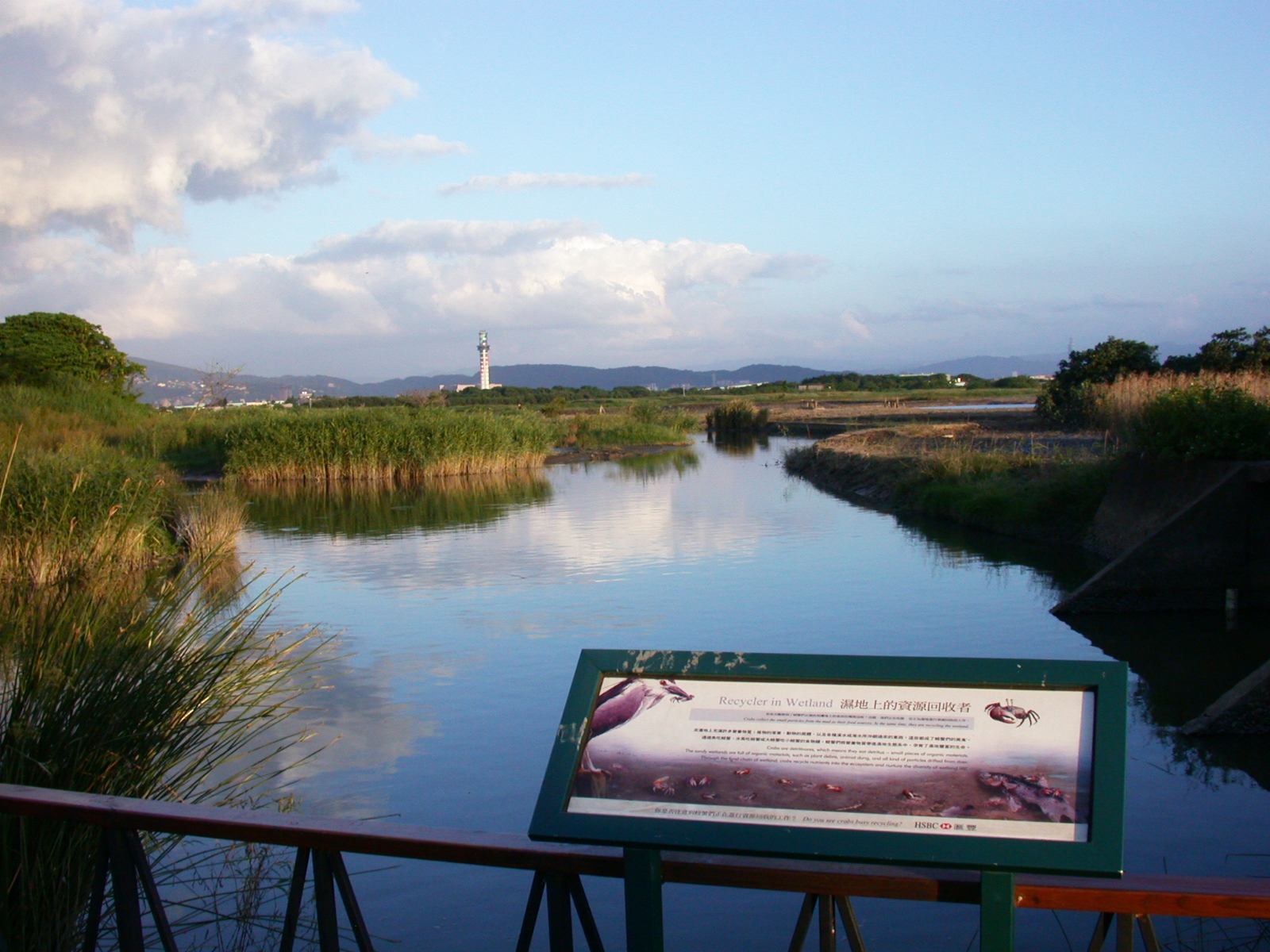
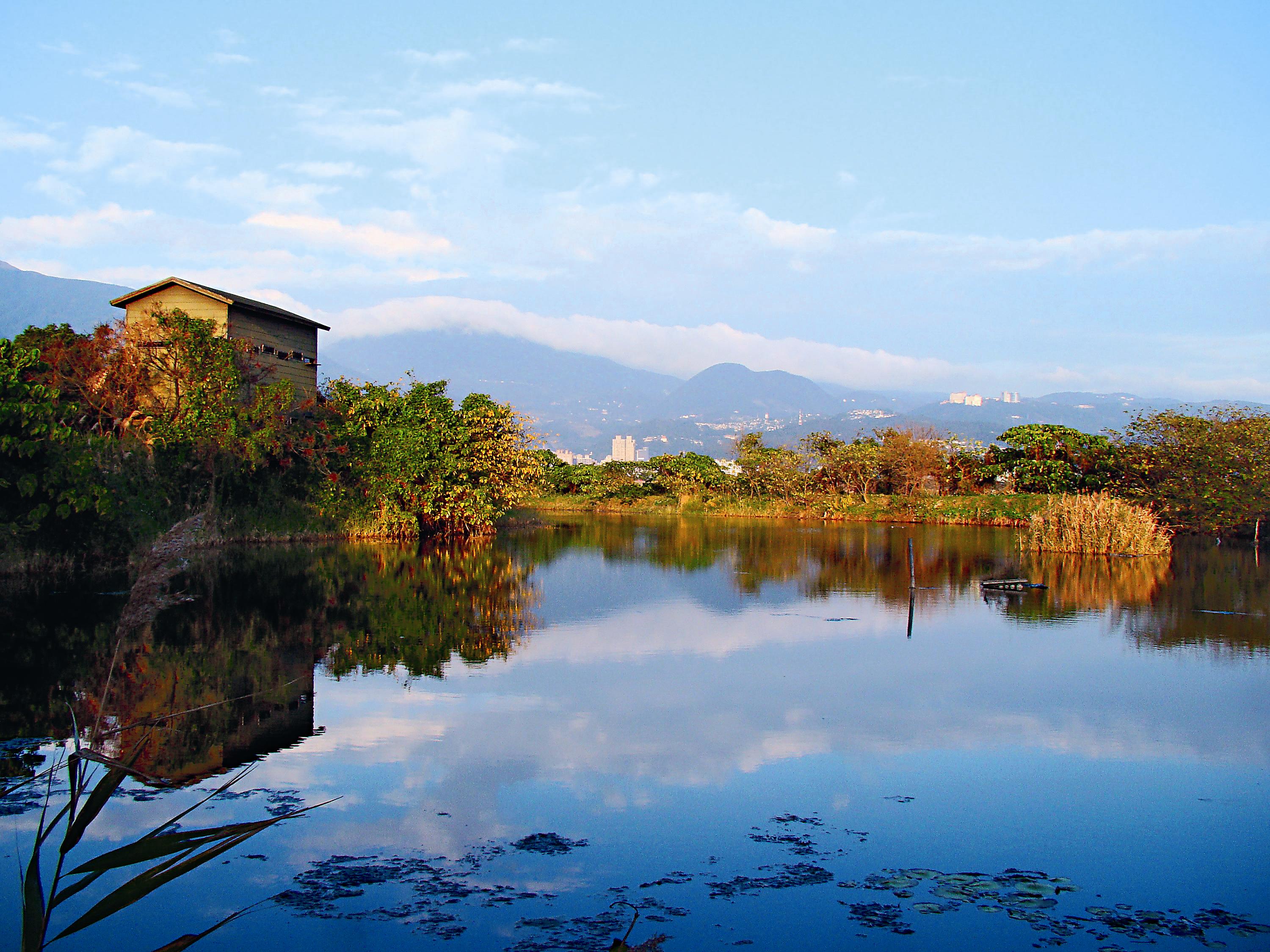
- upper:Moon pool and bird-watching hut.
- lower:Crab appreciation area.
Grit our Teeth for Preserving Persevere
The Guandu Nature Park is Taiwan's first The Guandu Nature Park is Taiwan's first example of private operation of an ecological nature reserve. The first contract had a term of seven years, and could be extended for two years. After assuming management of the Guandu Nature Park, the Wild Bird Society found that maintenance costs were astronomical.
Apart from routine costs such as personnel affairs and management expenses, there have been various occasional unexpected costs and situations. For instance, the Nature Center is equipped with a single ultra-large air conditioning, which has proved to be a huge problem; the air conditioner must cool the whole building when it ison, and the electrical cost is astounding!
In addition, there is the problem of the wetlands changing into dry land. When Typhoon Gloria caused the inundation of northern Taiwan in 1967, many people blamed the Guandu "Shixiang Outlet," which is the natural chokepoint between Mt. Guanyin and Mt. Datun, and set to work widening this gap. The unforeseen consequence of blasting this chokepoint wider was that when seawater flooded landward at high tide, many rice fields were contaminated with salt and became unusable.
It was at this point that waste soil dumping became rampant. Afterwards, the twodirectional water gates were changed to one-way valves, which allowed water within the dikes to flow out, but not come back. However, without an occasional infusion of seawater, the salinity of the soil gradually fell, and para grass gained a foothold. As a result, the wetlands within the dikes gradually changed to dry land. Because the roots of para grass (Brachiaria mutica ) are extremely effective at holding the soil, backhoes had to be used to remove the grass.
But because regulations prohibited the removal of soil from a nature reserve, the excavated soil had to be piled up around ponds, which led to the ponds becoming deeper; although this attracted more ducks and geese, there were fewer sandflats and mudflats, and consequently fewer plovers, sandpipers, and snipes. After several rounds of appeals, the Hydraulic Engineering Office, Public Works Department Public Works Department agreed to the removal of the one-way valves, and also agreed that waste soil in the nature reserve could be removed from the site. Nevertheless, the cost of environmental maintenance work, including construction, removal, and waste transport wasenormous. Because of this, during the early years after the Guandu Nature Park was established, the Wild Bird Society was forced to grit its teeth, practice extreme thrift, and bear this burden in hope that Guandu could recover its former glory.
In addition, because the SARS epidemic and a bird flu outbreak occurred during the first contract period, virtually no one visited the park for an entire year. After nine years, the Wild Bird Society's total losses had reached 30-40% of its net assets. When the first contract ended at the end of October 2010, Taipei city government could not initially find anyone willing to take over operation of the park. When the Taipei City Animal Protection Office was established in January of the following year, it took over from the Department of Economic Development as the Guandu Nature Park's administrative agency, and expressed its hope that the Wild Bird Society could continue to operate the Guandu Nature Park. Because the Animal Protection Office offered relatively beneficial terms in the new contract, the Wild Bird Society decided, in spite of its operating difficulties, to continue to support the restoration of the Guandu wetlands.
Addressing the business status of the Guandu Nature Park, Taipei city government established the Guandu Nature Park Operation Oversight Committee, which Juan Chin-sung sees as a very positive development, "They know about our hard work, and they think of ways to help us when we encounter a problem, such as when the building was leaking." Noting that the Nature Center was built on waste soil," Juan continued, "Because the waste soil had been dumped on mudflats, the building's foundation was unstable, and it settled unevenly, resulting in leakage. And although the city government had a repair budget, repair work was never done soon enough. If it isn’t repaired this year, the problem will be bigger next year, and the budget style won’t be enough."
The Guandu Nature Park is Taiwan's first The Guandu Nature Park is Taiwan's first example of private operation of an ecological nature reserve. The first contract had a term of seven years, and could be extended for two years. After assuming management of the Guandu Nature Park, the Wild Bird Society found that maintenance costs were astronomical.
Apart from routine costs such as personnel affairs and management expenses, there have been various occasional unexpected costs and situations. For instance, the Nature Center is equipped with a single ultra-large air conditioning, which has proved to be a huge problem; the air conditioner must cool the whole building when it ison, and the electrical cost is astounding!
In addition, there is the problem of the wetlands changing into dry land. When Typhoon Gloria caused the inundation of northern Taiwan in 1967, many people blamed the Guandu "Shixiang Outlet," which is the natural chokepoint between Mt. Guanyin and Mt. Datun, and set to work widening this gap. The unforeseen consequence of blasting this chokepoint wider was that when seawater flooded landward at high tide, many rice fields were contaminated with salt and became unusable.
It was at this point that waste soil dumping became rampant. Afterwards, the twodirectional water gates were changed to one-way valves, which allowed water within the dikes to flow out, but not come back. However, without an occasional infusion of seawater, the salinity of the soil gradually fell, and para grass gained a foothold. As a result, the wetlands within the dikes gradually changed to dry land. Because the roots of para grass (Brachiaria mutica ) are extremely effective at holding the soil, backhoes had to be used to remove the grass.
But because regulations prohibited the removal of soil from a nature reserve, the excavated soil had to be piled up around ponds, which led to the ponds becoming deeper; although this attracted more ducks and geese, there were fewer sandflats and mudflats, and consequently fewer plovers, sandpipers, and snipes. After several rounds of appeals, the Hydraulic Engineering Office, Public Works Department Public Works Department agreed to the removal of the one-way valves, and also agreed that waste soil in the nature reserve could be removed from the site. Nevertheless, the cost of environmental maintenance work, including construction, removal, and waste transport wasenormous. Because of this, during the early years after the Guandu Nature Park was established, the Wild Bird Society was forced to grit its teeth, practice extreme thrift, and bear this burden in hope that Guandu could recover its former glory.
In addition, because the SARS epidemic and a bird flu outbreak occurred during the first contract period, virtually no one visited the park for an entire year. After nine years, the Wild Bird Society's total losses had reached 30-40% of its net assets. When the first contract ended at the end of October 2010, Taipei city government could not initially find anyone willing to take over operation of the park. When the Taipei City Animal Protection Office was established in January of the following year, it took over from the Department of Economic Development as the Guandu Nature Park's administrative agency, and expressed its hope that the Wild Bird Society could continue to operate the Guandu Nature Park. Because the Animal Protection Office offered relatively beneficial terms in the new contract, the Wild Bird Society decided, in spite of its operating difficulties, to continue to support the restoration of the Guandu wetlands.
Addressing the business status of the Guandu Nature Park, Taipei city government established the Guandu Nature Park Operation Oversight Committee, which Juan Chin-sung sees as a very positive development, "They know about our hard work, and they think of ways to help us when we encounter a problem, such as when the building was leaking." Noting that the Nature Center was built on waste soil," Juan continued, "Because the waste soil had been dumped on mudflats, the building's foundation was unstable, and it settled unevenly, resulting in leakage. And although the city government had a repair budget, repair work was never done soon enough. If it isn’t repaired this year, the problem will be bigger next year, and the budget style won’t be enough."
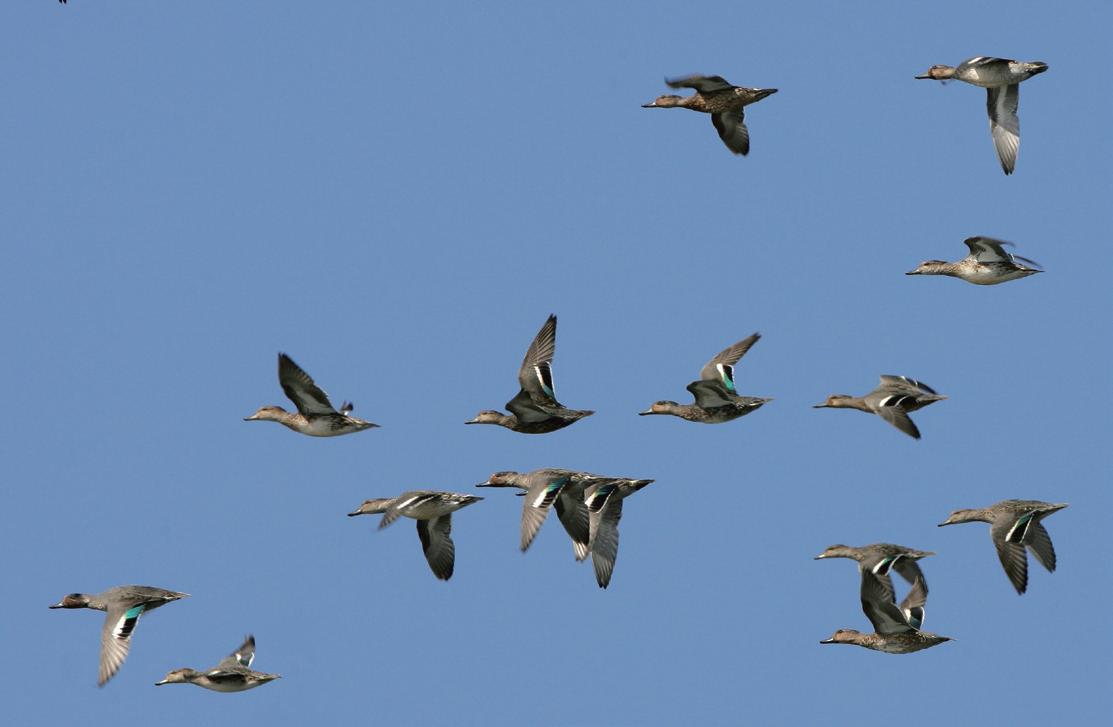
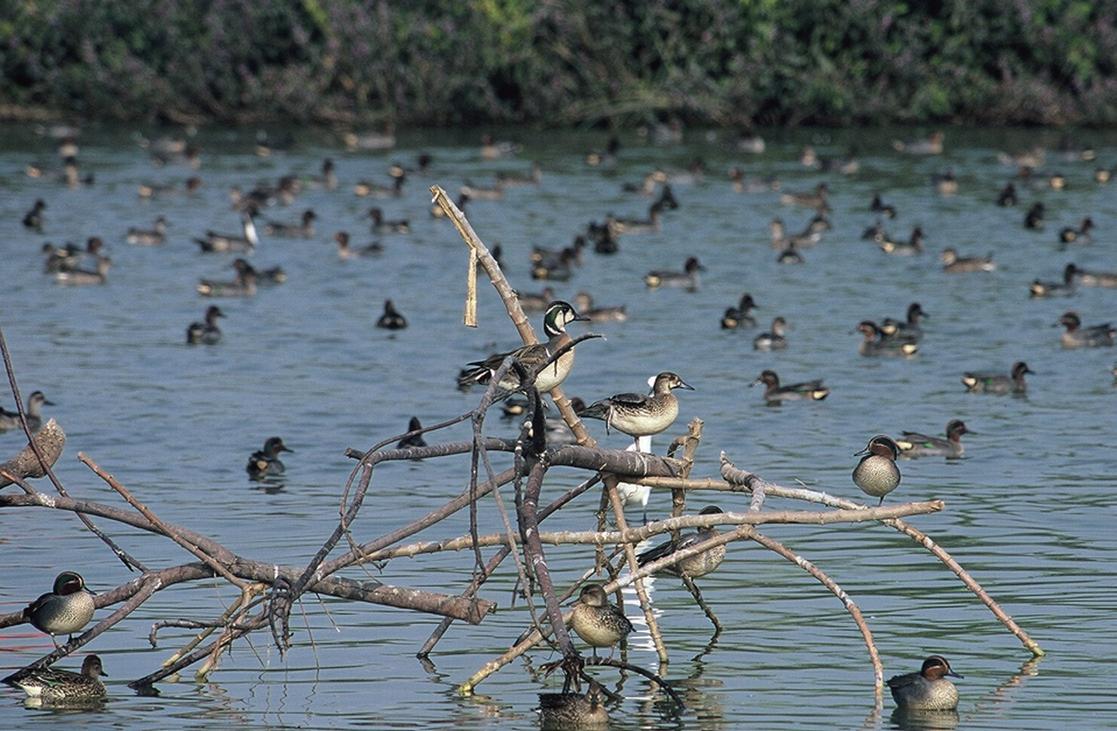
- left:Green-winged Teal (Anas crecca ).
- right:Green-winged Teal (Anas crecca ) and Baikal Teal (Querquedula glocitans ).
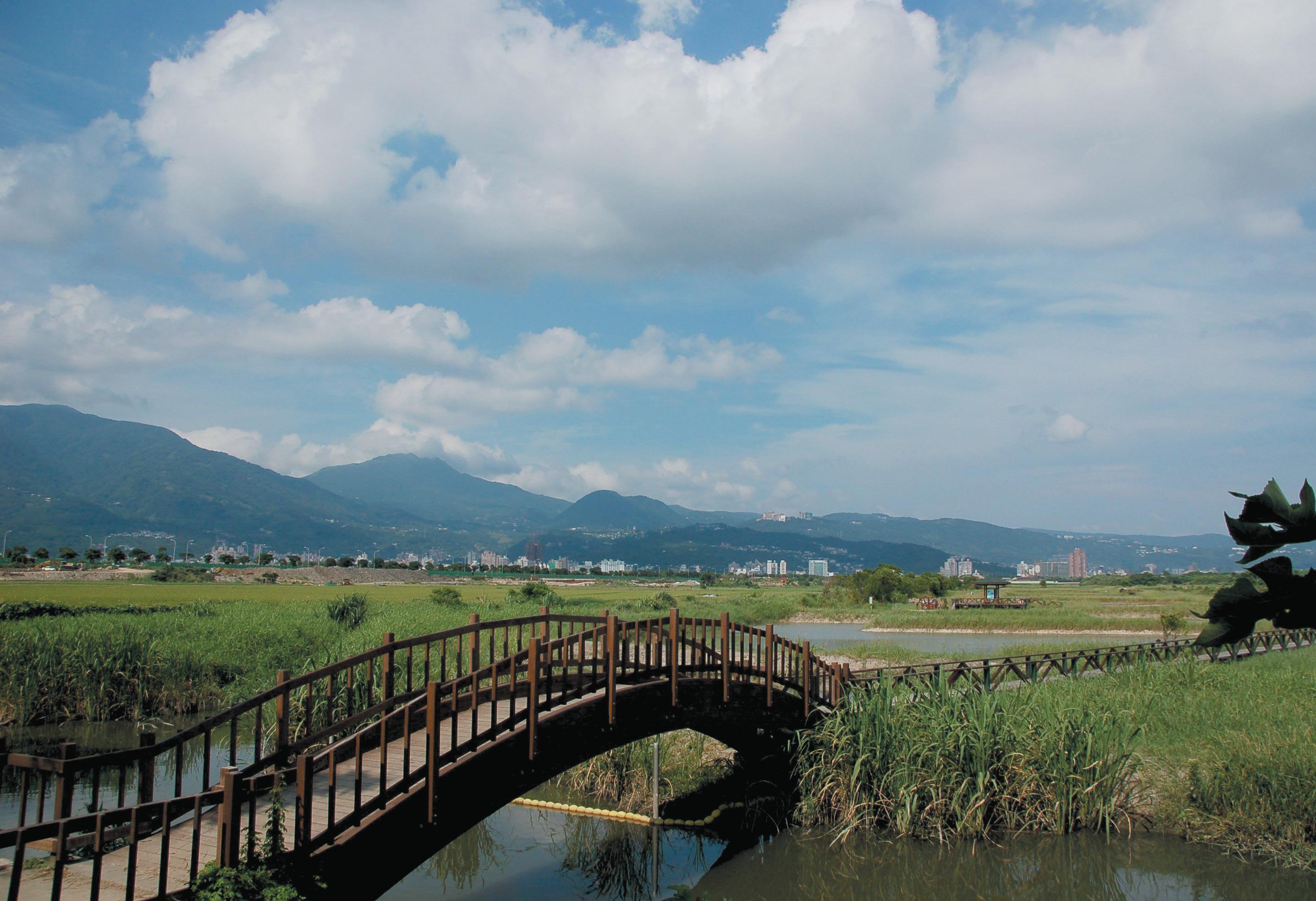
Restoration Work Gradually Achieves Greater Success
Although it has faced numerous problems, Guandu Nature Park has still achieved very impressive results. The Guandu area originally consisted of marsh wetlands. Following the catastrophic dumping of waste soil, the most important task was habitat restoration. At the end of 2005, water from Shuomokeng Creek was diverted into the area to create artificial wetlands, and various types of aquatic plants were planted. In2009, the para grass, which had been causing the marshes to dry out, was removed.
In 2012, water gate No. 3 went in to operation , enabling implementation of the "saltwater exchange project." Many habitat restoration projects are still underway today, and habitat restoration is seen as a long term task, one that may require 10, or even 20 years, before successor results can be achieved. "It's like a human's body," noted Juan, "As soon as something goes wrong, it's not easy to restore one's health. But this is work that must be done!"
The Wild Bird Society came up with a very innovative idea for dealing with the fast-growing para grass. Starting at the end of 2009, the Society acquired water buffalo. On one hand, the water buffalo only eat grass, and do not eat other aquatic plants such as reeds and rushes, and on the other, they trample holes in the mud, which helps maintain a marshy environment. Furthermore, the small water buffalo have been neutered, and will not become aggressive, which also allows them to serve as "goodwill ambassadors." "We are always and everywhere thinking of new methods," Juan proudly noted concerning the idea to get water buffalo to eat the grass.
Apart from the efforts of the Wild Bird Society to implement conservation work within the Guandu Nature Park, credit must also be given to enthusiastic members of the public for their many small donations, and for the donations of domestic and foreign firms. These donations have enabled Guandu Nature Park to survive and continue to improve.
And apart from economic assistance, the volunteers who assist with survey and various operations within the park, and who offer ecological education activities to visiting membersof the public, are Guandu Nature Park's most important assets, and are treasured members of our family. Volunteers are involved in almost all large and small matters within the park, and they are continuing to quietly contribute their time and energy to the park and to ecological conservation at Guandu.
Although it has faced numerous problems, Guandu Nature Park has still achieved very impressive results. The Guandu area originally consisted of marsh wetlands. Following the catastrophic dumping of waste soil, the most important task was habitat restoration. At the end of 2005, water from Shuomokeng Creek was diverted into the area to create artificial wetlands, and various types of aquatic plants were planted. In2009, the para grass, which had been causing the marshes to dry out, was removed.
In 2012, water gate No. 3 went in to operation , enabling implementation of the "saltwater exchange project." Many habitat restoration projects are still underway today, and habitat restoration is seen as a long term task, one that may require 10, or even 20 years, before successor results can be achieved. "It's like a human's body," noted Juan, "As soon as something goes wrong, it's not easy to restore one's health. But this is work that must be done!"
The Wild Bird Society came up with a very innovative idea for dealing with the fast-growing para grass. Starting at the end of 2009, the Society acquired water buffalo. On one hand, the water buffalo only eat grass, and do not eat other aquatic plants such as reeds and rushes, and on the other, they trample holes in the mud, which helps maintain a marshy environment. Furthermore, the small water buffalo have been neutered, and will not become aggressive, which also allows them to serve as "goodwill ambassadors." "We are always and everywhere thinking of new methods," Juan proudly noted concerning the idea to get water buffalo to eat the grass.
Apart from the efforts of the Wild Bird Society to implement conservation work within the Guandu Nature Park, credit must also be given to enthusiastic members of the public for their many small donations, and for the donations of domestic and foreign firms. These donations have enabled Guandu Nature Park to survive and continue to improve.
And apart from economic assistance, the volunteers who assist with survey and various operations within the park, and who offer ecological education activities to visiting membersof the public, are Guandu Nature Park's most important assets, and are treasured members of our family. Volunteers are involved in almost all large and small matters within the park, and they are continuing to quietly contribute their time and energy to the park and to ecological conservation at Guandu.
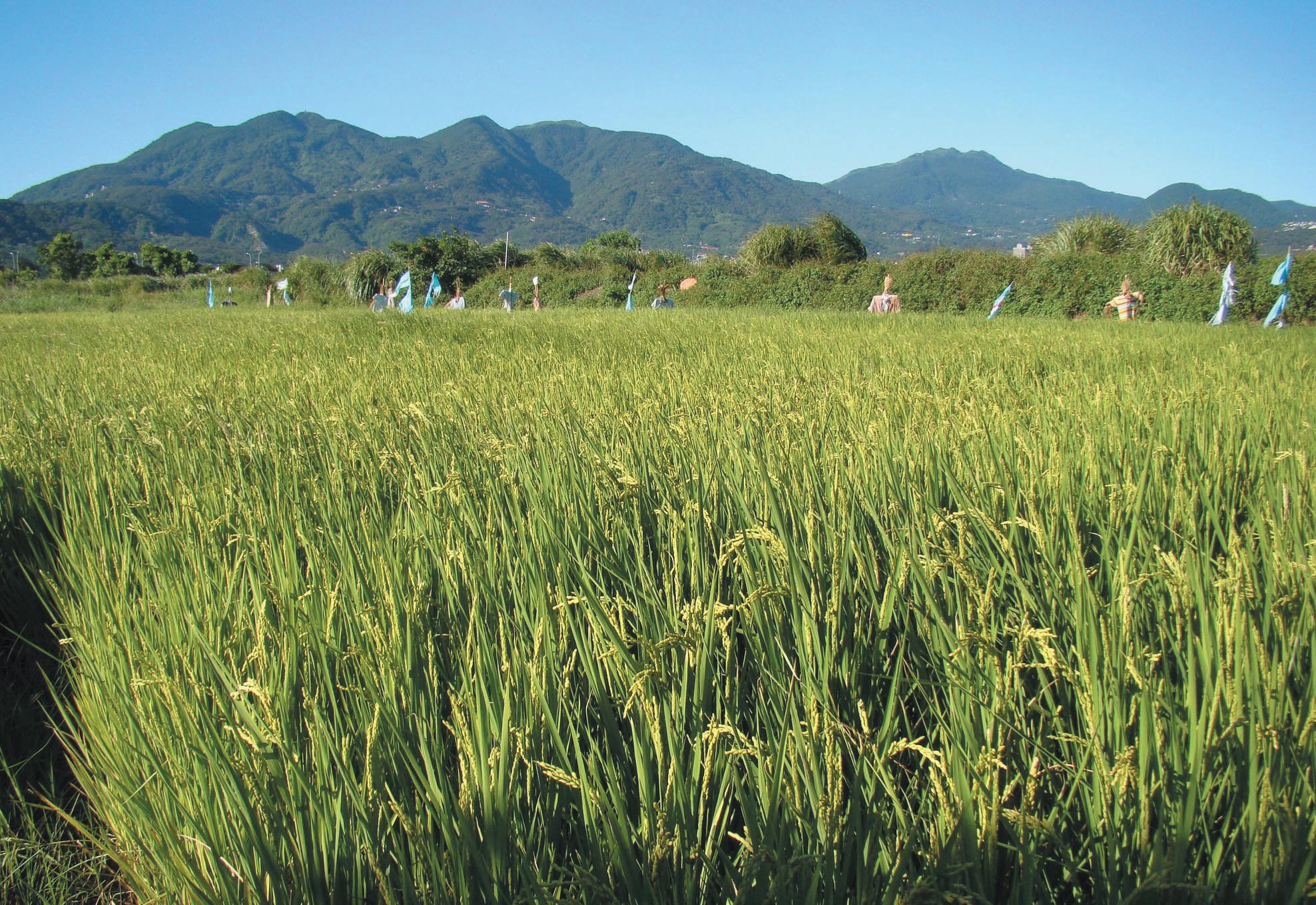
- upper:The arch bridge.
- lower:Following the catastrophic dumping of waste soil, habitat restoration was underway. The photograph shows farm fields area.
Guandu's Ecological Value and Environment FunctionsApart from providing excellent bird habitat, Guandu is also home to many insects, crabs, mudskippers, frogs, and various kinds of fish, crustaceans, and mollusks. It is estimated that there are over 200 species of plants and over 830 species of animals at Guandu. The Wild Bird Society is keenly aware of the importance of maintaining biodiversity.
For instance, when a number of species native to Taiwan, including the small fish (Hemicculter leuciclus ) , Top-mouth gudgeon (Pseudorasbora parva), freshwater clams (Anodonta woodiana ) , the snail (Sinotaia quadrata ) , and the shrimp (Caridina longirostris ) , were accidentally found during silt removal at the site of the final sedimentation pond in the "Shuomokeng Creek Artificial Wetlands Project," the organisms were caught and kept in a moon pool until the hydrology and flora in the artificial wetlands had stabilized enough that they could be released there.
In addition, the Wild Bird Society has also established insect and bird survey teams to perform survey work on a regular monthly basis. The Society has also established bird and insect databases, and volunteers have been observing the nesting and breeding of the Pheasant-tailed Jacana and Black-winged Stilt, which had not occurred in the past.
Guandu Nature Park not only possesses biological monitoring, research, conservation, and recreation functions, but also bears responsibility for environmental education. Over 10,000 large and small environmental education activities have been held over the past 10 years, and a cumulative total of more than 500,000 people have taken part in these events. In order to give the public a better understanding of wetlands and their importance, the park regularly holds various kinds of environmental education activities, including topical special exhibitions, weekend lectures, parent-child do-ityourself classrooms, various camps, and specialized lecture classes.
Apart from promoting interest in nature, these activities also seek to preserve and revitalize old cultural memories of the Guandu area. For instance, children have a chance to take their shoes off and personally experience the joy of transplanted rice seedlings and harvesting rice in a marshy paddy. Furthermore, the park has also held a number of "natural installation art festivals," and invited artists from various countries to use natural source materials beautify and express their concern for the environment.
- left:Family Camp - Guandu Farmers' Almanac. (Spring planting)
- right:Six thematic classes for oudiv>
Conservation, from Taiwan to the world
Guandu Nature Park currently holds annual birding conventions, and this year hosted the Asian Bird Fair. Apart from providing the public with recreation and environmental education, the park also has the very important function of raising funds for other bird conservation areas and birding societies. For instance, last year the Guandu NaturePark helped the Wild Bird Society of Kaohsiung to raise funds for Grass Owl conservation work.
This year, the park helped raise funds for the Wild Bird Society of Tainan's Pheasant-tailed Jacana conservation park. "We are not just performing conservation at Guandu; we are also extending conservation work throughout Taiwan, and even around the world!" said Juan. In 2011, the park signed a cooperation agreement with the Hong Kong branch of the World Wildlife Fund, which will propel the park's conservation experience and results in Taiwan onto the international stage.
Guandu Nature Park currently holds annual birding conventions, and this year hosted the Asian Bird Fair. Apart from providing the public with recreation and environmental education, the park also has the very important function of raising funds for other bird conservation areas and birding societies. For instance, last year the Guandu NaturePark helped the Wild Bird Society of Kaohsiung to raise funds for Grass Owl conservation work.
This year, the park helped raise funds for the Wild Bird Society of Tainan's Pheasant-tailed Jacana conservation park. "We are not just performing conservation at Guandu; we are also extending conservation work throughout Taiwan, and even around the world!" said Juan. In 2011, the park signed a cooperation agreement with the Hong Kong branch of the World Wildlife Fund, which will propel the park's conservation experience and results in Taiwan onto the international stage.
- left:Children's camp-Wetlands storing water resources are our comfortable water bed.
- right:Weekend activity – Interpretive bird-watching station.
About the author - Li Kuang-hsin
A graduate of Graduate Institute of International Affairs Strategic Studies at Tamkang University. Has worked as a reporter and publishing company editor; currently an unaffiliated writer. Winner of the 28th Golden Tripod Award for magazine special report.


