
Alpine Plants in Taiwan under the Influence of Climate Change-
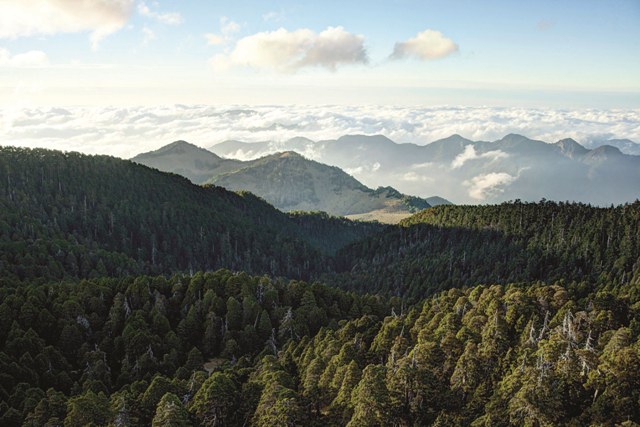
Prof. Hsieh Chang-fu of the Graduate Institute of Ecology and Evolutionary Biology at National Taiwan University has devoted long-term attention to research on forest dynamics. Prof. Hsieh recalls that, more than thirty years ago, he walked from Hualien to Nantou via Mt. Hehuan: "It had snowed hard on the previous day. I was walking together with a teacher in the Department of Physical Education, and the snow was so deep that we could not see the route. We finally ended up following the tips of power poles, which were the only part extending above the snowdrifts, to make our way across Mt. Hehuan to Nantou." Over a decade ago, Mr. Yi Pi, the former manager of Paiyun Lodge in Yushan National Park, similarly mentioned: "I woke up from my sleep on an extremely cold night. Only half awake, I noticed that the sound of the wind no longer could be heard from the doors and windows of the lodge. Feeling curious, I tried to open the door and look outside, but found that the door was jammed shut. Only then did I discover that the snow outside was nearly as deep as I was tall. The lodge was buried in snow. Panicking, I forced the door open, dug and climbed my way out, and spent the rest of the night hurrying down to Tataka."
- The vast Sprengeri fern (Juniperus Chinensis ) forests. Photograph by Liu Si-yi.
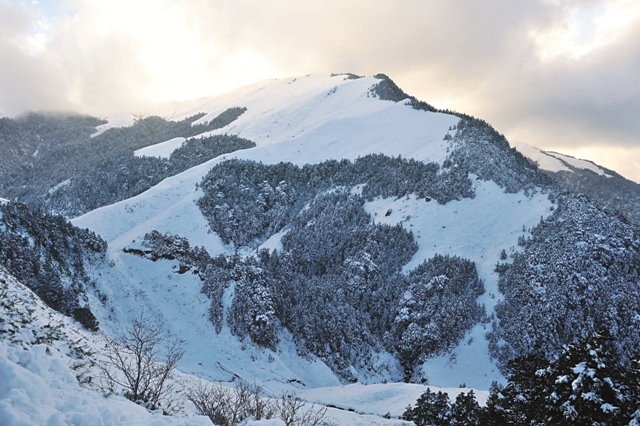
10 or 20 years ago, Taiwan's alpine areas over 3,000 meters in elevation commonly had 1-2 meters of snowpack each winter. In 1970s, Mt. Hehuan was a popular winter spot for skiing and playing in the snow, and a ski lift was even built on the east side of Hehuan East Peak in order to develop skiing. The ski lift has since been abandoned, but it bears witness to the fact that Mt. Hehuan once had the climatic conditions necessary to sustain skiing.
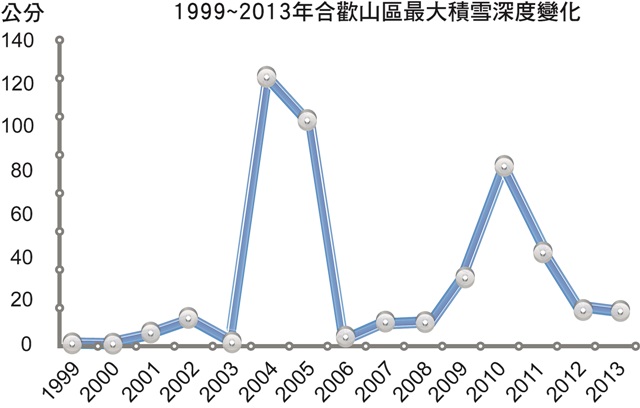
Statistics for the period of 1999 – 2013, obtained from reports and online information, indicates that winter snowfall in the Mt. Hehuan area has varied from 40 cm to only occasional flurries during the past 15 years. In contrast, the area would have needed dependable winter snowfall of over 1 m in past years to sustain skiing and encourage the development of a ski lift. During the most recent 15 years, this amount of snow was only for brief periods during 2004 and 2005. We can conclude from this information that the climate of Mt. Hehuan is in the midst of changing.
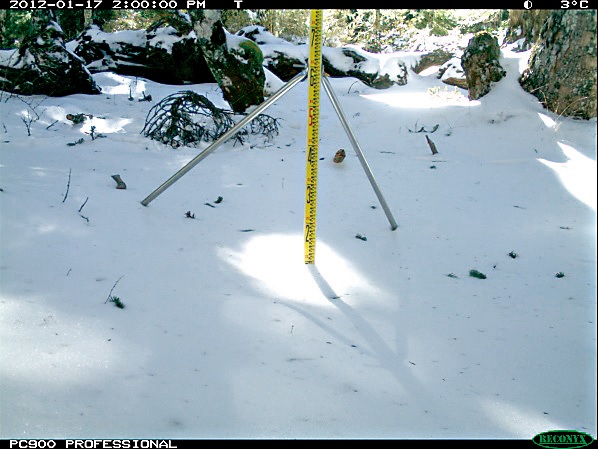
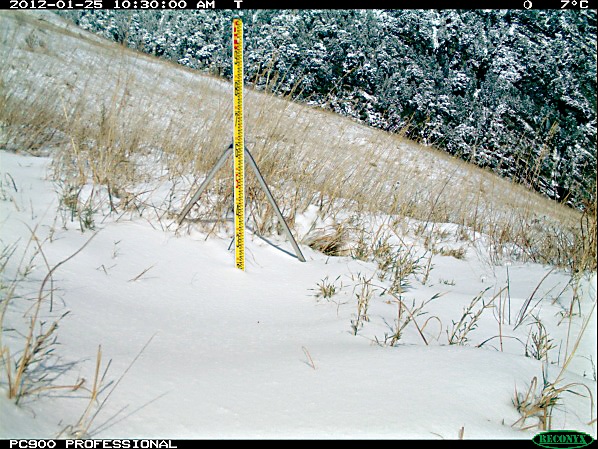
Taiwan is a mountainous island, and has 258 peaks with an elevation of over 3,000 m. In view of Taiwan's location within the subtropical zone, these mountains contain very special ecological environments. In light of the many high mountains in Taiwan, and lack of systematic research, starting in 2009, Shei-Pa National Park began conducting the "High Mountain Ecosystem Long-term Ecological Survey Study," which focused on Mt. Xue within the park that often receive winter snow. This project is currently the most systematic investigation of the mountain ecosystems in Taiwan, and is studying such aspects as montane climate, watershed environments, fungi, vegetation structure, plant phenology, insects, birds, mammals, and establishment of ecological databases. In conjunction with its focus on alpine climate, the project has also begun recording changes in Taiwan's alpine snowfall. The research team employs snow gauges paired with automatic cameras to regularly photograph snow levels; memory cards from the cameras are occasionally brought back to the laboratory for manual interpretation of snow depths. This approach has enabled the team to obtain a large body of data concerning
Compared with some surveys employing sound waves snow depthmeter, which can produce noise interference, the use of snow gauges and automatic cameras is a very stable method. This survey has successfully collected data on snowfall at the Cirque, Black Forest, 369 Hut, and Kupoding. Data in Mt. Xue includes cumulative snow depth, number of snowstorms, maximum cumulative snow depth, first snow day, and final snow day. After a period of time, it will be possible to compare changes in these data items with other biological survey data to obtain a clearer picture of the changes affecting alpine ecosystems on Mt. Xue.
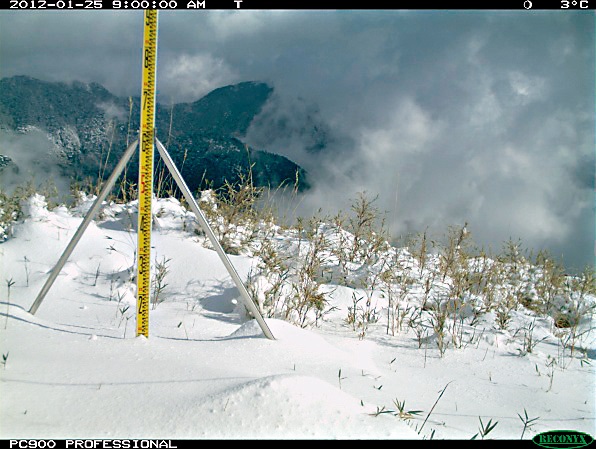
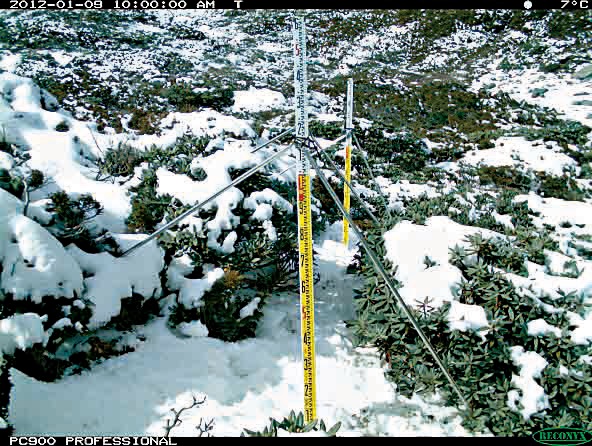
- upper left:Black Forest weather station.
- upper right:369 Hut weather station.
- lower left:Kupoding weather station.
- lower right:The Cirque weather station.
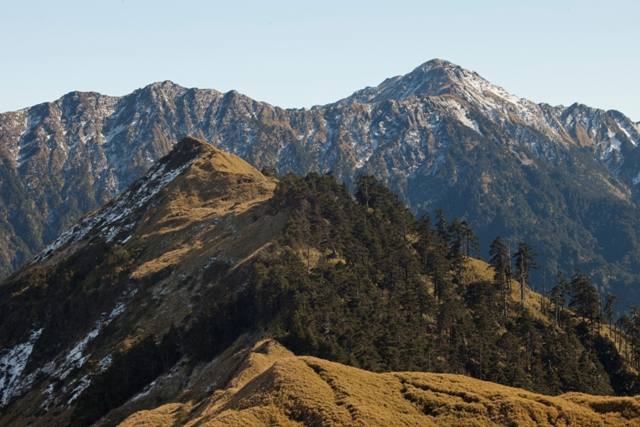
Changes in the high mountain environment will have significant impacts on alpine flora and fauna. The scope of the Global Observation Research Initiative in Alpine Environments (GLORIA) includes many alpine environment research networks around the world. Researchers participating in this program have already observed the impact of the earth's warming climate on alpine vegetation. Due to the impact of warming, plants that prefer cold conditions are gradually migrating to higher elevations as they seek out a suitable living environment. This type of migration can cause species to become isolated in high-altitude habitats, restricting their geographical distribution. As a result, some cold-adapted alpine plants are gradually disappearing from the mountains of southern Europe. A 2012 paper published by Prof. Chou Chang-hung, an Academia Sinica fellow, concerning the results of his research on the flora of Mt. Hehuan indicates that climate warming is causing Taiwan's alpine plants to migrate to higher elevations, and six alpine plants—Mount Yushan Pearleverlasting (Anaphalis morrisonicola ), Artemisia morrisonensis, Swertia macrosperma, Hypericum nagasawai, Angelica morrisonicola, and Cirsium arisanense —face extinction as their range approaches the highest peaks. In addition, monitoring data from the Academia Sinica indicates that, due to warming over the past century, these alpine plants are migrating upward at an average annual rate of 3.6 m per year.
In order to investigate long-term trends among alpine forest vegetation, Dr. King Hen-biau, who is currently a member of the national park planning committee, Ministry of the Interior, conducted a large-scale sampling survey of forest dynamics in vegetation zones at different elevations while head of the Taiwan Forestry Research Institute in 2007. By establishing and existing forest dynamics plots, this project performed long-term monitoring of forest plants in at least one plot in various forest vegetation zones reflecting different elevations. This monitoring project currently has 12 forest dynamics plots with an area of more than 1 ha each. A 6-hectare plot was established at an elevation of 3,000 m and the east side of Hehuan East Peak in 2008 to monitor trees such as the Taiwan fir (Abies kawakamii ) and Taiwan hemlock (Tsuga chinensis var. Formosana), and study the shifting relationship between the forest containing these species and alpine grass land dominated by Yushan arrow bamboo (Yushania niitakayamensis ). A laser theodolite was used in the Taiwan fire forest dynamics plot on Mt. Hehuan to precisely measure the corner coordinates of the plots and the elevations of landforms. In addition, all woody plants with a chest height diameter greater 1 cm in each plot have been identified, had their chest height diameter measured, had their location within the plot noted, and marked with number tags. All survey tasks are completed within a one-year period, and a new survey is performed once every five years. This process has provided a clearer understanding of how forest composition changes over time.
- upper left:The maximum snowpack in the Mt. Hehuan area has changed from 1999 to 2013, and only 2004 and 2005 had snowpack exceeding 1 m in depth. (Reference: Media reports and online statistics by author)
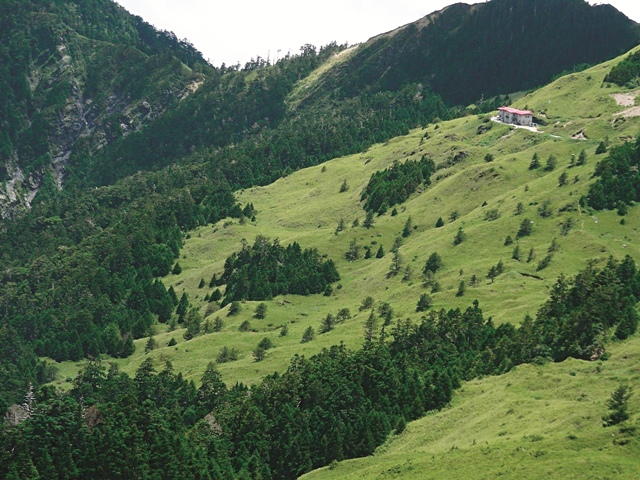
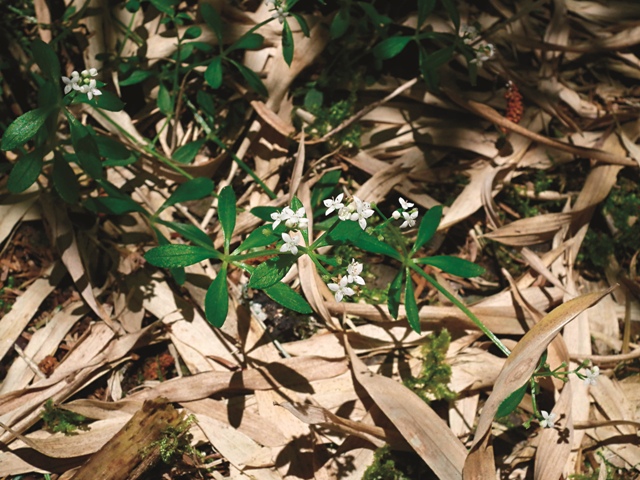
- upper right:Climate change is having a major impact on alpine plants. Photograph by Liu Si-yi
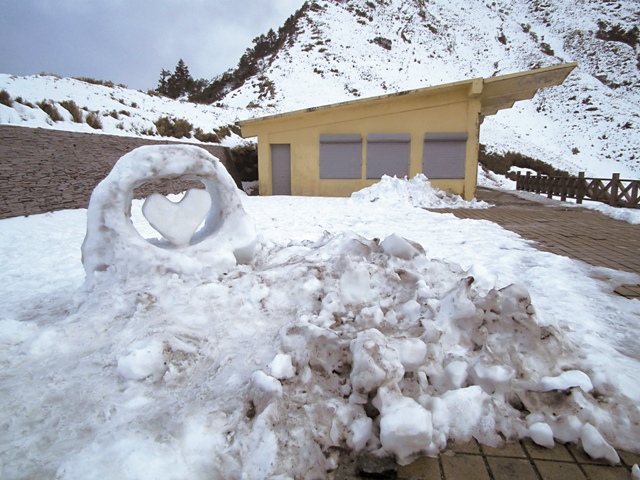
- lower left:The snowfall in the Mt. Hehuan area makes it a big winter travel destination for the people of Taiwan. This photograph shows various amusing snow creations made by visitors.
- lower right:Long-term forest dynamics plots aimed at studying subalpine Taiwan fir forests on Mt. Hehuan are located on the east side of Mt. Hehuan and where the forest below the Ski Lodge meets the alpine grass land.
Surveys 18 Years Apart
Large-area forest dynamics plots can provideprecise information on the spatial distribution oflandforms and woody plants with a chest heighdiv>
Two surveys focusing on Hehuan East Peak andconducted 18 years apart provide a basis for researchon changes in plant phenology over time. The resultsof these surveys indicate that such dominantgroundcover plants as Elatostema trilobulatum andGalium echinocarpum , along with such alpine grassland as Miscanthus transmorrisonensis , Lycopodiumpseudoclavatum , and Gaultheria itoana , all now floweror produce fertile spikes earlier than they did 18 yearsago.
Among these species, the dominant species Miscanthus transmorrisonensis and Elatostematrilobulatum , which respectively prefer alpine grassland and the shade of Taiwan fir (Abieskawakamii), both flower two months earlier than inthe past. A comparison of the two surveys' plandiv>
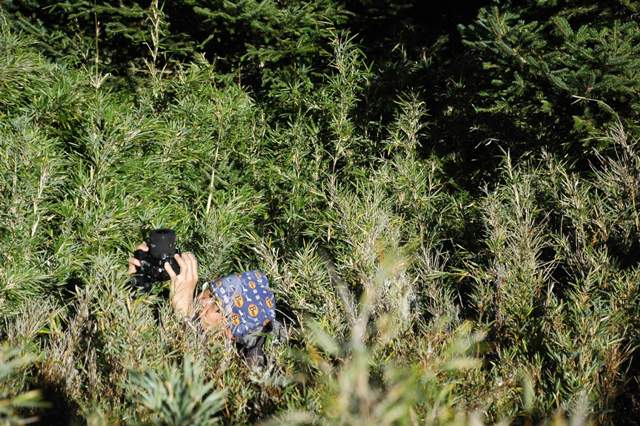
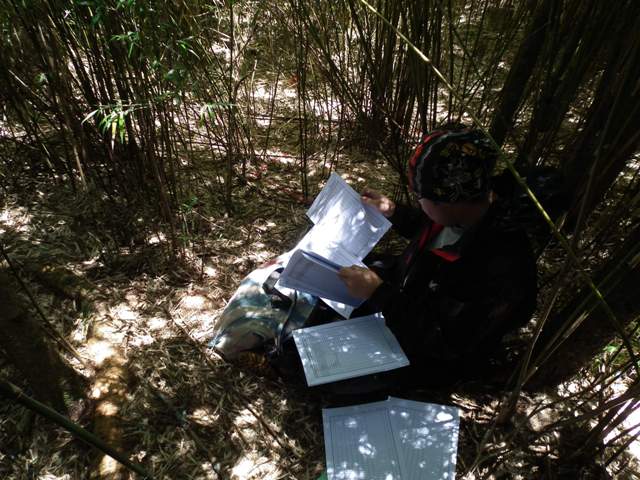
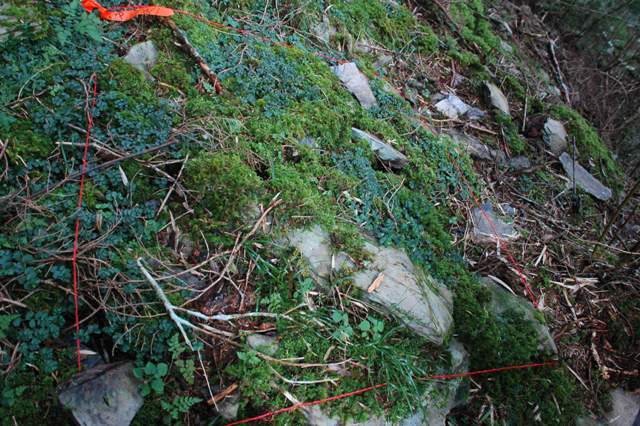
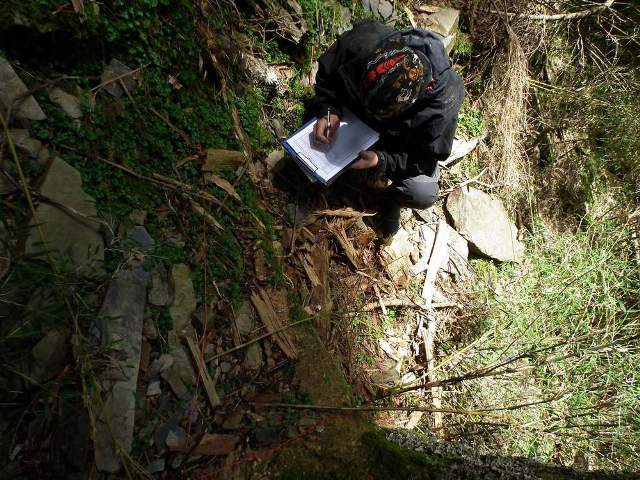
- upper left:The most dominant species Broadleaf Elatostema (Elatostemaplatyphylloides Shih & Yang) in the plot. Photograph by Huang Jianlu.
- upper right:The Sprengeri fern (Juniperus Chinensis ) Forest Dynamics Plot islocated in Mt. Hehuan. Photograph by Huang Jian-lu.
- lower left:Environmental factor photography work. Photograph by Huang Jianlu.
- lower right:Yushania niitakayamensis Forest Dynamics Plot is located in Mt.Hehuan. Photograph by Huang Jian-lu.

Upwardly-migrating Trees
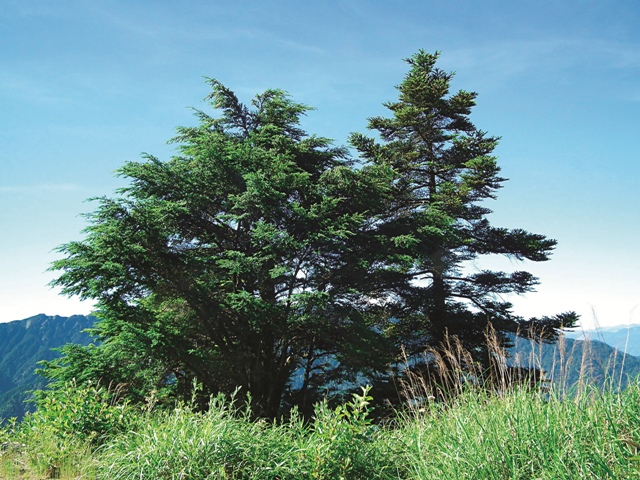
The forests on the eastern side of the Mt.Hehuan area chiefly comprise pure stands ofTaiwan fir at an elevation of over 3,100 m, andforest at an elevation of 2,600-3,100 meters comprise either pure stands of Taiwan fir or mixedforests of Taiwan fir and Taiwan hemlock, withTaiwan fir the dominant species. The Taiwan fir istypically tall and straight in form. In contrast, whileyoung Taiwan hemlock trees are typically straight,with a rounded form and pointed tip, the trunks ofmature trees are commonly twisted or tilted,although there are some straight specimens, and thecrown has a rounded umbrella shape. Because ofthe tree's form, snow will not easily accumulate onTaiwan firs. Snow will readily accumulate on thebranches and needles of adult Taiwan hemlocks,however, putting pressure on the trees.
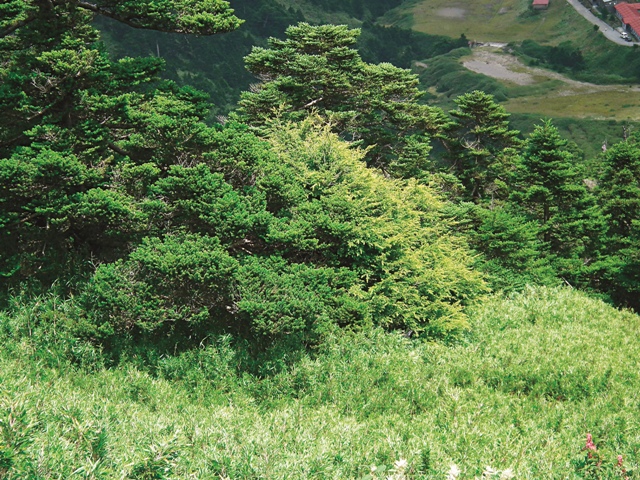
Taiwan hemlocks are rare at elevations of over 3,100 m in the Mt. Hehuan area, and forests at thisaltitude comprise mostly pure stands of Taiwan fir.It is thought that hemlocks cannot thrive in highelevationfir forests chiefly because of the heavywinter snows that fall at this height. However,preliminary surveys of the Mt. Hehuan areaconducted since 2011 have found young Taiwanhemlocks growing in many areas above 3,100 m.For instance, there are two young hemlocks morethan 3 m in height growing by the Mt. Shimen trail;numerous hemlocks roughly 1.5 m in height on theslope below the viewing platform at the Mt.Hehuan Lodge; a young hemlock on the northeastridge of the main peak of Mt. Hehuan; two young hemlocks by the summit trail on the northeast sideof Hehuan East Peak; and two young hemlocks onthe northwest side of Hehuan East Peak.Furthermore, two Taiwan hemlocks approximately2-3 m in height are growing at the uppermost edgeof the Taiwan fir forest where it meets alpine prairieabove the Kunyang parking facility, and a hemlockwith a height of roughly 4 m is growing at anelevation of approximately 3,265 m near theWuling parking facility—these are some of thehighest hemlock specimens found in this area.
This phenomenon of young hemlocks growingin areas where mature hemlocks are absenthighlights the fact that the Taiwan hemlock hasNational been continuously invading higher-elevation areasin recent years, which has also happened to be atime of reduced snowfall. Although no operationalexperiments or direct evidence has proven the earlyflowering of plants, appearance of some mid-/lowelevationplants at higher elevations, and thecolonization of areas over 3,100 m in elevation byhemlocks, all of these changes are directlycorrelated with climate and environmental changein the Mt. Hehuan area over the past one or twodecades. Nevertheless, plants' growth andphysiological activities depend on the presence ofliquid water in their cells; plants with no specialmechanisms to deal with freezing temperatures willeventually be killed by occasional snowfall.
Climate changes in the Mt. Hehuan area over pasdiv>
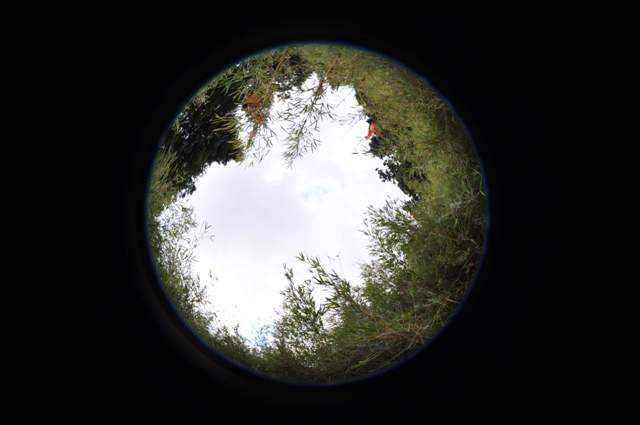
- upper left:Fish-eye camera photography of environmental factors—Dynamic changes in forest crown and gap.Photograph by HuangJian-lu.
- upper right:Fish-eye camera photography of environmental factors—Checking level and orientation. Photograph by Huang Jian-lu.
- lower left:Young Taiwan hemlock (left) tend to have a triangular shape with arelatively wide base; in contrast, young Taiwan fir (right) have a tall,pointed form.
- lower right:This young hemlock growing at an elevation of 3,265 m on the slopeto the north of the Wuling parking facility has pale yellow-greenneedles, and is currently the highest hemlock in the Mt. Hehuan area.
Importance of Alpine Climate Surveys
Taiwan's mountain national parks consist ofShei-Pa National Park and Taroko National park,and Yushan National Park, which contains Taiwan'shighest peak. Yushan National Park's Nanzihsian River watershed includes mid-elevation broadleafforests, mid-/high-elevation mixed conifer/broadleaf forests, high-elevation conifer forests,and forest line and alpine vegetation growing nearmountain summits. The changes in forestvegetation with increasing elevation can be clearlyseen from Mt. Linzhi in the Tataka RecreationArea. Starting in 2009, Yushan National Park hasused its geographical advantages by conductingplant phenology surveys from the Nanxi Bridge,located at roughly 1,700 m at the lower end of theNanzihsian River Forest Road, to 2,600 m on theTataka Anbu, and from the Tataka Anbu to thesummit of Mt. Jade at 3,950 m. This work gatheredbasic data for research on plant phenology in thearea around Mt. Jade.
Alpine ecosystems have an extreme climateand adverse environmental conditions. In theseareas, low temperatures, a short growing season,poor soil, high levels of radiation, a large day-nighttemperature differential, dryness, and strong windsare the most important factors restricting thegrowth of plants. Among climate factors, solarradiation, snowpack, and strong winds determinewhether plants can survive. Changes in plantphenology directly reflect changes in local climate,and are easily-observed and high-effective sensorsof climate change. As a result, long-termobservations of plant phenology can be used tomonitor climate change. Yushan National Parkcontains some of Taiwan's most typically alpineecosystems, and preserves a very complete array of natural resources. Because this national parkcontains many plant communities living inextremely harsh climate conditions, and featuresflora and fauna very different from those of otherecosystems, it is a very suitable area for long-termsurvey and monitoring efforts.
When Taroko National Park Headquarterscommissioned a plant phenology survey in the Mt.Hehuan area in 1994, it perhaps was only interestedin compiling a detailed record of flora in the area.After almost two decades, during which increasingattention was paid to global climate change, thebasic data gathered at Mt. Hehuan prompted afollow-up survey in 2012, which found that plantswere flowering or producing fertile spikes earlierthan in the past. Taiwan's mountainous national parks are now researching the alpine environmentin a more systematic manner, and have laid afoundation for long-term ecological research in thefuture. When researchers conduct new surveys inthe future, and compare their findings with pasdiv>
Taiwan's average temperature has risenroughly twice as fast as that of the earth as a wholeover the past century. With regard to the effect ofclimate warming on the world's alpine ecosystems,although research on this aspect got startedrelatively late in Taiwan, it has now been underwayfor a good number of years. Continuous,uninterrupted long-term ecological research isabsolutely necessary if we are to improve our knowledge of the effect of climate change onecosystems. Thanks to the hard work done by thenational park system, we will continue to obtaineven more comprehensive information on Taiwan'salpine ecosystems in the future. By helping thepublic to understand the relationship betweenglobal warming and alpine ecosystems, this workwill increase awareness of the threats faced bythese mountain ecosystems and the importance ofconservation.
About the author:Lin Chi-ko
M.S., Department of Life Sciences, Tunghai University; hasparticipated in the establishment of forest dynamics plotsand survey in areas including Lianhua Lake, Mt. Beidongyan,Nanzihsian River, and Mt. Hehuan.
- upper left:A young hemlock has appeared at the edge of a pure stand of Taiwan fir at an elevation of approximately 3,275 m on the slope to the north of the Wuling parking facility (the yellow arrow points to the hemlock).
- upper right:Climate change is having a major impact on alpine plants. Photograph by Liu Si-yi
- lower:As a result, long-term observations of plant phenology can be used to monitor climate change. Photograph by Liu Si-yi.


