
Change and Disaster in a Flash-
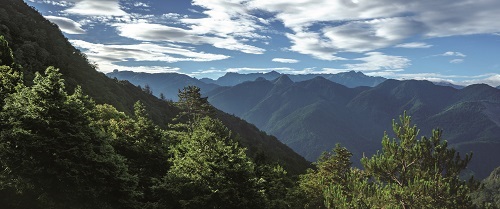
The breath-taking scenery of the Holy ridgeline, which also signifies the vulnerability and changeability of the environment. / Huai-Chi Yang
Change and Disaster
“From the ancient classic – I Ching, we will be able to see the truth about how the world runs. ‘I’ is change. To ‘simplify ( Jian I)’ the truth about how this world runs is not complicated at all, its essence is ‘changeable (Bian I)’ and impermanence, and this is the only ‘unchangeable (Bu I)’ truth.” Professor Shin Wang used the philosophy of I Ching and with only three words, uncovered the essence of the natural environment as well as the social environment – constant change. Natural effects initiate changes, and is the foundation that keeps all things on earth in an everlasting cycle; no matter it is the altering of the four seasons or the rise and fall of the tides, without these changes, earth would not be as lively as today. Change itself is a neutral process and phenomenon, it does not target any life form or groups, but achieved the alternation of life cycles and succession and renewal of the ecosystem.
In Professor Wang’s interpretation, “disaster” is even easier to be clearly defined: “‘Change’ in any environment are all natural effects; if there is no human involved, there is no such thing as ‘disaster’”. When human’s survival interest is affected by the natural changes in the environment and has caused an adverse or negative effect, then disaster is born.
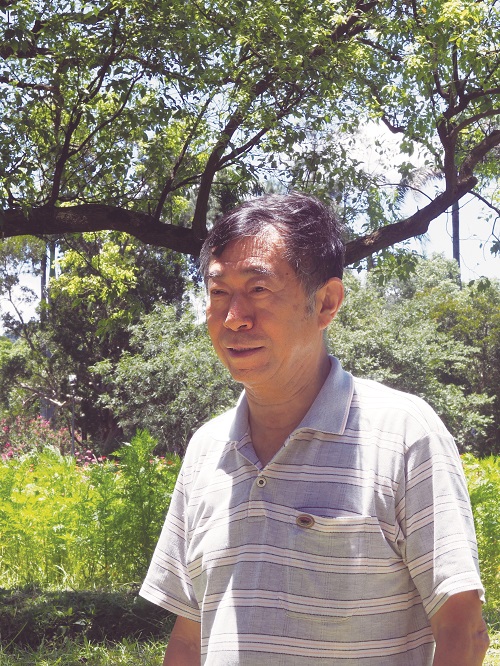
Professor Shin Wang / Hui-Ying Lui
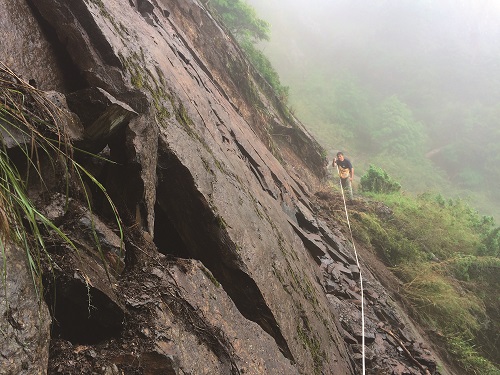
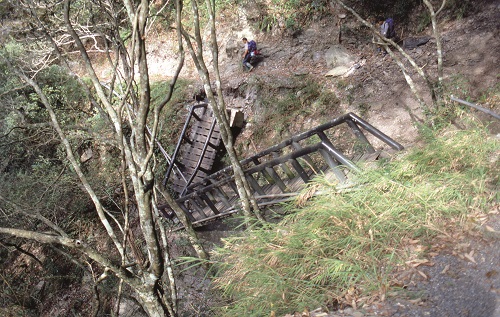
Walami Trail was damaged by Typhoon Morakot. / Bangkaerhaifangnan
(provided by Yushan National Park Headquarters )
Pursue Good Fortune, Avoid Disaster
When human’s survival interest is threatened by natural effects, it is time to think about how to pursue good fortune and avoid disaster. Since “disaster” is a loss to the human social economy, from the human point of view, we should “prevent” it. To prevent disaster, we should start from the concepts of avoiding and mitigating disaster. “Disaster relief ” is the rescue level that comes after the disaster has happened, and in terms of the resilience of the entire human society when facing natural changes, it is at the very end of the line.
“Disaster avoidance can be divided into two aspects: First, do not develop at places that should not be developed; second, use time and space as strategies to avoid the possibilities of disasters.”
“Disasters are usual ly generated because the constructions are happening at the wrong locations! Nowadays, whether it is in Taiwan or other countries in the world, environmental condition is often not a prerequisite when it comes to ‘development’, but rather on social and economic aspects as priority consideration. However, when we face up to the sustainable development of human society which must be built on environmental sustainability, we cannot just think about our immediate interests and disregard the survival of our next generation.” When the decisionmaking of development is wavering and weighed among environmental, social and economic aspects, once we sacrifice the environment, one day we are bound to pay the price socially and economically.
Especially where the National Parks are located are usually places that have unique natural ecological values or play an important role in homeland security. Therefore, National Parks made a lot of efforts when it comes to preventing many inappropriate developments. “For example, the recovery of mining rights at Yangmingshan’s Dayoukeng, and recently, the recovery of mining rights on 25 hectares of land from Asia Cement at Taroko.” This also includes the termination in constructing the Yuli-Yushan line of the New Central Cross-Island Highway, which Professor Wang had actively participated in back in the days. It is not easy to fight against the pressure of development, but National Parks should stand their grounds on their environmental oriented position.
After National Parks are established, there are still lands that belongs to many different owners and units within their boundaries, “Each National Park has its own National Park Plan, and there are plans for the allowable intensity of use or type of facility for each area; if we carry out accordingly to the plan, we won’t fall too far away from the blueprint.”
Now let’s talk about the use of time and space as strategies to avoid the possibilities of disasters. This needs to be based on the characteristics of environmental changes in the different areas of each National Park and manage and regulate accordingly. “Basically do not go into the mountains when typhoon comes; if a trail is damaged, the National Park should announce a closure notice and go through evaluation and renovation. Visitors should comply with the necessary management measures the National Park have implemented to protect their lives and safety.” “In addition, visitors should be guided away from the high-risk areas, and the crowd should be directed to the low recreation risk areas.” Professor Wang put it out bluntly, management is truly not an easy task! Faced with the highly variable natural environment and the changes in the social atmosphere and condition of citizenry, managers must have better communication and flexibility in dealing with contingencies.
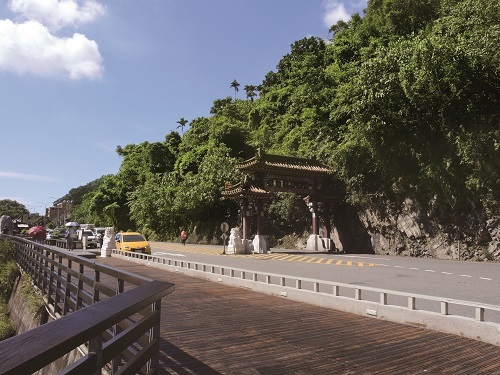
Regulate and guide visitors to stay in a safe place is the first step for disaster mitigation. / Hui-Ying Lui
Disaster Mitigation
Before National Parks are established, there usually are public infrastructures or lands development already existed within their boundaries; besides, National Parks will also have to carry out necessary constructions for conservation, research, education and recreation safety purposes. “The natural sceneries of National Parks are beautiful, but these beautiful sceneries also signify a fragile and unstable environment.” Of all the public works projects, transportation is the most important. The Southern Cross-Island Highway in Yushan and the Cross-Island Highway in Taroko both play important roles in connecting the region. “Take Taroko area as an example, if viewed professionally from a geological standpoint, this region has a lot of earthquakes and the weather is warm and humid, change is definitely frequent on the stratum, and excavation should be avoided. Because any construction that started as good intention would be a disturbance to the dynamic balance of the nature. If we extend the road for better traffic flow because of the growing recreational needs, it will lead to more landslides in the future.” As a result, several National Parks have been facing with the pressure of increasingly amount of visitors, and have actively implement traffic diverging and control strategies, which may be view as necessary mitigation measures.
“Take Taroko National Park where it has the most rockfall incidents as an example, they have always paid extra attention on monitoring the areas along the roads. In the early days, apart from inviting geological experts to do evaluations, routes were also diverged or tunnels were built at several dangerous road sections. Even nowadays Taroko National Park still regularly do preventive rockfall cleanups or related disaster prevention works. However, when it comes to facing the nature, manmade prevention can never be 100%.”
“Visitors should also take up the responsibilities themselves, and this takes educating the public by National Parks. The most basic awareness of environmental hazards needs to be communicated to the visitors through signage, interpretation, etc. to make them stay alert and abide the recreation safety rules.” National Parks come from the perspective of good intention and concern for the human, and therefore, have to stand their grounds even more firmly. “Since the possibility of change and disaster will not stop, the education to the public cannot stop.”
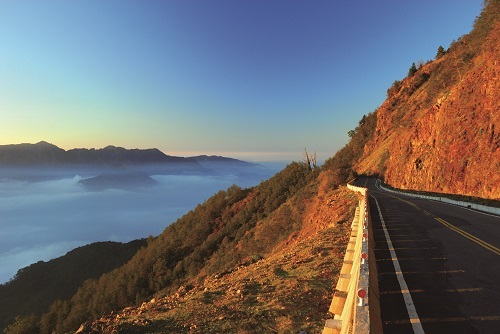
Construction of the New Central Coss-Island Highway has stopped at Tataka ofYushan National Park. / Hsiao-Lu Ho
Facing Changes under Extreme Climates
If the attitude we have on facing natural changes always stays at the “blocking” strategy, human society will gradually lose the flexibility in dealing with contingencies when facing global climate changes. Because the so-called extreme weather such as flood and super typhoon, etc. are far more than what we have predicted statistically in terms of frequency and intensity.
The strategy we are taking now is “mitigation” and “adaptation”. Mitigation, is mitigating the generation of known factors that would aggravate global climate change, and use the accumulated wisdom of mankind to mitigate the impact when disaster occurs. As for adaptation, first we have to adjust our mentality. We have to truly recognize that “change” itself is a part of nature’s essence, and is also the fact about the environment that us people in Taiwan have to face constantly. With an attitude of respecting the nature and adapting to changes, we have to raise awareness in the concept of disaster mitigation and hazard avoidance, be brave and calm, rational and vigilant, and be prepare with the mentality of literacy a global citizen should have. In addition, continuously doing research and consolidating information to increase the adaptability of human society for changes, is also one of the responsibilities National Parks have to take. Through the “RELIEF Kit Project”, IUCN has been actively consolidating ecosystem knowledge database from 6 major regions in the world, in the hopes to get a better understanding on the roles biodiversity and the ecosystem play on mitigating natural disasters, and transform the orientation of ecosystem-based disaster mitigation, which has been remaining in the conceptual level in the past, into practical action strategies.
Since nature is constantly changing, the coping strategies we have adopted should constantly adjust as well. The one thing that cannot change, is that National Parks should stand fast to their own value, especially when now we have entered the phase of global knowledge integration, transformation and innovation; how to make the knowledge accumulated by the National Park transform into a booster for social and environmental resilience development, should be a critical goal in the future.


