
Should I be responsible, too? -
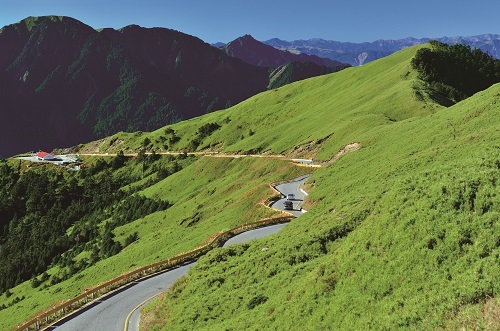
Mt. Hehuan, where the altitude is high enough and yet there is decent transportation and emergency services, is suitable place for a better understanding of mountaineers’ physical condition and adaptability. / Hsiao-Lu Ho
Should I be responsible, too?
Article / Editorial Department
Interviewee / Yushan National Park Ranger Chang-Ying Ho; Taroko National Park Ranger Yong-Chun Wang (Nobu); Shei- Pa National Park Recreation Service Section Jing-Cheng Hu (Arranged by established time of National Parks)
The transpired air welled up in clouds of mist, one moment it is a cloudless sky, the next a sudden downpour of rain; runoff gathers into streams, tranquil flows hastily become falls; thunder blasting down the earth, as if the shinning sun has never previously existed. Not to mention the heavy rain and screeching wind entrained by tropical cyclones from the Pacific as well as Super Typhoon. Compared to “pleasant”, the weather from late summer into early fall is better to be described as “unpredictable”. Where are you at in such weather? Under the arcade hiding from the scorching sun, or wanting to be in the forest enjoying the cool shade, challenging yourself boundlessly in the mountains?
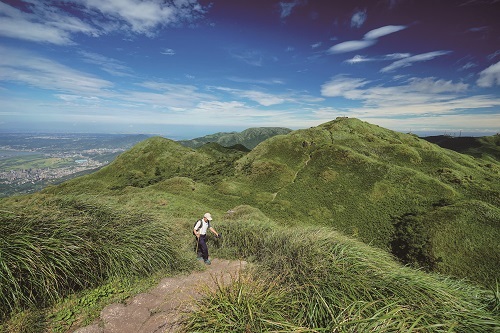
The vegetation near the Mt. Qixing ridgeline are mostly no tall vegetation. Oncethe thunder starts crushing down, hikers may become lightening conductors. / Huai-Chi Yang
Accidents happen
On July 3 of this year, a female hiker was struck by lightning and unfortunately passed away while hiking with her family on the Mt. Qixing East Peak trail in Yangminshan National Park. This accident reminded everyone that we often only considered high-altitude mountaineering as being dangerous, and underestimated the danger we may encounter in low-altitude mountains or even urban edge hills.
The highest elevation of Mt. Qixing area is 1,120 meters, and the vegetation near the Mt. Qixing ridgeline are mostly miscanthus or arrow bamboo and no tall trees. When strong convection occur in the afternoon and brings in thunderstorms, frequent lightning happens around the East Peak. Once the storm comes in and thunder starts crushing down, hikers may become lightening conductors where there is no tall vegetation. Due to the effect of climate and terrain, dense fog often occurs in Taiwan’s medium-altitude mountains or below, and seasonal fog conditions vary from area to area. You may not believe this, but many visitors have lost their ways in Yangmingshan National Park because of heavy fog.
Even though accidents happen and life is unpredictable, even though we cannot read the sky or summon the east wind like Zhuge Liang, we can earnestly collect information, understand the characteristics of the mountains, and let knowledge lead us to pursue good fortune and avoid disaster.
Mountaineering is an adventurous activity
How much time does it take for us to set off for the nearest National Park? Taiwan’s mountains are very close by, but this doesn’t mean we can enter the mountains with a careless mentality. “Photos after photos of ‘the highest peak’ and ‘top 100 peaks of Taiwan’ are shared on Facebook and blogs everywhere, but how people should prepare for it are rarely mentioned, therefore, it would often give out the false sense of mountaineering being an easy task.” said Chang-Ying Ho, “Mountaineering is an adventurous activity, few oudiv>
Being in the National Park’s alpine environment, people’s body load is different than when they are at lower grounds, so of course the prerequisites for sustaining life are very different. The most common negligence in the danger of mountaineering that National Park staff most often run across is inadequate equipment. “Because Yushan National Park’s trail system is very well planned, several high-altitude mountain routes are accessible to all public, but this doesn’t mean they should be taken lightly. For example, at Paiyun Station, we have seen visitors wearing high heels or flip-flops or just carrying regular bags and wanted to climb Mt. Jade Front Peak.” Although theMt. Jade Front Peak trail is only 0.8km, the vertical distance is 400m. Chang-Ying Ho had rescued hikers who underestimated the danger of the trail and did not bring any equipment with them into the mountains; when the fog came in in the afternoon, the hikers got lost and was freezing. “We often perform propaganda at Tataka Visitor Center and Paiyun Station, telling visitors even when climbing urban edge hills, they should still be prepared: carry rainwear, headlamp, highcalorie snacks, and cell phone.” Chang-Ying Ho urged.
In addition, the most frequent type of mountaineering incidents that happen in alpine national parks is altitude sickness. “Altitude sickness is not confined to a particular ethnic or age group. Even athletes would be affected if their conditions are not at the best that day. But some people are indeed more susceptible to this sickness than others.” Jing-Cheng Hu reminded. “Take altitude adjustment measures or test runs before mountaineering may help filter out this risk. Before doing the actual mountaineering, people can visit places such as Mt. Hehuan first, where the altitude is high enough and yet there is decent transportation and emergency services to get a better understanding of your physical condition and adaptability.” Chang-Ying Ho suggested.
“However, at the medium-altitude mountains, because the climate is very suitable for animals and plants to grow, even though pathways were built, they might be covered by the fast growing vegetation, and people may be confused by the animal trails and get lost. Incidents of people falling off cliffs often occur when people got lost and were unfamiliar with the routes and panicked. In addition, the chance to encounter animals in these areas is also higher, especially hornet attacks. To prevent bee stings, people should have the basic common sense of not to wear perfume and bright and colorful clothes. Mountaineers should understand the habitual behavior of wild animals to avoid conflicts with them.”
Mountains are not dangerous because they are tall, what is dangerous is the negligent attitude. Senior Park Ranger Nobu said, “Be sure to do your homework before mountaineering, you must be prepared with basic knowledge and training. What do you do if you get lost? How to keep yourself warm? You cannot go into the mountains recklessly without having any basic survival skills.” Physical training, proper equipment, information collection, and survival skills are all absolutely indispensable. But most importantly, is having a vigilant attitude.
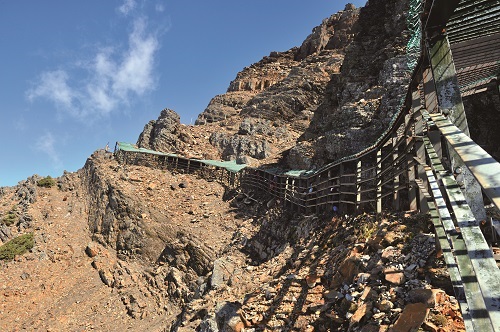
Security facilities of Mt. Jade Main Peak Route have routine maintenance. / Hsiao-Lu Ho
Take control of your own life
Commercial expedition business models have appeared in the market nowadays, some even advertised themselves with secret routes or low prices to attract customers. Mountaineers who would like to hire a commercial expedition team in fact should make more inquiries. The so-called “secret route” may be routes that are not approved, and the low price may affect the professionalism of the tour guide.
“People must make inquiries and do comparison when it comes to selecting mountaineering teams. With the rise of the internet, people can check on the expedition company’s reputation and reviews from other hikers. There are three principles that we can use when screening: professionalism of the guide, insurance, and pre-tour training. Besides having mountaineering and guiding experiences, whether if the guide is EMT1 certificated is also an important item to check. Pretourtraining or assistance in mountaineering gear inspection is even more at stake regarding the member’s life, especially to those novice climbers who have no experience at all.” Chang-Ying Ho suggested. “The most important thing is to return to ‘being responsible for yourself ’, even if you choose a commercial expedition tour, you cannot act like a piece of white paper and put your life in the hands of others. You should learn as much about mountaineering safety as possible on your own, no matter it is from the National Park website or community websites such as the Hiking Biji or KeepOn, they are all good source of information.” Jing-Cheng Hu reminded earnestly.
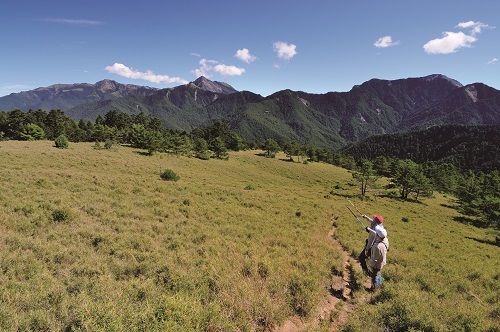
Mountaineers should have the ability to identify the orientation.
/ Hsiao-Lu Ho
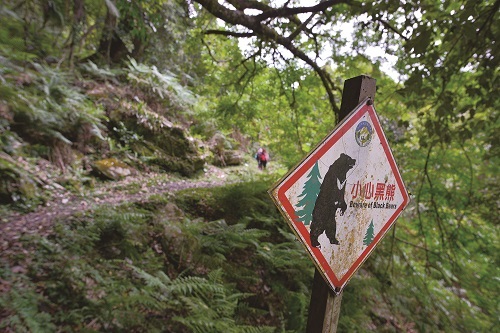
Mountaineers should understand the habitual behavior of wild animals to avoid conflicts with them./ Hsiao-Lu Ho
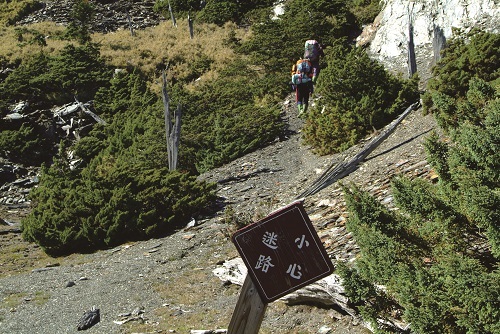
Incidents of people falling off cliffs often occur when people got lost. / Hsiao-Lu Ho
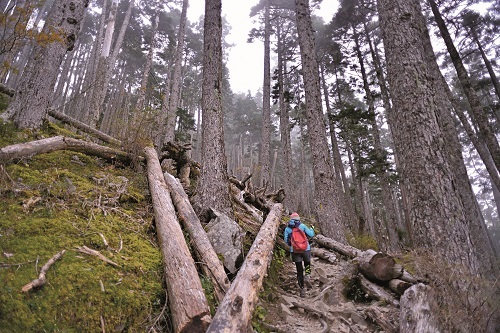
Climates at mountains are different front the plain, and cause different physiological load. / Hsiao-Lu Ho
Don't bite off more than you can chew
On June 8, eleven hikers set off for a hiking activity in the South Section 3th of Central Mountains Hiking Route. When they reach the Tiannankelan Mountain, three members of the party said they were unable to continue because of fatigue and blisters on the soles of their feet, and asked to be airlifted from the mountains. The other teammates left these three members behind, and went on according to plan. Due to bad weather conditions, the aircraft did not complete the task the first time, but tried again the next day and successfully picked up all three hikers. An estimated NT$200,000 was cost for the two helicopter flights, and another NT$16,000 for the two-day ground search labor cost. The two persons who had blisters claimed they have a medical history of diabetes and high blood pressure, but according to the rescue personnel, the third person showed no sign of distress. This news caused a lot of discussion; some thought if the three hikers were not rescued immediately, it might lead them into real life threatening danger; some thought users should pay for the cost, which may stop people from abusing social resources.
When it comes to the bottom of it, the hikers themselves should really take the majority of accountability regarding this incident. First of all, the hike on the South Section 3th of Central Mountains Hiking Route has certain difficulty and is not a hiking route suitable for everyone; when these three hikers joined the group, they did not take into consideration the difficulty of the route. Secondly, two of them have diabetes and high blood pressure and the third was fatigued; when it comes to physical and health conditions and physical resilience, they did not do a good job in self-assessment. Finally, when the guide discovered his team members appeared to be exhausted or injured, he did not handle the situation properly; this included miscalculating the duration for rescue and not staying to take care of the team members who were ill.
The most fundamental self-assessment element when participating in mountaineering activities, is in fact the evaluation of one’s physical and mental state and capability. "Capability" and "hiking trail difficulty" is a relative state. Therefore, Yushan, Taroko, and Shei-Pa National Park has rated the hiking trails for the public to determine themselves. The rating is based on the characteristics of the trail, the environmental sensitivity of the area, and the skills needed for the climb, etc. to do a comprehensive assessment. The rating information and recommended eligibility criteria can be found in the “online application for entry permission to Taiwan’s National Park” website or any National Park websites.
Jing-Cheng Hu especially stated, “The so-called selfassessment on capability and experience is not just simply determined by ‘how many mountains of the 100 peaks I have climbed’. If you have simply went along with others and did not participate in the planning of the mountaineering trip, you may be insufficient when it comes to capability. Hikers must learn to be able to do a complete mountaineering plan for every trip, including insurance, food, the ratio of new and old members, whether passing through special terrain (need to prepare special equipment), etc.”
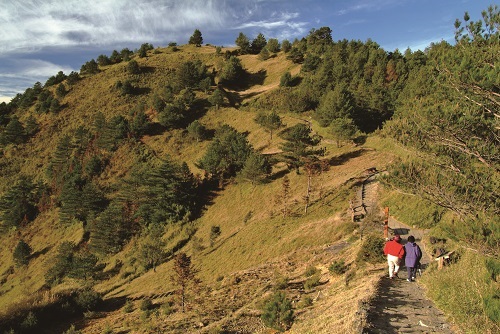
The general level or landscape trails, flat and with good secure facilities, are suitable for the public. (Hiking Trail in Tataka Recreation Area)
/Hsiao-Lu Ho
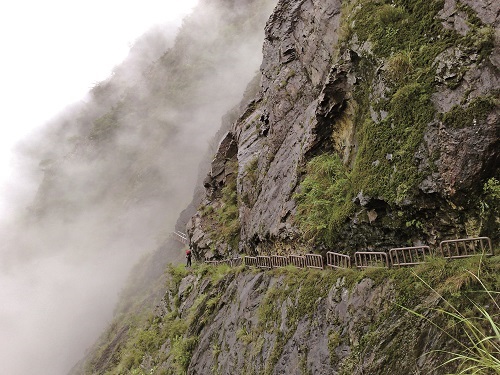
Japanese Occupation Era Batongguan Traversing Trail is a advanced hiking trail in Yushan National Park./Hsiao-Lu Ho
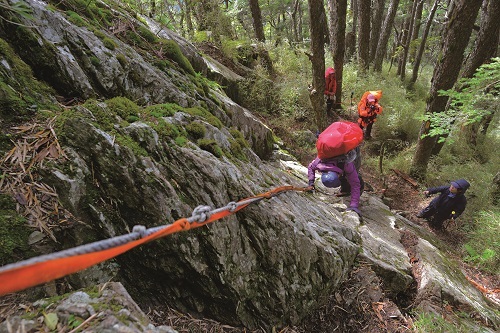
Climbing many sections of Mt. Qilai Eastern ridgeline need higher skills. / Hsiao-Lu Ho
Discipline and self-disciplin
“Total access to the mountains” is an issue discussed for many years in Taiwan’s mountaineering community. Here we will take the overnight backcountry use in United States’ Grand Canyon National Park as an example. All hikers (backpackers) who plan on staying overnight in the Grand Canyon National Park backcountry must obtain a “Backcountry/Wilderness Use Permit”. Because there is a control on the number of people entering, hikers can request for the permit four months prior to the proposed start month to obtain a better processing order. The permit requires the applicant to fill out his personal information, type of backcountry use requested, and itinerary details (camp location of every night); there is no minimum group size limit (1 or more can apply), and there is no requirement for providing prove of related experience. Grand Canyon National Park would provide current information on trail conditions and situations affecting the backcountry on their “Backcountry Updates and Closures page”, unless there is an emergency disaster, the trails would remain open. But in the application guidelines, the fourth article has clearly stated “Safety. Travel in Grand Canyon National Park backcountry has inherent risks and hikers assume complete responsibility for their own safety. Rescue is not a certainty. Backcountry users should be in good physical condition and should be able to survive on their own by taking the necessary precautions and equipment. Your safety is your responsibility.” Total access, means hikers must take full responsibility.
Because of the differences in the circumstances of the environment and people, the management strategies taken will be different. In Taiwan, administrative authorities of protected areas such as the National Park have many to consider when it comes to managing the mountain areas, including protecting the ecological environment and looking after people’s lives. Therefore, the carrying capacities in ecological protected areas are controlled, and due to the difficulty in being restored, access to some of the core ecologically sensitive areas are fully restricted. “Many areas in the national parks indeed have irreplaceable ecological value and are highly sensitive, so the National Park Headquarters must stand their grounds in protecting these areas.” Chang-Ying Ho explained, “Under Taiwan’s climate, topographical and geological conditions, the stability of trails is very difficult to compare with those in temperate countries. Forexample, Mabolasih Hiking Route of Yushan National Park collapses every time when it rains; landslide area at Wula Cliff has also grown due to earthquake activitiesand Typhoon Morakot. If we allow total access under this type of environmental and climate conditions, there will be many uncontrollable risks.”
“When facing with the issue of total access to the mountain areas, we are not restricting hiker’s freedom through measures such as trail closure, regional mountain closure, or permit review. This has to return to the fundamentals of ‘discipline or self-discipline’ for discussion. When hikers can truly be self-disciplined, naturally the authorities would not have to do too much control.” said Jing-Cheng Hu, pointing out the key. “There are still a lot of room for improvement in our people’s mountaineering knowledge and ethics. The management mechanism is flexible, as we continue to work hard on implementing related knowledge education and skill training starting from childhood, the National Park will continue to adjust our management strategies base on the quality of the mountaineering population.” Chang-Ying Ho said, indicating the direction of future efforts.
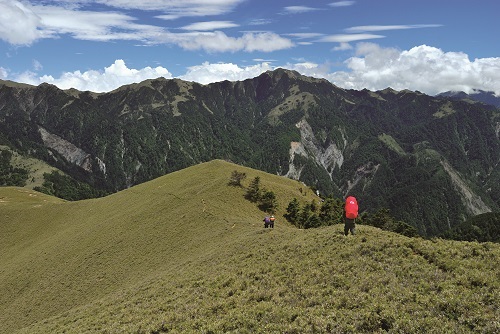
South Section 2nd of Central Mountains Hiking Route belongs to advanced hiking trail, because taking long time to pass trough and with high risk.
/ Hsiao-Lu Ho
Get insurance coverage
When facing the rapidly changing mountains, even if you are well prepared, there is still a chance that something unpredictable will happen. At this time there is still a move you can make, and that is transfer the risk of mountaineering through insurance. The risks mountaineering activity may encounter include altitude sickness, attacked by animals, hit by falling rocks or other accidents. In the past, if you feel like to transfer the risk of mountaineering through insurance, you may be faced with the dilemma of not being able to getting any due to deny of coverage by the insurance company.
In March, 2014, insurance companies have started to cover mountaineering accident, and the National Park has also been working on promoting the concept of mountaineering insurance. Currently the National Park encourages hikers to get insured, hoping they would have an extra layer of protection for themselves. Mountaineering insurance has been around in other countries for quite some time, some insurance companies even design different coverage policies according to the different mountaineering areas (or levels). Mountaineering insurance is a type of special travel insurance, and currently several large scale insurance companies in Taiwan are all welling to provide coverage.
Taiwan’s mountaineering insurance system is still in the beginning stages, and there are still a number of things that needs continuous communication and adjustment among the government, the civil society and the insurance company base on the current coverage and benefit package. According to the implementation experience overseas, the insurance coverage would be revised continuously according to hiker’s feedback and further assessment and understanding of mountaineering risks by the insurance industry.
Type of Insurance
Mountaineering Accident Insurance
Travel Accident Insurance
Number of Insured
5Group of 5 or more
One person can be insured
Policy Period
Maximum of 30 days
Maximum of 180 days
Covered Area
Domestic
Domestic and overseas
Coverage
Mountaineering incidents: accident injuries, and specific incidents (ex.: altitudesickness)
Accident injuries (mountaineering accidents not covered)
Schedule of Benefits
Death or bodily injury, actual medical expense and emergency rescue cost reimbursement (payment starts after 48 hours of searching, medical transfer, transfer of body).
(Source: Financial Supervisory Commission)
Value safety, cherish life
If unfortunately accident still happened, the entire staff of the National Park, especially park rangers and related rescue units, would certainly act immediately to save every life. Nobu had risked his own life traveling for miles in the dark in bad weather to rescue a hiker who was almost unconscious. He said, “I didn’t think too much, I just feel this is what I should do, like protecting my own family, with no hesitation.” These devoted park rangers all have the quality of treating everyone like family; their love for life encourage them to take the lead in every rescue operation. They are the ones who are most familiar to this mountain, but god treats both novice and veteran mountaineers equally, the rescuers must risk the same danger as the one awaiting to be rescued, and the risk may even be higher under the pressure of time.
Be a responsible mountaineer, value your own safety, and also cherish other’s lives. Please adjust your mindset before hiking in the National Parks, be well trained and prepared to minimize the risk of accidents. “The mountains will always be here, your safety is the most important.” The entire staff of the National Park all sincerely hope that everyone who enters the National Park to enjoy the nature and challenge themselves can be in and out of the mountains safe and sound.


