
Polishing up the Shield of Wetland-
Important events of wetland conservation
1971.02.02
23 countries signed the Ramsar Convention on Wetlands in Iran.
2007
“Taiwan Wetland Conservation Declaration” was read in the “Taiwan National Parks and Green Network Conference”, and 75 important wetlands were officially recognized. Currently, it has increased to 83 wetlands (2 international level wetlands, 40 national level wetlands, and 41 regional level wetlands), with a total area of 47,627 hectares.
2008
“2008 Asian Wetland Convention” has initiated the signing of “Taipei Declaration on Asian Wetlands” and Regional Strategic Program of Action (RSPA) with the Society of Wetland Scientists (SWS).
2009
Officially signing the 2010~2015 Memorandum of Understanding with SWS, and continued to invite SWS experts and scholars to Taiwan in the following years to exchange information and findings.
2009
The Ministry of Interior has drafted the “Wetland Conservation Act” and “Wetlands of Importance Conservation and Utilization Plan” as legal and budget basis for promoting important wetland conservations.
2009.12.28
Establishment of Taijiang National Park. There are four wetlands of importance within its boundaries, including international level wetlands of Zengwen Estuary Wetland and Sicao Wetland, and national level wetlands of Qigu Salt Pan Wetland and Yanshui Estuary Wetland.
2010
Executive Yuan has approved the “Wetlands of Importance Conservation and Utilization Plan” (2011~2016) proposed by the Ministry of the Interior, and began its implementation in 2011 with a total fund of 16.034 billion, to reinforcing the conservation work on important wetlands and encourage local participation.
2012
The Executive Yuan pushes for the “Wetland Conservation Act” draft.
Important events of wetland conservation
2013.06.18
The Legislative Yuan passes the “Wetland Conservation Act”
2014
Complete the Wetland of Importance badge.
2014.11.18
Taijiang National Park Headquarters signed a Memorandum of Understanding with the SWS and WWF at The International Wetlands Conference on Environmental Education.
2015.02.02
“Wetland Conservation Act” was officially promulgated and implemented, the National Wetland Conservation Guideline was developed, and relevant sub-laws were implemented simultaneously.
2016.09
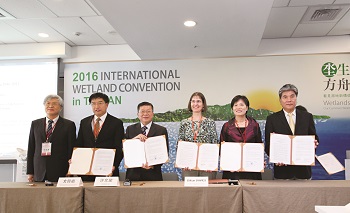
In the “2016 International Wetland Convention in Taiwan”, Memorandum of Understanding was signed with the SWS and WWF-Hong Kong.
A gathering of international wetland conservation VIPs
The Ministry of the Interior co-organized the “2016 International Wetland Convention in Taiwan” with the Water Resources Agency, Forest Bureau, and Environmental Protection Administration on September 13, 2016. They have invited 9 representatives from core international wetland organizations including the Society of Wetland Scientists (SWS), International Union for Conservation of Nature and Natural Resources (IUCN), World Wide Fund for Nature Hong Kong (WWF), the International Association for Ecology –Wetland Working Group (INTECOL – WWG), Wetlands International (WI), International Society of Paddy and Water Environment Engineering (PAWEES), and 15 wetland conservation leaders and experts to exchange information and findings.
To address the conference title “Wetlands: Our Common Wealth”, this meeting has explored the position of wetlands under the adaptation of climate change and land conser vation from a win-win perspective of green economy and homeland security. In the symposium, international experts shared the global implementations of wetland conservation and the development of concept, and also arranged domestic scholars to give keynote speeches, paper publication and discussions. This meeting witnessed the milestone of Taiwan’s wetland conservation: the official implementation of the 2015 “Wetland Conservation Act”, and the 6-year-result (2011-2016) of implementing the “Important National Wetland Conservation Plan”.
Wise Use of Wetlands
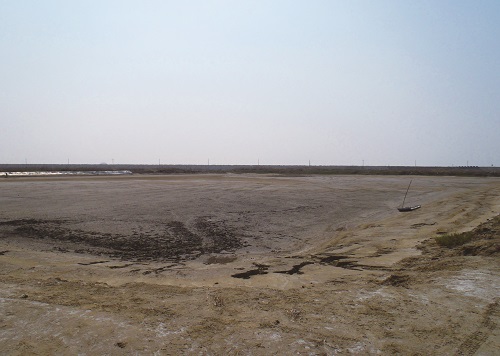
The legislative focus of Taiwan’s “Wetland Conservation Act” is to carry on the spirit of Ramsar Convention, and base on the important values of biodiversity and conservation of important species, to classify wetlands into international, national and regional importance. Its center spirit of “wise use”, refers to a timely, fittingly, moderately and adequately sustainable utilization of the biological resources, water resources and land resources that is achieved in a compatible approach within the wetland ecological capacity, to maintain the quality and quantity of wetland resources in a stable condition. Unlike previous conservation laws strictly forbidden and restricted any land use, “wise use” hopes to respect people’s rights base on the different characteristics of wetlands, and set up a management strategy of “Wetland of Importance Conservation and Utilization Plan” according to the local conditions, which emphasis on utilization per the “continuing conditions” is allowed within the borders of the Wetlands of Importance, and development avoidance, impact mitigation and ecological compensation mechanisms are taken place to ensure the quality of wetland, in hopes of finding a balance between public interest, local development and environmental conservation.
Taijiang – finding the elements for habitat adjustment
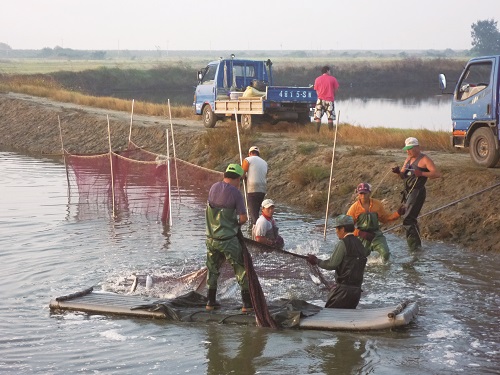
Taijiang National Park has Taiwan’s only two international level wetlands – Zengwen Estuary Wetland and Sicao Wetland, and two national level wetlands – Qigu Salt Pan Wetland and Yanshui Estuary Wetland. Taijiang National Park Headquarters has always been at the forefront of the times on the concept of wetland management; they hope to integrate conservation with local production, and truly implement the concept into local living. By joining traditional wisdom and modern science, actuating wetland management while maintaining the socio-economic has become the longterm goal of Taijiang National Park Headquarters. The coastline landscape which has been mostly occupied by aquaculture in the past, has experienced numerous technological revolutions with the change of times. Aquaculture farmers generally believe birds would cause negative impact on their aquaculture profitability, therefore, it is very difficult to persuade them to be friendly to the birds.
Black-faced Spoonbill is not only the star species of Taijiang National Park, but also an umbrella species to other species. The habitat where it lives also houses a wide variety of organisms. Taijiang National Park Headquarters has been continuously observing and accumulating data on the habitual behavior and number of Black-faced Spoonbills stopping by every year since its establishment. According to their data, there were more than 1000 Black-faced Spoonbills in Tainan City before 2010, and the average number between 2010 and 2011 during the winter is 834, which has dropped 35% compare to the previous year. The main reason for this is because the lack of food sources. Fish farms usually has an abundant coarse fish which would attract migratory birds foraging; especially the shallow pond milkfish fish farms which are ideal feeding grounds for the winter migratory birds. In recent years, due to the different economic benefits in cultured fish species, some fish farms have change to raise the higher value groupers and clams, causing their food source to gradually reducing each year.
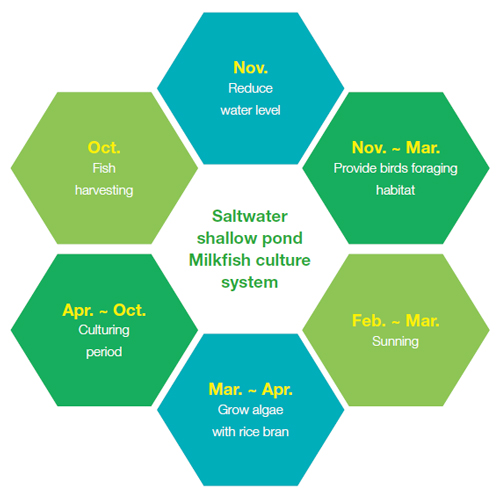
From Taijiang National Park Headquarters’ standpoint, how can we carry out a production method reform that is based on wetland ecological conservation? Scientific experiment and evidence will be the most powerful tool of persuasion. Therefore, Taijiang National Park has cooperated with National University of Tainan, and started a fish farming experience since 2012 to understand the connection between fish farm management measures and the fish farm environment, waterbird habitat and other species as the basis for promoting friendly aquaculture in the future.
The area of National University of Tainan’s Qigu west campus is about 80 hectares and is close to the Blackfaced Spoonbill Reserve and the East Fish Ponds. Qigu west campus is an ecological conservation site with a landscape that is consist of wetlands and mounds and encompasses a very wide habitat diversity, including tidal creeks, tidal pools, and all kinds of long-term and temporary wetlands dominated by biscuit grass, black mangrove and common reed, which breeds abundant species. Due to the change of the fish farming industry in the Qigu region, the number of food sources of Black-faced Spoonbill have decreased over the years; therefore, the research team hopes to use the fish pond water level experiment to demonstrate the significance of shallow pond aquaculture on Black-faced Spoonbills and conservation of migratory birds, and serve as a base for Taijiang National Park Headquarters to promote saltwater shallow pond milkfish culturing, showing that both catch yield and ecological conservation can be looked after.
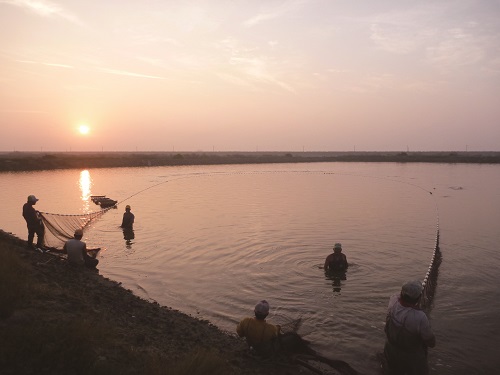
Between the research period of 2012 ~ 2015, four types of experimental groups were set up at the Qigu west campus site, which were wild species pond, Oreochromis sp. pond with no feed, milkfish and Oreochromis sp. pond with feed, and Oreochromis sp. pond with feed. The influence of these four different food sources to the birds, fish, and water quality were compared. The water of the fish ponds were introduced from the north and south tidal creeks, so many fish, shrimps and crabs would flow into the fish ponds with the water. The Milkfish culture period is April to October, then milkfish would be harvested, and the other fish, shrimps and crabs would be left in the pond. After harvesting in November, the water level of one pond from each of these four types of ponds would be lowered, and the other pond would be treated with the same treatment in three month after. The purpose is to understand the influence of difference water levels on the distribution of birds.
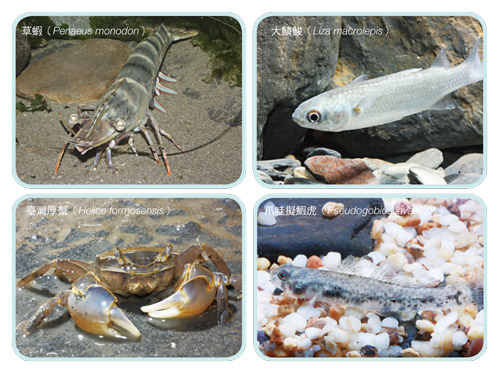
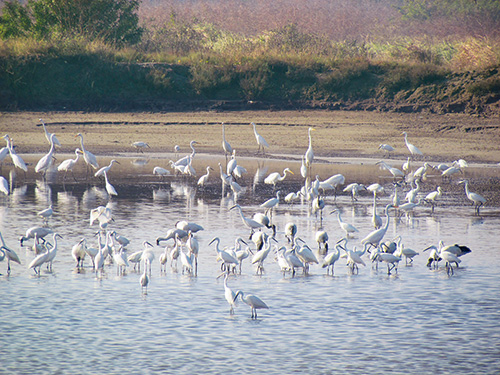
From April to September, the dominant birds at the fish ponds are mostly resident birds; from mid-September to end of March of the following year the dominant birds are changed to winter migratory birds. Because Milkfish are algae-eating fish, rice bran will be added into the experimental pools during March and April to grow algae so that it can become the food sources for Milkfish. April to October is the Milkfish’s culturing period, which is overlapped with the resident bird dominant period; in November when the water level is lowered after the Milkfish is harvest, is exactly the peak when winter migratory birds are staying at Qigu. When the water level of each group are dropped below 20cm, the density of the birds will increase; the higher the density of benthic organisms in the fish pond, the higher the density of the birds. This experiment showed that reducing the fish pond’s water level during winter and the abundance of benthic organisms are the key factors affecting the density of winter migratory birds. Perhaps there are still a lot of issues that is in need of more scientific data to back them up before we can fully convince fish farmers to go back to shallow pond aquaculture, especially in the current extreme weather conditions. But with Taijiang National Park Headquarters’ persistent experimental spirit and communication enthusiasm, we believe we can find a wise use way for aquaculture to co-exist with the beautiful wetlands of Taijiang.

The wetlands in the National Parks each have its merits
Kenting National Park – Longluan Lake
Longluan Lake wetland is consist of the wetlands around the two water bodies of Longluan Lake and Caotan, as well as the marshes southeast and southwest of Longluan Lake, with a total area of 289 hectares. The lake is surrounded by different ecosystems such as rice paddies, dry farmlands, forests and fish ponds, which provide highly diversified habitats for birds. According to the survey done over the years, there are more than 200 species of birds in this area, most of them are migratory birds, which are accounted for more than 70%. Because only 175 hectares of the wetland around Longluan Lake are in the landscape protected areas of Kenting National Park, in order to maintain the overall ecological function of wetlands, the use of private land within the wetlands is the key. Therefore, in addition to strengthening the environmental education function of Longluan Lake Nature Center, Kenting National Park Headquarters has also been actively establishing partnerships with communities (such as Longshui community) and local organizations (such as Hengchuen Township Farmer’s Association) to build a diversified development that supports the wise use of wetlands, activate local economy and moreover, ensure farmland for farm use through integrating environmentally friendly farming, ecotourism, and shaping of local cultural characteristics, making these private lands the best ecological buffer for the Longluan Lake core area, and maintain the ecological function of the entire wetland.
Kinmen National Park – Cihu Wetland
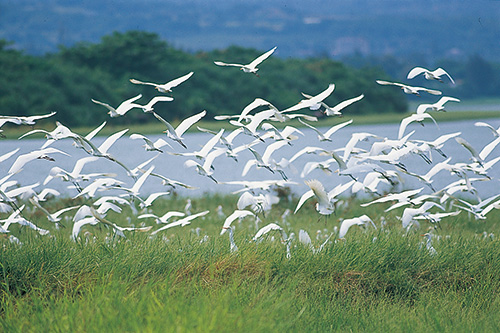
Cihu is located at the northwest corner of Kinmen Island covering an area of 188 hectares, and is an important relay point for southeastern migratory birds in Asia. Cihu is a saltwater lake formed by a patch of sea enclosed by embankments, and the ecosystem it provides is different from the usual freshwater lakes. The wetland ecosystem formed by fish ponds, swamps, mudflats, farmlands, meadows, and forests provided wild birds a perfect place to rest and feed. It is estimated that there are more than 200 species of wild birds in this area, and the seasonal clustering of great cormorant, Ardeidae family, Laridae family, Anatidae family, and Scolopacidae family birds is the distinguishing feature of this area. The management issue of Cihu wetland is very similar to those of Taijiang’s wetlands and Kenting’s Longluan Lake wetlands; constant communication on the management method of private lands, farmlands and fish farms, finding a balance between local residents’ economic activities, eco-tourism activities and wetland conservation, are the goals that Kinmen National Park Headquarters is continuously working on.
Yangmingshan National Park –Menghuan Pond
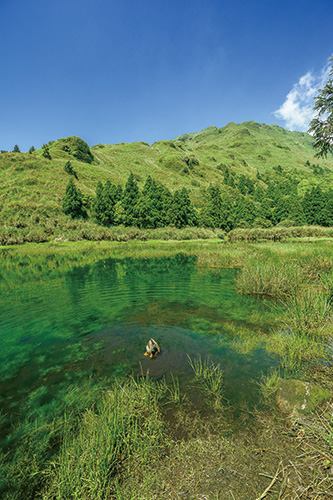
Menghuan Pond wetland is located at the mountainside of Yangmingshan’s Qixing Mountain covering an area of about 1.0 hectare, and is within the boundaries of Menghuan Pond Reserve of Yangmingshan National Park. It is the habitat of aquatic fern Isoetes taiwanensis, an endemic species of Taiwan; Eroicaulon sexangulare at Qixing Mountain is another endemic species of aquatic plants in Taiwan that can be found at Menghuan Pond. Menghuan Pond Reserve only allow access to teaching and research personnel and maintenance staff of Yangmingshan National Park to enter. There is an overlook platform by the lake for the general public to observe the lake’s natural ecosystem. Therefore, the wetland itself is well protected. Menghuan Pond wetland is surrounded by the core landscape protected areas of Yangmingshan National Park, which serves as a great buffer to land use. At one point of time, there was a crack at the bottom of the lake causing the water area to decrease, but after an emergency repair by the Yangmingshan National Park Headquarters, this situation has improved. Yangmingshan National Park Headquarters has also been working on preventing the nutrient salt from neighboring areas to flow into the lake to slow down the rate of landification and succession.
Scientific management and localization
The 2016 International Wetland Convention in Taiwan declared to promote the wise use of wetlands and practice the spirit of Satoyama Initiative, which specifically pointed out the fundamental of wetland conservation, and once again showed the conservation concept’s integration trend after international ecological conservation has promoted cross-region cooperation.
Only when “wise use” is scientifically grounded can we formulate specific environmental management measures, and encourage and promote locals to voluntarily develop wetland friendly agriculture and fisheries as well as eco-tourism. Most importantly, we have to respect the local’s traditional lifestyle and production method, and the operation means of their social culture. This coincides with the essence of the Satoyama Initiative. The Satoyama Initiative included 5 ecological and socio-economic perspectives: 1. Resource use within the carrying capacity of the environment; 2. Cyclic use of natural resources; 3. Recognition of local traditions and culture; 4. Multi-stakeholder participation and collaboration, participate in sustainable and multifunctional management of natural resources and ecosystem services; 5. Contributions to sustainable socio-economies (including poverty alleviation, food security, sustainable livelihoods and empowerment of local communities).
When managing “wetland” – the most productive ecosystem on earth, the above 5 perspectives are that requires the most attentive management. When facing global climate change and the impact of frequent extreme weather conditions, coastal wetlands serve as a buffer to coastal flooding, seawater intrusion, and soil salinization; inland wetlands can help to delay flood peak, regulate and detain stormwater, and recharge groundwater; along with the contribution of all wetlands on ecological conservation and biological habitat, all show the irreplaceable value of wetlands. The implementation of “wise use” will also benefit the survival of the human generation.


