
Ecofriendly Low Carbon Tourism-
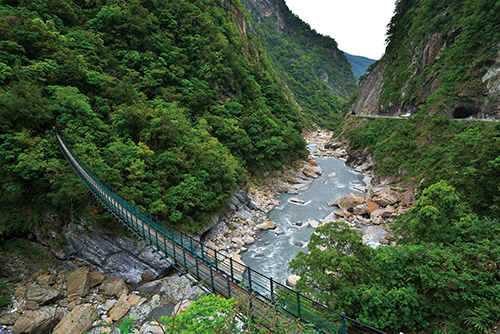
What is the meaning of traveling? Is it a journey to find yourself ? A moment to take a break and relax? A time to explore the world? Or a chance to know your homeland? In this small island of Taiwan, the mountains and sea are all just a short distance away. In just a day, we can travel deep into the Taroko Mountains more than 2,000 meters above sea level, or hop onto the beautiful outlaying islets lying in the sea. However, it may have never crossed our minds that the choices we made in our trip, from transportation to accommodation, will have different impacts on the places we visit, the people who live there, the plants and animals that inhabited there, and even to the entire earth.
Traveling is the unique experience of moving and stopping between points. Moving requires using your own two feet or means of transportation; stopping needs to at least meet the basic survival needs of food and drinking water. Known as “the industry without chimney”, tourism is relative more environmentally friendly compare to other industries. Today, reducing greenhouse gas emission has become a global consensus; how to reduce the carbon dioxide emission to a minimum in every aspect of tourism behavior is a share responsibility between tourism service providers and consumers.
When traveling is no longer a choice of personal preference but an extension of environmental protection, it suddenly seems to become a serious issue. But don’t get nervous yet, let us follow this article and learn how to reduce the possible carbon footprint created during travel, and also take a look at the efforts National Parks have made for low carbon tourism.
The meaning of low carbon tourism
Low carbon tourism is to develop tourism services following the principles of low energy consumption, low pollution, and low emission, and using the environmental resources rationally. From the tourism service provider’s standpoint, we should actively provide tourism service contents or models that can reduce carbon emissions; from the consumer standpoint, we should extensively collect information and make suitable choices during our travel to minimize carbon footprint and carbon dioxide emission, and take the chance to support tourism service providers who put great effort into protecting the environment.
Transportation, accommodation and dining are the three major sectors of tourism. In terms of National Park tourism, it is very difficult for the National Park Headquarters to single-handedly manage the above three major services; they often have to rely on partnership between public and private sectors or collaboration among government units. Now let us take a look at what efforts the National Parks have made to this end.
Low carbon transport
Different means of transportation will produce different carbon emissions; walking is better than riding in a vehicle, carpooling is better than driving alone, and taking public transportation is more environmentally friendly than driving. But when it comes to tourists choosing the means of transportation, convenience is still a key factor. Therefore, how to make people move around conveniently while increasing their preference in low-carbon transportations, has also become a lone-term goal of the National Park Headquarters. However, transportation is not just connecting two points, it is also related to the planning of access outside the park, and therefore, crossunit cooperation becomes an important key.
Just like other attractions, National Parks are faced with the problem of overcrowded by people and cars during the holidays, especially during long breaks such as the Chinese New Year holiday, or certain seasonal event such as the flowering season. So how can we solve the traffic problems brought by the crowds and reduce carbon emission during these periods? We can start from the two aspects of traffic control and public transportation.
Taroko National Park
Due to the steep terrain and sensitive ecological environment, the traffic flow threshold at Taroko National Park (TNP) is already more stringent than other places, and the traffic control implemented within its boundaries during the Chinese New Year holidays has become an enormously strenuous task. Since 2001, Taroko National Park Headquarters (TNPH) cooperates with Police Department of Hualien County to implement the traffic control during the Chinese New Year Holiday, and also provides free park shuttle buses during the Chinese New Year holiday, visitors can take any shuttle bus and hop on and off at any scenic spots; the buses are frequent and very convenient, which can reduce the risk of driving yourself and the possibility of sticking in traffic.
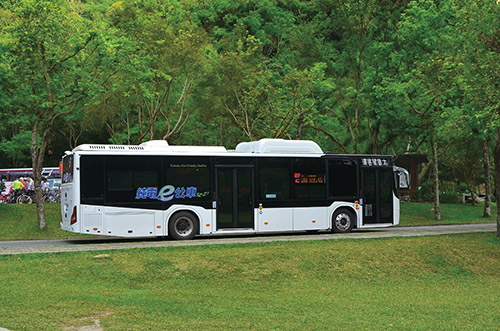
Hualien County Government also hopes to work with the TNPH to create a low carbon homeland. After a trial run with the private sector, the “National Park green electric bus route (Xincheng – Tienhsiang)” was officially launched in September, 2016, creating a public transportation system using green electric energy instead of petroleum fuels, and making recreation transportation of national parks a leader in environmental protection.
Shei-Pa National Park
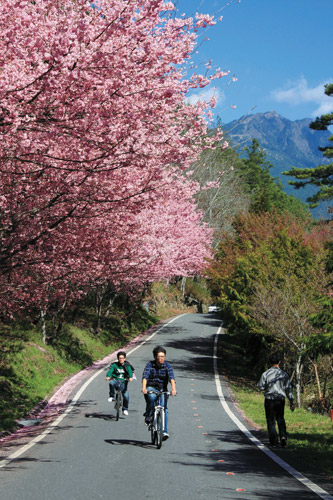
Every year when the cherry blossom season arrives at Wuling Farm, Shei-Pa National Park Headquarters (SNPH) is also faced with the problem of surging traffic flow. SNPH, Wuling Farm and Directorate General of Highway analyzed the visitors’ attributes, and launched a variety of traffic diversion programs and uses permit application to control the entering vehicles. During the control period, the park does not allow day trip hikers to apply for vehicle passes, or they have to be staying at Wuling Farm for the night and can provide proofs such as reservation document or vehicle passes before they can be issued a park entry permit. Some areas and facilities, such as Cika Cabin and Cika campground, are closed for application during the cherry blossom control period. After receiving their park entry permits, hikers who are driving themselves to the park still needs to comply with the high occupancy vehicle restriction and obtain vehicle passes issued at Wulin Farm to enter the park.
In order to truly implement high occupancy vehicle restriction and at the same time not affecting people’s interests in traveling, SNPH has also established a “Wuling cherry blossom season carpooling platform” for hikers who are driving themselves but have less than 2 passengers to have a chance to match up through the platform and apply for admission. This is a good strategy of making good use of the internet platform for National Parks to implement low carbon transport.
Yangmingshan National Park
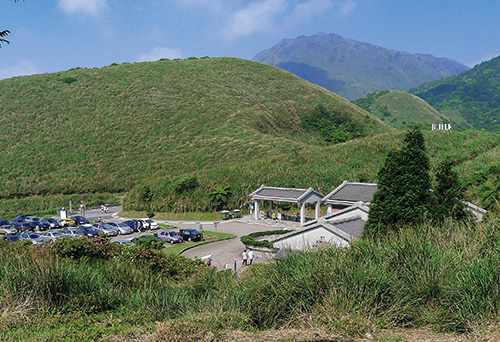
Yangmingshan National Park’s Yangde Boulevard is always busy during the holidays, not to mention parking is very difficult to find. If you would like to enjoy a leisurely journey in Yangmingshan, you may consider taking a one day bus trip to visit Yangmingshan National Park (YNP).
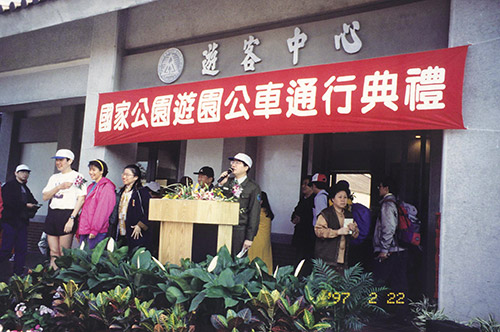
Yangmingshan National Park Headquarters (YNPH) provided free park shuttle buses and launched a trail run at the popular “Qingtiangang – Lengshueikeng” route during the “Flower Season” in 1993; in 1997, YNPH leased small buses from the private sector, and maked commentary folding, park bus packages, etc., to increase visitors’ willingness to take the ride. In July 1997, the park shuttle bus was officially opened.
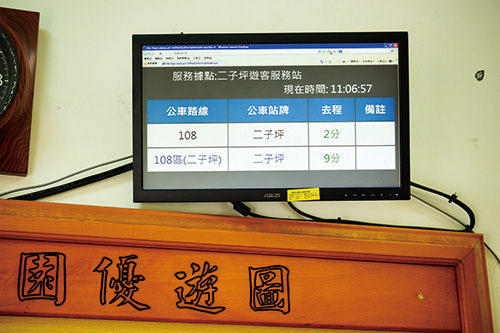
Since 1998, YNPH and Taipei City Government have combined the recreational bus and the park shuttle bus. Following the trail route planned by YNPH , Department of Transportation of Taipei City Government commenced the operation of the “108 shuttle bus” service, which has now ran for more than 15 years. The 108 shuttle bus is a fixed route service, and it runs regularly around the entire YNP with frequent services. It has now become a popular transportation for visitors who often visit Yangmingshan for a hike. YNPH installed LCD screens at Visitor Centers to display the arrival time of park shuttle buses, and it would be more convenient to take buses.
When spring arrives at Yangmingshan and the flowers start blooming, the Taipei City Government would celebrate by holding the “Yangmingshan Flower Season”, and crowds would rush in as an endless stream to see the flowers. Luckily, Taipei City uses measures including traffic restrictions, special bus services, Fulin Park underground parking transfer fare discount, and increase parking fees at government owned parking facilities to control the people and cars entering. YNPH also hopes people would take advantage of the public transportation discounts and services and make an effort on reducing our carbon footprint together.
Low Carbon Accommodation
Low carbon accommodation means energ y saving and carbon reduction measures that are taken into consideration in the facility’s construction or operational details. For example, the use of new energysaving equipment, such as energy-saving appliances; the use of environmental friendly building materials, such as bamboo, wood, or clay; the use of building designs for natural ventilation and temperature adjustment; the use of solar power or renewable resources to reduce the use of fossil energy. In addition, there is the garbage recycling system, as well as encouraging guests to bring their personal toiletries to reduce the use of disposable products, which are all considerations of low carbon accommodation.
Visitors can also choose to stay at hotels that are green hotel certified. The Environmental Protection Administration (EPA) has categorized green hotels into three classes of gold, silver and bronze; review criteria include environmental policy, energy saving, water saving, waste reduction, green procurement, and hazardous materials management. EPA has been actively promoting this certification system since 2012. Currently, affiliated hotels of Dasyueshan and Hehuanshan National Forest Recreation Area are both bronze certified green hotels.
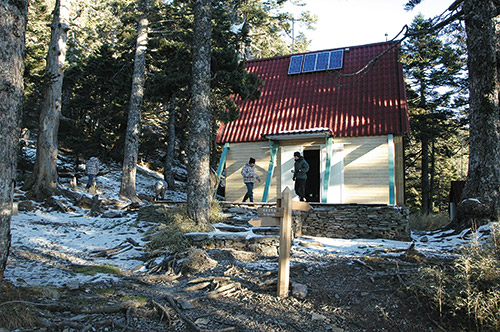
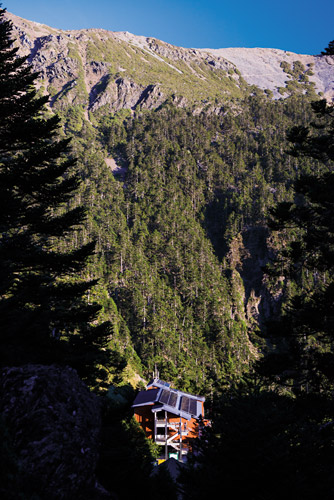
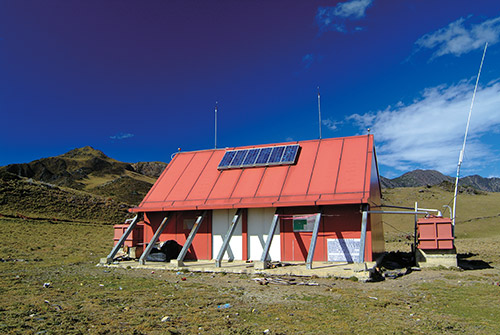
National Parks have spared no efforts on promoting low carbon green accommodation. In recent years, high altitude national parks including Yushan, Taroko and Shei-Pa National Park have been continually promoting the greening of mountain cabins. They have made good use of the solar and wind power system as well as new building materials to improve the cabin’s insulation and airtightness. For example, in order to promote energy saving and carbon reduction of mountain facilities, Shei- Pa National Park Headquarters invited experts and scholars to form a consulting team to provide energysaving design ideas when re-designing the Banan Cabin in 2012. The energy saving and carbon reduction design principles they came up with included: recycle, preserve and reuse of water resource, collect and use of clean alternative energy, use energy saving facility components and building enclosures, use low carbon footprint and recycled materials, and use high efficient and intelligent energy saving equipment. During the construction, all the equipment and materials are carried in by helicopter, reducing the construction time and the effect of manual transport on the forest trail, as well as minimizing the impact of the construction process on the surrounding natural environment.
Implementation of low carbon tourism
Kenting National Park
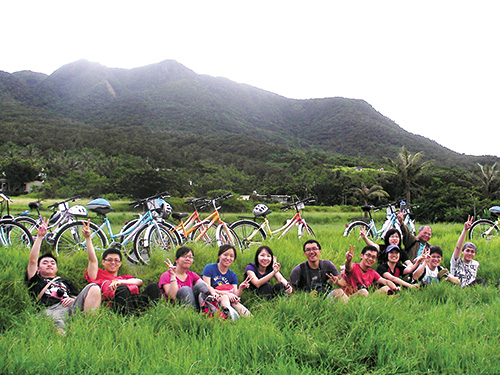
Kenting National Park Headquarters has worked very hard on promoting eco-tourism through community partnership operations and has made fruitful results in Sheding, Lide, Gangkou, Manjhou, and Longshui communities. Whether it is transportation, accommodation, dining, ecological interpretation and community operation, they are all comprehensively connected and implemented. However, how does the promotion of eco-tourism fulfill the low carbon concept?
In fact, from entering the community to staying in local lodging, restaurants using local ingredients and provides local cuisine, and team of interpreters formed by local residents giving inclusive and lively interpretive tours, every link has combined local and low carbon, as well as production, living, and ecology.
For the local tour, it follows the principle of preserving the ecological environment and the entire interpreted tour is done on foot; besides keeping the integrity of the environment, the walk also allows visitors to get a better feeling of the place through the process. The total number of visitors entering the community each day is also controlled to avoid exceeding the environmental carr ying capacity and damaging the ecological environment. Interpreters will explain the rules to the visitors prior to the trip, and are asked to safeguard the environment together during the journey. No speakers are used during the interpretation, either, to avoid the interference of noises to the inhabited creatures, and this also creates a comfortable trip quality and a more natural dialogue between the interpreter and visitors in a relaxing atmosphere.
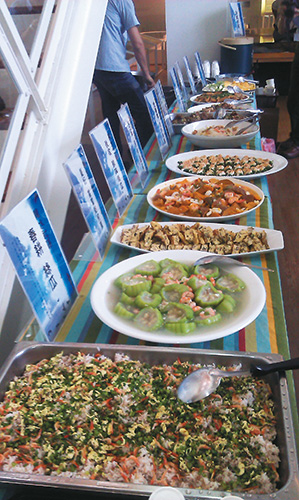
Restaurants in Lide, Gangkou, Manjhou, and Longshui communities even provide visitors choices of local cuisine, which uses unique local ingredients and purchase crops and meats that are grown and raised by local residents. This not only significantly reduces the footprint for transporting the food, but also encourages the concept of eating locally, and promotes the development of local economic.
Kinmen National Park
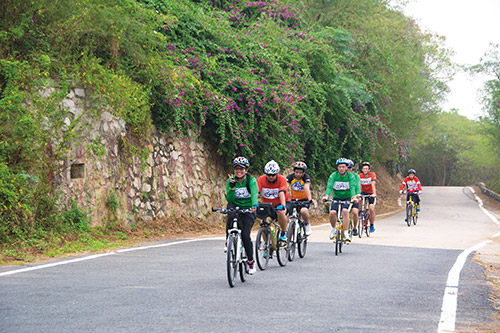
The goal of this activity is not competing for speed or timing, but hope that participants can experience Kinmen’s natural environment through riding bicycles, and appreciate the beauty of Kinmen’s abundant historical culture and ecosystem. In this year’s (2016) activity, Kinmen National Park Headquarters has added a route section along the coast during planning, so that participants can enjoy the diverse scenery of Kinmen’s coastline and landscape of military camps along the way.
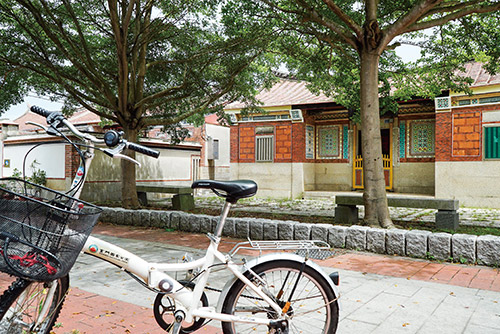
In order to encourage visitors to use energy saving and low carbon methods to interact with and understand the natural and military resources of Lieyu Township, Kinmen National Park Headquarters has held several low carbon leisure activities to reduce the environmental impact recreation have on the eco-tourism destination. For this reason, they have planned to build several bicycle rental stations in the park to increase the convenience of using bicycles to travel. We hope more and more visitors would give up the high-pollution motor vehicles that emits exhaustion gases and creates noise pollutions, and switch to using the low carbon bicycles when visiting Kinmen, and act together to protect Kinmen’s ecological environment while enjoying its unique geographical beauty and cultural history.
The good life of low carbon tourism活
Low carbon tourism is a kind of attitude towards life, it can also be widely used in our daily lives. For example, bring a water bottle in your backpack for drinking water instead of buying bottled water, carry your own reusable shopping bags, reduce the use of disposable products, and choose to take transportations with lower carbon emissions.!
Next time when you visit the National Parks, try taking the shuttle buses, staying in the green mountain cabins, or riding the bike. Traveling while protecting the environment at the same time, as well as leisurely enjoying the beautiful scenery of the mountains and the sea. Low carbon slow living, it’s a healthy way of life, and a love to our planet!
About the Author
Pei-Jou Liao
Migrating between mountains and cites, the author takes great interests in the relationship between human and nature, and is devoted to learning the wisdom on living harmoniously with the nature. Liao currently is engaged in environmentally friendly farming, environmental education and writing.


