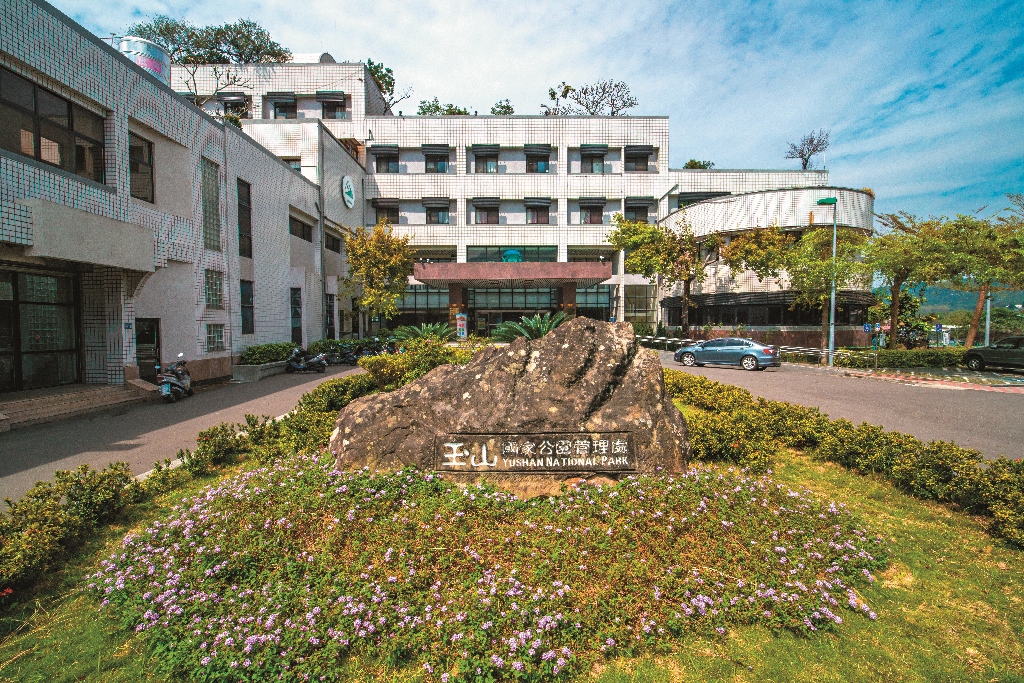
Building within Nature-
If nature is the shelter of all creatures, we human who consider ourselves as the highest order of all living things should protect this piece of land we depend on. National Parks play the role of the core protector of ecological areas, and the staff of National Park Headquarters are the vanguard of these protectors. As nature’s gatekeeper, it takes comprehensive thinking when managing the environment, a compassionate heart to the land, and adjustment to the environment to build and manage these vast areas, which makes the location of Headquarters not only the heart of the network in handling environmental information, but also the gate that leads people toward thebeauty of National Parks.
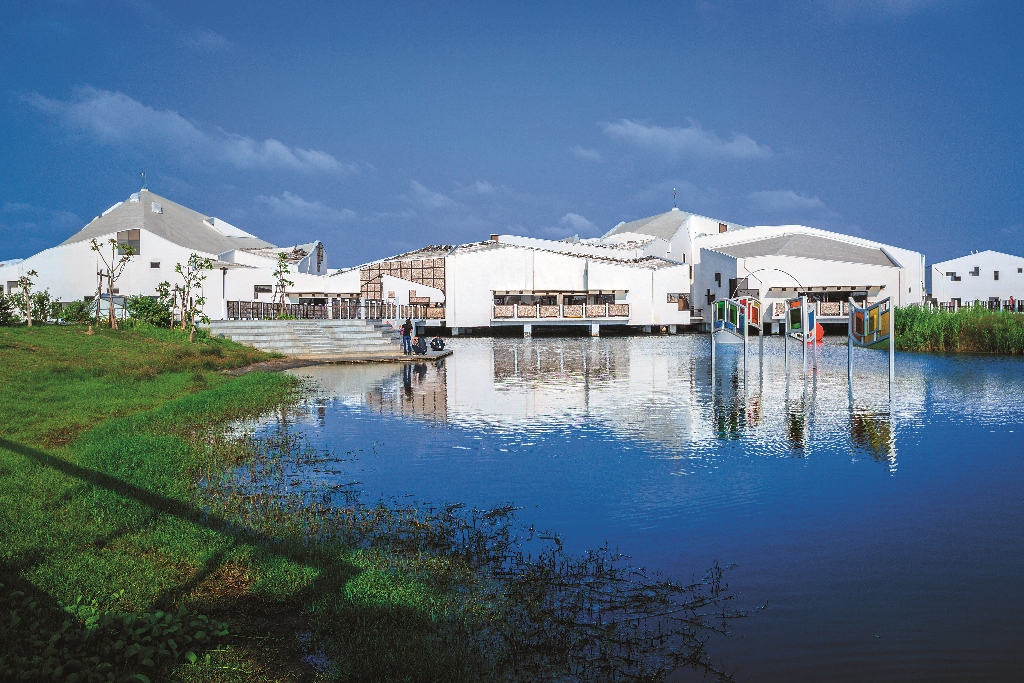
The Door that Leads to Natur
In the vast land of national parks, there is a door. Behind this door is where the staff members brainstorm on conservation matters, and through which visitors can find a way to read the park. It is the building complex of National Park Headquarters and Visitor Center. At the beginning when each National Park Headquarters was first established, they do not have their own office and visitor service spaces. After going through a transitional period of staying at temporarily borrowed places, what concerns them most when they were selecting the location of the headquarters was not merely having an office space to coordinate affairs, but more about the implementation of visitor services. Therefore, the construction of visitor center and administrative building went on hand in hand, becoming the earliest building complex of National Park Headquarters.
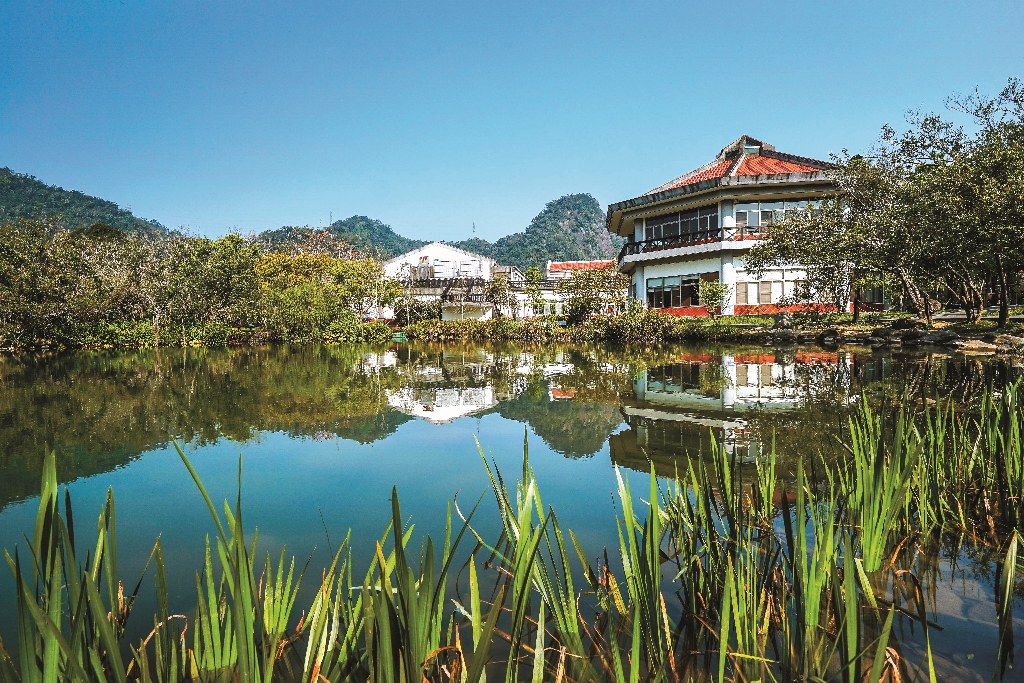
The core value that precedes all
When asked what the most important consideration was when designing and planning the headquarters and visitor center building complex, factors such as skyline, architectural style, selection of building materials, merging with existing landscape, etc., what people generally considered as important in architectural design
were not Director General Hsu’s priority concern, but the National Park’s “core value”. All the building’s technical aspects can be overcome with an excellent teamof architects, but “core value” can only be accurately communicated through the people of national parks.
If we can bring people closer to the core ecological landscape features, they will be most deeply touched by
the nature’s performance. But if for ecological sensitivity or safety reasons and does not allow visitors to havedirect experience through the five senses, or like many ecological features have seasonal changes and cannot be seen year round, indoor display becomes the best assisting tool. “Technology continues to progress, we can think of a more innovative way to show the national park’s precious natural and cultural ecology.
For example, not every visitor has the ability to climb the Yushan main peak; maybe we can use technology to somehow show it in the visitor center, so they can feel as if they are personally experiencing it.” Director
General Hsu hopes every national park can pass on their own features to everyone who visits through deliberately arranged indoor and outoor
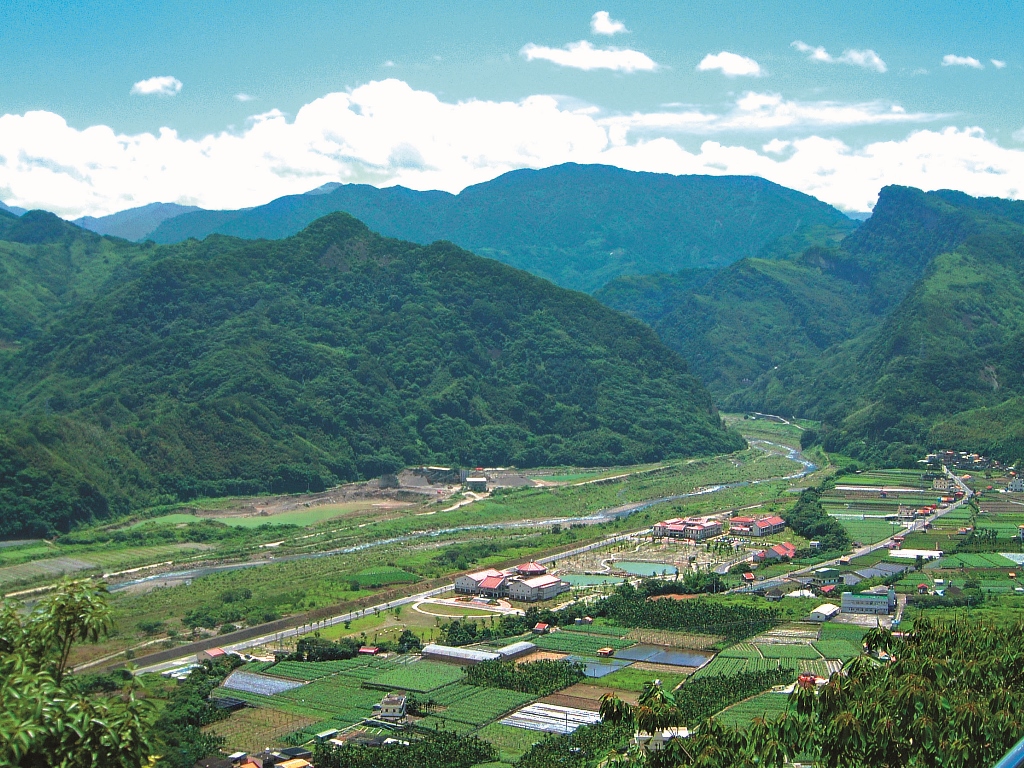
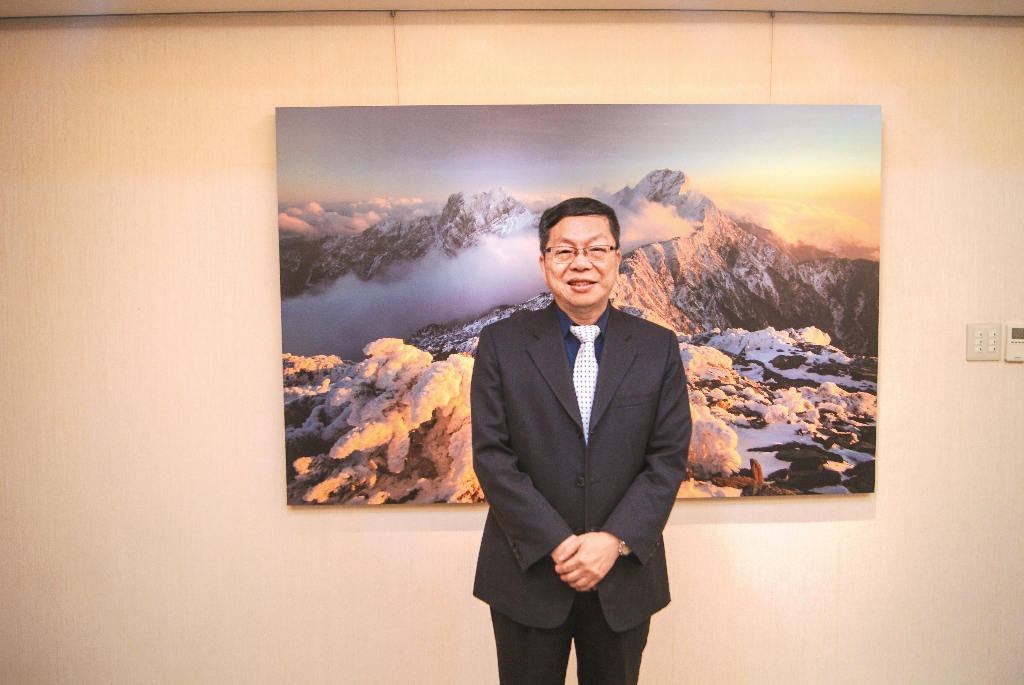
Ministry of the Interior / Chien-Wang Wu
New atmosphere at stamping grounds
Logically, the site selection process should be based on assessing and screening of the site’s transportation
convenience, accessibility, ecological sensibility, and allowed building area. But in reality, most of the sites
that were suitable for the headquarters were already occupied before the national parks were established.
Therefore, the site selection was not only a scientific analysis, but also depended on a dash of chances and
good mediation skills. The locations of Yangmingshan, Kenting and Taroko National Park Headquarters were all old military bases. Originally, Kenting National Park Headquarters planned to locate the visitor center at what
is Xiaowan in present day (next to Cesar Park Hotel Kenting), and today’s site was where the Department of
Defense had planned to set up a Marine Corps camp.
With great effort by Lung-Sheng Chang and Yi-Hou Lin, who were the Director General and Director of Construction and Planning Agency at that time, the Kenting National Park Headquarters and Visitor Center
can finally be at the current location by Shiniu Creek. The land at Taroko Terrace was acquired piece by piece
after obtaining consent from the original landowners contenders. At that time, Miaoli County Government
had been actively recommending a piece of public land by Wenshui creek in Dahu Township; Li-Men Pan, former Director General of Construction and Planning Agency, surveyed the site with staff members of the Shei-Pa National Park, and at the end decided to choose the Wenshui site after considering this would help balance
the regional development. Local government also hoped the establishment of national park headquarters and
visitor center could bring benefits of critical mass in the regional tourism and recreational industry, and give the place a new atmosphere, looking after both industry and conservation.
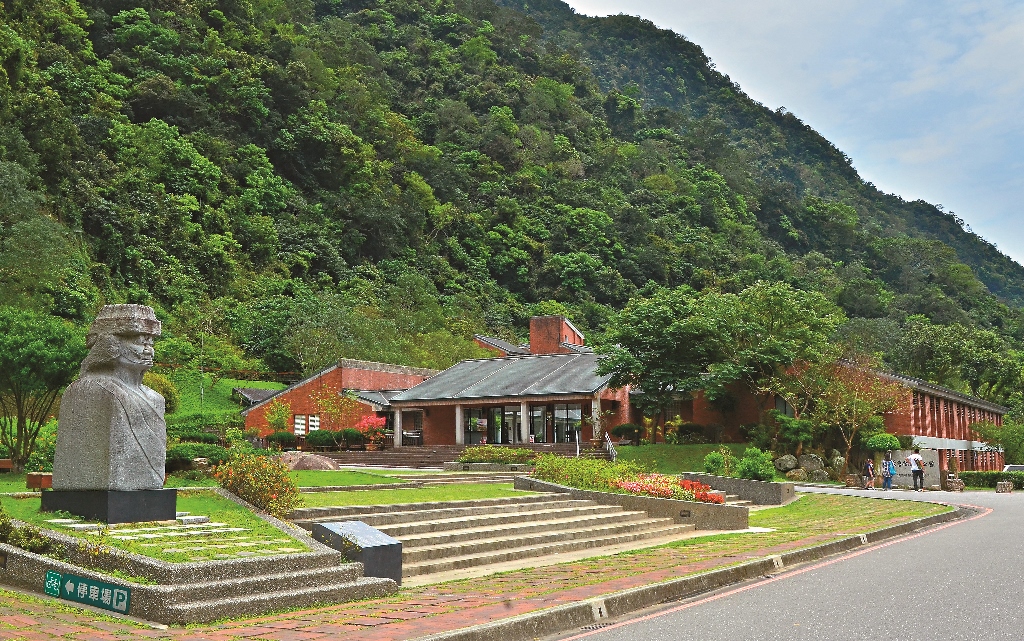
provided by Taroko National Park Headquarters (photographed by Mao-Yao Lin)
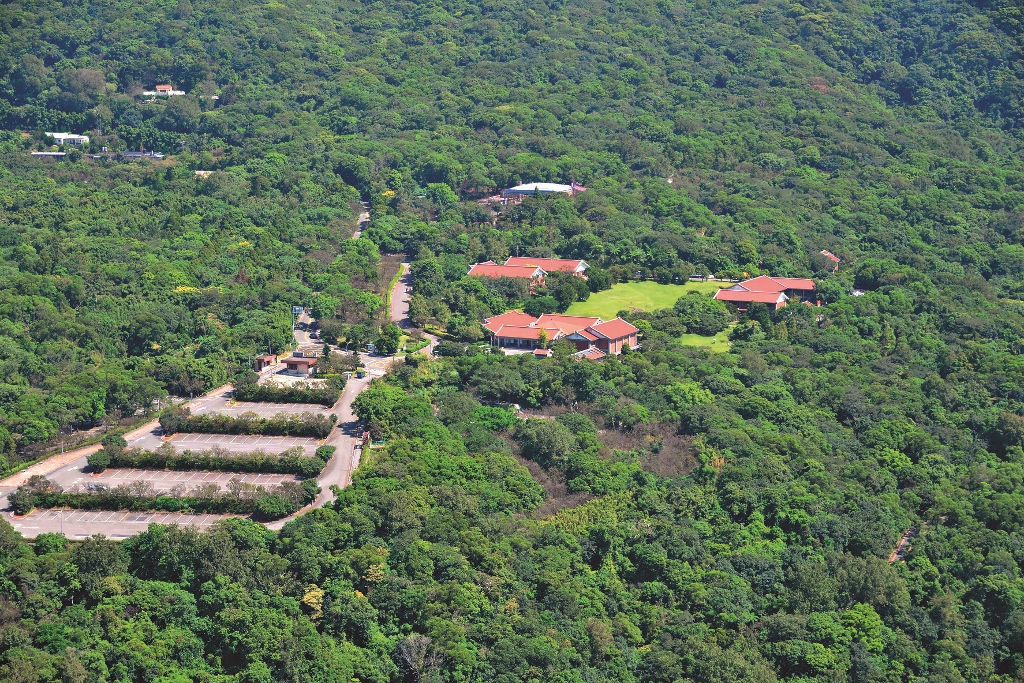
Provided by Yangmingshan National Park Headquarters (photographed by Zhi-Wu Han)
Situated with reason
“The building complex of Yangmingshan National Park Headquarters was the first being completed. Located on a hillside is its biggest limitation as well as its greatest feature. The entire building configuration had to be completed within the limited hinterland while keeping the surrounding forest intact,” allowing the building complex to play on its courtyard characteristic, but at the same time blending in the rolling landscape. “Taroko National Park also made use of the terrain, allowing the entire building complex and Taroko’s mountains and rivers to form a great scenery.
In order to cope with regional climate conditions, a lot of work was done on the design of the national park’s building complexes. Take Kenting National Park as an example, to accommodate the foehn wind at the Hengchun Peninsula, they looked for answers from traditional architectures and designed an “alley” form corridor to block the wind. In addition, the height of the building also has its secrets; the visitor center is north-south oriented with the entrance facing south, and the back building is taller than the front building, which all help blocking the strong winter wind from the sea. For the same reason, large areas of existing Casuarina forest were kept to effectively block the cold winter northeast monsoon when planning the Kinmen National Park Jhongshanlin building complex. Although each building complex has its own style, they all paid a lot of attention on accommodating local environmental conditions.
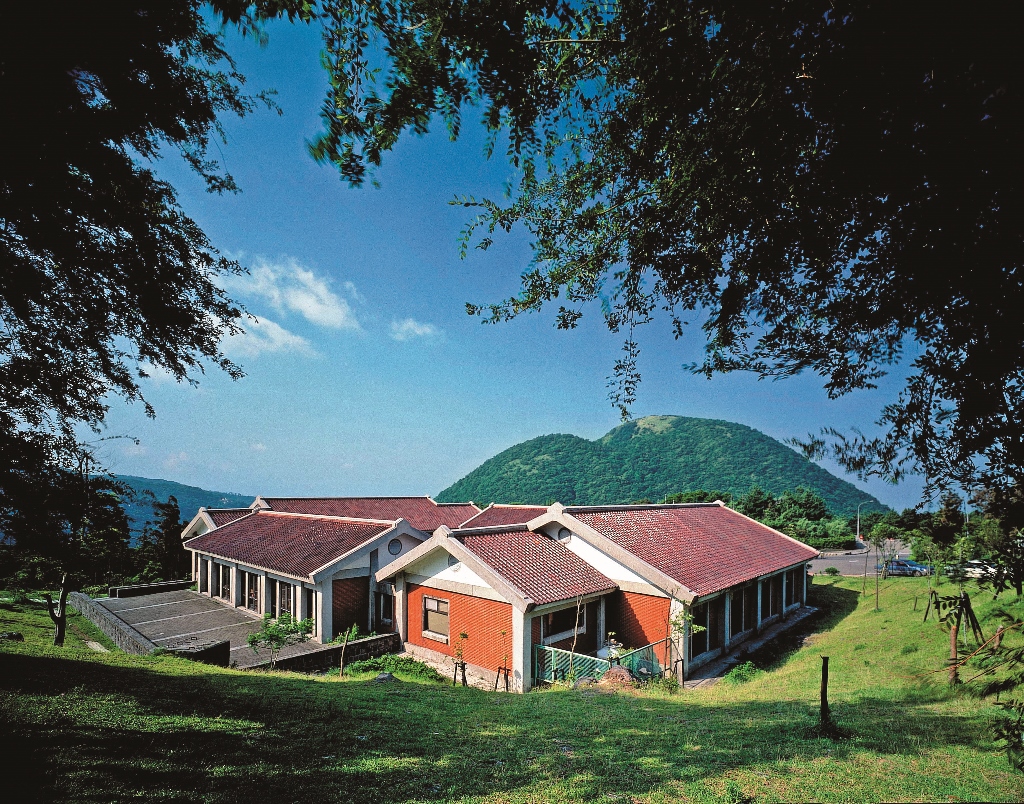
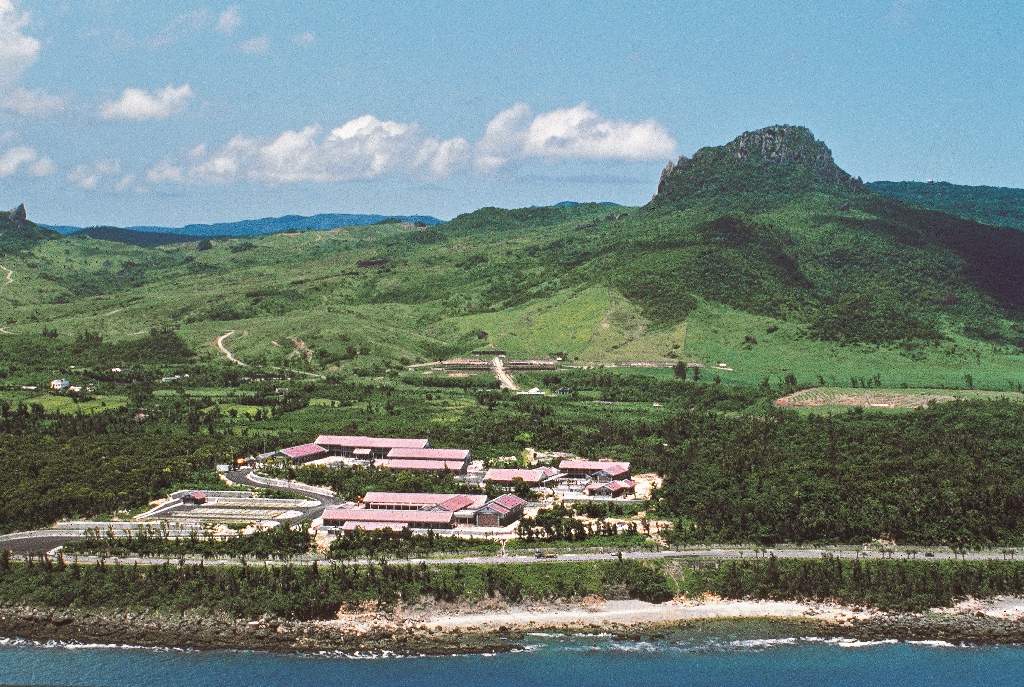
provided by Kenting National Park Headquarters
Various expression and vocabulary
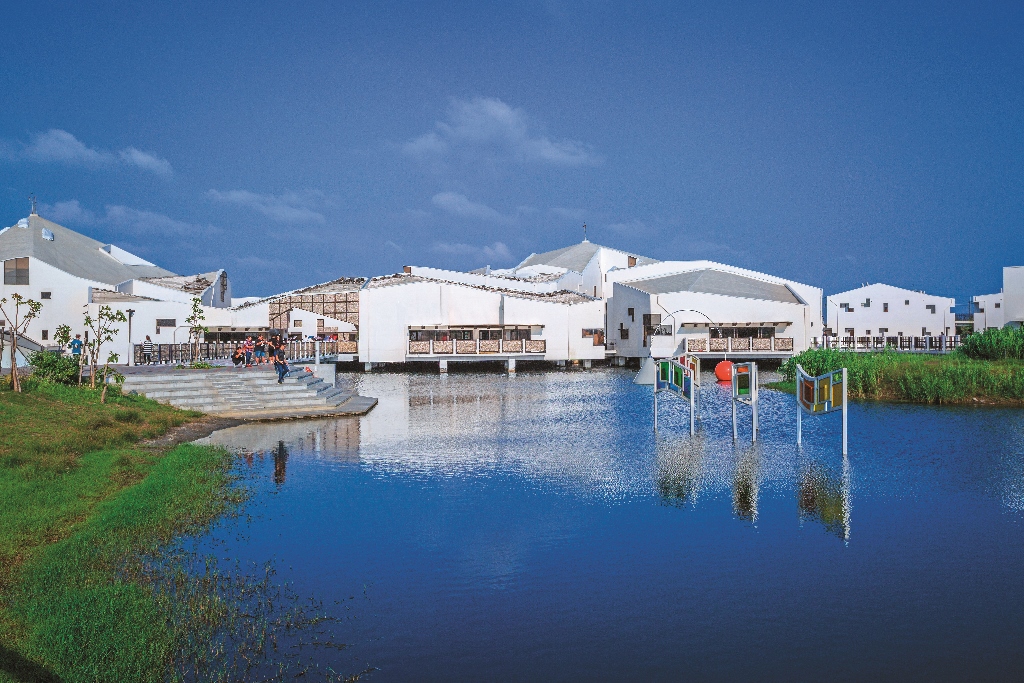
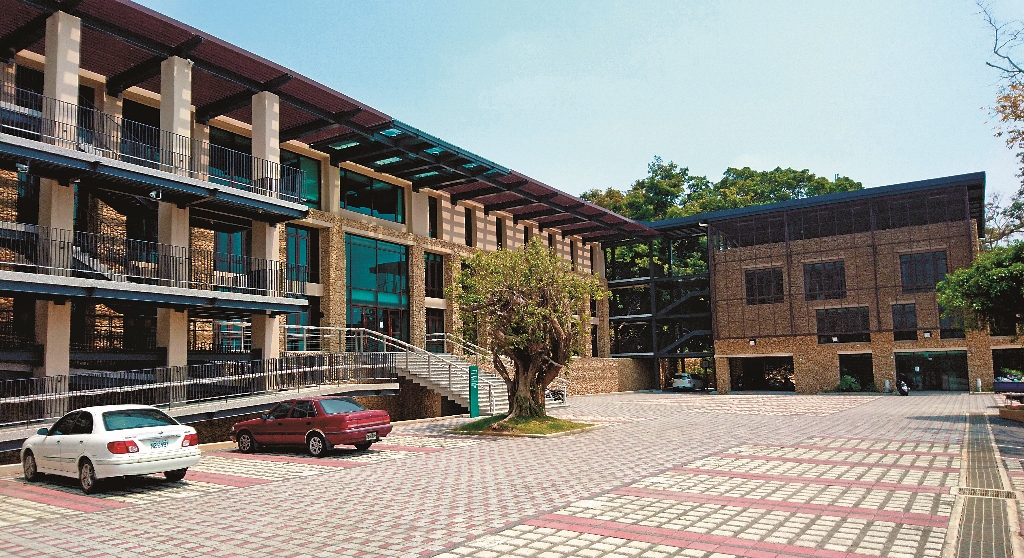
Of all the National Park Headquarters and Visitor Center building complex completed between 1989 and 1998, except for Yushan National Park’s Shuili Headquarter, they all adopted a courtyard architectural form. “Many years later, in 2016, we have the building complex of Taijiang Xue Yuan.” As time goes on, the aesthetics and values of contemporary architecture evolved. Whether it is the courtyard architecture of Yangmingshan, Kenting, Taroko, Shei-Pa and Kinmen National Park Headquarters, or the modern architecture of Yushan National Park Headquarters, they all represent the interpretation of architectural aesthetic of that era. When it comes to Taijiang Xue Yuan, we entered into a new contemporary architectural trend. The abstract architectural appearance has a more profound intension and meaning, dividing and dissecting the building volume in response to the environmental conditions, allowing the building entity to have more interaction and variation with the external space, which not only creates a better building micro environment, but also adds the fun of wandering.
Direct General Hsu is a national park old-timer; he served as Director at several national parks, and has
many fond memories and feelings for these places in his past. The brilliant courtyard design of Taroko National Park’s visitor center made a great impression on Direct General Hsu: the rock mosaic symbolizing the outstanding geological landscape framing the huge Taroko mountain image, the white stone pavement symbolizing the surging water of Liwu River crashing the giant stones in the courtyard. “Kinmen Jhongshanlin visitor center’s Fujian-style architecture is consistent with local architectural features, the bridge and water in the oudiv>
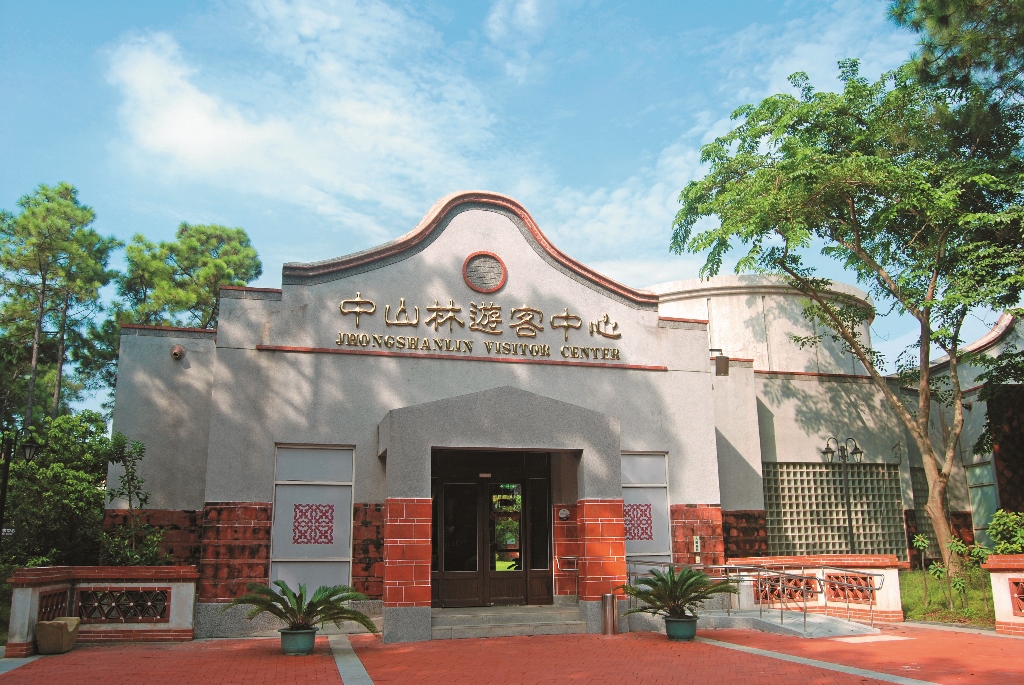
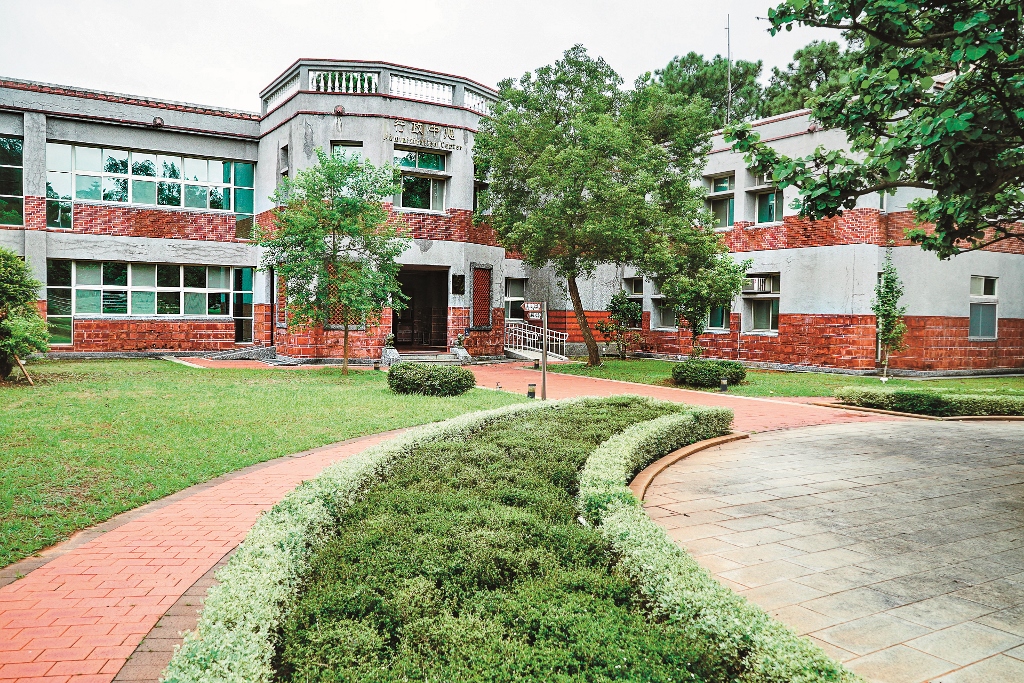
Administrative Center / Shu-Ying Liu
Keeping pace with the green concept
“Headquarters and Visitor Centers of Yangmingshan, Kenting, Taroko, Shei-Pa and Kinmen National Park could be called as the first generation of national park buildings, and the Taijiang buildings could be called the
second generation. Especially Taijiang introduced the latest green building concept, which is where we can see
the main differences in the two generations of buildings. As for Shoushan National Nature Park, the Preparatory
Office uses the existing military buildings as foundation and is making improvements according to the needs of
the Preparatory Office.” During the building renovation process, the Preparatory Office not only held their ground on not increasing the existing developed area, but also preserved and improved the original military buildings that were still intact, and made use of the coral stones excavated from digging the detention pond to use as insulation material on external walls, which also become a feature echoing the local geological environment.
Taijiang Xue Yuan, an EEWH diamond-rated green building, paid a lot of attention on connecting with
the original fish farm roots, whether it comes to the water conservation and greening of the site, or creating
biodiversity in the original environment. “The most important concept of green building is energy saving and
carbon reduction. Taijiang Xue Yuan is located by the sea and is in an area which could be easily flooded; therefore, we used the concept of a sponge city, and no longer tried blocking out the water but learn to live with the water, and so it comes the stilt house building complex.
Besides solving the flooding problem, it also uses the water to reduce the building’s external temperature and
minimizes the need for air-conditioning. In addition, materials such as local oyster shells and drift woods were used to create a porous biological habitat; oyster shell powder is also added into the wall paint in order to regulate humidity and insulate heat. These are all ways in reusing materials which were considered as waste.
The administrative office is the management authority of the buildings in the national park, and it should be
on us to take the lead on implementing a better, more environmentally conscious architectural idea, in hope to
take on the role of demonstration and leader.”
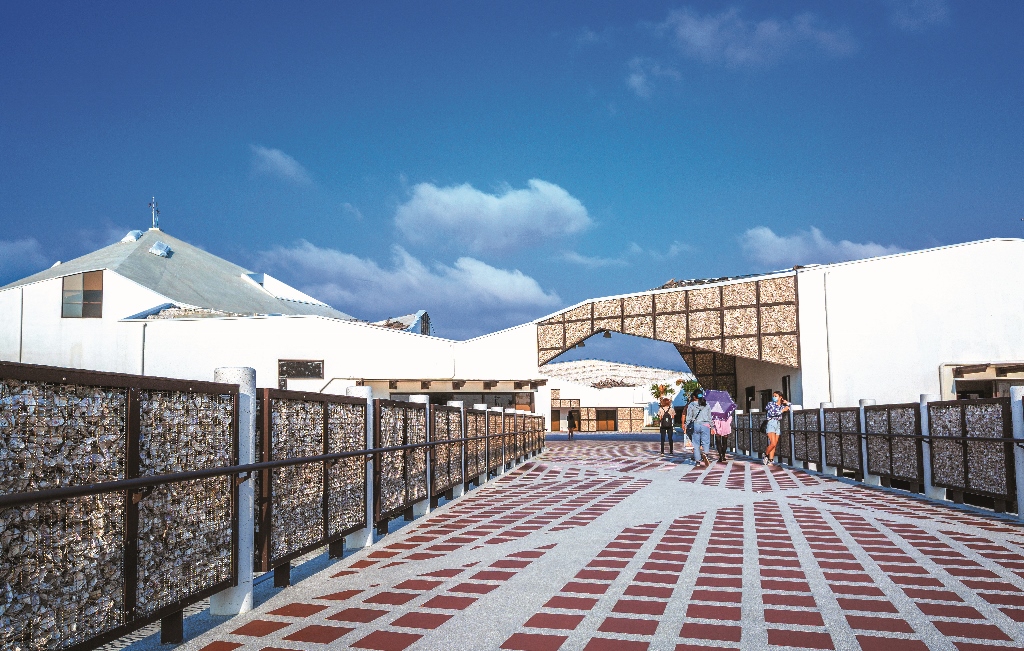
porous biological habitat and wall paint / Shi-Liang Yan
Brighten up the door that guards the nature
The operation of national parks is a business that will last for hundreds of years but a building has only a
certain life span; therefore, it will have to face the issue of renewal in the future. Before the time for a total overhaul arrives, there is always the possibility of partial renovation or adjustment on display spaces in response to service needs. Director General Hsu looks forward to the future establishment of the National Park Agency, so the planning and construction of the national park’s buildings can be improved no matter it is regarding the funding autonomy or connecting with the world’s cooperation experience under the new organizational structure.
The sense of reality in environmental education’s seeing is believing is irreplaceable. Therefore, when there is
a chance to rebuild or renovate the headquarters and visitor center building complex in the future, how to
present the core value that precedes all. The experience of visiting America’s Everglades National Park is still
vivid in Director General Hsu’s memory, “I remember when visiting the Flamingo Visitor Center, the entire space is covered by a two-story high mosquito net.
People have to go through two sets of doors to enter the visitor center for the purpose of preventing mosquitoes
entering. At the sign-in orientation, the narrator specifically reminded visitors to put on mosquito repellent – not to protect the visitors, but protecting the big mosquitoes in the marsh. The cost of killing a mosquito is USD$25. This really was a big surprise to everyone. With this shock, we set foot on the boardwalk outside the visitor center. When seeing the fish jumping out of the water and catching the mosquitos, we immediately understand through the interpretation that this group of annoying insect is an indispensable member of the swamp’s food chain. It is crucial to the survival of the fish in the swamp area, and also affects the future of pelicans and alligators. So they certainly worth the 25 dollars cost.” By the time visitors are back to the visitor center covered with mosquito bites, an indelible ecological view has also been branded in their minds permanently.
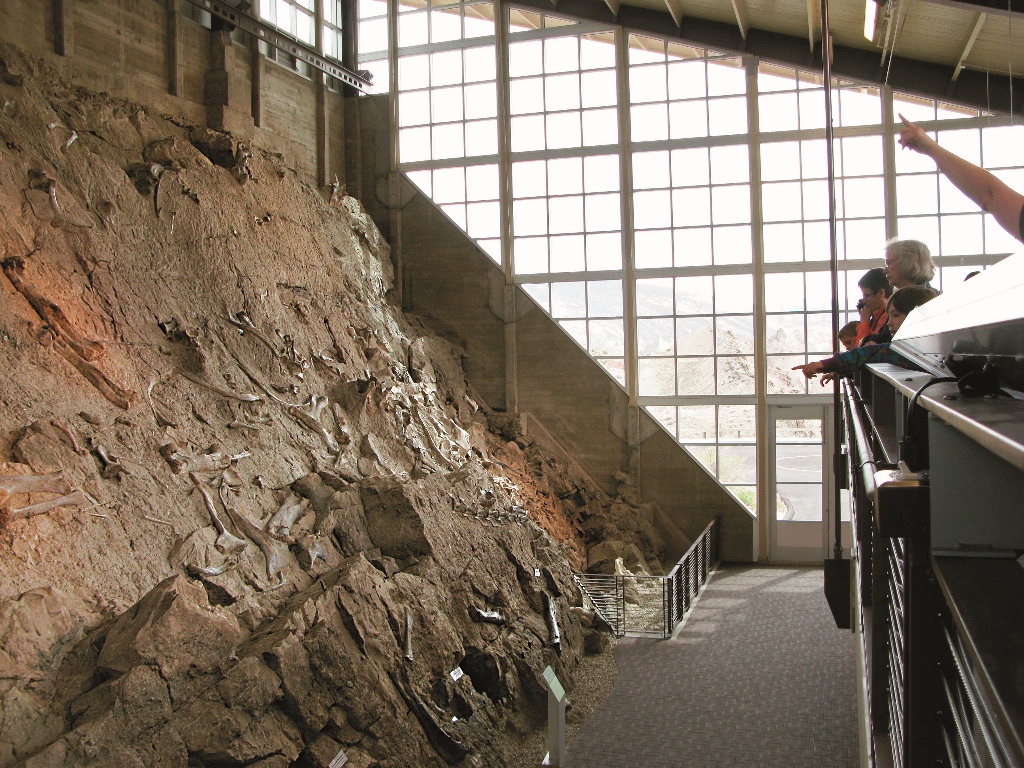
National Monument, USA (resource:
Creative Commons, https://commons.wikimedia
.org/wiki/File%3ATourists_examine_Wall_of_Bones%2C
_Dinosaur_National_Monument%2C_Quarry_
Building_2012.JPG)
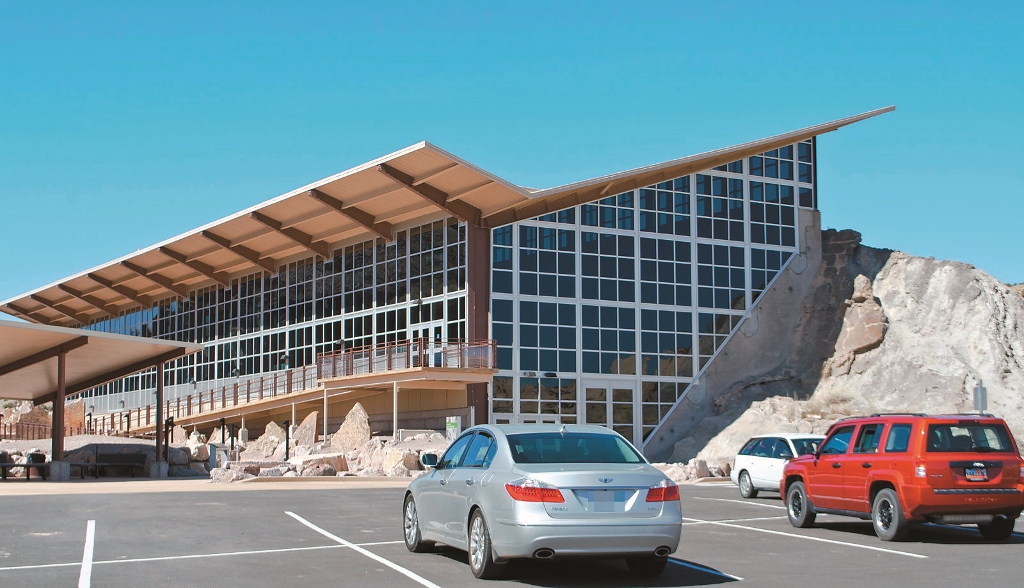
“Take example of the Dinosaur National Monument in Utah, USA.” Director General Hsu said, “The emphasis of the exhibition are the spectacular dinosaur fossil rock walls and unearthed dinosaur fossils, therefore, the visitor center building is constructed in coordination with the core values of the Monument. It includes an interior with high ceilings to house the giant carnivorous dinosaur fossils, carefully arranged circulation for the flocking dinosaur fans, and flexible spaces to accommodate tourists during peak hours. Japan’s Shikotsu-Toya National Park uses salmon’s ecology as the core of their exhibition, so the design of the entire visitor center circles around the life of salmon migration.
Core value comes first, and then we think about the construction of the building, this is what we learned from foreign case studies. Over 30 years of operating the national park, we continue to learn and expand our
knowledge, and by looking at the architectural space and form of the past through a subsequence perspective, surely we will discover many improvements we can do in the future. But we do have to say, the buildings of National Park Headquarters and Visitor Centers were all above level in their time, and the architects responsible were also the best.”
The national park building complex is the door that guards the nature. Inside the door is where the staff manages affairs big and small, in order to give the best protection to natural and cultural ecology; it also is
a place to provide visitors important information, so that people who visit the national park can have a comprehensive and general understanding on its core value. Stepping outside the door, people will take the
knowledge they gathered inside and experience and verify the mystery of nature under the wilderness sky.
The world outside the door is broad without limits. This door of national park building complex is just like a bridge, allowing the staff of the national park to lead people learning more about our mountains, rivers and sea.