
Traveling through the Time River, Indulging in the Wonderfulness of Wetland-Taijiang National Park Administrative and Visitor Center
Taiwan's national parks are diverse in environment; the parks include a combination of mountains, forest, oceans, landscape, and humanities. A tourist’s first stop is usually the visitor center of the national park. By obtaining thorough introductory information, meeting the enthusiastic service staff, and observing the exhibition and film inside, visitors can receive a basic understanding of the entire appearance of the national park.
However, these various visitor center buildings are not only rich in content. Their outer appearances also have
hidden meanings. Some of them emphasize functions, some are designed in a low-key style, and some buildings have incorporated Southern Fujian elements. With the evolution of times, the appearance and the interior of the tourist center have been provided with increasing personality and potential possibility. By integrating the landscape and the concept of friendly ecology, authorities place more attention to the inheritance of humanities in history. These step by step trials and changes specifically show in the architecture of Taijiang National Park Administrative and Visitor Center.
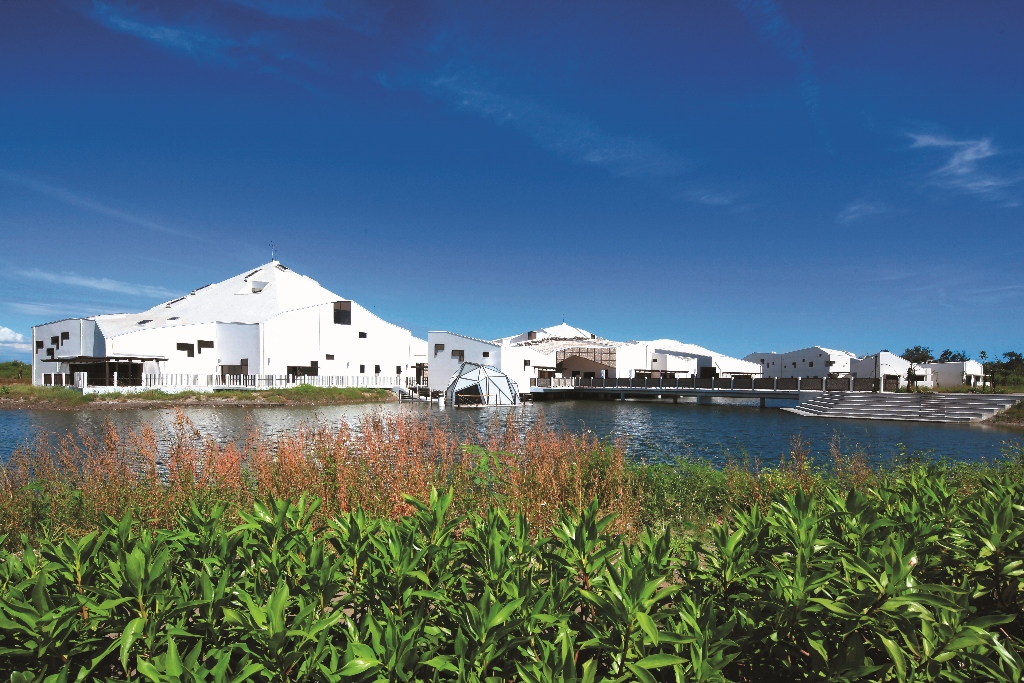
Above Water Mist ; Among Water Grass
Taijiang National Park is the only wetland national park in Taiwan. It has a variety of wetland environments such as fish ponds, wasted salt pans, mud flat and and estuarine sandbar. The national park nurtures rich flora and fauna habitat. In addition, the national park provides an environment for migratory birds that pass by or stay
for the winter to receive nutrients and to rest. With multifaceted core values and characteristics including natural ecology, historical humanities, inherited fishing and salt pan, Taijiang National Park Headquarters must
seriously consider what type of administrative and visitor center can meet the needs of the tourists.
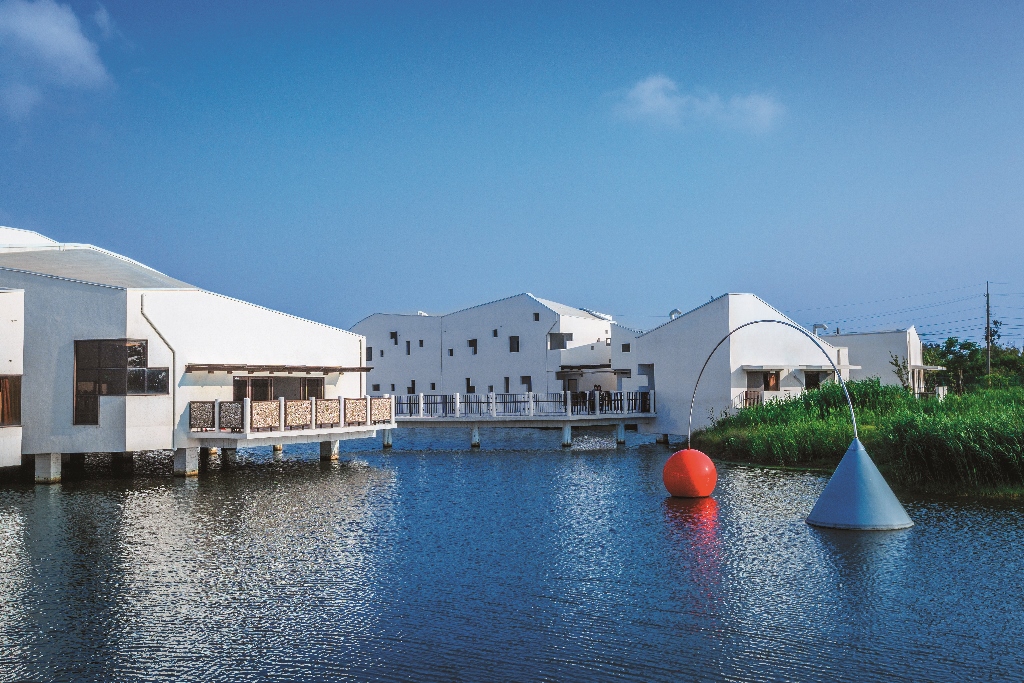
utilizing oudiv>
Therefore, the very first question is what is the location of the building?
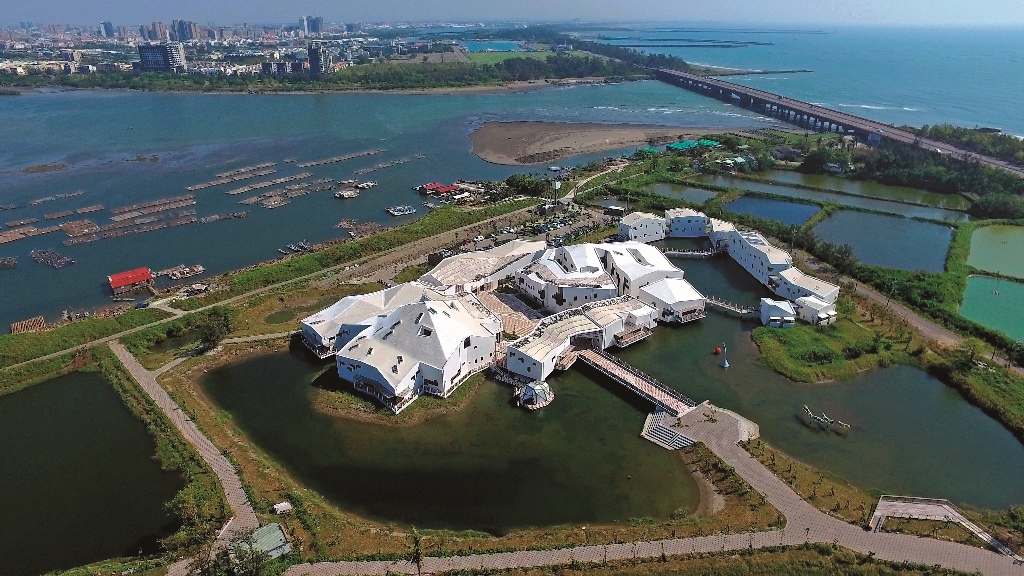
Director Wei-Chuan Chang pointed at the spread out aerial photo. He stated, “The present site next to the
Sicao Bridge could stand out from the seven choices because of one main reason. When we place the present
map to the ancient map, we can see the current site and how it corresponds to Fort Zealandia and North
Shanwei Island. This site is the entrance where Chinese people crossed the strait to Taiwan several hundred
years ago.” This site is to serve as the starting point toguide people to understand Taijiang National Park and
Taiwan’s wetland ecology.
For the next step, in this environment, which is next to the Yanshui Creek, near the sea, and is surrounded by
fish ponds, what kind of architecture building will be constructed?
Ying-Chao Kuo, an architect from Tainan who was responsible for the design and planning of the Taijiang
National Park Administrative and Visitor Center Park, admitted openly, “in the course of my study, I am
unfamiliar with the history of my hometown”. Therefore, when he kept on collecting and reading various
information for the design project, he described this process as “making up his studies”. He chose to convert
the Taijiang image of sea waves and hills of contrasting height that the ancestors first saw after crossing the
black strait with difficulty into the basic outline of thebuildings. However, the base itself is a fish pond. Can the buildings float on the water?
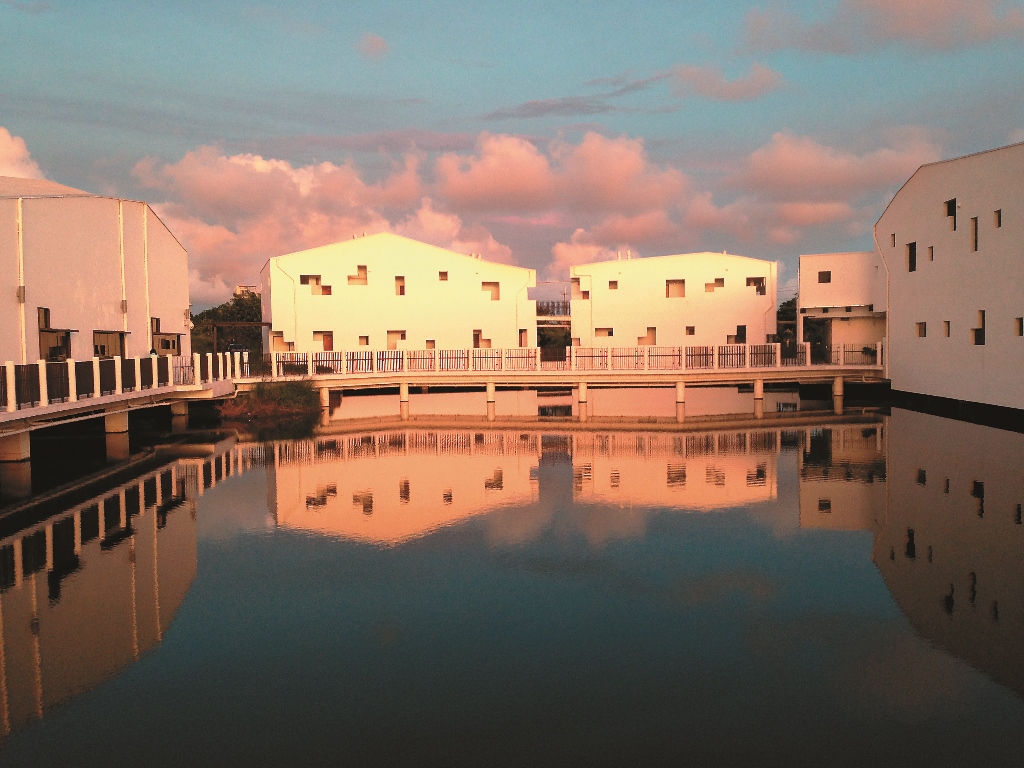
Taijiang National Park Headquarters did a lot of homework before they produce the invitation to bid report. In this invitation, the written demands were quite clear and detailed. Ying-Chao Kuo recalled that the image of “Sitting above water mist and among water grass in between” was the core of everything. Therefore, the entire buildings present themselves in the style of “stilt houses”. The buildings stand on the surface water like an island that grows its roots among swinging reeds and in the habitat of waterbirds. However, if the fish pond was to remain in its current condition, a pool of even deepness would not be suitable for biological habitat. Diverse water fields are created by digging and refilling to shape out muddy flats, as well as shallow and deep water areas. In addition, the Headquarters is to rehabilitate mangroves to provide an appropriate environment for water fowl. Furthermore, the deep water can provide fish a place to live through winter.
Fish came, birds came, people came too. “Compared to other national parks, because Taijiang National Park is
highly accessible, the authority hopes that visitors will spend more time walking into the park from the outside.
Ying-Chao Kuo has designed the traffic flow starting from the visitors parking. Visitors can walk along the
fish pond trail and enter into the buildings. In Jiang- Ming Hong’s view, this traffic flow is similar to the
process in which after the Han ancestors crossed the sea, they saw the land of Taijiang appeared in their eyes. He described, “the surrounding landscape is full of many water bodies. When people walk over the bridge, they
similarly experience passing through the test of the blackstrait, which opens up their first contact with TaijiangNational Park.
a porous space for living things to inhabit
From Gold to Diamond
This new generation national park lives symbiotically with the local community. Taijiang National Park Headquarters is to consider ways to provide visitors with an innovative learning experience through the park, architecture, and exhibition as the focus of the park planning. “Taijiang National Park is also named “Taijiang Campus”, hoping to provide visitors an educational site that is outside of the school environment. In addition, architecture is one essential section of education”.
Director Wei-Chuan Chang further explained that “the original administrative and visitor center is based on a gold level green building as a standard. However, after considering the level and the representative meaning of the national park, these centers were upgraded to diamond level. These buildings are not only environmental friendly in appearance, they are also the best environmental protection educational material”.
Taiwan defines green buildings as buildings that are “eco-friendly, energ y saving, waste reducing, and healthy buildings”. For the national park, the most relevant characteristic is being eco-friendly, which must include finding ways to actively plant plants, maintain water, and promote biodiversity within the architectural environment. Furthermore, the goal is not only to reduce the impact of the building s to the environment, we hope the buildings can become the strong arms that support the diverse biological living things. With the effort of the Headquarters, architects, and evaluation committee members of Taijiang National Park Administration and Visitor Center, they implemented plans including an ecological network, small habitats, soil improvement, and water quality control. These plans and implementations provide sufficient space for the plants to grow. “In order to do a good job, the Headquarters and the architects meet with each other once every 8 days on average”, Director Wei-Chuan Chang recalled with a smile.
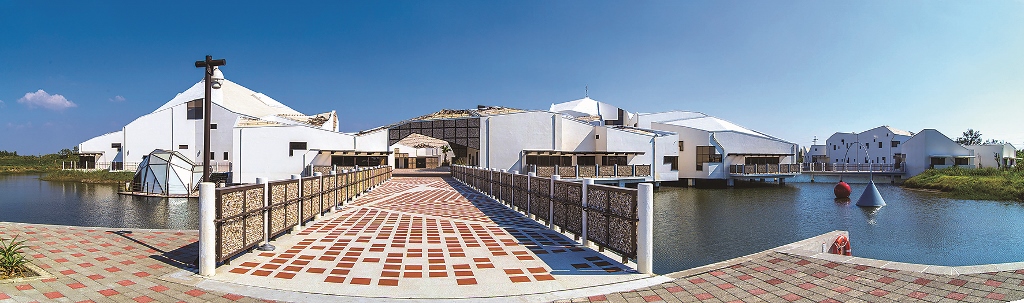
pond trail and into the building complex is like experiencing how the Han ancestors
crossed the sea and saw the land of Taijiang appear in their eyes. /
provided by Taijiang National Park Headquarters
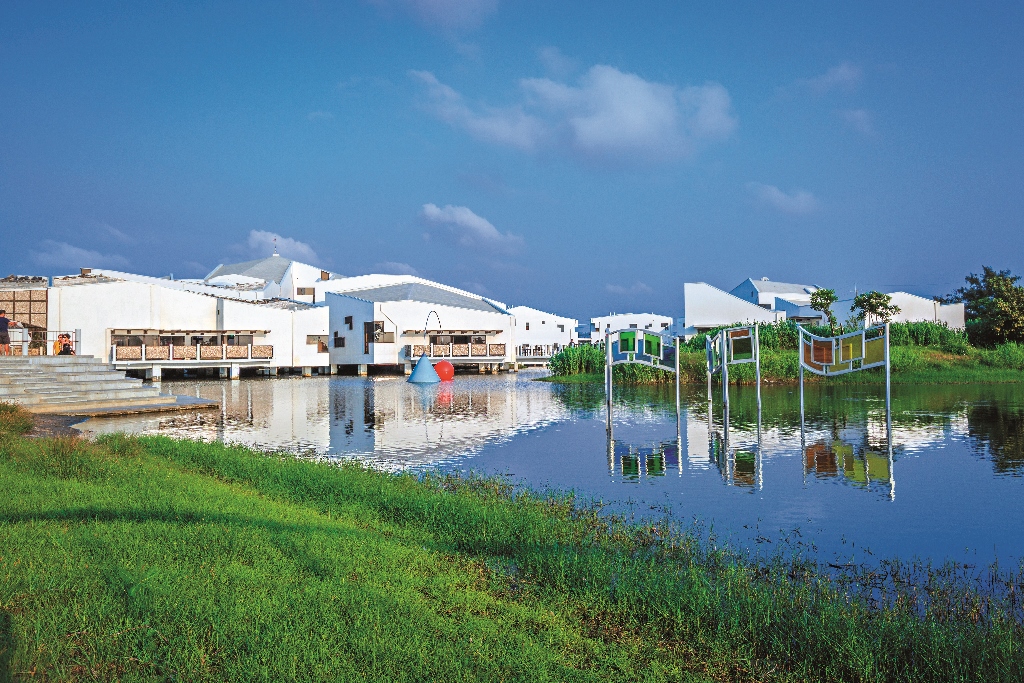
a natural revetment with a slope that is less than 1:3. / Shi-Liang Yan
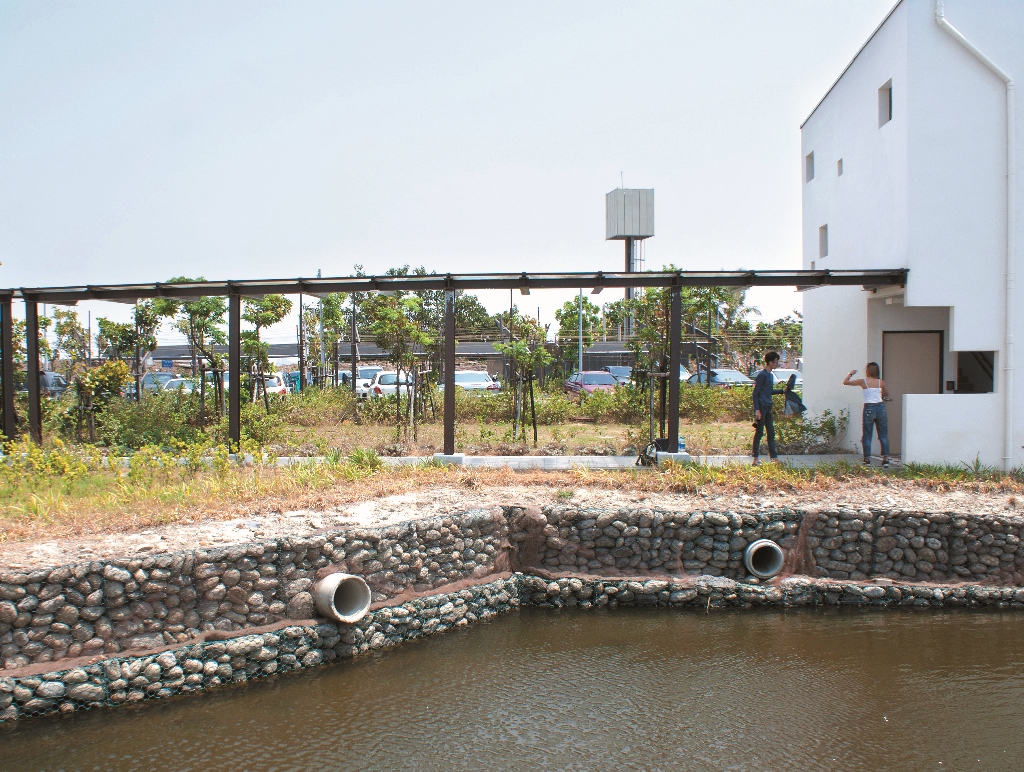
The area is refilled with pebbles to produce porous spaces
so living things can use them as habitats. / Hui-Ying Lui
The entire area of the park is about 6.6 hectares, of which green area is 14,048.56 square meters. Inside the base, the sidewalk and parking lot are set up continuously with arbors and shrubs. The continuity of the arbors and shrubs has never been cut off by artificial facilities or roads that are longer than 30 meters. The entire ecological network is like a dense microvascular network that provides a mobile passageway for biological living beings.
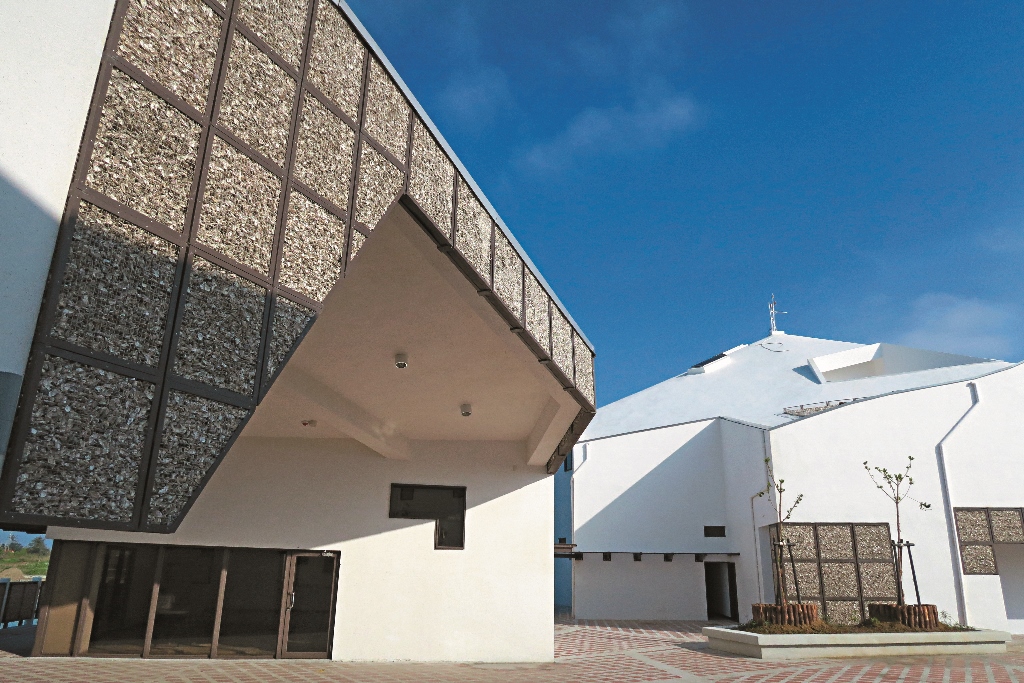
Moving our attention from the land to the water, we can see that the architect utilized the existing fish pond terrain and designed natural protective shores with a slope that is smaller than 1:3. In addition, the architecture retains the mixed forest and shrub grassland of the base to avoid interference with the habitat of the original creatures. Furthermore, a stone cage is used to protect the slope from mudslide. The pebbles used to refill the land produce many porous spaces, which serve as a habitat for biological living things.
The national park is located off the shore of the Yanshui creek, and is near the estuary of the sea. Like all the
buildings near the sea, the park must face the challenge of strong winds and salt damage. In order to reduce
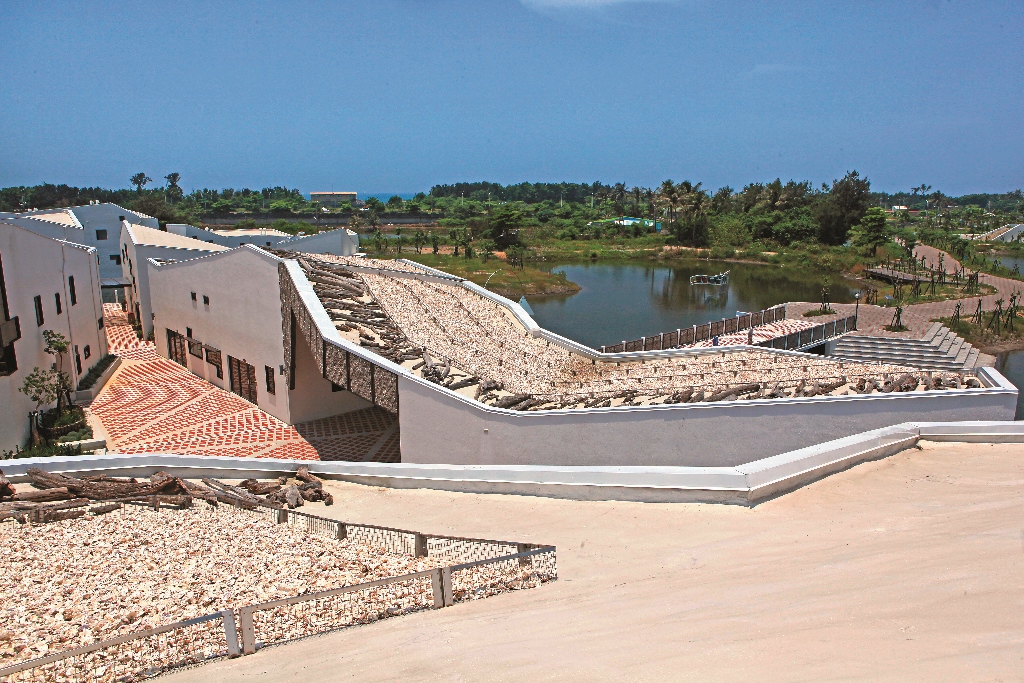
the dramatic “wind” like impact of the sea breeze on the park. From the National Park Quarterly 21 Roof layered with drift wood provides a small habitat for birds outermost waterfront embankment, the use of multilayer plantation strengthens soil and water conservation and provides a greening effect. In the ground layer, high salt-resistant plants such as Sesuvium portulacastrum, seashore dropseed grass, and Suaeda nudiflora are used to grasp and hold the sand. The shrub layer is filled with drought-resistant coastal plants such as sea lettuce, Pandanus odoratissimus, glory bower, and hayata. The tree layer includes fragrant pittosporum, linden hibiscus, coconut, and Indian almond; these trees interweave to become a wind wall with seasonal characteristics.
Then, in the waterfront tide area, mangroves were rehabilitated; the types of mangroves added include
Rhizophora stylosa, lumnitzera, and black mangroves. Finally, grasses including reeds were used to build
shallow water grass. According to the results of the wind field analysis, these closely planted and multi-level plants can shield, block the cold winter wind, and guide the summer monsoon to flow into the building complexes. The salt brought to the soil by the sea breeze is cleverly utilized in the local industrial waste, which is oyster shell. The oyster shells serve as the bottom isolation layer (30-50 cm) for the plant, blocking the salt from crystallization at the roots through capillaries of the plants. Therefore, the plants can live more comfortably.
The park also opened up the base of the individual fish ponds and connected the ponds to the adjacent Taiwan River system. Therefore, tidal water is formed to activate the water quality. Not only can this action prevent increased water salinity caused by high evaporation because of the bright sun, in addition, the water can introduce plankton, fish, shrimp, shellfish, and benthic organisms; this allows the ecosystem to become more dynamic and abundant.
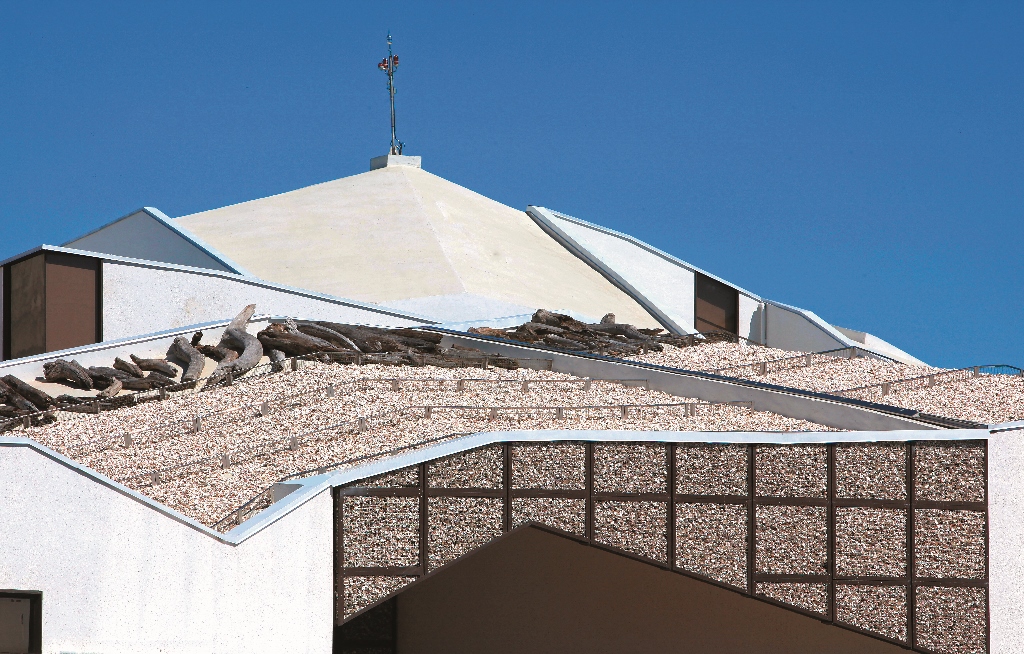
the Anping district leads the cool breeze of summer into the buildings
Walking and Reading the Humanity and Landscape of the Buildings
After walking through the greens and water surrounding the building, we then walk into the building complex and continue with the wonderful “course”.
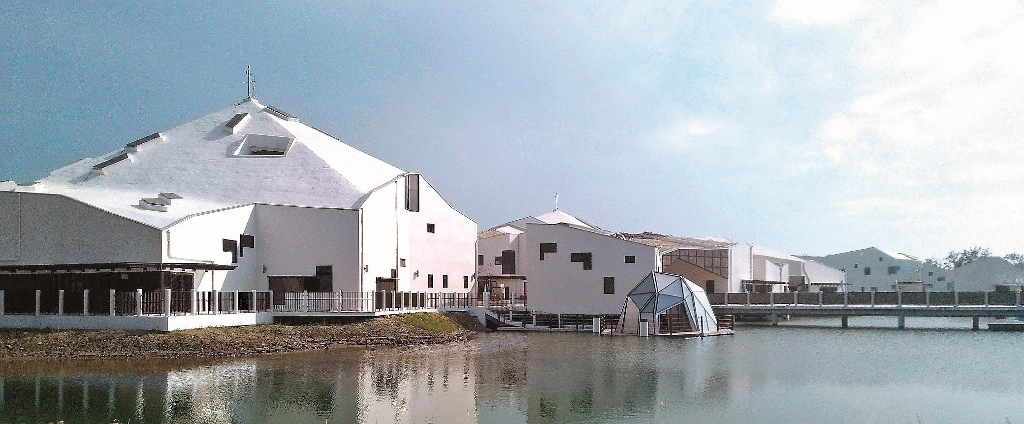
"In fact, I did not deliberately let the building to be "like something”. Instead I imagined the entire building
complex as a sandbar or an island”. Ying-Chao Kuo explained. "Then, according to the function of the
space, I integrated the buildings into a settlement. Then I adjusted the height of the buildings based on
the equipment, mainly the elevator. The specific height allowed the buildings the ability to block the north
wind, and to guide the west wind to flow in. Then I followed the local light and wind to cut the surfaces and
finally this process produced the present architectural appearance. The white exterior walls were inspired by
appearance of the buildings in the bright sunny area such as Greece and Turkey. This white exterior wall happens to appear like a hill which immerses and corresponds to the unique landscape of the local salt producing industry “Rather than what I think, I would like to know how other people think. Buildings should be able to create experience and make people think so they can connect much closer to people.
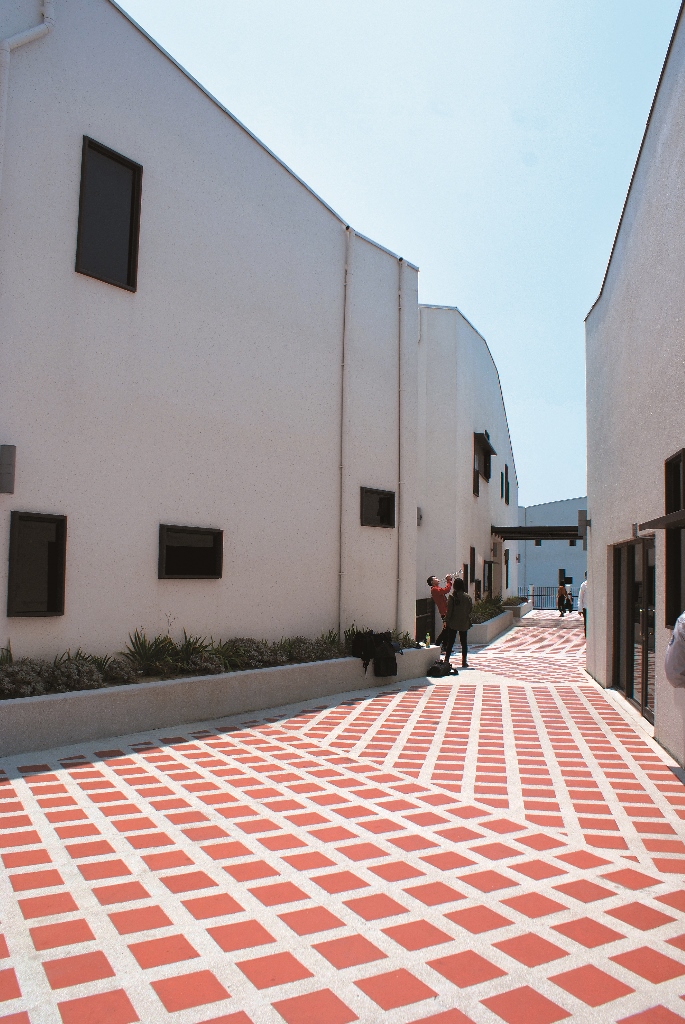
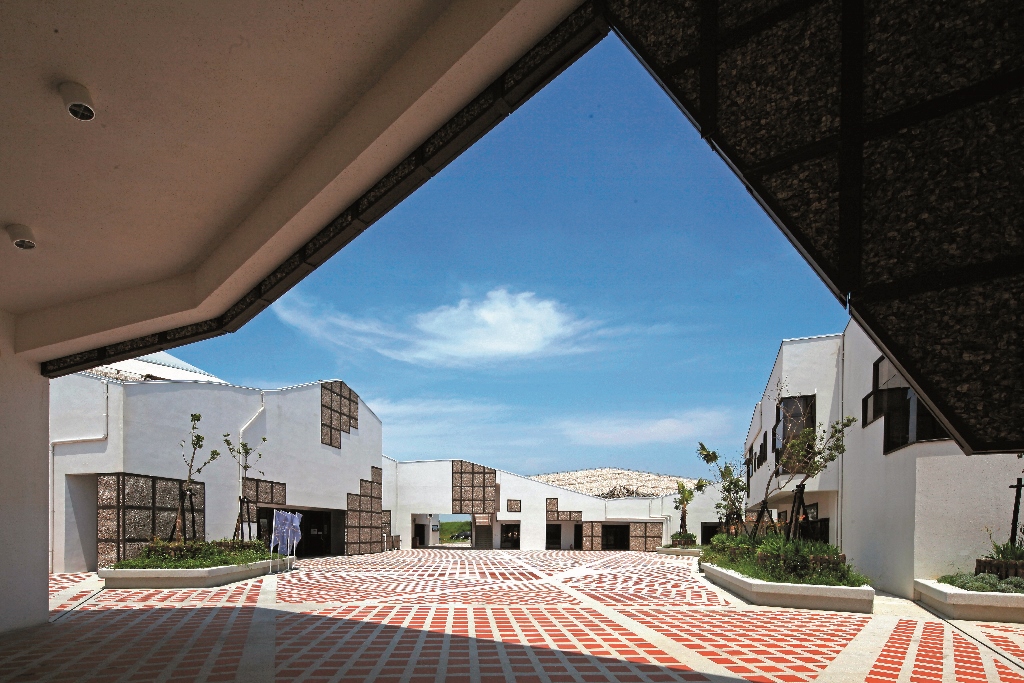
Following the footsteps of the senior technical specialist, Jiang-Ming Hong and moving between the buildings that are full of exotic ambiance, we can fully feel the sense of local settlement style. “Tainan is best known for its lanes and temple courtyard. Lanes are used to reside and move about whereas temple courtyards
are the centers of the community. Here in Tainan, lanes and water passageways connect the buildings
and lead everyone to the temple courtyard, and then spread out individually. He further explained while
stepping on the red tile like floor. “When you talk about traditional buildings, you would think of the red tile
roof. However, the red tile roof is not suitable here.
The organic nature of the settlement is continued, and the care for ecology is also extended from outside to
inside. One can easily see the structure units of the fence of the bridge and the walls of the building complex are filled with oyster shells. Up on the roof, one can also see a large surface area layered with oyster shells and drift wood. In addition to achieving a thermal insulation effect for the building, these layers also create various sizes of ecological pores for the biological creatures to rest and habitat. This type of usage of industry collecting and natural waste as architectural construction material can reduce carbon emissions produced as a result of transporting waste from the coast and estuary.
In addition, it can also achieve the goal of reducing wasteproducts. Furthermore, the white insulation paint used on the walls is mixed with oyster shell powder. This method thoroughly plays out the concept of ecological reserve and has become an essential example of reusing local waste materials.
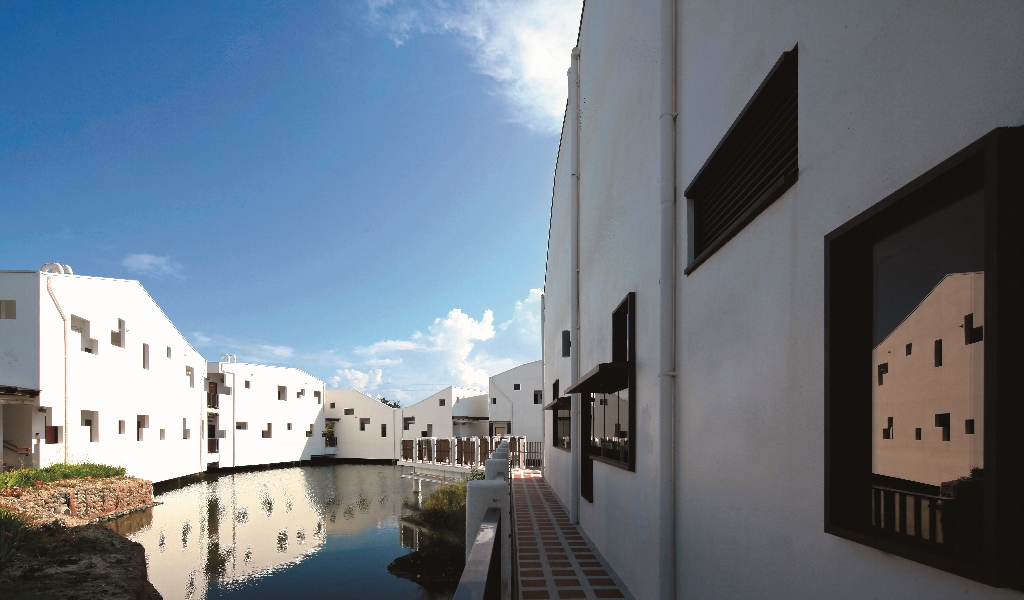
As we look back at the past, we also must look to the future. By using the unique window-opening design, the architect also emphasizes the building’s modern style in the building’s traditional space configuration style. “If the building complexes are like salt mountains, then these windows are like the crystallization of salt. The size of these windows varies based on the function of the specific space. Specifically, in the dormitory area, the placement of the outer wall opening and the doors and windows of the inner walls are staggered so the light can be reflected in the corridors. However, the light will not direct heat into the house”. Although these designs come from the wisdom of traditional architecture, the cleverness of the designs demonstrate the contemporary and innovative possibilities.
If Taijiang is a Book
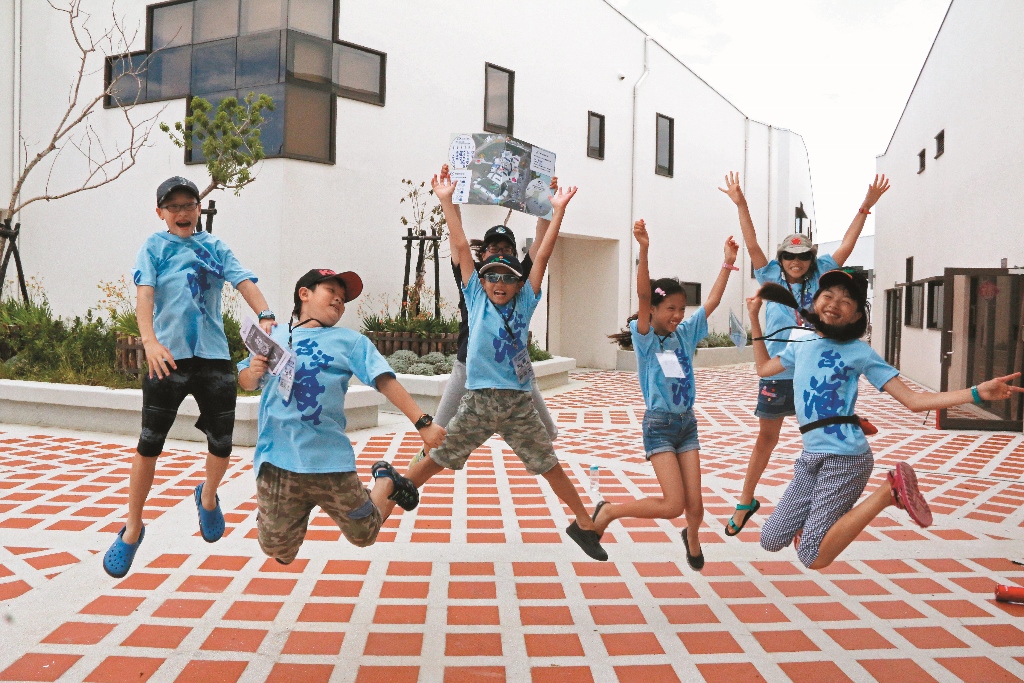
Visitors come to the visitor center with various purposes and they stay at the center for various periods of time. Some visitors come specifically to participate in the activities of the Taijiang Campus. These activities
include experiencing the standing canoe, following the tour guide to explore the wetland ecology, and tracing
humanity and history with the local NGO. These activities are lively and profound. For some visitors, we
must provide an outline form because they need to feel the rich ecology, history, and accumulated industry of
Taijiang within a few hours. Therefore, the visitor center is responsible for the task of being a “reading guide”
for the park; the center opens the first window for the people to take the first taste of Taijiang.
“The visitor center is not a museum; it is like the catalogue of the entire environment of Taijiang.” Senior technical specialist Jiang-Ming Hong stated the status and his expectation of the center while standing right outside the nearly complete visitor center. “When tourists visit the visitor center and head toward other places in Taijiang, they have the opportunity to think of the exhibit and the relevant textual and graphic information. After they incorporate their sensory experiences, they allow Taijiang to become a book that the tourists can sense with content that is constantly being added”.
The exhibit of the first floor of the visitor center shows the image of the Taijiang. Visitors first ride on the
time machine to review the history extending from the 18th century until the present time: the environmental
changes and human development of Taijiang. Then, we entered the highlight of the visitor center, the natural
ecological experience area. “We produced a double size realistic model of Taijiang’s essential wetland
environment so that without bending over, people can observe the hidden wetland ecosystem. As they
raise their heads, they can see the models of migrating birds flying”. Director Wei-Chuan Chang described
the attractive characteristics of the experience area in detail. “This activity is not a gimmick; it allows
visitors to understand ways to observe the diversity of the seemingly ordinary ecology in the environment. The visitors then can become aware that mangroves, lagoons, and salt marsh wetlands contain an extremely rich and unique vitality”.
In the last area, we introduce the promotion process of Taijiang National Park in detail. By discussing the changes of the local nursery fishery, we can look at the conservation process of the black-faced spoonbill. “The conservation and banding of the blackfaced spoonbill is one of the major tasks of the Headquarters.
We hope that the exhibition can incite the visitors’ interests to participate in the Welcoming the Black-faced Spoonbill event in September and the Farewell to the Black-faced Spoonbill event in March”. Director Wei-Chuan Chang stated that after the hardware of the buildings of the administrative and visitor center was completed, the courtyard at the center of the building complex then became an essential section of the activity. For the Farewell to the Black-faced Spoonbill activity this year, the Headquarters set up booths in the courtyard and invited local communities to exhibit and sell their local agricultural products or cultural and creative products. For first hand experiences such as “Summer Night Walk in Taijiang” and “Riding at Taijiang’s Two Towers”, the courtyard is the meeting place before the activities take off. The courtyard definitely plays its function in the tribal settlement.
The function of space has been gradually verified after the opening of the building, such as the vibrant pool
life in the lively courtyard, or the insects and birds entering and leaving the ecological pores. However, the
effect of green building cannot be confirmed yet. We have to wait for the energy monitoring system of the
administrative and visitor center to activate. In addition, accumulated years are required to compare the various data. Then, we can confirm the performance and make improvement. Director Wei-Chuan Chang, who just spent a year with the changes in the four seasons in the administrative center believe that “Green buildings and ecology conservation are both dynamic processes. We must be patient. We take other people’s experiences and use the data model to create Taijiang’s green buildings. Although we must face a the dramatic and extraordinary challenge of climate change, but I think we already have a good foundation to be a representative model.
vocabulary, it is also a double wall that is thermally insulated, wind blocking,
and ultra violet protected. / provided by Taijiang National Park Headquarters
Additional Information
Adminstrative Center Design Interest
Visitors do not always have the opportunity to visit the administrative center. Please follow our footsteps
to take a look at the unique design inside the administrative center.
About the Author
Yueh-Han Yang Graduated from the Department of Civic Education and Leadership, National Taiwan Normal University. Studying at Graduate Institute of Museum Studies, Taipei National University of the Arts.
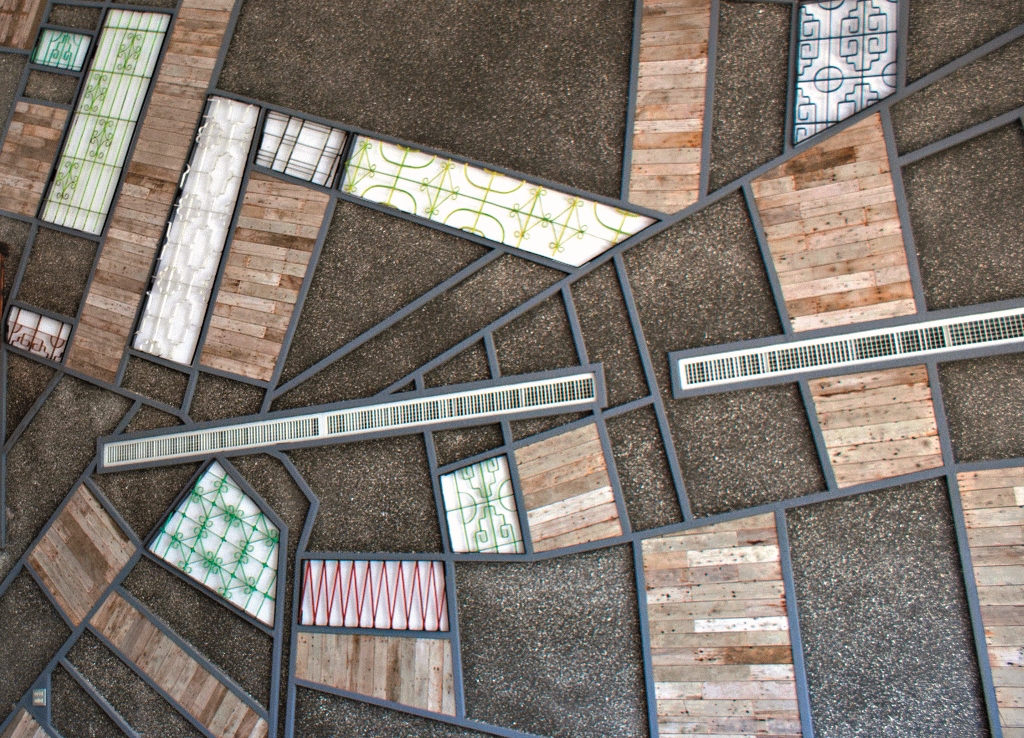
plate molds and cement correspond to the elements tribal settlements
such as the civic houses and fish ponds.
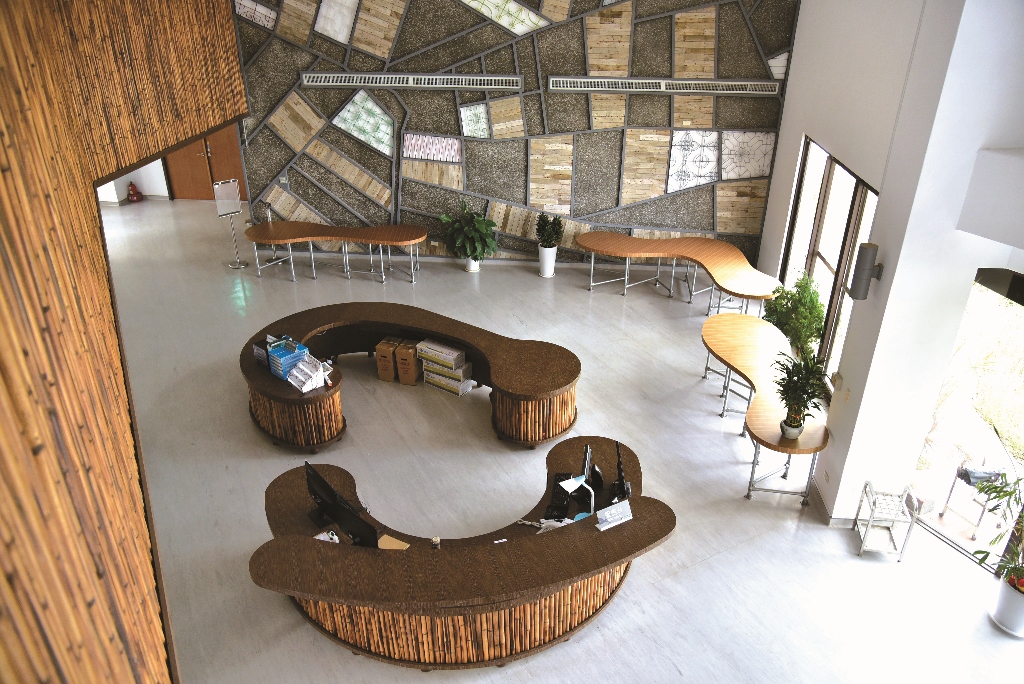
makes the table resemble the ever-changing sandbar along the Anping coast.
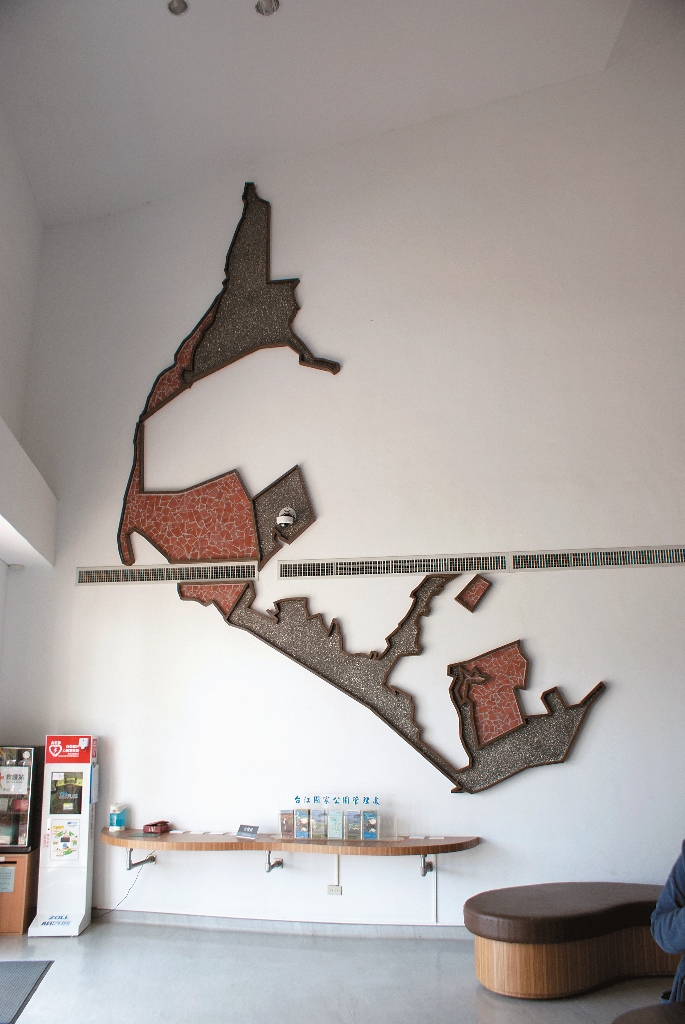
fill in the various functional blocks on the map.


