
The New Perspective of Homeland Conservation-Symposium of Reviewing National Park’s Functional Position under the National Spatial Planning Syste
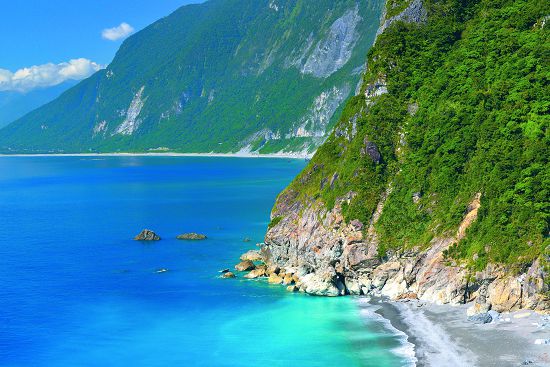
in the prehistoric culture. / Hsiao-Lu Ho
Article / Hui-Ying Lui Photo / Provided by Greenland Ecology Conservation Association
In response to the implementation of the National Spatial Plan, as well as the national park system began joining hands to respond to the “Heading towards National Park Version 2.0” position proposed by the Ministry of the Interior in late 2017, the Construction and Planning Agency held the “Symposium of Reviewing National Park’s Functional Position under the National Spatial Planning System” seminar under the “National Parks for the Future - International Symposium of National Parks Development and International Cooperation Program” series to strengthen the national park’s future functional positioning. Experts and scholars in the fields of national spatial planning, cultural landscape, and environmental conservation were invited to explore the national park’s responsibility in homeland conservation under the current legal structure and international trends.
KEYNOTE SPEAKER
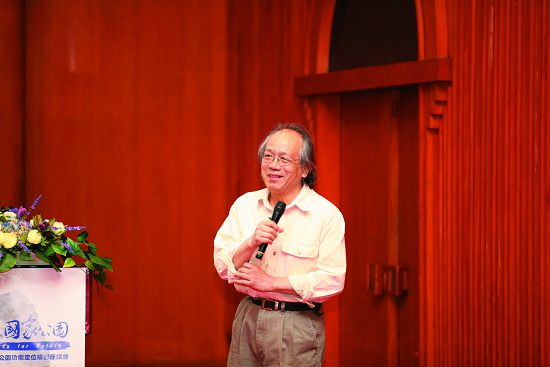
Institute of Archaeology, National Cheng Kung University
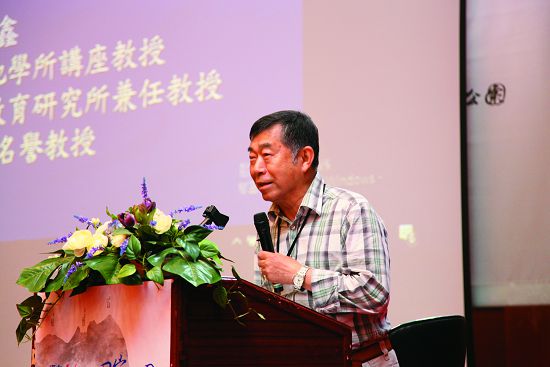
Professor, Graduate School of Earth Science, Chinese Culture University
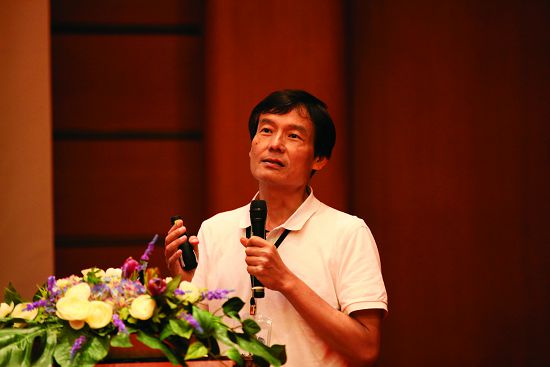
Researcher, Chung- Hua Institution for Economic Research
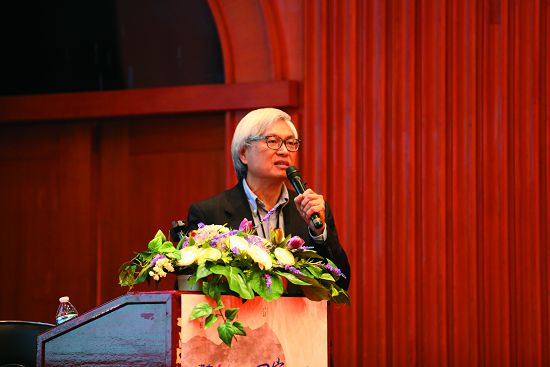
Professor, Institute of Marine Affairs and Resources Management, National Taiwan Ocean University
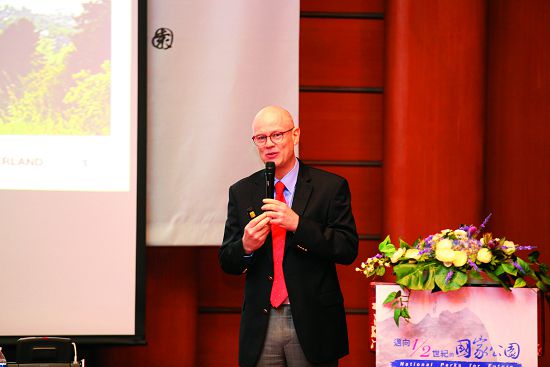
Director, Trade Office of Swiss Industries
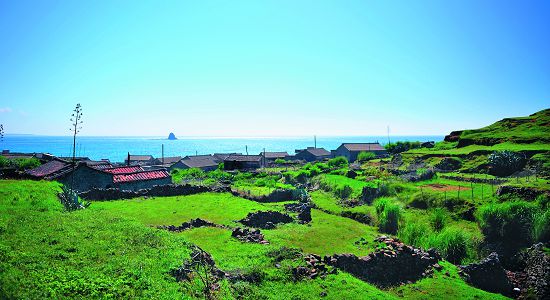
which have marine areas, such as South Penghu Marine National Park. / webmaster Yi-Pi
Integrative thinking that breaks through boundaries
Based on his profound knowledge in Taiwan’s prehistoric culture and history, Professor Yi-Chang Liu emphasized at the very beginning of the seminar that the integrity of homeland conservation must base on the equal emphasis on natural and cultural resources. National park’s conservation of cultural landscapes in the past was studied and preserved in the form of point-like historical preservation areas or special landscape areas under the respective efforts of various individual headquarters. But history evolution and footprint of human activities often present in a belt-like extension of time and space. Therefore, Professor Liu specifically pointed out that, “UNESCO's definition of cultural landscape in the World Heritage emphasizes the landscape of ‘the interaction between man and nature,’ which consists of the elements of human, event, time, place, and object collected all together.” Thinking from the perspective of human activities, “a pathway type cultural landscape can be an important consideration for the preservation of cultural landscape in future homeland conservation.”
Pathway not only has its narrow sense of accessibility function but also has a profound and complex meaning in people’s interaction level. The concept of a pathway system can break through single points or blocks of preservation, connecting heritage sites, historic buildings or other types of cultural assets. In terms of national parks, the Fish Road Historic Trail and Batongguan Historic Trail are both important cultural assets; these invisible ocean route systems of the prehistoric jade trading routes and the trading routes on the Taiwan Strait since ancient times are even more meaningful regarding crossing boundaries and regions. The national park has the opportunity to play a more active role in how the connotation of cultural landscape can be preserved and highlighted in the national park through the process of a comprehensive planning review, as well as how to form a belt or even a net of overall connection at the homeland conservation level through the assembly of pathway system.
Professor Wen-Yan Chiau also explored the role of national parks from the perspective of protecting underwater cultural heritage and how to enhance this area under the framework of the National Spatial Plan. UNESCO’s Convention on the Protection of the Underwater Cultural Heritage stated that underwater cultural heritage is an important common asset of mankind. Underwater cultural heritage was rarely investigated and evaluated in past developments in Taiwan’s seas, which may cause irreversible damage to many meaningful historic sites, structures, or surrounding environmental context. After the promulgation of Underwater Cultural Heritage Preservation Act, activities involving the development and utilization of waters shall be carried out in accordance with the law to conduct underwater heritage surveys, and the necessity and feasibility of the development activities shall be assessed based on the survey results.
Professor Wen-Yan Chiau also suggested that a survey of underwater cultural heritage should be conducted at the national level, and an overall strategy and system plan should be drawn based on the results. For the Kenting, Taijiang, Dongsha Atoll and South Penghu Marine National Parks which has marine areas, there should be recruitment or training of corresponding talents in the future, with the ability to deal with related issues and even conduct relevant investigations. The National Park Law also includes the use of historic preservation areas. In the future, the integration with the Underwater Cultural Heritage Preservation Act, as well as the integration and network construction of various marine protected areas, or even the planning of marine spaces and the integration of preserving marine and land culture, all require a broader perspective to plan for a bigger picture.
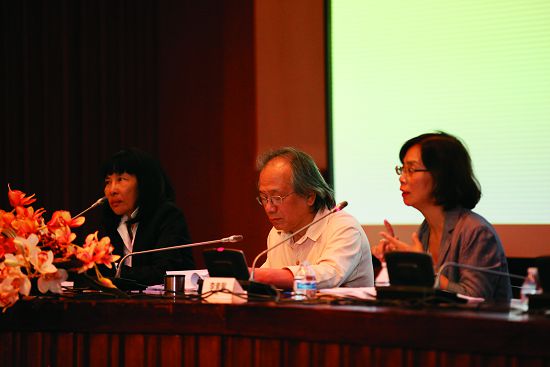
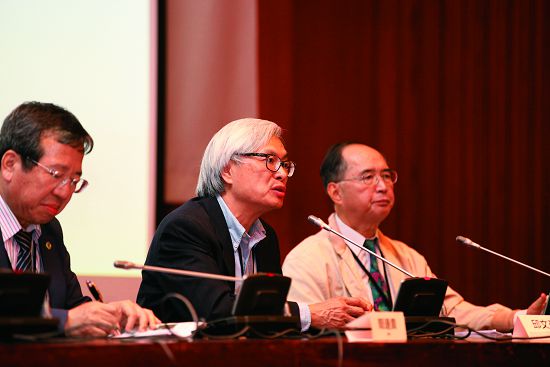
participating in exchanging dialogues on the topic "Finding new thinking of national park
development from the perspective of cultural landscape."
participating in exchanging dialogues on the topic “Protection of underwater cultural
heritage in national parks: issues and challenges.”
Deepen from the discussion of value
Professor Shin Wang summed up the current international development trend of protected area management, emphasized the relationship between people and the environment, and also especially cited the expositions of several important international institutions and the contents of international conferences to share with the participants. To establish the viscosity of the relationship between people and the environment, the first is the passing of the concept “the importance of the natural environment to human beings.” Therefore, environmental education has become an important means, and with their rich and precious natural assets, national parks naturally become the most important oudiv>
When the world continues to work to promote the “Aichi Targets” and committed to increase the area of global terrestrial and marine protected areas, how to make the national park system from the interface of international discourse to the innovation and adjustment of policy, administrative and technical aspects while Taiwan’s National Spatial Plan is promulgated and implemented? We can gain a lot of experience from foreign case studies. More importantly, we should seriously consider the overall layout of the national park in the National Spatial Plan, and achieve harmony between man and environment through systematic scientific management.
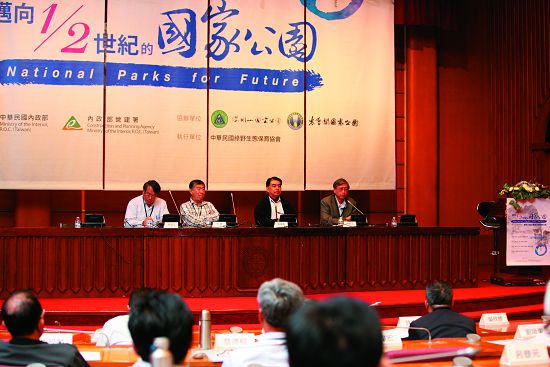
participating in exchanging dialogues on the topic
“Challenges and opportunities for national parks in a new age.”
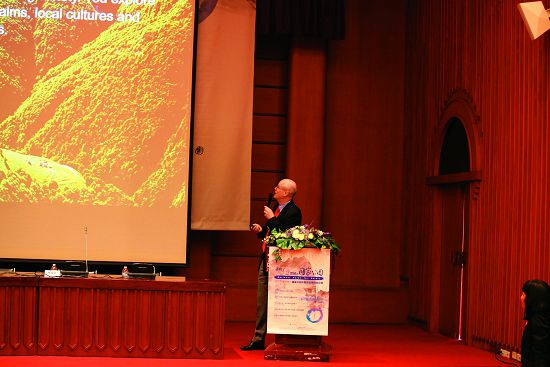
sharing the development experience of Swiss National Park
Allow national park to root deeply in people’s hearts
Mr. RolfFrei , Director of Trade Office of Swiss Industries, was specially invited to share the experience of Swiss National Park. He emphasized that nationa l parks not only preserve resources but also is a “management mechanism” that supports the locale conomy and maintains local traditions. Celebrated its 100th anniversary in 2014 , the Swiss National Park System clearly grasps the development advantages through scientific analysis, and further establishes the “connect i on between peopl e and national parks” through these advantages. The Swiss National Park has gather s tati s tics showing people who do hiking , cross - country mounta in bike s and cycling in Switzerland thought experiencing the natural and mountain scener y is the most impor tant attraction; the age group that loves hiking activities hasa l so fall ento the 45 ~ 51-year -old group , and 46% of them fall into the 20-yearol d ag e group. Therefore , to establish a long-term and stable connection between people and national parks, how to attract the groups that love hiking (especially young people) willing to continue to visit the national parks becomes an important key.
Through a convenient public transp or tsystem, ahighly accessible trail system, and the emer g ence o f envi ronmenta l diversity, Switzerland has success fully promote dlowcarbon ecotourism. In the entire Swiss trail system, the general level trai l is 40,000 km long , the mounta in hiking trailis 25,000 km long , and the alpine hiking trail is 1,000 km long. Most of them rely on volunteers f or maint enance . The well - connect e d trail system also connected local settlements , providing opportunities to boost locale conomy and showca s e local culture. They use 30 years a s inter va l s thinking ahead, is there a need to continue to exp and the trail system in the future ? In the face o f environmental changes, should the maintenance o f the trail system be re-adjusted? All of the s e topic sare on the list with more challenges that need to best rate gically adjusted continuously.
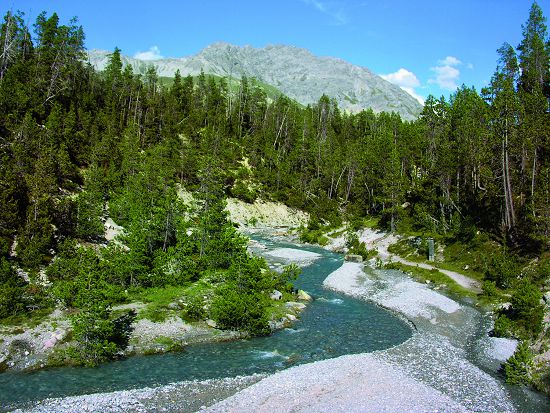
/ Source: Creative Commons(https://upload.wikimedia.org/wikipedia/commons/
b/b2/Swiss_National_ Park_023.JPG, by Hansueli Krapf)
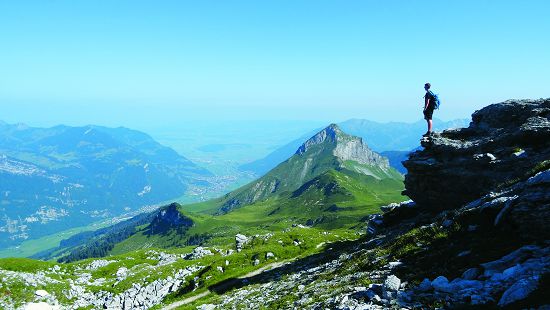
between man and nature. / Source: Creative Commons
(https://commons.wikimedia.org/ wiki/File:Hiking_in_the_mountains_in_Schilt_(Unsplash).jpg,
by Roger Steinbacher armaas)
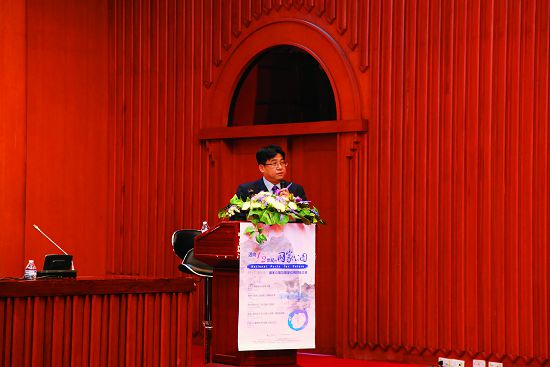
Agency Ministry of the Interior giving the opening speech
National Spatial Plan as the outline, and resource conservation as the goal
At the end of all the special seminar, Professor Yung-Jaan Lee provided the direction of the national park’s positioning from the National Spatia l Planning system. “The National Spatial Plan is the outline, and resource conser vation is the goal. Only when the outl ine is fo l lowed can the goal be reached, and can effectively protect our homeland. National park s are not established purely for natural conservation functions, but rather a combination of homeland security , environment aleducation , general recreation, and space admini stration of land and building control .” Nationa l spatial system (National Spatial Pl a n , Urban Planning , and National Park Plan) and the three national spati allaws (Spatial Planning Act, Wetland Conservation Act, and Coastal Zone Management Act) establish the legal source and structure of homeland conser vation and effectively protect the country. If the establishment of National Park Service is succe ss ful in or ganization reform in the future, its business will include wetland conservation and coastal management. At that time, it will inevitably bear the heavy responsibility of integrating policies and management mechanisms in the conservation o f water , land and forest resources.
Just as Director General Hsin- Hsou Wu (Dire ctor General , Construction and Planning Agency Ministry of the Interior) has said in the opening of the conference, the national park’s management mechanism is not only a guarantee for the success o f homeland conservation , but also an actual practice the countr y has on environmental conservation. In the future, we should continue to work hard on externally to be in line with the international community regarding ideas and actions ; internally, it is necessary to propose policy adjustments and action strategies for the Spatial Planning Act and National Park Plan’s operation and management work. We believe that under the framework of National Spatial Plan, national parks can be more acti ve in promoting bus iness management, faithfully playing the protector role of homeland security and environmental conservation , and moving towards a new generation.
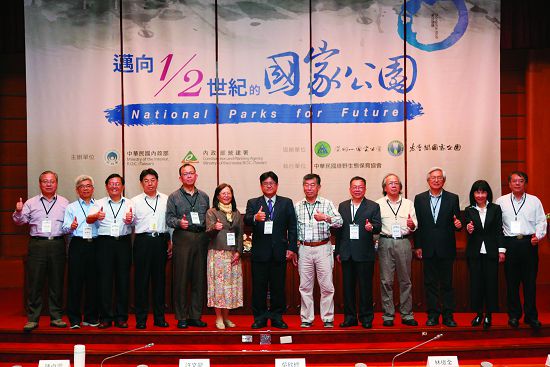
Agency Ministry of the Interior with the participated experts and scholars


