
Building the Style of Recreation through History-Adaptive Reuse of Kinmen’s Historic Houses
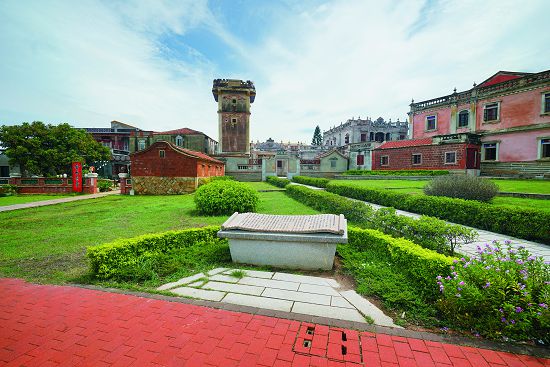
has become an important milestone in the adaptive reuse of Kinmen’s historic houses.
/ Huai-Chi Yang
Interviewee / Wen-Lung Hsu, Former Director General, Construction and Planning Agency Ministry of the Interior (Director of Kinmen National Park Headquarters from 2000 to 2006)
Article / Ru-Ling Yu
Photo / Huai-Chi Yang
The first national park in Taiwan that aims to conserve cultural assets and battlefield heritages was established in Kinmen in 1995. In its jurisdiction, there are Southern Fujian style buildings preserved since the Ming and Qing Dynasties, impressive western-style mansions from the merchant-gentryera, as well as natural ecology that is preserved under the long military control period, and combat readiness facilities and battlefield heritages left behind after the relieving of battlefield mission. Although many of the traditional buildings scattering among the settlements have collapsed due to neglect and lack of use, one can still imagine their magnificence during their peak moments when standing before the remains.
In 1999, Kinmen National Park Headquarters set up subsidies for maintaining the traditional architecture style of buildings in Kinmen National Park, providing funds for renovating these traditional buildings. For traditional buildings with preservation value but could not be repaired by residents themselves, owners can give over the above ground building rights to the Kinmen National Park Headquarters for 30 years, and the renovated building will be adaptively reused as exhibition halls, homestays, shops, etc., and manage by the national park. Kinmen National Park has conquered many obstacles in negotiating and broke through the difficulties of the complicated property rights in solving the cumbersome usage right probl ems , restoring the building according to the original appearance, and outsourcing the operation to be used as homestays, exhibition halls, restaurants or shops. Through the restoration and reuse of historical buildings, it not only achieves national park’s purpose of preserving cultural assets, but also promotes community development, and enables visitors to experience the wisdom and culture of the ancestors through these traditional spaces.
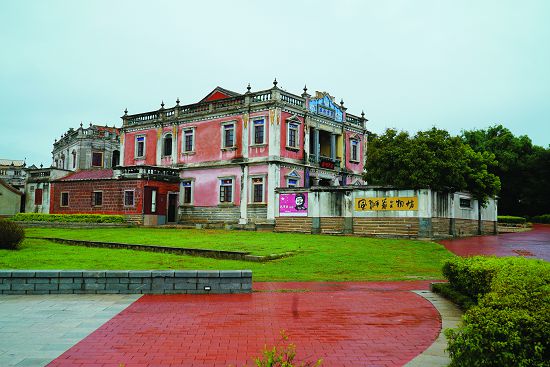
in addition, there are even more diverse ways of adapting these spaces.
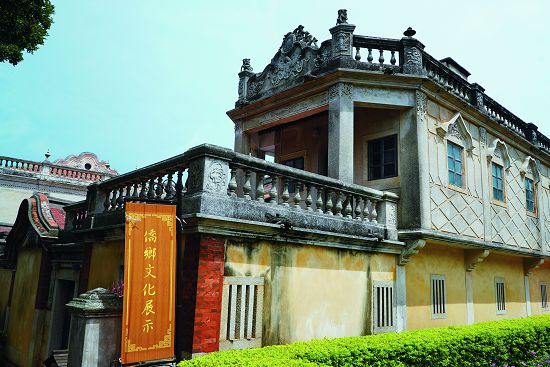
(Wind Lion God Cultural Relics Shop).
Complex property rights make integration difficult
Wen-Lung Hsu , Former Director General of the Construction and Planning Agency Ministry of the Interior, has served as the Director of Kinmen National Park Headquarters from 2000 to 2006. During that time, he has vigorously promoted the adaptive reuse of historic houses and established relevant operational mechanisms, and has become an important advocate of the preservation and regeneration of Kinmen’s architectural landscape. He believes that if the buildings were simply restored without any reusing, the buildings would break down again over time. Also, if the traditional buildings were massively transformed into exhibition halls, there would be the problem of too much homogeneity. While Wen- Lung Hsu as the director of Kinmen National Park Headquarters, the Tourism Bureau of the Ministry of Transportation and Communications has just started to promote the “Regulations for the Management of Home Stay Facilities.” The traditional buildings in Kinmen are mainly residential houses. Regarding the nature of use and potential, they have the conditions to be converted into homestays. They only have to go through proper applications and allow people who appreciate historic houses and are willing to manage and operate to take over, this way not only can they maintain the restored spaces, but also revitalize the local economy and promote community development. The Kinmen historic house homestay was born under this vision.
However, the traditional buildings in Kinmen are ancestral properties inherited by generations of local residents. The property rights of the historic houses are shared by many, which means the number of owners is very large, making it difficult to reuse the space. Take Deyue Tower as an example; it was built in 1931 when the local Huang family made their fortune doing business in Indonesia. It is the most representative westernstyle building in Shuitou Village. After generation and generations, the Huang family has settled all over China and Southern Asia, plus the property rights of the buildings are intertwined and complicated, making it very difficult to clarify and handle.
At that time, Former Director Hsu overcame funding issue and entrusted the Land Administrator to visit descendants of the Huang family overseas. After clearly explaining the national park’s position and terms to the family members, they finally impress them with sincerity and obtained the above ground usage right for 30 years. However, Deyue Tower’s condition is not suitable for a homestay, so it is reused as an exhibition hall. At the same time, considering the diversity of adaptive reuse of the historic houses, other buildings around Deyue Tower were also repaired and transformed into restaurants and shops to form a community for tourism service functions. From one has to cross over the sea to negotiate, we can see that it was not an easy process in the initial promotion of the adaptive reuse of historic houses. The most important thing is to gain the support and trust of the local residents and obtain the rights to use the buildings, then can the subsequent restoration works and adaptive reuse possible.
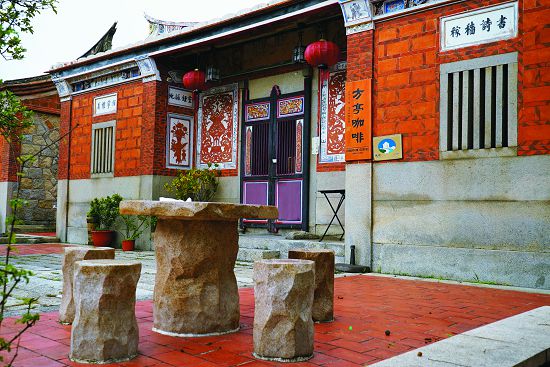
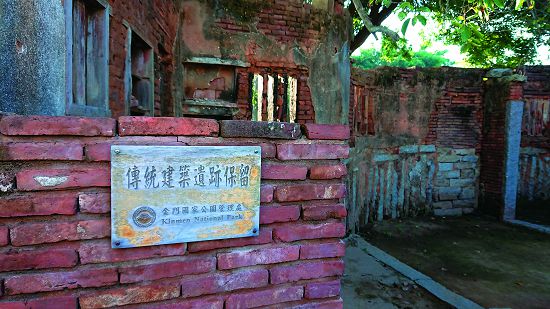
traditional architecture to see the appearance without repair.
/ provided by Construction and Planning Agency Ministry of the Interior (Photo by Tina Hsieh)
Overcoming the difficulties of the law and giving back to the local communities
After these lection of suitable architects and contractors by the Kinmen National Park Headquarters, the building will be communicated in detail with the commissioned architect before repaired. The function of space will be determined at the beginning of the construction. If it is to be converted as a homestay, in addition to the principle of “restoring the old as old,” it must take into account the needs of the guests. Therefore, all the rooms of the homestay are designed as suites equipped with modern bathroom amenities. Most importantly, damages to the building must be avoided during the internal renovation and reconstruction process. Former Director Hsu said, “After the completion of the historic guesthouses, the ideal state is that they can be taken over by the descendants of the property owners because they are the ones who know the house best and would cherish it the most. Therefore, when selecting who will be operating the homestay in the public bidding process, kinship status is listed as a bonus condition.”
Although Kinmen National Park Headquarters has gathered the funds and showed their good faith, how to convince the people to invest in the operational resources and workforce is still a major struggle. In the position of the business owner, although Kinmen National Park Headquarters would complete the restoration of the building , the business owner still needs to purchase equipment, carry out interior design and manage the homestay, which all require them to invest a large sum of money. In order to eliminate the public’s concerns, Former Director Hsu proposed a special request to the Ministry of the Interior and was approved that the historic house homestay owners would only need to pay the royalties when they made actual income, which greatly reduced the cost and risk of the business owners. This way they can concentrate on serving their duty as a homestay owner and operate a characteristically unique homestay. To boost the confidence of local residents and reinforce the professional abilities of the homestay owners, Former Director Hsu even took them to visit homestays in Taiwan Island and Mazu to learn from their experience, as well as invited the Fuhua Hotel team to come to Kinmen and teach them business management skills.
In the process of promoting historic house homestays, another hurdle that needs to overcome is the restrictions in the “Regulations for the Management of Home Stay Facilities.” Former Director Hsu recalled at that time, Taiwan’s regulations on homestays used regulations in European and the United States as references and stipulated that the number of rooms in a homestay must stay under four. However, the situation in Europe and the United States is very different from that in Kinmen. The limitation of four rooms would restrict the development of the historic house homestays. “So I called on the Tourism Bureau to let them know the necessity of revising the law, and also arranged for the Chair of the Regulations Committee of the Ministry of Transportation and Communications to visit Kinmen to understand the situation. As a result, a proviso was added to the Regulations for the Management of Home Stay Facilities that outlying i s land s can be an exc epti on. Otherwise, the scale of the operation will not be large enough, and for the historic house homestays with a larger number of rooms, there will also be the problem of imbalanced recovery.”
In addition to revitalizing traditional architecture, the operation purpose of historic house homestays is to combine local culture and build a friendly partnership with the community. Therefore, the homestay owner has to propose a communityfriendly plan. For example, bring in employment opportunities for the village, organize a picture book storytelling activity for the children in the community, etc., giving actual feedbacks to the community. To assist the development of historic house homestays, Kinmen National Park will also organize activities and eco-tourism for the homestay to introduce customers. After a decade of continuous promotion, allowing tourists to experience Kinmen’s unique architectural style, customs, and everyday life as a way to pass on Kinmen’s culture.
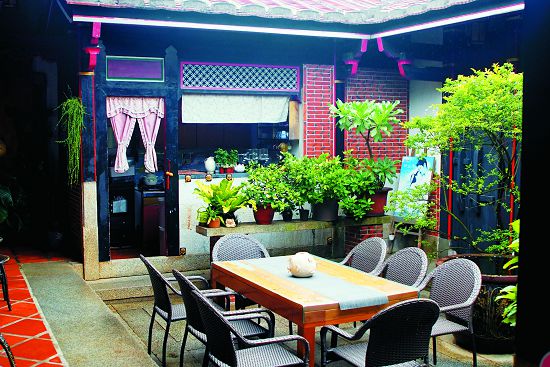
and it is also an important factor in keeping the house well ventilated and comfortable.
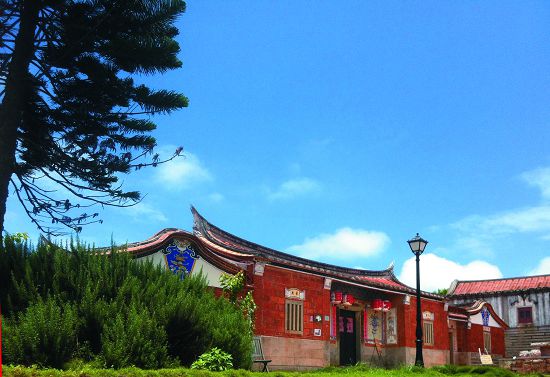
and has established a very good reputation. / provided by Xiang-Fen Yan
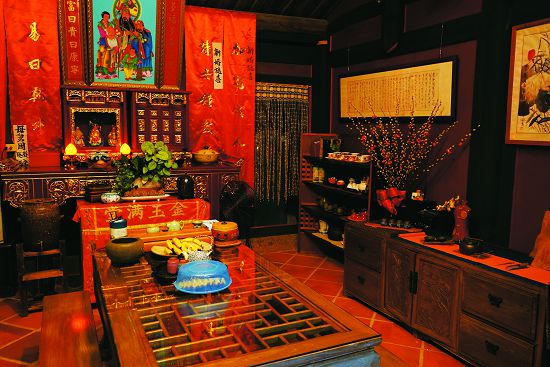
Some of them are set up as partly used by the Kinmen National Park Headquarters
and partly used as residential homes.
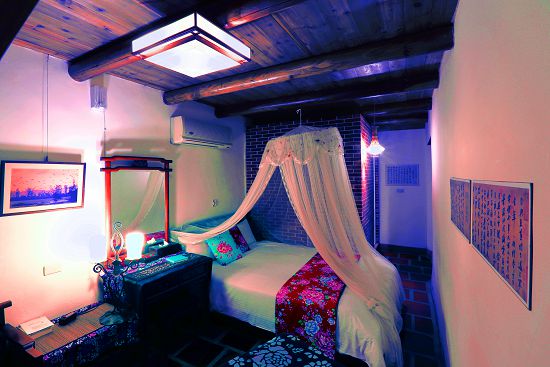
When used as a homestay, it is necessary to take into account the general
accommodation needs in this modern time and at the same time,
avoid any damage to the building itself. / provided by Xiang-Fen Yan
Having both software and hardware is the key to success
Kinmen historic house homestay is a pioneering work beyond the na tional park’s management model ; however, ther e ar e many s imi lar ca s e s overseas. Former Director Hsu recalls his accommodation experiences during his past trips, such as the European castle B&B, which is undoubtedly a successful example of building adaptation and regeneration. A farmhouse in Germany converted its extra rooms into guesthouses and offered meals made out of local agricultural produces, a llowing visitors to experience the daily life on a farm. This type of homestay operation is also worth Kinmen historic house homestays to learn from.
From the hardware perspective, the historic house homestays are mostly Southern Fujian style courtyard buildings. This architectural form reflects the regional style and the aesthetics of the people, and has the advantages of adapting to the environment to keep warm in winter and cool in summer. A courtyard is planned in the house which eliminates the barrier between the natural environment and the building; the redesigned ancestral hall has also become a place for visitors to chat and interact. In terms of management, the historic house homestay itself carries excellent cultural heri tag e, p lus young business owners have brought in the concept of “slow living”, conveying a lifestyle that is different from the city rhythm, thus attracted many backpackers.
“Our targeted customer group is separated from those big group tours of more than 30 or 40 people. Therefore, the hotel industry will not criticize us because we have not taken away customers.” Former Director Hsu also observed, “Group tours usually only use the homestay as a place to stay overnight, and will start their sightseeing and shopping trips early in the morning. Individual guests who choose historic house homestays will spend most of their time in the homestay and enjoy a leisure time there. They will stay for a night in the historic house and will grow feelings to this place. When they see other unique historic house homestays, they will also have the idea of staying for a night, and even ask their friends to come visit Kinmen together revisiting their memories.”
Each of the Kinmen historic house homestays has its style and is dedicated to creating a cozy, homey atmosphere. For example, the owner of the Couple Inn is a young couple who has visited Kinmen before opening the Inn. They were so attracted by Kinmen’s cultural and natural landscapes that they end up giving up their high-income jobs in Taiwan and moved across the sea to Kinmen, and gained their right to operate the homestay through public bidding. Shuitou No. 40 operated by Xiang-Fen Yan is very popular among visitors and is a successful demonstration of the historic house homestays. Located in the Zhushan village and as indicated by its Italian referenced name, Piano Piano – which literally means take it slow – advocates a slow pace in life. These are just a few representations of Kinmen’s historic house homestays. There are more guest houses with different characteristics that are worthy to experience and explore.
To maintain the quality of the historic house homestays, Kinmen National Park Headquarters also set up an evaluation system of the homestay owners, inviting experts and people in the tourism industry come and assess. If the homestay owner is awarded excellence, then his contract can be renewed and their operation period can be extended from the original five years to another four years each period.
Former Director Hsu believes that the success of the historical housing homestays lies in the collaboration of software and hardware. The National Park provides the funds for the repair, design, and construction of the hardware, and the homestay owner’s operation method is the software, which is also the key to the development of homestay industry. “Good hardware and software will bring good reputation, with good reputation there will be demand, and demand creates supply, which together forms a virtuous circle. This way we just might be able to gradually restore and regenerate all the thousand historic houses we recorded in our survey.”
However, the restoration funds in the present have been greatly reduced compared to the initial stage of promotion. Former Director Hsu said, “Now the demand is increasing, but the supply depends on the budget from the central government because the local economic resources are limited. Yet with the current reduced budget, how can we solve this problem? This is what Kinmen National Park has to think about in the future.”
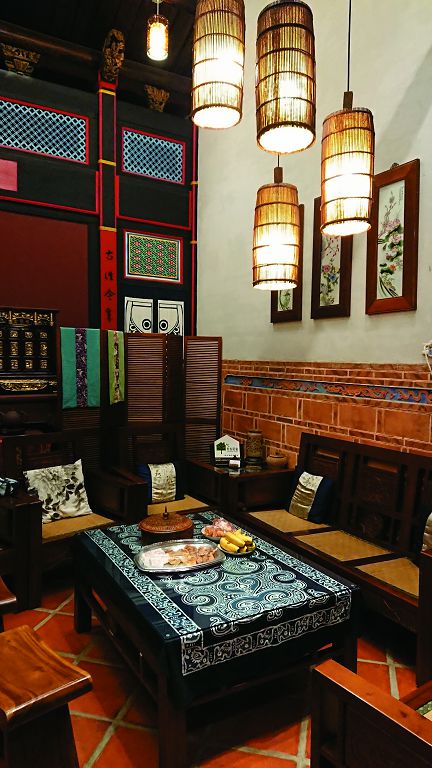
becomes a space for guests to interact with each other. /
provided by Construction and Planning Agency Ministry of the Interior (Photo by Tina Hsieh)
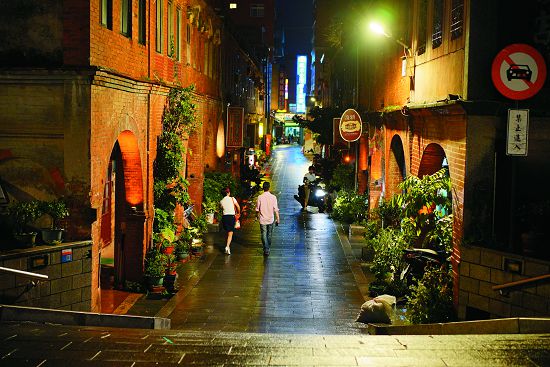
has thousands of faces that are definitely worth visiting.
Building the brand’s core value
Since the opening of the first batch of Kinmen historic house homestays in June 2005 to August 2017, Kinmen National Park Headquarters has completed 69 historic house homestays covering the villages of Shuitou, Zhushan, Oucuo, Qionglin, Xiaojing, Shanhou, Beishan, Nanshan, and Lincuo, having a total of 338 rooms. Kinmen National Park Headquarters also commissioned a performance evaluation and from the occupation rate, number of visitors, number of returned customers, tourist feedbacks, and revenue, all reflect that the operation of historic house homestays is a success.
“I often say historic house homestay is like a ‘reversed BOT’. BOT is the private sector provides the money and the government provides the land. Historic house homestay is just the opposite that the government provides the money and the private sector provides the property. Initially, it was very difficult to integrate the owners of the historic houses, and there weren’t many successful negotiation cases. It was getting half the results with twice the effort. Now with the establishment of results and reputation, it has become yielding twice the result with half the effort.” The difficulty of promoting the historic house homestays in the early days is self-evident. After more than ten years of efforts by the team of Kinmen National Park Headquarters and the owner of the homestay, these precious cultural assets of Kinmen got to survive, and “historic house homestays” has also become the most valuable brand of Kinmen National Park.
Former Director Hsu has also reminded that besides having hundred-year-old traditional architectural settlements, Kinmen also has precious natural resources such as otters that only live in clean waters and pelicans and other migratory birds that come here every year. This small island is blessed with such a unique environment that allows every guest who stayed in the historic house homestays can not only experience the local traditional culture but also enjoy a rich eco-tourism experience. When people visit Kinmen, they can stay in the historic house homestay to experience the beauty of architecture and culture, learn about the story of conserving the otters, enjoy the winter scenery of migratory birds, and patrol between spectacular battle sites, and feel the National Park’s efforts in transforming these resource characteristics and sharing them with the visitors.
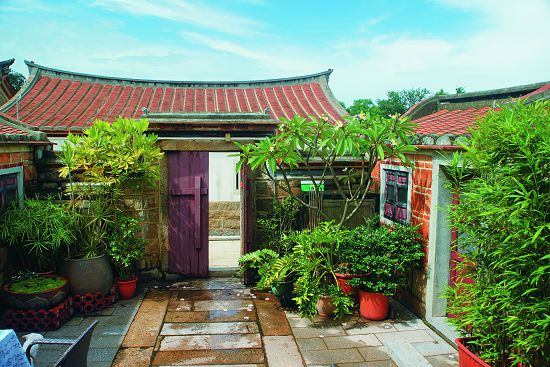
made it regained its vitality once again.
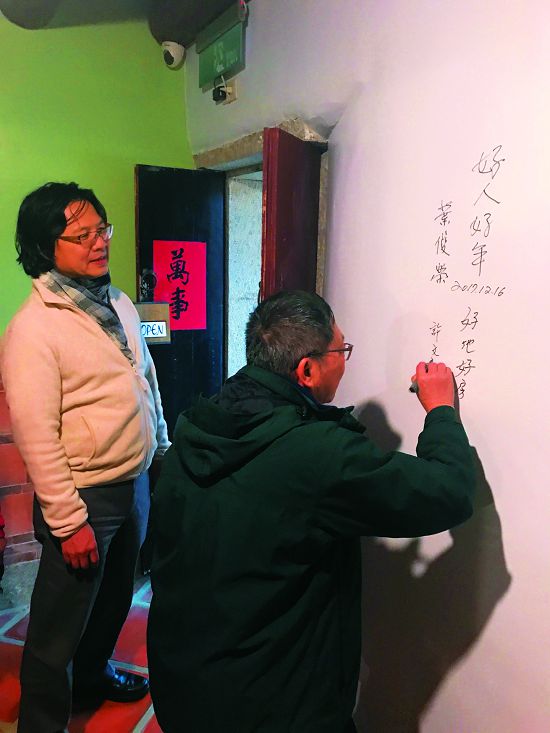
Former Director General of the Construction and Planning Agency visiting a
restored Kinmen historic house (Shuntian Mansion) /
provided by Kinmen National Park Headquarters
Author | Ru-Ling Yu
Former editor of space design magazine, interview editor of an art magazine, chief editor of children's book. Currently working as a freelance writer.

