
Law Enforcer with Gentle Heart-The story of a senior National Park police officer
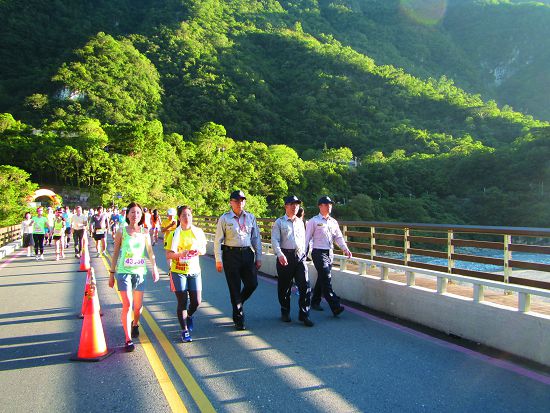
and security maintenance services at the Taroko National Park Canyon Marathon.
/ provided by the 9th Division of the Seventh Special Police Corps
Interviewee / Chien-Chih Huang, Commander of the 7th Division
the Seventh Special Police Corps, National Police Agency, Ministry of the Interior Article / Yueh-Han Yang
Have you ever had such an experience? You are hard pressed to explain a familiar word when suddenly asked about its meaning. For example, here's a question: What do "police" do?
Few people have an immediate answer while most need to put together their impression of a police. Whether issuing tickets, arresting drunk drivers, chasing after criminals or patrolling their jurisdictions, these are part of police duties. However, in a nutshell, police are civil servants responsible for maintaining public order.
A further question then! What are the National Park Police res2ponsible for?
Chien-Chih Huang, Commander of the 7th Division, the Seventh Special Police Corps (7SPC) who has spent 28 winters and summers in national parks, shares the joys and sorrows of his special experiences in Yangmingshan National Park, Yushan National Park and Taijiang National Park, and in his story, gives us the answer to the question.
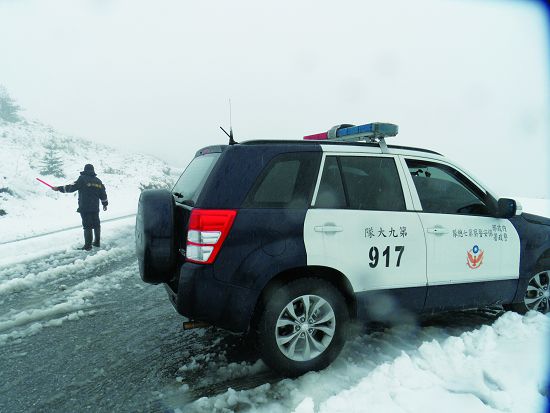
and safety propaganda in the snow season of Mt. Hehuan
/ provided by the 9th Division of the Seventh Special Police Corps
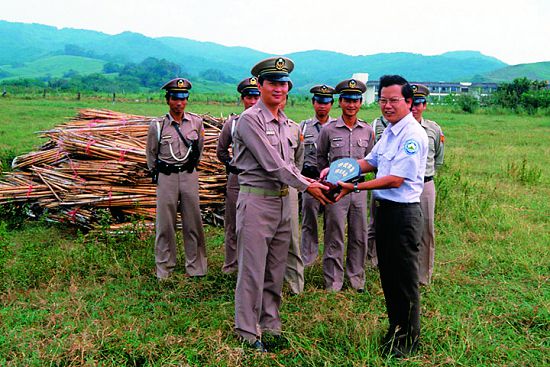
and showed appreciation for the efforts of those protecting the birds.
/ provided by Kenting National Park Headquarters
Banning is a means, not an end
When Taiwan first established a national park in the 1980s, the concept of conservation was not prevalent at that time. Inevitably, the implementation of many conservation policies conflicted with past public perspectives and habits. To facilitate the natural ecological protection going on track as soon as possible, the National Park Headquarters adopted a twopronged strategy. The first dimension was strengthening the impression of ecological conservation through educational promotion. The other dimension was rigorous enforcement of the National Park Law and other relevant regulations with the help of the then National Park Police. Thus the gray figures of the National Park Police became an ever present cornerstone in the protection of national parks.
“Everyone may be surprised, but a major problem handled by the National Park Police is public transportation,” Chien-Chih Huang smiled as he recounted the complexities of problems encountered in the past. “No electricity, no gas, break downs, punctures, locked out...whatever help the public needed, we did our best to provide.” Particularly along the expansive roads in Yushan National Park, before roadside assistance can arrive, the police are the most indispensable guardian of the lives and properties of tourists. Coupled with the ensuing problem of traffic diversion and illegal parking, the role of the police as a public babysitter remains distinctive in national parks.
“In the past, the roads of Yangmingshan National Park were as crowded as a parking lot during the holidays.” Scenting the arrival of tourists, street vendors would gather, and illegal construction of restaurants and Bed and Breakfasts would spring up like bamboo shoots after the rain. Moreover, trampling over plants, picking flowers and littering were common problems that exhausted the police. Yet like “baby-sitters”, the police preferred to persuade and educate rather than punish. “Banning is a means, not an end. The ultimate goal is for the public to abide by the law.” Citing the Taijiang National Park as another example, Chien-Chih Huang said, “Since the Headquarters was established in 2009, we did not officially issue our first ticket until 2012. Before that, we issued more than 200 warnings in the hope of gradually instilling in the public, especially local residents, a correct perspective.” Naturally those who refuse to listen despite multiple warnings or those who are intentional offenders should not be spared the consequences.
Since the National Park was established under the National Park Law, the role of the police has changed from law enforcement to assisting with National Park Law enforcement in the event of violation. “For example, if someone is caught cutting down a tree, we will first notify the National Park Headquarters of suspected illegal activities. If necessary, we will require the person in question to make a statement at the Headquarters 01 to determine if the conduct was intentional or for other legitimate reasons. The final verdict will be at the discretion of the Headquarters.”
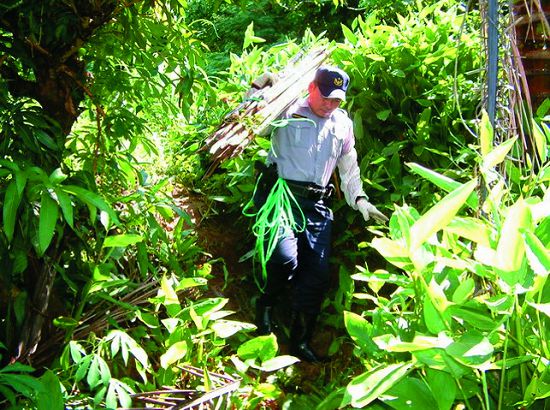
/ provided by Kenting National Park Headquarters
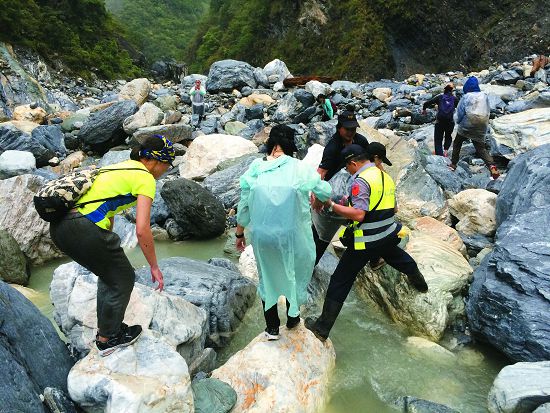
/ provided by the 9th Division of the Seventh Special Police Corps
Never forget to respect nature
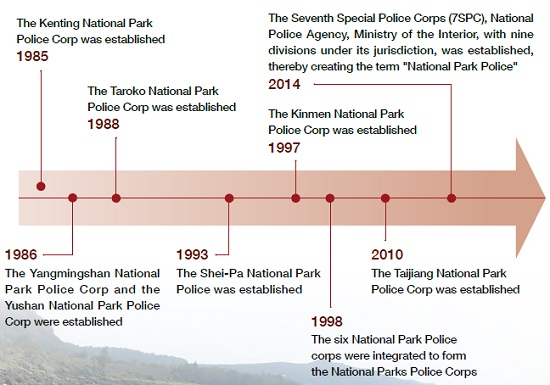
In fact, since Kenting National Park established the first National Park Police in 1985, the term National Park Police has undergone several reorganizations before becoming a part of history. However, its heart for serving the people and maintaining order has remained unchanged.
“In 2014, the National Park Police and other professional police corps such as Taiwan special police corp, the Environmental Protection Police Corps and the Forest & Nature Conservation Police Unit were integrated into the 7SPC,” explained Chien-Chih Huang as he pointed to his badge. Under the 7SPC, the 4th to 9th Divisions are responsible for environmental protection and national park duties within their respective jurisdictions. “The natural and cultural environments vary according to each jurisdiction, so it is necessary to implement “special skills” that are appropriate to the different environments.”
For example, the 6th Division responsible for Yushan National Park and Nantou Forest District works in a natural environment of lofty mountains and steep hills, and constantly deals with tourists who are attracted to the beautiful but dangerous vistas. “I was involved in a mountain search and rescue operation in Yushan National Park that lasted for 35 days. After being transported in batches by helicopters to a landing point on the mountain, it took 5-6 days for the personnel to get down the mountain.” Chien- Chih Huang recalled the typhoon approaching from the Pacific Ocean during that time, and the extreme mental and physical stress on the already exhausted rescue workers.“Unfortunately, in the end, we did not find anyone.”
However, when asked about rescuing mountaineers injured from animal attack, Chien-Chih Huang smiled and replied, “Almost never.” The majority of rescued tourists suffered from mountain mishaps due to mountaineering alone, disregarding bad weather conditions, lacking mountain climbing knowledge or having inadequate equipment. “I hope that everyone realizes that in comparison to nature, humans are miniscule. At best, they get injured, and at worst, they may become lost and die. So, we must always regard nature with awe and respect.”
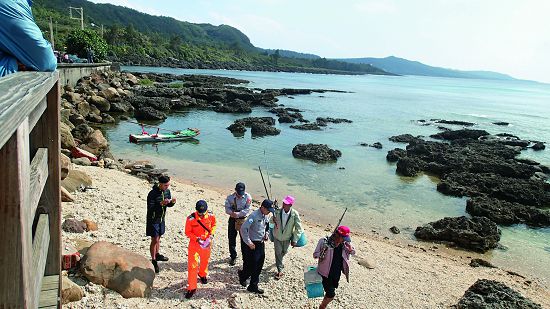
jointly enforce the ban on illegal fishing / provided by Kenting National Park Headquarters
Scope of Duties of the 4th ~ 9th Division, the Seventh Special Police Corps
The 4th Division:
Handle violations of National Park Law within Yangmingshan National Park and Kinmen National Park, conduct rescue and disaster relief operations, and enforce natural resources and environmental protection. The scope of service also includes jurisdiction areas of Luodong Forest District Office of the Forestry Bureau.
The 5th Division:
Includes Shei-Pa National Park, jurisdiction areas of Dongshih Forest District and Hsinchu Forest District Office.
The 6th Division:
Yushan National Park. The scope of service also includes jurisdiction areas of Nantou Forest District Office and the Experimental Forest, College of Bio- Resources and Agriculture, National Taiwan University.
The 7th Division:
Taijiang National Park, Marine National Parks, Shoushan National Natural Park and jurisdiction areas of Chiayi Forest District Office.
The 8th Division:
Kenting National Park and jurisdiction areas of Pingtung Forest District Office.
The 9th Division:
Taroko National Park, and jurisdiction areas of Hualien Forest District and Taitung Forest District Office.
Organizational Tansformation and Duties of The National Park Police
On January 1, 2014, the Seventh Special Police Corps (7SPC), National Police Agency, Ministry of the Interior was established in cooperation with reform in governmental policies. Former agencies such as the Special Police Corps of the Ministry of the Interior National Police Agency, the National Park Police, the Environmental Protection Police Corps, the Forest & Nature Conservation Police Unit, the Kaohsiung and Pingtung River Special Police Force and other agencies and task groups were integrated to form the 7SPC, which assumes the existing duties of the former agencies and units. The responsibilities of the 7SPC include:
1. Enforce The Forestry Act, Wildlife Conservation Act, Cultural Heritage Preservation Act, and Soil and Water Conservation Act within forest areas, protect national park forest.
2. Maintain public order in national park areas and conduct rescue operations.
3. Protect natural resources and the environment within the national parks.
4. Assist national park headquarters with violations of the National Park Law.
Assisting park rangers with patrols in the National Parks is an important task of The 6th Division, the Seventh Special Police Corps. / provided by Yushan National Park Headquarters
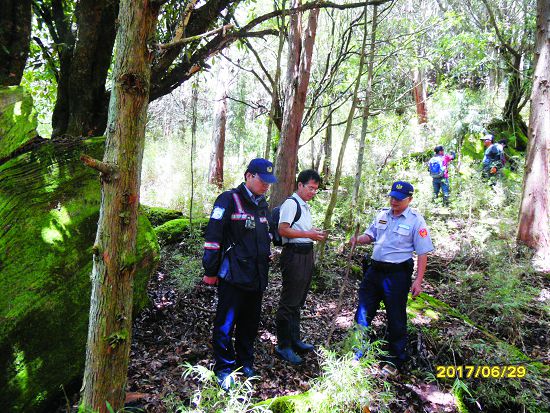
The 6th Division, the Seventh Special Police Corps. /
provided by Yushan National Park Headquarters
Limited police force, unlimited public resources
As one of the very few police officers who stayed wi th the National Park Police after entering the force, Chien-Chih Huang is deeply aware of the changes in the natural environment. “I have been in Yangmingshan National Park for 20 years. In past winters, I had to wear a winter protection and rainproof jacket in the mountain. In the last few years since I left, I have almost never had to use my jacket. To me, the term “global warming” is very real.”
On the other hand, changes in people are no less than environmental changes. “People nowadays are quite self-aware, and have adequate common knowledge about the law. So we have to be more refined in executing the law.” Citing a roadside rescue, he said, “In the past, most tourists would not criticize you if the service is somewhat lacking. After all, car repair is not our specialty. But nowadays, we immediately face complaints if we fail to fix a problem or cause other damage.”
To balance “public service” and the “rights of tourists”, the benefits and risks of all services are explained in details to tourists before assisting them with problems. They are even are asked to sign an agreement to protect the rights of both parties involved. Although human warmth seems to have been replaced by such regimentation, the rapid development of photography and communication equipment has unexpectedly allowed a deeper connection between the police and the public. “As the saying “limited police force, unlimited public resources” goes, the increasing convenience of video recording has motivated many enthusiastic people to report violation incidents to us. Maybe everyone has the common goal of sustaining the natural ecology, so false reports and pranks are rare.” The public has become the pervasive eyes and hands of the police, and working together with the police, they help to protect people and the environment. As one family, the police and the public are gradually realizing their common ideal in the national parks.
However, unrestrained passion for the environment and may also create another kind of harm. Citing the Taijiang National Park as an example, Chien-Chih Huang said, “Because of the abundance of migratory and resident birds, many bird-watchers or photographers gather near the wetlands. As a result, there are violations, such as illegal parking, trespassing into restricted areas and even bird luring." He reminded the public, "Distance must be kept to conserve natural form. Please exercise self-discipline rather than rely on the discipline of others.”
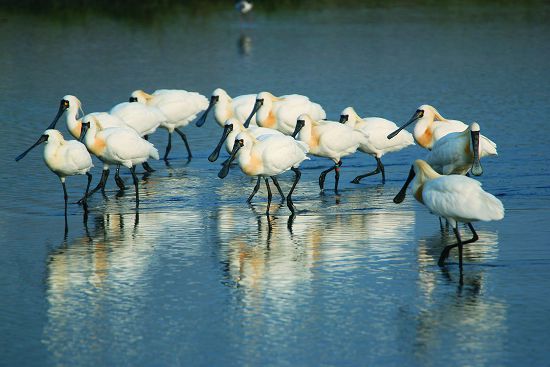
rely on the discipline of others,” Commander Chien-Chih Huang admonished bird lovers. / Yu-Jen Li
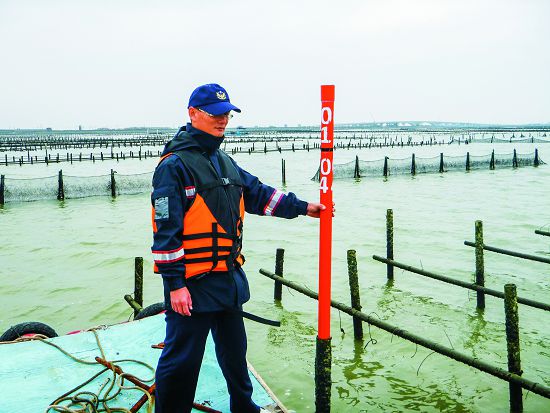
guard the fishermen industry. / provided by Taijiang National Park Headquarters
Flagging for Oyster Protection
Oyster farming is an important industry in Qigu Lagoon. In recent years, the decrease in oyster production has resulted in a sharp increase in price and subsequent increase in profit, and somewhat leading to greed. In the spirit of public service, the Taijiang National Park Office and the then National Park Police actively sought to resolve the problem even though the problem of oyster poaching was not within their responsibility at that time.
The large 1,350-hectare expanse of water and absence of obvious landmarks make it difficult to calibrate the lagoon, thereby rendering collecting evidence difficult. To fully address the problem, the method of flagging the boundaries of the seaway and oyster beds was used for identification and positioning. In addition, cameras equipped with high-magnification telescopes were installed. In 2013, an “Oyster Protection Flagging Briefing” was held, and in collaboration with news media, the information was widely disseminated, resulting in a great reduction in oyster poaching. Soon, fishermen outside of the experimental areas also began expressing interest in flagging.
Local oyster production and marketing groups of the Fishermen's Association and local fishermen had a special certificate of appreciation made to express their gratitude. The Taijiang National Park Headquarters and the National Park Police had jointly safeguarded the marine assets produced by the hard labor of fishermen, and had also laid a deep foundation of trust for partnership.
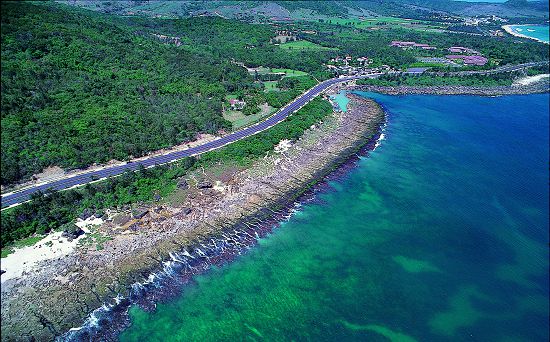
environment depends on public self-discipline (Photo showing the rocky coast of
the Kenting National Park). / provided by Kenting National Park Headquarters
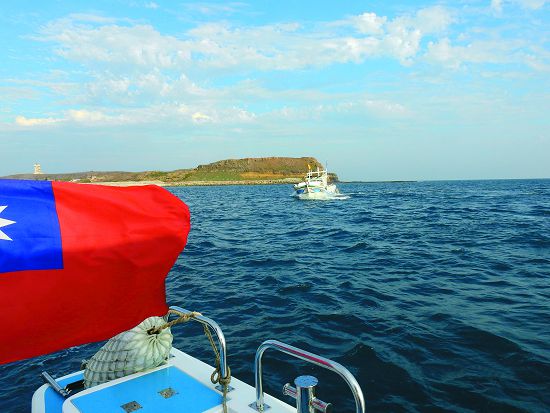
Marine National Park Headquarters rangers jointly enforced marine laws.
/ provided by Marine National Park Headquarters
Communication with the locals is akin to water management
Not only is the natural environment constantly changing , but the mentality of the people is also changing with the times. Likewise, the National Park Headquarters must adjust to social changes. Before leaving Yangmingshan National Park to execute the order to participate in the planning of Taijiang National Park, Chien-Chih Huang witnessed international trends playing out in Taiwan. “In the past, the primary tasks of national parks were protecting nature and the human environment. Now the mission of national parks is environmental sustainability. Local strengths are valued, local ideas and livelihoods respected, and symbiosis and coprosperity are pursued through close communication.” Notably, the establishment of Taij i ang National Park was achieved through bottom up promotion , with particular attention to fostering local livelihoods and resources for conservation.
“Other than communication and more communication, there is no shortcut.” Although the police are usually cast in the role of the bad guy who admonishes and issues tickets, they are fully committed to assisting national park headquarters with briefings and publicity events. Chien-Chih Huang particularly noted their close cooperation with Taijiang National Park Headquarters since the early days of its establishment. “Although the Headquarters and the police corps are different agencies, we have always been like one unit. Especially during the beginning, Director Teng-Yuan Lu was very helpful. Whenever a problem arose, we would solve it together, and this tremendous sense of camaraderie has remained to this day.”
Before Taijiang National Park was established, there were many existing fish ponds within the territory, and fishing in the rivers was rarely regulated. Therefore in the early stage of establishment, it was necessary to elicit the opinions of local representatives, the elite and the people, and the cooperation of the two agencies has played an important role in the process.
“For conservation, forcing a ban on behavior is superficial and lacks impact. People must first understand the reasons, and be able to discuss better options.” Referring to the example in the Great Flood of Gun- Yu, Chien-Chih Huang noted, “Communicate with an open mind, and the people will share their ideas or dissatisfaction, giving us the opportunity to adjust. On the other hand, an appearance that everything is fine will lead to an eruption of accumulated public grievances.”
In 2010, two years after Taijiang National Park was officially established, Chien-Chih Huang was transferred to Yushan National Park (the 6th Division). Returning to Taijiang National Park this year (2018), he has many heartfelt thoughts, “As the saying goes, “One sows and another reaps” but there are not many like me who has the opportunity to both sow and enjoy the fruit. I also feel especially heartened to see more than half of my colleagues from the establishment days still here. ”
Commitment to the mission and continuous improvement
The system that my colleagues and I formulated remains the core of the 7SPC today. “As the first national park in Taiwan that contains rivers, wetlands and lagoons, we needed to be equipped with police patrol boats, and had to learn boating, swimming and water rescue techniques. These skills seem like a given today, but at that time, they had to be accumulated one step at a time.” Huang is gratified that the experiences he accumulated in Taijiang have been passed on to the South Penghu Marine National Park by colleagues who transferred there.
Tsai-chuan Hsiao, Commander of the South Penghu Marine National Park division was a member of the police corps during the founding of Taijiang National Park, and the difficult process of resource integration and resident communication is deeply imprinted in his mind. When he went to station at the South Penghu Marine National Park, he once again experienced starting from ground zero, and Chien-Chih Huang is filled with admiration for his courage and perseverance.
Chien-Chih Huang has left a trail of footprints in his jurisdictions in Taijiang National Park, South Penghu Marine National Park, Shoushan National Natural Park and the Chiayi Forest District. Nevertheless, he must now count down the days to his retirement. When asked about the future, his wish is very simple. “I hope that the system and rapport that have been established with great effort can be maintained, yet be flexible in the face of environmental changes. We have regular training courses for our colleagues, and the Headquarters also invites us to participate in relevant courses. I believe that as long as we remain committed to our mission and continue to improve, Taiwan's national parks will progress.” Lastly, Chien-Chih Huang added, “I joined the National Park Police because I love nature, and I never thought about leaving. In fact, I have never left, and it's my blessing.”
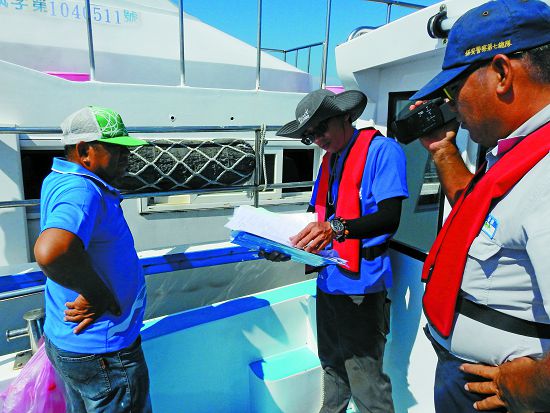
Headquarters rangers jointly conducting on board boat inspection
/ provided by Marine National Park Headquarters
Author | Yueh-Han Yang
A graduate of the Graduate Institute of Museum Studies, Taipei National University of the Arts, Yueh-Han Yang is the former editor of architecture magazine, Dialogue. She is currently a contributing author and editor of several publications.


