
Listening to Stories of Epic Battles in the Pine Woods-Kinmen Zhongshanl in Memorial Forest Trail

of many years of hard work / photo by Visit Kinmen B&B
Listening to Stories of Epic Battles in the Pine Woods - Kinmen Zhongshanl in Memorial Forest Trail
Interviewee/Xiao-Wei Gu, Section Manager, Kinmen National Park Environmental Maintenance Section、
Long-Sheng Chen, Interpreter,Kinmen National Park Interpretation and Education Section、
Li-Ping Wang, Landscape Ecology Specialist
Article/ Mei-Yun Tso
The Zhongshanlin Memorial Forest in Kinmen National Park was established to celebrate the 100th birthday of our Father of the Nation - Sun Yat-Sen. It covers 160 hectares of land, and after decades of tree planting and afforestation, the original red dirt badland has turned into the green and lush island forest today, and the rumbling artillery sounds of wartime are replaced with whispers among the pines. Military relics and weapons displays in the area attract enthusiastic military fans; the cold tunnels under the ground cut off the brutal killings, as if a time tunnel traverses the past and future.
To allow people of all ages and physical strength to enjoy the nature and battlefield sceneries, the trails in the Zhongshanlin Memorial Forest adopted a three-in-one strategy of combining firebreak, bike path, and accessible design. Among them, the 5.5 kilometers accessible trail is unmatchable in length and scale in any of the national parks in Taiwan.
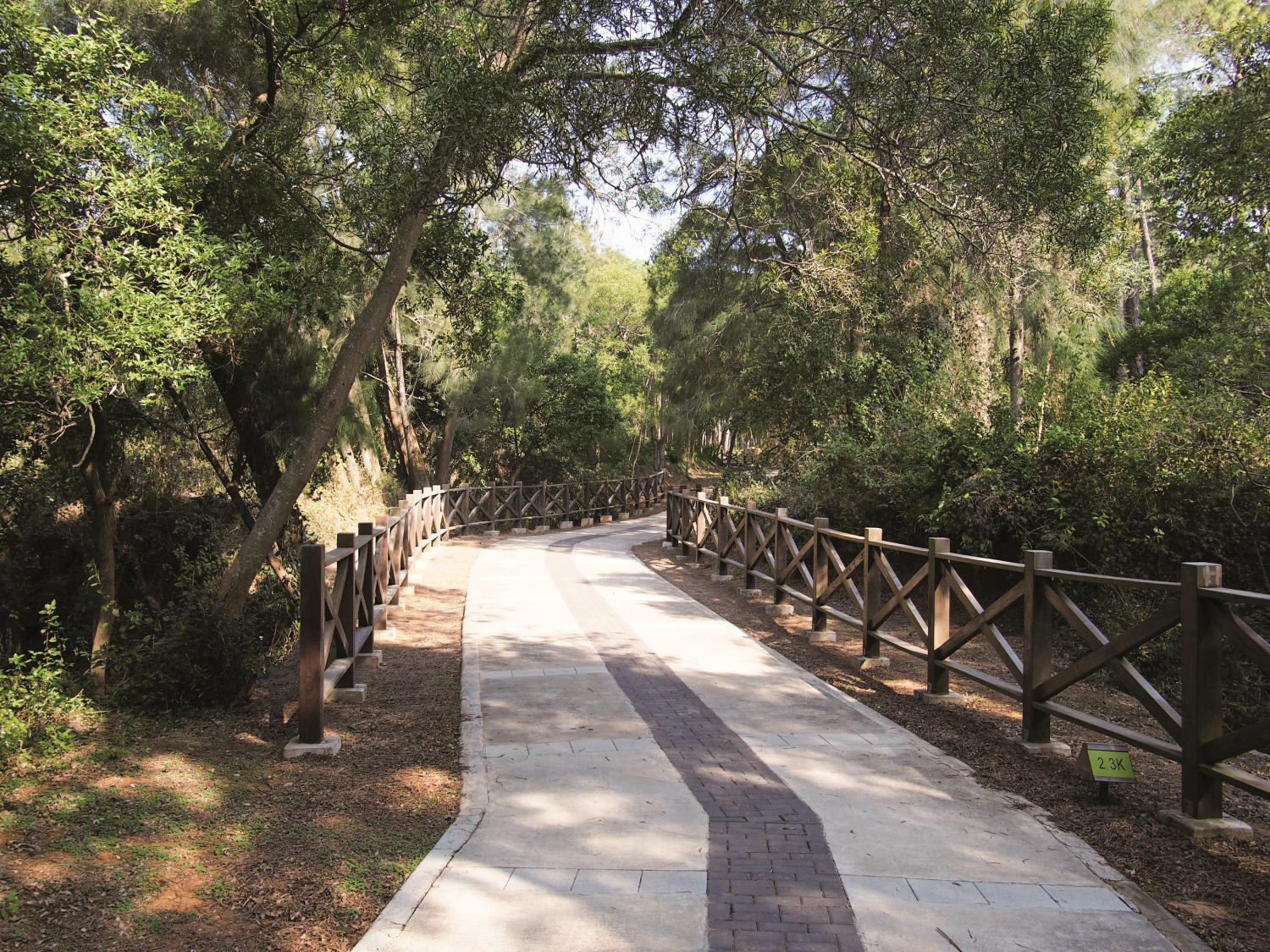
the achievements of greening for many years. / provided by rheins
(https://zh.wikivoyage.org/zh/File:中山林自行道_-_Zhongshan
_Forest_Park_Bikeway_-_2015.01_-_panoramio.jpg)
The Intricate Kinmen Island
Kinmen is located in the Xiamen Bay, off the southeastern coast of the Fujian Province. It is also known as “Wu Island”. Because of its geographical location, this border island has experienced twists and turns over the centuries and has repeatedly been involved in the war. For safety reasons, due to the threat of artillery fire, no building is allowed within 500 meters of the island’s coast, and the height of the building must not be more than three floors. In this fast-changing world, the traditional architecture of Kinmen instead has been preserved. The landscape of war, the tragic stories, and traditional culture have formed a unique style, which makes the world want to explore and reveal its secrets in person.
Kinmen ended its Civil Affairs Military Government rule in 1992 and is opened to the public for sightseeing on February 7, 1993.
In addition to natural and cultural resources, the historical battle features are the most distinctive. Among them, the Zhongshanlin Memorial Forest is located right at the center of Kinmen and is consists of military combat preparation tunnels and camps repaired over the years. Kinmen National Park Headquarters is located right here. It is only a 5-minute drive from the Shangyi airport, and can be said as the first stop visitors would visit when arriving “Wu Island”.
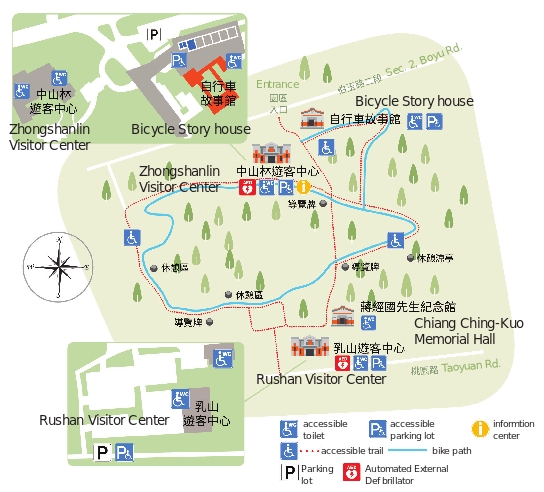
Construction and Planning Agency, Ministry of the Interior
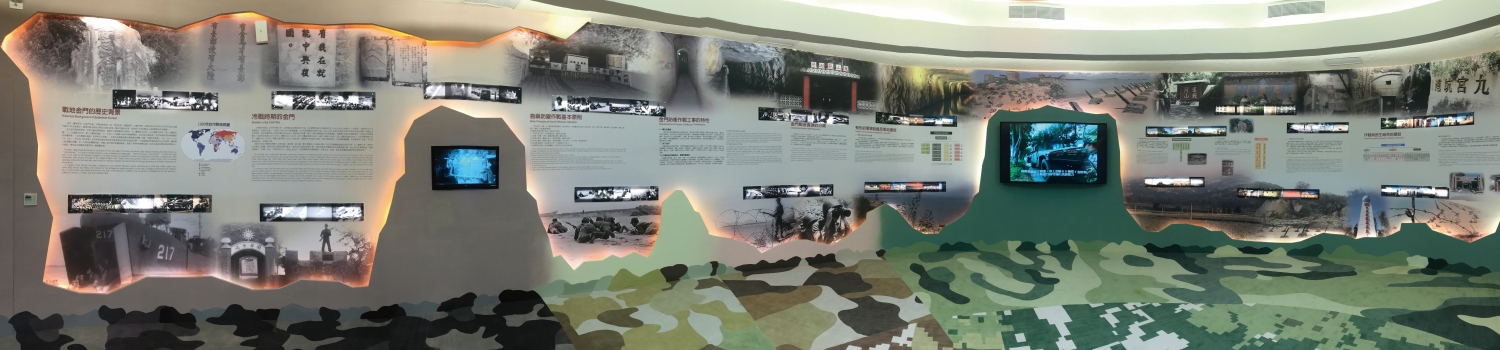
of war, culture and history to create an immersive experience.
/ provided by Kinmen National Park Headquarters
Planed with Love, Visit with no Hindrance
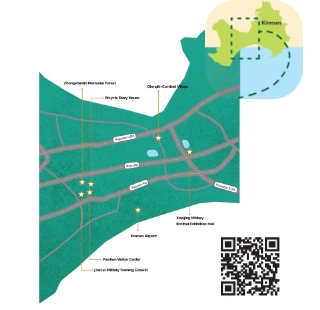
Zhongshanlin Memorial Forest is Kinmen’s very first and largest forest recreation area. It has complete tourism resources, including the Zhongshanlin Visitor Center, Bicycle Story House, Chiang Ching-Kuo Memorial Hall, and Rushan Visitor Center, as well as an outdoor theater, BBQ area, campground, tennis court, swimming pool and so on. Besides providing information about Kinmen, this place also has easy-to-read in-depth ecological and historical themed displays of the area, with multimedia introductions such as leaflets and films to prevent visitors from missing out on the places worth visiting and going home empty-handed.
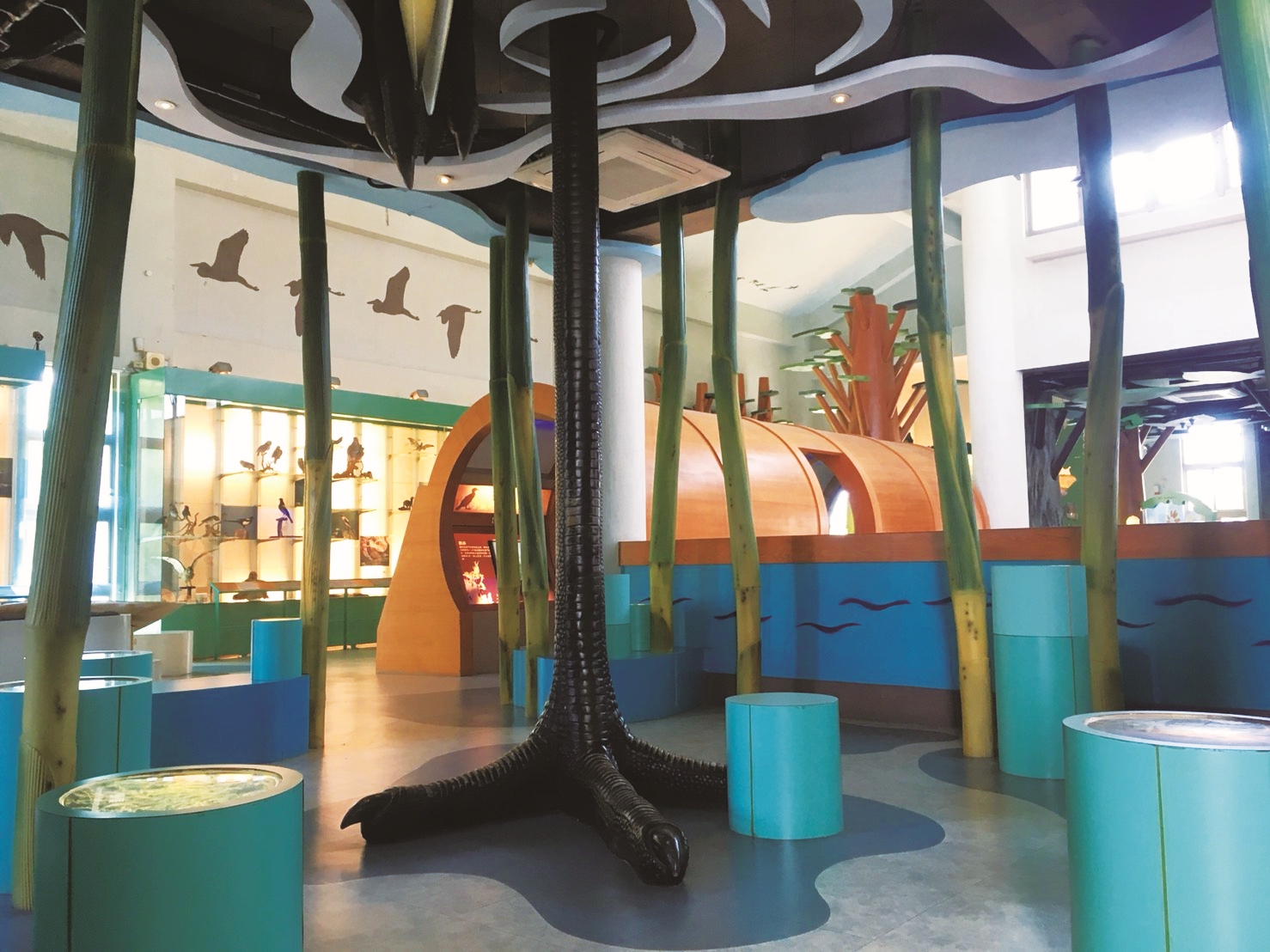
tourists the local ecological features from a fresh perspective.
/ provided by Kinmen National Park Headquarters
In the red and grey building of the Zhongshanlin Visitor Center gives an introduction of the history of Kinmen and the traditional Southern Fujian style settlement, as well as the natural ecology and historical battle heritages in the Zhongshanlin Memorial Forest. Due to the wide range of the Memorial Forest, there are multiple exhibition halls that people can visit. If visitors do not have enough physical strength or sufficient time to visit all the places at once, Xiao-Wei Gu, Section Manager of the Kinmen National Park Environmental Maintenance Section suggests that visitors can plan their trip according to their interest and physical condition.
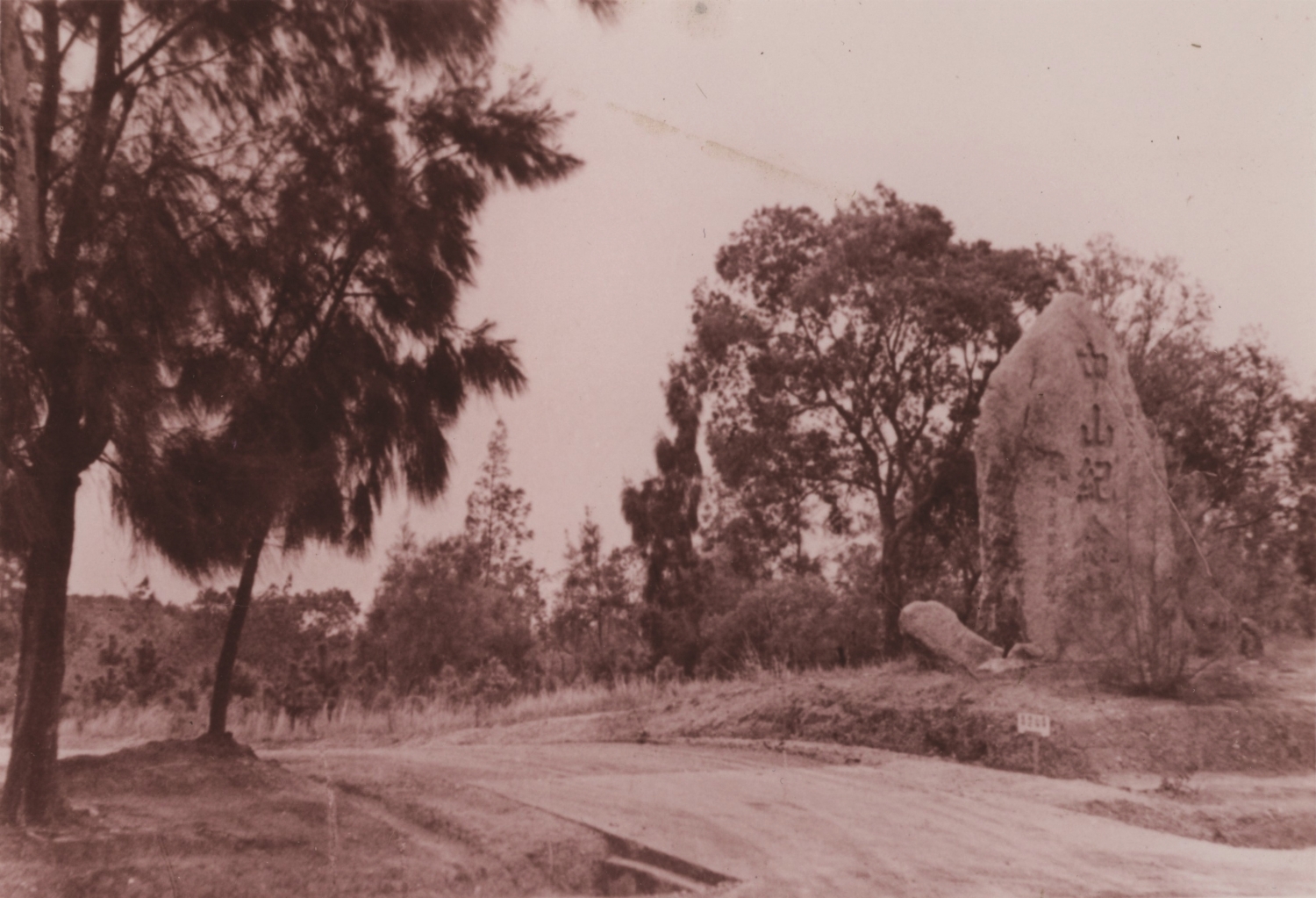
when it was just establishment we can see that
the trees still needed time to grow up./ provided
by Kinmen National Park Headquarters
The Zhongshanlin Memorial Forest covers a large area, with a trail of more than 7 kilometers in length, weaving through the entire area. Xiao-Wei Gu, who was in charge of the planning of the park, said that the topography of the Zhongshanlin Memorial Forest is flat, so when the Kinmen National Park Headquarters took over the planning of the forest area from the Kinmen County Government, they took advantage of the innate geographical benefits and identified the original landscape trails, firebreaks, and bike paths in the main area and expanded them into accessible trails, complete with a comprehensive mileage and route signage system for people of all ages and physical abilities to come visit.
Since the completion of the trail in 2018, Kinmen National Park Headquarters has launched the “Visiting Zhongshanlin with all three generations” program. Visitors old and young would come together strolling among the hundred-hectare forest area. Children can run happily and people who need walking sticks or wheelchairs will not have to concern about the road being too rough. Bikers and joggers can also go about their activity on the 3-meter wide path without any worries.
The trail from the Zhongshanlin Visitor Center to the Rushan Visitor Center is about 1 kilometer in length, which goes right through the middle of the Memorial Forest. In addition to providing tourist information, the visitor centers also have everything from toilets, charging stations, to water dispensers and cafes. People can get ready here and walk through the forest, enjoying the battlefield scenery in the forest bath, which can be said to be a barrier-free green island.
(https://www.flickr.com/photos/lonelyshrimp/39912337482)
Reading the Geological History, Seeking the Traces of Birds
When wandering in the Zhongshanlin Memoria l Forest, one can find geological and ecological interests ever ywhere. When speaking of Kinmen, many would think of its hard granite bedrock. But according to the research of geologists, the geology of Kinmen is stacked in sequence of Kinmen Formation, lateritic layer and gravel layer from bottom to top. Visitors who are interested in geology can learn about the evolutionary history of Kinmen Island through the bare rocks on the easternmost bike path in the Zhongshanlin Memorial Forest.
However, due to its g eological characteristics, whether it is the Kinmen Formation which contains porcelain clay or the lateritic layer which is high in clay content, the soil is lack of nutrients, and with Kinmen’s hot and dry climate, the tree species planted here are mostly Swamp Pine (Pinus elliottii) and Beef Wood (Casuarina equisetifolia). In recent years, the area of pine forest has continued to decrease due to the infection of pinewood nematodes (Bursaphelenchus xylophilus). After removing the diseased plants, the existing forest form is gradually replaced by native trees.
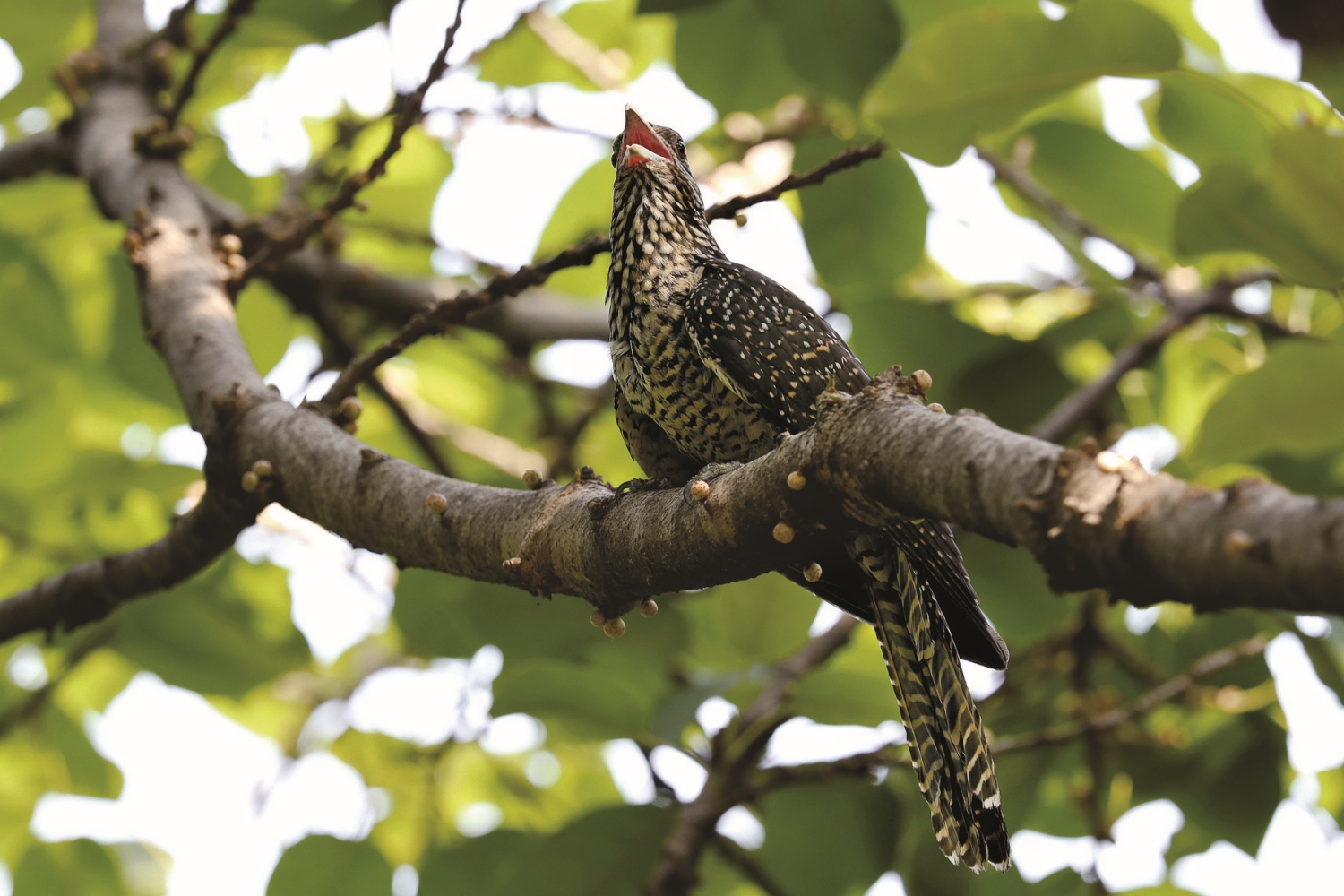
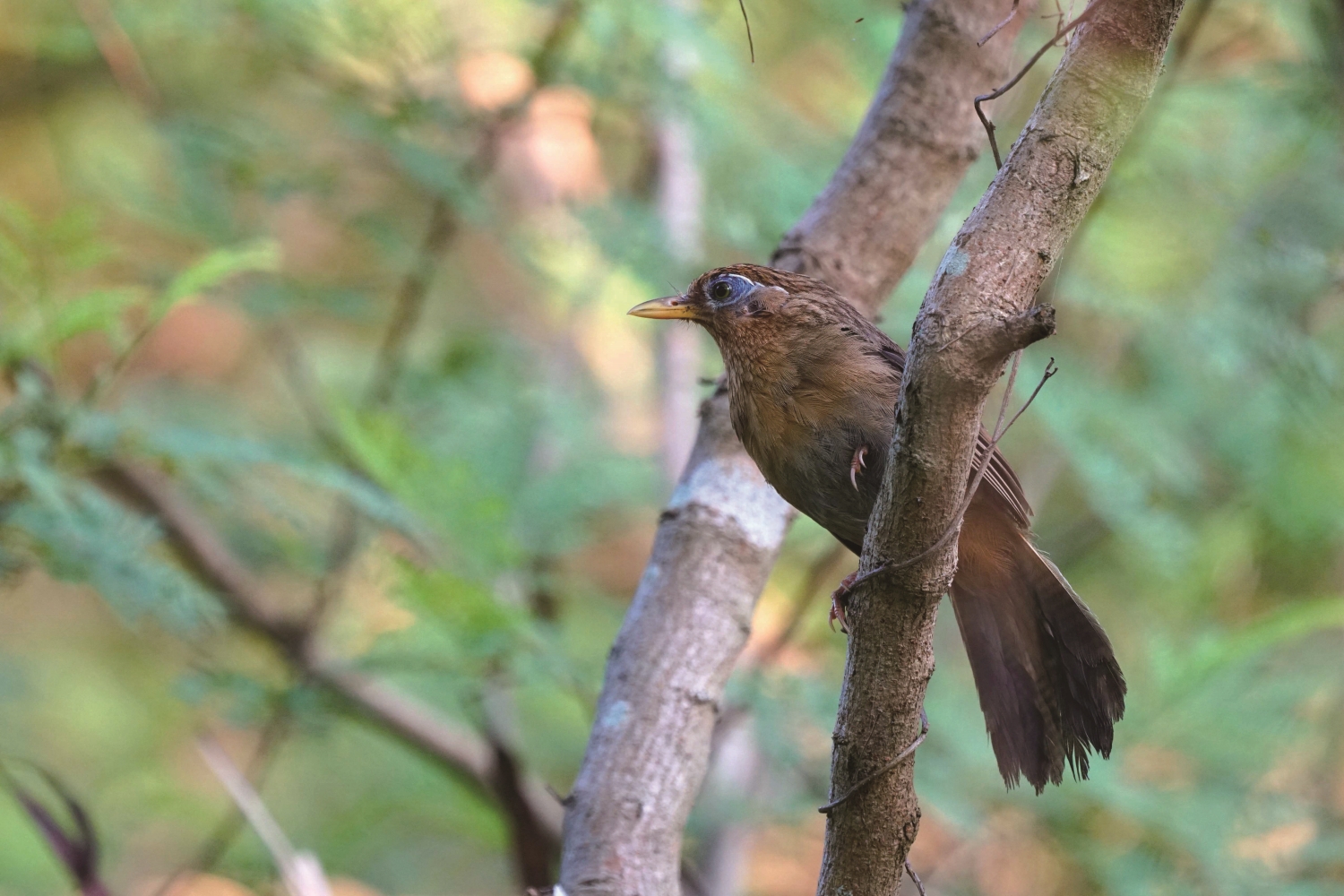
In the eyes of landscape ecolog y specialist Li-Ping Wang, Zhongshanlin is the largest forest land in Kinmen, the best demonstration area for afforestation on flat land, and furthermore, the perfect habitat for birds. Hwamei (Garrulax canorus) which has a circle of delicate white eyeliner around the eyes is a summer migratory bird. Some have become resident birds in Kinmen. Their feathers are plain and modest, so they are hard to spot when hiding in the bushes. But they sound like silver bells, so sweet and pleasant you would love to encounter them. There is also the irritating Asian Koel (Eudynamys scolopaceus) which belongs to the Cuculidae family. Wang said that there are about 3 or 4 Common Koel in the Zhongshanlin forest. Although the number is not large, their cries are sad and shrill, and the sound is so loud it is hard to ignore.
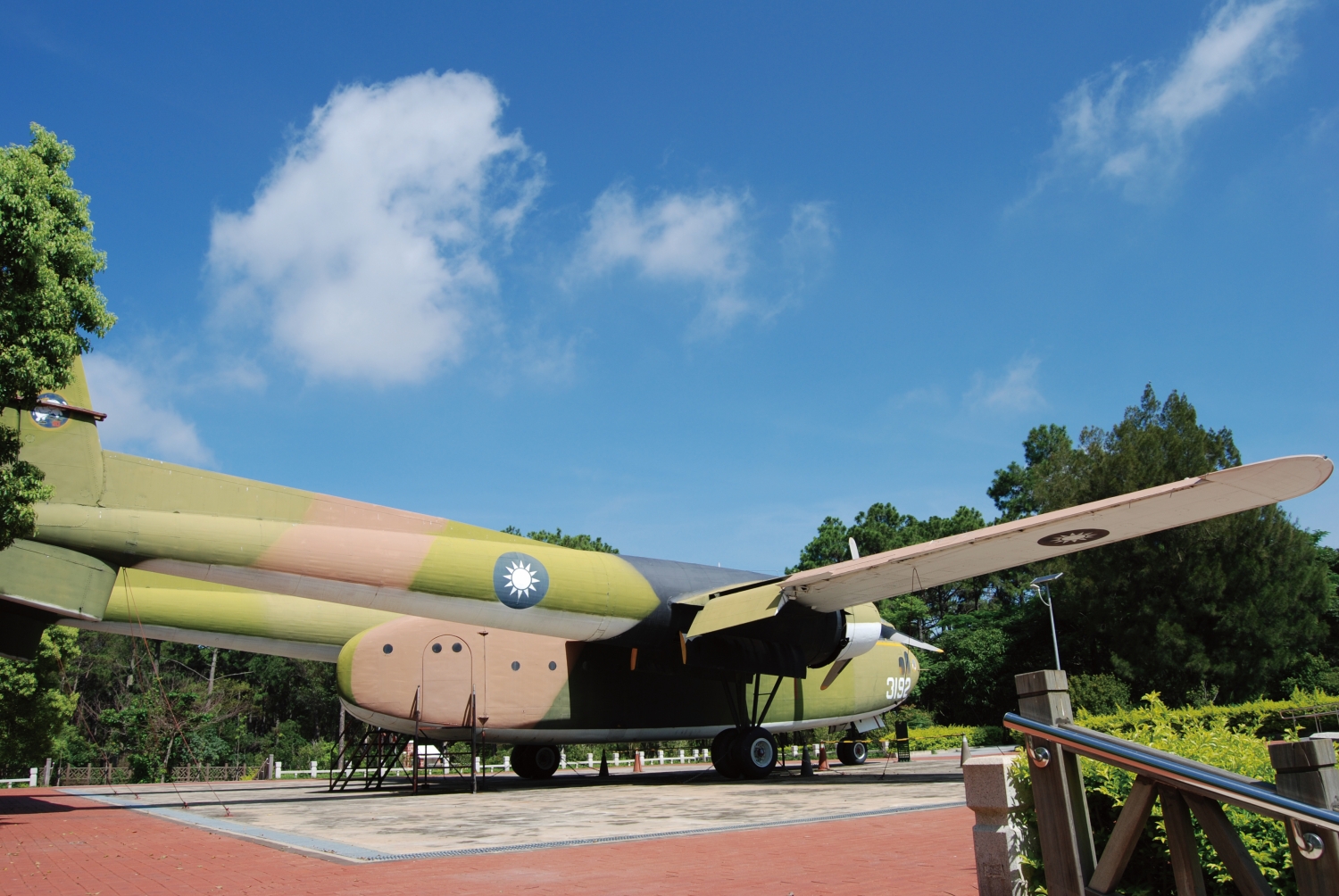
carrying more than 2 million passengers, and millions of tons
of cargo during the service of Republic of China Air Force.
/ provided by Kinmen National Park Headquarters
Reminiscence of War in Tranquility
However, for some time, the austere atmosphere at Kinmen also caused these forest fairies to evade. The thrilling Battle of Guningtou and the August 23rd Artillery Battle are important chapters of Kinmen’s battle history. Especially the Battle of Guningtou which happened in 1949, the Communists just took over Xiamen and planned on “liberate” Kinmen following up this victory. After 56 hours of fierce attack, the Communist was repelled, and from this, a hostile situation across the Taiwan Strait was formed. It was a key historic battle.
There are also many fortifications in the Zhongshanlin forest, which reminds people of the tension and helplessness of war. Kinmen National Park’s native interpreter Long-Sheng Chen shared that Shuangru Mountain, located in the Zhongshanlin Memorial Forest, is the commanding point of the whole region. At that time, it was the place to keep watch in the Battle of Guningtou; today, visitors can visit the Old Rushan Fort and Rushan Visitor Center. The fighter aircraft display near the parking lot catches the eyes of military fanatics. The Fairchild C-119 Flying Boxcar, commonly known as the Old Han, is an American military transport aircraft leased by the United State to Taiwan during the August 23rd Artillery Battle. It played a great role in the airdrop and transport of supplies during wartime. After World War II, it also participated in disaster search and rescues and even helped in making artificial rain, which can be said that it took part in battles big and small until it was officially retired in 1998.
Other armed forces that also makes military fanatics go nuts include the Northrop F-5B fighter jet, the F-104 Starfighter fighter jet, US-made M48A3 Patton II main battle tank, US-made M18 Hellcat tank, and mobile radar truck units. This is a must-visit spot for many people, besides taking photos with aircraft and tanks, the M45 Quadmount machine gun and worrier model are also popular check-in points, allowing people to imagine all the crossfires when the battle was fierce.
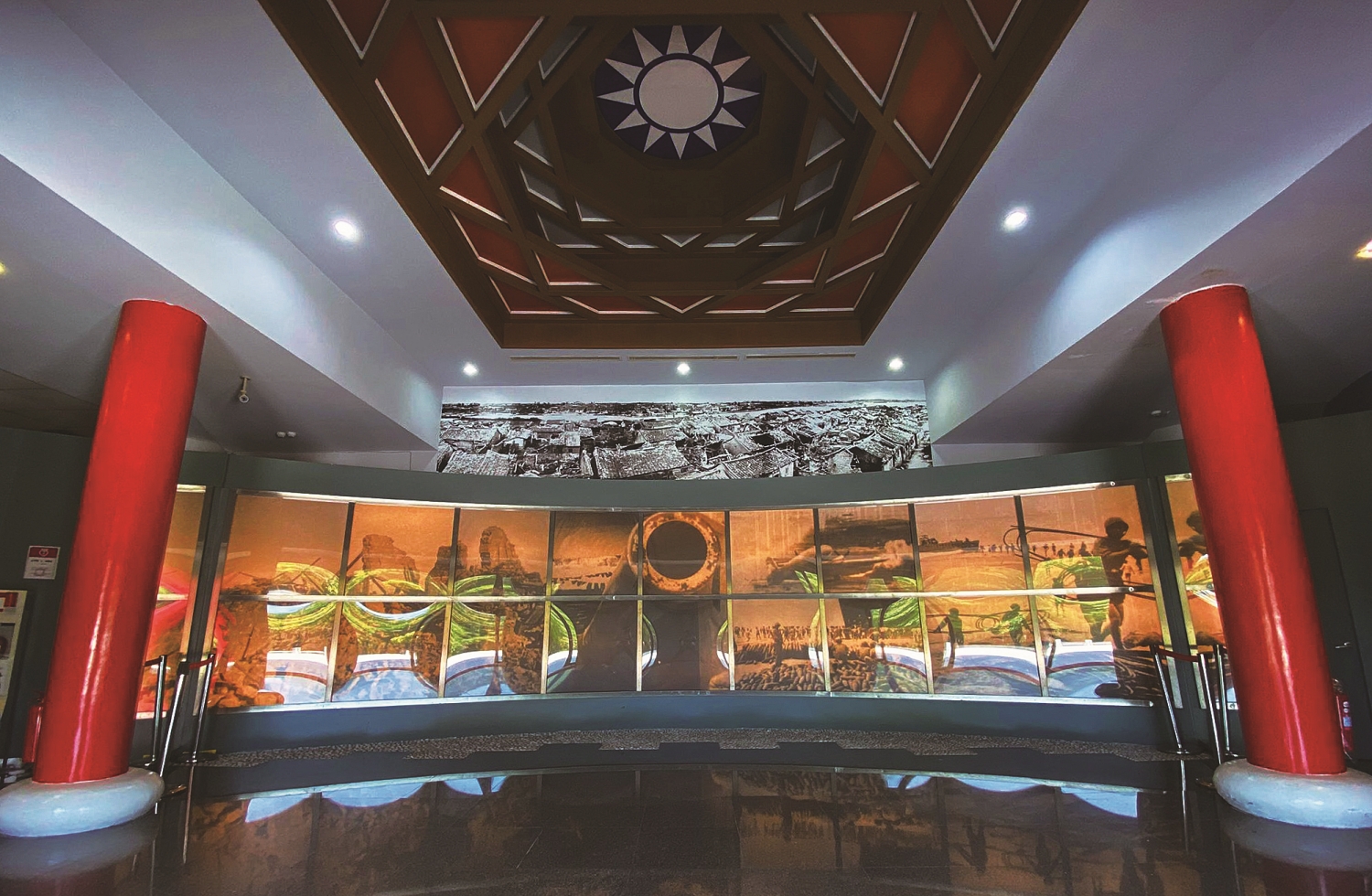
people have the opportunity to image the serious atmosphere
of the days. (August 23rd Artillery Battle Museum in photo)
/ provided by Kinmen National Park Headquarters
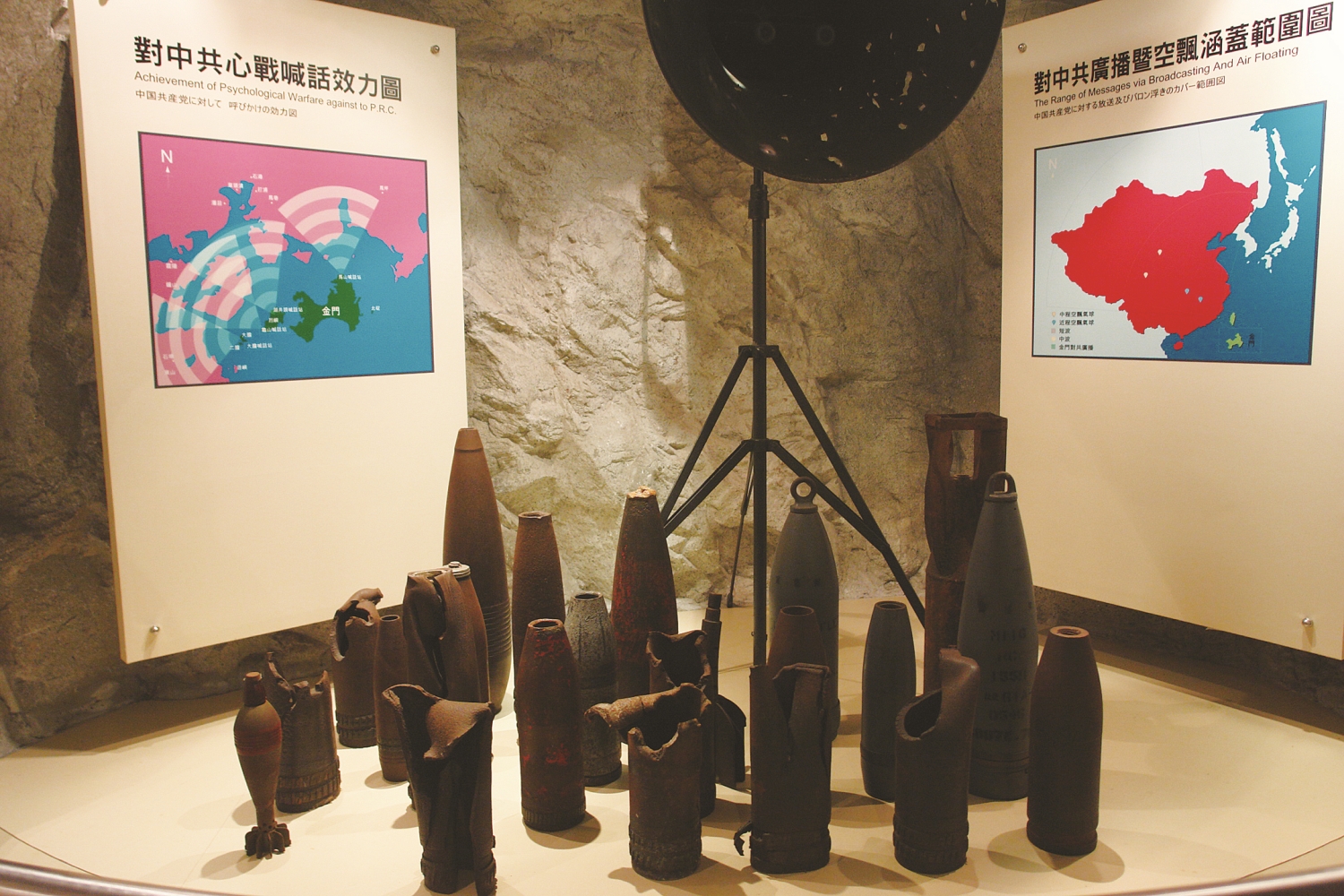
are still being excavated and found,and just like an endless war
diary. / provided by Kinmen National Park Headquarters
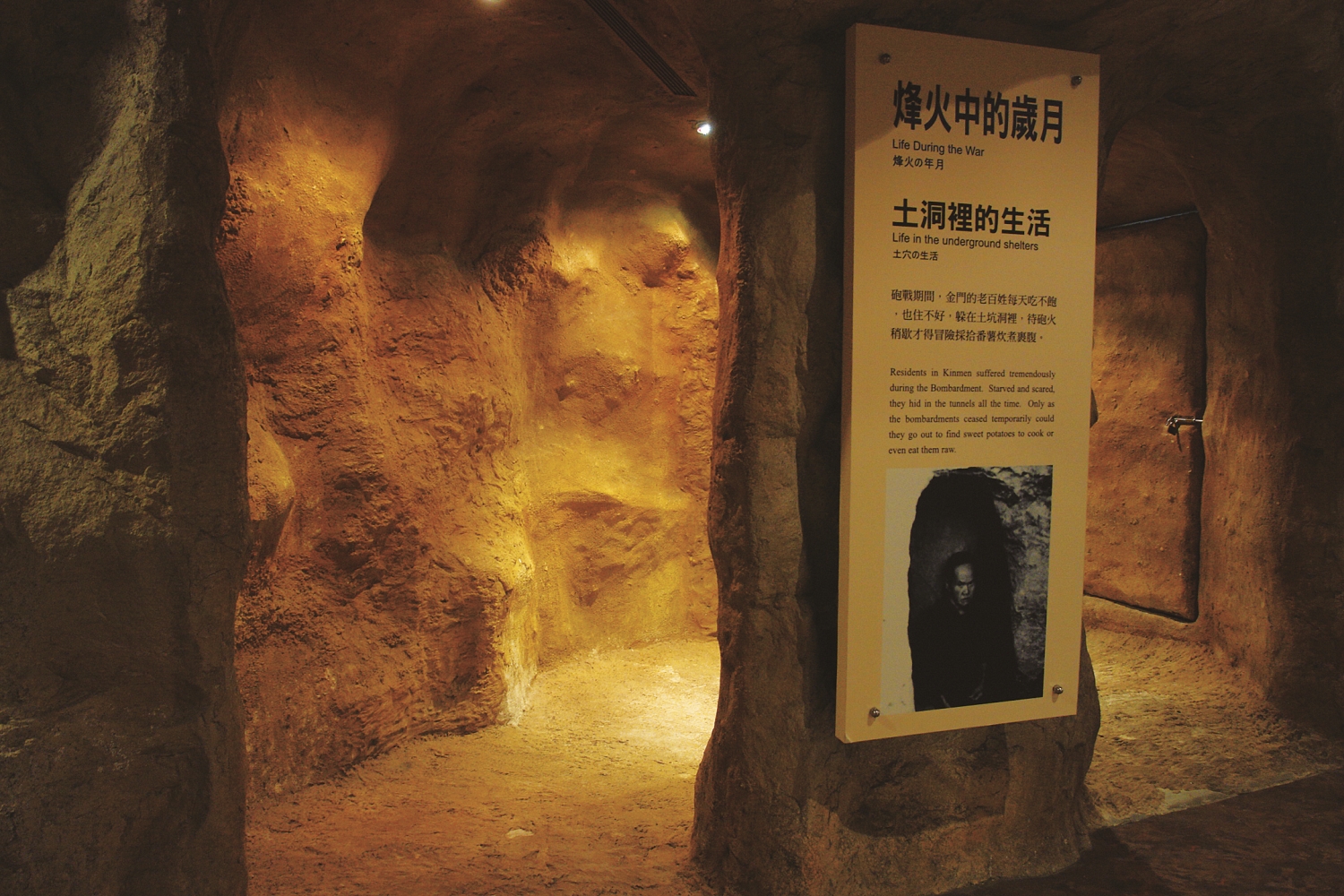
small caves. / provided by Kinmen National Park Headquarters
https://www.facebook.com/kinmen.blog/
Chiang Ching-Kuo who Stood with Kinmen
Of battles big and small, those who have experienced the August 23rd Artillery Battle always have endless stories to tell about this bombardment which stretched over 20 years. Among them, the memory of “odd-day attacks” is classic. During the August 23rd Artillery Battle in 1958, the situation at the Taiwan Strait was extremely tense. In the 44 days when the war was most stressful, the Communist Army fired more than 470,000 artillery shells, which scarred every inch of Kinmen and caused heavy casualties. Chiang Ching-Kuo, who was the Deputy Secretary General of the National Defense Council at that time, had visited Kinmen 123 times and stayed in Kinmen for a total of 352 days. His action of standing with Kinmen truly inspired the spirit of the military and civilians.
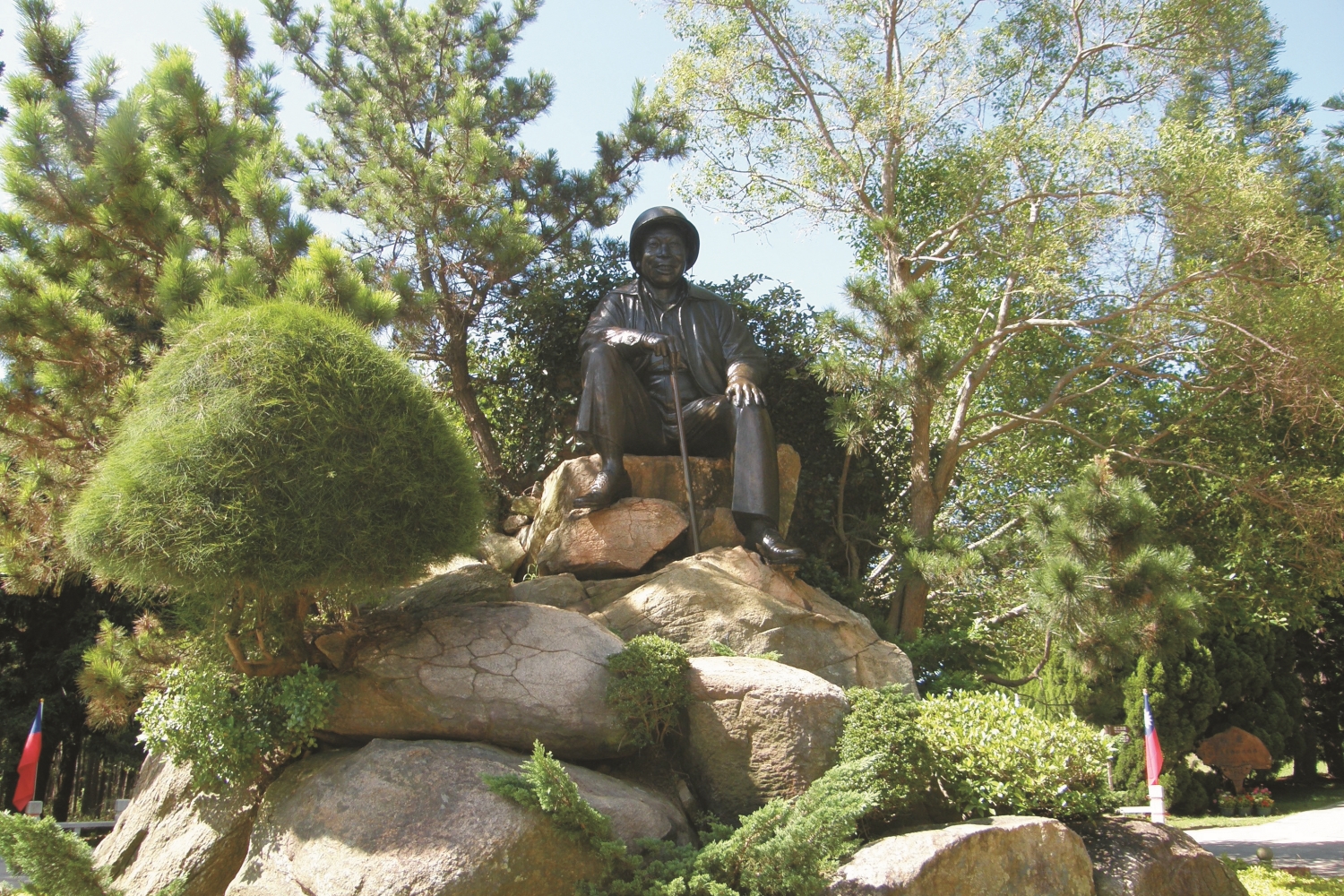
At the end of a long path close to the north side of the Rushan Visitor Center stood a traditional courtyard style building, it is the “Chiang Ching- Kuo Memorial Hall”. It was established in 1989 when Hau Pei-Tsun was Chief of the General Staff. There are many photos and relics of Chiang Ching- Kuo displayed in the Memorial Hall. Near the Memorial Hall stood a bronze statue of Chiang Ching-Kuo wearing a helmet, holding a cane, sitting on a stone with ease; there is even a Dragon Chinese Juniper in the Zhongshanlin forest that he planted himself on Arbor Day of 1984. The older generation of Kinmen people often goes there to recollect and pay their respects.
it has become the mark of an era. / provided by
Kinmen National Park Headquarters
A Great Adventure in the Secret Runan Tunnel
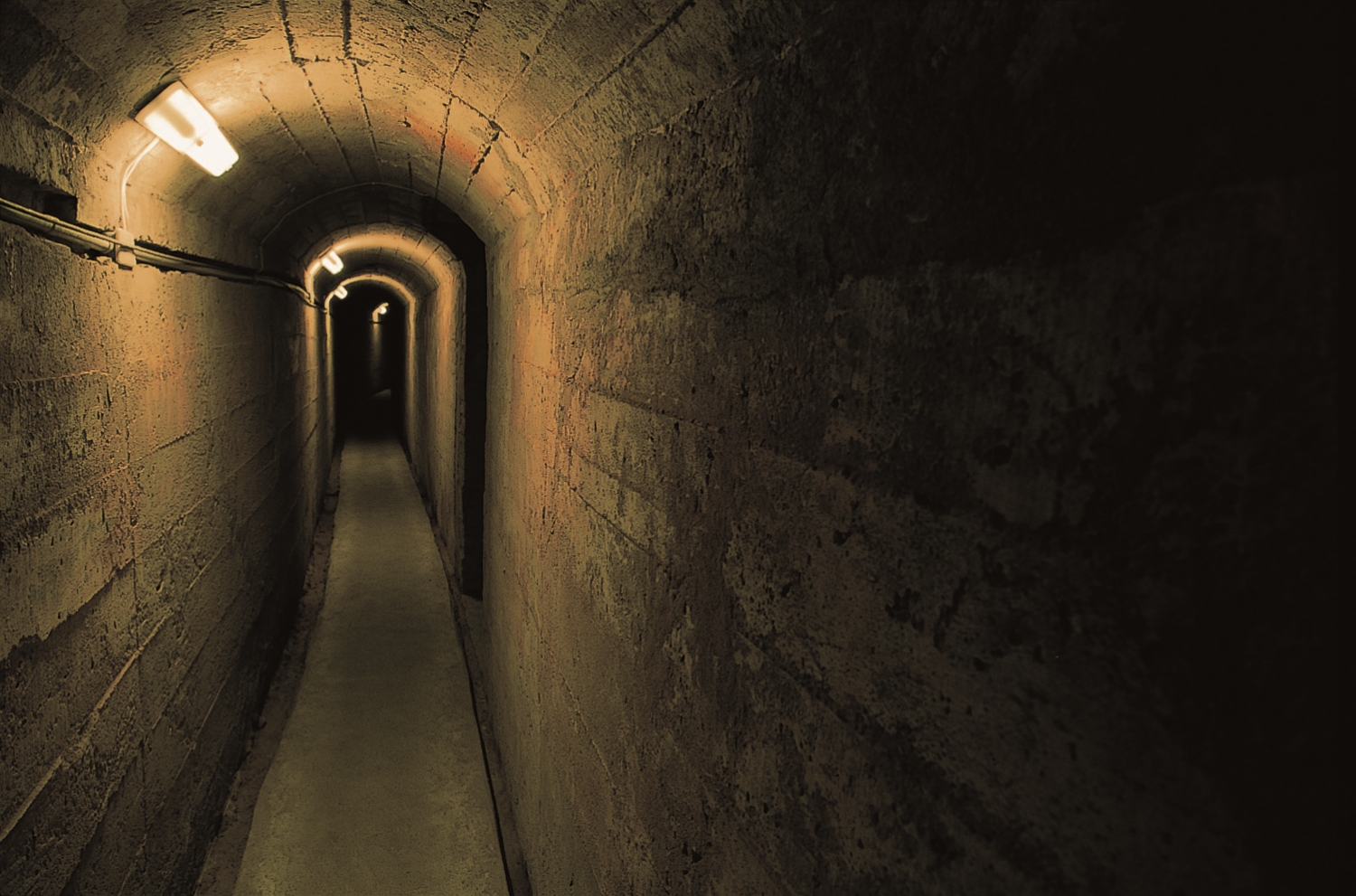
However, the memory of war does not only exist above ground but also goes deep into the underground of Kinmen Island. Although Kinmen’s hard granite geological structure is difficult to excavate, it can provide solid protection. The military has begun to dig tunnels since 1956, and after the August 23rd Artillery Battle has started, the fortifications were moved completely underground to resist the frantic artillery fire of the Communist army. There is also a tunnel that has not been officially opened to the public yet in the Zhongshanlin forest, silently telling the war history of the past.
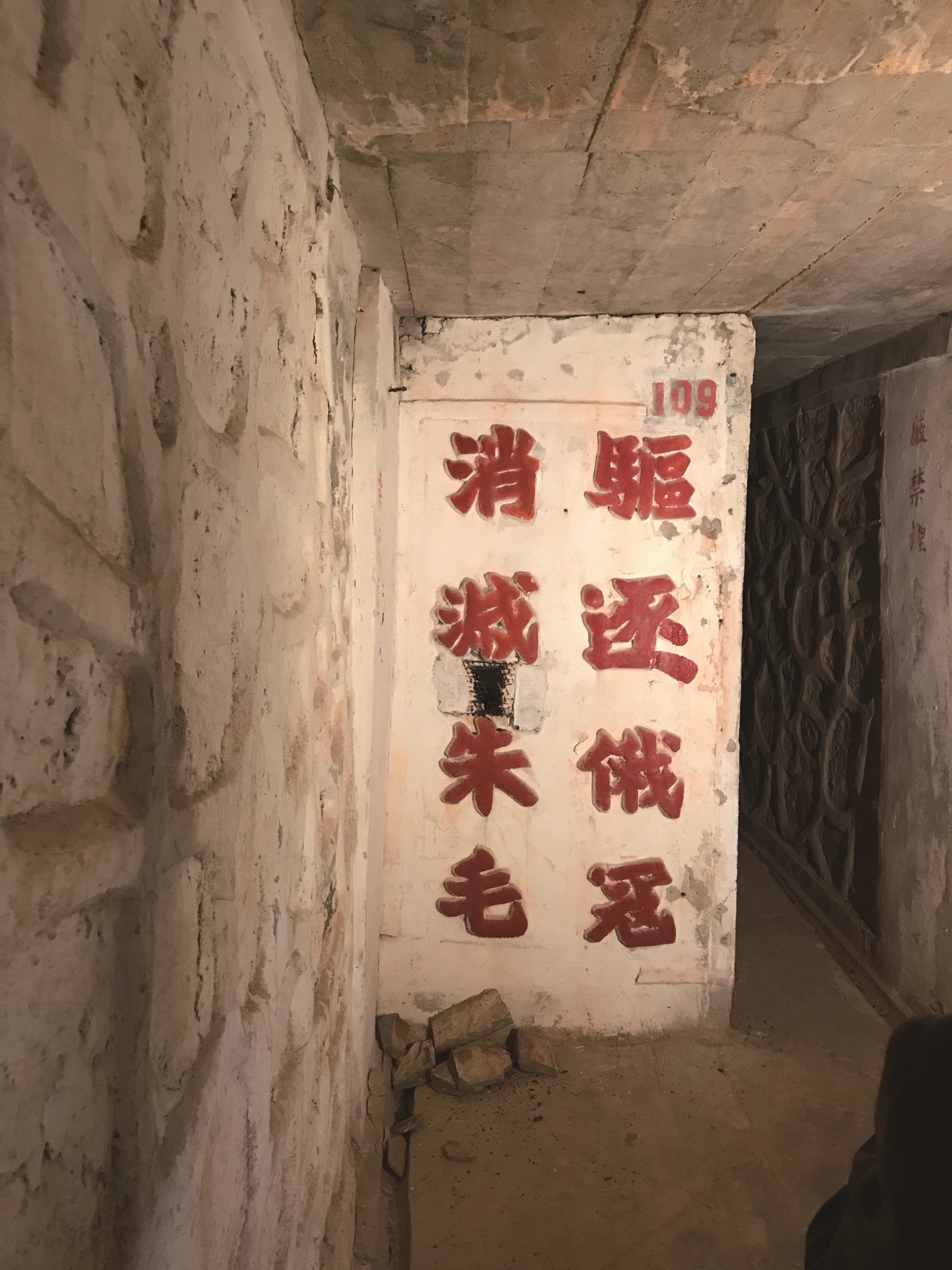
The excavation of Runan Tunnel under Rushan Mountain began on October 20, 1956. The Qingtian troops of the 93rd Division at that time used all their manpower excavating, and spend over a year to finally hollow out the granite foundation. The total length of the tunnel is 1,442 meters. This secret tunnel that has not yet been open to the public has become an adventure paradise for locals who are familiar with the place. Long-Sheng Chen said, one of the biggest features in the tunnel is that there are more than 10 military slogans such as the classic “kill Ju slay Mao, anti-Communism and fight Russia”, which now it looks out of place, but is a special mark of the times.
Besides, it is said that the tunnel is open in all directions, and there are branch tunnels outside the main tunnel. It is so dark inside you can’t even see your fingers, and those who are not familiar with the way are likely to get lost and go in circles. All kinds of stories only make the tunnel even more mysteries.
Kinmen Military Combat Preparation Tunnels
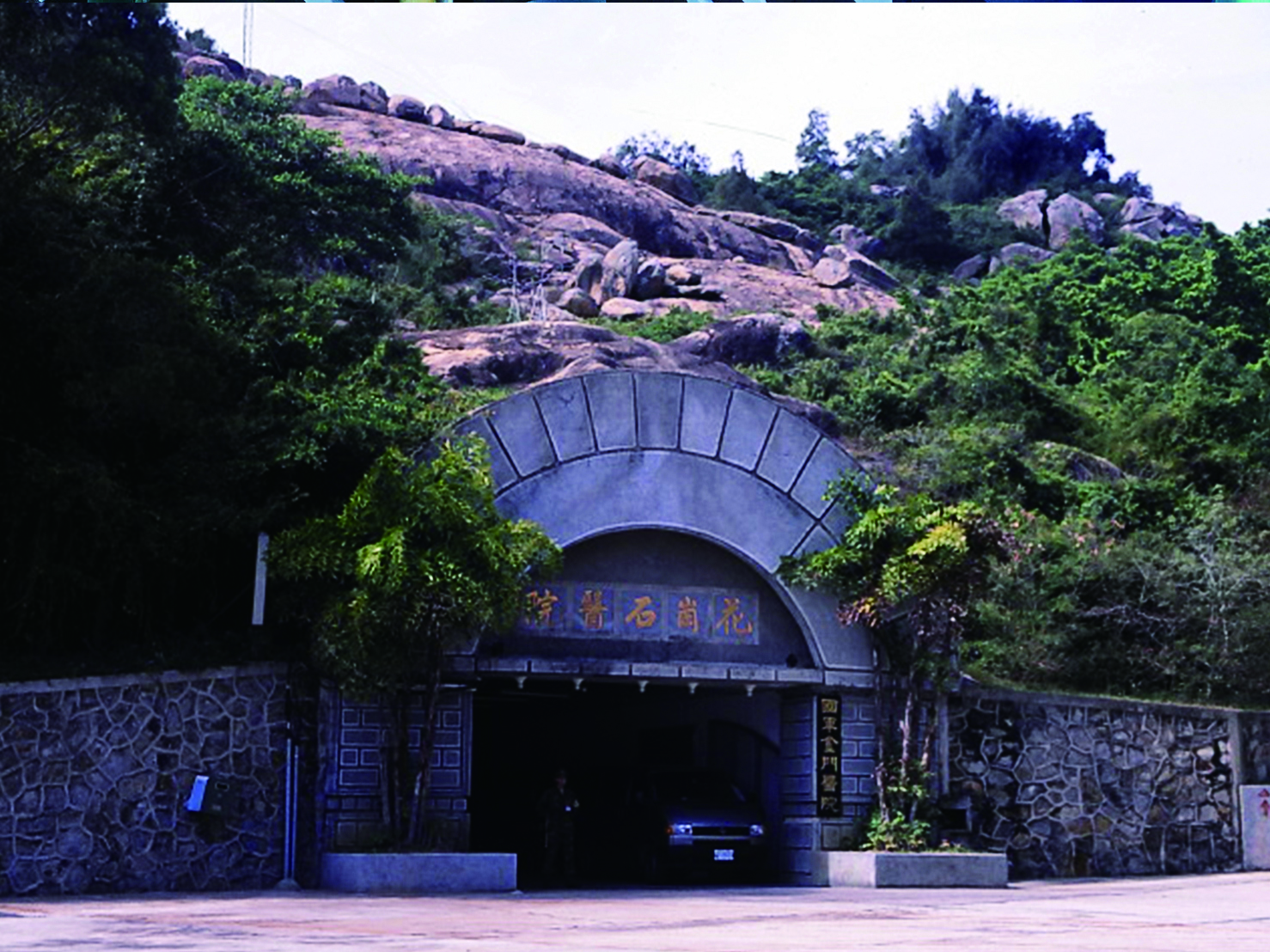
The geological structure of Kinmen is dominated by hard granite gneiss bedrock, which is excellent for constructing underground tunnels. After the August 23rd Artillery Battle, the fortification fully turned underground, and the military and civilians concentrated on building tunnels together. Presently, Kinmen’s underground tunnels are like spiderwebs spreading over the entire island. The tunnels in Kinmen can be identified into three types. First is the tunnels located under civilian houses, which is about one meter wide and allows two people to walk side by side, such as the Qionglin Tunnel located at the Qionglin settlement. Second is the navy boat tunnels by the sea, which is mainly used for landing craft turnarounds and transport supplies, and the most famous is the Zhaishan Tunnel. The third are tunnels with special functions, such as the Tahou Tunnel (mind games) and the Granite Hospital (medical).
Transportation-Good trip in Taiwan- Banyan Park Line
Route Shanwai Station → August 23rd Artillery Battle Museum, Banyan Park and Mr.Yu
Da-wei Memorial Hall → Special Tea Room Exhibition Hall → Qionglin
Village → Bicycle Story House (Zhongshanlin Memorial Forest) → Chen
jinglan's Western Style House → Shanwai Station
Information https://www.taiwantrip.com.tw/line/57
Take a friendly travel-Follow the Guide
Born and raised in Kinmen, Kinmen National Park Interpreter Chen Long- Sheng has gone through the process of his home transforming from a battlefield to peace, so he knows everything about Kinmen. He recommends that visitors who come to Kinmen Zhongshanlin Memorial Forest can also drop by the following four scenic spots to see a more diverse Kinmen:
Jia Village Training Ground
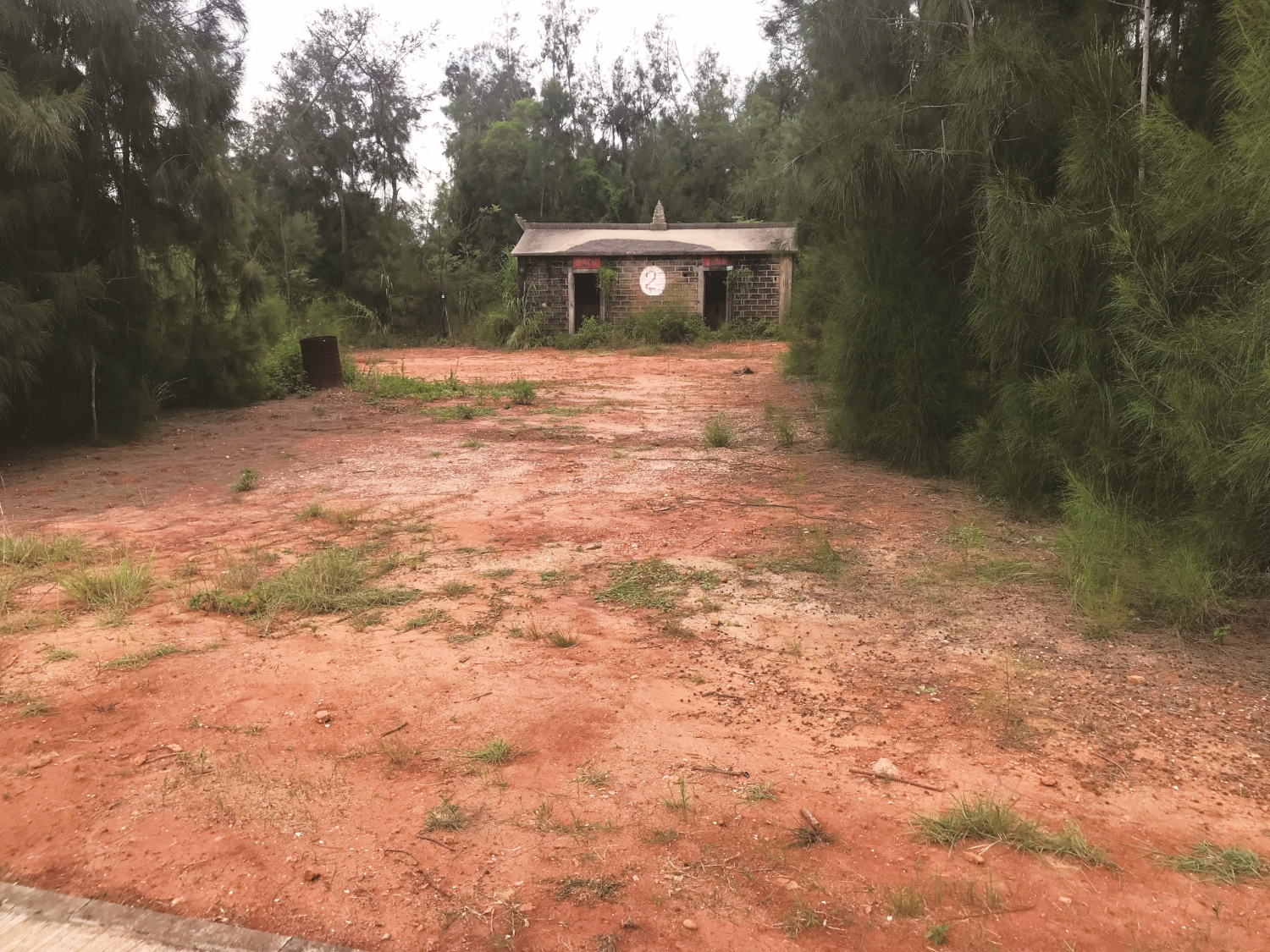
There is a place near Zhongshanlin that cannot be found on the map but actually exists – “Jia Village”. As a training ground preparing for nuclear and biochemical attacks and civilian combat training, many Kinmen people only heard about it but did not know the exact location. Although it is now abandoned, it still attracts many people to visit. There are several houses in the village, and on the walls are mottled graphics teaching people what to do when encountering biochemical attacks as well as reminding the precautions during the training so when people encounter chemical gas from the enemy, they can protect themselves and save people.
Xiaojing Military Brothel Exhibition Hall
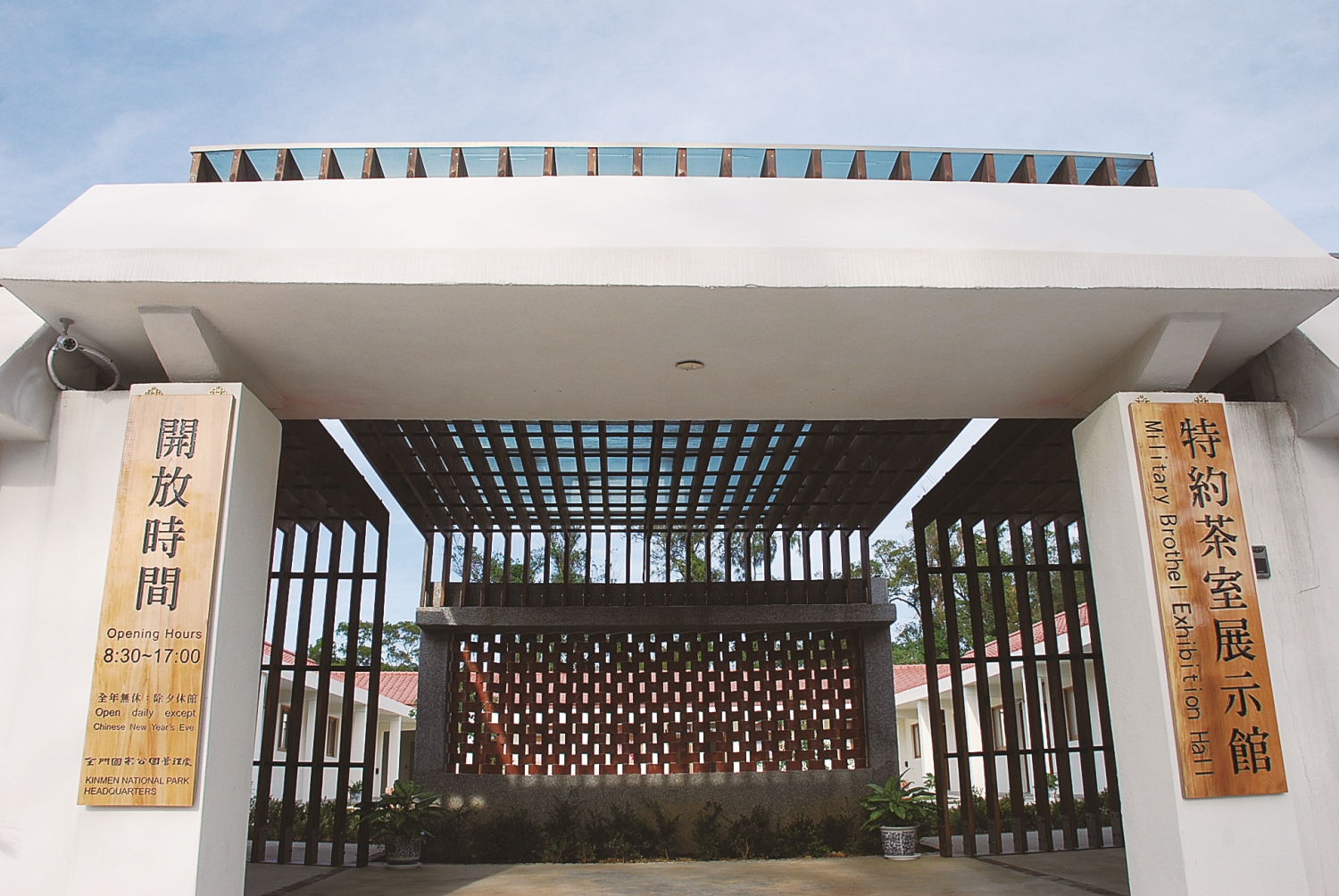
Appetite and lust are only natural, and this is no exception during wartime. Military brothels that were established in response to the war were transformed into more veiled “special tea rooms” in the ’50s and ’60s, but their function remained the same and is part of Kinmen’s war history. Some filmmaker has used this as a theme and made movies out of it. Besides the very first Jincheng main establishment, Kinmen’s military brothel has branches in many places. Xiaojing Military Brothel is located in Jinhu Township and has become an exhibition hall after renovation. The white walls and red tiles exterior shows somewhat elegant, and the four rooms inside are arranged as what it was like in the past for people to visit and ponder on the women who dedicated themselves to the country in that special time and space.
Qionglin Combat Village
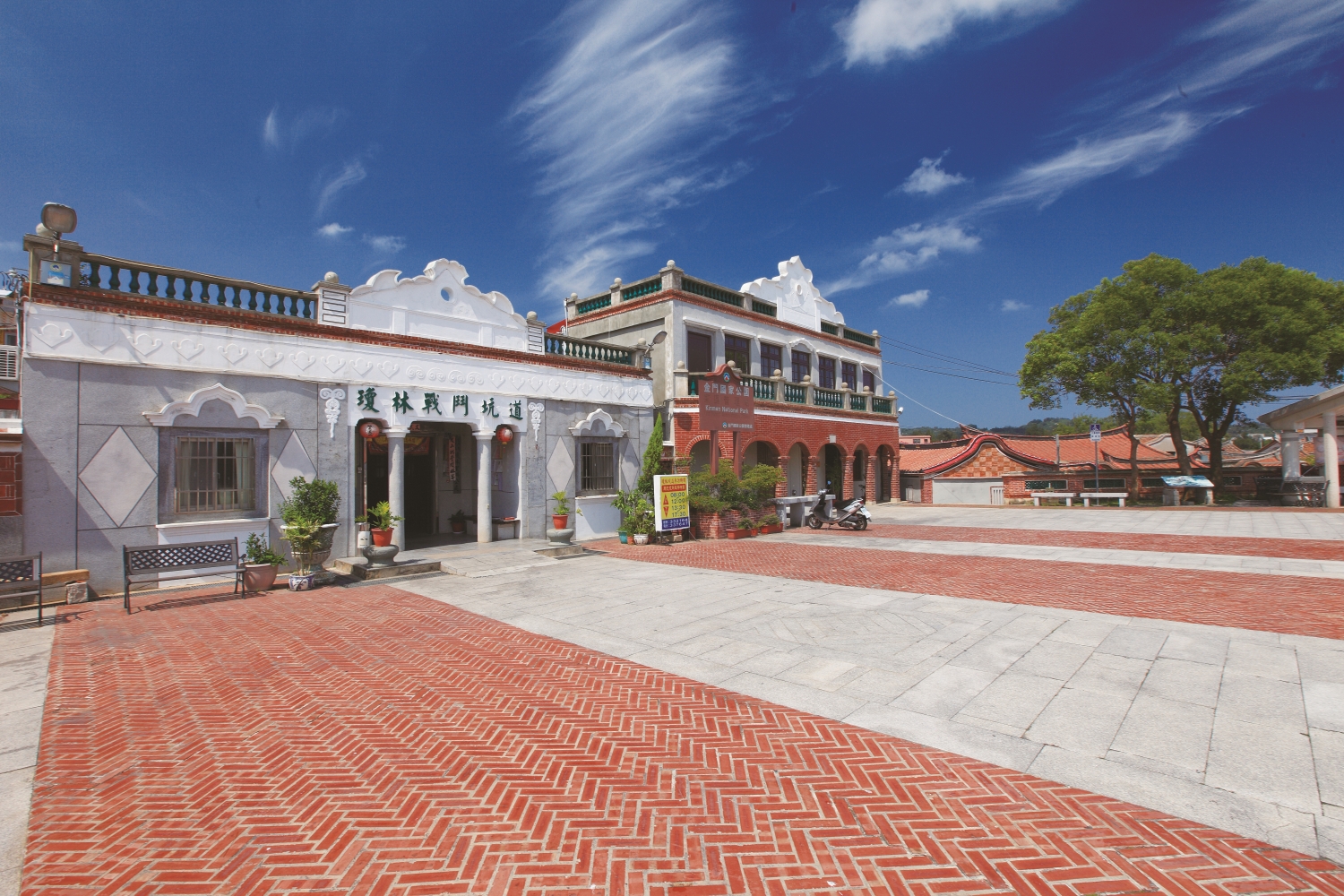
The Qionglin settlement has the most complete Southern Fujian culture and building complex and is the most distinctive single surname family settlement in Kinmen. Local talents come forth in large numbers. They would build an ancestral shrine whenever there is someone who passes the imperial civil exam, so this place is known as “eight ancestral halls in seven house compounds”. Among them, the Cai Family Ancestral Shrine has been listed as a national monument, and it is the settlement with the most ancestral shrines on the island. The gorgeously decorated Southern Fujian architecture is also one of the settlement’s features. Three hundred old buildings with swallowtail ridge and horseback gables impressively gathered here. Also, Qionglin Village is located at the neck of Kinmen, so it was designated as a combat village during the war with underground tunnels all over the place and an underground command post, which made it a significant scenic spot for visiting Kinmen’s battlefields.
Bicycle Story House
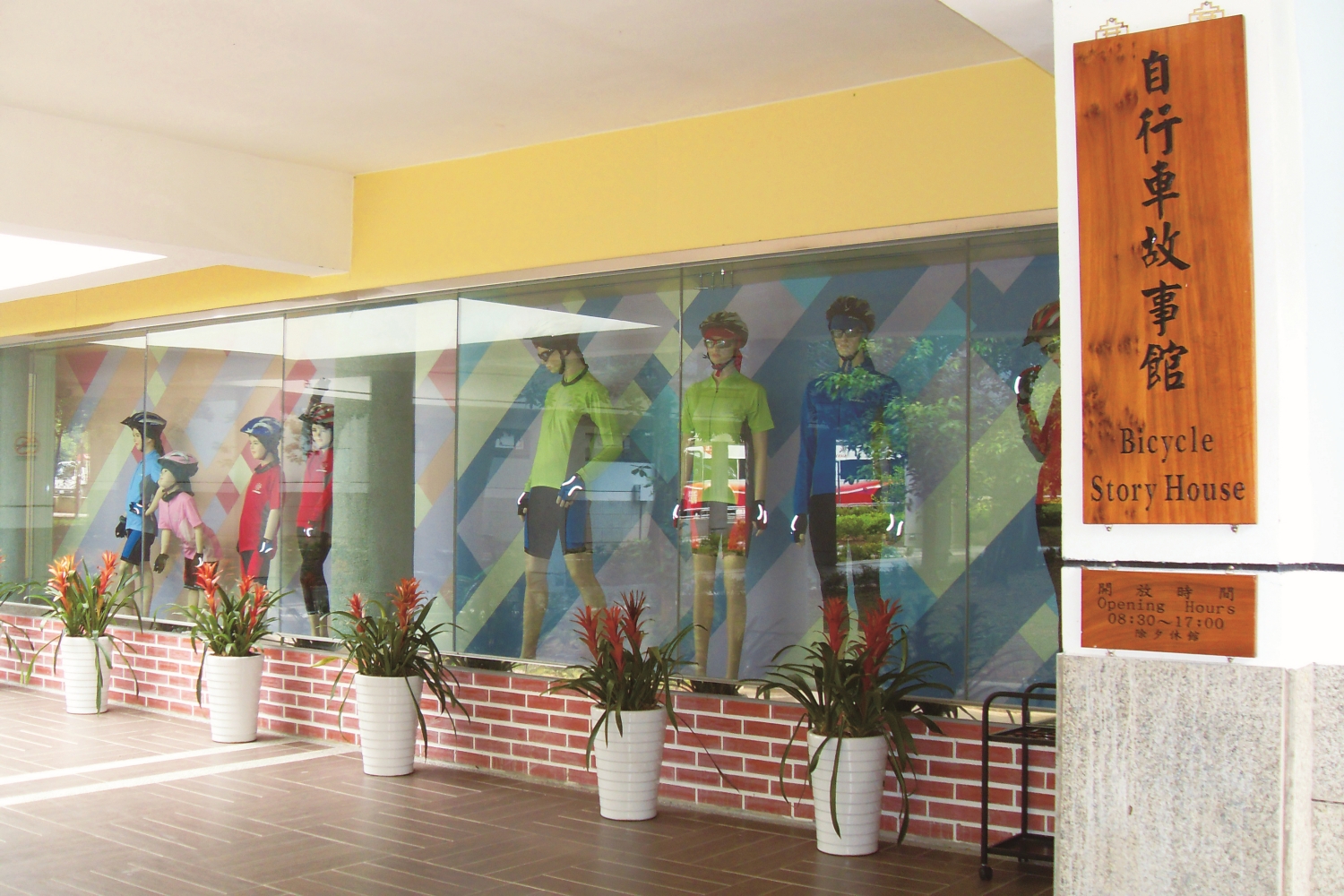
The bicycle Story House is located in the Zhongshanlin recreation area and is renovated from existing buildings. Inside there are exhibits of the history of bicycles, classic bicycle models, how to ride bicycles and etiquette when ridding, as well as spinning classrooms in combination with the bike paths in the park to promote healthy cycling sports.
About the Author︱Mei Yun Tso
Graduated from the Graduate Institute of Conservation of Cultural Relics and Museology, Tainan National University of the Arts, Tso worked as a reporter for the China Daily News and press contact for the National Museum of Taiwan Literature. Now she is a freelance writer and image worker.


