
A Brilliant Second Half of Life-A Second Life of the Senior Volunteers at National Parks
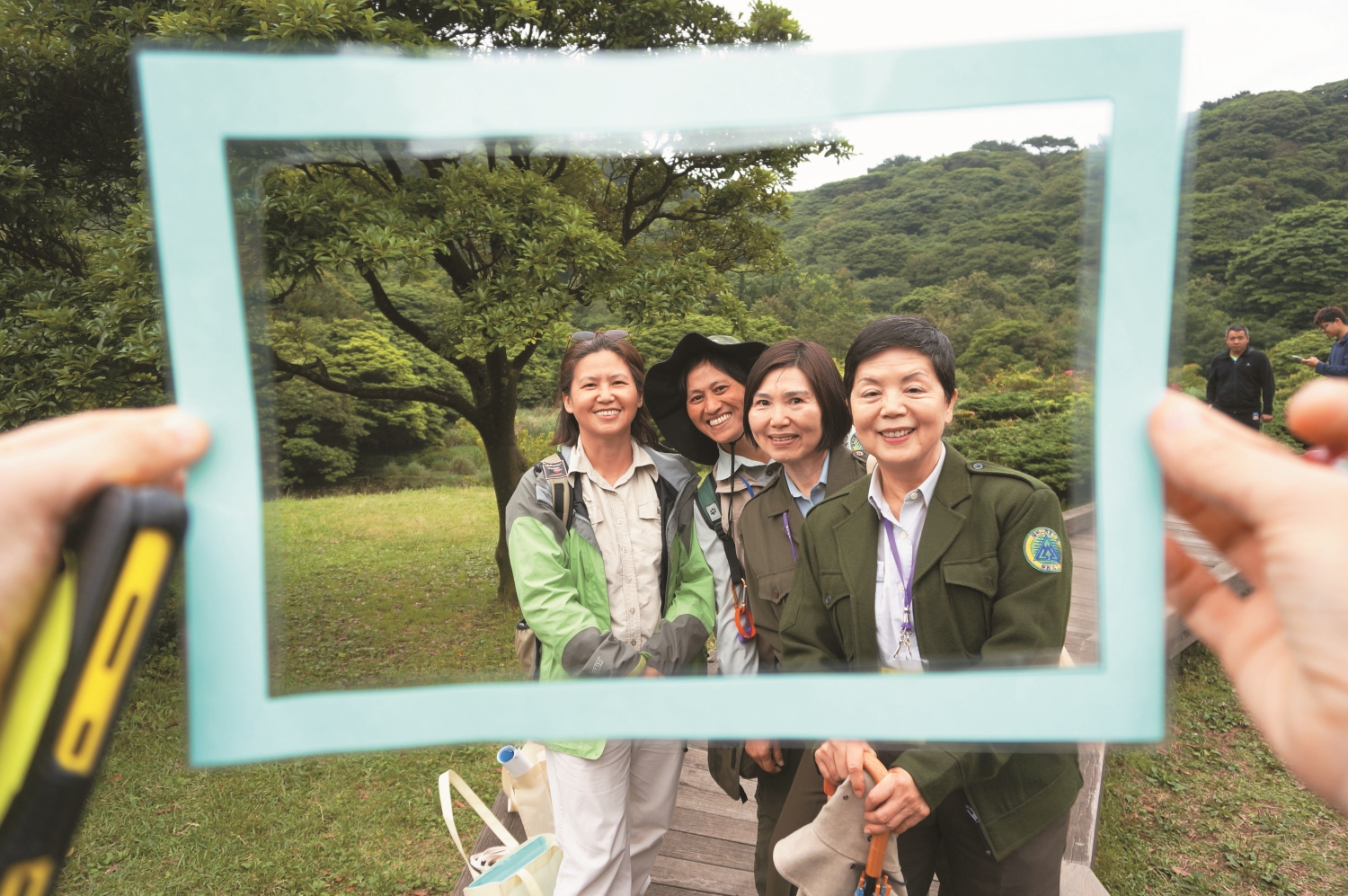
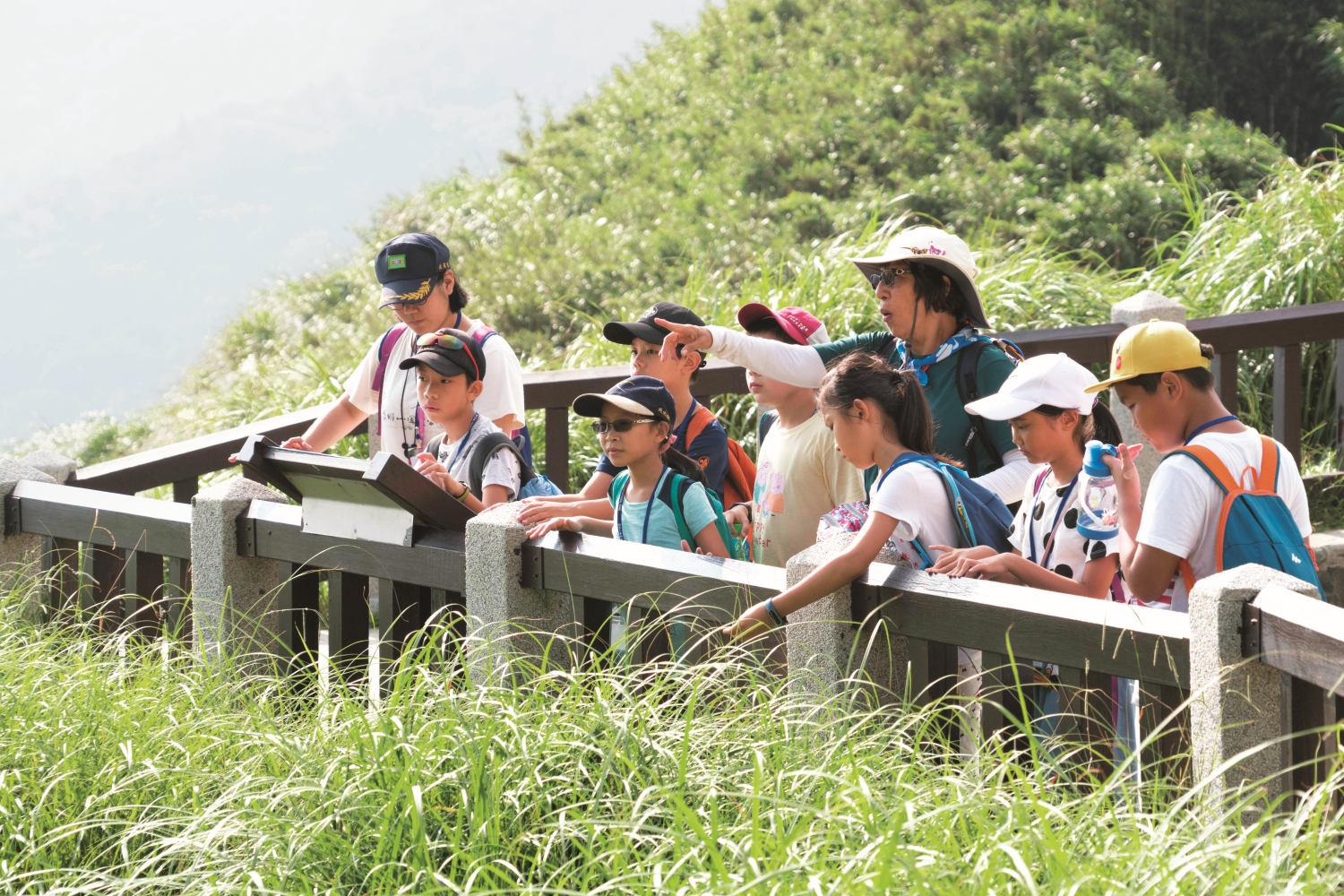
confident senior life through volunteer activities. /
Provided by Yangmingshan National Park Headquarters
A Brilliant Second Half of Life -A Second Life of the Senior Volunteers at National Parks
Article / Wei-Han Li
In recent years, “Elderly” has been a constant topic of discussion in Taiwan. In 2018, the Ministry of the Interior announced that the percentage of people over 65 years old in Taiwan reached around 14%, that is to say, the population in Taiwan is no longer young. Hence, how to experience life in old age is an issue that everyone must face, where “aging with joy” comes in place. The stories of five senior volunteers who have been serving in national parks all over Taiwan are profiled in this issue’s cover story, sharing with us their experiences and the practical process of “lifelong learning” for living the second half of their lives to the fullest.
One thing they all have in common is that their previous occupations were not related to ecological conservation, but they have skillfully applied their past workplace experience in their volunteering activities, from where they absorb new knowledge and get close to people. As they visit the mountains in their daily lives, thus national parks are no stranger to them.
Senior Citizen (Aging with Joy)
The term was first coined in Singapore as a euphemism for people aged 60 or above, but “Aging with Joy” is more apt to convey the idea of “the age at which one can live a happy and contented life”, in the hope that the elderly can enjoy the rest of their lives happily and joyfully. The term first appeared in the late 1970s when the first activity center for the elderly in Singapore adopted the term “Senior Citizens’ Activity Center (meaning Aging with Joy Center)” for the first time.
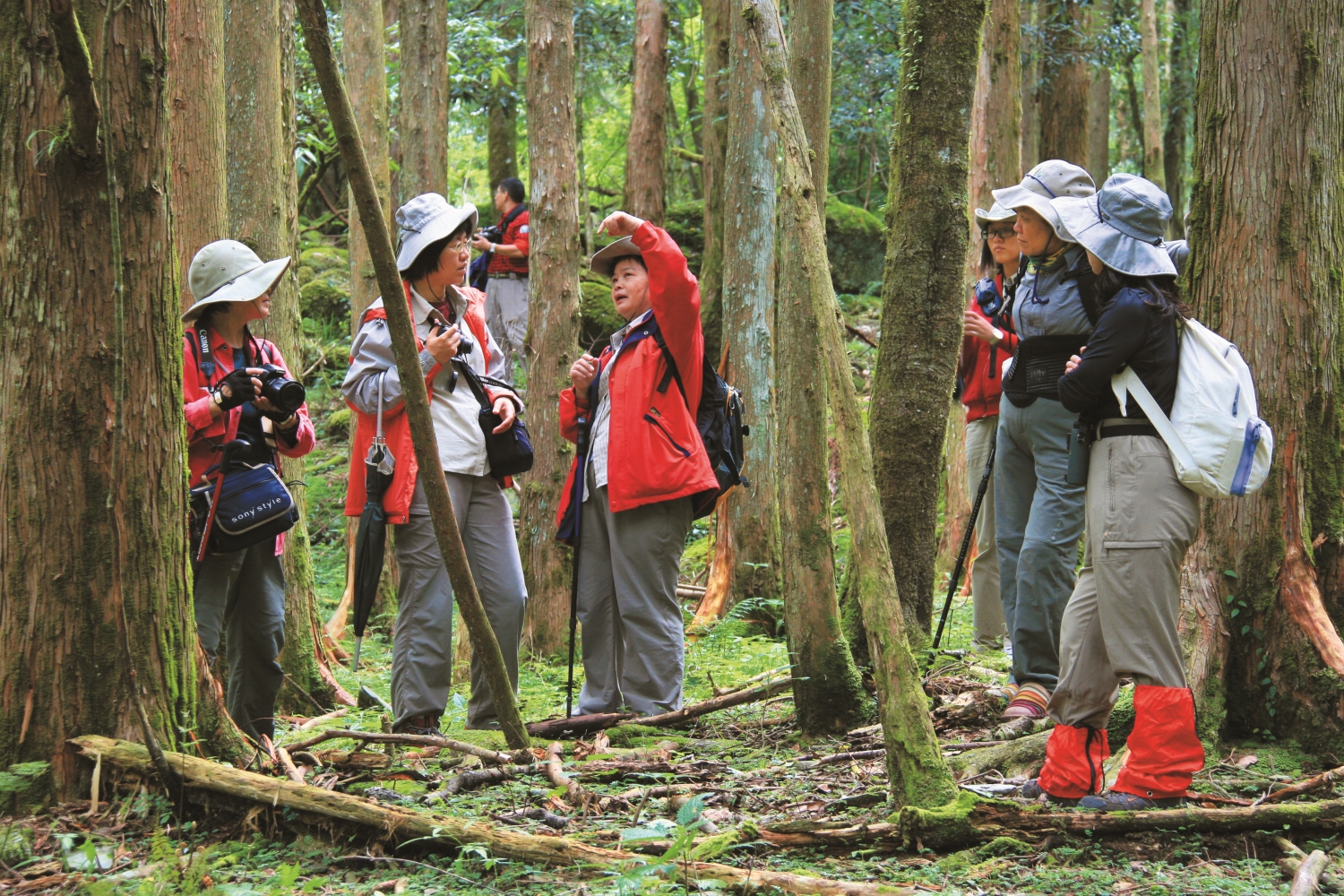
in Taiwan’s National Park. This is a team full of talents. /
Provided by Yushan National Park Headquarters
Loving Taiwan’s Mountains Even More after Climbing Mt. Everest
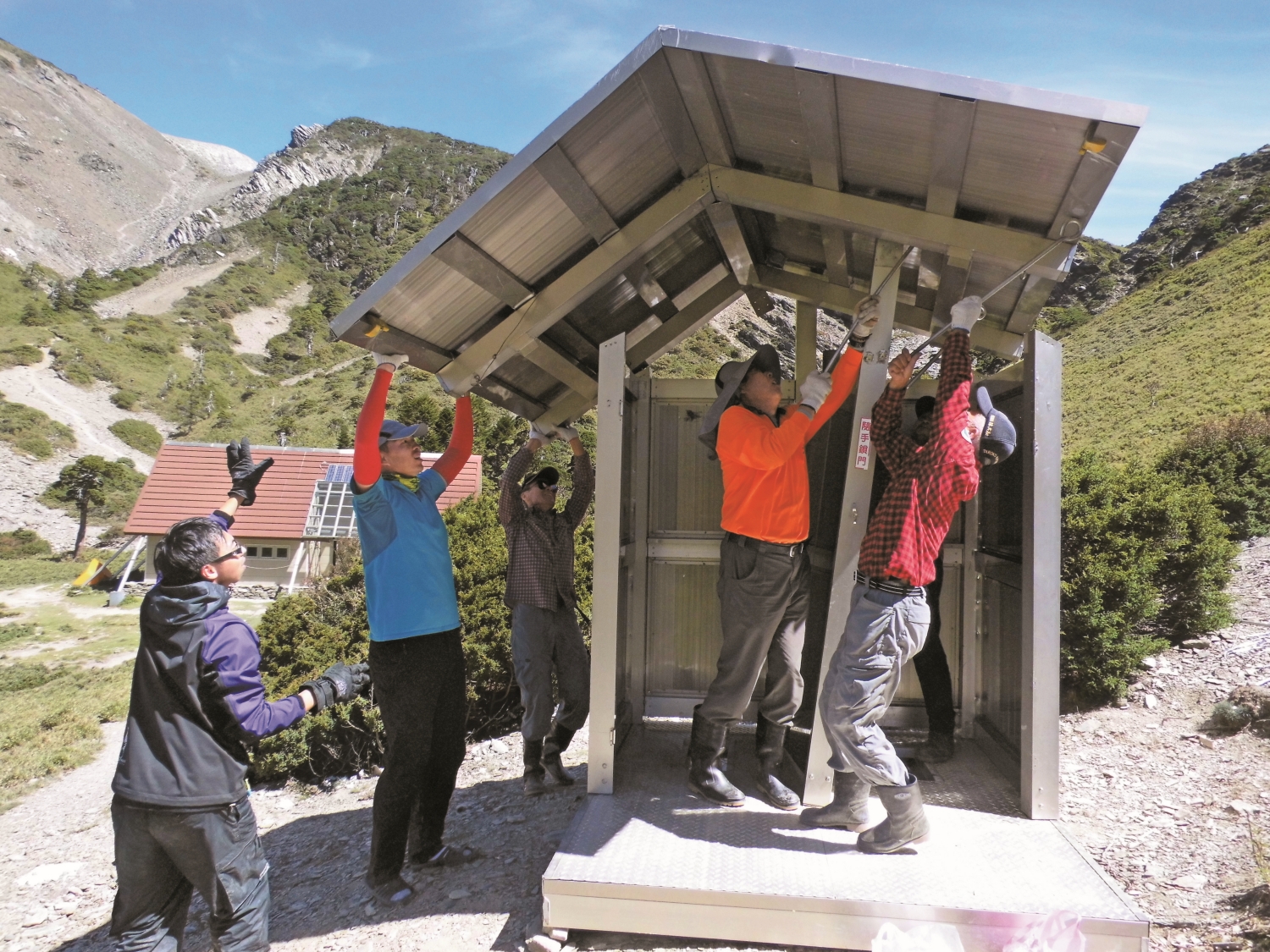
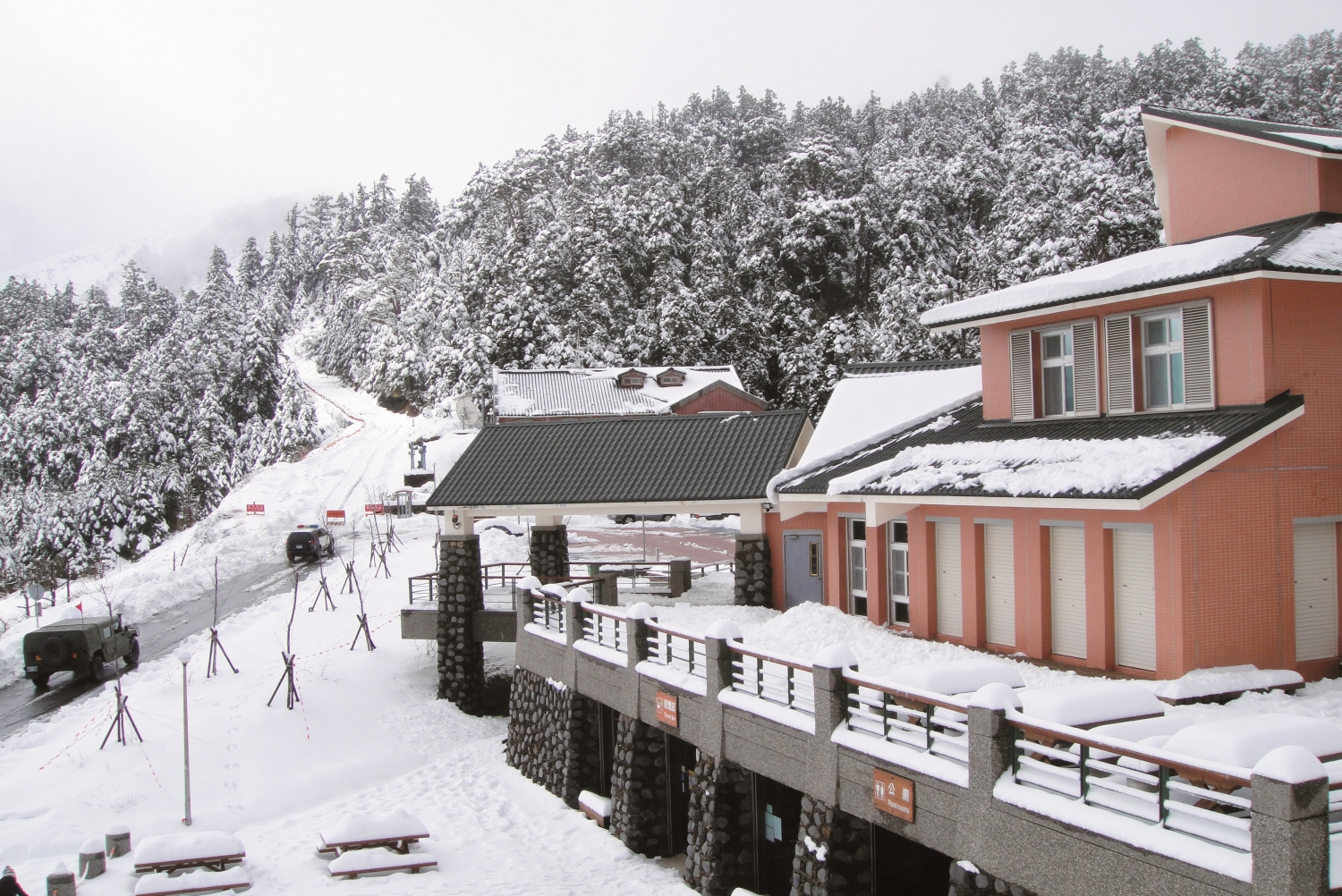
Mr. Ming-Shao Ye, who has been doing his volunteering tasks at the Yushan National Park, is the eldest among the five interviewees. For decades, he had been serving in the National Chung-Shan Institute of Sciences and Technology, the Ministry of National Defense, where he involved in microwave and electro-optical engineering, such as radar and antenna, for most of his life. However, he didn’t coop himself up in the research lab, instead he obtained his mountain guide certificate in 1990, and a volunteer role identity with the Yushan National Park Headquarters before retiring. From time to time, he goes into Yushan with a team of volunteers to assist in the installation or repair of the in-park facilities, such as solar panels or the equipment maintenance in the cabins, with his expertise in electro-optics.
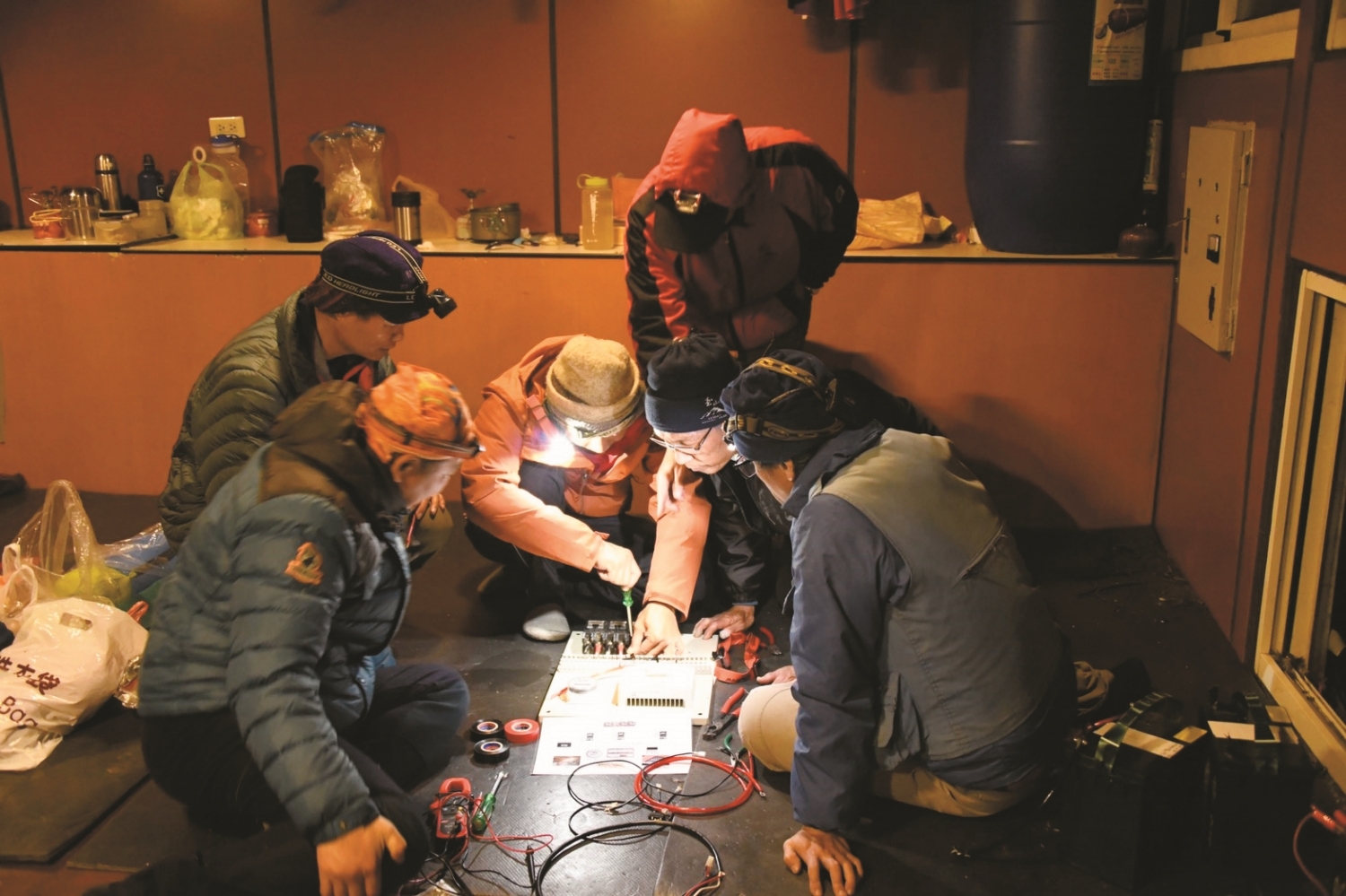
volunteers at the mountain cabin. / Provided by Ming-Shao Yeh
His perseverance over the past two decades is to be reckoned with. In spite of the fact that he has lived in Longtan, Taoyuan all these years, there was no bitterness found in his words. “I like the mountains in Taiwan very much, and our mountains are as good as those in other countries,” Ye said. Having even challenged the base camp on Mount Everest in Nepal, his deep affection towards the Taiwan’s mountains is evident, which is why he can still enjoy being a volunteer, even though the daily work of a volunteer is more like serving the others. “One of our main tasks is to assist and confirm the safety of hikers in the park. For example, we’ll first go to the cabins to make sure everything is in order, check the hikers’ Park Entry Permit before they move in, and advise them accordingly if they behave inappropriately. Or, as in the past, when there was a spike in the number of holiday visitors, we also had to help controlling the people flow or resolve parking disputes. Sometimes it’s exhausting, but I think it’s worth it to maintain the mountain environment,” Ye added.
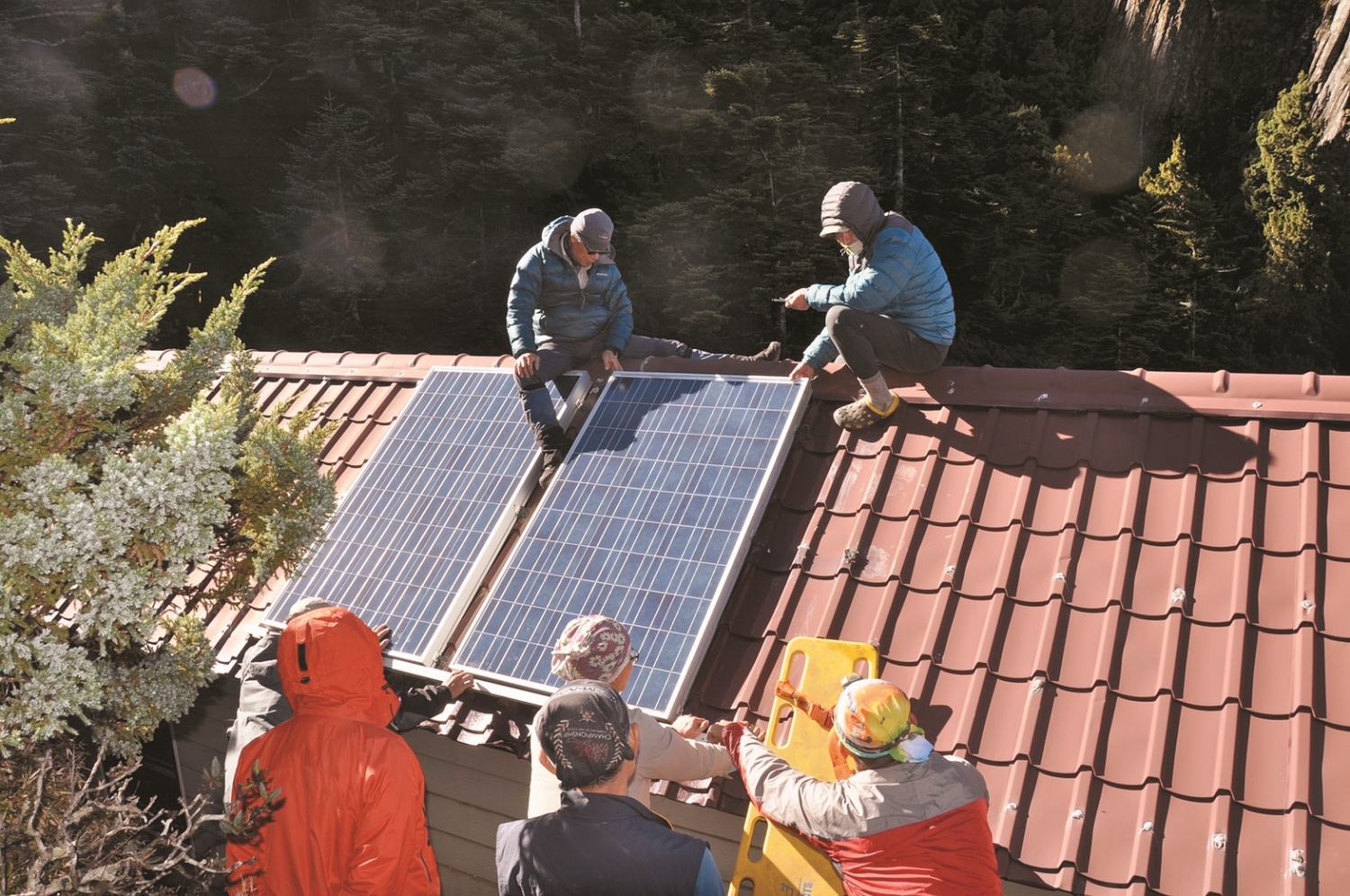
install solar panels at the mountain cabin. / Provided by Ming-Shao Yeh
Among the volunteering tasks, the most memorable part to him has been the electro-optics duty task, which was an even harder task than the traffic control, because the mountain trekking route took them seven or eight days to reach the destination. Although there were youngsters hired to carry the equipment, everyone in the team was responsible for carrying the remaining tools, food and other equipments. In fact, it’s quite a dangerous task if anyone develops a health condition during the trip. “I remember on the Mid-autumn Festival two years ago, when our team was carrying out the electro-optics works at the Jhongyang Mine Cabin and the Baiyang Mine Cabin, I developed an acute prostatitis which then soon became critical. The chief of Yushan National Park Headquarters urgently asked for assistance and sent a paramedic to the Lele Cabin at the halfway point to treat me, and then escorted me down the mountain to Show Chwan Memorial Hospital for treatment. Although it was a traumatic experience, I was deeply impressed by the mutual help and care between people,” Ye recalled.
This scene also reminds him of a time more than a decade ago when he ran through the mountains in the middle of the night, just to get an oxygen bottle in order to help a fellow hiker who developed altitude sickness get out of danger. No matter receiving help or helping the others, he feels the warmth of human kindness in the mountains, which makes him still stick to his post today.
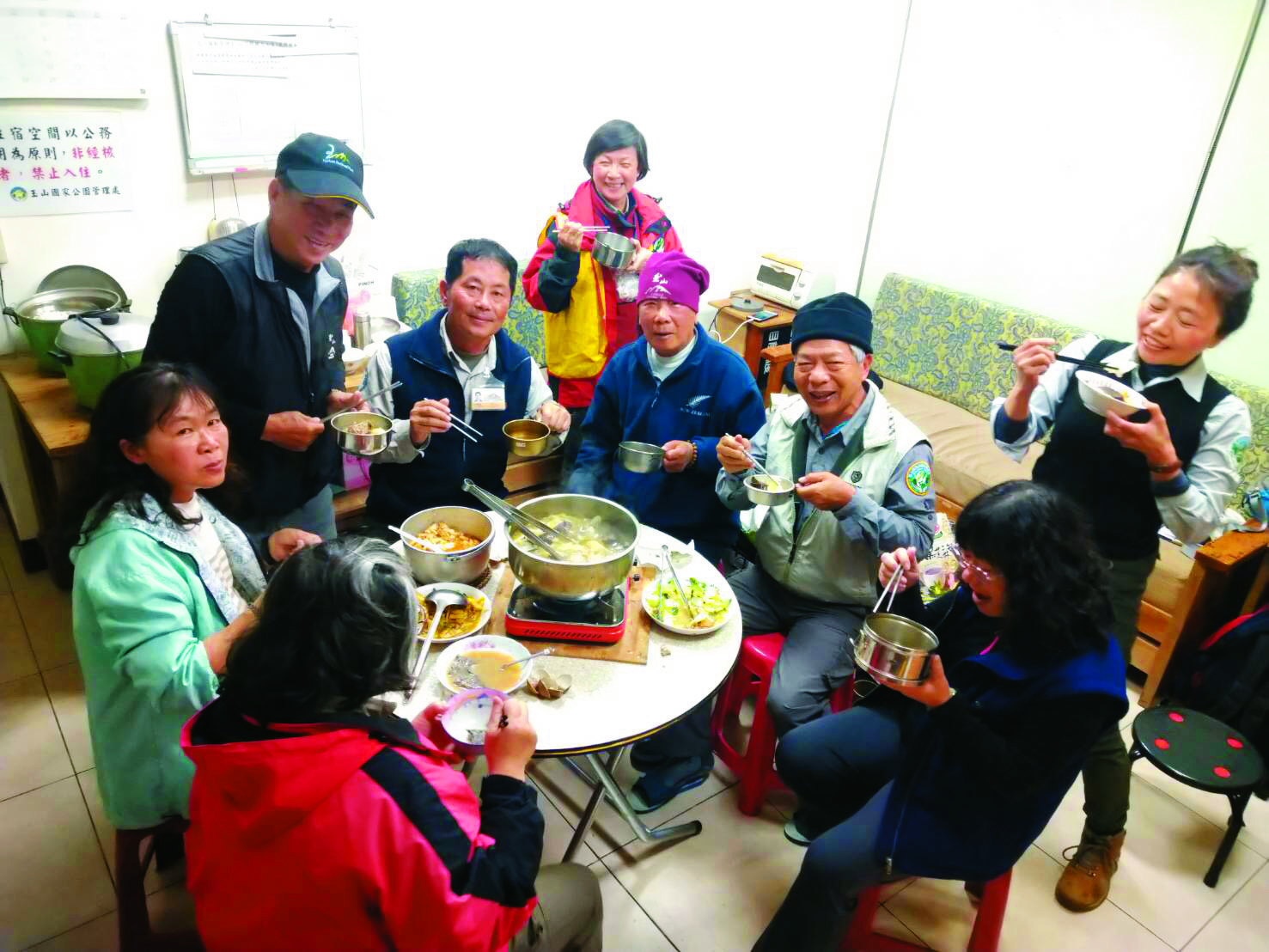
among volunteers to stick together no matter good or bad times./
Provided by Ming-Shao Yeh
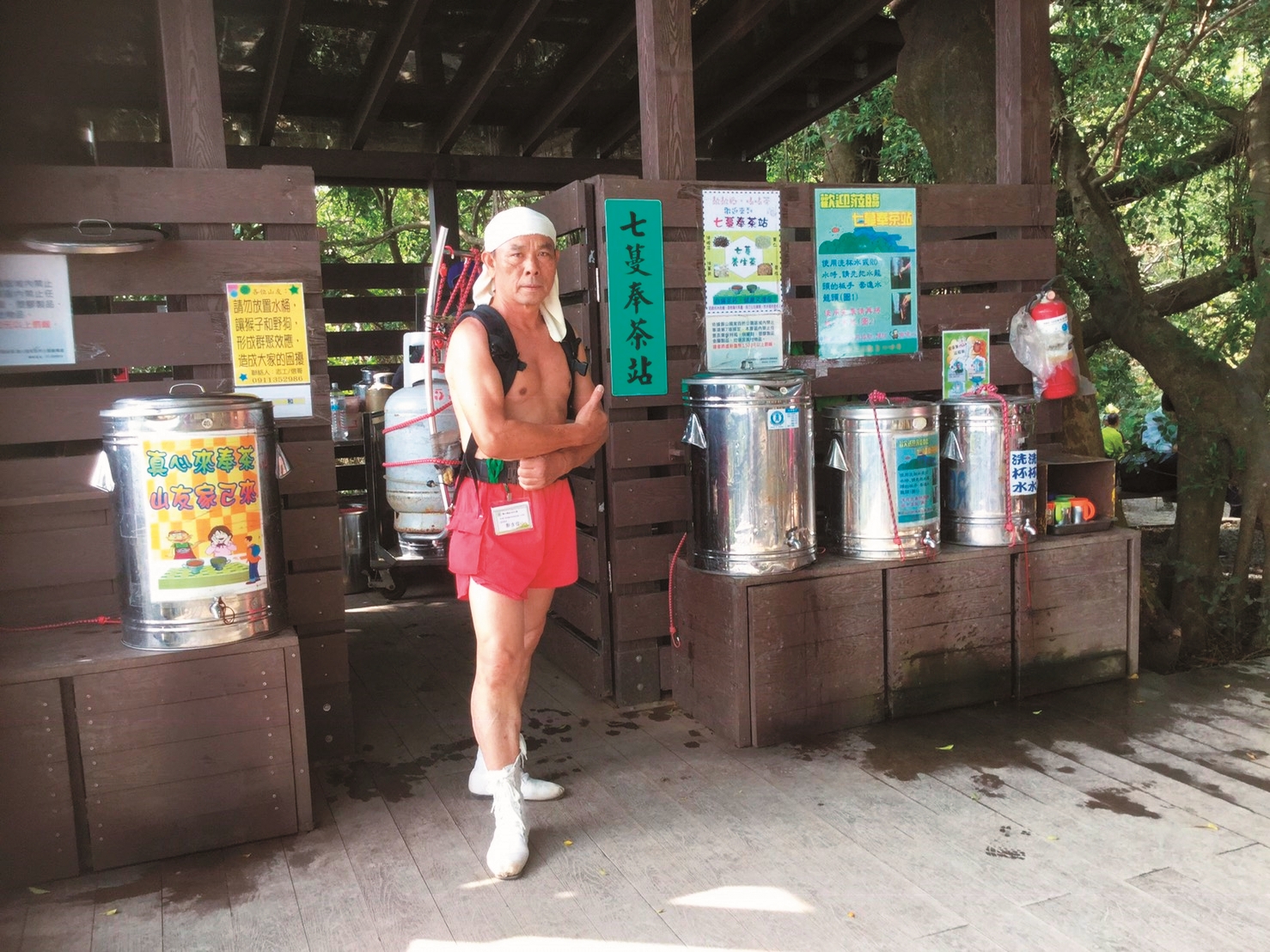
it’s because of the volunteers’ daily efforts that the aroma of tea
and the hospitality are always there. / Provided by Chi-Hsin Cheng
Free Healthy Teas Can Quench Thirst
A year younger than Mr. Ming-Shao Ye, Mr. Chi-Hsin Cheng is a native of Kaohsiung. As a motorcycle mechanic in Sanmin District, he treats the Shoushan National Nature Park as his own backyard, where he makes a habit of climbing every day, allowing him to stretch his legs after squatting all day. Before the park was established, the Qimanzhan Tea Station hosted by him has been in service at the original site for decades, serving free healthy teas made from ginseng, Job’s tears, cassia seeds, barley and other ingredients to the public. “It’s just a small token of my appreciation that I want to keep the milk of human kindness flowing. I’m grateful and thankful to all the help the Shoushan National Nature Preparatory Office (at that time) has given, so that the tea station can continue to serve tea without affecting the ecology. They’ve all done so much to help; it’s no big deal for me to carry a bucket of water and gas up the mountain for tea making to the public” Cheng said.
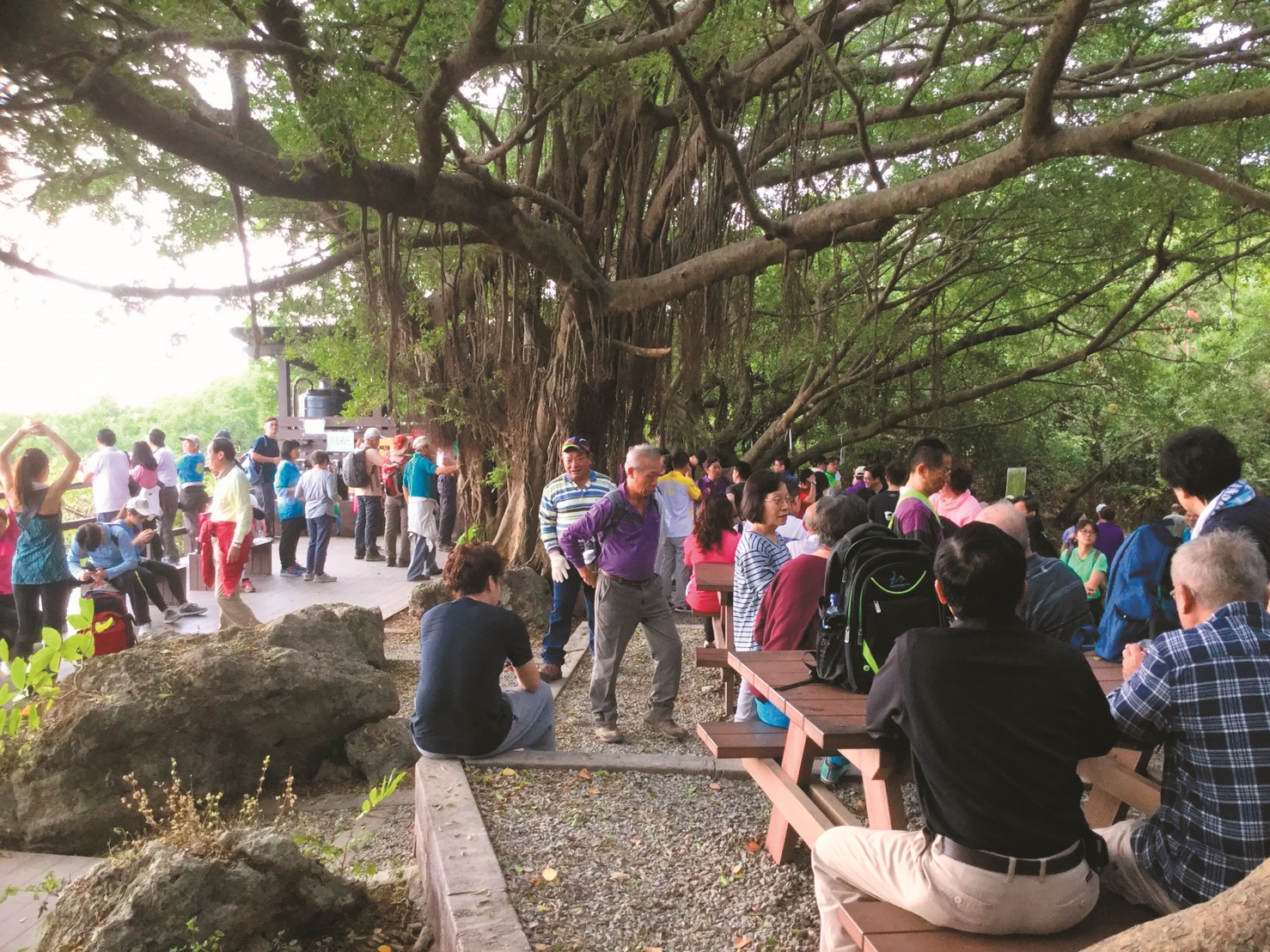
and the volunteers are always happy to help everyone to quench their thirst. /
Provided by Chi-Hsin Cheng
After the Shoushan National Nature Park Preparatory Office was established, he listened to the advice of his friends and his third son, who was pursuing his studies at the School of Forestry and Resource Conservation of National Taiwan University, so that he worked hard to obtain a docent volunteer certificate. In retrospect, that was the right decision as the Shoushan National Nature Park has changed him into a different person. “In the past, Shoushan was like my home, so I used to go to the mountain in just a pair of shorts. Now that I’m a volunteer, I’m more concerned about my appearance, I can’t explain to the hikers without a top after all. But I’m also ashamed to say that I used to feed the macaques, like what many other tourists do, and sometimes I didn’t see any harm in touching, moving or plucking the plants and trees. Back then, everyone did so, as well as me, without noticing that was inappropriate. It was only after my son had taught me many correct concepts and National Nature Park Headquarters had arranged an ecological conservation course for volunteers that I was corrected. Even though I’m not good at studies, I tried to absorb the knowledge, learn the art of speaking, and practice how to share with others. Whenever I encounter things that I don’t understand, I ask my son, so that I can share the good things about Shoushan with everyone. All of these changes have been positive for someone of my age,” Cheng added.
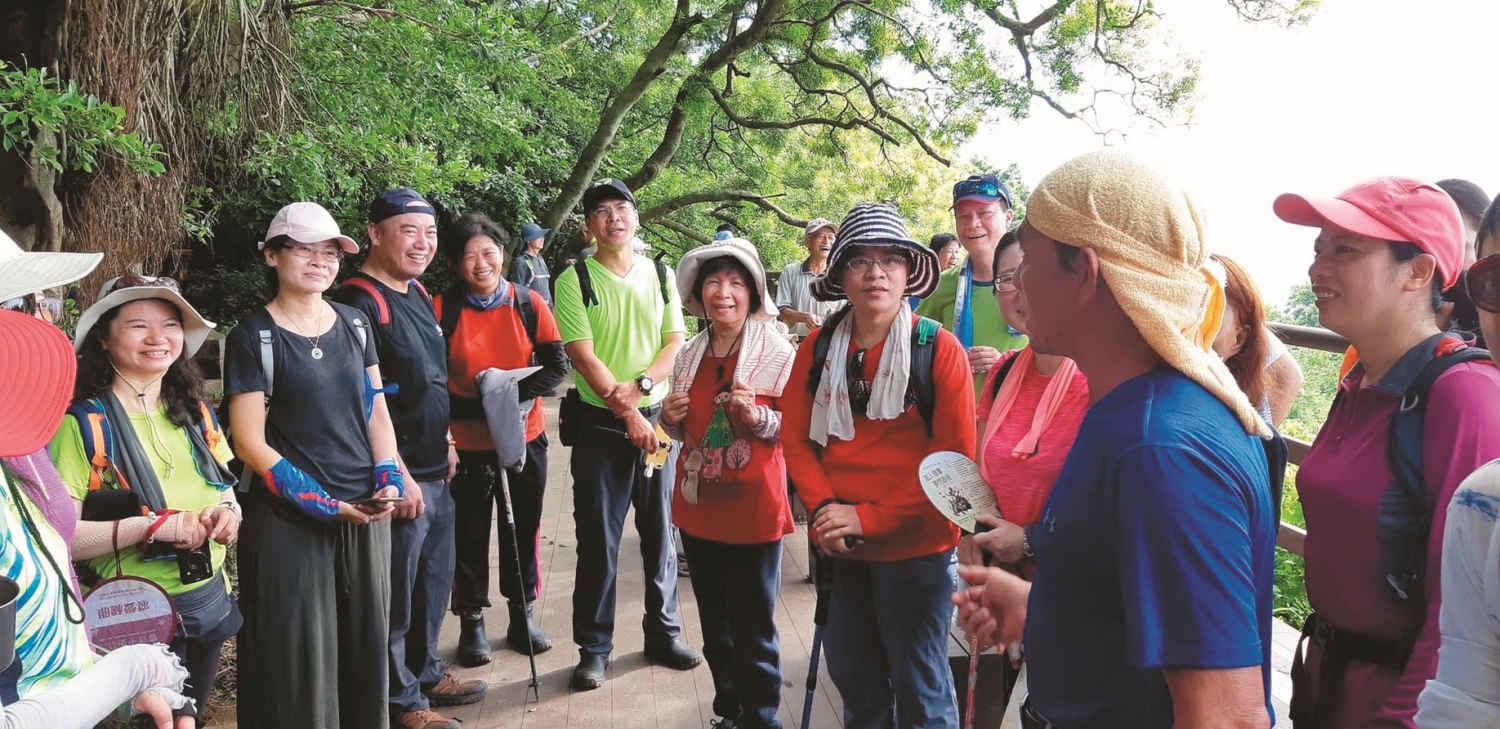
and doing his best to convey the beauty of Shoushan to the visitors. /
Provided by Chi-Hsin Cheng
To this day, he is still very energetic and carries water on his back up to the mountains. His physical strength and agile limbs were of great help when there was once a tourist got injured on the mountain. Cheng recalled, “Once, a female tourist injured her leg, but the road condition in Shoushan couldn’t allow the ambulance to access, so I had to carry her down the mountain for treatment. That lady was so nervous that she strangled my neck until it became red.” Yet, he took it lightly. It just like tourists who are thirsty when climbing up a mountain, he passes them what they need in time, because simply a cup of tea will quench their thirst. To the tourists, his assistance has always been a timely and unforgettable experience.
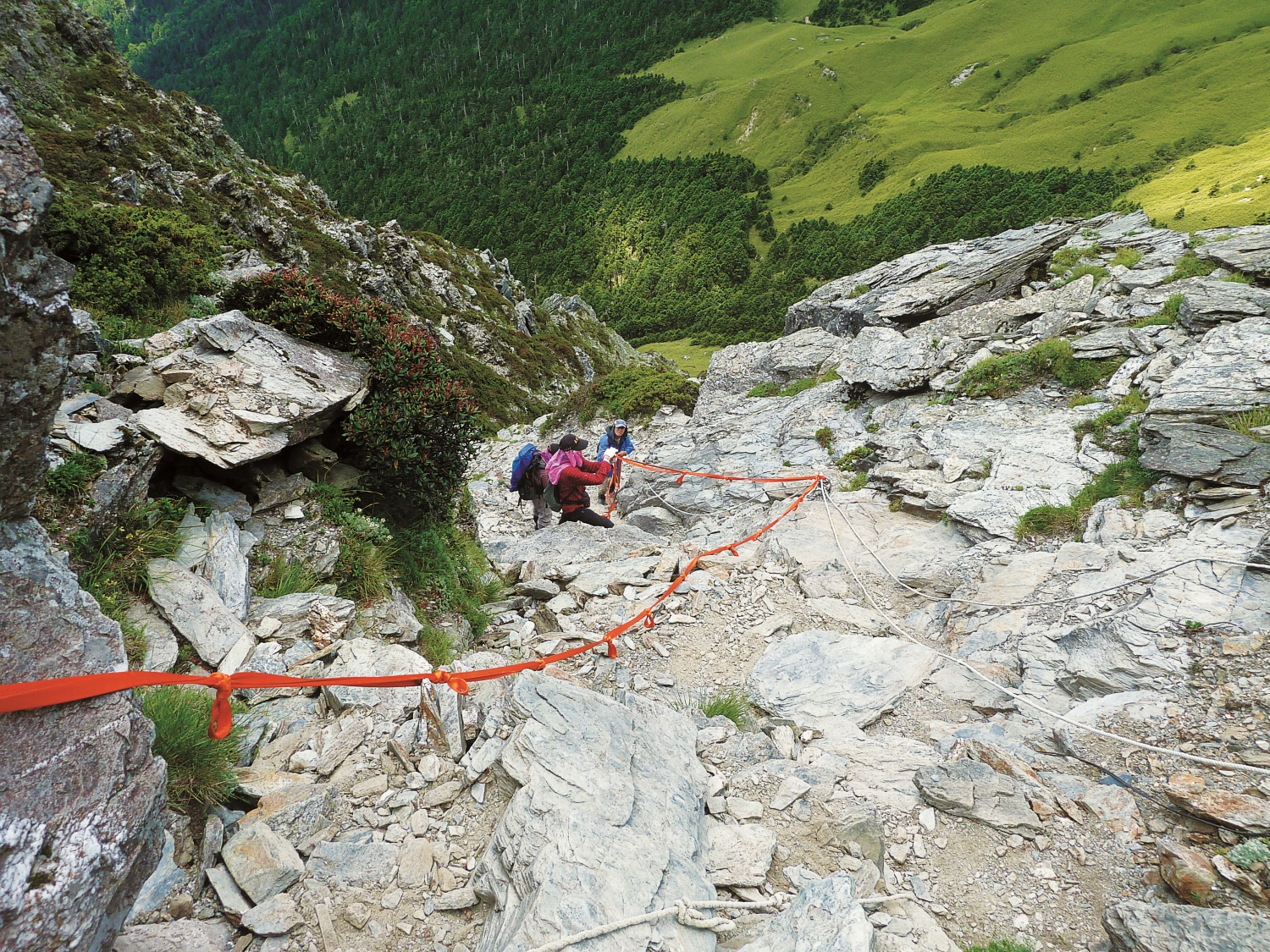
at the North Peak of Mt. Qilai in a difficult environment. /
Provided by Taroko National Park Headquarters
No Fear of Once Falling off the Cliff, Volunteer Career Still Continues
Mr. Fu-Chang Hsu also has an impressive physical strength, which he puts into practice in his abundant activities of volunteering. In addition to serving in Taroko National Park for over 14 years, he has also provided docent services and assisted the visitors in Yangmingshan National Park, Taipei Astronomical Museum, Yilan’s Luodong Forest District Office, Hsinchu City’s Library of Cultural Affairs Bureau, and even as far as Matsu National Scenic Area. But of all the units he has worked with, his favorite is still the Taroko, so he almost gives it his all, not only as a docent volunteer, but also as a competent conservation volunteer, which he does remarkably well in both the roles.
Tourists are always impressed after listening to his explanations. “I’m in the habit of taking photographs and writing short essays. At the end of each tour, I’ll record my experiences, so that I’ll have a wealth of images and materials to share with visitors later. Sometimes the explanation is directed at children, but their parents are more interested and want me to tell them more,” Hsu said. Furthermore, the Taroko National Park Headquarters once created an e-newsletter with a column for him, giving him a platform to publish his works.
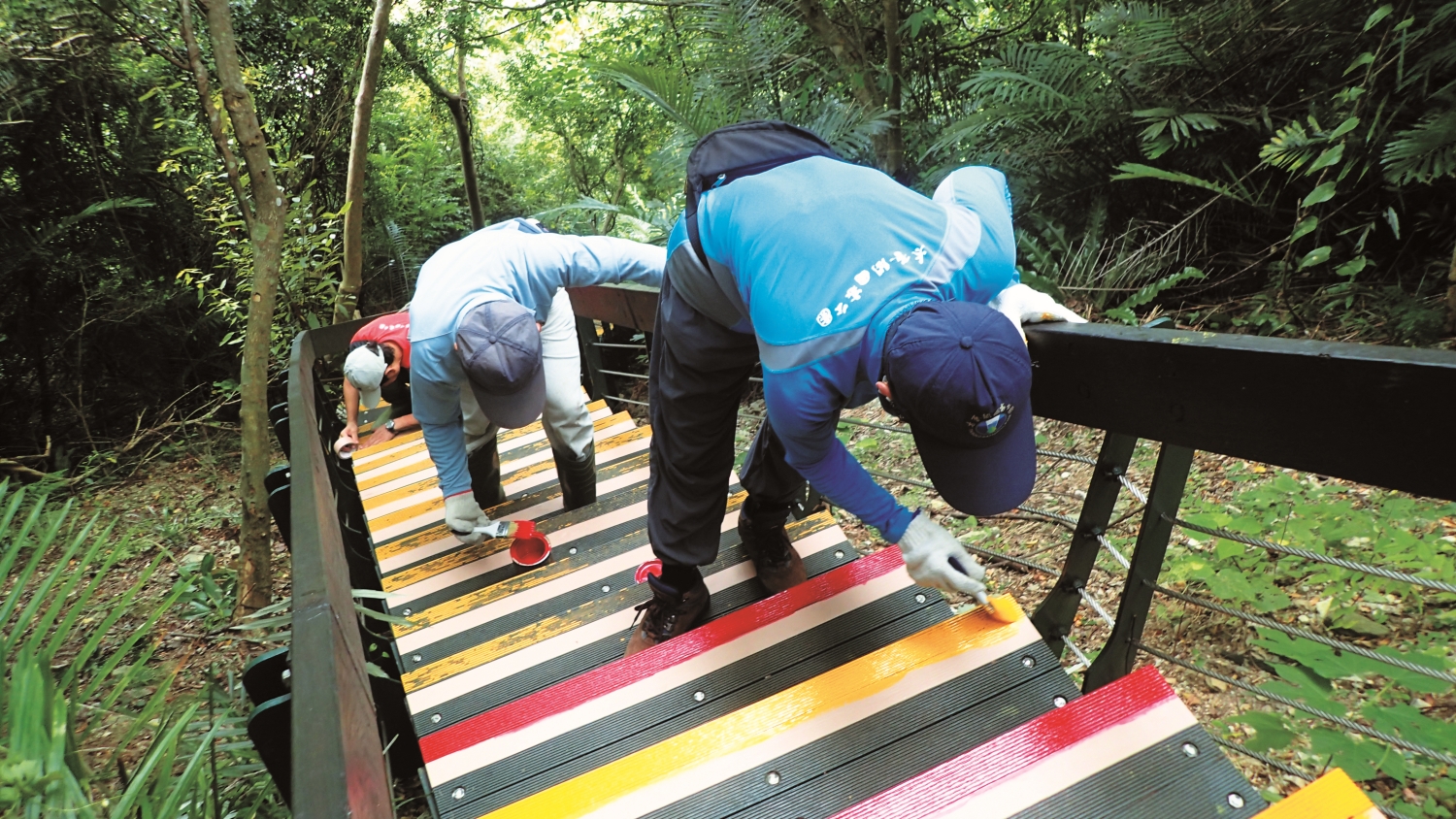
Provided by Taroko National Park Headquarters
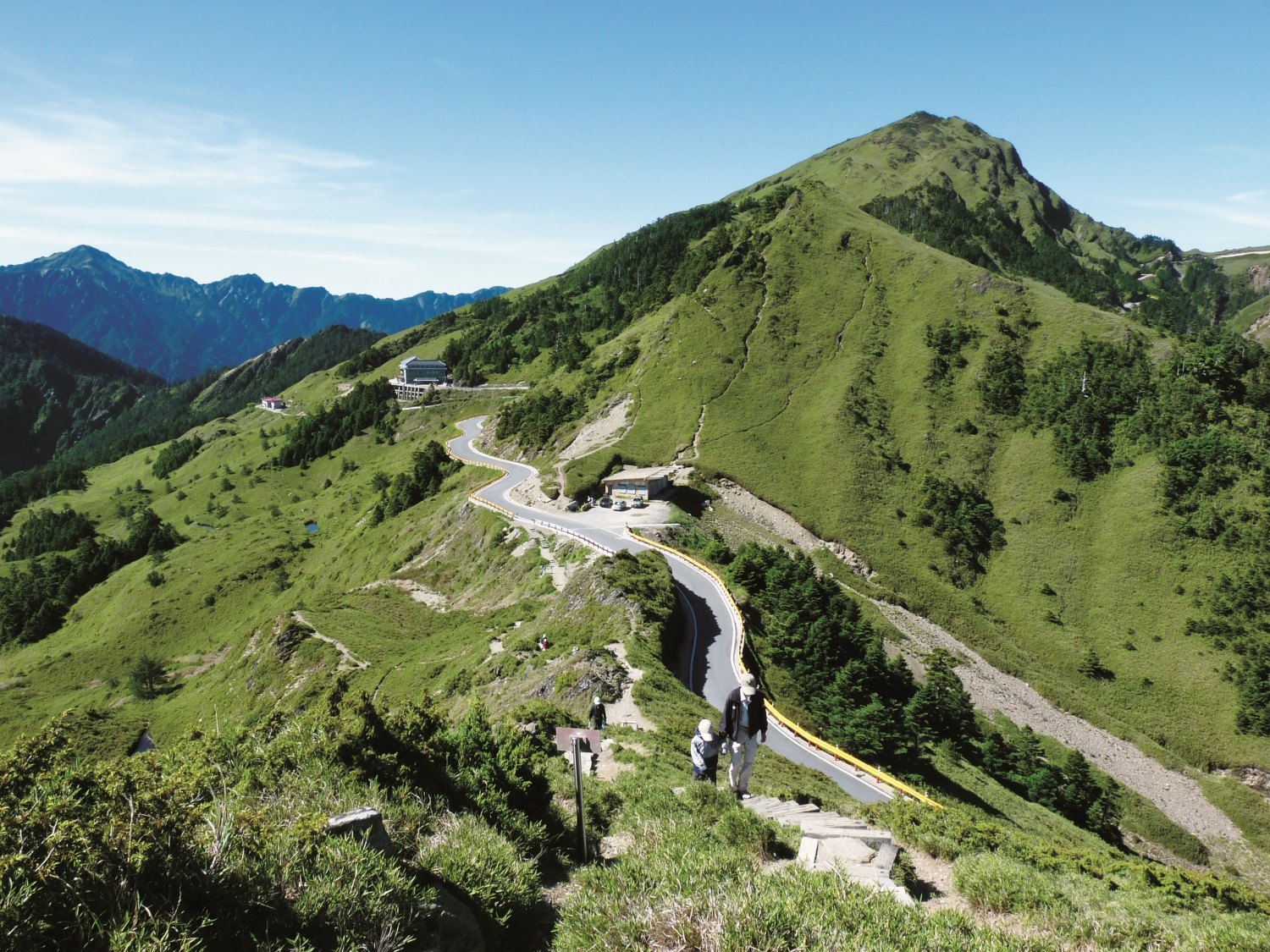
at the Nanhu Cirque after a typhoon. /
Provided by Taroko National Park Headquarters
As for a conservation volunteer, the main tasks include facility maintenance, trail patrols, eco-advocacy and mountain rescue, which he has spared no effort. Picking up the garbage left by hikers is also one of the basic tasks for a conservation volunteer, but he would even bring a piece of candy wrapper incidentally passed to him from a hiker down the mountain without hesitation. “At that time, I was inspecting the Zhuilu Old Trail and walking behind the tourists, that was when I saw a plastic bottle at the edge of the cliff (picking up garbage is also one of the inspection tasks). Without a second thought, I squatted down to pick it up. Before realizing my backpack was too heavy, I lost my balance and fell off the cliff unconsciously. Luckily, a rock platform was down there to buffer me, otherwise, not only had I had a broken collarbone and a broken tailbone, I would have been dead,” Hsu recalled. After experiencing the moment of life and death, many of his friends and relatives would always ask him if he would go back to the post, nevertheless, his answer has always been yes. And he assumes that it is the best way for him to learn by example.
“I hope that the visitors can spend some time imagining how much rescue, medical and social costs that the garbage they left will cause, and it may even indirectly take a life. Thus, it’s better to bring the garbage down the mountain themselves, in order not to cause similar regrets again,” Hsu advised.
Managing Both the Cultural and Ecological Activities Because of Love for Tainan
Like Mr. Fu-Chang Hsu, Mr. Yao-Zhou Huang, who lives in Tainan and serves in the Taijiang National Park, has also dedicated himself in more than one volunteer roles: a docent volunteer and an environmental education volunteer. Mostly active in Tainan, he has a passion for cultural activities, which is why he volunteers at the Tainan City Government’s Cultural Affairs Bureau, and the Tainan Confucius Temple, where he can be seen assisting the annual Confucius Ceremonies. Before he retired, he worked for a property insurance company, where not only did he work with numbers, but he also built up a list of contacts and experience in various industries. At that time, he often held meetings and did presentations with clients, so he is no stranger to dealing with people. Nevertheless, what he really finds challenging is the explanation of ecological knowledge instead.
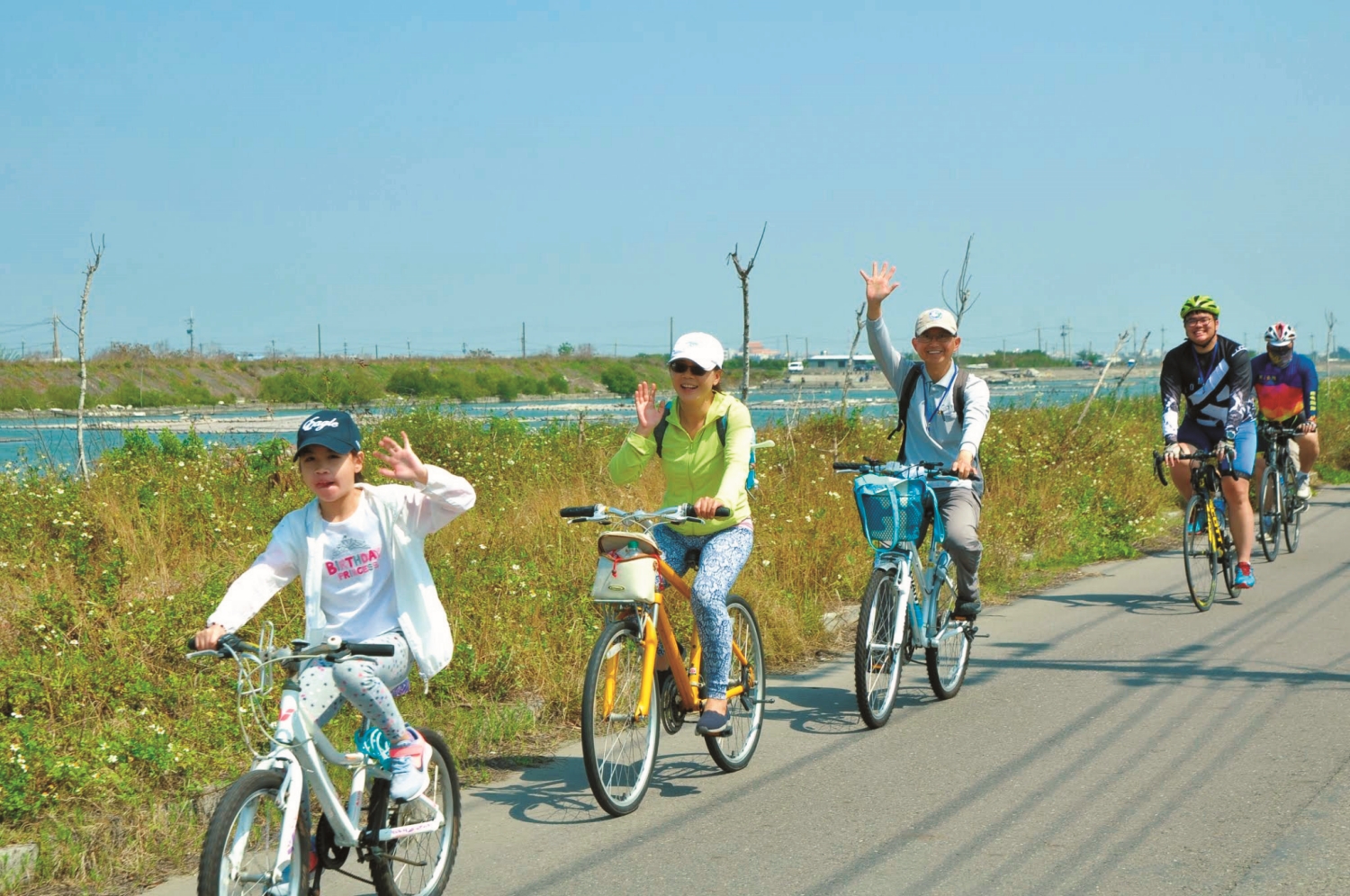
of the salt fields. / Provided by Taijiang National Park Headquarters
“Not only is Taijiang rich in human and cultural history, as well as industrial history, but its nature ecology is also a highlight. I started relatively late in terms of acquiring the ecological knowledge, but I was fortunate enough to be one of the first volunteers trained when Taijiang National Park was first established. That was because I had the chance to learn a lot from the many senior volunteers who joined the program back then,” Huang stated. He believes that humanistic knowledge can be absorbed through extensive reading, but that reading alone is not enough for ecological understanding. He further added, “It is also necessary to go to the sites to see and observe more, and to be guided by senior experts. Therefore, while doing my explanation, I always encourage visitors to pay more attention and observe their surroundings.”
Observation and experience make it easier for people to understand the concept of ecology, which also allow him to implement it in his work as an environmental education volunteer. In fact, environmental education volunteers are also a kind of docent volunteers, but with more difficult tasks. “No matter how vivid the explanation is, it’s good enough for visitors to remember 20% of the content, but if they can experience it themselves, the content they can remember will increase to more than 40%, wouldn’t it be more effective? For example, through hands-on activities such as oyster farming, fishermen experiencing, and salt farming, the series events of ‘A Date with National Park’ held by Taijiang, it enables the visitors to gain deeper understanding of the environment and learn more about how our ancestors lived on this land,” Huang explained. The performance of the environmental education volunteers in revitalizing knowledge gives him a sense of accomplishment, but he admitted that the entry bar for such volunteer role isn’t set low.
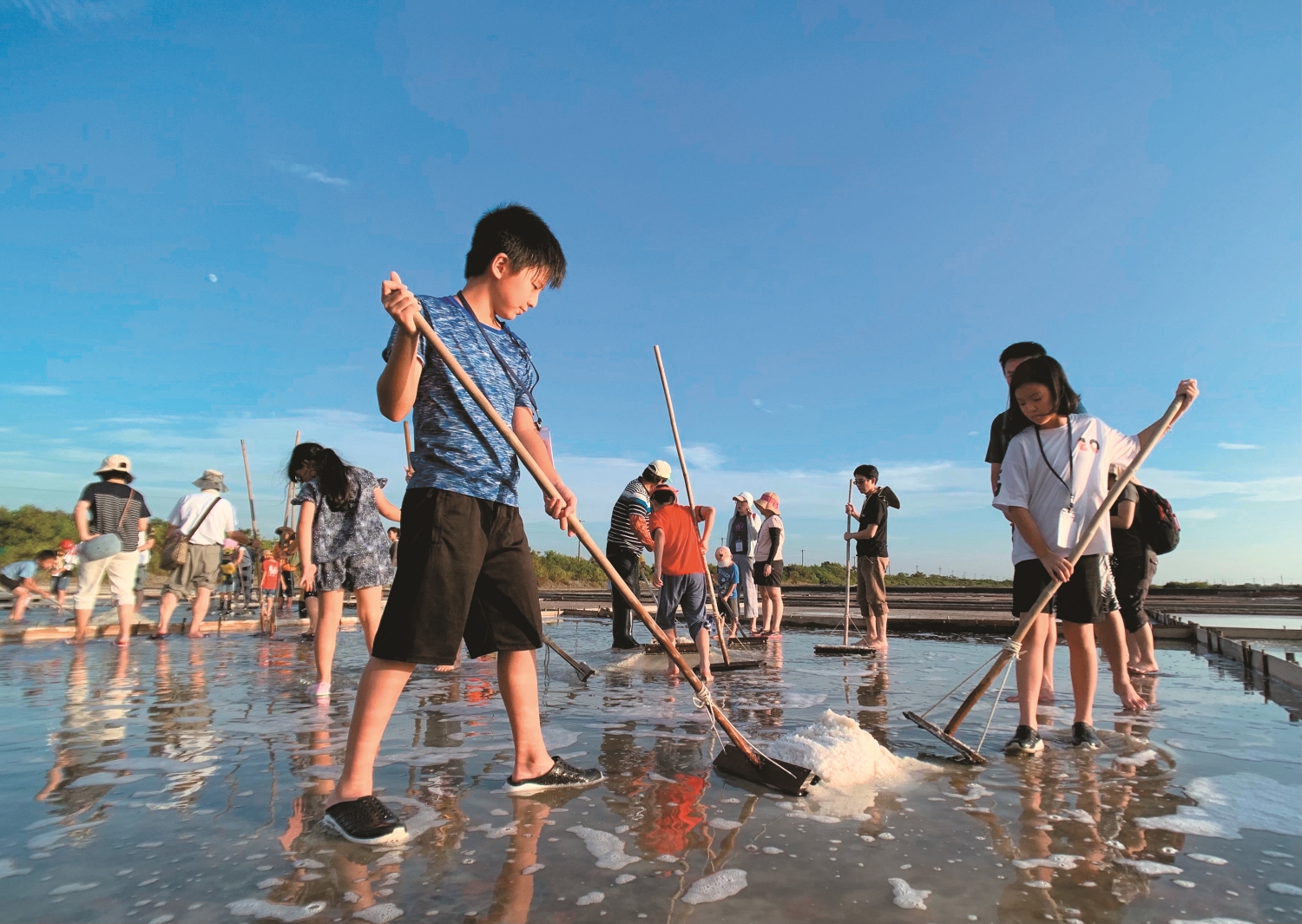
Provided by Taijiang National Park Headquarters
A Date with the National Park
“A Date with the National Park” is a series of events organized by the Ministry of the Interior’ s Construction and Planning Agency, which aims at encouraging the public to learn more about the rich natural and cultural landscapes of the national parks. Each national park/ national nature park offers a series of programs based on its unique features, including culture and nature tours, environmental education, cycling tour, ecological conservation, and road running and cross-country running, etc. In doing so, it provides the public with the opportunity to be familiar with the terrains, flora and fauna, as well as human and cultural history. The events are well received by the public.
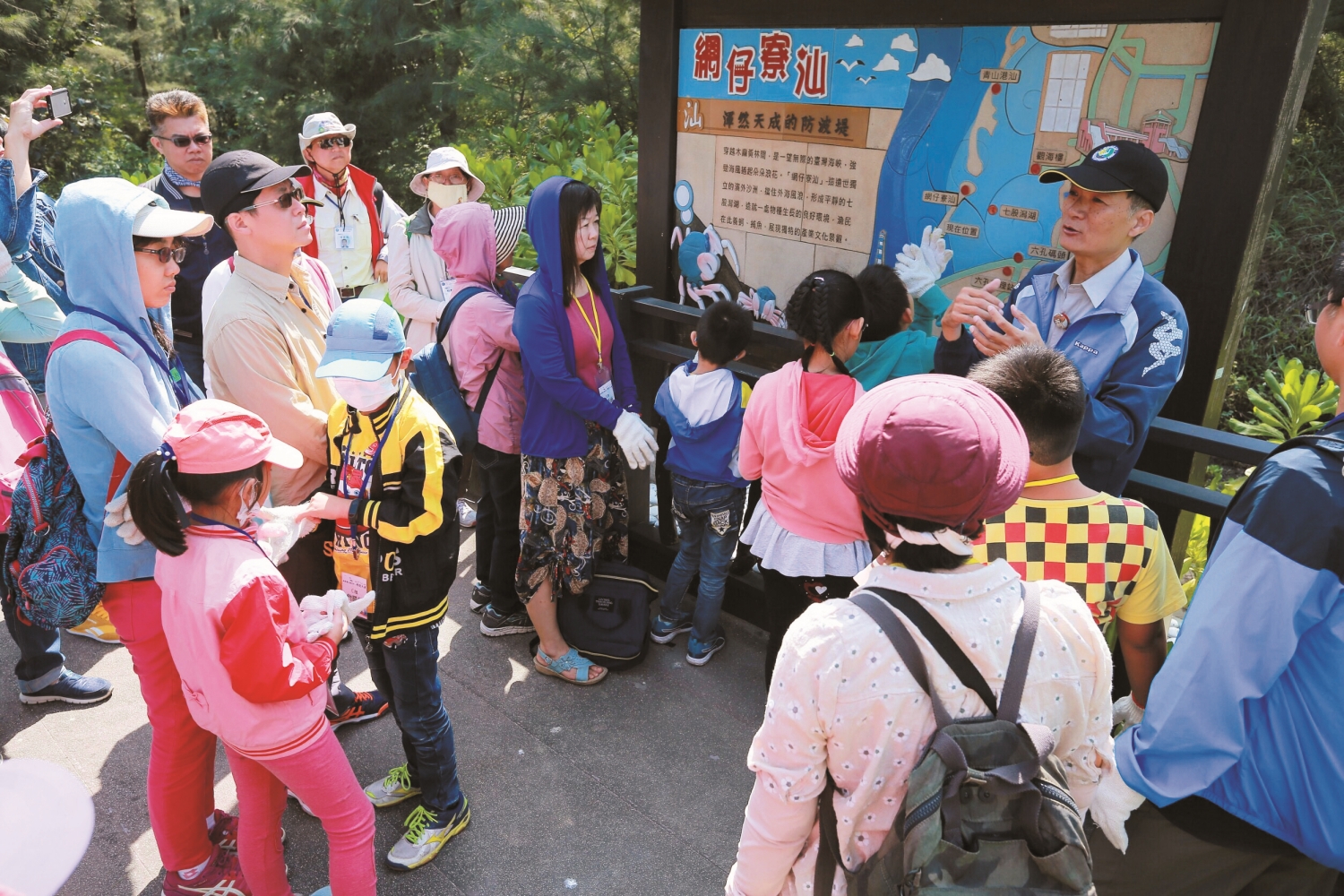
Yao-Zhou Huang speaks with ease. / Provided by Taijiang National Park Headquarters
“Since we have to work together to come up with lesson plans and lead group activities, teamwork plays a crucial role. When selecting volunteers, the Taijiang National Park Headquarters usually gives the candidates a lecture first and observes their behaviour during the class. Then, they conduct interviews with the candidates individually, in the hope to select people who are truly passionate about the job and embrace the team spirit,” Huang explained. He is a very well-read person, and the reason why he enjoys being immersed in tons of books is because the Taijiang National Park provides him a stage that allows him to put his knowledge into practice.
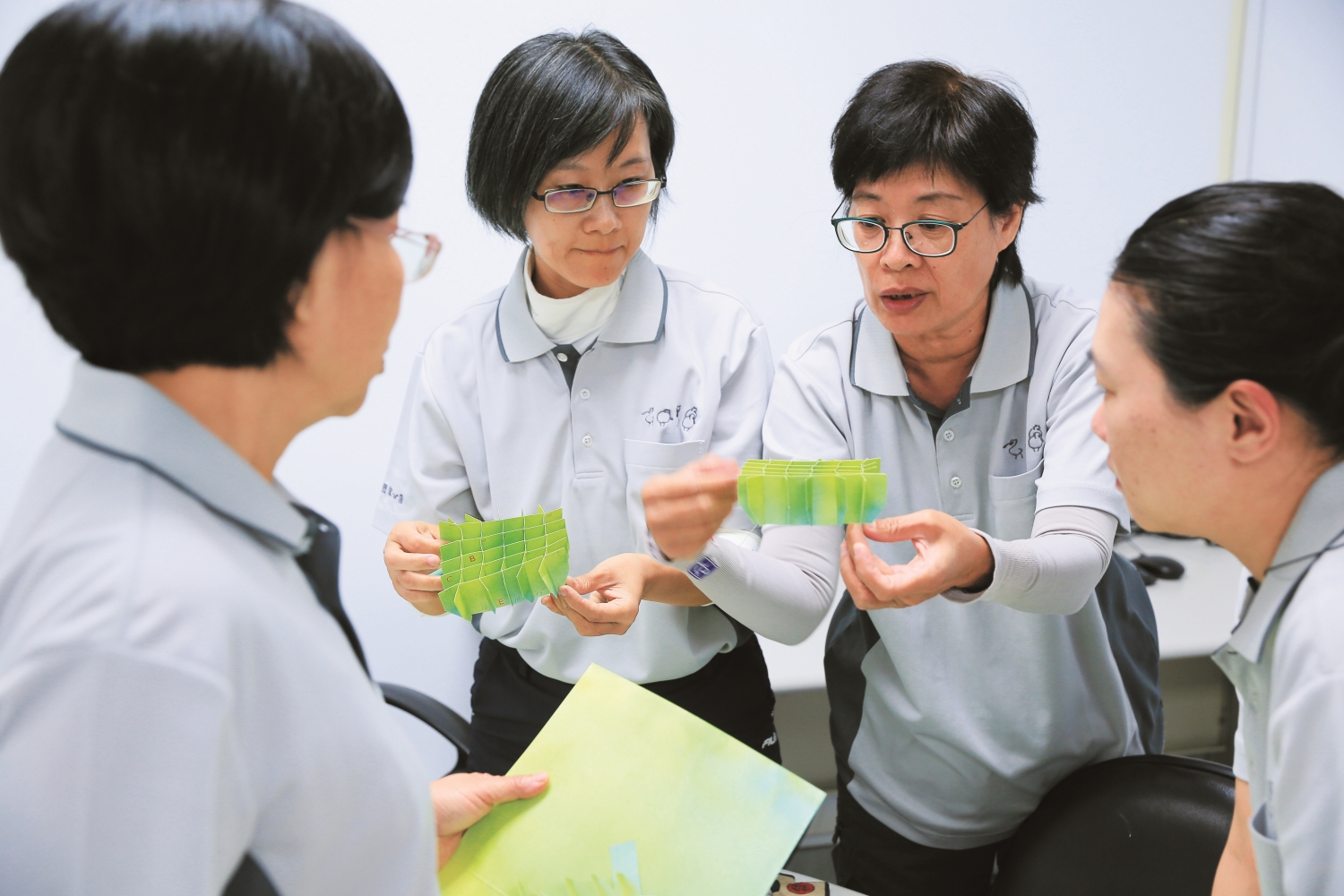
Provided by Taijiang National Park Headquarters
salamander habitat building holiday activity program. /
Provided by Shei-Pa National Park Headquarters
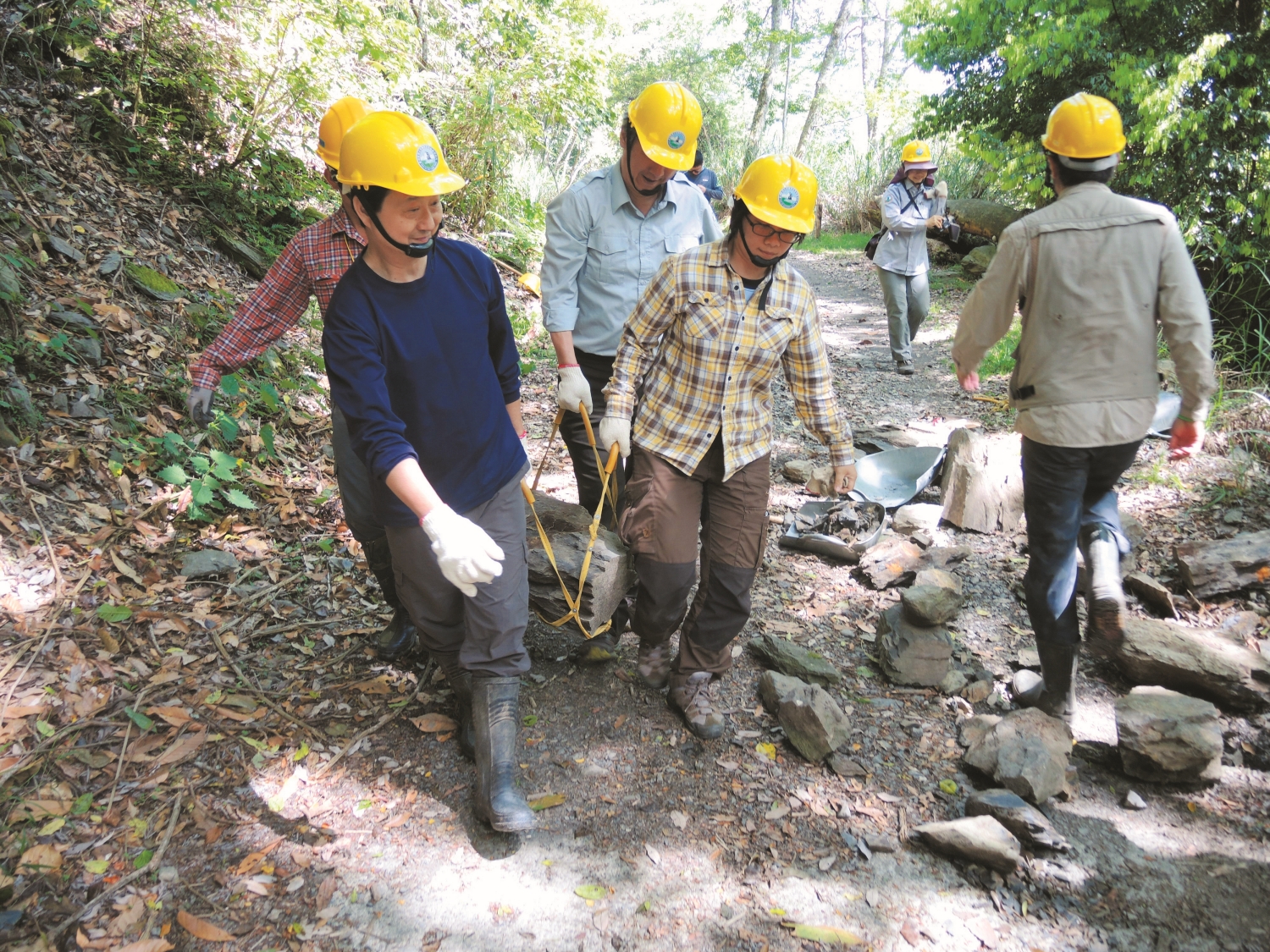
As a docent volunteer and a conservation volunteer at Shei-pa National Park, Mr. Da-Chih Gu also works with the environmental education team, that he always racks his brain to make theoretical and conceptual knowledge accessible to the general public. With the past experience of being a military officer, he admitted that has made his hands very dexterous. “I worked for the ground unit in the Air Force, in charge of the maintenance and repair of all kinds of transportation equipment and power machines for the flight lines. Being good at mechanics wasn’t enough, I was required to be skillful for carpentry tasks because the truck compartments were made of wood back then. Other than that, most of the equipment in the military were old models left over from the World War II, we were told by the seniors to look for substitutes ourselves whenever we ran out of the required spare parts. Consequently, we’ve honed our skills to create something out of nothing,” he explained.
Moreover, he has put this skill into practice with the various teaching aids needed for the environmental education courses, such as making a puppet theatre to stage a puppet show of Oncorhynchus Masou Formosanus; and making a traditional Kamishibai (paper puppet show) out of discarded wooden crates and bicycles, which puts on a show of the picture book story that was conceived by the fellow volunteers. Although he humbly admitted that he only contributed the idea and production of the structure for the show, in fact, it is thanks to his skillful hands that the concept of the ecological education teachers and other partners can be implemented and displayed in a more interesting way in front of children’s eyes.
Provided by Shei-Pa National Park Headquarters (Photo by Bao-Huan You)
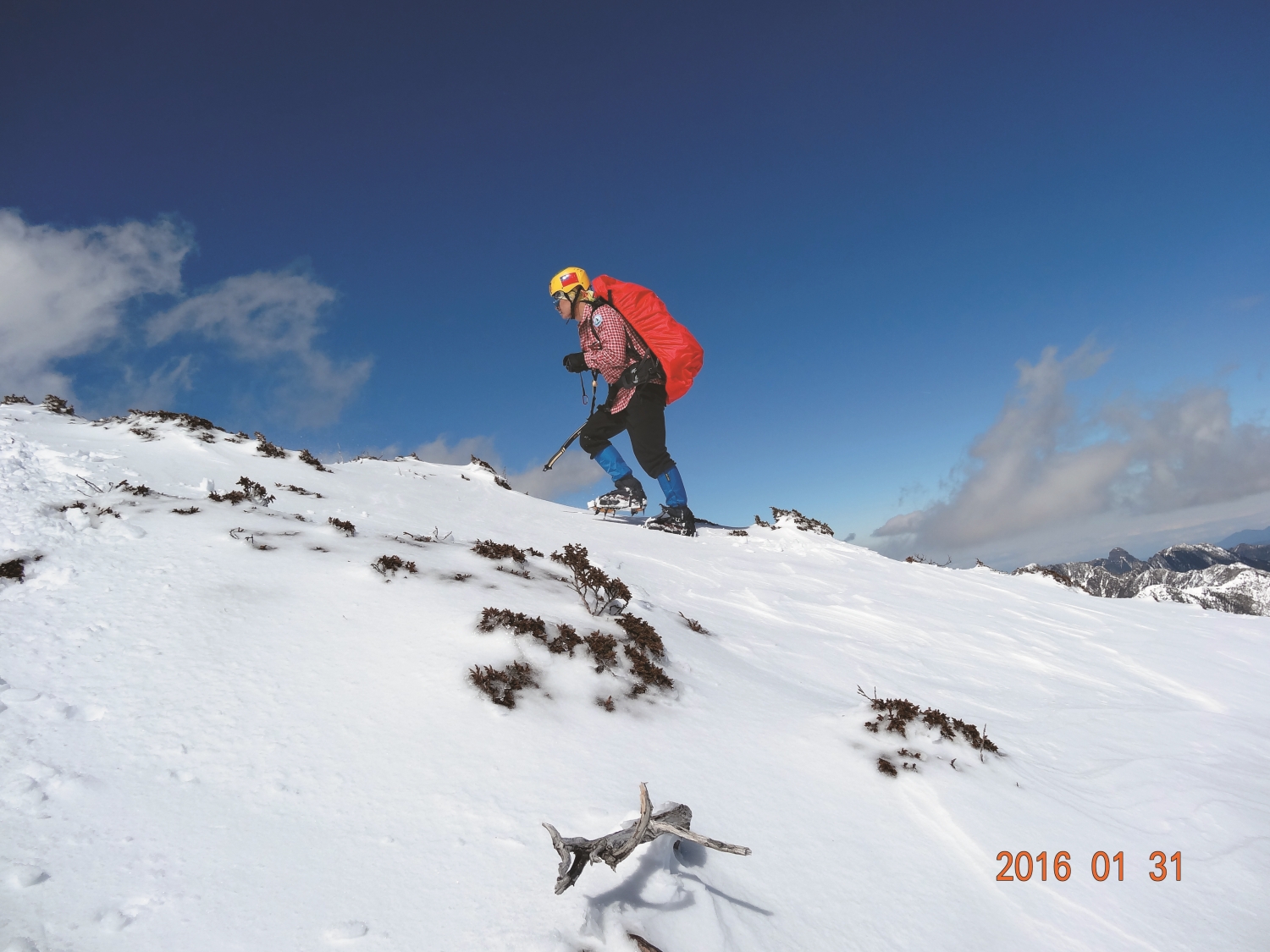
Not only does he have a pair of skillful hands for making props, but that pair of hands can also save lives. “My knowledge and experience in disaster relief come from the military, along with my experience in handling military plane crashes back then. After retiring, I joined the Phoenix Volunteer Group. Now, I’m a member of the Hsinchu Emergency Educator Association, where I occasionally conduct emergency care training sessions for the staff members of Shei-pa National Park Headquarters,” Gu said. With a number of first-aid certifications, he is more alert than others when it comes to providing timely assistance to hikers who feel unwell while he is on duty at the mountain cabin.
“Some hikers find difficult to keep up with the group, so they stay in the cabin for a rest, that’s why I have to make sure whether they’re just too tired or feeling unwell. It occurs more often after the release of the mountain and forest debarment policy, as many people take the mountains for the hills, and the Chiaming Lake for the Sun Moon Lake, without carefully assessing their abilities. In order to cope with this situation, apart from diligent advocacy, I think that the goals of ecological conservation education and hikers safety can be both achieved if every conservation volunteer has some first-aid skills,” Gu added.
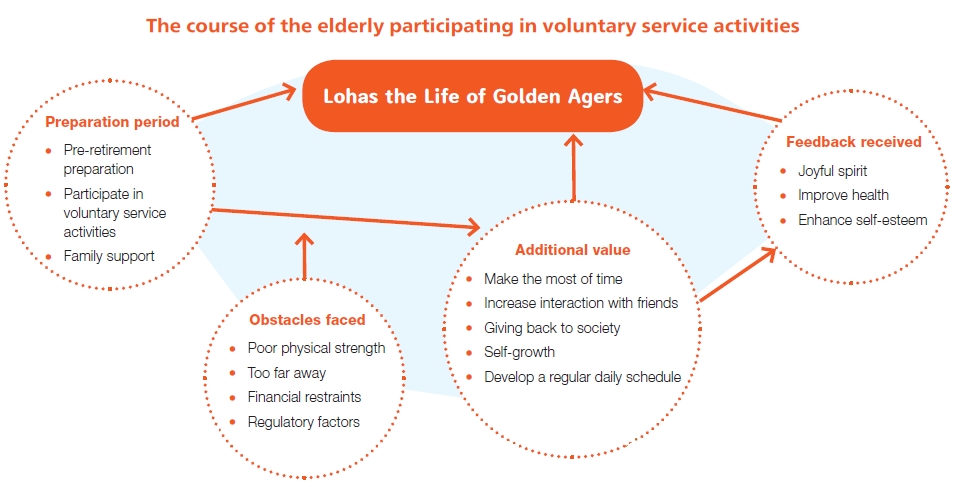
Encouraging elderly to join the ranks of senior volunteers is the most common retirement planning we recommend to seniors, but what exactly are the benefits of participating in senior volunteering activities? Is it really good for both the body and mind of the elderly? In fact, there are scholars in Taiwan who have devoted their research to these issues, and some have the question answered through sorting out the participation process of volunteering activities.
First, there must be sufficient preparation to start planning before the retirement. Apart from looking for various volunteer projects, one should also consider their own interests, professions and what they can do with their abilities, as well as reaching a consensus with their family members and gaining their support. However, studies also show that many seniors have encountered difficulties while preparing, such as poor physical strength, distant journey, financial difficulties, regulatory restrictions, etc.
If they can overcome the obstacles and become a volunteer successfully, it’ll bring along additional values such as enriching their lives, making friends, giving back to society, and having a sense of accomplishment for self-growth, etc. Also, it further enables them to feel happy, confident and maintain a healthy state of mind and body. In addition, the studies also suggest that the management units of the volunteer team should guide the organization to give full play to the spirit of “benefiting others and benefiting oneself”, for the volunteers to truly understand the spirit of “aging with joy”, as well as to avoid internal interaction problems. In doing so, it can dislodge the stereotypical image of the elderly in the society and gain the public a deeper understanding of the elderly’s professionalism and experience, so that a virtuous cycle of succession can be formed, with no gap left between the generations.
References:
* Tsai, H. P. (2015, June). Research of Management Strategies on Senior Volunteer Team in Senior Learning Center (Master’s thesis, Adult and Continuing Education, National Chung Cheng University, Chiayi, Taiwan).
* Chang S. H., Wang S. C., Lin H. H., Chao C. H., & Yu C. L. (2019, April). Happiness in Senior Life: Exploring Learning Process for Elderly Participating in Volunteer Activities. Tainan: Tzu Chi Nursing Journal, 18(2), 63-73
Provided by Yangmingshan National Park Headquarters
In high school, he started climbing and even fell in love with Shei-pa at first sight. During a supply operation at the radar station, he happened to look back and saw the Shei-pa mountain awakening in the morning light, that was the moment that made him decide to return to serve in Shei-pa decades later. At present, for the mountain he loves most, he gladly embraces the duty of being a volunteer, no matter how hard it is.
Another thing to be mentioned is that a more notable consensus was shared among these five volunteers of different background. To be specific, when they were asked, “Is it hard to be a volunteer at a national park?”, they almost unanimously answered, “It’s not hard at all.” In their opinion, the concern and enthusiasm for the Winner is a must for being a volunteer. What’s more, the nationwide national parks regularly host a variety of activities, by actively participating, becoming familiar with the operation of national parks, meeting fellow volunteers at events, and not missing out on opportunities once the recruitment information is released, they believe the candidates can greatly increase their chances of being accepted.
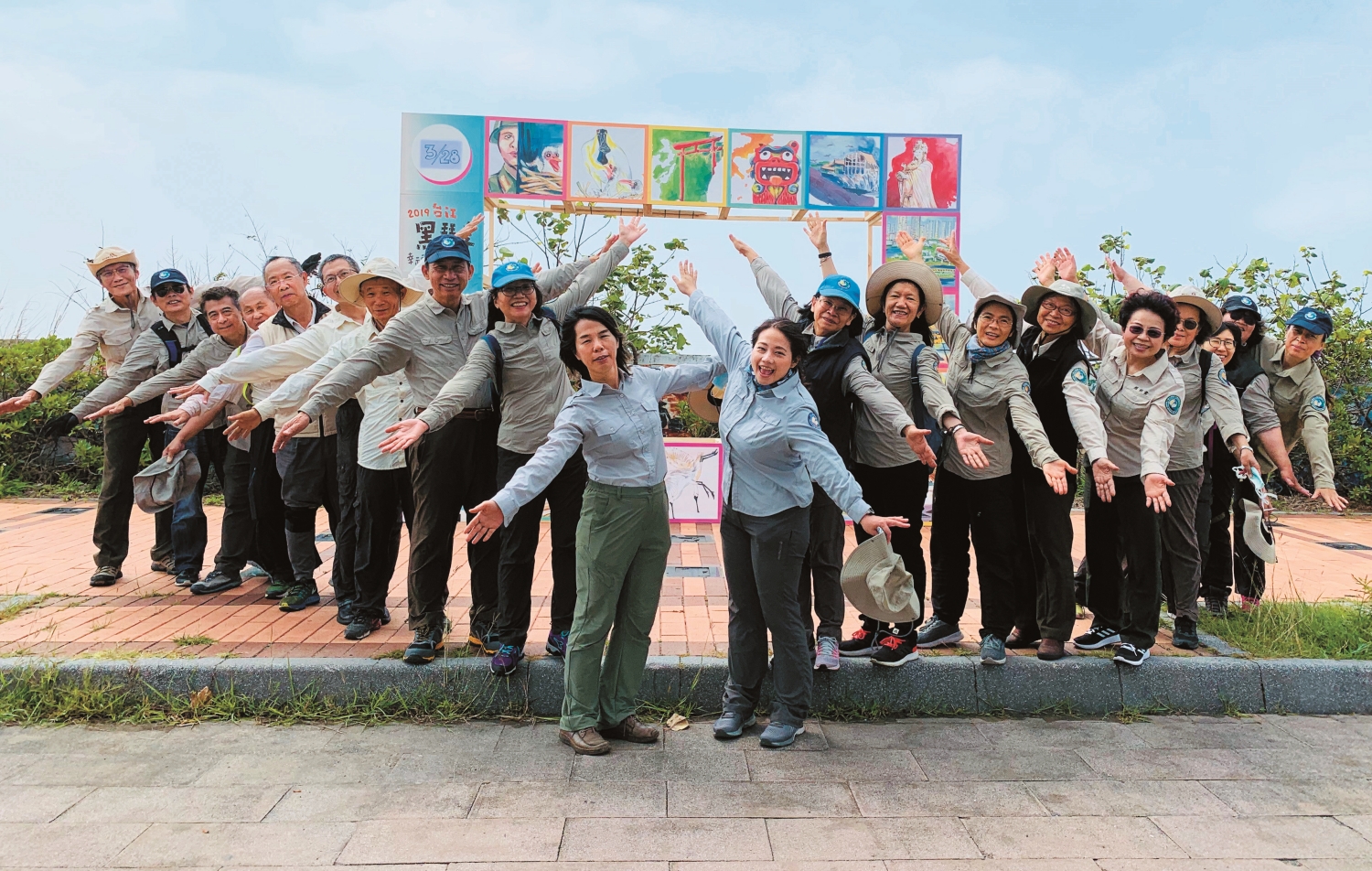
spirit to better others and themselves. / Provided by Taijiang National Park Headquarters
For them, the second half of their lives has just begun, and not only do they fully embody the essence of “aging with joy”, but they also live a life with more self-confidence and a greater sense of accomplishment compared to many young people. It makes people can’t help but look forward to the new chapter they will unfold on the new stage.
About the Auther︱Wei-Han Li
Born in 1985, graduated from Department of Chinese Literature, Soochow University. Professional editor, part-time novelist, loves to read, and always make writers and instructors to identify her by hat in the crowd. Li currently is a signed writer of Mirror Fiction.


