
Cijiawan River Earns Distinction as Wetland Seal-Environmental Protection Strikes Roots in the Community- collaborate with Local Residence to Protect
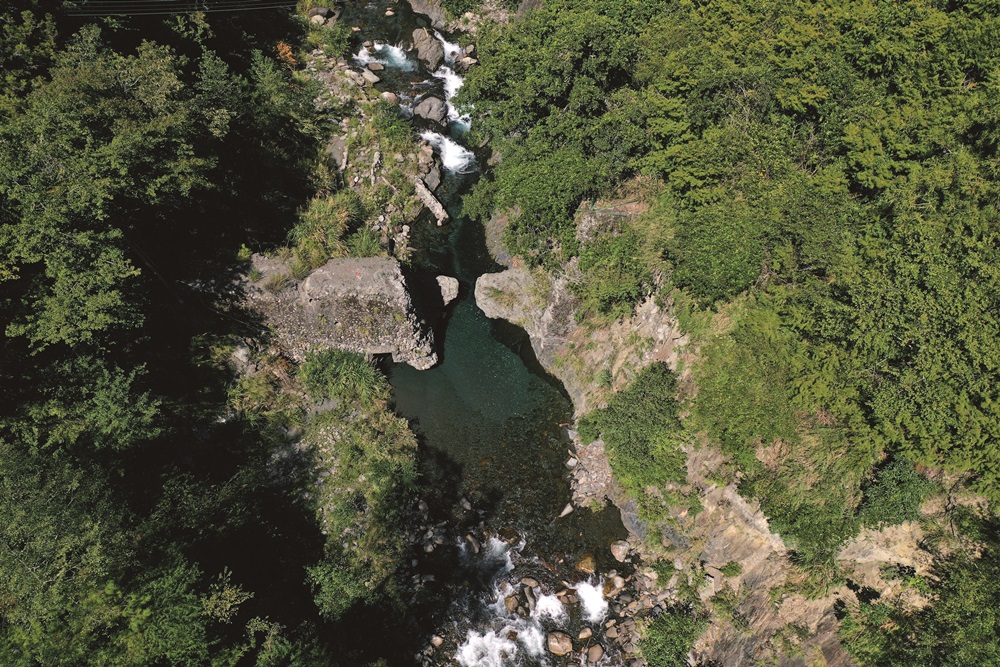
Environmental Protection Strikes Roots in the Community- collaborate with Local Residence to Protect the Formosan Landlocked Salmon
Author / Yu Tzu-Ying
Interviewee / Shei-Pa National Park Wuling Management Center – Liao Lin-Yen, Chang Yen-Ling
Shei-Pa National Park Management Office, Cho Hsiao-Chuan
Former Head of Wuling Farm, Fang Zheng
Endemic Species Research Institute, Council of Agriculture, Executive Yuan, Hsieh Li-Yung
Wetlands contain a wealth of natural, ecological resources and are also known as nature’s granary; in Taiwan, the diverse number of coastal and forest wetlands are also home to many species. Cijiawan River is a key wetlands habitat for Taiwanese salmon and since Shei-Pa National Park Management Office (Shei-Pa Office) was founded, they have actively attempted to restore these national treasures and spared no effort in promoting environmental education. As such, they earned the wetland seal.
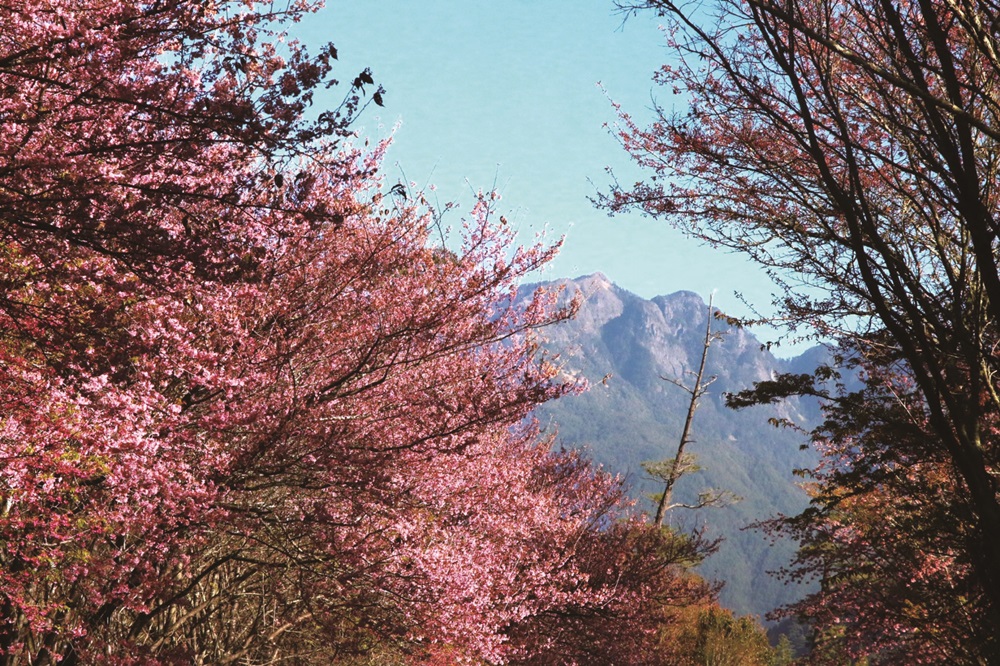
Cijiawan River Important Wetland is located within the borders of Shei-Pa National Park and is located upstream of Dajia River at an altitude of approximately 1,750m; due to the low temperature and pure water quality, it has become a key habitat for Taiwanese salmon. The species had previously faced extinction but after Shei-Pa National Park was founded in 1992, many long-term efforts have been made to protect the Cijiawan River Important Wetland, restore the salmon, and promote environmental education. These efforts have successfully helped increase the number of Formosan landlocked salmon and helped the wetlands return to its original natural ecosystem.
In 2021, Cijiawan River Important Wetland received a wetland seal for “Shei-Pa National Park Cijiawan River Important Wetland Promotion of Environmental Education” issued by the Ministry of the Interior. This not only put the restoration and environmental education efforts under the spotlight, but also opened up additional possibilities for ecological tours and eco-friendly environments.
Cijiawan River Important Wetland
Area: 7,230 hectares
Type: inland wetland
Scope: Located within Shei-Pa National Park, primarily in the catchment area of Cijiawan River, upstream of Dajia River. The wetland contains natural borders made of mountains, valleys, and other natural landscapes and includes the central, northern valleys of Wuling Farm as well as Cijiawan River’s western coast to the south; the border extends west from Yi Nian Qiao until the mountains.
Wetland Grade: National Grade Important Wetland
Cho Hsiao-Chuan, an instructor at Shei-Pa Office is one of the key individuals that helped earn the Cijiawan River Important Wetland seal. She worked in surveying wetlands as a student because of the belief that public awareness of wetlands was lacking, causing their value to be neglected for a long period of time. “From the human perspective, wetlands are fields of mud that have no economic value and as such, they’re often filled, flattened, and converted for industrial use or used as landfills; this causes irreparable damage to then environment. However, wetlands are rich in biodiversity with some even having the functions of preventing floods and purifying water. Protecting wetlands is protecting the future of humankind.”
As such, the purpose of the wetland seal is to utilize market mechanisms to expand social participation into wetlands conservation and promoting wetlands education. It’s important because Taiwan is rich in wetland resources with a total of 58 international, national, and local grade wetlands; Cijiawan River established itself as a national grade important wetland due to it being the habitat of Formosan landlocked salmon.
Cho Hsiao-Chuan further explains, “the wetland seal focuses on environmental education, ecological tours, agricultural products, cultural industry, and other products that are friendly to wetland environments, comply with the spirit of eco-friendly and smart usage, and basically means achieving an eco-friendly balance between environmental protection and economic benefit.” Cijiawan River’s seal as an important wetland is affirmation for the efforts and contributions made by Shei-Pa Office in protecting wetlands ecosystems and promoting education.
Hsieh Li-Yung, who is responsible for assisting with obtaining the wetland seal, from the Endemic Species Research Institute at the Council of Agriculture states that the seal is mainly based on a few criteria such as eco-friendly and smart utilization, contribution to wetlands environments, and conserving or building habitats for target species. “Cijiawan River’s comprehensive conservation efforts towards the wetland and Formosan landlocked salmon as well as organization of various environmental courses and activities allowed them to successfully earn the wetland seal. Hopefully, they can continue to exercise their influence to educate more people about the significance of the seal.”
Since the implementation of a wetland seal, it has been earned by 6 sites across the nation. Inquiries toward application methods, processes, and utilization of rebates from the public and agencies have increased over the past 2 years. The Endemic Species Research Institute also dispatches agents to provide counseling for various sites but Hsieh Li-Yung emphasizes: “currently, the agencies that have submitted inquiries or applications have mostly obtained other seal or certifications in ecological tours, eco-friendly agricultural products, or environmental education such as “Environmental Education Certification System” and “Green Conservation Program” which facilitates their application for the seal; it’s not as hard as the public might believe. The important thing is that sites which earn the wetland seal uphold the spirit and provide the public with a consumer option that is eco-friendly and green.”
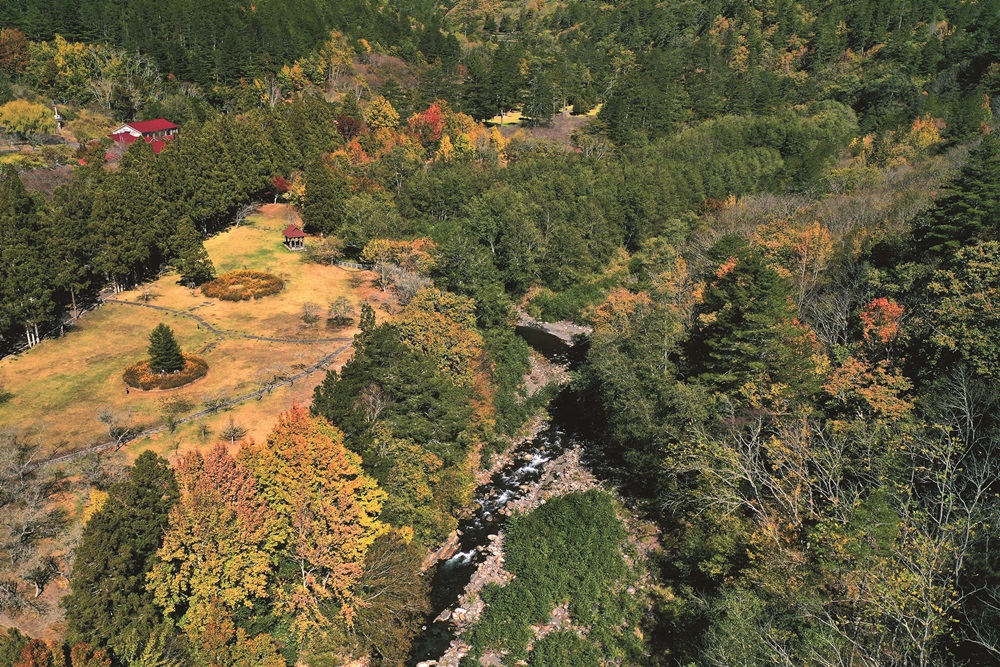
One of the purposes of establishing national parks is to protect the natural environments and biodiversity within the borders of national parks; a founding mission of Shei-Pa National Park was mainly to conserve one of Taiwan’s aquatic national treasures. In recent years, conservation of Formosan landlocked salmon has been conducted under the guidance of Shei-Pa Office with the combined efforts of Wuling Farm, the Forestry Bureau, and relevant agencies, conservation has been successful and their habitat has been well protected.
Liao Lin-Yen, Director of Shei-Pa Office with 2 decades of experience in Formosan landlocked salmon conservation stated, “After Shei-Pa National Park was founded, we strived to protect Formosan landlocked salmon and restore their ecosystems through fish protection teams, large-scale reclamation of farm land, building forests, removing sand barriers, and releasing historic habitats. Many efforts were invested to safeguard the habitats of Formosan landlocked salmon and as of 2020, the number of Formosan landlocked salmon in Taiwan has reached a historic high of 12,587 salmon. We’re finally seeing the results of our efforts after so many years.”
Cijiawan River penetrates Wuling Farm, a place that plants vegetables and fruit trees in high altitude and cold climates and places an extreme emphasis on ecological conservation. Fang Zheng, the Head of Wuling Farm expressed: “Cijiawan River is a valuable asset for farms and in order to maintain environmental sustainability, the farm has also invested efforts to protecting the environment over the years to provide Formosan landlocked salmon with an optimal habitat.” He stated that Wuling Farm established fish protection teams in the 1960’s by patrolling the coasts of Cijiawan River and stopping the public from fishing. With later policy changes, the farm stopped planting crops and instead planted trees along the northern canyon of Cijiawan River while also relocating the camping grounds near Cijiawan’s river bed; all farmland within the region utilizes natural farming in their continued efforts of ecological conservation at Cijiawan River.
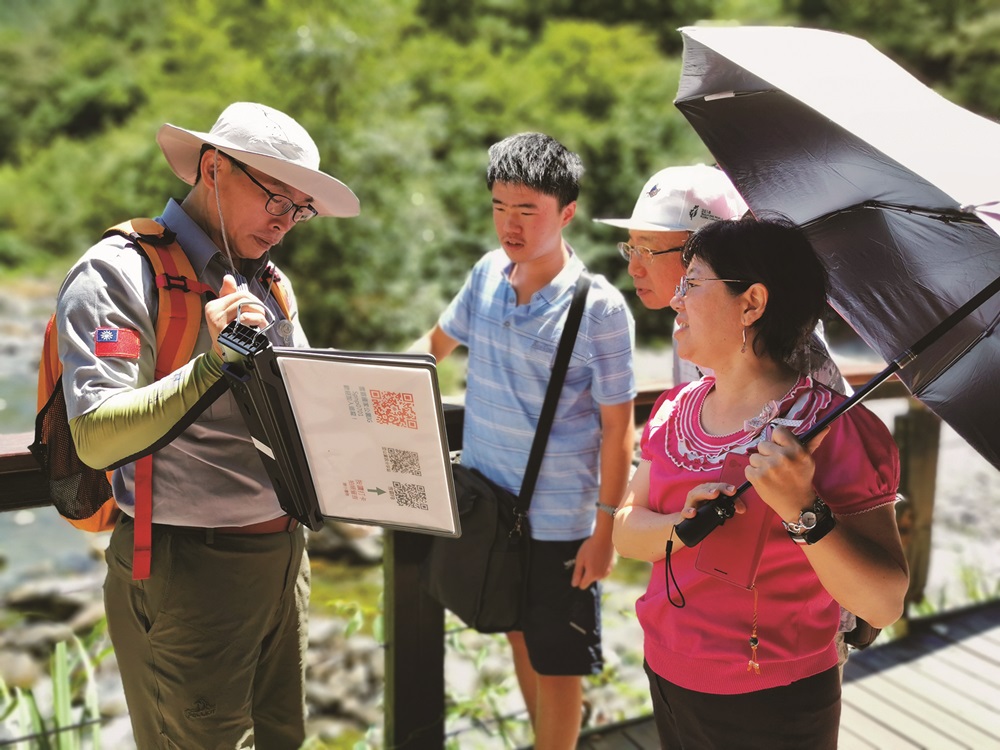
In addition to conservation research, Shei-Pa Office has also devoted their efforts into promoting environmental education. From their early efforts of putting up signage for tours at fixed points evolving to mobile tours and establishing a Formosan Landlocked Salmon Ecological Center in Wuling Recreation Area, the park hopes to utilize a multitude of channels to introduce Formosan landlocked salmon to Taiwan’s public.
Cho Hsiao-Chuan emphasizes that there are no rivers in Taiwan with the amount of comprehensive hydrological, biological, and ecological research data of Cijiawan River; this amount of data has been extremely helpful in promoting environmental education courses. Liao Lin-Yen also stated: “Shei-Pa Office provides events and courses suitable for all ages. The quality of our environmental education has increased each year to include not only explanations, but also experiences and explorations so that the public can learn more about Formosan landlocked salmon as well as our office’s efforts in this regard.”
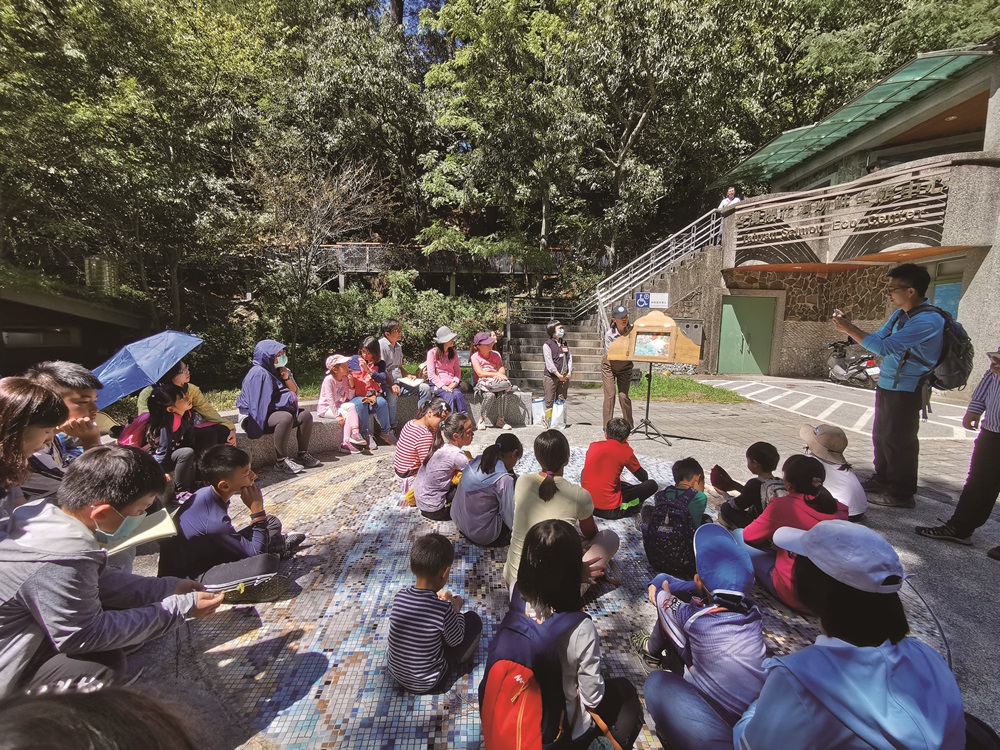
The Formosan Landlocked Salmon Ecological Center provides exhibits that detail the policies, actions, and conservation achievements of protecting the national treasure fish in addition to interactive games that give tourists an in-depth introduction of the habitats and ecosystems of Formosan landlocked salmon. Shei-Pa Office Tour Guide Chang Yen-Ling, a frontline worker in environmental education shared that aside from museum tours, there are also activities designed for students such as “Kamishibai” (paper play), a form of traditional Japanese theater. A box is secured on the back of a bike and used as a screen displaying illustrations that tell the story of salmon; at Wenshui Visitor Center, there’s also puppet theater such as “Dreams of Mr. Salmon”, a story that reminds the public about conserving habitats and environments.
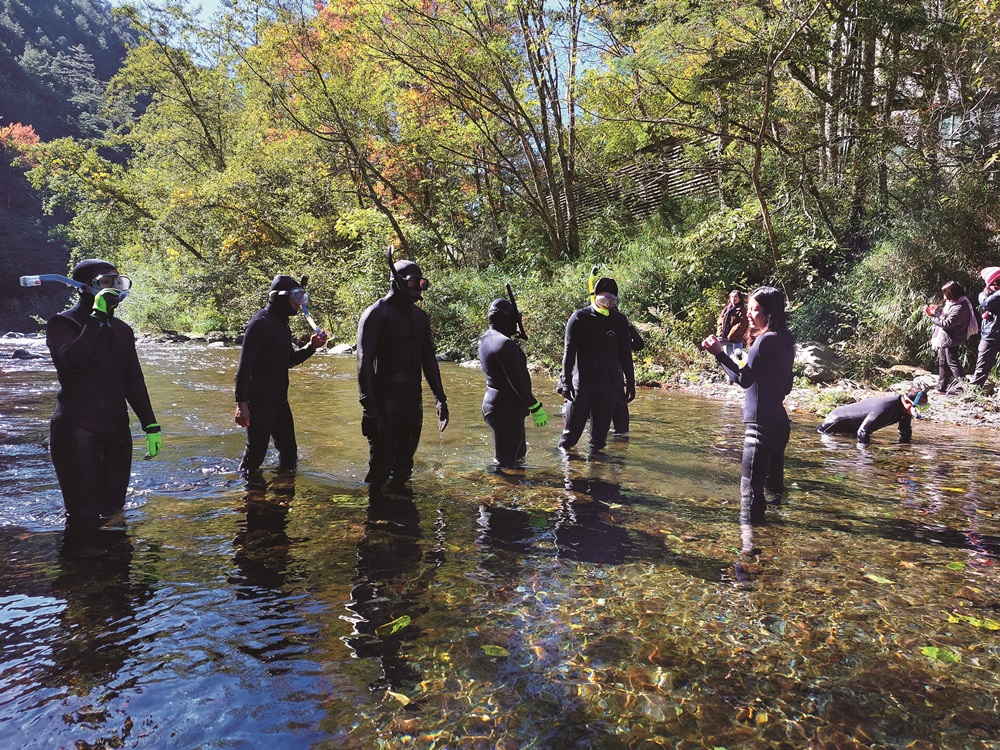
Out of these featured activities, the most special is “counting fish in the river”. The activity’s concept simulates researchers who wear snorkeling suits and lay in the cold rivers to observe the habitat of Formosan salmon and count the schools of fish. Chang Yen-Ling expressed that “elementary or middle school students simulate this act by laying on grass or wearing goggles and placing their face into the center’s fish database tank to count fish. We teach them the hand signals for reporting their count and divide into groups for competitions. On the other hand, high school or university students can put on wet suits and dive into the rivers to experience the challenges experienced by researchers to understand that conservation is arduous work.”
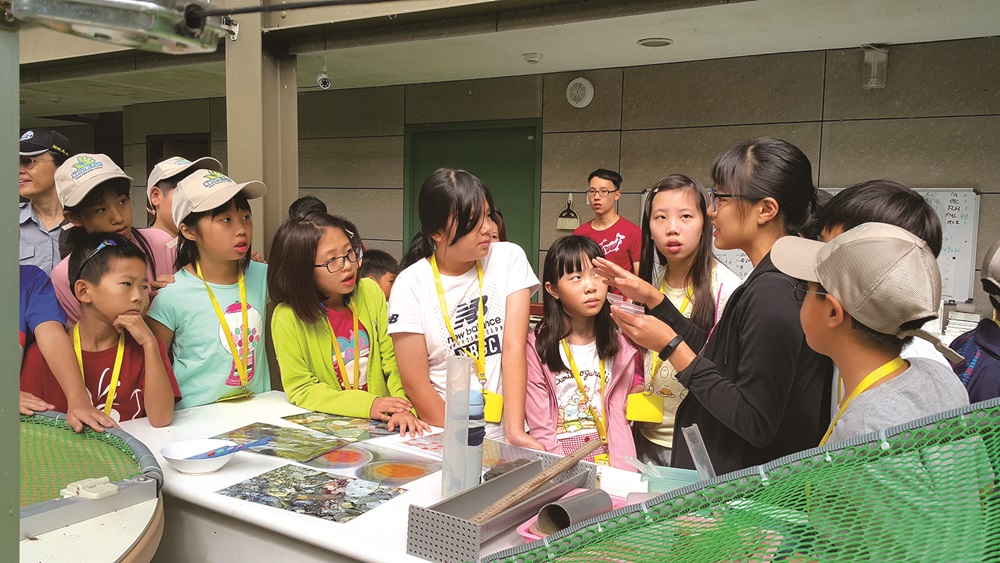
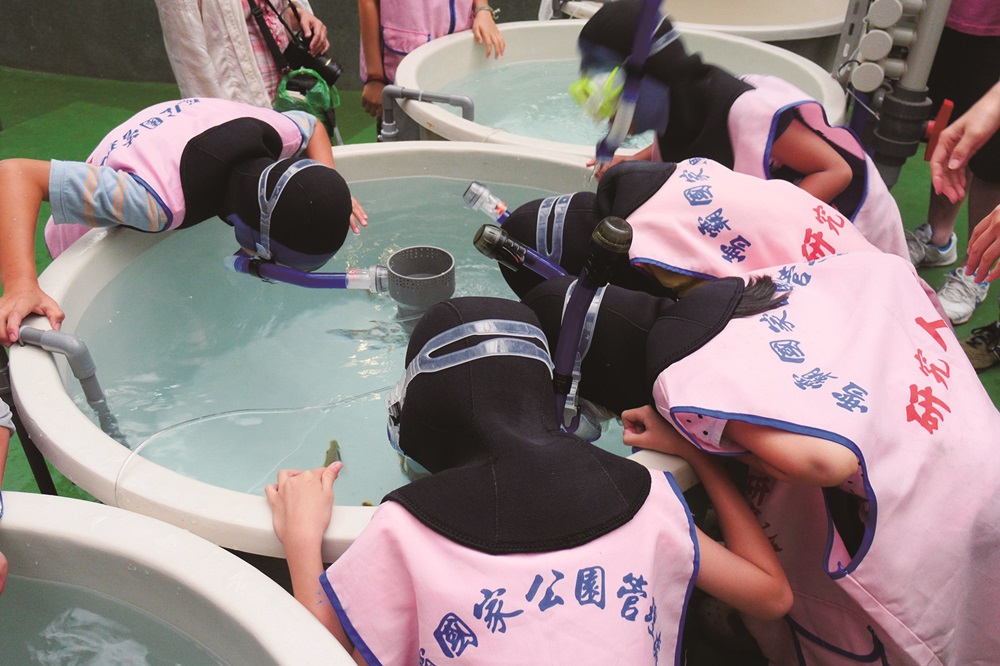
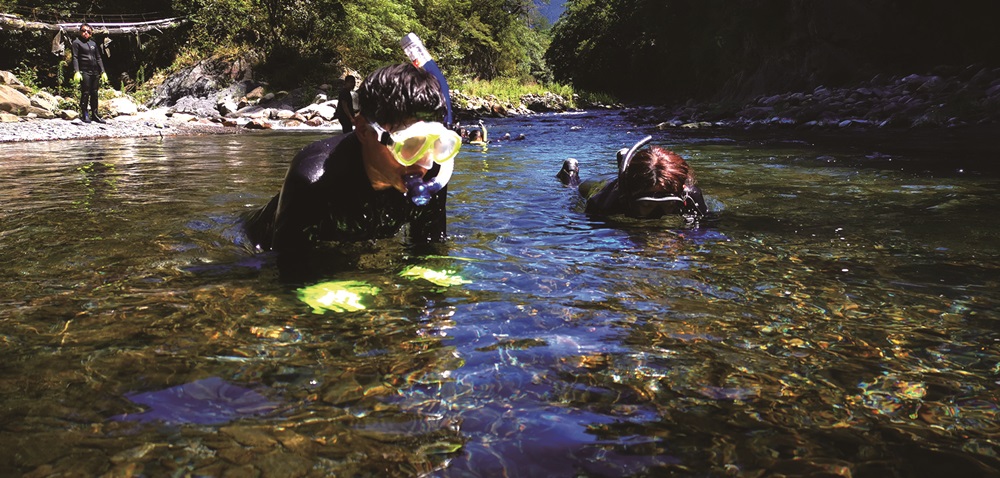

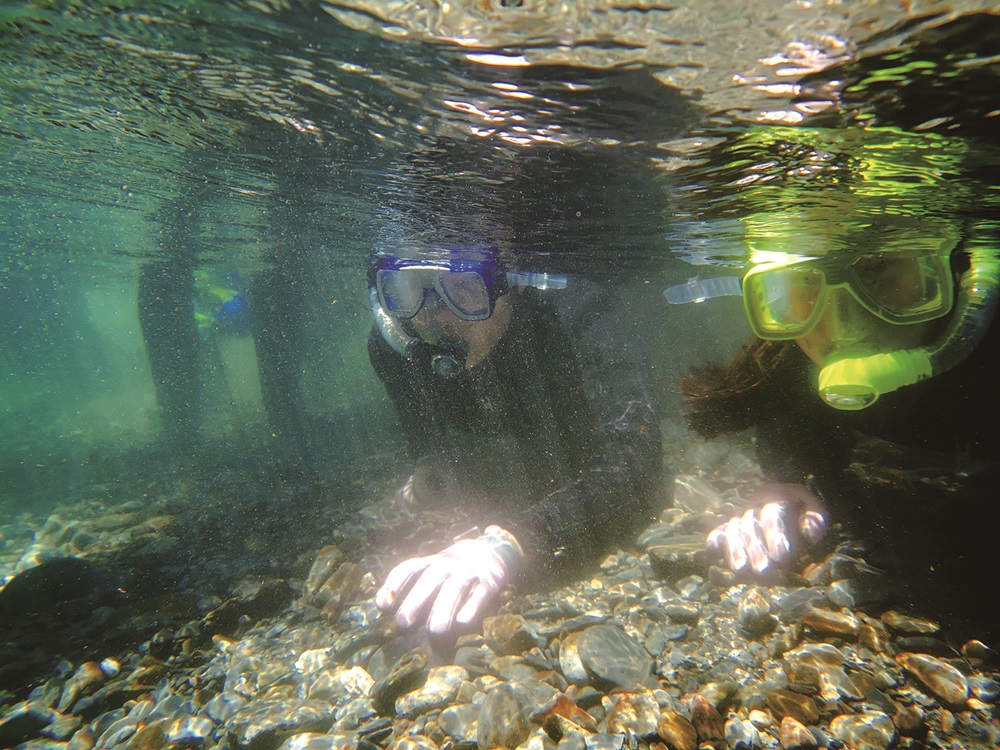
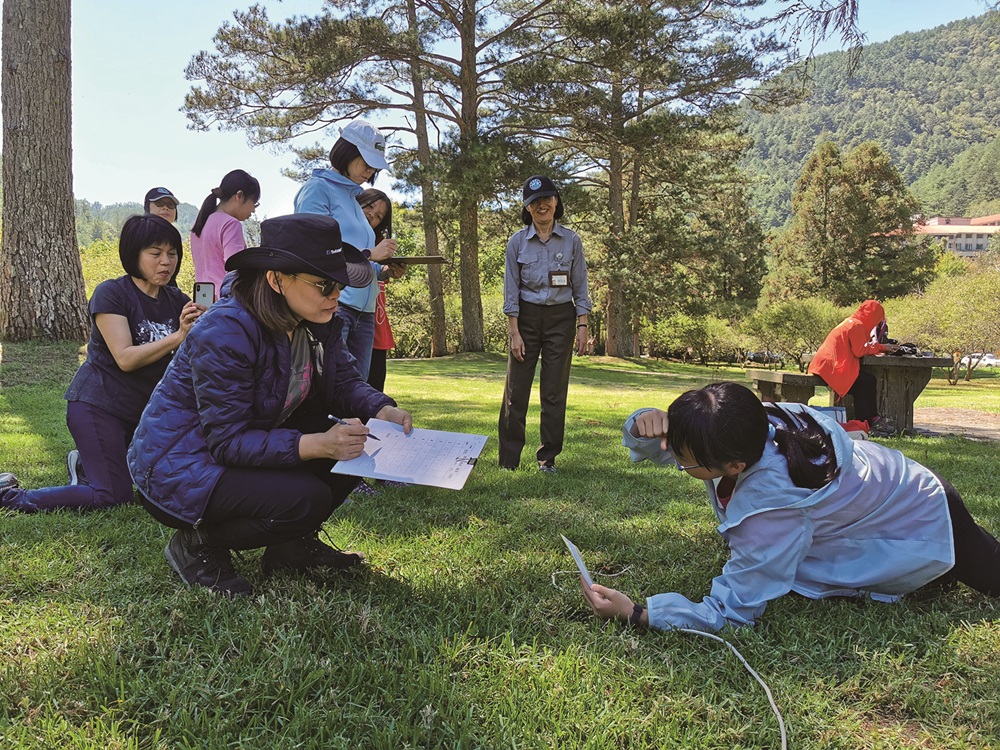
Aside from providing tourists with various environmental education experiences, Shei-Pa Office also partnered with local elementary schools to host a series of featured courses such as experiencing the release of Formosan landlocked salmon, participating in conservation research efforts, and deepening the roots of environmental sustainability. This year, activities such as a vertical rope descend, tree climbing, and hiking will also be organized to convey the importance of mountain education. Chang Yen-Ling expressed that during the latter half of the year, a “young tour guide training” program will also be implemented in elementary schools where training will be offered to introduce national parks. Children will also be asked to design signage to introduce their indigenous tribe and living environments to increase children’s understanding, sentiments, and personal identification with their homeland.
The key significance of the wetland seal is expanding social participation. The seal system promotes exchanges between the parties of government, private businesses, and the general public that will generate a common principle, create maximum value, and propel sustainable wetlands into a brand. Now that the seal has been received, Shei-Pa Office also hopes to expand our influence in the future, assist nearby indigenous tribes with promoting ecological tours, or offer counseling on eco-friendly product certifications. We hope that market mechanisms can be used to cater to both conservation and sustainable resources; more importantly, public participation will be vital to support eco-friendly habitats and achieve mutual benefits for all.

Scan the QR Code to understand the purpose of the Wetland Seal Mark promotion

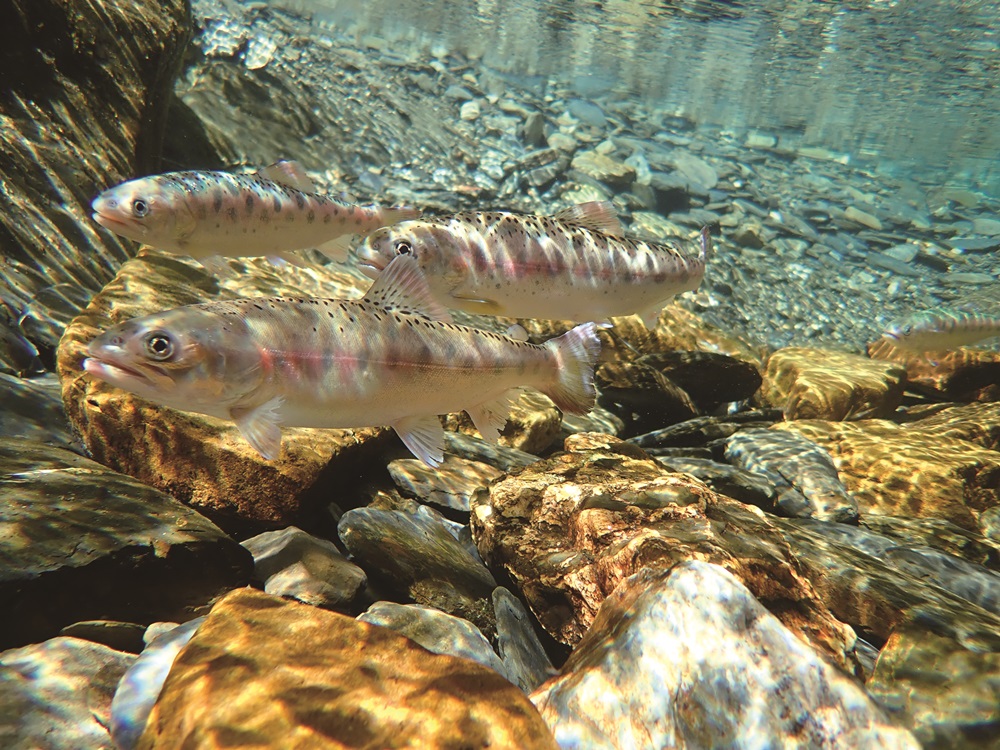
The Cijiawan River fish viewing platform located on Wuling Road is the best spot to observe Formosan landlocked salmon from a close distance. In order to prevent factors such as weather and the environment from impacting fish observation, Shei-Pa Office has partnered with cable TV providers to install underwater cameras at upstream locations of Cijiawan River. Real-time underwater dynamic images are recorded so that visitors to Wuling can use their mobile phones to scan a QR Code and observe the habitat of our national treasure fish.
Scan the QR Code and observe our national treasure fish
About the author: Yu Tzu-Ying
Previously worked as a planner and editor at C’est Si Bon, main editor for periodicals and series of books, currently a freelance writer.


