
A Long Journey to Bring Back a Forest-Road to Afforestation and Restoration for National Parks
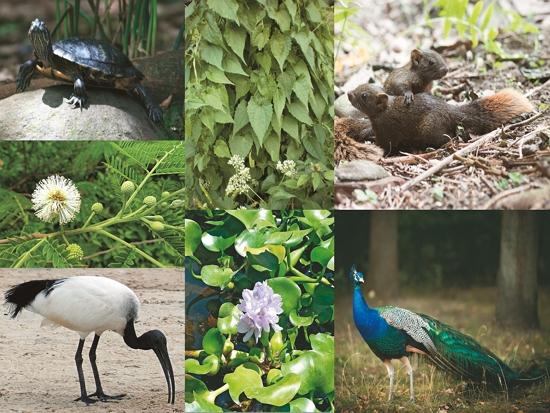
Wild tamarind (Leucaena leucocephala. ) / Provided by John Tann
African sacred ibis / Provided by Bernard DUPONT
Mile-a-minute weed / Provided by Navaneeth Krishnan S
Common water hyacinth / Provided by Juan Carlos Fonseca Mata
Red-bellied tree squirrel (Callosciurus erythraeus. ) / Provided by LiCheng Shih
Indian peafowl (colloquially, "peacock"; Pavo cristatus. ) / Provided by Bautsch
Weeds grow a mile-a-minute, blanketing the fields; apple snails pervade agriculture reservoirs; then there’s the African sacred ibis with their black sickle beaks, the fire ants, water hyacinth, and green iguanas…these “alien species” are frequently featured in the media, and are a persistent source of worry. Due to their rapid reproduction and spread, these exotic plants and animals not only impact the native ecology, but also cause economic losses and can even spread disease.
National parks in all regions are faced with the invasion of alien species, such as the red-bellied squirrel and Indian peafowl in Kinmen National Park, and the Leucaena leucocephala in Kenting National Park. But what exactly is an alien species? Are alien species necessarily abominable? Will the ecosystem return to balance if they’re aggressively removed? Will there be animal welfare controversy if alien animals are forcibly removed? These considerations must be included in the strategies for dealing with alien species, and carefully discussed through investigation and research, monitoring, and evaluation.
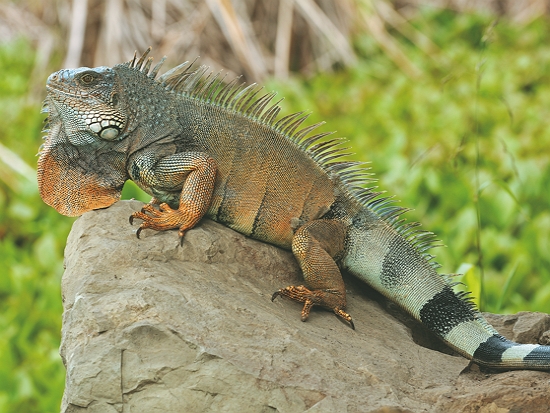
(Source: https://commons.wikimedia.org/wiki/File:Iguana_iguana_Portoviejo_05.jpg)
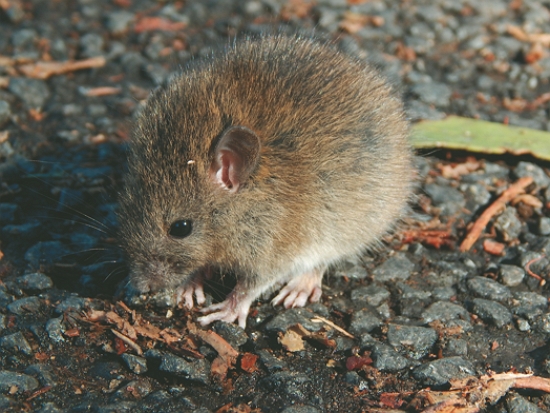
(Source: https://commons. wikimedia.org/wiki/File:Starr-141030-2690-Eucalyptus_globulus-habitat_
with_Polynesian_rat_in_parking_lot-Hosmers_Grove_HNP-Maui_ (25129932392).jpg)
Intentional or Unintentional, Alien Species Appear
According to the information released by the International Union for Conservation of Nature (IUCN) in 2000, an “alien species” is a species that has been introduced outside its native distribution range. “Invasive alien species” refers to the introduction or spread of a species that has established a stable population and may threaten biodiversity.
Liang-Kong Lin, a distinguished professor from the Department of Life Science at Tunghai University, pointed out that, “the emergence of alien species is related to ‘human factors’. For example, blackfaced spoonbills fly to Qigu, Taiwan every year to spend the winter. They are not native to Taiwan, but they fly here at a fixed time, forming a cyclical natural phenomenon. Since there’s no long-term impact on the local ecosystem during their stay, we won’t call them an alien species.”
As for the human factor, there are two types: “intentional” and “unintentional.” An example of “intentional,” introduction would be the green iguanas, which were kept as pets when they were young and cute. Although they entered Taiwan through legal channels and passed customs inspection, they were abandoned once they grew and reached adult size. They ultimately became a serious problem after breeding in the wild. An example of “unintentional” introduction of an alien species is the Pacific rat. Native to Southeast Asia, they were brought into the country unintentionally by humans, and then multiplied rapidly, causing harm to native species and becoming one of the top ten invasive alien species in Taiwan.
“Compared to continental-type ecosystems, Taiwan's island ecosystem is closed and fragile, and native species are less competitive. Therefore, it is easy to provide space for alien species when there’s still room in the ‘ecological niche’,” said Liang-Kong Lin.
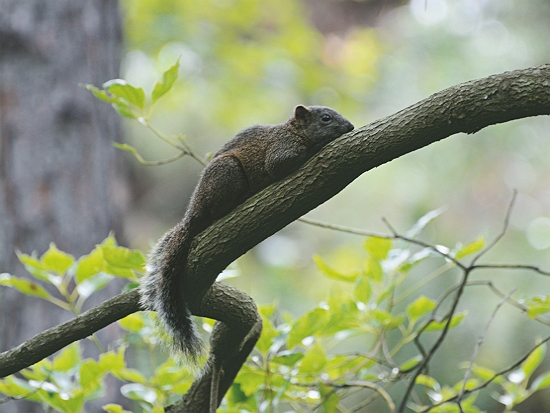
/ Provided by Liang-Kong Lin
/ Provided by Liang-Kong Lin
/ Provided by Liang-Kong Lin
Where Did the Red-bellied Squirrel Come from?
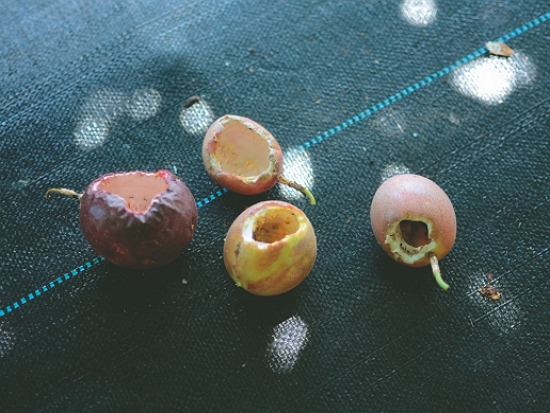
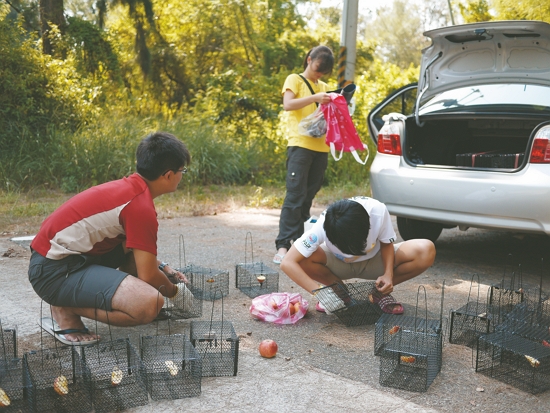
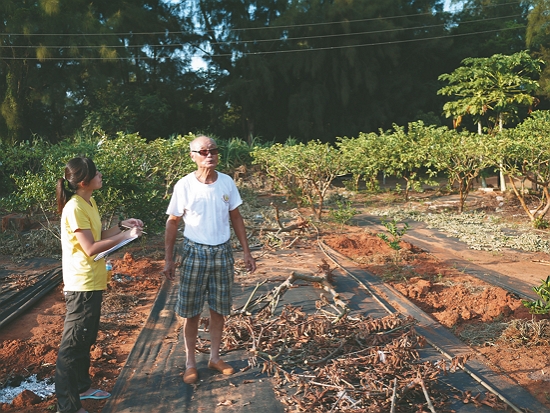
In recent years, “armies of red-bellied squirrels invading Kinmen” has become big news. In fact, Kinmen residents had never seen red-bellied squirrels in the past. However, after the year 2000, one by one, farmers discovered squirrels gnawing on crops, and the fruits of their labor were wiped out. In 2014, with urgent appeals from local representatives, Kinmen County commissioned Liang-Kong Lin’s research team to conduct an investigation.
Red-bellied squirrels are mainly distributed in the middle- and low-altitude mountainous areas of China and Taiwan. Kinmen is surrounded by the sea, so, “Where did the squirrels come from?” Lin recalled. He initially speculated that they might have been smuggled into Kinmen from China. However, DNA testing conducted by his team revealed that the genes of the red-bellied squirrels in Kinmen are dissimilar to those of Xiamen squirrels, and closer to those of squirrels in southwestern Taiwan. Therefore, it is more likely that the red-bellied squirrels in Kinmen were imported from Taiwan.
First, Liang-Kong Lin’s team recorded the number and distribution of red-bellied squirrels in Kinmen through visual observation, and found that there were nearly 10,000 red-bellied squirrels on the island. They simultaneously investigated the harm of red-bellied squirrels to Kinmen’s agriculture, which included more than 20 types of cash crops such as guava, longan, papaya, sweet potato, and passion fruit, and then evaluated possible removal methods.
“One of the reasons for the successful invasion of alien species is the lack of natural enemies and competitors. When red-bellied squirrels came to Kinmen, there were no natural enemies for checks and balance, and coupled with the squirrels’ good adaptability, their numbers increased rapidly.” But Liang-Kong Lin also emphasized that the ecosystem has its critical point. Food and space resources are limited in Kinmen Island’s ecosystem, therefore, once a certain population is reached, members of the alien species will begin to compete with each other. Therefore, he estimates that when the number of red-bellied squirrels reaches about 10,000, the population should cease to increase significantly.
A Silent Killer in Hengchun Peninsula
Population expansion, competition with native species, agricultural damage, and the spread of disease are all “visible” impacts of invasive alien species. Many alien plants are also steadily overwhelming and disturbing the natural ecology. Vulnerable native plants are disappearing, and the biodiversity of the environment is also being challenged. This phenomenon is happening in Kenting National Park.
Hsin-Hung Chen, an Associate Technical Specialist from the Conservation Research Section of Kenting National Park Headquarters, said that historically, acacia trees have been the native species on the Hengchun Peninsula. But as these trees age, it has been difficult to germinate the acacia seeds. They now face the gradual encroachment of swaths of Leucaena leucocephala from Central and South America.
Leucaena leucocephala has a long history in Asia. The Spaniards introduced it to the Philippines in the 16th century as livestock feed and fuel wood; it was then introduced to Indonesia as fertilizer and to provide shade for coffee trees; later it was transferred to Taiwan to be used as pasture, honey plant, shelterbelt, and paper pulp.
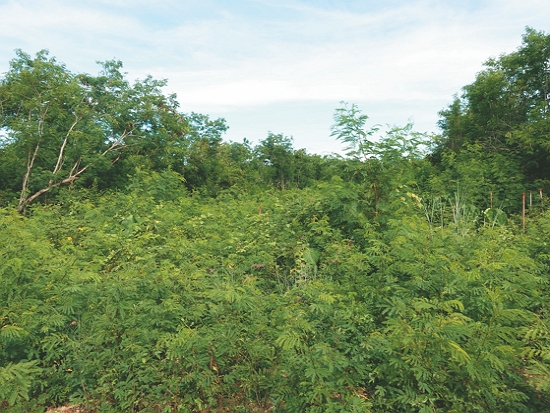
Despite its lovely name, Leucaena leucocephala is toxic. It produces large quantities of seeds and is a competitive species with the ability to germinate as soon as it enters the ground. One strain of Leucaena leucocephala produces about 700 to 1,000 fruit pods a year, and one fruit pod has 10 to 20 seeds. It is calculated that a single strain of Leucaena leucocephala yields 10,000 to 20,000 seeds.
When Leucaena leucocephala pods mature, they crack by themselves and reproduce naturally after falling to the ground. They can grow in barren saline-alkaline land or dry sandy land. Once they find a space to live, they will overwhelm the area without mercy. Without pests or diseases to slow it down, it is a strong invasive plant. As such, Leucaena leucocephala has been gradually encroaching on the acacia trees on the Hengchun Peninsula.
Hsin-Hung Chen explained that Leucaena leucocephala secretes “mimosine” in the habitat, suppressing the growth of native plants, and even leading to death. Moreover, the forest is dense, and it is difficult for light to penetrate, so groundcover plants cannot grow, and wild animals cannot survive due to a lack of food sources. As a result, the woodland that is invaded by Leucaena leucocephala becomes a silent, single forest, without a trace of other living things.
How much space does the Leucaena leucocephala occupy on Hengchun Peninsula? In 2021, the Pingtung Forestry Bureau referenced and interpreted the images taken by the Aerial Survey Office, and discovered that over 1,131 hectares of Hengchun Peninsula have been invaded by Leucaena leucocephala.
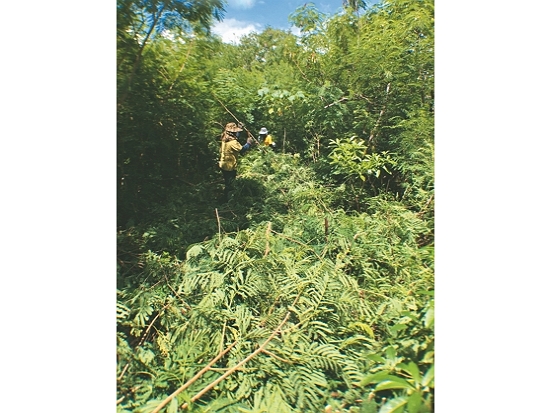
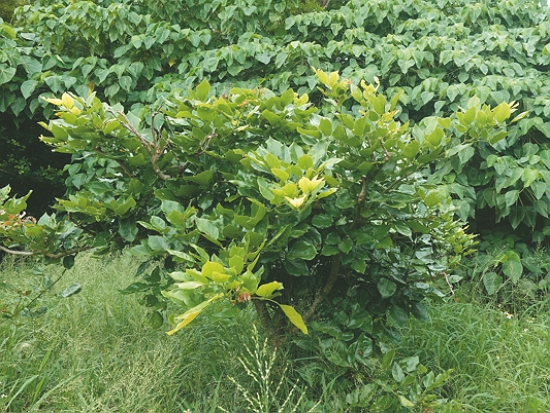
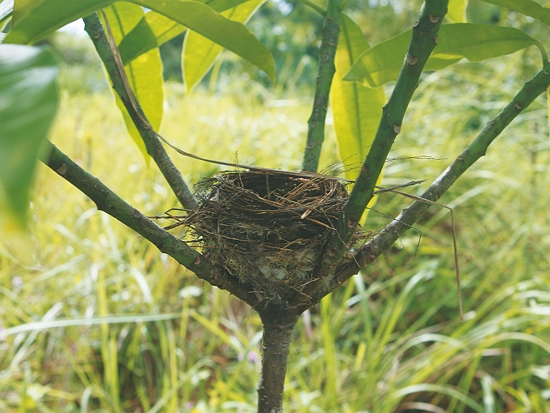
As early as 2005, the Pingtung Forestry Bureau and the Kengting National Park Headquarters held a forum on “Hengchun Peninsula Alien Species Invasive Leucaena leucocephala Removal and Reforestation” to start the Hengchun Peninsula Leucaena leucocephala removal plan. To completely root it out, machines were used to sever the head of the Leucaena leucocephala tree. After excavation, reforestation quickly began with fastgrowing species such as pandanus, Terminalia catappa, sea hibiscus, Pongamia pinnata, china berry, acacia trees, and red fruit fig-tree. These intolerant plants will restore native coastal tree species and rebuild the green corridor that was once cut off by Leucaena leucocephala.
From 2016 to 2023, the project will have removed a total of 70 hectares of Leucaena leucocephala, and the cost will range from NT$300,000 to NT$500,000 per hectare. The removal work is affected by the natural environment and weather. During the dry season, the newly planted trees can easily dry up and die. Artificial irrigation must be applied, which consumes a lot of water. If it rains, weeds can easily grow, so weeding must be done to protect the unobstructed growth of the saplings. Both manpower and material resources are costly.
The invasion of alien species has had a serious impact on human life and the earth's ecosystem.Whether it is the red-bellied squirrel and Indian peafowl in Kinmen, or the Leucaena leucocephala in Hengchun Peninsula, changes in the natural environment are a reality. Whether to remove alien species at all costs or to continuously monitor their spread has been the focus of discussions. At this time, two important indicators should be considered: What kind of impact do alien species have on the ecosystem? Are alien species causing biodiversity imbalance?
Liang-Kong Lin expressed in earnest that human beings must use a high degree of wisdom to judge whether a well-adapted alien species should be welcomed like an immigrant, and be issued an “identity card” representing social acceptance. As for alien species that have already affected the ecosystem, while actively eradicating them, it’s also necessary to strengthen the investigation of the distribution and types of alien species and monitor and evaluate the impact on the local ecological environment at any given time. Meanwhile, the public’s knowledge of alien species must be strengthened, so that government and citizens can work together to have the opportunity to resolve the problems and challenges presented by alien species.


