
Continue the Lifeline of the Ocean-Take Action to Protect the Mother Earth
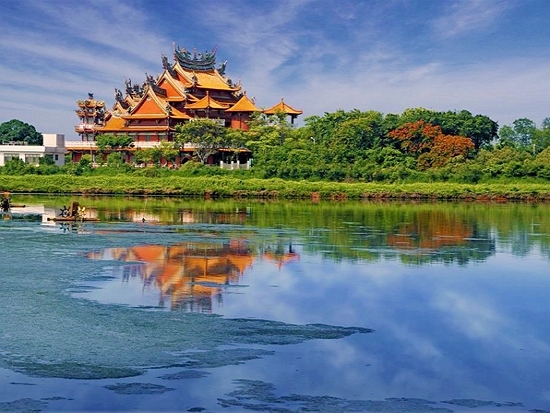
As sustainable development becomes a prominent ideal, what role can culture play? How does culture become a driving force, linking the environment, economy, knowledge, and civic engagement? Through sharing and recognition, we gain local wisdom from the history and the folklore of our ancestors. Creative applications of new media have launched an immersive cultural experience and conducted indepth investigations and research, laying a solid foundation for preservation work, and letting the music of indigenous people continue to be heard through the mountains and forests.
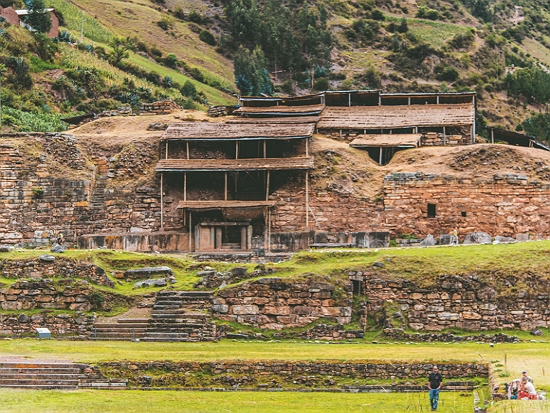
by extreme rainfall in recent years. / Provided by Apollo
(Source: https://commons.wikimedia.org/wiki/File:Chav%C3%ADn_de_Hu%C3%A1ntar_-_51148181187.jpg)
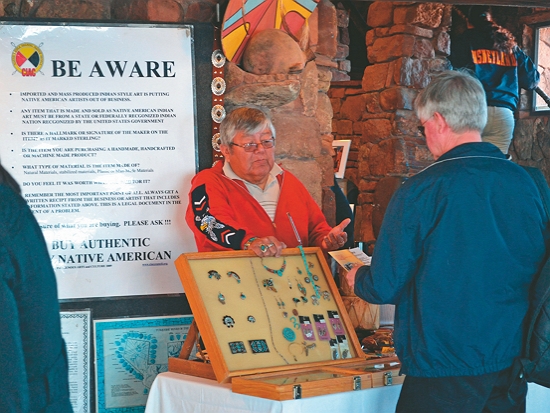
tribes are invited to exhibit and sell traditional Indian crafts and cultural works to tourists.
/ Provided by Grand Canyon National Park
(Source: https://commons.wikimedia.org/wiki/File:Grand_Canyon_National_Park
_2015-2016_Cultural_Demonstration_Series_%2824284733129%29.jpg)
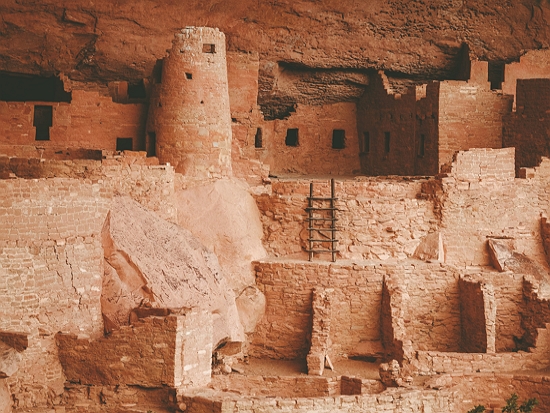
in Colorado,has preserved ancient people's traditional dwellings knowledge. / Provided by Alec Krum
(Source: https://unsplash.com/photos/qWdKseoimhw)
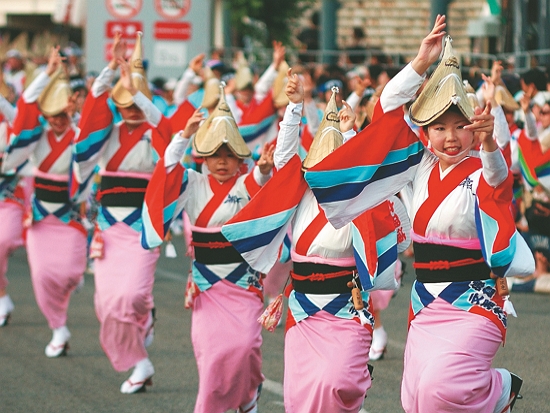
forming community cohesion through cultural activities. / Provided by Rosino
(Source: https://commons.wikimedia.org/wiki/File:Awa-odori_2008_Tokushima_03.jpg)
Sustainable Development, Culture can Help
In 2015, the United Nations adopted the 2030 Sustainable Development Goals, intending to employ 17 Sustainable Development Goals (SDGs) to guide global action over the next 15 years. Since then, these SDGs have become a shared objective for the international community.
Among the 17 SDGs, many indicators indirectly show the potential for culture to support sustainable development. Everyone realizes that it will be challenging to translate abstract cultural concepts into measurable indicators and policy connotations, making it difficult for culture to play a key role in the conversation on sustainable development. Nevertheless, culture not only shaped the values of the civilized world in the past but also informs future human behavior and promotes sustainable development. So, how can culture not be part of the solution?
In light of this, the United Nations Educational, Scientific and Cultural Organization (UNESCO) published Culture | 2030 Indicators. In addition to the economy, environment, and society, culture is expected to become the fourth force in support of sustainable development.
Culture | 2030 Indicators proposes four themes: Environment & Resilience, Prosperity & Livelihoods, Knowledge & Skills, and Inclusion & Participation, covering 22 indicators. This not only echoes the SDGs initiative, but also encourages the formulation of policies in different fields, leading to more meaningful collaborations.
It is wor th noting that when Culture | 2030 Indicators was released, the International Council on Monuments and Sites (ICOMOS) also held its GA2020 general assembly online with the theme of “Shared Culture, Shared Heritage, and Shared Responsibility”. Similar to Culture | 2030 Indicators, this meeting attached great importance to heritage and cultural fields.
Looking back at Taiwan, the national parks have also devoted a lot of effort to the maintenance and preservation of heritage, the innovative use of cultural facilities, and the research and promotion of cultural knowledge and multilingual education.
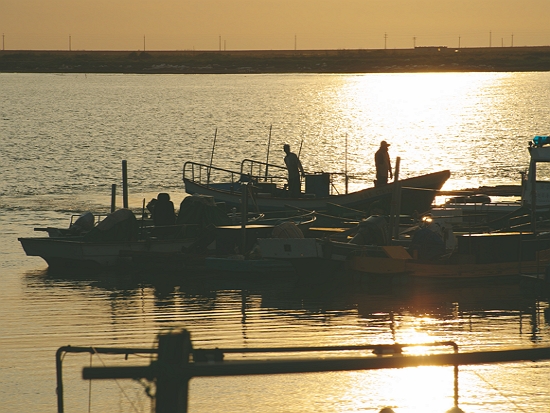
The Sea, the Gods, and the People of Taijiang
In a society with multiple values, how can heritage ser ve as a “shared culture” that everyone recognizes, protects, and inherits, and how can best practices be gained through the collaboration of different communities? Taijiang National Park serves as Taiwan’s first successful example of a grassroots effort to foster this type of shared culture.
Since the 17th century, Taijiang has witnessed changes in power structure, from the Age of Discovery to the Kingdom of Tungning, the Qing Dynasty, and Japanese rule. A bay area where thousands of boats once moored, where diverse ethnic groups came and went, home to villages where fisheries and the salt industry flourished and settled; immigrants have long been the protagonists in Taijiang’s story, and as long as there are people, there will be stories.
After Taijiang National Park was established, it actively promoted communication and cooperation among local communities, and incorporated “Taijiang Guardian Circle Project” communities. Caring for residents’ life, livelihood, environment, education, and other aspects helped build an ecological conservation system and brought new vitality to the communities.
In 2019, the Taijiang National Park Headquarters also commissioned Professor Wen-Feng Tai from the Department of Culture and Natural Resources of National Tainan University to carry out the “Intangible Cultural Assets and Documentation Collection Project of Taijiang”. The research team looked into Taijiang’s local folklore, oral culture, and traditional art, resulting in a 500-page survey report and a publication suitable for mass consumption called Gods of Taijiang: Legends of Deities and Warding off Evil Spirits.
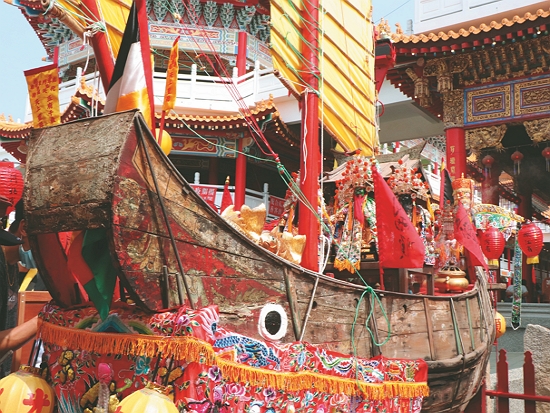
The Xiaolong Pilgrimage Procession and Wangye’s Boat Festival, Anping Mazu Pilgrimage, Taijiang Welcoming of the Ceity Ritual, Anping Kaitai Mazu Temple’s Coming-of-Age Ceremony, and Qinkunshen Chaotian Temple Boat Festival are all folk traditions that take place at Taijiang yearround. Gods of Taijiang uses folklore as an entry point to understand the settlements; examines how the Taijiang Guardian Circle and its surrounding communities celebrate and uphold deities, Yu-yingkung (worship of the Lonely Ghost), and the use of warding off evil spirits by these settlements and households; and illustrates the stories of gods and people.
Wen-Feng Tai mentioned that these themes all have strong local characteristics. For example, the ocean is considered to be the origin of the belief system in Taijiang. The “Wangye’s Boat” drifted from Fujian and Penghu to the southwestern coast of Taiwan, introducing the tradition of the Wangye ( Five Royal Lords) belief that continues to flourish today; the City God and Mazu came ashore amidst caught seafood; even driftwood was transformed into a deity. These dieties from all walks of life were brought by the sea and took root as immigrants settled.
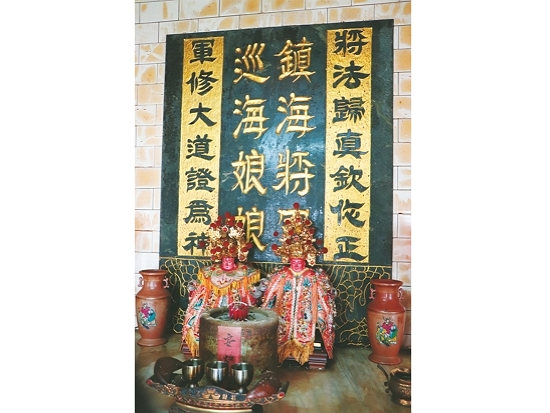
Yancheng Village who protected thieves while they were stealing salt. / Provided by TNPH
Additionally, many resettlers in the Taijiang area also introduced their own belief systems into these new settlements. For example, in the Taiqu settlement in Yancheng Village, Qigu District, Youfu Chiensui became the patron spirit of the salt industry; in the Xiashanziliao settlement in Longshan Village, Qigu District, Chifu Chiensui, also known as the “Thief Chi”, was thought to bless the less fortunate villagers by robbing the rich and helping the poor.
The book focuses on Taijiang’s local characteristics, including regional beliefs. Throughout Taiwan, small shrines to Yu-ying-kung are commonly seen under trees or near fields. There are more than 40 such shrines in the Taijiang Guardian Circle, with the most common victims being water accidents.
“In the past, the fishermen of the Taijiang would bury the drowning victims collectively. They’d build a small shrine and worship them like deities, which is different from the inland areas in Taiwan. Sea water and estuaries have become the origin of the Yu-ying-kung belief in Taijiang.” For the fishermen who must battle with the open seas daily, praying devoutly to these shrines for a safe journey grounds their hearts and souls.
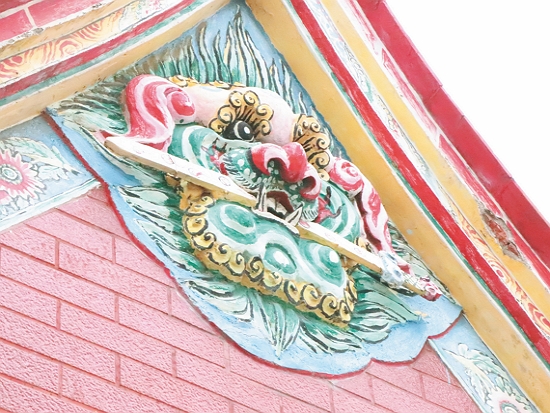
Interestingly, in the book’s Chinese title, the characters “warding of f ” are the same as “pressing”, which means to suppress. “warding off evil spirits” refers to objects like bagua, sword lions, and guardian stones that suppress ominous things, ghosts, and feng shui problems.
The warding off evil spirits in the Taijiang area are not only placed throughout the community but also in ordinary households. The practice is particularly common in the Anping community near the sea, where you can find sword lions on houses warding off evil spirits, wind lion gods restraining the evil spirits from the sea, sword screens blocking out evil spirits, and powerful guardian stones guiding you through the winding alleys.
As times change, modern society may no longer rely on the deities’ blessings. So what other kinds of enlightenment can folk beliefs provide? Wen-Feng Tai believes that these cultural stories convey significant information about the natural local environment and the history of our ancestors, which is an important basis for the identity construction of future generations.
“Start by understanding local legends and stories, and then slowly explore geographical phenomena and human history; try to observe and nderstand the special culture of an ethnic group, and one will surely find the culture and values that we’re all closely linked to.” The “shared culture” that we recognize, protect and inherit is the rich and precious heritage of the local area.

“Patroller”: An Immersive Cultural Experience
In addition to “shared culture”, GA2020 also focuses on how “shared heritage” uses information technology and new media to create cultural experiences and inject vitality into cultural assets. The Yangmingshuwu in Yangmingshan National Park uses “Patroller”, an immersive escape game, as their latest attempt.
Jia-Feng Lin, a docent for Yangmingshuwu, Yangmingshan National Park Headquarters (former summer residence for Kai-Shek Chiang), explained that through the collection and research of historical materials, they discovered a security system for the site. “Yangmingshan’s security system is divided into three layers: outer, central, and inner security. At present, the patrol trail of the Zhongxing Guesthouse is the inner security system, with a total length of about 1.5 kilometers and 7 checkpoints. At that time, about 200 people were mobile deployed.

/ Provided by YNPH (Photo by Ya-Wen Chang)
Although the actual patrol paths are not long, they provide a significant amount of valuable historical data. The docents of Yangmingshuwu wondered if there was a way for visitors to experience the paths for themselves through games. “Patrollers” takes place on the 750-meter patrol path on the north side. Players become guards in the 1970s-equipped with flashlights, military belts, and trekking poles—shuttling through checkpoints such as camp bunkers, water towers, and helipads. Players brainstorm with their teammates throughout the game to solve each level with their mobile app.
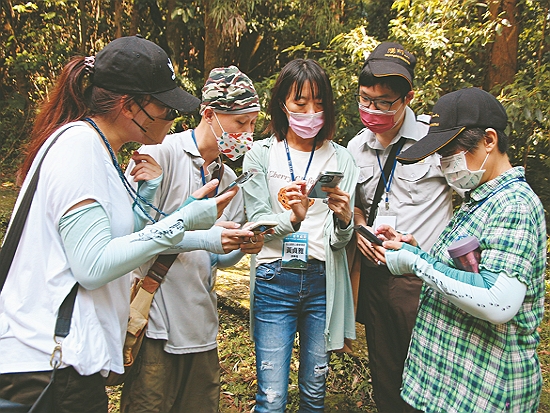
/ Provided by Yangmingshan National Park Headquarters(YNPH) (Photo by Hsiao-Wan Chang)
The puzzle-solving levels in “Patroller” are integrated with real scenes, like an outdoor version of an escape room, transporting players back to this mysterious place. When first launched in May 2022, it attracted puzzle enthusiasts keen on the challenge, allowing gamers to generate word-ofmouth buzz amongst a niche audience.
As of April 2023, “Patroller” has been played 142 times, with more than 500 players participating, creating opportunities for young people to engage with Yangmingshuwu. Jia-Feng Lin recalled that while designing the game, he was cer tain to not inject historical information into the game. “Instead, I hoped the public would be attracted to the game, and experience the environment and the atmosphere. If interested, they can return to par ticipate in guided tours later, or explore Yangmingshan National Park in depth.”
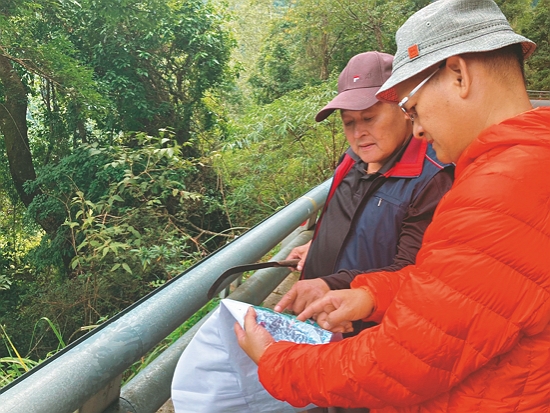
in the surrounding areas to visit survey, and invited tribal elders to identify place names.
/ Provided by Haisul Palalavi
Survey the Names of Traditional Places
The third theme of GA2020, “shared responsibility”, focuses on the sustainable management and maintenance of heritage, and integrates industry, government, academia, and the private sector to jointly invest in preservation work. At the same time, it also calls for cultural equality and the importance of “indigenous heritage”, “the journey of culture and nature”, and “disenfranchised heritage”.
Before considering how to manage and maintain heritage, research is indispensable foundational work. Yushan Nat ional Park Headquar ters commissioned Associate Professor Haisul Palalavi of the Center of Teacher Education at National Taitung University to carry out the Survey on Traditional Place Names and Cultural Implications of Indigenous Areas in Yushan National Park”.
The scope of Yushan National Park includes areas where the ancestors of the Tsou and Bunun people lived in the past. But the indigenous names of mountains, rivers, old settlements, and land no longer exist. “When discussing the preservation of indigenous language and culture, names of places are very important. It is the foundation of indigenous cultural heritage and revitalization. Only by understanding the traditional names can we grasp the scope of these places.”
During the research process, Haisul Palalavi first obtained documents, maps, and archives from the Japanese rule period, and conducted indepth interviews with clansmen, elders, experts, and retired mountain rangers who are familiar with the breadth of Yushan National Park. Additionally, focus groups were held at Dongpu Village in Xinyi Township, Nantou County; at Meishan Village in Taoyuan District, Kaohsiung City; at Taiping Elementary School in Zhuoxi Township, Hualien County; and at Na-nan Station of Yushan National Park Headquarters.
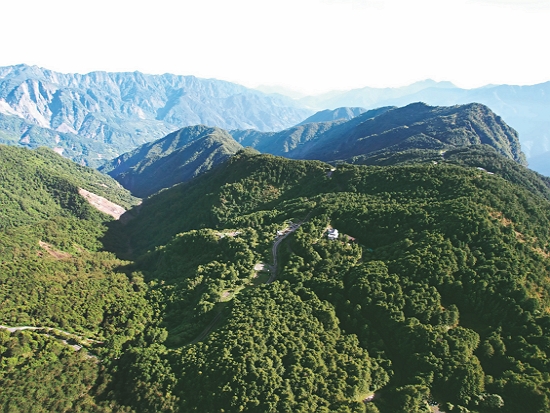
/ Provided by Jinke International Multimedia Co., Ltd.
After organizing and analyzing the data, Haisul Palalavi believes that the place names of the Bunun people can be divided into names that commemorate a hometown, the original name for the land, people’s names, topography, legends, animals and plants, physical condition, orientation, or tools; and occasionally retain the use of Japanese place names, or utilize newly created words, onomatopoeia, and adverbial words.
Chief among them, many place names are named after plants, such as Sizu (shell ginger), Huaz (Calamus jenkinsianus), Tana (prickly ash), Tupia (Yushan Cane), Nanatuh (Tetrapanax papyriferus) and so on. “Through this naming method, it is clear to see the indigenous way of life in nature and the natural intersubjectivity of life.”
Take Tataka, where the Tataka Station is located as an example. Tataka is generally believed to have originated from the language of the Tsou nationality, meaning a wide, flat grassland. “However, after asking the Tsou people and looking up the online dictionary of the Tsou language, tataka actually means ‘pavilion’. If it refers to a wide, platform grassland, it is closer to the Bunun language tatah, tataq, which is ‘mud land’. When it rains on the platform grassland on the high ground, mud swamps are prone to appear in the low-lying areas, and sambars like to come here to drink and play in the water. ”
Haisul Palalavi also mentioned that tataka in the Bunun language also means a pavilion or a workhouse. But now the Bunun people often call Tataka “sahsah”, which originated from the simplified pronunciation of tataka in the early days as “kansiahsiahan”, which means “the path where thes ambar jumped down.” In the past, sambar would jump down from the mountainside, and the deer's hooves would rub against the dirt and gravel, making the sound of siahsiah.
Haisul Palalavi believes that surveying the names of traditional places requires indigenous language ability as a basic requirement. “In addition to being able to communicate with the elders, it helps to understand the structure of the Bunun language, including the use of derivatives, affixes, and appendages, to deliberate and elaborate on the original meaning of place names.” Moreover, it’s necessary to be familiar with the Bunun history and culture, combined with academic training in archival research and anthropology, to complete a rigorous survey.
Not only will the relevant survey results be used on local signages and to create maps of traditional place names, they can also be provided to primary and secondary indigenous schools as materials and textbooks for cultural teaching, which is beneficial to the recent promotion of indigenous education and universal access to indigenous education.
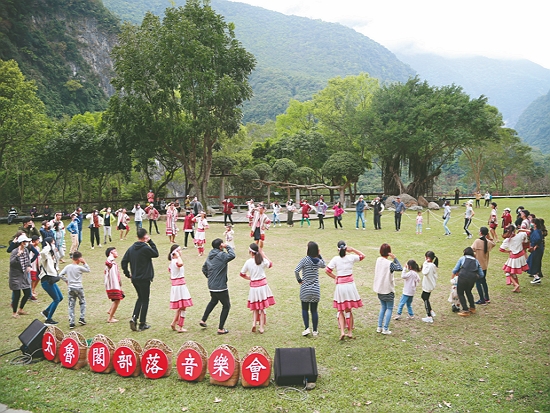
/ Provided by Taroko National Park Headquarters
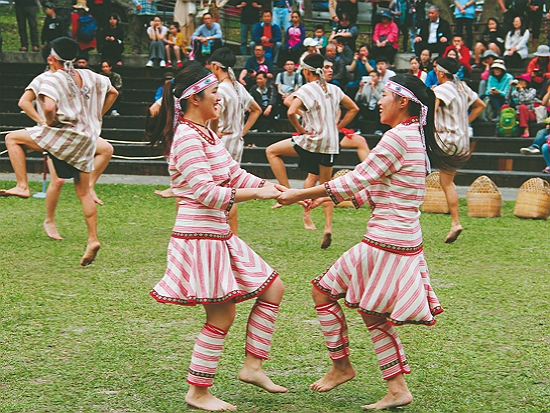
/ Provided by Taroko National Park Headquarters
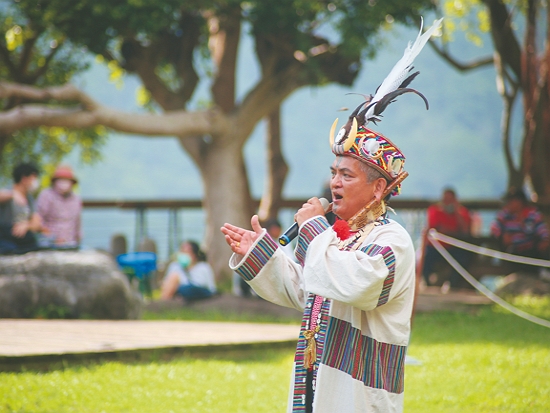
joins in performing. / Provided by Taroko National Park Headquarters
Original Voices, the Stories of People and Songs
Creating culture, nature, and artistic journeys is also one of the ways to preserve and sustainably develop indigenous heritage. For example, many visitors to Taroko National Park have participated in the indigenous singing or dancing on the grass fields during the “Tribal Concert”, an event that’s been held for many years.
Looking back on the original intention of holding these concerts, Chia-Yu Liu, interpreter at Taroko National Park Headquarters explained, “From singing at celebrations to playing traditional musical instruments to festival dances, music has always been a very important element in the lives of the indigenous people.” In a relaxing atmosphere, and through the presentation of tribal concerts, indigenous youths can become familiar with the indigenous language and traditional cultures, while the public has the opportunity to appreciate and understand.
Early on, the indigenous performance groups in the neighboring communities of Taroko National Park were amateurs, and the tribal concert provided a platform to showcase their talents. As members matured and quality improved, the number of performances increased from 6-8 per year to 2 per month, or 20 performances a year. Many performance groups eventually established dance or performance associations and got invited to perform at various events.
In addition to music and dance performances, there are cultural experience activities, such as rattan weaving and bow weaving, which allow the public to experience the traditional crafts of the Taroko people; or husking rice and making seasonings, which represent hometown tastes. The workshop vendors participating in the event also have an opportunity to understand visitors’ preferences. “It’s an opportunity to get feedback on their handcrafted products, which also helps to attract more visitors to these workshops.”
Through tribal concerts and cultural experience activities, Taroko National Park Headquarters has “opened up” the cultural space, creating more possibilities for the preservation and inheritance of indigenous culture. They also successively assisted communities who are willing to try cultural eco-tourism and organized various themed trips. From visitor reception to arranging experiences, teachers, and interpreters, Taroko National Park Headquarters has been assisting from the sidelines. “Now the tribes and the community are doing very well!”
With the original intention of cultural inheritance, tribal concerts have enjoyed an 18-year history. Through cultural and artistic exchanges, Taroko National Park Headquarters formed partnerships with tribes and community members. Chia-Yu Liu said, “Concerts and cultural experiences are an opportunity to let indigenous youths know of the valuable assets they have, and to present them well.”
From the Culture | 2030 Indicators to the GA2020 conference, it has once again been proven that culture is an indispensable force for sustainable development. Through different forms, culture strikes a balance in promoting the contributions that the environment, economy, and knowledge make to sustainable development. Cherish the shared culture, preserve the common heritage, assume common responsibilities, and let the torch of culture be passed on from generation to generation.


