
Passing the Torch of Culture-The Story of the Sea and the Mountain
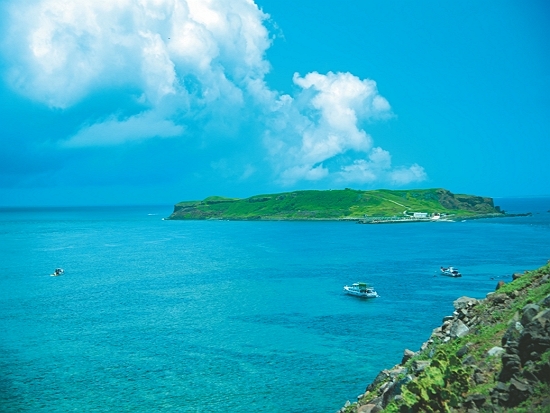
The ocean, which covers about 72% of the earth’s surface, birthed the planet’s earliest lifeforms through its gentle, stable, and tolerant qualities, and thus can be called the mother of life on earth. This also explains why, among the 34 phyla of animals in the world, 32 phyla can be found in the ocean, and 12 of them only exist in the ocean. The ecology eneath the azure waves is rich and more diverse than the ecology on land. This is why many people are drawn to the ocean.
However, ever since the Age of Exploration, competition for oceanic resources has become a normal part of countries’ political and economic expansion in the international arena. Additionally, the industrial revolution in the mid-18th century accelerated global warming, and human activities have had a severe impact on marine environments and ecology. Nevertheless, a trend of rethinking humanity’s past has been gradually emerging. This trend led to countries signing and approving to the United Nations Convention on the Law of the Sea (LOSC) in 1982. As a result, 1.2% of the world’s high seas were categorized as protected areas, and the Convention became a guideline for countries’ concerted efforts to protect the ocean for the next 40 years.
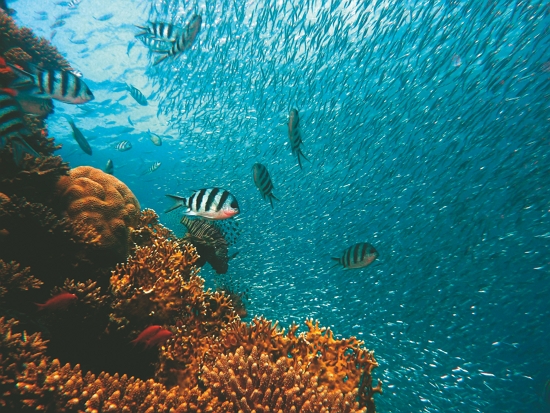
the ocean will receive more attention from all countries in the world. / Provided by joakant.
(Source: https://pixabay.com/zh/photos/fish-underwater-corals-sea-ocean-378286/)
“The Ship Has Reached the Shore.”
At 10:27 p.m. on March 4, 2023 (Saturday), New York time, in the conference room where an intergovernmental conference of the United Nations Convention on Biological Diversity on the High Seas had convened, after 36 hours of non-stop marathon negotiations, Rena Lee—an ambassador from Singapore and the president of the conference—was excited to conclude the conference with this statement. When Rena Lee uttered her closing remark, representatives from more than a hundred countries immediately burst into loud applause. They had witnessed the moment when countries around the world signed an international agreement to protect the ocean, four decades after the United Nations Convention on the Law of the Sea was signed.
The new agreement has been widely nicknamed the “High Seas Treaty”, “High Seas Agreement”, and “Global Ocean Treaty” by the media and major international organizations. Some experts and scholars worry that these oversimplified titles may mislead the public regarding the meaning and purpose of the agreement itself.
The Agreement Under the United Nations Convention on the Law of the Sea on the Conservation and Sustainable Use of Marine Biological Diversity of Areas Beyond National Jurisdiction, officially referred to as the BBNJ Agreement, is the first international law to regulate all sea areas beyond national jurisdiction (ABNJ), hoping to restore and maintain marine biodiversity in the high seas and the Area. Fundraising through international cooperation is expected, along with other means to achieve the conservation and sustainable use of marine resources.
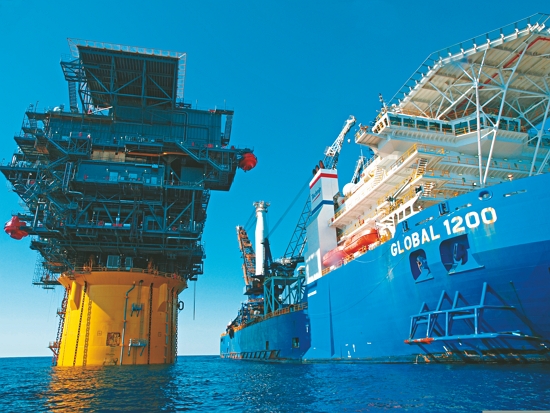
a critical cause of international conflicts. / Provided by Gabe Raggio.
(Source: https://pixabay.com/zh/photos/industry-water-transportationsystem- 3279601/)
The History of the United Nations Convention on the Law of the Sea
To understand the BBNJ Agreement, we must first go back to the middle of the last century to clarify the context of the United Nations Convention on the Law of the Sea.
At the time, countries repeatedly challenged the traditional concept of “the high seas are three nautical miles away from land” in order to advance their economic interests such as access to fishing grounds and seabed mineral deposits. Countries expanded their territorial waters at will, making it difficult to clarify responsibility for sea pollution. International conflicts and territorial disputes occurred frequently. For example, one well-known case is that of former British Army Major Paddy Roy Bates, who occupied an abandoned naval fort (Roughs Tower) and established the Principality of Sealand about 10 kilometers off the coast of Suffolk, England.
To resolve this issue, the United Nations took the initiative to hold the first conference on the Law of the Sea in Geneva in 1958. Over the next 20 plus years, three multilateral government negotiation meetings were held. Finally, on December 10, 1982, the United Nations Convention on the Law of the Sea was signed and approved by 160 countries, and the agreements signed during the first conference (Convention on the Territorial Sea and the Contiguous Zone, Geneva Convention on the Continental Shelf, Convention on the High Seas, and Convention on Fishing and Conservation of the Living Resources of the High Seas) were incorporated into the United Nations Convention on the Law of the Sea, effective November 16, 1994.
Therefore, the scope of various marine areas including archipelago, territorial sea, contiguous zone, exclusive economic zones, continental shelf, and high seas have been clearly defined. At the same time, related rights such as the ownership of seabed resources, marine research, and dispute arbitration in areas under national jurisdiction have been regulated. However, with the exception of fishery-related regulations, most of the marine creatures, resources, and ecosystems located outside national jurisdiction are not included in the regulations, which can be a potential reason for multilateral negotiations on the BBNJ Agreement in the future.
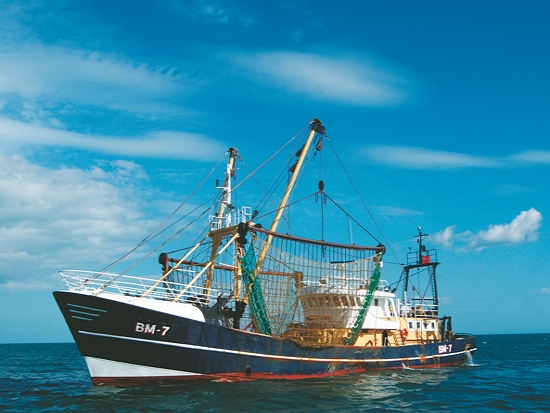
many days’ catch by a traditional fishing boat. / Provided by Mark Caldicott.
(Source: https://pixabay.com/zh/photos/sea-trawler-boat-fishingship- 1761912/)
Rebuilding the Sustainable Vitality of a Commonly Shared Ocean
With technological advancements in shipping, fishing, biotechnology, and deep-sea bed development, countries have extended their research and economic interests beyond their national jurisdiction and have taken marine resources at will. The pollution and overfishing caused by these exploitative economic activities have accelerated and worsened the destruction of biological habitats, leading to rapid decreases in the quantity of organisms. The unbalanced ecosystem may lead to a crisis in which species extinctions occur regularly.
Take the best-selling medicines, nutritional supplements, and cosmetics from recent years as examples. As long as the advertisements mention special ingredients extracted from deepsea sponges, krill, coral, seaweed, and fungi, the product values immediately rise. Owning to the high scientific research value and unlimited business opportunities of these oceanic resources, the situation of overfishing on the high seas has been aggravated.
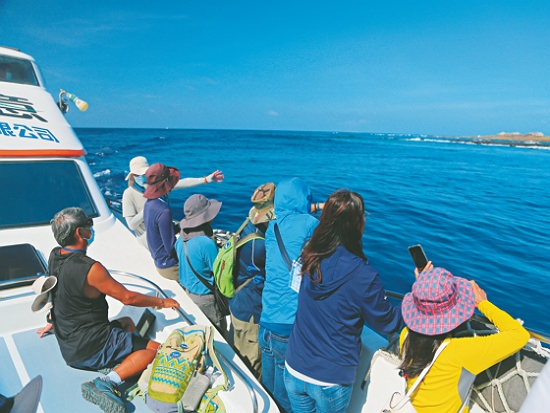
and to further promote conservation action. / Provided by National Marine Park Headquarters
In response, at the beginning of this century, representatives of transnational nongovernmental organizations, environmental protection groups, and oceanographers began to petition together, advocate, promote, and formulate multilateral international treaties to strengthen marine conser vation. In 2004, the United Nations established the Ad Hoc Open-ended Informal Working Group to study various issues related to the conservation and sustainable use of marine biodiversity beyond national jurisdiction. Experts were invited to research countermeasures.
After nine meetings, the working group submitted a formal proposal to the United Nations General Assembly in 2015, hoping to include the Conservation and Sustainable Use of Marine Biodiversity in Areas Beyond National Jurisdiction under the United Nations Convention on the Law of the Sea. Since 2018, the United Nations has held five rounds of intergovernmental meetings. Various countries, determined to defend their fishing rights and interests of economic development and scientific research, frequently wrestled on issues of resource sharing and benefit distribution. It took more than 20 years to reach a consensus on protecting the ocean.
The BBNJ Agreement incorporates the topics proposed by the working group: marine gene/genetic resources sharing, area-based management tools applicable to marine protected areas, environmental impact assessment, and capacity building and marine technology transfer, thus establishing a legal framework for marine protected areas. At the same time, the agreement also regulates that a Conference of the Parties (COP) must be held regularly in the future to deal with international cooperation issues related to ocean governance, maintenance of biodiversity, and sustainable use.
In addition to maintaining marine biodiversity and sustainable use beyond national jurisdiction, a later press release issued by the United Nations mentioned that 30% of the world’s oceans will eventually be included in protected areas, and more funds will be allocated to the obtainment of marine genetic resources and marine conservation work. This is to support United Nations Biodiversity Conference (COP15) Kunming-Montreal Global Biodiversity Framework (GBF) Goal 3: before 2030, achieve the protection of 30% of the world’s biodiversity and important ecological functions on land, inland waters, and coastal and marine areas. This is the well-known 30X30 initiative.
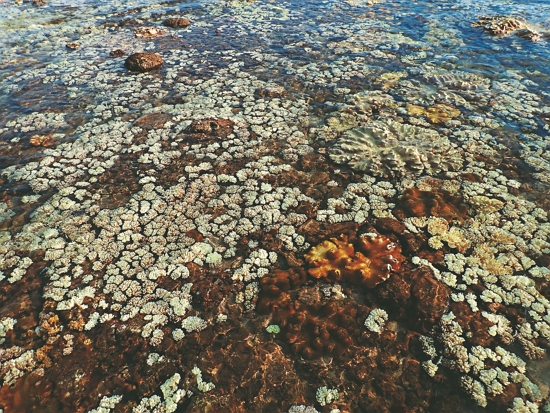
Coral Planting: Color the Four Southern Islands
The establishment of marine protected areas is one of the tools to realize the BBNJ Agreement. However, as early as 2007, Taiwan established the Dongsha Atoll National Park in the South China Sea to protect the local atoll ecosystem. In October 2014, South Penghu Marine National Park became the second marine national park in Taiwan, working under the conservation philosophy that prevention is better than recovery.
The four southern islands are Dongyupingyu, Xiyupingyu, Dongjiyu and Xijiyu, plus the surrounding isles and sea areas. They are all within the scope of the national park. The sea area is 35,473 hectares wide, which is about 1.3 times the size of Taipei City. According to Tai-Ying Wu, a technical specialist from the Conservation Research Section of the National Marine Park Headquarters, the four southern islands are located at the junction of the North Sea and the South China Sea. The warm Kuroshio Current and the cold current from China’s coast flow through this sea area at the same time. The two currents are equally forceful, and when they meet, they create an “upwelling” conducive to the development of extremely high biodiversity and a complete coral reef system.
The cold damage in 2008 was a painful experience to the hearts of many Penghu fishermen, but it was also an opportunity to shine a spotlight on the waters around the four southern islands. Tai-Ying Wu said, “Compared with the adjacent sea areas, the degree of damage here was minimal. This place is like a natural refuge.” The National Marine Park Headquarters also cooperated with experts to carry out ecological assessment and investigation. They discovered that the local species are diverse, the marine resources are rich, and the coral reef ecosystems is quite complete. Before the national park was established, the colorful world under the blue sea was already a secret place known among divers.
To maintain the biodiversity and sustainable use of this secret place, in addition to communicating with the few residents still living in the local area about the changes that would be brought about by the establishment of the national park, negotiations also took place with neighboring fishermen to set up a no-fishing zone. In 2013, approximately 69 hectares of sea area around South Tiezhenyu was designated as a core no-fishing zone where no animals and plants could be harvested at all. Additionally, the sea area adjacent to the four southern islands was declared a bottom gillnet nofishing zone in preparation for the establishment of a conservation national park.
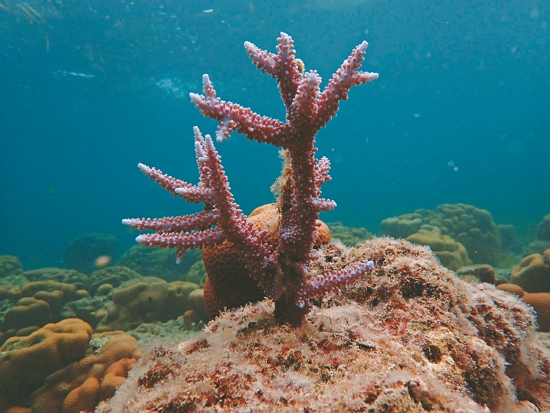
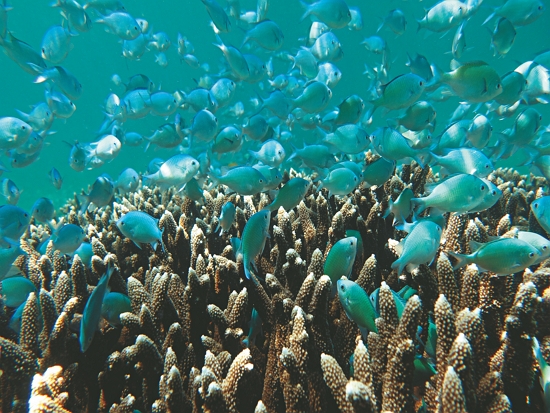
Some scholars and experts believe that the waters around the four southern islands with high biodiversity are very suitable to be a seed bank. Through conservation work, the breeding of biological species can be strengthened. These species can then be seeded in other sea areas around Taiwan. The coral planting (cutting propagation) conservation plan launched by National Marine Park Headquarters in 2022 also serves this purpose.
Tai-Ying Wu said that corals are very sensitive to environmental changes. In addition to the damage caused by deteriorating water quality, when the water temperature is lower than 20°C or higher than 30°C, coral bleaching will occur and the coral will die. In recent years, the extreme climate has intensified, and now less than 5% of Acropora hyacinthus (table carol) and Montipora foliosa (chalice carol) remain, even though they were originally dominant species in the waters around the four southern islands. In the waters near Dongjiyu, coverage of the Lavender Forest coral reef that amazed so many divers has dropped from 70% or 80% to 19%. In the waters around Xijiyu, the Rose Garden made of Montipora aequituberculata has been completely covered by algae. Therefore, the National Marine Park Headquarters has begun planting coral in the sandy land to expand the coral’s habitat. The National Park is continuously monitoring the situation, with the expectation that the new coral reef ecosystems will be created and a beautiful underwater world will reappear.
living things and the overall environment. / Provided by KNPH
Feeling Close to the Ocean, Establishing Marine Cultural Literacy
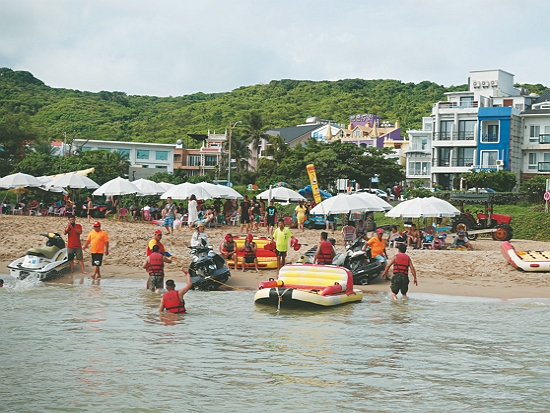
When it comes to coral monitoring in Taiwan, Kenting National Park has the longest history and a systematic database. At present, there are 15 monitoring stations in the park, covering ecological protection areas, marine ecological protection areas, marine resource protection demonstration areas, and nonprotected areas. It is hoped that these stations will help with discovering the impact of human activities such as fishery activities, waste water discharge, and water recreation on ecological changes, including water quality in the intertidal zone, habitat destruction, and the status of coral reefs and crustaceans.
When it comes to the damage of human activities to the coral reef ecosystems, it is common knowledge that in the past, large coral reef fish such as Cheilinus undulates (humphead wrasse) and Bolbometopon muricatum (humphead parrotfish) and the brightly colored tropical saltwater fish that swim between the holes and crevices of reefs were caught Hsin-Hung Chen, a technical specialist from National Marine Park Headquarters, explained, “People don’t realize that touching marine creatures while diving and snorkeling or stepping on marine creatures in the intertidal zone all place stress on the ecosystem…the oil pollution incident of the Amorgos cargo ship more than 20 years ago and the deterioration of water quality caused by the sediment or untreated sewage entering the sea from land development are also responsible for the greatest negative impact on the overall marine ecology.”

Through monitoring, it was discovered that once water quality deteriorates, algae will grow and cover the coral reef. When the algae that grow symbiotically with coral and provide nutrients to coral can no longer carry out photosynthesis, they will either find another host or drain the coral of nutrients, accelerating coral bleaching and death. Owing to the difficulty in finding food, fish and crustaceans whose survival depends on the coral reef will either leave or die. In the end, the entire ecosystem collapses.
Hsin-Hung Chen said, “These situations must be prevented or remedied through marine life education and knowledge promotion, the formulation of recreational regulations, the implementation of activity zone management, the establishment of anchor points for ships, and the formulation of land development and sewage management methods.” In recent years, the coral reef coverage in Kenting has gradually increased, and the coral restoration seed beds established at the water outlet have gradually achieved the desired results. New species of coral have also been discovered. All of these positive developments are believed to be related to the implementation of marine life and resources protection measures and knowledge promotion.
Marine life education emphasizes being close to the ocean, loving the ocean, and knowing the ocean. If people living in Taiwan—an island surrounded by the ocean—can enjoy the ocean’s beauty with an open mind, then based on their correct understanding of sustainability and ocean resources conservation, “feeling close to the ocean” can translate to “protecting the ocean” instead of being two ideas on opposite ends of a spectrum. This creates more opportunities to develop a layered and profound marine culture, which will further guide the public to rediscover the ocean from a rich and multifaceted perspective.


