
Running Toward a Sustainable Future-Minister of the Interior Yu-Chang Lin discusses the National Park Service’s Vision
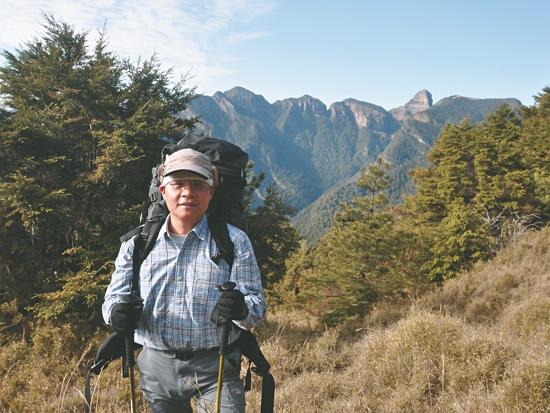
is taking over as the first Director-General of the National Park Service. / Provided by SNPH
In recent years, as the international community has paid greater attention to issues such as climate change and biodiversity, Taiwan’s government has kept pace with related policies. Such action highlights Taiwan’s stance of taking responsibility for the environment, while simultaneously responding to the Taiwanese people’s expectations for the sustainable development of the land. As part of this, and after half a century of development, the national parks administration system was upgraded to become the National Park Service (NPS) within the Ministry of the Interior (MOI) on September 20th, 2023. This will further move Taiwan toward the goal of becoming a major ecological nation.
All the restructuring work and revealing the new NPS name plaque were only the first step, of course. Future development which will depend even more on the planning and guidance of the NPS’ first Director-General, Mao-Chun Chen. Chen has previously supervised Yangmingshan, Shei-Pa, and Kinmen National Parks, and has served as the MOI Secretary-General, MOI Counselor, and Director of the Cooperative & Civil Associations Preparatory Office. In addition to his rich experience in practical and regulatory matters, though, he is also the son of a farmer. Having grown up on a farm, he deeply understands the importance of land ecology to human life. When he served at the headquarters for Yangmingshan and Shei-Pa national parks, he also developed a long-term habit of mountain climbing and spent a lot of time in nature. After he took the position as Director of the Preparatory Office, upon being back in the office, he once said with a smile, “I’m not really used to this. If I go a week without walking around Yangmingshan, I feel like my body had forgotten how to breathe.”
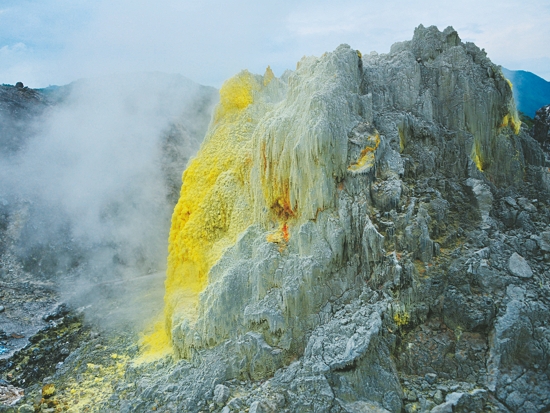
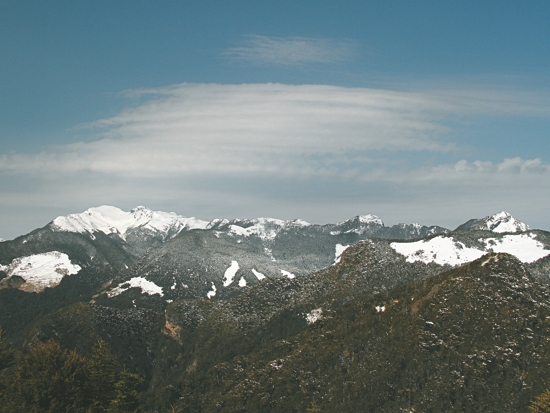
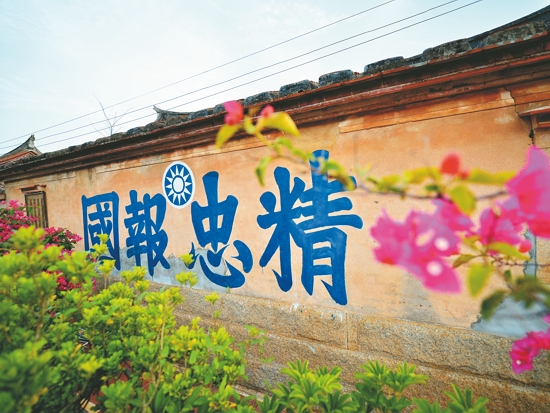
distinctive features: (top) Sulfur vents in Yangmingshan National Park;
(middle) alpine ridges in Shei-Pa National Park; (bottom) battlefield culture
in Kinmen National Park.
Responsible Decisions and Commitments
Chen has experience managing a wide range of national parks, from those with high mountains, to foothills that are ideal for recreation, and historic sites where battles took place. He has a profound understanding of the uniqueness and diversity of the land of Taiwan. “The National Park Law took effect in 1972,” Chen notes. “Ten years later, the first national park was established at Kenting. Now, Taiwan has nine national parks, one national natural park, and 58 national wetlands and critical coastal areas. Taiwan’s comprehensive land conservation networks cover a vast range of regions: Mountains, suburbs, the ocean, wetlands, all the way to urban and historical sites. The natural and the human, it’s all given equal weight. And to have accumulated all these results, it’s been no easy feat.” Chen says, earnestly: “Because I’m on the frontline in the practical work, I understand even more the importance and fragility of these networks.”
While preserving the rich and diverse cultural and ecological resources of national parks, we also need to deal with the tight-knit relationships between people and the land. Every issue and challenge is different from the last, but Mao-Chun Chen is always there in person, directly wrestling with the issues. In that kind of environment, the pressure is no small thing.
“During my two stints at Yangmingshan National Park Headquarters,” Chen recalls, “I had to deal with some difficult issues. One was the illegal construction case with Jingshan Cherry Blossom Resort in 2008; then there was the Cheng-Chih Liu land case in 2013. In 2009, when we were working with the Pyanan (Nanshan) tribal village to release Formosan Landlocked Salmon in Gonbkan bilaq (Luoyewei) Stream, no one expected the weather reports to say a typhoon would hit the next day, but we decided to proceed with the plan anyway. Whether we did it or not, whatever would happen later on, these were decisions to make and responsibilities to undertake.”
He believes that there are inevitable tensions in striking a balance between ecological conservation, environmental sustainability, and humans, and in what can be achieved after resources are invested. It is precisely because of having experienced these kinds of negotiations and tensions that Chen has become more deeply aware of the importance of cooperation. Things will not progress without people making the effort. He has also gained a deeper understanding that , when it comes to the environment, no one can remain aloof. All citizens must become aware of, and take up, their responsibility for this land of Taiwan.
Gather Resources to Expand the Conservation
The human footprint on the land has indeed exceeded its bounds, causing irreparable damage to the environment. Therefore, the primary priority for national parks is conservation – protecting ecological areas with diverse species, and rebuilding habitats for endangered species to the greatest extent possible. During his work at three national park headquarters over nine years, Mao-Chun Chen has been right there, being part of the practical research and implementation required.
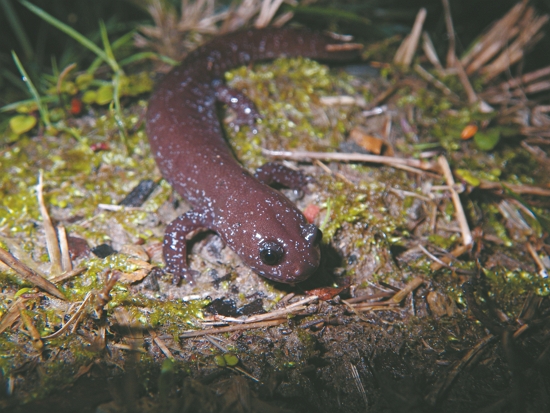
“At Shei-Pa National Park Headquarters,” mentions Chen, “I promoted research on Hynobius fuca, and have witnessed our successes in habitat restoration. Hynobius are very rare, like living fossils – it’s incredible that such cold-zone species survive in Taiwan. But, as the environment changes, it’s not hard to imagine that they are now on the verge of extinction.”
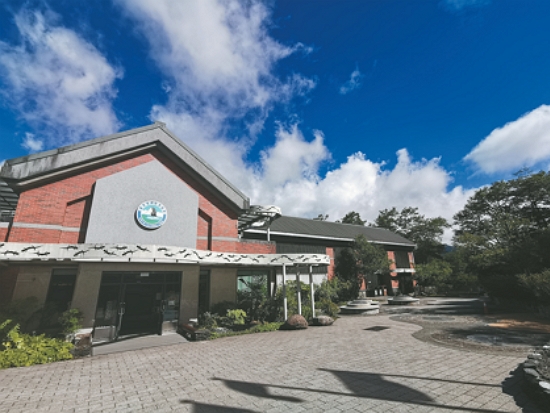
In 2012, with Chen’s leadership, the Shei-Pa National Park Headquarters (SPNPH) established the first domestic ecology center, themed on Hynobius fuca , in Guanwu Recreation Area. This center is designed to help the public understand the habits and ecological environment of Hynobius fuca , and thus the importance of conserving these species. Later, research on Hynobius was expanded to three different national park headquarters: Shei-Pa, Taroko, and Yushan. These three offices are now working together to expand the environmental-protection influence of their important achievements in species conservation.
With the new NPS organization, Chen and his team have more resources to strengthen the connections within conservation networks. Although the work has just started, Chen already has a blueprint in mind: “The national parks have a 40-year foundation in conservation research. A great example of this is the restoration of Formosan Landlocked Salmon. In the future, we will continue to propose multi-lateral conservation cooperation projects, centered on the national parks.”
Chen reveals that this model will also be extended to other impor tant species. For example, conservation of the Formosan black bear is set to integrate Shei-Pa National Park Headquarters and Taroko National Park Headquarters, as well as government agencies like the Forestry and Nature Conservation Agency, the Taiwan Biodiversity Research Institute, local government agriculture bureaus, and the Council of Indigenous Peoples. Add to this private conservation organizations, such as the Taiwan Black Bear Conservation Association and tribal villages near national parks, and together we can weave conservation networks to significantly increase the integrity of species habitats and connectivity. All this will make management and protection more comprehensive, more effective. “Projects such as those for Hynobius and Purple crow butterflies will also be implemented,” says Chen, “using this cooperative framework that brings together governmental agencies and private organizations.”
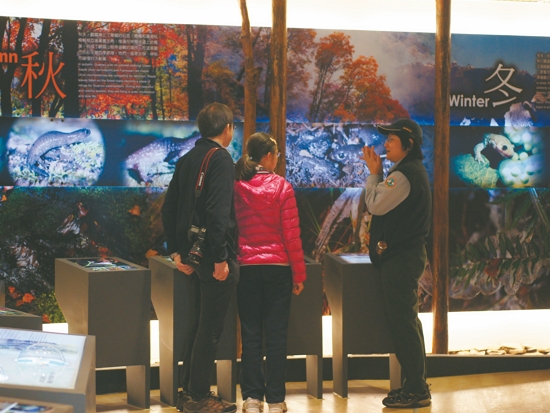
and habitat of Hynobius . / Provided by SNPH.
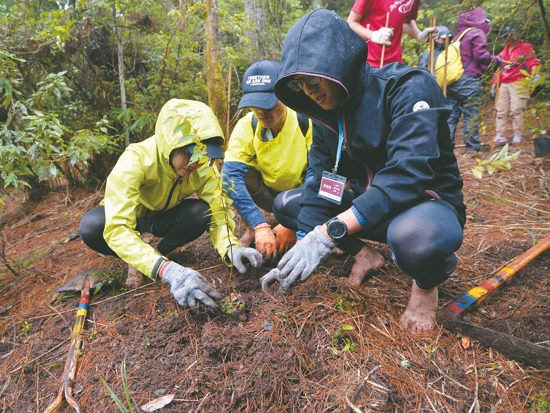
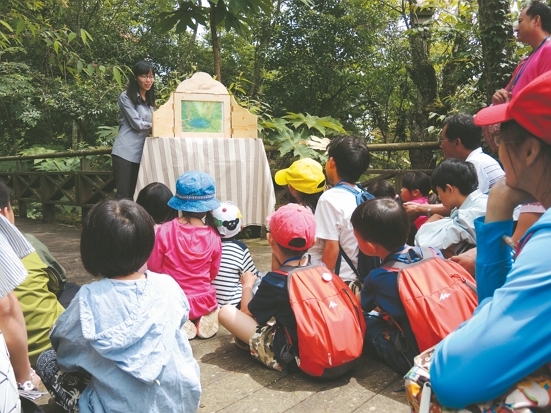
Habitat Restoration Project. / Provided by SNPH
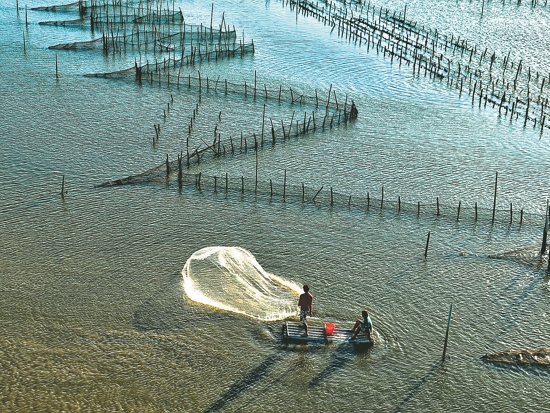
local residents, and indigenous communities will enable ecology and
society to coexist and thrive. Pictured: Fishing at Qigu Lagoon.
/ Provided by TNPH
Connecting Protection Networks, from Mountain to Sea
Hynobius, the Formosan Landlocked Salmon; the Formosan Black Bear – these are not only precious species endemic to Taiwan, but their sustainable coexistence with other species also hints at whether diverse ecologies as a whole are sound. Taiwan’s national parks have always taken the conservation of land and resources as their priority. Based on prior successes, Taiwan’s national parks will continue to respond to the core concepts of the UN Biodiversity Conference (COP 15), held in Montreal, Canada in 2022, through future actions, and work toward 2030’s milestone goal of preventing biodiversity loss. This will also ensure realization of the shared vision of living in harmony with nature by 2050.
“Our efforts over all these years have been in the right direction,” says Chen confidently, “and we can quickly align ourselves with this international trend.” Since the conference, many countries have worked together to promote the Kunming-Montreal Global Biodiversity Framework, which places a special emphasis on reducing threats to biodiversity. Hopefully, through the use of protected area systems and Other Effective area-based Conservation Measures (OECM), combined with other mechanisms, we will be able to restore at least 30% of the world’s land, inland water, coastal, and marine ecologies by 2030. And national parks play a key role in this.
For those reason, the NPS’ mission goes beyond merely maintaining ecological environments within the national parks. “Since the Wetland Conservation Act and the Coastal Zone Management Act both fall within the NPS’ jurisdiction,” Chen explains, “the management of wetlands and coastal areas across the country will also be integrated into the next-generation national park system. This means that the NPS’ upgrade is not just administrative; now, we can work from a larger perspective and with more resources, expanding Taiwan’s national conservation systems so they protect ecological environments from land to sea.” Chen, who has long come face-to-face with practical issues while working on frontline conservation tasks, knows very well that this upgrade demonstrates the high degree of emphasis that the government is placing on ecological integrity and connectivity.
With heartfelt words, Mao-Chun Chen also explains some difficulties that he’s encountered as part of his duties in the past. He makes the point that, as Taiwan is surrounded by sea, the total coastal area under NPS jurisdiction has reached 1,422,144 hectares, and 42,699 hectares of wetland. “That’s a huge area,” he says. However, in the past, owing to insufficient funds and labor, conservation of wetlands and coastal areas was mainly restricted to reviewing plans. It was necessary back then to commission outside organizations or provide them subsidies to carry out the work. For the national parks, there wasn’t the strength to do it all. “It’s obvious that we wanted to do more, to do better; we had the resolve, but not the resources. But that’s changed now.”
Chen is eager to envision the future of the newly established NPS; he is working to obtain more labor and budget to carry out the practical work of managing critical wetlands and coastal areas; Chen aims to extend the protection network of national parks to critical wetlands and coasts across Taiwan. It’s not just about reallocating resources. Chen wants to connect conservation networks from the high mountains, to the foothills, to wetlands, coastal areas, and the ocean. He also hopes that what gets called “substantive management” can fully include services like business management, recreation planning, environmental tour guides, interpretation and education, par tnerships, international exchange, and more.
“It’s because we know very well”, says Chen, “that conservation is not just the mission of one agency or one team. Every inch of Taiwan’s land belongs to its people. Everyone has a responsibility to protect the environment. How can we shoulder this responsibility for a long term, keeping shouldering it for the long haul? The key is whether everyone has a good understanding of this land. Therefore, I highly agree with the purpose of the National Park Law: To provide a channel for national education, entertainment, research, and learning, and to guide the public with a positive attitude to live and prosper alongside nature.”

/ Provided by SNPH
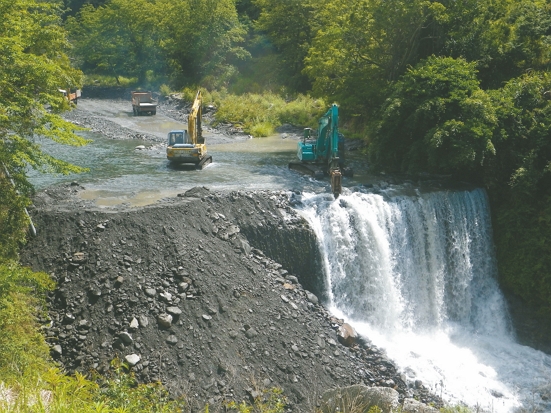
the sand dam on the stream was finally removed. / Provided by SNPH
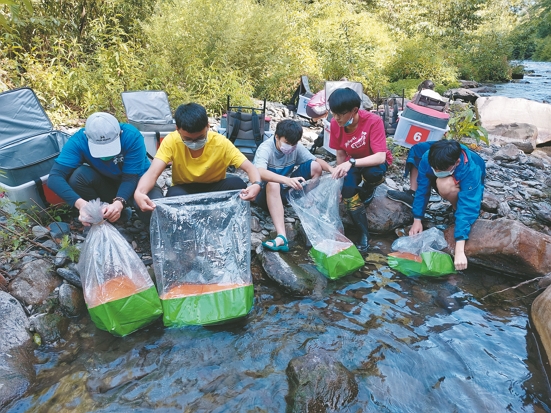

their participation in national park affairs is an important international
trend in conservation. Pictured: The Pas-ta'ai (Ritual to the Spirits of
the Short People), a ritual of the Saisiyat people. / Provided by SNPH
Government, Communities, and Enterprise
From Mao-Chun Chen’s words, we can feel his love for nature. But he also knows that, between people, finding chances to work together are extremely necessary. One person can never achieve anything alone. We have to know how to listen, communicate, and connect. Chen recalls how, over the years he’s spent in national parks, how he’s created integration and connection with local people. The process hasn’t always been easy, but when he thinks of the fruits of that labor, it always makes him smile.
“In the past, we wanted to improve habitats for Formosan Landlocked Salmon. SNPH not only removed artificial facilities like sand dams, but also helped coordination to stop agricultural activities along the Qijiawan Creek; that helped prevent sewage from affecting the water quality. 8.1 hectares of land was nationalized for ecological restoration. But these efforts weren’t enough. We also worked with local indigenous communities including Huanshan, Nanshan, to form a conservation patrol team.”
In fact, these tasks didn’t go as smoothly as hoped. But everyone involved understood that, if the environment was not improved, the land would not be able to support people living there. “So we continued to communicate and try. Both sides showed goodwill and understanding. Finally, we got to gradually deepen our cooperation with the conservation team, and their position changed from opposition to supporting the national park.”
Examples of close cooperation between national parks and local communities are not restricted to ones Chen personally experienced, either. Other successes include hunters from the Kulaliuc (Sheding) tribal village in Kenting who have become local eco-tour guides after receiving training from the national park, and, in Yushan National Park, the Bunun people who have gradually adopted organic farming based on traditional farming methods.
Examples of cooperation such as these are what the NPS will continue to work toward in the future. Chen points out that the Biodiversity Framework emphasizes the need to recognize and respect the rights of indigenous peoples and local communities, and to ensure that local residents have full and fair participation rights in the decisionmaking process. “Their cultures are core values; their cultures are the ones that have been on this land the longest. We must respect and understand them. The Shei-Pa National Park Headquarters once commissioned a study on the year-round rituals of the Northern Saysiyat people near the national park, and found that their River Cleansing Festival (or Tala’lum in Saysiyat) is closely related to the idea we’ve promoted of prohibiting hunting marine resources to protect fish. There is no conflict there. From the standpoint of protecting this land, we are partners.”
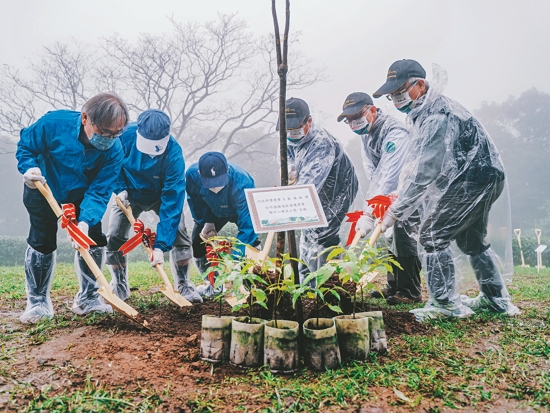
/ Provided by Wan Hai Lines
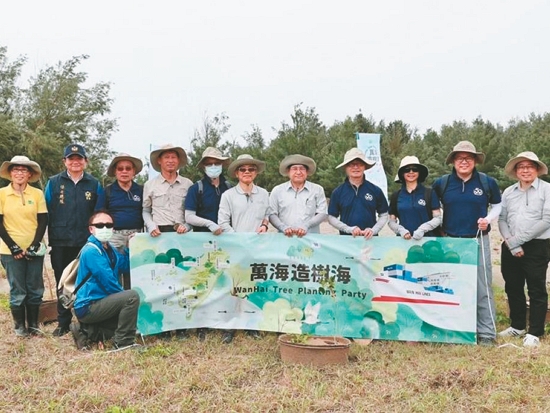
/ Provided by Wan Hai Lines
In addition to local residents, civil society organizations and enterprises are also indispensable par tners for the NPS. Chen expresses gratitude to the outstanding partners at the National Park Association in Taiwan and the Geoparks Association of Taiwan for their work with the NPS on conservation. “When I was Director of the Cooperative & Civil Associations Preparatory Office in the MOI, I gained a deeper understanding of how powerful civil society organizations like the Lions Clubs and the Rotary Club can be. Some groups have joined in the conservation efforts to do their part for environmental sustainability. In the future, we will deepen our cooperation and interaction with social groups like them; and on that basis, we will form alliances with external parties, providing enterprise with opportunities to understand, recognize, and implement ideas that support the existence of national parks.”
In fact, many companies now understand that about half of the world’s GDP output relies on healthy ecosystems. If environmental damage continues and biodiversity continues to be lost, this will undoubtedly be a major business risk. Without an ecosystem to support them, enterprises will not survive. “So we are very happy that the government and enterprises can build mutual understandings of social responsibility, and become supporters of environmental protection.”
Chen again cites the successes in cooperation between national parks and many companies in recent years, jointly implementing projects such as restoration, afforestation, and trail maintenance. “Yushan Bank’s sponsorship of the Yushan Maravi Project; Fubon Bank’s support of the Wangzailiao Barrier Island rescue plan… these and other projects have been very successful. Last year, we also signed an afforestation memorandum with Wan Hai Lines to plant 400,000 Taiwanese native tree species and bring the land to life. In the future, I also hope to expand areas of cooperation to all sorts of conservation research.”

progress toward becoming a major ecological nation. / Provided by NPS
The Emerald on the Tropic of Cancer
After talking about his vision for what he will do for domestic ecosystems, Chen takes a broader view to examine what makes Taiwan’s ecologies unique in all the world. “We all know that Taiwan is located on the Tropic of Cancer. However, from a global perspective, places on the Tropic of Cancer are mostly deserts or grasslands with very harsh environments: the Sahara Desert in northern Africa, the Arabian Desert in the Arabian Peninsula, the Thar Desert in India and Pakistan, Mexico in North America.” Unlike these places, Taiwan is blessed with unique natural resources. Its geographical location, abundant rainfall and forests, and high mountains and deep valleys formed by tectonic activity have created a diverse environment. In other words, many lush Northern Hemisphere ecosystems are distributed vertically across the elevations of Taiwan. This island could be called the “Emerald on the Tropic of Cancer.”
And that is just the land. Taiwan also has extensive coastlines and broad sea areas. “Because of the surrounding ocean currents, Taiwan also has very rich coral reef ecologies. Coral reef ecosystems provide great ecological services to the ocean, ensure that offshore fishery resources don’t fall short, and serves as a breakwater to prevent longterm erosion of Taiwan’s coastline.” And in addition to all that, there is great potential in tourism and research resources.
Whether it’s alpine or marine, all of Taiwan’s national parks have features extraordinary enough to become a uniquely Taiwan brand. By promoting these features internationally, they can become an attraction for international visitors to learn about Taiwan. These national parks will become ecological research libraries with rich collections that are open to the international community. “I’m certain,” says Chen, that since the NPS has been upgraded to become a central government agency has occurred, we have a solid responsibility to promote Taiwan’s brand value to the world.”
The global environment is facing tremendous changes, and every step forward is urgent. Chen is very clear that every domestic action taken by the NPS must be in line with international standards, to form collaborative efforts to solve bigger problems. Today, the issues of climate change and net-zero emissions are important international and national policies. The NPS has already prepared itself to implement these policies.
“Every piece of news about climate change in the past few years has been horrific to see,” says Chen. “Climate change, driven by human activities, especially the burning of fossil fuels, has led to an increase in greenhouse gas levels in the atmosphere. The incorrect ways we have used land have also caused excessive levels of greenhouse gases. At present, more than 130 countries around the world have announced that they are commi tted to the climate goal of net zero emissions by 2050. Taiwan also officially announced the General Explanation of the 2050 Net Zero Emissions Path in March 2022. Hopefully, through crossgenerational, cross-sector, and cross-international transformation, we will will further promote the four major transformation strategies in energy, industry, life, and society.”
The carbon management plan that is part of this effort was drawn up by the NPS, based on estimates of natural carbon sinks and carbon inventories where carbon sinks and carbon emissions currently stand. This important work is currently being carried out by the NPS and the different park headquarters under the guidance of a team of experts. All of this is not only to respond to international expectations for global environmental sustainability, but also to continue the past five decades of effort in Taiwan, and to carry the work forward for the next fifty years of sustainable development in the national park system. “We were born and grew up in Taiwan; generation after generation will take root on this island. How many natural and cultural treasures we will leave for future generations depends on the efforts we put into now.”
After talking about these serious topics, Chen relaxes slightly and talks about something that happened in the past. “After being in a lot of conservation research and habitat restoration projects, I realized how difficult it is to reconstruct the life history of a species and its habitat. But it is precisely because of that difficulty that I will always remember something that happened: We carefully turned over a wet stone, and were delighted to see that Hynobius fuca had begun to live in that restored area.” Now, Mao-Chun Chen has returned to a position in the national parks, to do his utmost for environmental sustainability. He keeps working hard, perhaps just to continue those joys he once experienced into the future.
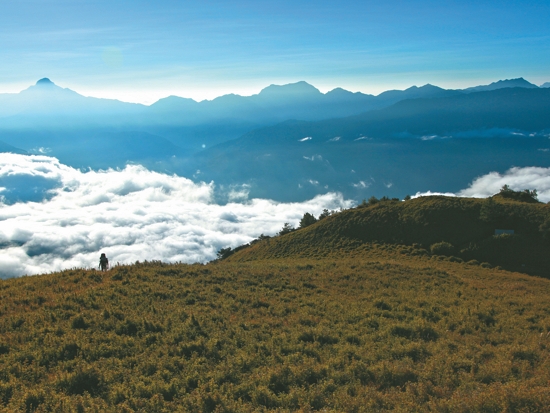
from sea to mountain will be left for future generations. / Provided by SNPH
What is a “carbon sink”?
A carbon sink is a “warehouse” specially used to store carbon dioxide. The most natural carbon sinks on earth are forests, soil, and oceans. Forests absorb carbon dioxide most quickly, and the total amount of carbon dioxide stored can be increased through artificial afforestation. Peatlands, black soil, permafrost, and farmland soil where soil fertility is improved through fer tilizers can also store large amounts of carbon dioxide. In ocean ecologies, algae, seagrass beds, deep sea mud, seabed sediments, and mangroves and wetlands on land are all marine carbon sinks, ranking first in terms of their total storage capacity.


