
Let's Get Creative! Stepping into Different National Parks-5 Fun Learning Activity Programs

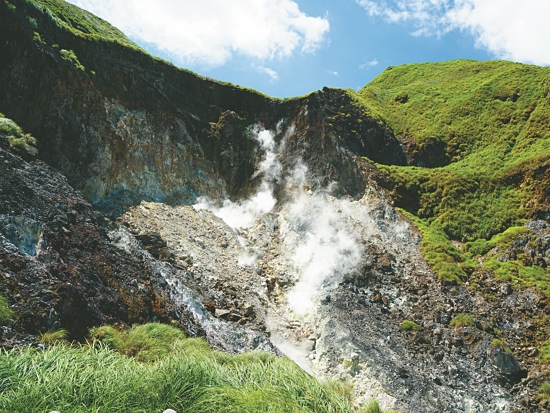
reached a new milestone. Pictured: Nanhu Mountain Cirque. / Photo by Chin-Huang Lai
On September 20, 2023, Taiwan’s national parks, which began nearly half a century ago, reached a major new milestone, witnessed by joyful witnesses: After 25 years of organizational restructuring, the National Park Service (NPS) was officially founded. Looking back, we can see the foresight of our predecessors and their efforts. Looking forward, we see how government, enterprise, communities, and civil organizations will work together to face the challenges of extreme climate change, shoulder the responsibility of national land conservation, and declare their determination for sustainable development. In anticipation of the next 50 years of the Taiwan National Parks, we will carry this beautiful calling card for Taiwan with pride and determination as we stride forward.
After 25 Years of Long-Distance Running
Early in the morning of September 20, the atmosphere at the National Park Service Plaque Unveiling ceremony and the Appointment of the First Commissioner ceremony was brimming with excitement and joy. NPS employees were strolling around, and old friends and family members with ties to national parks were in attendance as well. Everyone's faces were filled with joy, as they had been looking forward to this joyous event for a long time.
A video entitled The National Parks after Half a Century: Looking Back, Looking Forward was shown, detailing the history of Taiwan's national parks. Those who have par ticipated in the organizational restructuring of the NPS recalled the difficult steps along the journey, and expressed their blessings and hopes for the NPS.
Included among those present were Former Ministers of the Interior Liou-Yi Liao and Jiunn-Rong Yeh; former Construction and Planning Agency (CPAMI) Director-General Wen-Lung Hsu; Director-General of Land Management Agency Hsin-Hsiu Wu; and Minister of the Interior Yu-Chang Lin, who had completed the last mile of the organizational restructuring. Like a long-distance relay race, baton after baton, they have safeguarded the birth of the NPS.
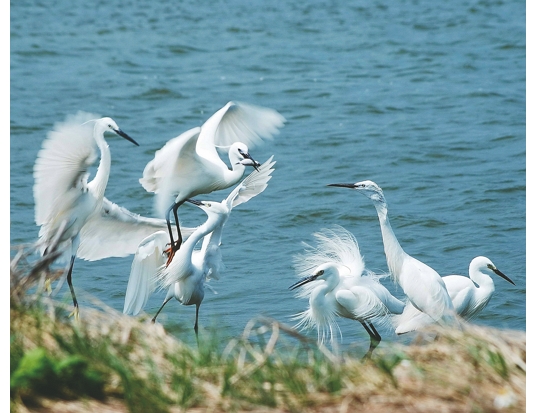
From the mountainsides to the oceans, from the wetlands to the volcanoes, from metropolises to historical war zones, the richness of Taiwan’s nine national parks and one national nature park has woven together a splendid tapestry of beauty that is unparalleled in the world. Not only have they contributed to Taiwan's nature conservation, but they have also prevented damage from inappropriate development. As former Minister of the Interior Liao said, “The protection of wetlands and coasts has become an international language; any country that fails to do so properly does not deserve the label of ‘advanced nation’.”
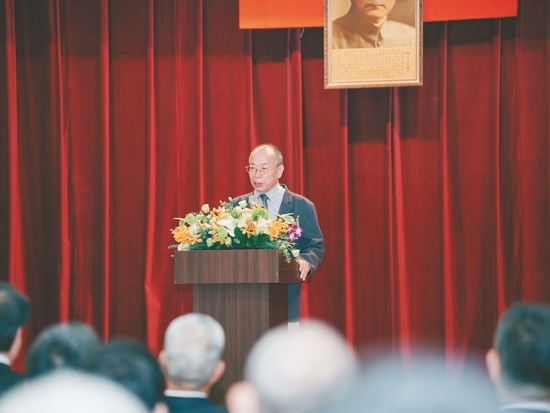
Speaking of this organizational restructuring, former CPAMI Director Wen-Lung Hsu also stated his belief that the coasts and wetlands are two very important parts of the national territory; and this is especially true in response to climate change. In the future, the coasts and wetlands will fall under the purview of the NPS, which will be able to better perform their functions. “I think this is one of the highlights of this organizational restructuring,” he said. In the future, the Spatial Planning Act, the Wetland Conservation Act, and the Coastal Zone Management Act will be linked to the National Park Law to form a strong protection network for Taiwan's national land conservation.
After the establishment of the NPS, the land conservation area of national parks, wetlands and coasts was connected. Originally, the land conservation area of national parks accounted for only 8.65% of the land area. After its establishment, the overall land and sea conservation area increased significantly to 25.4% of the land area, and moving towards the 30×30 goal of the "Kunming-Montreal Global Biodiversity Framework" of the COP 15. "After the national park has achieved its phased tasks, with the establishment of the NPS, it must go further and let the values and concepts of the national park go beyond the national park."
The Firm Mission of Protecting Taiwan's Land
In 1972, the National Park Law was formally promulgated, thus providing a legal basis for the planning and establishment of national parks. 10 years later in 1982, Taiwan's first national park, Kenting National Park, was established; this was followed by Yushan National Park, Yangmingshan National Park, Taroko National Park, and Shei-Pa National Park. Linking together the mountains and the sea, Taiwan’s national parks formed a magnificent map.
With the establishment of the Kinmen National Park in 1995, which preserves cultural and wartime history, the conservation of Taiwan's national parks has expanded from the natural environment to cultural assets. Dongsha Atoll National Park, Taijiang National Park, and South Penghu Marine National Park were later established, interweaving Taiwan's natural treasures from oceans to wetlands. In 2001, the establishment of Shoushan National Nature Park set an example for the protection of urban green corridors.
Over the past 40 years, Taiwan's nat ional parks have been shouldering the missions of conservation, research, recreation services, interpretation, promotion, partnership building, patrol and rescue, and international exchanges. The national parks have delivered results that are remarkable on an international scale. With the increase in the number and scale of Taiwan’s national parks, and the rise of social consensus around national land conservation, it has been imperative to review the mission outlook of national parks and the positioning of organizational development. With this, calls to establish the NPS also became more prominent.
But this step took 25 years. After a long period of discussion and coordination, the draft amendment to the Organization Act of the Ministry of the Interior was finally passed in the third reading on May 26, 2023. In the future, the NPS (which used to be subordinate to the CPAMI) will be the specialized agency in charge of managing Taiwan’s national parks. This opens a new chapter in the organization of the Ministry of the Interior.

Cross-region Cooperation is Imperative
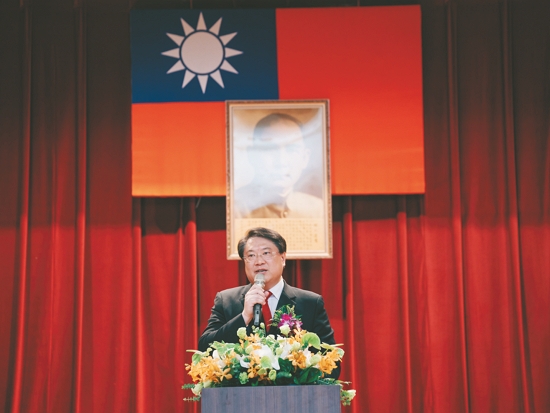
“It's been a long time coming!”, Minister Yu-Chang Lin said emotionally.
Executive Yuan Vice Premier Wen-Tsan Cheng; Executive Yuan Minister Without Portfolio Ching-Sen Chang; Legislator Hui-Jen Tang; Executive Yuan Directorate-General of Personnel Administration Minister Chun-Jung Su; Executive Yuan Department of Transpor tation, Environment and Natural Resources Director Ying-Jung Chen; Maritime and Port Bureau Chief Hsieh-Lung Yeh; National Police Agency Seventh Special Police Corps Commander Chun-Neng Weng; NPS Director-General Mao-Chun Chen; as well as the directors of the various national park headquarters, employees, and other VIPs such as the former CPAMI directors, and the directors of associations and societies, were all present to witness the NPS officially taking its new step forward.
Yu-Chang Lin mentioned that he was grateful for the support of successive Executive Yuan Premiers and Ministers of the Interior, the efforts of successive CPAMI Directors, and the full support of so many Legislators, national park directors, employees, volunteers, and partners. “The National Park Service has so, so many VIPs to thank!”
The establishment of the NPS represents the expansion and integration of Taiwan's national land and conservation system. Yu-Chang Lin also mentioned that in the future, he would like to promote a new generation of national park systems. “This upgrading is not only an elevation of the organization’s status, but also represents the importance Taiwan attaches to natural resources and humanistic and historical values. The national parks will become one of Taiwan’s calling cards to the world.”
In the face of concerns about biodiversity, climate change, carbon reduction, and sustainable development, national parks have a heavy responsibility and must propose new strategies. The first is the conservation and restoration program for national indicator organisms. Through multi-national park cooperation, we have invested in the conservation and restoration of species such as the Formosan black bear, Hynobius , and Purple crow butterflies. “For example, for Formosan black bear conservation, the three alpine national parks will have to work together as one in the future”, integrating budgeting, staffing, and policy implementation across their borders.
Secondly, the NPS will join forces with the Forestry and Nature Conservation Agency, the Tourism Administration, the K-12 Education Administration, and other organizations, as well as with county and city governments, to promote a variety of conservation action plans. “For example, the 23.5°N Ecological Space Linkage Program is a horizontal linkage that combines different ecosystems from mountain to ocean, from national parks to county and city governments. This program consolidates the strengths of local communities, tribal villages, and civic organizations.”
Yu-Chang Lin encouraged the NPS to create and provide opportunities, especially as many corporations urgently need to face ESG Corporate Social Responsibility (CSR) and SDGs development goals: “I look forward to the NPS thinking about the construction of the Friends of National Parks SDGs in the future, including the proposal of the National Parks Fund. This will be an important direction for work in the future.”
“The national parks have a great social responsibility in the future,” continued Lin, “so stepping beyond our administrative boundaries is not only a spatial expansion, but also a transcendence of values and concepts”. Only in this manner will we be able to unite our strengths, as we are not alone when we march together.

Creating the Next 50 Years for the National Parks
“Today is a historic moment for the national park system,” said the first NPS Director-General, Mao-Chun Chen.
Having served as Director of the Yangmingshan, Shei-Pa and Kinmen National Parks; Secretary-General of the Ministry of Interior; and Advisor and Director to the Cooperative Civil Associations Preparatory Office, he now takes over as the first Director of the NPS.
Secretary-General Mao-Chun Chen mentioned that in order to respond to today’s environmental issues, while the national conservation network has already taken shape, the NPS will have to consolidate its research capacity in the future and build a platform for interagency cooperation. This will include conservation plans for indicator species, all of which go beyond the boundaries of single parks. By combining the strengths of different agencies, we can maximize the impacts of the multiplier effect.
At the same t ime, ef for ts wi l l be made to deepen local partnerships and to publicize the conservation value of national parks. “For example, in the Sheding tribal village in Kenting, hunters have become nature conservation interpreters to promote local eco-tourism. In Yushan, Bunun people have switched from customary farming to organic farming. And in Shei-Pa National Park, creeks have been closed to protect fish. Our partners going from opposing national parks to supporting them has created many excellent success stories.”
As a model for Taiwan's land use and resource conservation, Mao-Chun Chen also affirms that national parks are the best way to market Taiwan and connect with the world: “We want to build the national park brand, so that the international community will know more about Taiwan.” He also hopes to deepen expertise in operations and management through international exchanges, local internships, and other talent cultivation in the national park system. By continuing to improve the user-friendly hiking environment, more domestic and international mountaineers will come to recognize the beauty of Taiwan.
“Today, Taiwan’s national parks are upgraded to version 2.0! But we still have a long way to go. We encourage everyone to work together to build Taiwan's national parks for the next 50 years, and to pass on Taiwan's unrivaled natural and humanistic treasures for generations to come!”


