
Taiwan: A Sustainable Voice on the Global Stage- From International Exchange to the SDG Asia Expo
Taiwan: A Sustainable Voice on the Global Stage
From International Exchange to SDG Asia Expo
Article/ Shih-Ju Huang
Interviewees/ Yun-Ting Wang, Planner, Conservation Research and International Cooperation Section, Conservation and Interpretation Division, National Park Service
Yi-Wen Chan, Section Chief, Conservation and Research Section, Kenting National Park Headquarters
Yi-Hua Tsai, Investigator, Raptor Research Group of Taiwan
Yu-Hsiu Hsu, Technical Specialist, Interpretation Education and Human Resource Development Section, Conservation and Interpretation Division, National Park Service
In 2015, the United Nations announced the 2030 Sustainable Development Goals (SDGs), guiding countries around the world to take collective action. Specifically, Goals 13, 14, and 15 call for urgent action to address the impacts of climate change and to conserve marine and terrestrial ecosystems, thereby ensuring the sustainable use of oceanic and land resources.
Taiwan’s national parks, with their rich natural ecology, are the green jewels of the Tropic of Cancer and serve as crucial hubs for Taiwan’s sustainability initiatives. Beyond routine management and operations, national parks represent Taiwan’s efforts in sustainable development, and they actively appear on the global stage to share Taiwan’s achievements with domestic and international audiences through research exchanges, workshops, summits, and expos. By deepening international exchange and establishing the contributions of Taiwan’s national parks on the global conservation map, Taiwan also demonstrates that the SDGs are not distant goals but ones that can be progressively realized in daily life.
Infuse New Blood into Taiwan’s Wetland Research
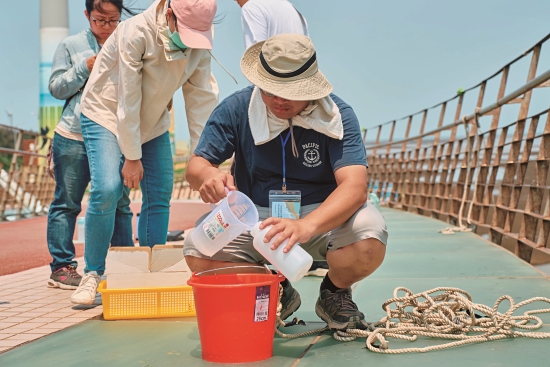
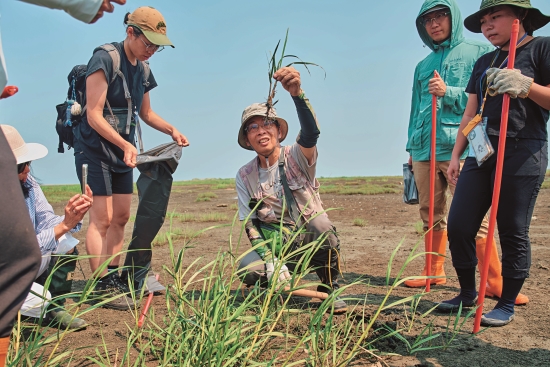
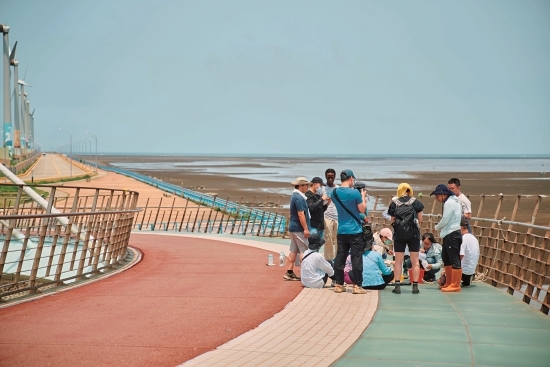
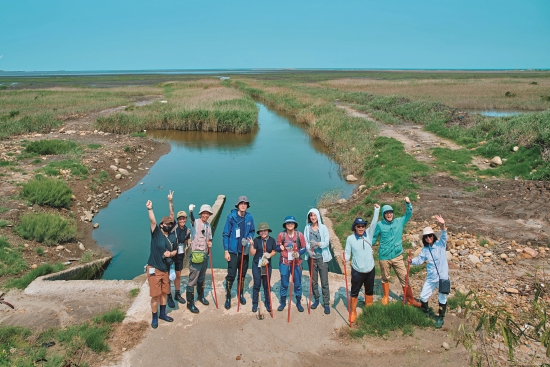
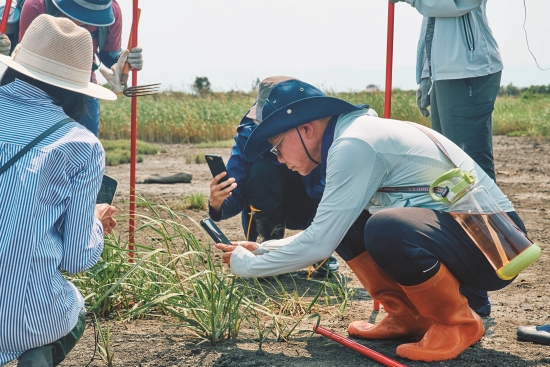
On a clear April day, the 6th wetland seed trainees progress leisurely along the seawall of the Gaomei Wetlands. Some participants wield rakes to remove invasive Spartina alterniflora; others use instruments to monitor the wetland’s dissolved oxygen and salinity levels; some people enter the community to learn about local development. They bend down, drawing close to the wetland, and attempt to listen to the whispers of Gaomei Wetlands with all their senses.
This endeavor traces back to the 2016 International Wetlands Conference, when MOI, the Construction and Planning Agency signed a memorandum of understanding with the Society of Wetland Scientists (SWS) to cooperate on a regional strategic program of action (RSPA). The following year, the International Wetland Conservation Study and Exchange Cooperation Program was launched, focusing on cultivating wetland-related personnel by organizing wetland conservation lectures, seed camps, and World Wetlands Day events. The wetland seed camp, which combines wetland science lectures with on-site workshops, has been held for 7 years to date.
In 2022, the program joined the Wetland Scientific Research Education Base Promotion Project, transforming the wetland conservation lectures and seed camps into Wetland Scientific Research Lectures and Wetland Seed Trainee Cultivation Workshops and inviting international wetland conservation organizations, domestic and foreign wetland experts and scholars, relevant government agencies and NGOs, and university students from across Taiwan to participate. Over the 7 years since its inception, the program has cultivated 93 seed trainees.
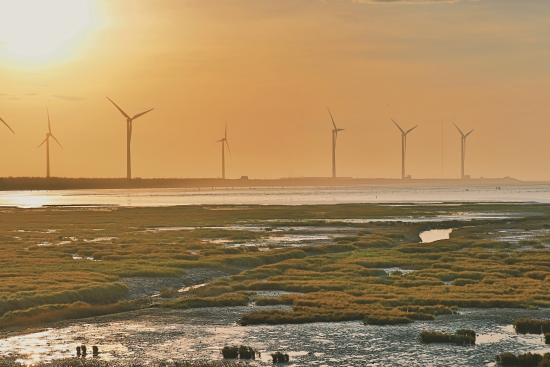
Focusing on Coastal Wetland Conservation and Recreation in Gaomei Wetlands
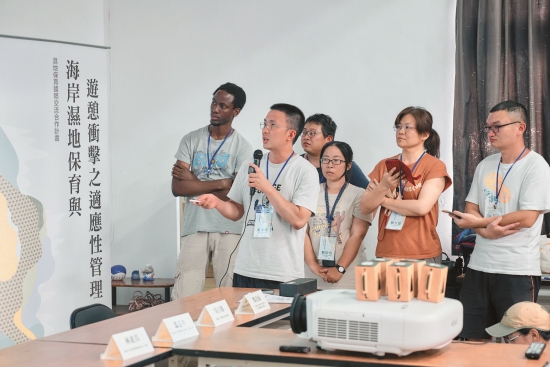
Over the years, the themes of the wetland seed camps have closely aligned with global environmental issues and international wetland research, including wetland identification and delineation, conservation and wise use, the creation and revitalization of urban wetlands, the impacts of climate change on wetlands, and wetland carbon sequestration. This year’s theme, Adaptive Management of Coastal Wetland Conservation and Recreational Impacts, shifts attention to Taiwan’s extensive 1,566-kilometer coastline.
In the face of climate change, natural disasters, and energy transition, coastal environments are the f irst areas to be impacted. Yun-Ting, Wang, Planner of the Conservation Research and International Cooperation Section at the Conservation and Interpretation Division of the National Park Service,explained, “In recent years, the flourishing development of coastal tourism in some areas of Taiwan has posed challenges for wetland management. We hope to use this opportunity to explore the balance and response strategies.”
In previous years, the trainees’ research has taken them to various locations, including Dadu River Mouth, Lengshuikeng, Guandu Nature Park, Guandu Estuary Mangrove Tidal Flats, and Xucuogang Wetlands, as they’ve gradually investigated the diverse modality of wetlands across Taiwan. This year, Gaomei Wetlands, a nationally significant wetland that has become a popular tourist destination in recent years, was selected as the location for their on-site workshop. “As we continue to plan the locations for the wetland scientific research education bases, we aim to promote both central and well-developed local sites. Our past efforts have focused more on the northern and southern regions, and this year we hope to engage everyone in discussing the issues concerning central coastal wetlands.”
Learning by Doing: Experiencing a Day as a Wetland Researcher
Unlike typical conferences that focus on indoor presentations, the wetland seed camp stands out by emphasizing “learning by doing” on the front lines of wetlands. This year, under the guidance of experts and scholars, trainees ventured into the Gaomei Wetlands to conduct hands-on investigations of hydrological environmental factors. They experienced the survey and removal of invasive plant species and visited local landmarks such as Wenxing Temple, Jinxing Temple, and old houses in Gaoxili. This multi-faceted approach provided a comprehensive understanding of the changes and management of wetland environments.
“Wetlands are real, tangible places, and merely providing background information doesn’t allow trainees to fully grasp the current conditions and issues affecting wetlands. Thus, we incorporated ‘learning by doing’, a method highly praised in international environmental education.” Let trainees explore the different forms of wetlands. In addition to group activities and presentations, trainees had the opportunity to engage in face-to face discussions with local groups and contemplate diverse paths for balancing wetland conservation with recreational tourism.
Yun-Ting, Wang noted that among this year’s 18 seed trainees, in addition to university students and public sector employees involved in wetland-related work, local wetland interpreters or concerned citizens are also specially selected. “This is not a one-sided exchange where teachers instruct trainees; the trainees also share their perspectives on the challenges wetlands face and describe local activities promoting wetland awareness. This creates a cycle of mutual learning, sparking new ideas and inspiration together.”
Invasion of Non-Native Plant Species: Spartina alterniflora
In addition to the impacts of recreational tourism, the Gaomei Wetlands face a significant threat from the invasion of the non-native plant species Spartina alterniflora, which poses a severe risk to the wetland ecosystem. Spartina alterniflora, known for its rapid growth and dense root system that penetrates deeply into the soil, is one of the most aggressive invasive species causing wetland degradation worldwide. Its presence can be observed along various coastlines, including those in Kinmen, the Tamsui Estuary, Dajia River Estuary, Dadu River Estuary, and Zhuoshui River Estuary.
In the Gaomei Wetlands, invasive Spartina alterniflora have had a particularly adverse effect on the locally Bolboschoenus planiculmis. Managing and removing this invasive species remains a significant and challenging task that requires careful attention.
Wise Use: Drawing from International Experience
The 2024 Society of Wetland Scientists (SWS) Annual Meeting will be hosted by Taiwan from November 11–16 this year. Taking advantage of the announcement press conference, SWS President Susan Galatowitsch and Seung Oh, Suh, Executive Director of the Ramsar Regional Center - East Asia, were invited to the Wetland Scientific Research Lecture to share their valuable practical experience. “President Galatowitsch discussed the issues of invasive species in inland wetlands in the united states how they are addressed, and how the general public can get involved. Taiwan faces similar challenges, and her lecture provided us with reflection and reference points.”
Before the lecture, the two distinguished guests also took the opportunity to visit wetlands in northern Taiwan. “Director Suh was particularly impressed by the management practices at Guandu Nature Park. His insights emphasized that government wetland conservation promotion should tailor its goals and outreach methods to specific target groups. This will also be beneficial for our future planning of wetland scientific research education bases.”
By linking international wetland conferences, World Wetlands Day, and wetland talent development initiatives, Taiwan aims to foster collaborative exchanges in wetland conservation with the international community. Establishing partnerships with international wetland organizations showcases Taiwan’s experience and achievements in wetland conservation research. Each emerging talent is a future think tank for wetland conservation and a vital force in wetland environmental education.

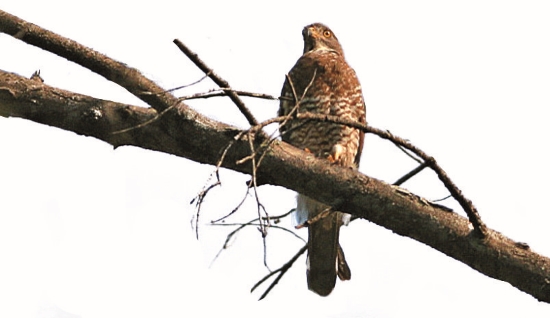

Raptor Enthusiasts Gather in Kenting
In October, as autumn sets in, the skies over Kenting are abuzz with Chinese Sparrowhawks and grey faced buzzards migrating south from the north. The spectacle of these raptors has long attracted many bird enthusiasts to bear witness. During the 2023 raptor season, the International Summit on Grey faced Buzzard and Migratory Raptors was grandly held at the Kenting National Park Headquarters, bringing together international guests concerned with the conservation of grey-faced buzzards and migratory raptors to share information about the conservation status throughout East Asia.
Yi-Wen, Chan, Section Chief of the Conservation and Research Section at the Kenting National Park Headquarters, discussed the origins of the International Summit on Grey-faced Buzzard and Migratory Raptors. Initially started in Japan, the Philippines, and Taiwan, the summit connects the breeding, migratory, and wintering grounds of grey faced buzzards. Since 2019, the summit has been held in Japan, in Ichikai-machi, Tochigi Prefecture, and Miyakojima, Okinawa Prefecture. In 2023, Taiwan secured the hosting rights, with the event jointly organized by the Kenting National Park Headquarters, the Pingtung Branch of the Forestry and Nature Conservation Agency under the Ministry of Agriculture, and Raptor Research Group of Taiwan. Participants included representatives from Japan,the Philippines, South Korea, Thailand.
“Kenting National Park Headquarters has accumulated over 30 years of data on migratory raptors, making it one of the most comprehensive datasets among East Asian countries,” Yi-Wen, Chan explained. Reflecting on the Hengchun Peninsula’s journey toward raptor conservation, Chan noted that efforts began with addressing hunting and trading issues and evolved after the establishment of Kenting National Park. Collaboration with local bird enthusiasts led to community and school outreach, mentoring former hunters to become patrol partners, and further development of eco-tourism to benefit the community. “By hosting this conference, we hope to showcase to the international community how the efforts of both government and non-governmental organizations in Taiwan have transformed raptor conservation on the Hengchun Peninsula from conflict to collaboration.”
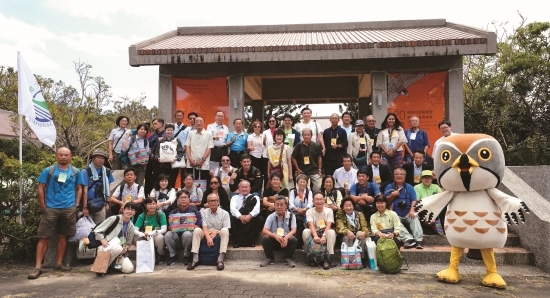
From Hunting to Conservation, From Conflict to Collaboration
During the annual International Summit on Grey-faced Buzzard and Migratory Raptors, representatives from various countries shared updates on local conservation research. Yi-Hua, Tsai, a researcher at the Raptor Research Group of Taiwan, was particularly impressed by the Japanese representatives’ contributions. “Tochigi Prefecture is a breeding ground for grey-faced buzzards, but in recent years, they have faced issues such as youth outmigration and the aging of farmers. There is an increasing amount of abandoned farmland, and because the fields lack water, there are fewer frogs, which in turn means less food for the grey faced buzzards.” Noting this problem, the local community began regularly watering and weeding abandoned fields. The frogs returned, providing ample food for the grey-faced buzzards during the breeding season. Residents also cleared bamboo forests to create a suitable understory environment for the buzzards.
Yi-Wen, Chan also shared that protecting grey faced buzzards is an official policy in Ichikai-machi, with both the government and local communities actively involved. The buzzard’s image appears on traffic signs and agricultural products. “Protecting this species has created new value for the area, revitalized the local economy, and fostered a positive cycle between the environment and the economy.”
Yi-Hua, Tsai, who has attended the summit since its inception, noted that the International Summit on Grey-faced Buzzard and Migratory Raptors differs from typical academic conferences. It emphasizes the exchange between government conservation policies and community participation. “The results of conservation policies are not immediate. Initially, they may affect local livelihoods and cause conflicts. Thus, the summit aims to provide insight into internal perspectives—hearing about local government strategies and commitments while also allowing communities to express how they respond and adjust to conservation efforts.”
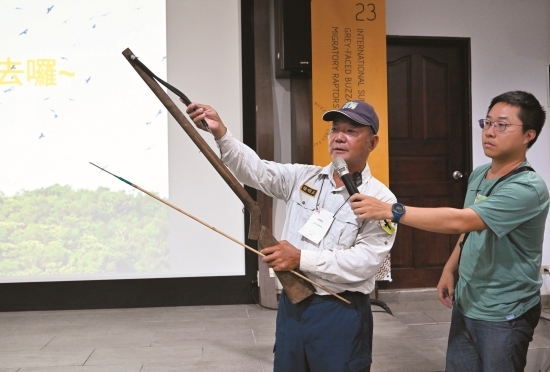
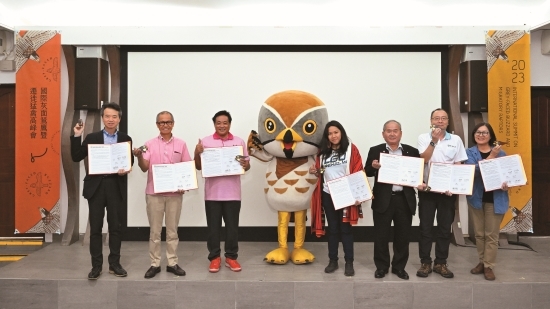
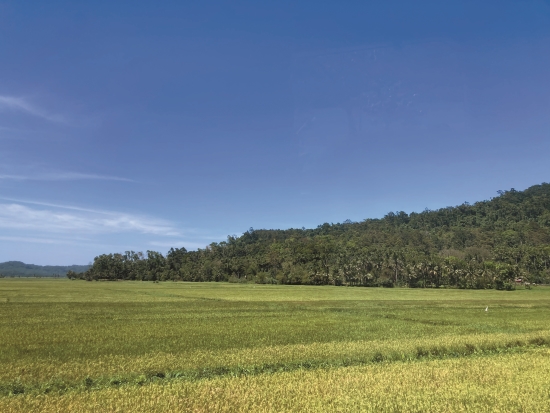
Walking Through 30 Years of Buzzard Conservation
The conference coincided with the mass southward migration of grey-faced buzzards. “During those 2 days, whenever we stepped out of the venue, we could see flocks of grey-faced buzzards circling above the Kenting National Park Headquarters,” said Yi-Wen Chan. After the conference, guests were invited to the Raptor Watching Expo in Manzhou. “On that day, over 25,000 grey-faced buzzards passed through—the highest number recorded last year. It was a lucky day! Foreign guests were impressed to see how Taiwan’s raptor conservation activities were organized like a carnival, with participation from young people. It was truly remarkable.”
Organizing international exchange events involves numerous challenges, including venue, transportation, and accommodation arrangements. Yi-Wen, Chan expressed satisfaction, noting that the summit was also provided Kenting National Park Headquarters with valuable experience in hosting international events. “Whether hosting or participating, having the opportunity to engage in such international activities provides direct benefits, including insight into what the international community is doing for species conservation and identifying areas where we can contribute. Engaging in discussions with international guests is more effective than just looking at data.”
Taiwan’s grey-faced buzzard conservation efforts are significant in Asia, and reflecting on the 30 year conservation journey at this conference is meaningful. Yi-Hua, Tsai remarked, "Many of the people involved may not fully understand the entire picture, but reflecting on the history helps everyone appreciate how challenging it was to achieve.” These challenges included Kenting National Park’s early efforts in nurturing the seeds of conservation at schools, confronting opposition and conflicts, and entering communities to conduct advocacy. “When we share these stories and bring international partners into the community, both the public sector and communities feel that their past efforts had meaning, that they garnered genuine international attention and had a real impact.”
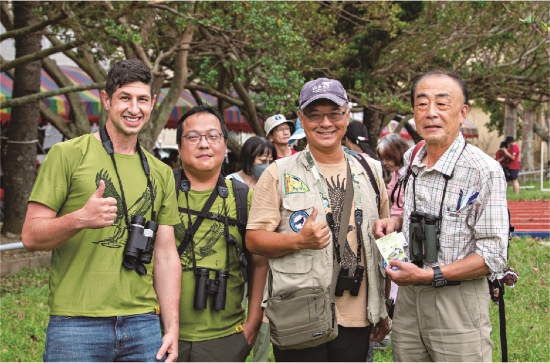
2024 International Summit on Grey faced Buzzard and Migratory Raptors
In April 2024, members of the Raptor Research Group of Taiwan attended the 4th International Summit on Grey-faced Buzzard and Migratory Raptors in Sanchez Mira, Cagayan Province, Philippines. During the conference, Yi-Hua, Tsai gave a presentation on the history of Taiwan’s grey-faced buzzard conservation efforts and the long-term monitoring results of migratory raptors during the autumn migration in Kenting.
“Given that countries worldwide are increasingly concerned about the potential risks of renewable energy development on migratory raptor habitats, the organizers have invited participants to share their current situations,”, Tsai explained. She used the Budai District solar energy development project as an example to illustrate how the government, developers, residents, and civic groups can communicate to reduce conflicts. “Renewable energy development is a global trend, not just an issue in Taiwan. Many countries face similar situations. Our goal isn’t prohibition, but mitigation—aiming to minimize ecological harm.”
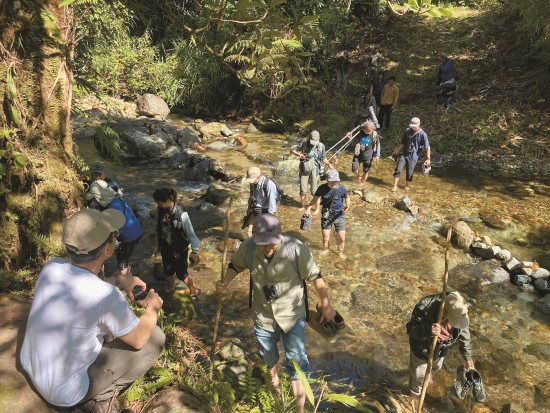
Advocating for Sustainability: 2024 SDG Asia Expo
SDG Asia is a rare event in Taiwan that combines an exhibition with a summit, forum, and sustainability action. Partners from industry, government, academia, and research sectors are invited to showcase Taiwan’s proactive and innovative sustainability achievements and potential to the international community.
The National Parks have participated in the expo for 3 consecutive years. Following international sustainability trends and topics, the first year showcased the rich natural ecology of national parks in the Rural Mountains and Seas: Sustainable Living theme pavilion, and the second year focused on Nature’s Wonders: Sustainable Practices, highlighting the results of species conservation efforts.
Yu-Hsiu Hsu, an technical specialist from the National Park Service’s Conservation and Interpretation Division, shared, “In addition to topics like wetlands, coasts, and natural carbon sinks, we also highlight partnerships between national parks and communities, as well as aspects of ecotourism.” The exhibition also featured images captured by ecological photography experts, offering visitors a glimpse into the rich flora and fauna and hidden landscapes of national parks. This exposure aimed to turn awe for nature into a commitment to its protection.
Hsu also noted that visitors may not have an in depth understanding of national parks. The expo’s design simulates national park settings and includes text and image displays, along with interactive games such as DIY experiences and photo-op giveaways. These features are intended to encourage more people to engage in sustainability actions and inspire them to visit national parks.
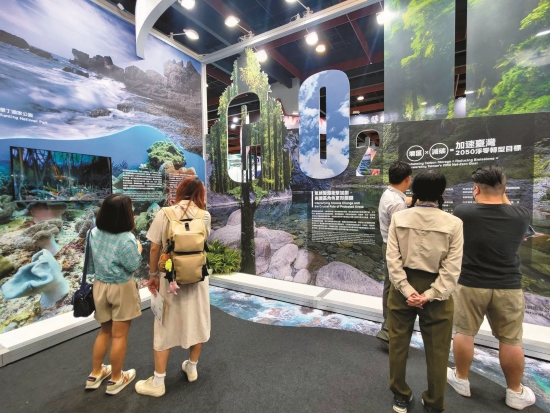
As representatives of Taiwan’s rich natural ecosystems and cultural landscapes, national parks are not only a highlight for international visitors seeking unique experiences but also play a crucial role in global environmental sustainability. As members of the global community, Taiwan’s national parks collaborate with the world to actively address sustainability issues.
In alignment with the 2023 Sustainable Development Goals, Taiwan’s national parks have made substantial achievements in conservation, education, and research. These success stories are shared with domestic and international audiences through exchanges, exhibitions, workshops, and other formats, to continuously showcase Taiwan’s commitment to sustainability.


