Checking National Parks' Carbon Ledgers-
Article / Chih-Ya, Cheng
Interviewee/ Chyi-Rong, Chiou, Retired Associate Professor, School of Forestry & Resource Conservation, National Taiwan University
With the goal of achieving net-zero carbon emissions by 2050 now set, discussions have emerged across every sector of society. However, as we move toward this objective, what concrete actions can the National Parks take to go beyond mere slogans, and prevent net-zero from becoming a pipedream? Chyi-Rong, Chiou, professor of National Taiwan University’s School of Forestry & Resource Conservation has dedicated years to researching topics such as “carbon sinks” and “carbon credit trading.” In recent years, he has been assisting the National Park Service in implementing carbon management plans. His efforts include a comprehensive inventory of forest resources across Taiwan’s nine National Parks and one National Nature Park, paving the way for a new chapter in the sustainable development of Taiwan’s forests.
A Thriving Business! The Commercial Model of Natural Resources
The concept of natural carbon sinks (also just called “carbon sinks”) is widely regarded as deriving from the 1997 United Nations Climate Change Conference in Kyoto, Japan, where contracting nations jointly formulated and signed the Kyoto Protocol. The concept of natural carbon sinks was subsequently developed as a key strategy for carbon reduction.
So, then, what is a natural carbon sink? Simply put, the natural environment has the ability to store carbon dioxide. The carbon absorption capacities of forests, soil, and bodies of water contribute a certain degree of “carbon reduction” for the planet. Natural carbon sinks are generally categorized into three types: Green carbon (forests), blue carbon (water bodies), and yellow carbon (soil). The concept of natural carbon sinks has been gaining increasing attention in the carbon credit trading market, as it is also considered a form of ecosystem service—benefits that humans can obtain directly or indirectly from ecosystems.
How can natural carbon sinks be utilized, and where should we start? Chyi-Rong, Chiou, professor of the Department of Forestry and Resource Conservation at National Taiwan University gets straight to the point: “It essentially combines the concept of asset management with natural resources.” Reflecting on his own experiences, he shares: “As early as 2005, what was then the Forestry Bureau provided funding that allowed me to attend that year’s United Nations Climate Change Conference in Montreal, Canada. At the time, concepts like natural carbon sinks and carbon credits were still unfamiliar to many organizations in Taiwan. It was only later that I realized how closely natural carbon sinks are tied to forest resource surveys.”
Since then, Chiou has participated in the conference every year. He has also continued contemplating how to integrate the knowledge he acquires there into practice in Taiwan. He explains: “Taiwan has vast and rich forested land, but traditional forest resource surveys have mainly focused on measuring timber volume and forest biomass (i.e., tree weight). Beyond focusing on annual tree growth, could these forests serve other tangible benefits? That’s when I started exploring international practices to see what Taiwan could learn from.”
Looking back at Taiwan’s forestry development, before the 1970s or 1980s, the industry relied heavily on logging natural forests for revenue. This approach, akin to “selling off the family heirlooms,” accelerated deforestation and caused severe environmental damage. There was encouragement for follow-on forest management to preserve natural forests and expand plantation forests, but this was not a long-term solution. When overemphasizes not cutting down natural forests, plantation forests didn’t receive proper care or utilization at the same time, leaving Taiwan’s forestry industry in a state of near stagnation.
Chiou emphasizes that to revitalize Taiwan’s forestry sector and achieve genuinely sustainable forest management, we can introduce the concept of natural carbon sinks. “We need to transition from calculating biomass to measuring carbon stocks. We need to start inventorying how much carbon is stored in an area’s trees, rivers, lakes, and soil, and exploring ways to utilize it. Conveniently, forest carbon sinks are one of the most cost-effective and manageable forms of natural carbon sinks.”
The Emergence of Carbon Credits
The United Nations Climate Change Conference, or more formally the Conference of the Parties to the United Nations Framework Convention on Climate Change (or COP), has been held every year since 1995. It brings together representatives from signatory nations to discuss global warming trends and propose countermeasures. 1997’s Kyoto Protocol, signed at the Conference, explicitly stated that signatory countries must work together to stabilize greenhouse gas concentrations in the atmosphere and ensure the balance of ecosystems, the security of food production, and the sustainable development of human societies and economies. This was the first time that the concept of carbon credits (the right to emit carbon) was introduced. The Kyoto Protocol set the reduction of greenhouse gas emissions as its primary goal. Under the Protocol, there are flexible market mechanisms that allow organizations that exceed their carbon emission limits, or which have high emission needs, to purchase emission allowances from entities that had not yet reached their emission cap. Alternatively, organizations with higher emission requirements can invest in projects that reduce carbon emissions to increase their allowable emission levels.


Putting a Price on National Parks
Chiou uses National Parks as an example: “The National Parks possess rich ecosystems; they’re national, natural assets. And that means they hold both tangible and intangible value that can be utilized. However, what the public typically sees is just the beautiful landscapes; few truly understand why governments invest resources to preserve such vast natural areas.” Moreover, within the National Parks, their headquarters, stations, and recreation areas require water, electricity, and fuel for daily operations. And then there is the constant need to maintain infrastructure, and invest in conservation, restoration, and research. So, then, where does the necessary funding come from to sustain and expand these essential initiatives?
Chiou explains: “Through natural carbon sinks, we can quantify the ecological service value of National Parks. We essentially make one aspect of their intangible value, their Carbon (Stocks), visible to the public.” In other words, natural carbon sinks act as a way to assign an economic value to National Parks. By introducing this pricing perspective, the public can rediscover the importance of National Parks from an economic standpoint. This approach not only raises awareness but also fosters greater understanding of, identification with, and support for the conservation of Taiwan’s natural landscapes.
This leads to a further thought: What is the most abundant resource within National Parks? That’s right: forests. “If we consider carbon stocks as a form of total assets, then National Parks are essentially storing a significant portion of their ‘savings’ in forests,” Chiou elaborates, extending the asset management analogy. He continues: “To understand the carbon value of National Parks, we can break it down into two levels. First, we assess how much carbon the forests within a National Park can store—this is called ‘carbon savings’. You could look at it as the ‘principal capital’.”
“The second aspect is assessing how much carbon the National Park’s forests can absorb and sequester each year. That is its ‘carbon absorption,’ or effectively its ‘interest.’ If we don’t manage the carbon flow within the forest—if we rely solely on its original carbon storage capacity—then we not only fail to increase the carbon storage but may also see a decline in the forest’s storage potential and value. It’s kind of like keeping money in a bank. What matters is the amount of interest earned each year to avoid depleting the principal. The core of a carbon management plan is to evaluate what balance (total carbon sequestration) each National Park’s forest possesses, and what much additional balance can generate in the future (annual increase in absorption capacity).”
Forests’Carbon Sequestration
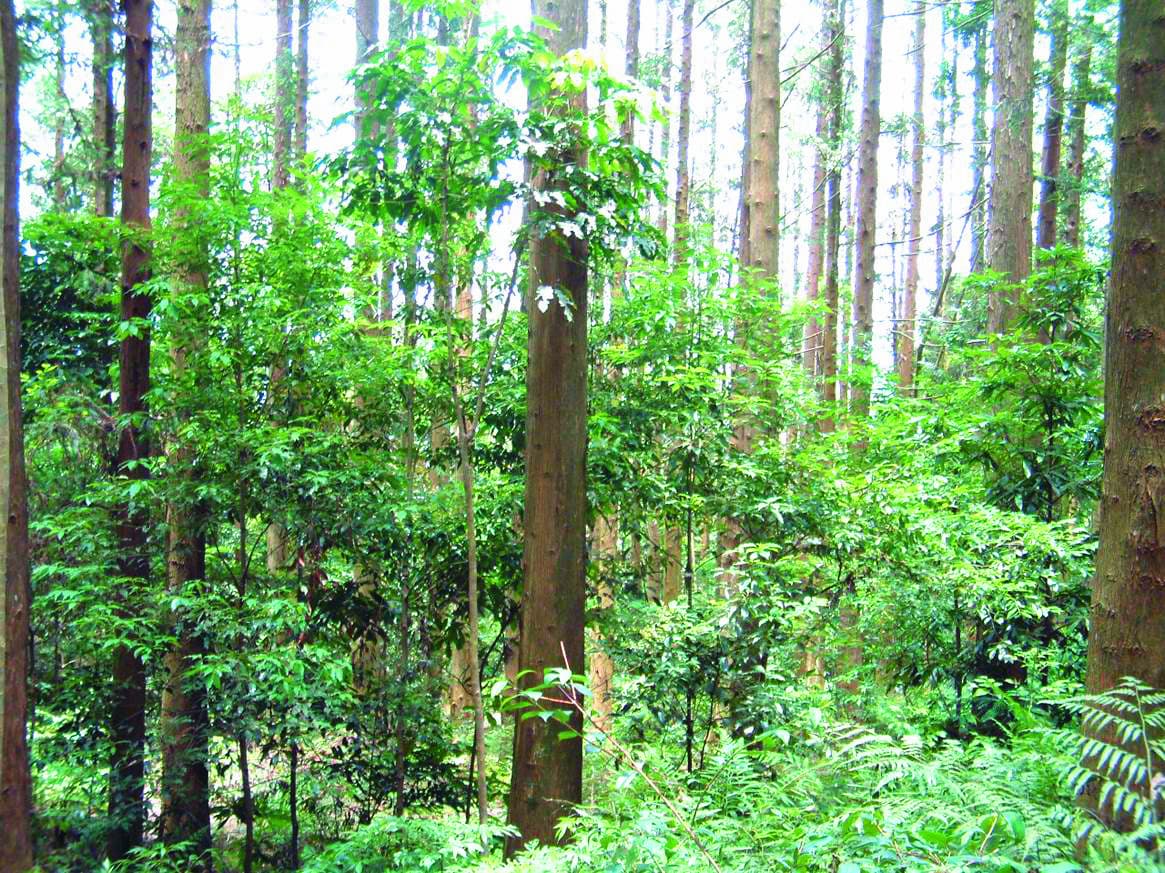
The carbon sequestration capacity of each tree species must be assessed by cross-comparing its density and growth rate. Tree density is something like to how much a person bone density, and what shape they’re in. Some people appear thin but have high bone density, meaning their weight isn’t necessarily low. In general, broadleaf trees tend to have a slightly higher density than coniferous trees. As for growth rate, trees exhibit significant differences in carbon sequestration depending on how much they grow over a given period. For instance, in a 10-year growth span, some breast height of trees may increase in diameter by 30 cm, while others may only grow 10 cm. This leads to huge variations in carbon storage. For example, the Taiwan red cypress (Chamaecyparis formosensis) has low density and slow growth rates, resulting in less carbon sequestration compared to fast-growing, high-density species such as the Taiwan acacia (Acacia confusa) in the same period of time.
Giving National Park Asset Management a Checkup
In alignment with the central government’s Taiwan 2050 Net-Zero Transition Carbon Sink Key Strategy, the National Park Service took the initiative of enlisting Professor Chiou and his team to help craft future carbon sink development strategies for the National Parks. Launched in July 2022, Chiou explains, “This project primarily helps us focus and think about how to enhance the carbon absorption to increase carbon sinks of National Park forests. In other words, we’re trying to help every plot of forest grow healthier, to increase its carbon sequestration potential.”
Looking at the project as a whole, it spans three years and consists of 16 targets, which are categorized into four major sections. The first section is Carbon Inventory, which involves assessing the carbon emissions of the National Parks. The second section is Mapping Natural Carbon Sinks, which includes compiling spatial distribution maps of different types of carbon sinks, carbon density maps, etc. Chiou gives this analogy: “We first need to understand the National Parks’ existing assets (carbon storage), their average annual expenses (carbon emissions), and their average annual income (carbon absorption). Only then can we determine the necessary steps to achieve a balanced budget—carbon neutrality and Net zero.”
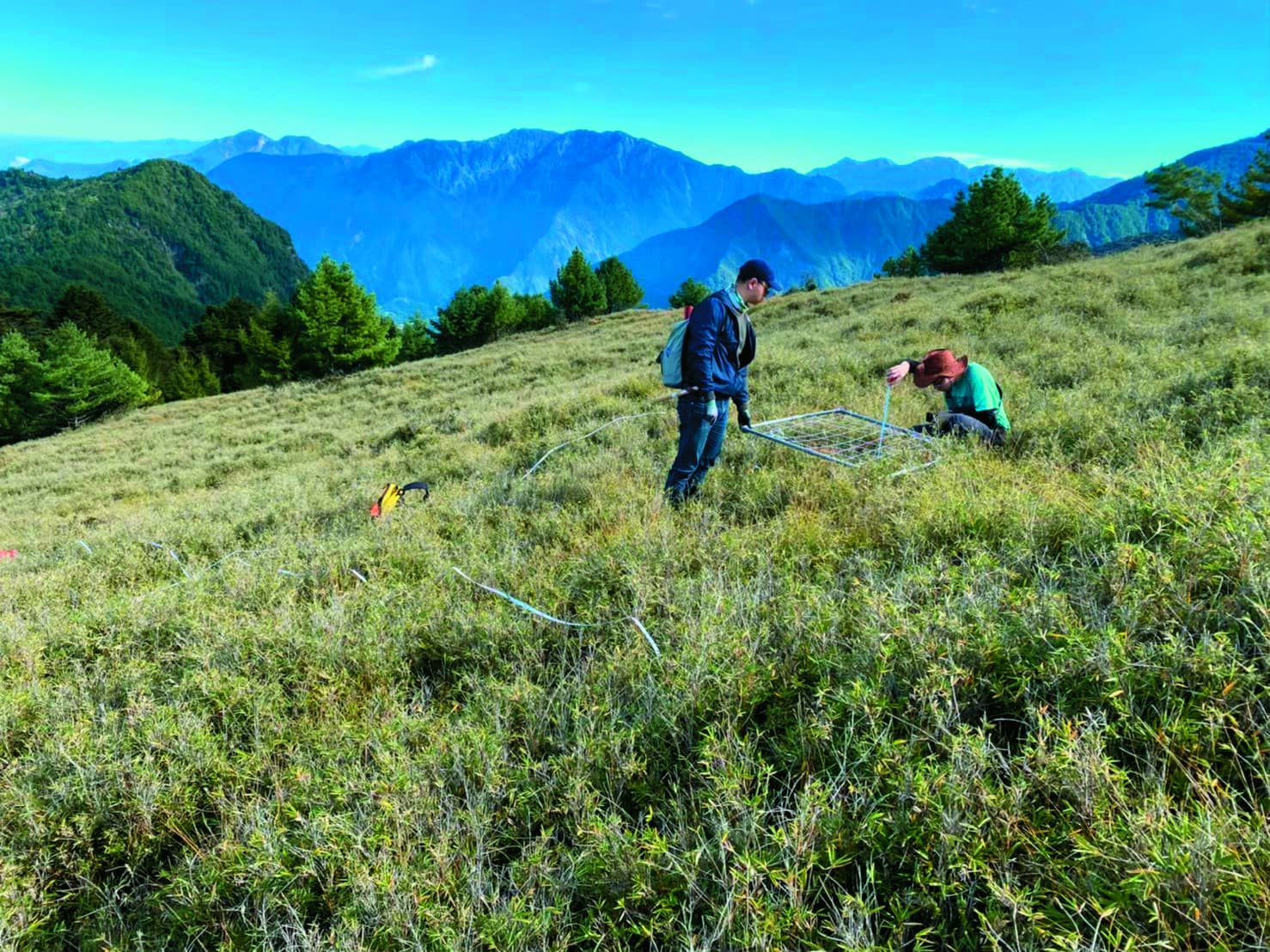
He further explains, “The first section is relatively easy to calculate, mainly based on the electricity and water usage of the different organizations. The second section is more complex, because it involves different natural carbon sink types with varying densities and growth rates.” He also briefly outlines that the National Parks can be broadly classified into three major natural carbon sink types. The first is Forest, which include familiar ecosystems such as coniferous and broadleaf forests. The second is Grasslands, which encompass Yushan cane (Yushania niitakayamensis) forests, alpine meadows, and shrublands. The third is Wetlands, such as the areas within Taijiang National Park. Additionally, for marine-based National Parks like Dongsha Atoll National Park, seagrass beds will also be incorporated into carbon sink calculations.
Following on from the first two sections, the third section focuses on developing carbon reduction and carbon sink enhancement strategies.Chiou explains, “A carbon inventory is like bookkeeping. So, we need to analyze which areas have high expenditures and which areas can generate more income. From there, we can devise strategies to reduce carbon emissions (‘cut expenses’) and enhance carbon sinks (‘increase revenue’) to achieve a balanced carbon budget.” For example, if a forested area has a large expanse of bare land resulting in low carbon sequestration, discussions should be held with park headquarters to explore solutions such as reforestation or improving forest health management. This means evaluating conditions to determine what improvement strategies are best suited to each specific site. Chiou adds, “When trees become diseased, die, or decay, they must be removed through sanitation and salvage cuttings to isolate infected trees and prevent the spread of pathogens to healthy trees. Although a large portion of National Parks consists of natural forests, active management is still necessary to ensure their continued vitality and resilience.”

The most labor-intensive and time-consuming part of the entire project is the fourth section: Long-term monitoring of forest dynamics. This is particularly challenging, as the nine National Parks and one National Nature Park contain vast areas of forests, meadows, wetlands, and even seagrass beds, each with distinct characteristics. Not only does this require a comprehensive understanding of tree species, density, and average growth rates, but it also demands cross-evaluations and adaptive management strategies to ensure that the original carbon reduction and sequestration enhancement goals can be met on schedule.
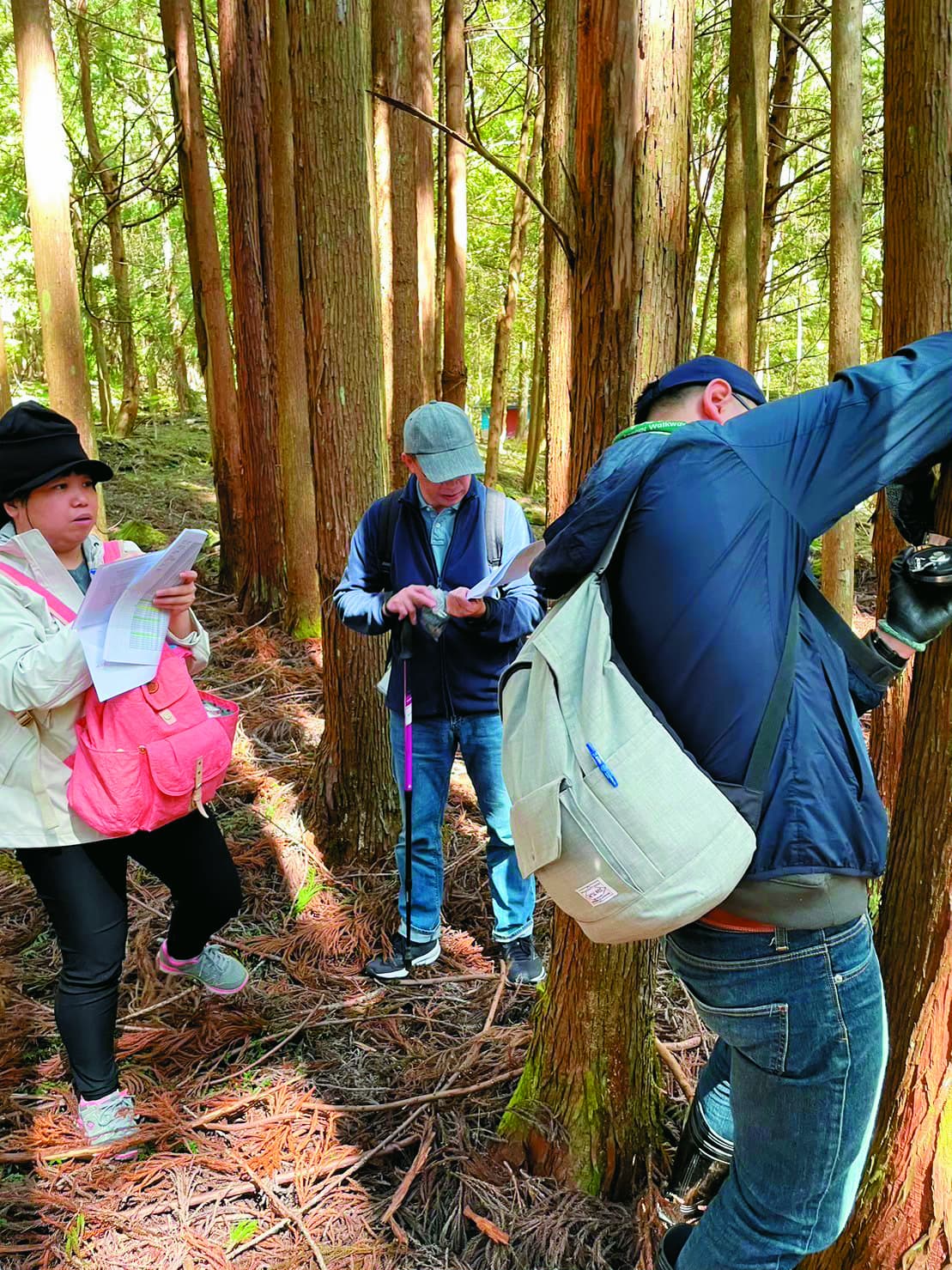
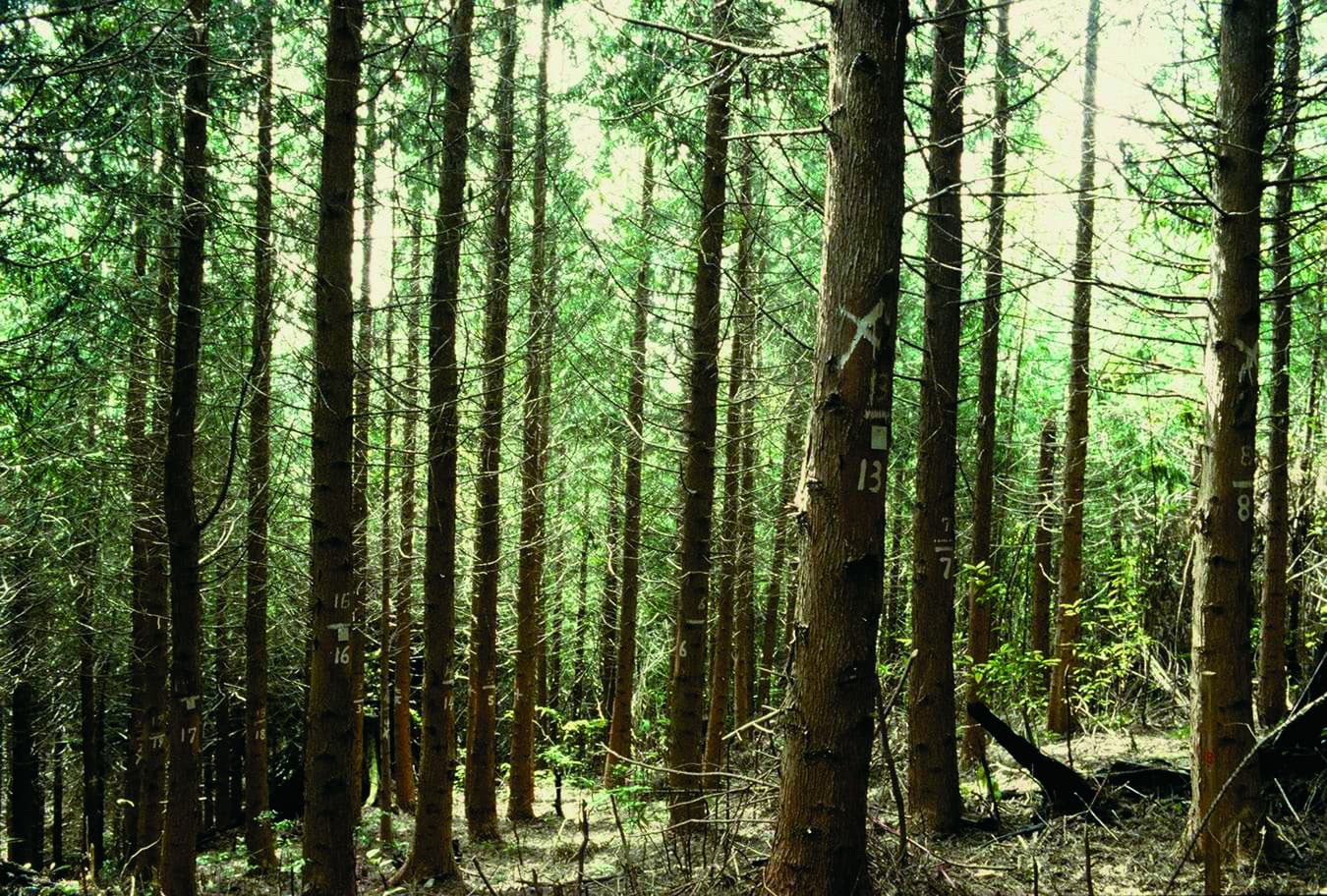
Chiou explains, “We conduct vegetation surveys for each park, referencing national forestry inventory maps and datasets. Then, following internationally recognized methodologies, we record the average annual carbon stock changes for each natural carbon sink types within the National Parks. Simply put, we estimate how much carbon can be absorbed and stored per hectare of forestland per year. However, in the first year of the survey, we can only obtain a rough estimate of the forest’s total carbon storage. To accurately determine its carbon sequestration capacity, we need to conduct follow-up surveys two to three years later.
“For example, in our first survey of a forest area, we might determine that it has c. 30,000 tons of carbon storage. When we survey it again three years later, we find that its carbon storage has increased to 35,000 tons. This means that over three years, the forest has sequestered an additional 5,000 tons of carbon, averaging about 1,600 tons per year. This change in carbon storage is the carbon stock change, which helps us understand the forest’s carbon sequestration capacity. That’s why the fourth section is so crucial. It’s the key to helping us move forward in achieving our overall carbon asset growth goals.”
Value-Added Strategies for Enhancing Carbon Assets
According to the latest work report, as of 2022, the total natural carbon sink area across the nine National Parks and one National Nature Park was approximately 132,000 hectares. When combining the annual carbon stocks change from forests, grasslands, wetlands, and marine carbon sinks, the estimated total annual carbon removal was around 3 million metric tons of CO2e. Among the parks, Yushan National Park, which serves as a demonstration site and has the largest natural carbon sink area, had an estimated annual carbon removal of c. 857,000 metric tons of CO2e. The second-highest was Taroko National Park, with an estimated annual carbon removal of approximately 837,000 metric tons of CO2e.
Chiou shares that the project is still in a labor-intensive phase of field visits and inspections. However, a preliminary strategy map has been outlined, covering four key themes: Implementing conservation actions in response to climate change; integrating low-carbon initiatives to enhance recreational services; incorporating low-carbon engineering and promoting digital management; and improving governance efficiency and strengthening partnerships. Based on these themes, four focuses have been established: Target audiences; internal processes; learning and growth; and financial support. Further refined and specific action plans are being developed, such as establishing a climate impact monitoring and early warning system, and facilitating corporate incentives for carbon reduction initiatives.
However, the nine National Parks and one National Nature Park cover vast areas and have complex organizational structures. Therefore, the ultimate goal of the project is to internalize the concept of natural carbon sinks as an integral part of each park’s headquarter. To achieve this, the project has organized many educational training sessions, consultations, and briefings to help each headquarters develop a solid understanding of the concept. Additionally, emission factors are being identified based on available data, which are then integrated into standardized survey and estimation guidelines. These guidelines will serve as a framework for the various headquarters to follow, ensuring the continuity of monitoring and implementation in the future.
A New Chapter for Taiwan’s Forests
When trying to define the role that the National Parks play in Taiwan’s journey toward the 2050 Net-Zero Emissions goal, one might consider a different perspective: How can National Parks become negative carbon institutions? In other words, how can National Parks absorb more carbon than they emit through their management and operations?
“The vast forests, grasslands, wetlands, and streams within the National Parks all have measurable carbon sequestration potential,” says Chiou. “By conducting thorough organizational carbon footprint verification and natural carbon sink estimation, providing quantifiable data, and proposing actionable net-zero roadmaps, we can move beyond mere armchair strategizing.” He also expresses concern that afforestation efforts without proper long-term management will result in wasted budgets and futile efforts. “Planting trees is like raising children. You need to invest 20 to 30 years of dedicated care before they reach maturity, before you can say you’re done. If we focus only on short-term results, we will never achieve true net-zero carbon emissions.”
He also hopes that the National Park Service, as a central administrative agency, it can take the lead in producing scientifically researched and data-driven reports. Only then can it maximize its impacts and help society recognize the economic benefits and value of forests. This, in turn, will encourage private enterprise to invest in effective long-term initiatives, collectively fostering a truly sustainable environment.
The MRV Mechanism
To transform natural carbon sinks into tangible carbon credits, the Monitoring, Reporting, and Verification (MRV) mechanism must be implemented. This process involves third-party auditing of reports submitted by organizations to verify and endorse the actual carbon emissions reductions achieved within a specific period. Only after this verification can convert natural carbon sinks into carbon removals to offset organizational carbon emissions and the corresponding carbon credits be issued, thus enabling participation in carbon trading markets.