Unveiling Taiwan’s Wetland Treasure Chest, Part One-
Article / Mei-Yun, Tso
Interviewees / Wei-Ta, Fang
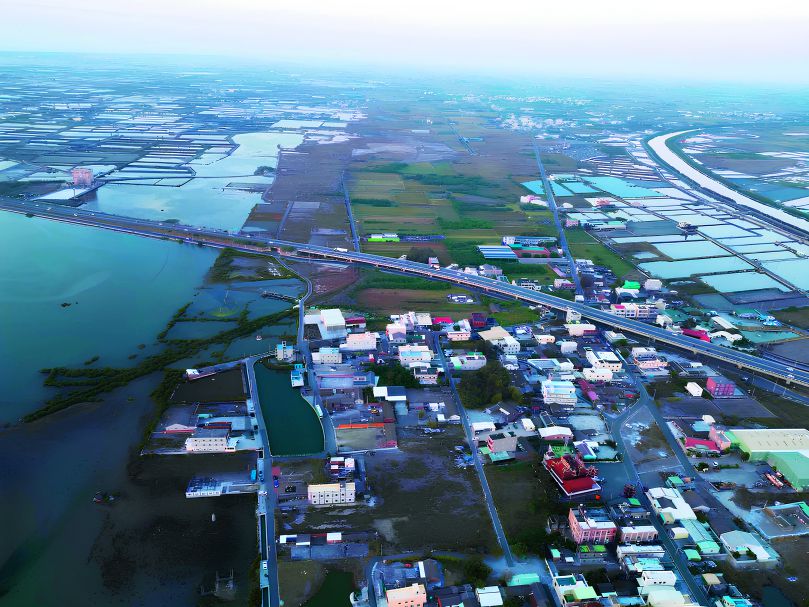
When you think of Taiwan’s wetlands, what comes to mind? The well-known Gaomei Wetlands, Taijiang Wetlands, or Taoyuan's Reservoir and Canal? Or perhaps the small mountain streams behind your childhood home, or the rice paddies crisscrossing the countryside? What is the relationship between wetlands and humans? If wetlands ceased to exist, could we still enjoy the peaceful life we are accustomed to? In response to these profound questions, Wei-Ta, Fang , author of Chronicles of Taiwan’s Wetlands, attempts to explore the beauty and sorrow of East Asian wetlands through an anthropological lens that traverses past and present, then leads readers on a journey back to reflect on Taiwan’s wetlands.
When distance in time and space is stretched, people’s perspectives expand, and everything about wetlands becomes clear.
Esteemed Taiwanese writer Mei-Hung, Yang wrote the following passage:
“Entwined in lush greenery, I wander into the city’s dream.
Damp and cool, where fragrances lie in silence.
The lake embracing the path breathes out tranquility, lulling love into a gentle slumber.”
Yang Mei-Hung, “Nurturing a City’s Dream”, Mudskipper Time, 2014.
A skilled writer’s literary touch conveys the sense of happiness that wetlands bring—something money cannot buy. Yet, in reality, many people have limited knowledge of wetlands. Without them, the land would be parched and inhospitable to life, and human civilization could not thrive.
To clarify the origins and significance of Taiwan’s wetlands, Distinguished Professor Wei-Ta, Fang of the Graduate Institute of Sustainability Management and Environmental Education at National Taiwan Normal University dedicated 30 years to completing his book, Chronicles of Taiwan’s Wetlands.
A 30-Year Aspiration
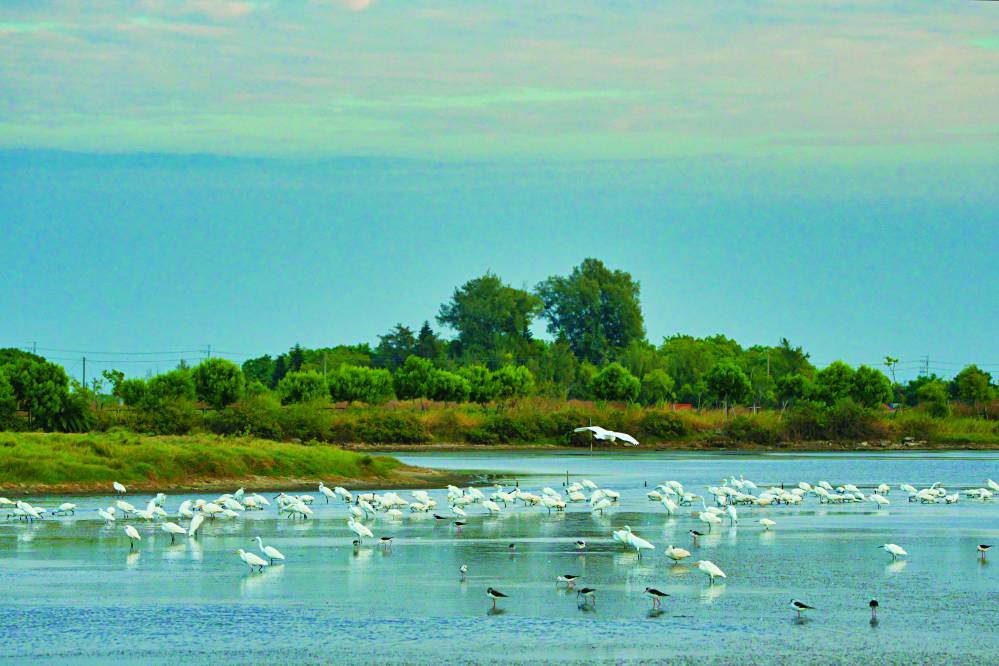
For many, their first encounter with wetlands begins with birdwatching. Wei-Ta, Fang ’s journey started in high school, when he and his equally nature-loving brother, Wei-Hong, Fang, joined a birdwatching society. Together, they roamed Guandu in pursuit of birds, much like modern day teens chasing idols. After spotting birds in Guandu, they would head to Huajiang Bridge to follow flocks of Eurasian teal.
“In the year 2000, bird populations were thriving. We once photographed 20,000 Eurasian teal at Huajiang Bridge. Now, there may be only one or two hundred,” Fang recalled. The breathtaking scene remains vivid in his memory even decades later.
Driven by a thirst for deeper knowledge, Fang took the Ministry of Education sponsored overseas study exam. After three unsuccessful attempts, he finally succeeded on his fourth try, with the exam topic being The Conservation and Restoration of Coastal Wetlands. This achievement secured his opportunity to study in the United States, where he earned his doctoral degree of Ecology and Management.
During his rigorous preparation for the exam, Fang immersed himself in wetland theories, laying a solid foundation for his future work in conservation and the eventual writing of his book.
The Price and Value of Wetlands
Wetlands are the cradle of human civilization. However, in terms of land prices, land designated for construction is the most expensive, followed by agricultural land used for staple crops. Despite being both the birthplace of culture and a haven for biodiversity, wetlands have long been undervalued. Due to their association with dampness and disease, their market price is shockingly low—some are even treated as dumping grounds for waste.
Shu-Hsing, Chen, who operates a clam aquaculture business in Beimen Lagoon, understands this reality all too well. After retiring from his position as a professor at Kun Shan University, he fully committed himself to his family’s aquaculture business. Citing the wetlands near his fish farm as an example: in 2022, the officially announced land value was merely NT$9 per square meter, with an assessed market value of NT$32. Even if he were to sell dozens of hectares of fish farms, he still wouldn’t be able to afford a small house in the city.
In Taiwan, the push for renewable energy has led to the phenomenon of solar farms, and financial incentives have driven many landowners to sell off their properties. Wei-Ta, Fang believes this trend of rashly trading land for money stems from two key factors: a lack of emotional connection to the land and a fundamental misunderstanding of the true value of wetlands.
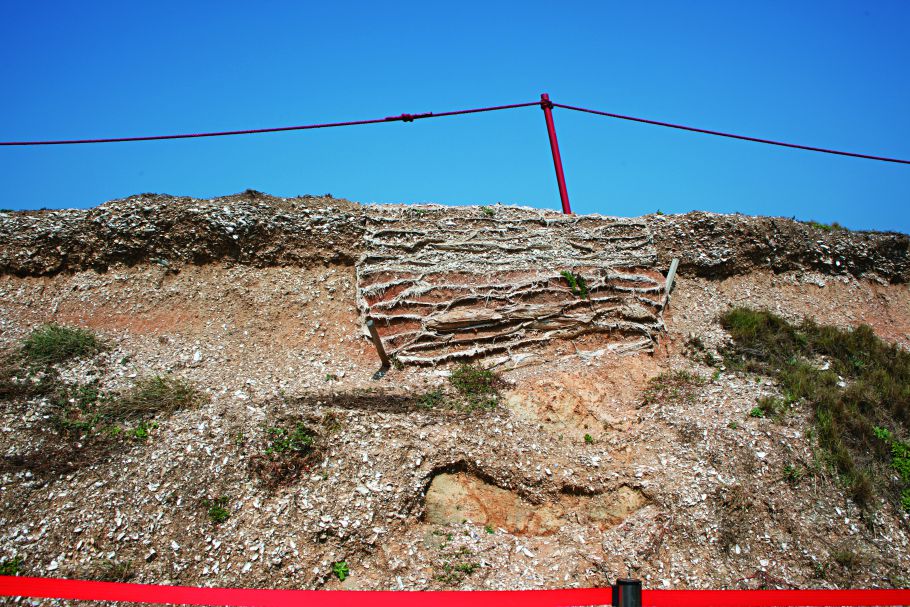
(Image source: https://commons.wikimedia.org/wiki/File:八千三百多年前南島語族祖先的遺跡.jpg)
The Negritos Once Lived in Taiwan
As an island, Taiwan has long been a destination for seafaring peoples from various regions. Many different ethnic groups have settled here throughout history, including the Indigenous peoples we are familiar with, as well as Zhangzhou-Quanzhou immigrants, Hakka settlers, and even prehistoric humans from Melanesia, Polynesia, and Southeast Asia—among them, the Negritos.
Tracing back to Taiwan’s earliest archaeological records, remains of the Negritos were discovered in Donghe, Taitung. Additionally, two human fossils unearthed on Liang Island in Matsu, the earliest remains of Liang Island remains dating back approximately 8,300 years, exhibited similar characteristics to the Negritos and closely resembled human fossils found in the Ryukyu Islands from over 10,000 years ago.
Perhaps in search of food, or seeking warmer climates during the winter, these ancient seafarers left behind remnants of fish, shrimp, and shellfish. Analysis of cultural layers and material artifacts suggests that early humans depended heavily on wetland resources— relying entirely on swamps and riverbanks for sustenance and survival.
Beyond Taiwan, Wei-Ta, Fang has conducted field research in the Philippines, South Korea, Vietnam, and Thailand, tracing the footprints of previous societies that once thrived in wetland environments and examining the evolving role of wetlands in these countries today.
What Is Anthropology?
Anthropology is the science of studying humans. It focuses on both humans themselves and the cultures they create. Contemporary anthropology is typically divided into four major branches: cultural anthropology, archaeology, linguistic anthropology, and biological anthropology. Cultural anthropology, which is also known as social anthropology, primarily examines the social and cultural diversity of different groups, aiming to describe, analyze, and interpret the similarities and differences among human cultures. Conversely, archaeology reconstructs, describes, and interprets past human behaviors and cultural patterns through the study of material remains, using excavated artifacts to piece together the history of human cultural evolution.
Wetland Exploration from Japan to Vietnam
Korea
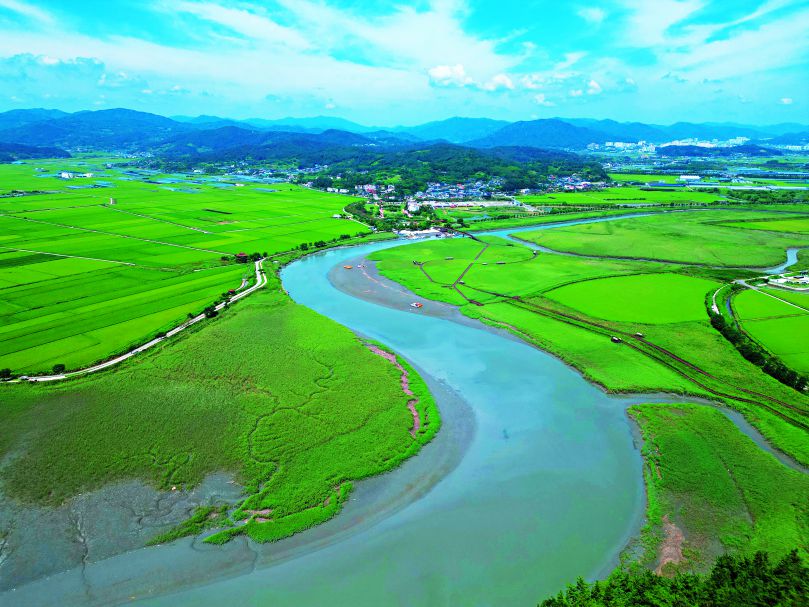
The development of wetlands in South Korea is similar to that of Taiwan. Suncheon Bay Wetland, located near Busan, South Korea, was formed after the end of the Ice Age 8,000 years ago. The wetland first garnered attention more than 30 years ago when a group of elementary school students discovered an injured red-crowned crane in the area. Determined to save the bird, the students, with the support of the local community, carefully nurtured it back to health, and eventually released it back into the wild.
In its early years, Suncheon Bay Wetland was used as a dumping ground for waste. In 1990, the citizens of Suncheon launched a movement opposing aggregate extraction in the lower reaches of the Dongcheon River. Later, a civic group was formed to protest against waste dumping in the wetland. Through continuous efforts and resistance, the wetland was finally revitalized. Today, it is home to over 100 bird species and more than 30 species of grass plants. It has become a key eco-tourism destination in East Asia and one of the few remaining wintering sites for the endangered hooded crane in South Korea.
China
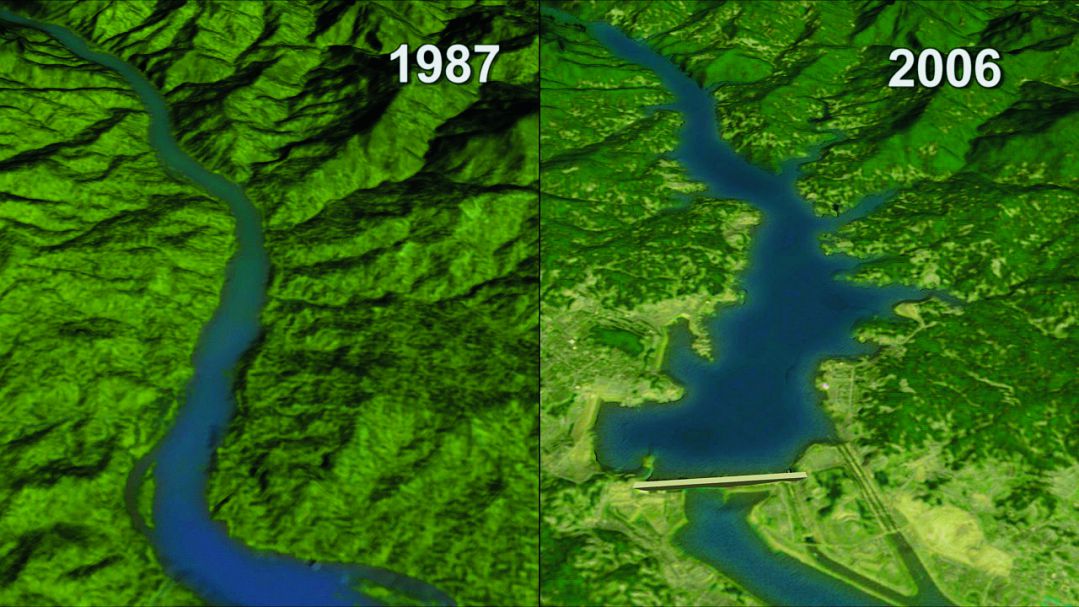
China possesses abundant wetland resources. Its vast territory covers a total wetland area of 56.35 million hectares—accounting for approximately 10% of the world’s wetlands. This ranks China first in Asia and tenth globally. However, due to extensive development and construction efforts, the country’s ecosystems have come under threat, leading to a continuous decline in wetland area as well as water resource pollution and invasion by non-native species. A notable example of this phenomenon is the Three Gorges Dam: although this massive hydropower project provides significant benefits in electricity generation and flood control, its construction disrupted the upper reaches of the Yangtze River, causing dramatic ecological changes. It stands as a prime example of the ongoing struggle between industrial development and ecological conservation.
Japan
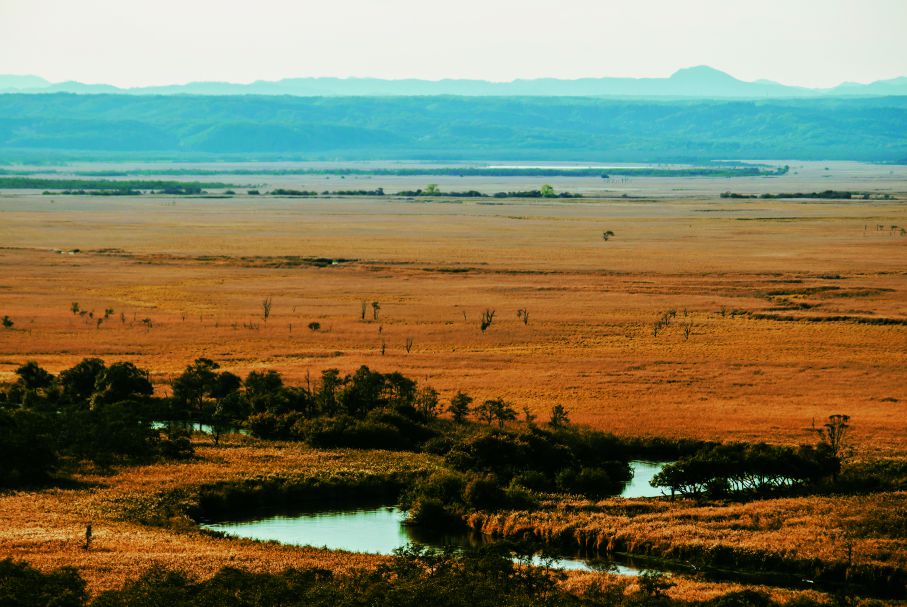
Japan has a rich wetland culture and is one of the leading countries in Asia with regard to nature conservation, tourism, and educational activities. Kushiro-Shitsugen National Park in Hokkaido is Japan’s largest wetland, spanning 28,000 hectares. It was the first wetland in Japan to be designated under the Ramsar Convention on Wetlands and serves as a crucial sanctuary for the endangered red-crowned crane.
Ramsar Convention on Wetlands
The Ramsar Convention is an international treaty signed to protect wetlands. It was adopted in 1971 in Ramsar, Iran, with 18 countries initially joining as contracting parties. As of 2024, the convention has 170 member states. Globally, a total of 2,337 wetlands are designated as Wetlands of International Importance: the United Kingdom ranks first with 175 sites, followed by Mexico with 142 sites. Taiwan has two internationally recognized wetlands—Zengwen Estuary and Sicao Wetlands—along with 40 nationally designated wetlands.
Hong Kong
Hong Kong, the “Pearl of the Orient”, is home to the Mai Po Nature Reserve, which has been recognized as a Wetland of International Importance under the Ramsar Convention. The reserve features a diverse range of wetlands and is renowned for its migratory birds, nature conservation areas, and mangrove forests. Every year, tens of thousands of migratory birds flock to this haven, making it a true paradise for avian species. The reserve showcases the remarkable power of nature and highlights Hong Kong’s success in wetland restoration.
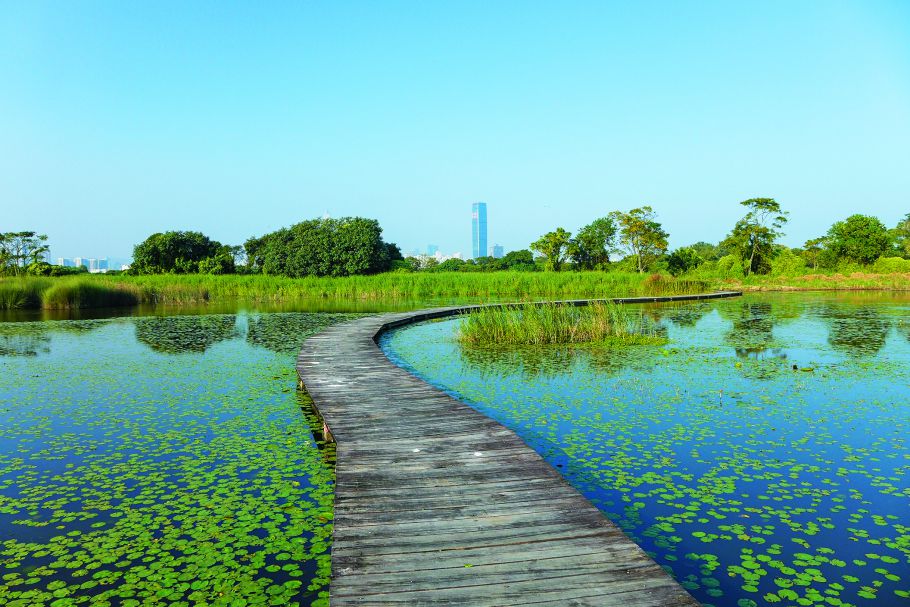
(Image Source: https://commons.wikimedia.org/wiki/File:Mai_Po_Marshes_Gei_wai_boardwalk_2016.jpg)
Vietnam
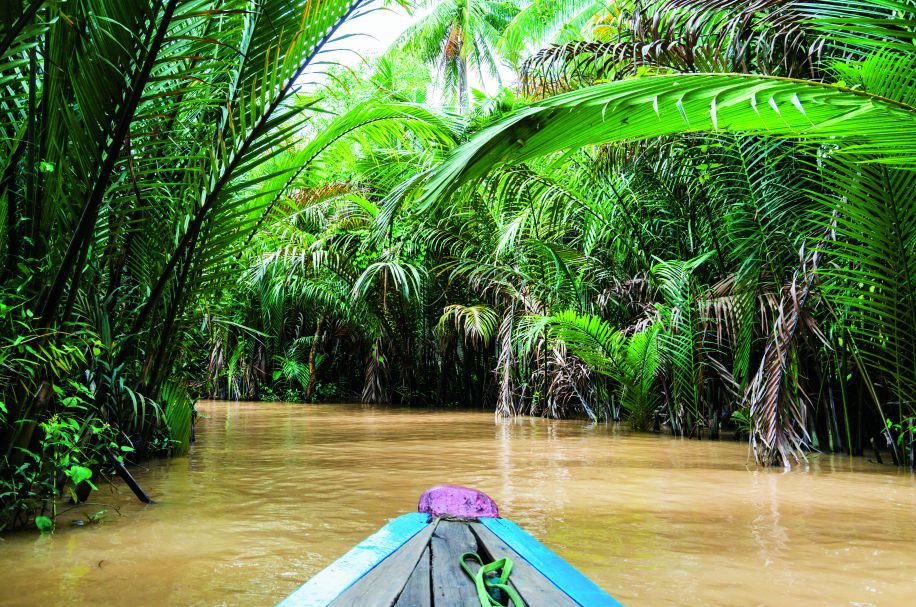
Ho Chi Minh City, located in southern Vietnam near the Mekong Delta, boasts a rich wetland ecosystem. The city’s Can Tho Wetland, Can Tho Wetland Reserve, and Can Tho Wetland Park not only serve as vital habitats for waterfowl and wildlife but also provide a recreational space for both residents and visitors.
The Uniqueness and Crisis of Taiwan’s Wetlands
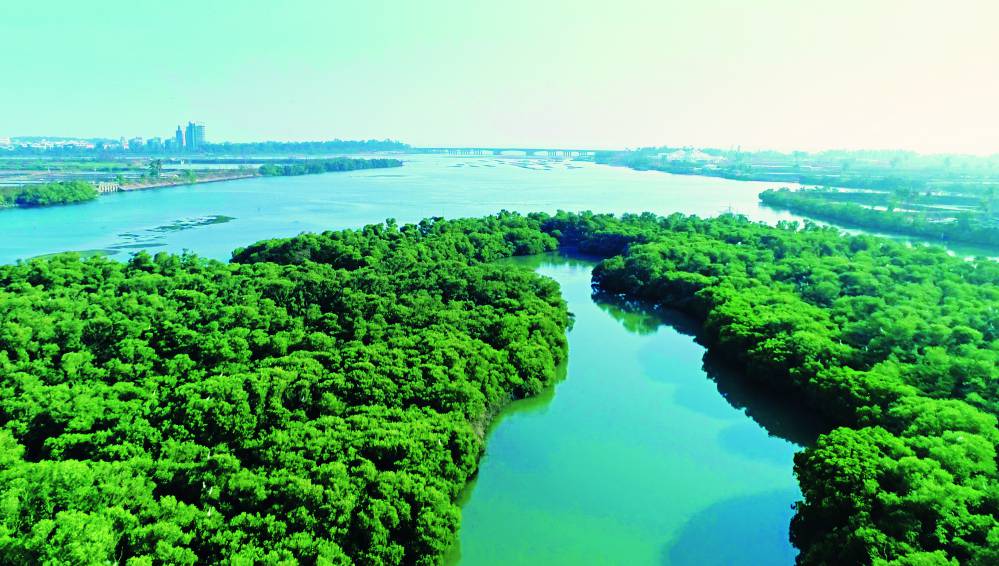
Taiwan is endowed with abundant wetland resources and a diverse range of wetland types, including alpine lakes, rivers, ponds, farmlands, lagoons, coral reefs, fish farms, mangroves, and tidal flats. The various wetland formations mentioned in textbooks can all be observed without the need for long-distance travel.
From the perspectives of human development and ecological migration, Taiwan holds a uniquely strategic position. As the largest island in the chain and one of the most biodiverse regions.
Although Taiwan is small in land area, if its mountainous terrain were flattened, its total surface area would be comparable to that of the Netherlands. Due to its towering mountains, Taiwan’s vertical wetland ecosystems boast exceptionally rich biodiversity, which has attracted specialized teams of international researchers to the island to conduct studies. A visit to Yangmingshan National Park in the morning and the Northeast Coast in the afternoon allows one to experience the journey from mountain peaks to coastal shores within a single day—a level of accessibility and diversity rarely seen worldwide. However, these wetlands are facing significant threats.
In addition to climate change, human encroachment has led to a sharp decline in wetland area. Wei-Ta, Fang believes that people’s attitudes toward wetlands are deeply tied to their personal values and sense of responsibility, as well as the broader cultural characteristics of society.
“We cannot view wetlands solely from an economic perspective—calculating the potential output of a semiconductor factory while ignoring the fact that habitat loss may drive species to extinction. Once a species disappears, the cost of restoring it, if even possible, is immeasurable. Our generation must not allow species extinction to happen.”
Because wetlands are connected to everyone, a foundational understanding of the environment should be instilled through education, thereby promoting conservational awareness. Inspired by a program on Japan’s NHK entitled Creating a Comfortable Environmental Map, Wei-Ta, Fang developed the Junior Environmental Commissioner project during his tenure at the Environmental Protection Administration. This initiative encouraged elementary school students to survey their hometowns, map local environmental conditions, and write essays to identify polluted rivers and neglected areas. Outstanding works were recognized through President Lee Teng-hui’s reception and awards.
Beyond organizing activities to subtly instill conservationist values, in 2024, Wei-Ta, Fang published Chronicles of Taiwan’s Wetlands, which narrates not only the story of Taiwan’s wetlands but also the story of its people. The book aims to provoke reflection on where we came from and where we are headed, while emphasizing the interconnected destiny of humans and wetlands.
(The next installment will be published in the Summer 2025 issue.)