
Article / Cheng Chih-Ya
Interviewee / Chiou Chi-Jung, Retired Associate Professor, School of Forestry & Resource Conservation, National Taiwan University
When did we stop saying that man can conquer nature? Was it when people, struggling amidst increasingly extreme typhoons, floods, wildfires, and droughts, began to realize that we are just as small and powerless as other animals— and perhaps even more vulnerable? Or was it when we saw that the disappearance of certain species could trigger the collapse of entire ecosystems, ultimately threatening our own survival? More than two decades ago, a growing number of voices began calling for a shift—from the belief that man can conquer nature to a philosophy that embraces living in harmony with nature. These activists sought solutions to environmental challenges from within nature itself.
The concept of Nature-based Solutions (NbS) traces its roots back to 2002, when the United Nations proposed similar ideas, and the term was established in a 2008 World Bank report. Since then, a framework has been gradually constructed through global discussions, transforming NbS into the central foundation and strategic pillar of numerous research projects. The discourse around NbS continues to evolve even to this day.
Although NbS predates the United Nations Sustainable Development Goals (SDGs), its objectives are closely aligned with SDGs 14 and 15. They all aim to address climate change and safeguard biodiversity.

The“Ecosystem Medical Team” Sets Out
Chiou Chi-Jung, a retired associate professor at the School of Forestry & Resource Conservation, National Taiwan University, explains, “Ecosystems possess innate climate-regulating functions; oceans absorb heat whereas plants absorb carbon dioxide. At the same time, they provide various ‘services’ to humanity, including food, energy, and medicine, as well as spiritual and cultural identity. Only by viewing both aspects together can we get to the root of real-world problems.
“NbS is primarily about integrating long-standing related concepts, such as ecological restoration, ecological engineering, and green infrastructure.” Strictly speaking, NbS isn’t exactly a new idea. In the past, these concepts were like different outpatient clinics. Now, NbS bring them together as one unified medical team. “By incorporating all these ideas under a consistent framework, we’re able to build a more complete strategic system.”
Over the past decade, NbS has become increasingly refined and comprehensive. This evolution reflects a growing awareness, amidst the accelerating degradation of the natural environment, that we can no longer rely on uncoordinated stopgap measures. There is now a pressing need to regroup with interdisciplinary expertise and updated technologies and to establish universal principles and standards. Only then can we respond more flexibly and adaptably by tailoring solutions to different times and places and caring for ecosystems long burdened by accumulated stress.
SDGs
SDGs 15: Protect, restore and promote sustainable use of terrestrial ecosystems, sustainably manage forests, combat desertification, and halt and reverse land degradation and halt biodiversity loss
A flourishing life on land is the foundation for our life on this planet. We are all part of the planet’s ecosystem and we have caused severe damage to it through deforestation, loss of natural habitats and land degradation. Promoting a sustainable use of our ecosystems and preserving biodiversity is not a cause. It is the key to our own survival.
Treating the Root Cause: People Are Both the Cause and the Cure
Chiou, explains that NbS focuses on understanding the complex interplay between humans and the natural world. “Climate change, the environment, and human communities are constantly interacting with one another. Climate change leads to the loss of natural functions, and the loss of natural functions accelerates climate change. Human activities intensify both climate change and the degradation of natural systems, and they, in turn, greatly affect human well-being. Within this tangled web of connections, NbS offers a point of intervention— one that can simultaneously help mitigate climate change, strengthen ecological resilience and adaptive capacity, and create shared benefits for both people and nature.”
This clearly illustrates that NbS places a strong emphasis on the presence and participation of people. Chiou explains, “Humans and nature are interdependent. Humans are the ones who damaged nature, but we are also working to save it—how can we not take humans into account?” Therefore, NbS advocates for integrating social and economic dimensions into environmental strategies, with the aim of finding a more effective balance between people and nature. “We avoid approaches that solely prioritize the environment—we care about people too. In a world with limited resources, this is the only way to effectively raise public awareness and strengthen the willingness and capacity of ordinary citizens to accept, participate in, and commit to long-term ecological solutions.”
Responding to Societal Side Effects
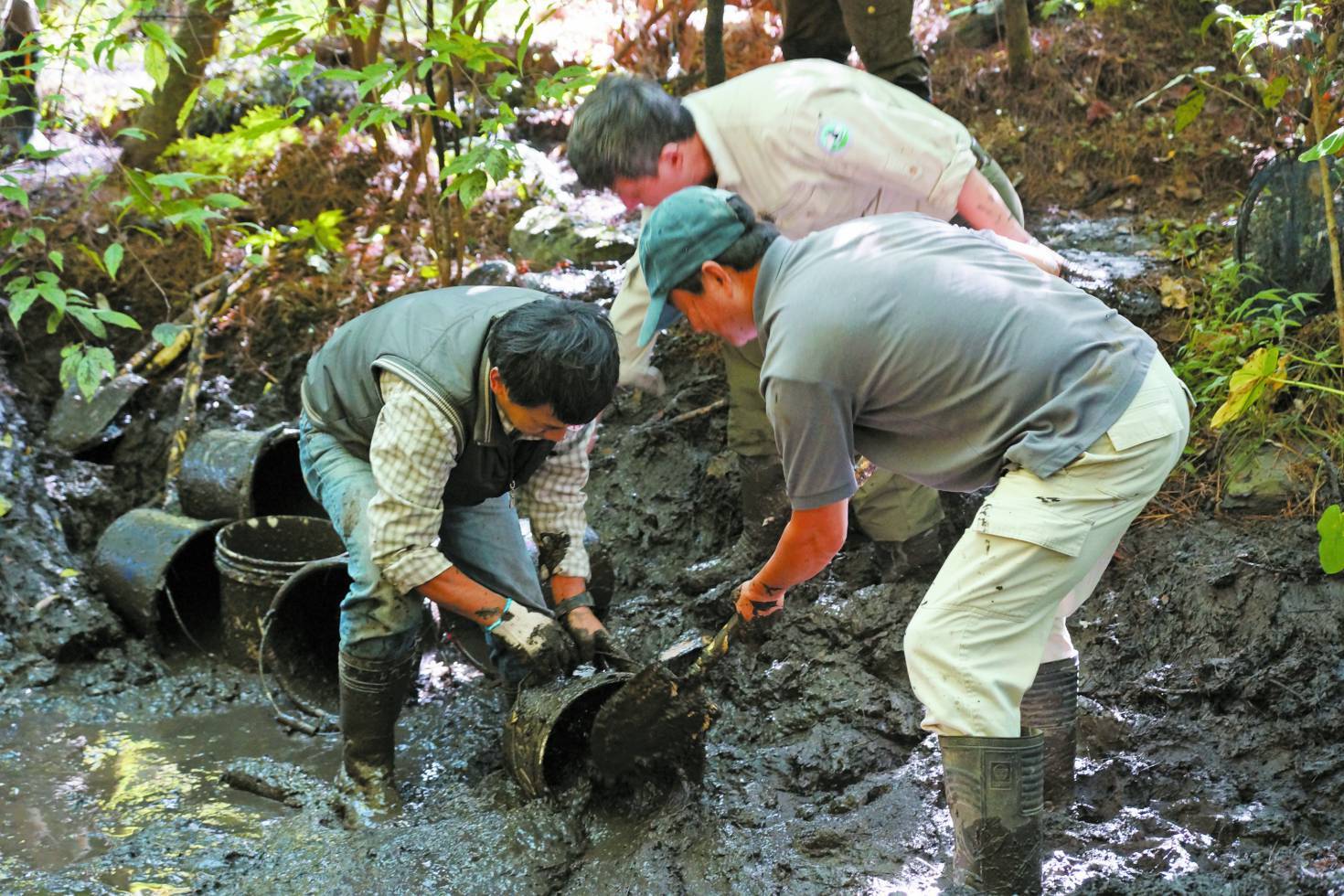
Where there are people, there are societal challenges; therefore, NbS prioritizes the use of action-oriented approaches to address societal challenges. The first step is identifying potential societal challenges. Next, NbS is incorporated into ecological management plans and solutions to ecological crises. Last and most importantly, the response measures must consistently strive to deliver the dual benefits of enhancing human well-being and protecting biodiversity.
Chiou elaborates, “Societal challenges rarely exist in isolation—they’re interconnected. For instance, the Water Resources Agency may primarily focus on water resource issues, but in addressing those, it also touches on many other problems, such as community development, environmental degradation, disaster risk, and ecological degradation.”
To assess the implementation quality of various management plans and solutions, the International Union for Conservation of Nature (IUCN) released the Global Standard for Nature-based Solutions in 2020. This framework includes 8 criteria and 28 indicators that cover aspects such as calculating net gains in biodiversity, ensuring transparent governance, and achieving the mainstreaming of sustainability goals. Chiou explains, “This set of guidelines provides a clearer way to evaluate whether a given action truly aligns with the principles of NbS. It helps implementers review their efforts and identify where and how improvements can be made.”
The IUCN’s Seven Major Societal Challenges Addressed by NbS:
① Climate change mitigation and adaptation
② Disaster risk reduction
③ Economic and social development
④ Human health
⑤ Food security
⑥ Water scarcity
⑦ Environmental degradation and biodiversity loss
The Eight Principles of NbS Proposed by the IUCN:
① Adhere to conservation norms and principles: NbS embrace nature conservation norms and principles.
② Integrated or stand-alone implementation: NbS can be implemented alone or in an integrated manner with other solutions to societal challenges (e.g., engineering approaches).
③ Context-specificity: NbS are determined by site-specific natural and cultural contexts (including traditional, local, and scientific knowledge).
④ Equitable governance and participation: NbS produce societal benefits in a fair and equitable way in a manner that promotes transparency and broad participation.
⑤ Biodiversity and cultural diversity: NbS maintain biological and cultural diversity and the ability of ecosystems to evolve over time.
⑥ Application at landscape scale: NbS are applied at a landscape scale (not confined to small or isolated areas).
⑦ Balancing trade-o?fs: NbS recognize and address the trade-o?fs between the production of a few immediate economic benefits for development, and future options for the production of the full range of ecosystem services.
⑧ Policy integration: NbS are an integral part of the overall design of policies, and measures or actions, to address a specific challenge.
NbS: A Multi-Benefit Strategy
From forests and rivers to farmlands and cities, every landscape presents different environmental conditions and societal needs. So how do we apply NbS in practice? According to Chiou, although NbS can take many forms, they can generally be categorized into two major types. The first type is protecting and managing existing natural and modified ecosystems. The second type is creating new ecosystems, such as human-made wetlands, urban green spaces, and bioswales. For example, the urban heat island effect and extreme rainfall events can be addressed by increasing tree canopy coverage—through community gardens, green roofs, and other measures—to reduce heat stress while expanding permeable ground surfaces to lower the risk of flooding during heavy downpours.
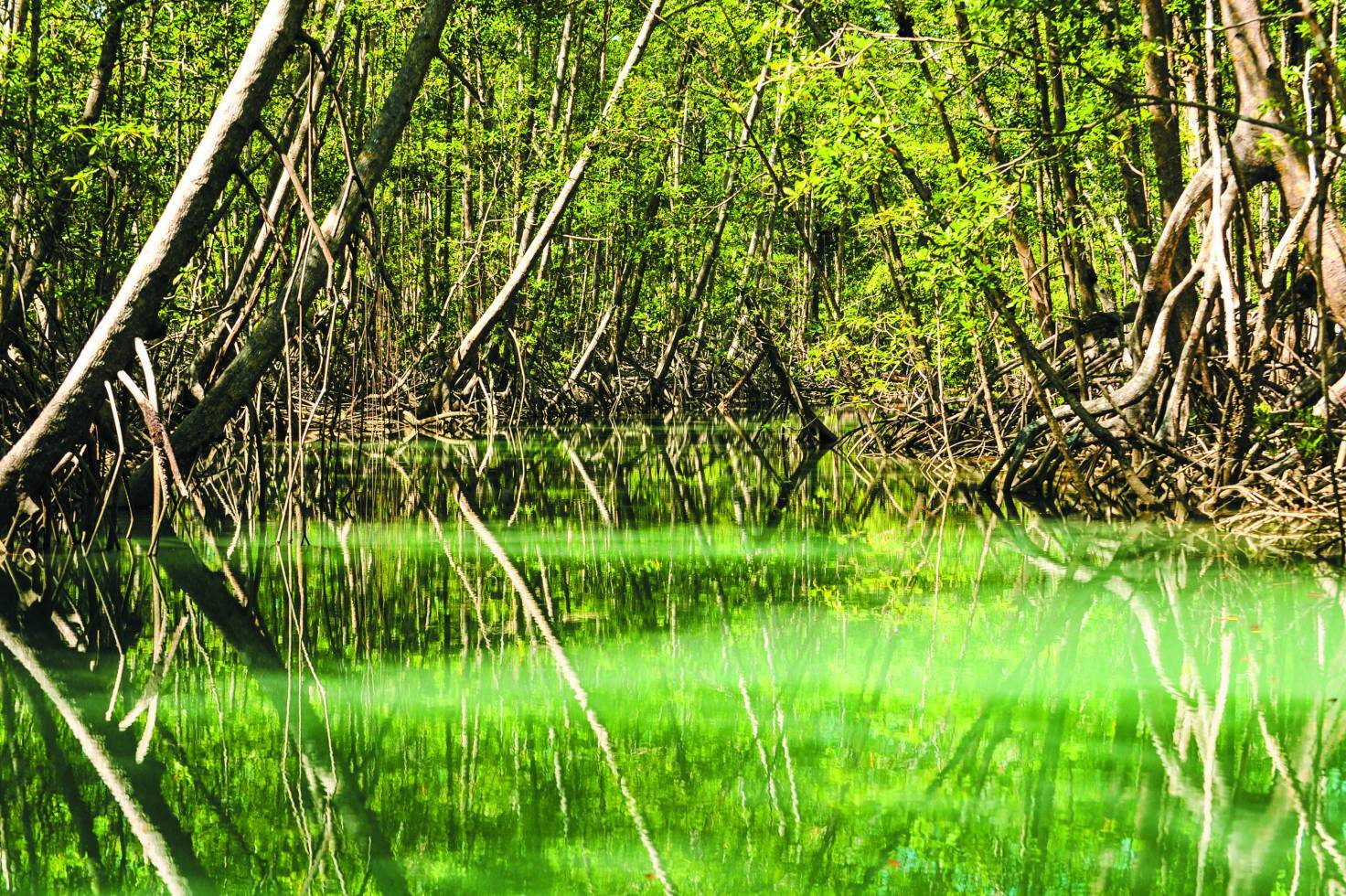
Chiou also shares a recent example of a successful nature-based solution from the international community. In the 1980s, Costa Rica’s banana industry collapsed under pressure from overseas competition. In response, local communities turned to cutting and selling mangroves, resulting in the destruction of nearly 40% of the country’s mangrove forests. This allowed ferns to rapidly take over as the dominant species in the degraded habitats.
In 1994, a team launched a 30-hectare mangrove restoration pilot project within a national wetland conservation area. They removed invasive ferns and planted mangrove seedlings, ultimately restoring the local ecosystem. The population of mangrove cockles, or piangua, a key species in the habitat, began to recover, bringing local residents a sustainable source of income. This initiative not only restored biodiversity but also revitalized the local economy and enhanced carbon sequestration potential and flood prevention. It stands as a clear demonstration of what it means to generate multiple co-benefits through NbS.
Chiou also recalls the management model used a few years ago at the Taitung Cycas Nature Reserve, which consistently failed to prevent illegal harvesting. This, he notes, highlights a fundamental oversight in management: the community’s need for economic benefit was never properly addressed.
“Let’s say 100 cycads seedlings sprout each year, and only 50 need to survive to sustain the population. We could allow local residents to sell the remaining 30, under the agreement that they help protect at least 50 seedlings from being stolen. This way, residents gain income, and the government gains additional manpower to help meet conservation goals—why not try it?” This approach not only generates economic returns for the community but also encourages their participation in conservation efforts. It reflects how NbS can help us break free from conventional resource-limitation thinking and facilitate a more grounded understanding of how natural resources are actually used, ultimately striking a balance between ideals and livelihoods.
Making NbS Work: Governance Challenges and Opportunities
Chiou also points out that Taiwan has yet to fully grasp the principles of NbS, particularly when it comes to interdepartmental coordination. “Everyone is too accustomed to staying within the bounds of their own jurisdiction, and they’ve unconsciously erected invisible barriers between administrative responsibilities.” He emphasizes that without a mechanism for cross-sector collaboration, the comprehensiveness of any solution will inevitably be compromised, and adds with some frustration, “Every agency is indeed investing funding, manpower, and time. But the long-term lack of thorough cost-benefit evaluations—as well as insufficient monitoring, tracking, and analysis—means we don’t know what should be continued or where improvements are needed. This severely affects both the economic feasibility and long-term sustainability of NbS.”
To realize the full potential of NbS, it is essential to move away from traditional siloed thinking and adopt a more inclusive, participatory model of governance. This means creating mechanisms that encourage the broad engagement of stakeholders from all sectors. At the same time, effective monitoring and evaluation systems must be established, and national policies must evolve in time with emerging needs. Legal and regulatory frameworks should support— not constrain—innovative solutions. This ensures that nature-based approaches remain adaptable to changing circumstances and can be continuously strengthened over time.
A Universal Language of Ecological Healing
“The NbS concept reminds us that instead of fighting against nature, we should aim to cooperate with nature,” Chiou concludes. “This is more than a method for solving environmental problems; it’s a shift in mindset that forces us to rethink the relationship between humans and the natural world.”
He also notes that national parks are currently well-positioned to identify a wide range of societal challenges. After all, they have long-established partnerships with neighboring communities. As recreational activities in mountain forests continue to increase, it becomes more important to actively consider how to comprehensively integrate, design, and implement cross-sector ecological management plans for the short, medium, and long term.
“Take Taroko National Park, for example. The major earthquake in April 2024 severely damaged the ecosystem and the local tourism industry. It’s not enough to restore the environment and strengthen resilience against future extreme climate events— we must also address the sharp economic decline of surrounding communities.” How can Taroko be reborn? When environmental degradation, disaster risks, and local development challenges arise all at once, it clearly demonstrates the potential for NbS to tackle multiple societal issues and highlights the value of integrated, systems-based thinking.
In this era marked by intensified climate-related disasters and the ongoing loss of biodiversity, NbS point us toward a path that integrates both ecological and human values. NbS offers a way to simultaneously address environmental protection, societal development, and economic viability, embodying a true win–win–win approach.
As the SDGs vision reminds us, harmonious coexistence between humanity and nature is not only possible but essential for a sustainable future. After all, people and nature are deeply interdependent, and protecting the environment also safeguards the very future of humanity. If our habitats are destroyed and biodiversity vanishes, we will no longer have anything to sustain our survival.

Assisted Natural Regeneration (ANR) in Burkina Faso
This project, implemented by the Swiss NGO New Tree in collaboration with local families and farming groups, involves building fences around areas of tropical savanna to protect them from grazing animals. These enclosures give natural forests the space and time they need to regenerate. After 9 years of implementation, the number of trees has increased fivefold on average, and tree species diversity has doubled. Agroforestry “cultivation bands” have also been established around the fenced areas, creating integrated land for both farming and forest use. The cultivation bands provide local residents with a broader array of resources, including food, livestock fodder, construction timber, and medicinal plants. Roughly 70% of the forest products are kept for household use, and the rest are sold, contributing to improved livelihoods and a more diversified local economy.
University of Oxford Nature-Based Solutions Initiative
The University of Oxford’s Nature-based Solutions Initiative, as described by Chiou, is an interdisciplinary research program that brings together experts from the natural, physical, and social sciences, as well as specialists in economics, politics, and finance. The initiative has established an integrated online platform structured around three main pillars: science, policy, and practice. It o?fers a variety of resources, including interactive maps, lists of reference books on biodiversity and ecosystems, and key NbS research projects. Users can also explore numerous real-world case studies and domestic NbS applications on the platform, which provide valuable references for implementation.


