Resource Conservation and Environmental Management | The Ocean Conservation Administration
Article / Huang Shih-Ju
Photos / Ocean Conservation Administration
Interviewee / Lu Shiau-Yun, Director-General, Ocean Conservation Administration, Ocean Affairs Council
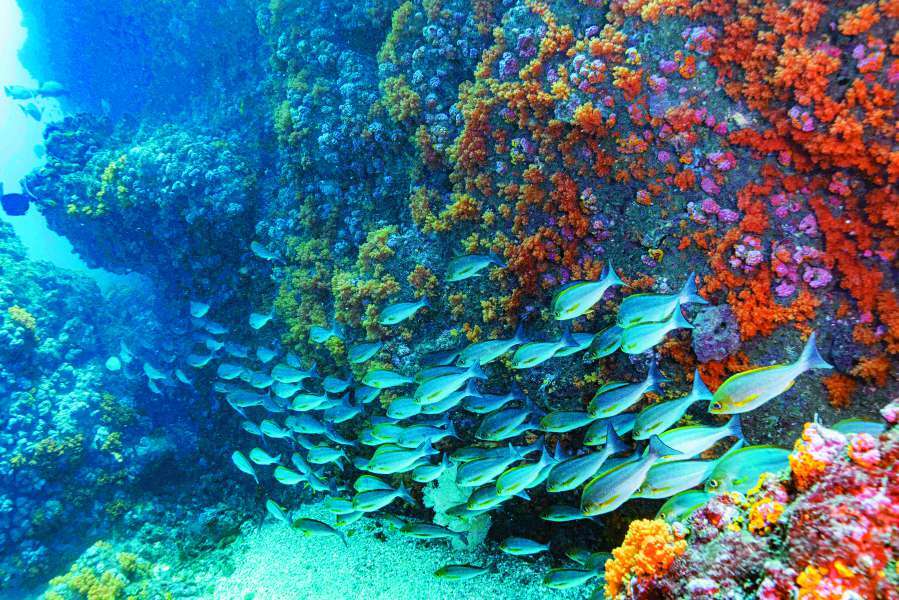
When we talk about Taiwan’s unique geographical position straddling the Tropic of Cancer, many of us think of the dramatic changes in the island’s terrain. In a few dozen kilometers, you can climb from sea level to mountains 3,000+ meters high. But if we shift our attention to the ocean, we discover that Taiwan’s underwater landscapes are just as breathtaking.
The Tropic of Cancer spans from the Penghu Archipelago in the west, to the shallow seabed of the Taiwan Strait, then to the sandbanks and wetlands along the west coast of Taiwan Island; and, on the east side of Taiwan, it plunges thousands of meters from the Hualien-Taitung coast to the deep-sea fault. The line of the Tropic of Cancer as it crosses the ocean near Taiwan sketches out vastly different coastal landscapes and ecosystems; it is a portrait of the biodiversity that exists where tropical and temperate zones converge. This unseen belt forms the invisible backbone of Taiwan’s oceans, and to Lu Shiau-Yun – Director-General of the Ocean Affairs Council (OCA) – it also has vast sustainability potential.
Protecting Their Marine Habitats
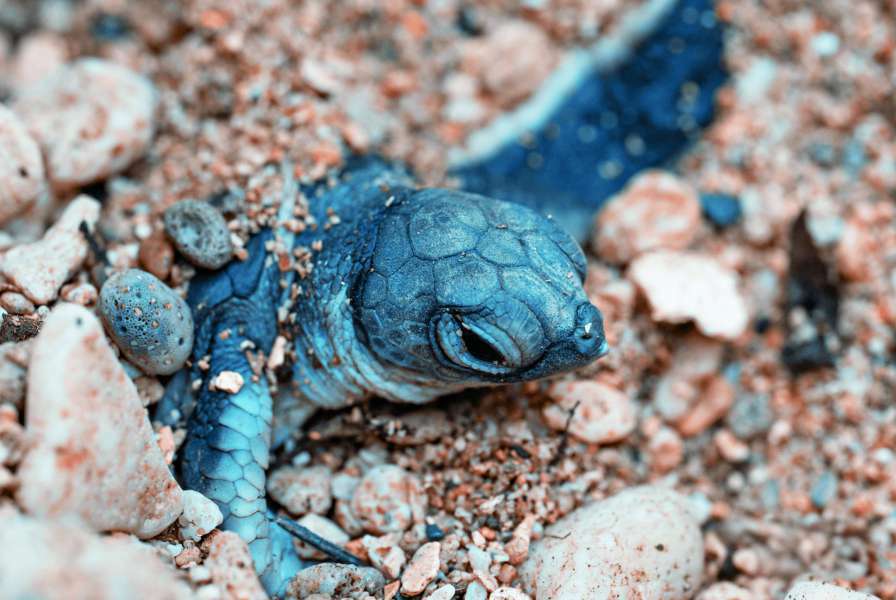
In the Tropic of Cancer Sustainability Belt project, Sub-Belt 6 is centered on the Penghu Archipelago. South Penghu Marine National Park; Penghu National Scenic Area; volcanic landscapes of basalt columns; all sorts of natural reserves, fishery resource protection zones, seabirds, and green sea turtle (Chelonia mydas) protection areas… all are integrated into this sub-belt that pays tribute to the ocean. The Penghu Archipelago’s unique island terrain and marine environments make it a critical ecological node. As a result, the OCA bears the responsibility to maintain sustainable development of marine ecosystems wit in this marine environment.
Lu enumerates the OCA’s conservation programs conducted at the Penghu Archipelago: “The Penghu Archipelago possesses truly unique island ecosystems, including seabirds, green sea turtles, cartilaginous fish, and giant clams – and the OCA has implemented different conservation programs for each.”
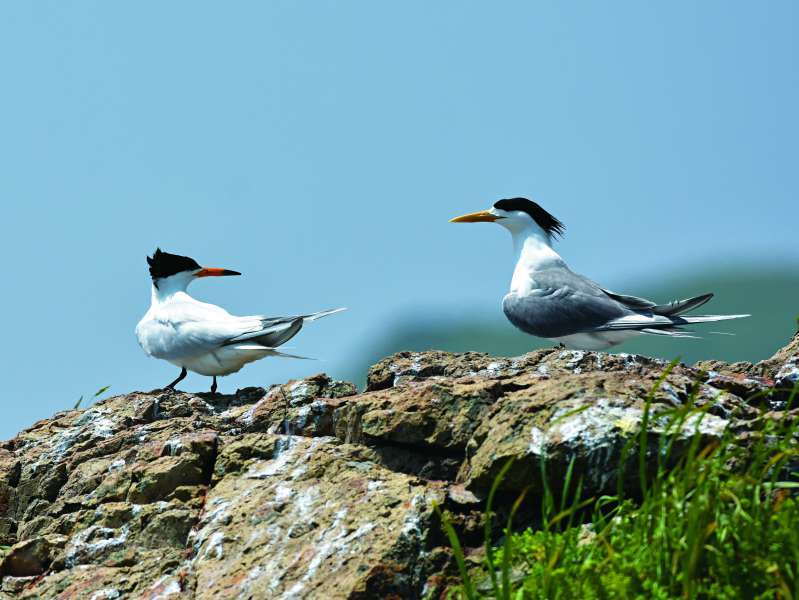
Take seabird conservation as an example. Maoyo Seabird Refuge is the first wildlife sanctuary in Taiwan, and is focused on protecting terns. In fact, the Refuge is one of the largest breeding grounds for the brown noddy (Anous stolidus) in Asia. In addition, long-term fixed-site species-based surveys and monitoring programs are implemented for species that breed in the Penghu Archipelago, such as the Chinese crested tern (Thalasseus bernsteini), great er crested tern (Thalasseus bergii), and bridled tern (Onychoprion anaethetus).
“Penghu is also an important area for green sea turtles to lay their eggs,” says Lu, “so our conservation programs also include improving habitat environments, rescue and rehabilitation, and installing eco-friendly streetlights around nesting areas.” This year, the OCA has also launched the Cartilaginous Fish Ecology Incentive Pilot Program in Penghu. Lu remarks, “Many of us may not know what cartilaginous fish are, but species such as the whale shark (Rhincodon typus), rays, and skates are sometimes caught accidentally by the traditional fishing industry. We hope to collaborate with fishers – when they accidentally catch such priority species, they will then notify us, and release the animals where they found them. Then, we provide the fisher with a reward.”
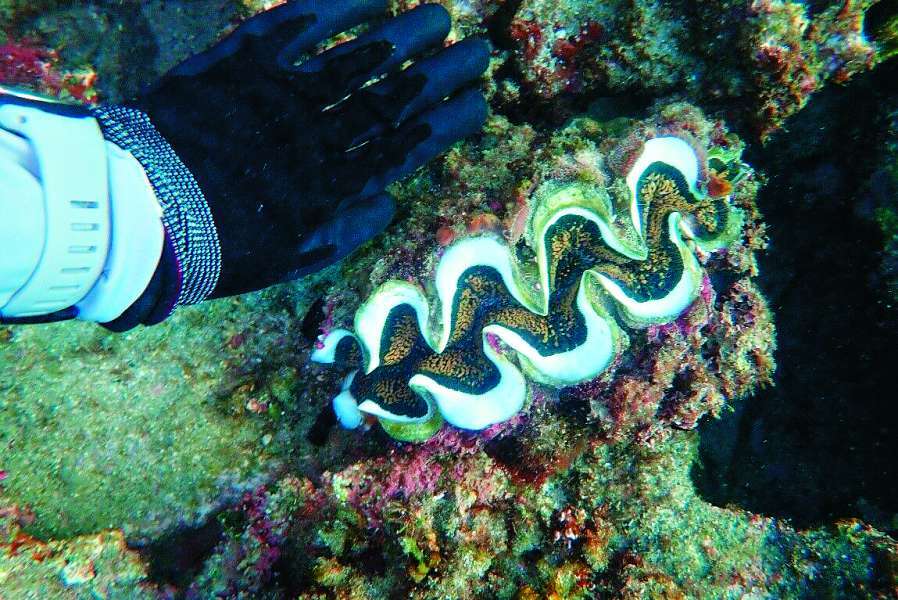
In addition, the OCA has also implemented conservation programs for the tri-spine horseshoe crab (Tachypleus tridentatus) and giant clam. “So,” ex plains Lu, “we already have many different species conservation programs ongoing in this sub-belt.”

Public-Private Partnerships for Marine Stewardship
Keeping marine resources sustainable depends on collective efforts. The Marine Conservation Act, which came into full effect on July 1 this year, is Taiwan’s first comprehensive regulation centered on marine ecosystems conservation. It aims to use future public-private collaboration to expand ESG matching capacity for local protection and marine conservation.
The Ocean Conservation and Local Protection Project promoted by the OCA upholds the same spirit, in hopes of bringing more people together, hand in hand. Lu notes, “The ocean has many facets. We hope that local NGOs and communities can work together in different areas, to safeguard our marine protected areas and coastlines. The Qimei Marine Protected Area is a good example.”
In the Qimei Aquatic Organisms Propagation and Conservation Zone last year, a completely no-take core area and buffer zone were added in the intertidal zone last year. These aim to preserve an area traditionally used by residents as an intertidal harvesting zone, thereby elevating the Qimei Marine Protected Area to a fully-protected level. Lu shares, “The concept here is to use a complete prohibition on fishing in the core zone to help marine resources grow, and then naturally expand outward, for better use by fishers. For example, colonies of collector urchins (Tripneustes gratilla) and giant clams have both seen increases in recent years – and this is all thanks to the strength of the local community patrols.”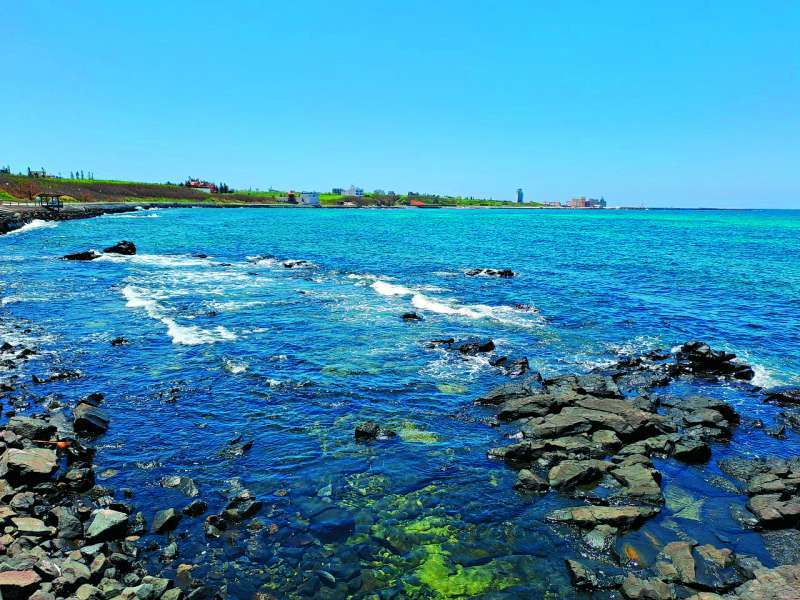

An Eco-friendly Travel Agreement
One important aspect of the Tropic of Cancer Sustainability Belt Project is fostering the growth of sustainable, community-based industries through promoting high-quality eco-tourism and local innovation. This, at the same time, aligns with UN SDG 8 by promoting inclusive, sustainable economic growth.
Marine activities such as whale-watching and diving are popular among both locals and tourists. In this regard, the OCA has also launched sustainability initiatives such as Friendly Whale Watching, Friendly Sea Turtle Watching, and the Coral Special-Dive Alliance to promote public conservation awareness of whales, dolphins, sea turtles, and coral reefs. “We have already launched Whale Watching Friendly Tour 2.0,” mentions Lu. “That initiative invites industry partners to join the joint cetacean patrol team. That way, everyone knows to slow down and keep their distance when approaching whales and dolphins, and avoid encircling them.” On the one hand, this improves the quality of whale watching tourism, while on the other, reducing impacts on cetacean ecologies.
Lu notes that leisure destinations inevitably overlap with wildlife habitats, and the Taiwanese public is diving more and more often in recent years. Through collaborative eco-friendly initiatives with industry partners, we educate the public on the proper interaction with marine wildlife during their eco-experiences, all while minimizing ecological impacts.
Sustainability is about using resources in a wise way; and so tourism, too, must align with the intents behind ecological conservation.
“It is important to strengthen conservation aware ness through tourism,” notes Lu. “When you actually see the ocean, you will truly feel it – and that feeling increases your drive to cherish the environment we have.” As Lu sees it, there is a growing public consciousness about environmental protection, and when there need to be caps on visitor numbers for recreational activities, people are more and more understanding about this.
The vast ocean is very different from an aquarium on land; in the ocean, living things move as they please. It may take you 30 minutes, even an hour by boat before you’ll be able to see dolphins riding the waves. You may even come back with nothing but longing to try again. “But that is precisely the right level of in tensity for the natural environment,” adds Lu, warmly. “When you venture out into the ocean, you’ll understand that living things need just this space to live in. When you understand this, you no longer have the mindset that ‘I have to get on a boat, I have to see cetaceans’. We have to cultivate this awareness, generation by generation, so that everyone gets to feel this way.”